What if the starting point of a piece of furniture was not its shape, but the way its parts come together? This question seems to sit at the heart of the object work developed by Allen Kaufmann Objects (AKO), the design practice of Berlin-based Allen Kaufmann Architekten. Rather than treating construction as a technical matter to be resolved after a design has a chosen shape, the studio approaches the logic of assembly as a generative design tool.
Developed by architect Justin Allen, in collaboration with Saskia Kaufmann and the wider studio, the Objects collection explores the relationship between material, geometry, structure, and use. The result is a body of work that occupies an interesting position between architecture, design, construction and woodworking.
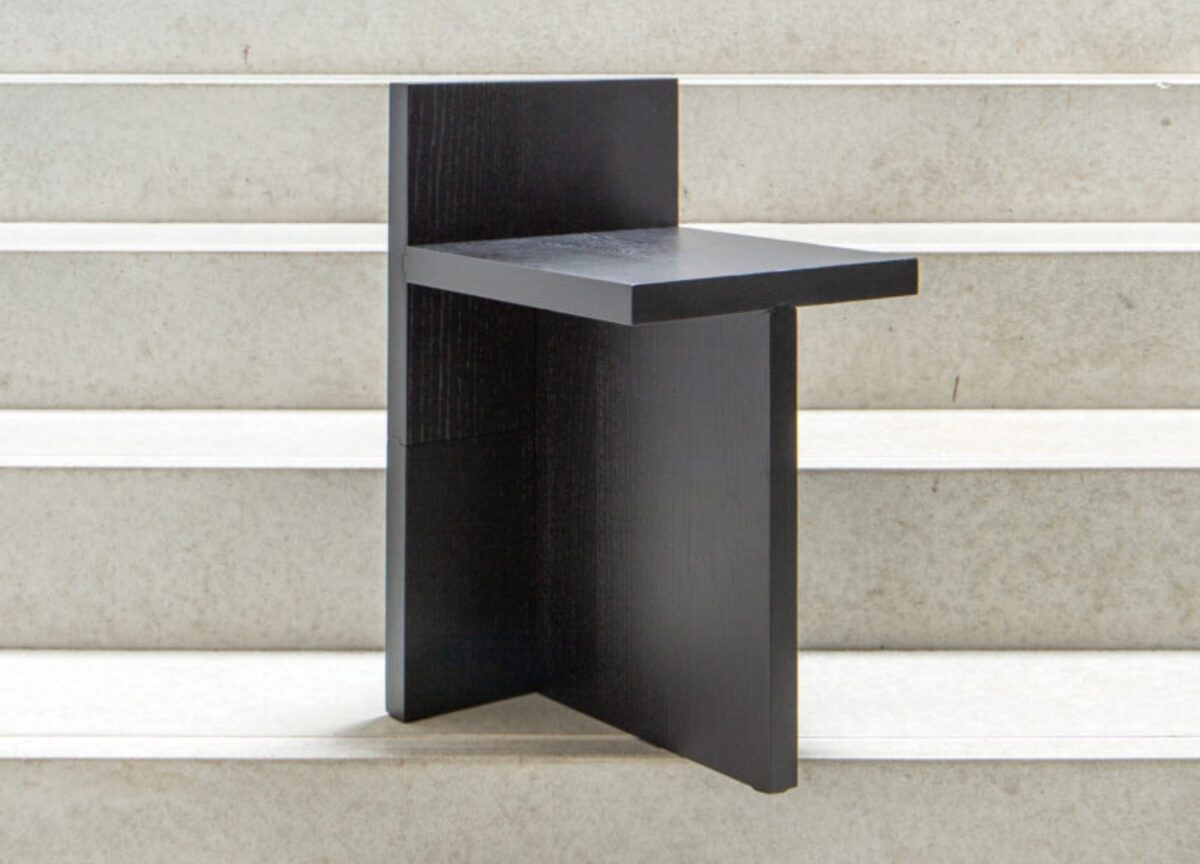
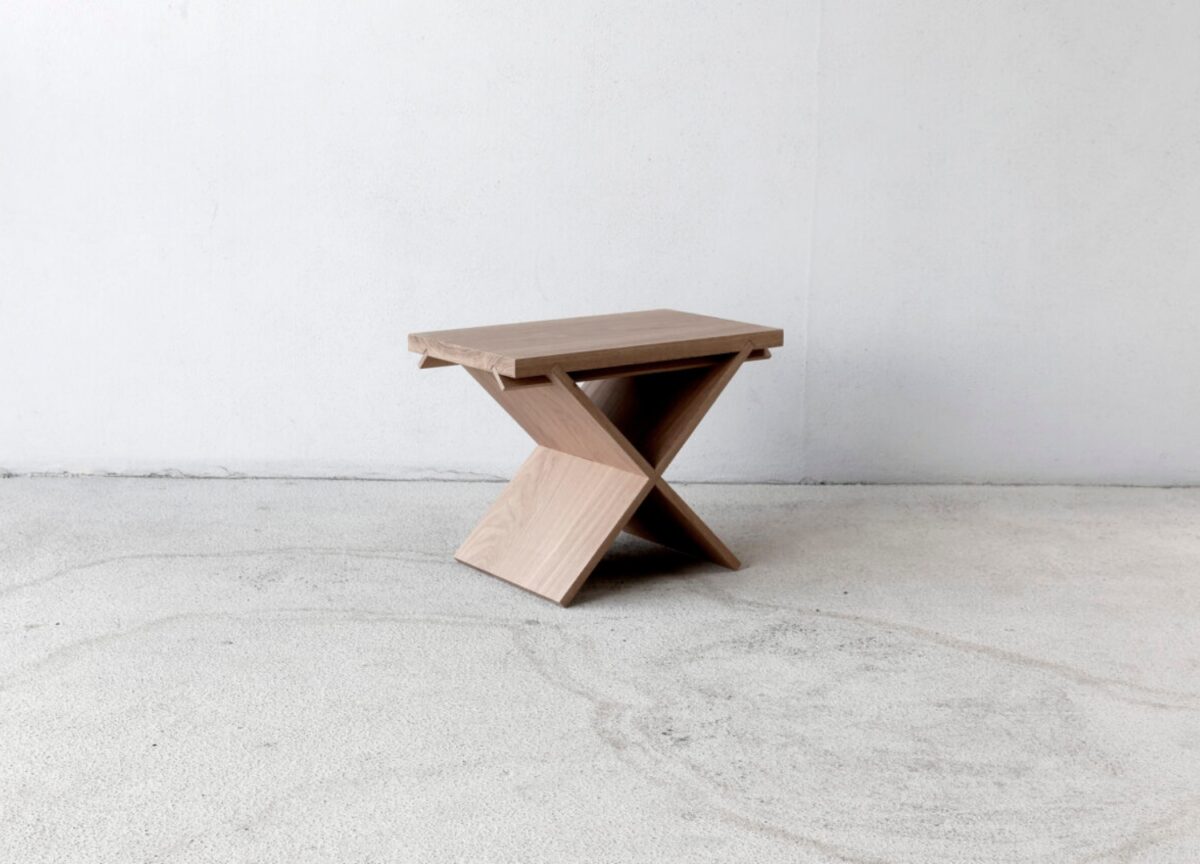
The approach is mainly defined by two lines of investigation: DADO and DOVETAIL. DADO stems from the housing joint, which connects one piece of timber to another through a groove. Allen reinterprets this established method by introducing a 45-degree geometry that allows multiple elements to interlock.
The DOVETAIL series uses the traditional sliding dovetail as the organising principle behind a family of objects. Simple wooden elements slide into one another, creating connections that are simultaneously structural and visual. Contrarily to DADO, here the joints are hidden once assembled, although their logic is determinant in creating the objects’ shape.
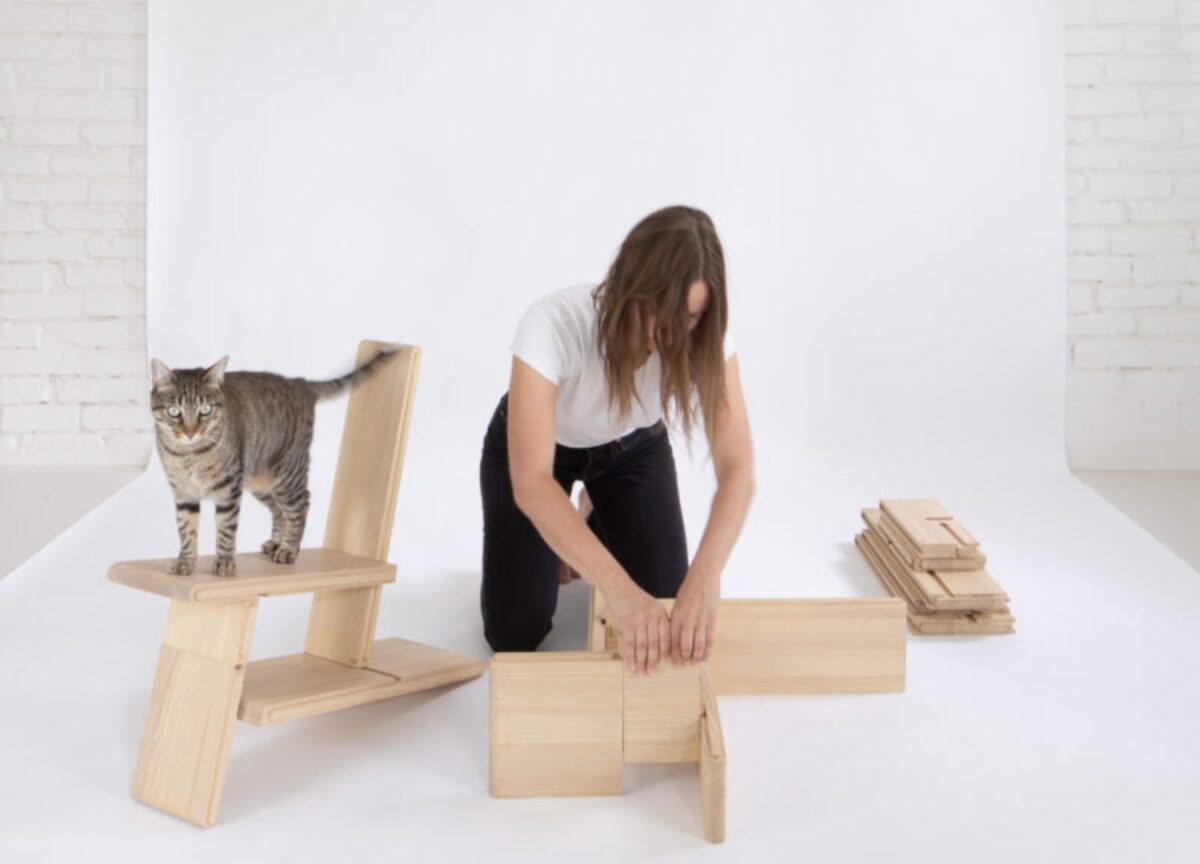
We spoke with Justin Allen about his design process, the objects’ relationship to architecture, and the studio’s fascination with construction.
Allen Kaufmann
What fascinates you about joinery and the joints you choose for your products?
Justin Allen:
“I have always liked looking at the undersides of things. Take Mies van der Rohe’s furniture. I admire it enormously. From the usual viewpoint, something like the Barcelona Chair can appear almost impossibly resolved. But turn furniture over and you begin to see how it is actually made: screws, fasteners, welded connections, brackets, depending on the piece. That made me wonder whether all of it is necessary. Shouldn’t an object be resolved from every angle? Does furniture actually need screws or brackets, or can geometry and material make the connection themselves?
That is probably where my fascination with joinery begins. I am less interested in starting with an image of a chair, table, or shelf and then figuring out afterwards how to construct it. I prefer when the way something is joined can generate the object itself. It is similar to architecture.
Good design does not necessarily begin with an exterior form. It can begin from the inside, with space, structure, or a construction principle, and allow the outward form to emerge from that. A joint is a very small thing, but it contains a surprising amount of information. It determines how forces move through an object, how parts meet, how precisely something must be made, how it can be assembled and taken apart, and ultimately what kinds of objects the system can produce.
Both DADO and DOVETAIL begin with traditional principles of wood joinery, but reinterpret them for contemporary furniture and manufacturing. They are dry assemblies. No glue, screws, brackets, or additional fasteners are needed, and the objects can be assembled, disassembled, transported, repaired, and reassembled. What is interesting is that the two systems express this logic very differently. With DADO, the patented functional joint is deliberately visible. Nothing is hidden. The connection becomes part of the character of the furniture, and you can immediately read how the parts come together. From that principle I developed a shelving system and a table.
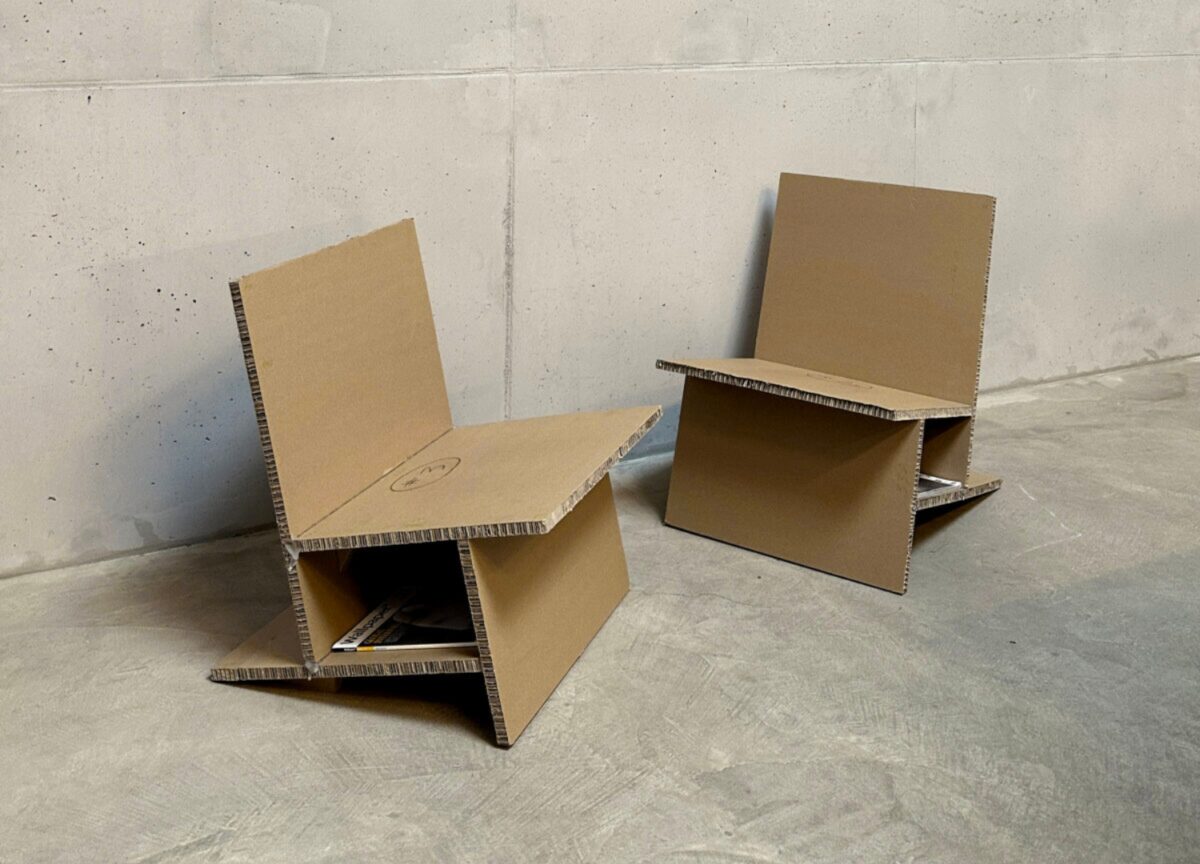
DOVETAIL developed partly from recognizing the limitations of DADO and asking what a different joint could make possible. Here, the connection performs the structural work but largely disappears within the finished object. The joint gives me much more freedom to develop different compositions and typologies while keeping the same basic principle of dry, hardware-free joinery. From that system I can develop a much broader family of objects, including chairs, shelves, bed frames, sofas, tables, and benches.
So I am not necessarily interested in making the joint visible. I am interested in what the joint can do. Sometimes it becomes the expression of the object, as with DADO. Sometimes it almost disappears, as with DOVETAIL. The question behind both is the same: how much can one construction principle accomplish?”
Walk us through your design process. How do you design, develop, and manufacture your furniture pieces?
Justin Allen:
“I often start by complaining about something. A complaint can be a very valuable design tool. If something feels unnecessarily complicated, wasteful, difficult to assemble, or dependent on too many parts, I start asking why it has to be that way. So the process begins quite conceptually, with a problem or a thought experiment. How can I make something from parts using only one material? Can a connection replace the hardware? Can the geometry solve more of the problem?
From there it may become a sketch or a geometric principle, but fairly quickly I need to make it. With joinery especially, drawings and renderings only tell you so much. One of the beautiful things about working at this scale is the freedom it gives me. We are architects, and architecture is expensive, slow, and usually requires a client. Furniture I can make myself. I do not need permission to test an idea.
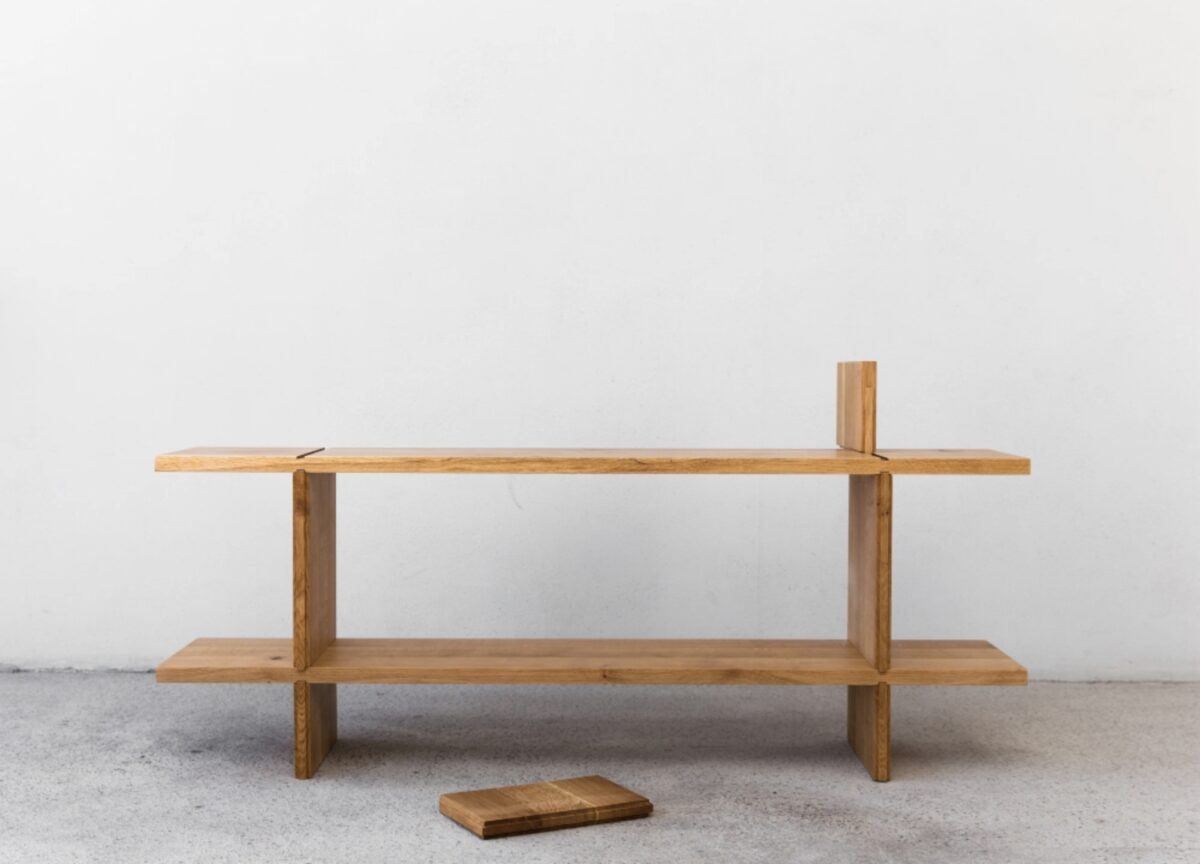
I can prototype at full scale, assemble and disassemble it, change angles and dimensions, and repeatedly adjust tolerances. A fraction of a millimeter can completely change whether a connection feels loose, impossible to assemble, or exactly right. The first object is also rarely the end goal. With both DADO and DOVETAIL, I am interested in developing a family from a construction principle. Once a joint works, the question becomes: what else can it do? Can the same logic produce a shelf, a table, a chair, or something I have not yet considered?
Time is also part of the design process, especially when working with wood. Wood has to be dried, but it never really stops moving. So the question is not only whether a joint works when it leaves the workshop. Does it still work when I bring it into our studio? Does it work in winter and summer? What happens after ten years? We still have furniture in our studio that I made around twelve years ago, and those pieces continue to teach me things. Seeing how the wood and the joints have behaved over time directly informs the tolerances, precision, and details of the joinery I am developing now.
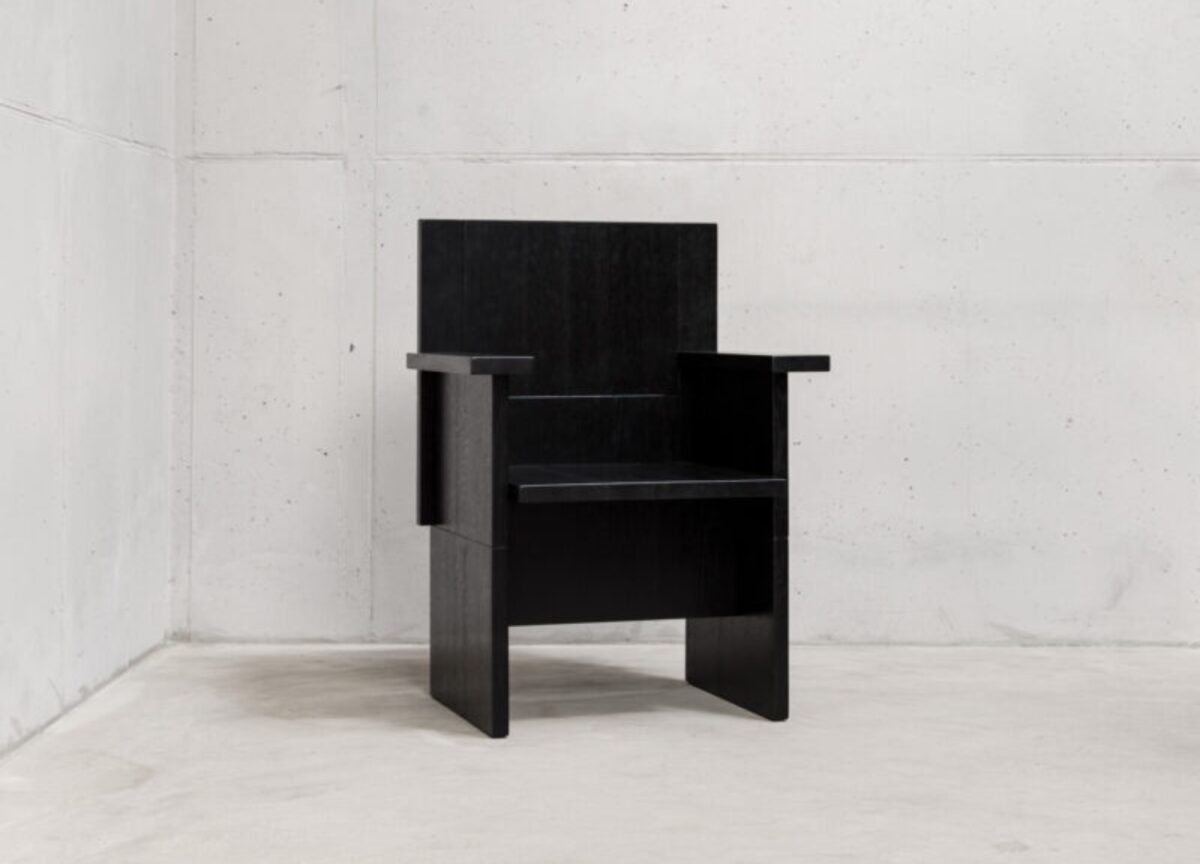
Manufacturing is part of the design process rather than something that happens afterwards. We work closely with workshops and manufacturers to understand their machinery, materials, and tolerances, and then refine the objects around what can be made accurately and repeatedly. We work primarily with solid wood and try to keep the number of parts and processes low. Dry, reversible connections are important because an object should be possible to assemble, disassemble, repair, transport, and eventually separate into its constituent materials.
There is a constant negotiation between precision and simplicity. If a solution requires a bracket, screw, or explanation, we usually ask whether the geometry itself can do more. In that sense, it is not really about being minimal. It is about being simple. Simplicity also gives us a certain independence. By relying on one material, in this case wood, we can understand, develop, and make much more ourselves rather than depending on additional components, manufacturers, or specialist systems.”
What is the relationship between your work in architecture and your work in furniture? How do the two communicate, if at all?
Justin Allen:
“I do not really see them as separate disciplines. Furniture is, for us, architecture at the scale of the hand. The questions are often the same. How does something stand? How do parts meet? What is necessary and what can be removed? How does material determine form? How does a person move through space, and how do they interact with the things within it?
In architecture, those questions are distributed across a much larger system involving structure, services, regulations, contractors, and many different trades. Furniture allows me to concentrate them into a much smaller object. You can hold the connection, assemble it yourself, and immediately see whether the idea works. Architecture can also be organized around a very simple material or construction principle. Think about a log cabin, a timber frame, or an old barn. These buildings often relied on a limited palette of materials and a small number of repeated connections. Structure, detail, and material were closely related.
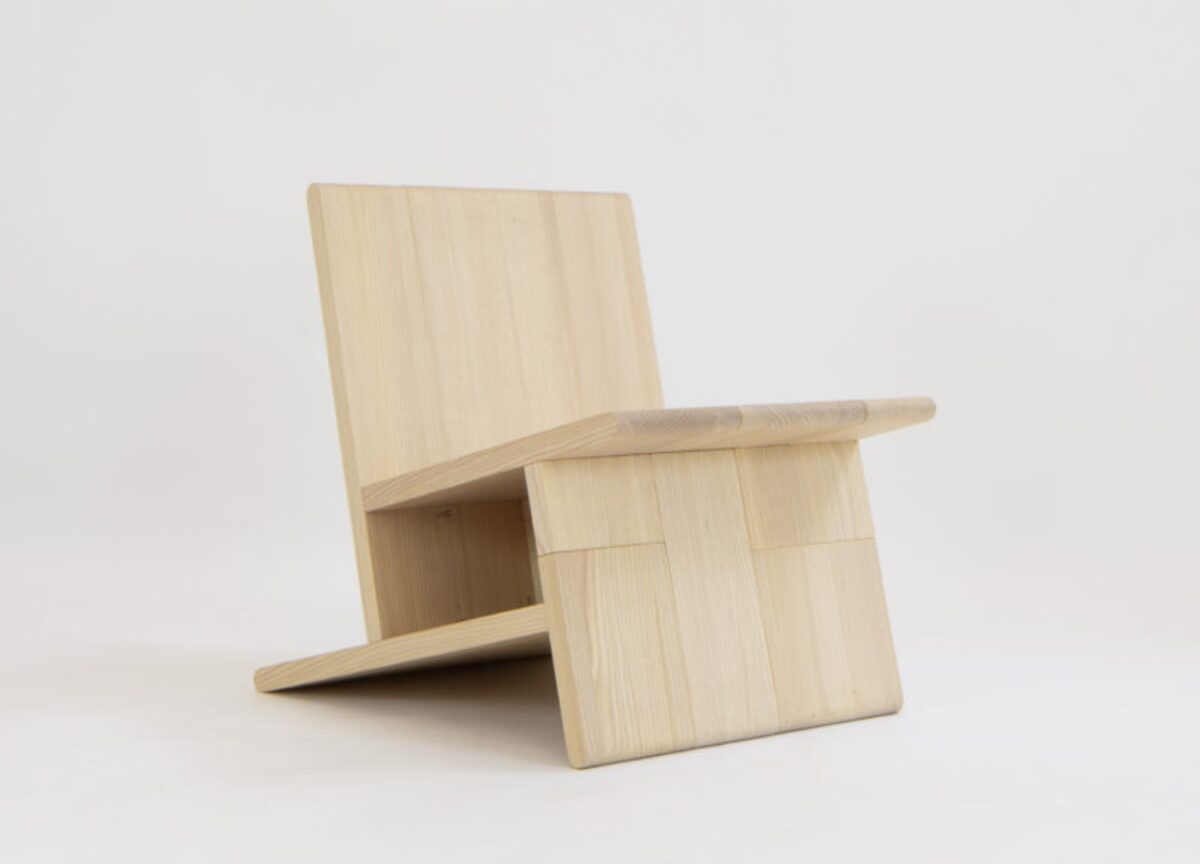
That interests me especially now because architecture is returning to timber and asking whether we can build larger and taller buildings with wood while reducing our dependence on carbon-intensive materials such as steel and concrete. The same question exists at the scale of furniture. A piece of inexpensive mass-produced furniture may appear simple, but when you take it apart it can contain many different materials, fasteners, adhesives, and components.
In that sense, DADO and DOVETAIL are a kind of return to an older construction logic, adapted to contemporary manufacturing. One primary material, a limited number of parts, and a connection that does as much work as possible. Both systems use dry joinery and can be assembled and taken apart without additional hardware. The point is not nostalgia. It is about asking whether an older principle of material economy can answer contemporary questions about production, transport, repair, longevity, and sustainability.
Saskia Kaufmann and I run ALLEN KAUFMANN ARCHITEKTEN, AKA, in Berlin, and we think about the practice through three related areas: Projects, Objects, and Subjects. Projects are our architectural and interior work. Objects are our furniture and product work, which has gradually developed into AKO, Allen Kaufmann Objects. Subjects gives us room for work that is more conceptual, artistic, experimental, or research-driven, including things that sit between architecture, design, and art.
Those areas are intentionally connected. Our architectural projects have always included custom furniture. Objects often begin with architectural questions. Subjects allows us to investigate ideas without first deciding what discipline they belong to. So AKO did not really emerge as a separate interest. It grew naturally out of the architectural practice. At the same time, developing DADO and DOVETAIL has made me more conscious of construction in architecture, particularly precision, material economy, reversibility, and how much a single connection can accomplish.
The scale changes, but the ambition remains very similar: to make something in which structure, material, construction, and use feel inseparable.”

Anna Lazzaron
Anna Lazzaron is a designer, writer, and researcher based in Milan and Barcelona, working across material exploration and speculative practices.