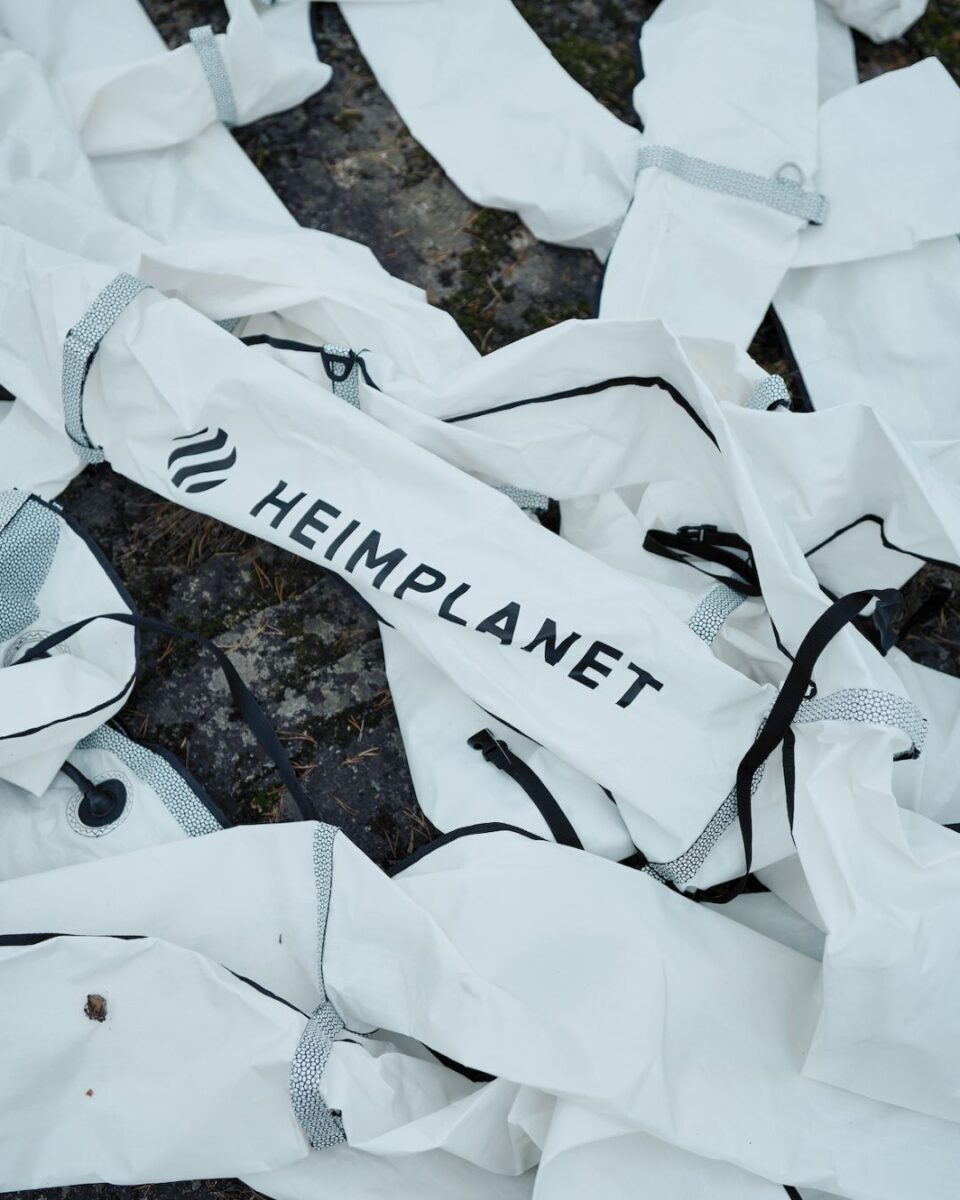
Architecture is often associated with permanence: walls, boundaries and places built to last. Yet mobility, flexibility and temporary forms of living are challenging this idea. If home is no longer defined solely by a fixed address, what makes us feel that we belong? Few objects embody this tension as clearly as the tent. One of humanity’s oldest forms of shelter, it now sits at the intersection of product design, portable architecture and contemporary outdoor culture. Founded in Hamburg by Stefan Clauss and Stefan Schulze-Dieckhoff, HEIMPLANET rethinks this archetype through inflatable structures and geodesic geometry.
In conversation with co-founder Stefan Clauss, we explore how design can reshape our relationship with nature, and why the idea of home may be less about permanence than about a sense of belonging.
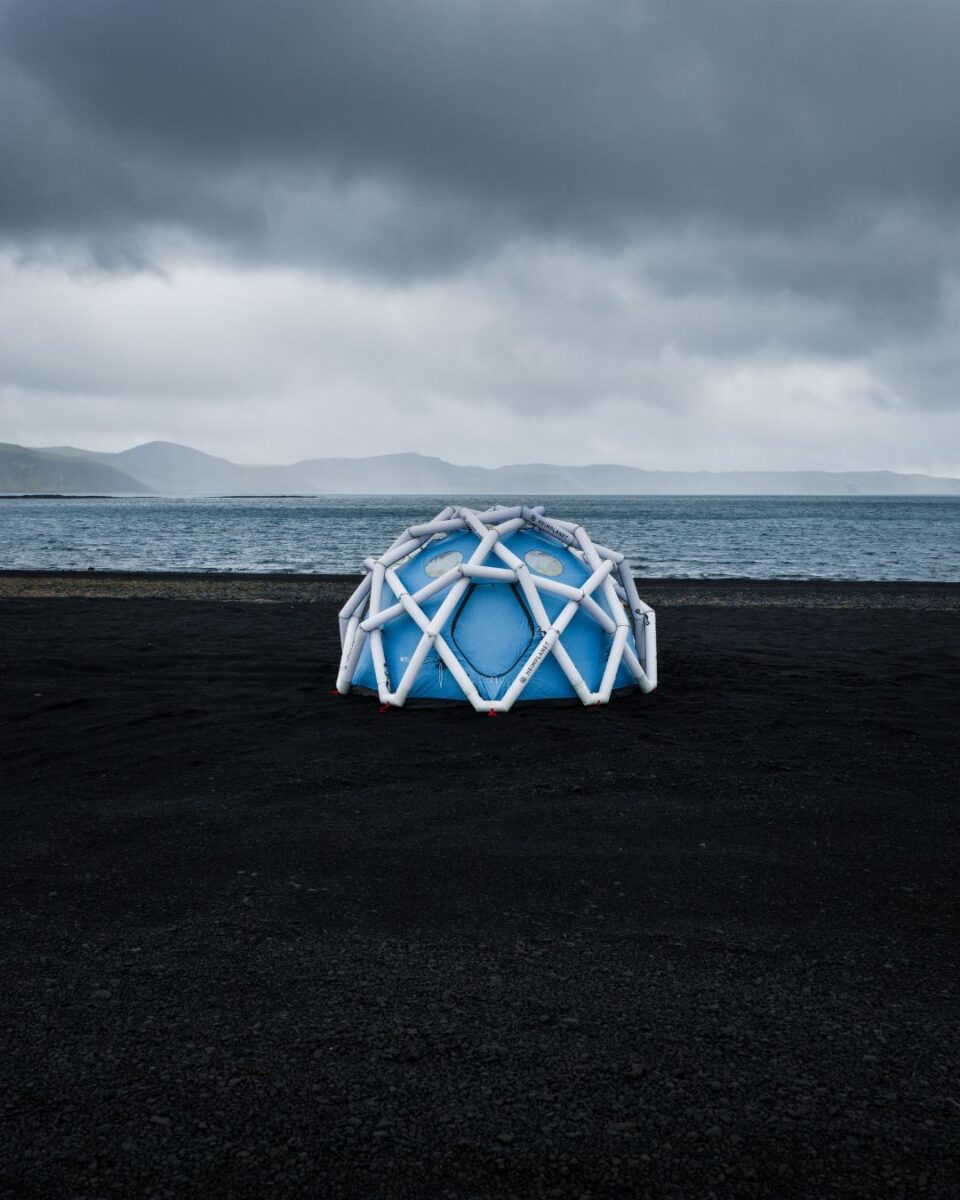
In an increasingly urbanised and hyperconnected world, nature is often seen as a form of escape. Do you agree with this idea, and what role can design play in bringing us closer to the natural world?
Stefan Clauss:
“I don’t think people are really trying to escape. I think they’re looking for something. At HEIMPLANET, we truly believe that nature answers one of the most fundamental human needs: the feeling of belonging to a larger system. We find that in our families, our friends, our colleagues. But we can also find it in nature. It’s the sense that there is something greater than you, and that you’re part of it. Most of us spend our days in environments that are fully controlled: temperature, light, noise, even what information reaches us. In that kind of world, you’re always at the centre, and paradoxically that can feel quite lonely. Nature is one of the few places left where you’re not the centre. The weather decides, the terrain decides. That’s humbling, and it’s also deeply reassuring, because suddenly you’re part of something again.”
Design’s role is to lower the threshold without removing the experience. If setting up camp takes an hour and ends in an argument, many people simply won’t go. If it takes a minute, you have more time for what you actually came for. Good outdoor design should almost disappear. It should get you out there and then get out of the way.”
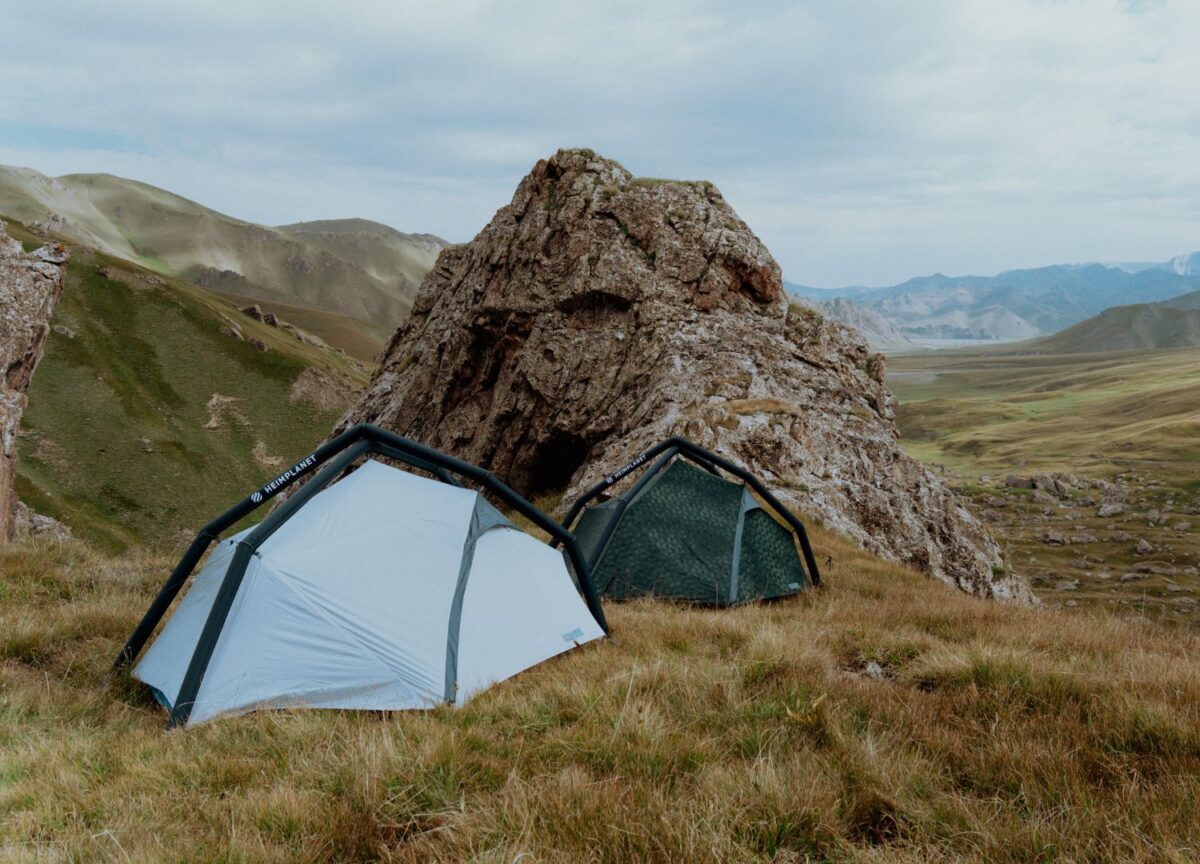
HEIMPLANET was born from a very simple frustration during a surfing trip in Portugal. Looking back at that initial intuition, do you think the most meaningful innovations often come from questioning everyday objects and habits that we tend to take for granted?
Stefan Clauss:
“Very often, yes. The tent is one of the oldest objects humans have, and for a long time nobody seriously questioned its basic principle of poles, fabric and tension. On that trip in Portugal, we had to set up camp in a storm and after nightfall while grappling with numerous individual tent parts. So the question was simply: why does it have to work like this? Starting from a frustration helps because you’re not inventing a problem to fit a technology. You feel the problem in your own body first. But questioning is only the first step. Between “there must be a better way” and The Cave, the world’s first inflatable tent, there were years of prototypes that didn’t work. The idea is cheap. The persistence is what counts.
The name HEIMPLANET was inspired by the concept of Spaceship Earth we came across while reading about the work of Buckminster Fuller.”
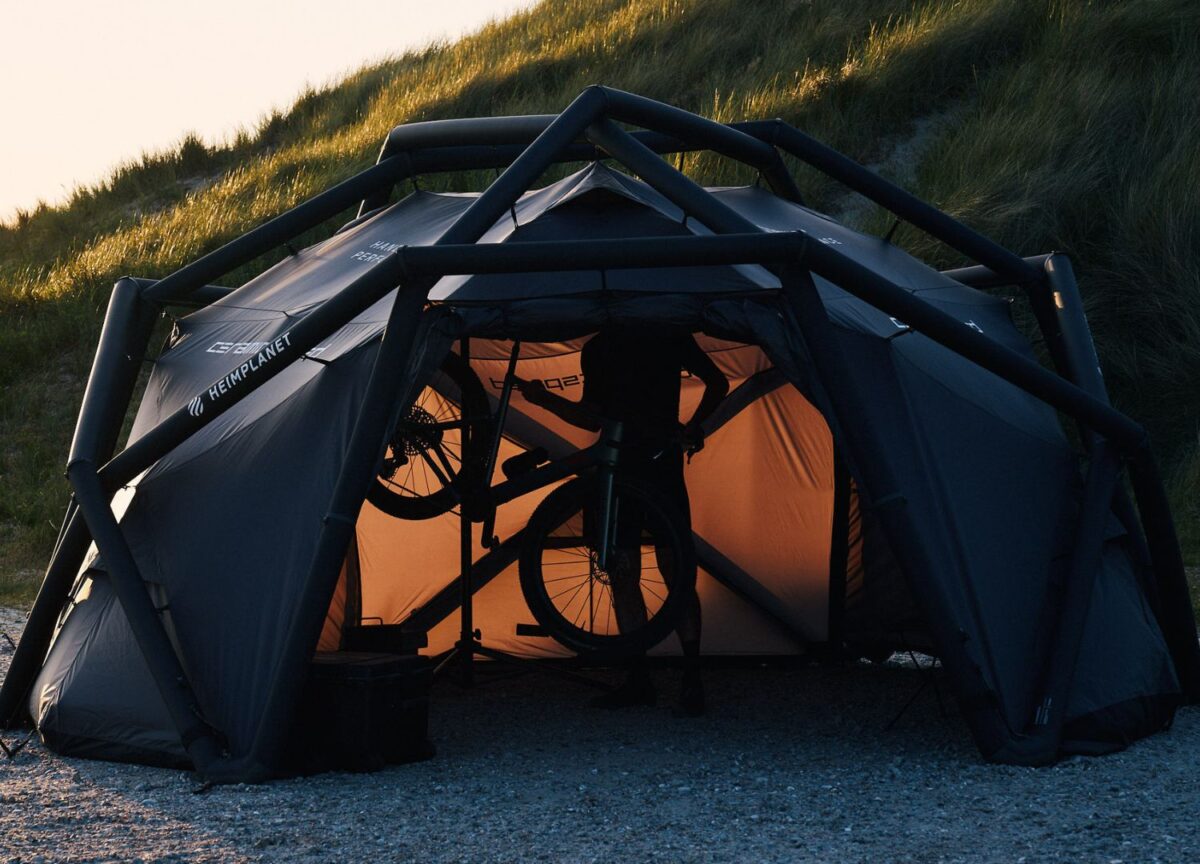
The name HEIMPLANET refers to the German concept of Heimat, a sense of home and belonging. In a world increasingly characterised by mobility and temporary experiences, how has your understanding of what makes a place feel like home evolved?
Stefan Clauss:
“When we started, I thought of home more as a place to return to. A familiar space to take into the unknown. Today I’d say home is less a location and more a condition. It’s the feeling of being at ease, safe enough to relax and pay attention to where you are.
A big part of that feeling comes from familiarity. When your gear is well designed, it becomes intuitive. You know how your backpack opens without looking, you know which pocket holds your headlamp, you know your jacket will keep you warm when the temperature drops. You stop thinking about your equipment, and that frees you to be present. Familiar objects carry a sense of home with you, wherever you are. A tent is simply the most literal version of that idea. It’s the feeling of home, materialised. When the wind picks up at night and you trust the structure around you, you sleep. In the morning you’re present for the landscape instead of exhausted by it. For a few hours, a few square metres on a mountain become your home.
The “planet” part of the name matters just as much. If home can be anywhere, then the whole planet becomes something you have a responsibility for. The name HEIMPLANET was inspired by the concept of Spaceship Earth we came across while reading about the work of Buckminster Fuller.”
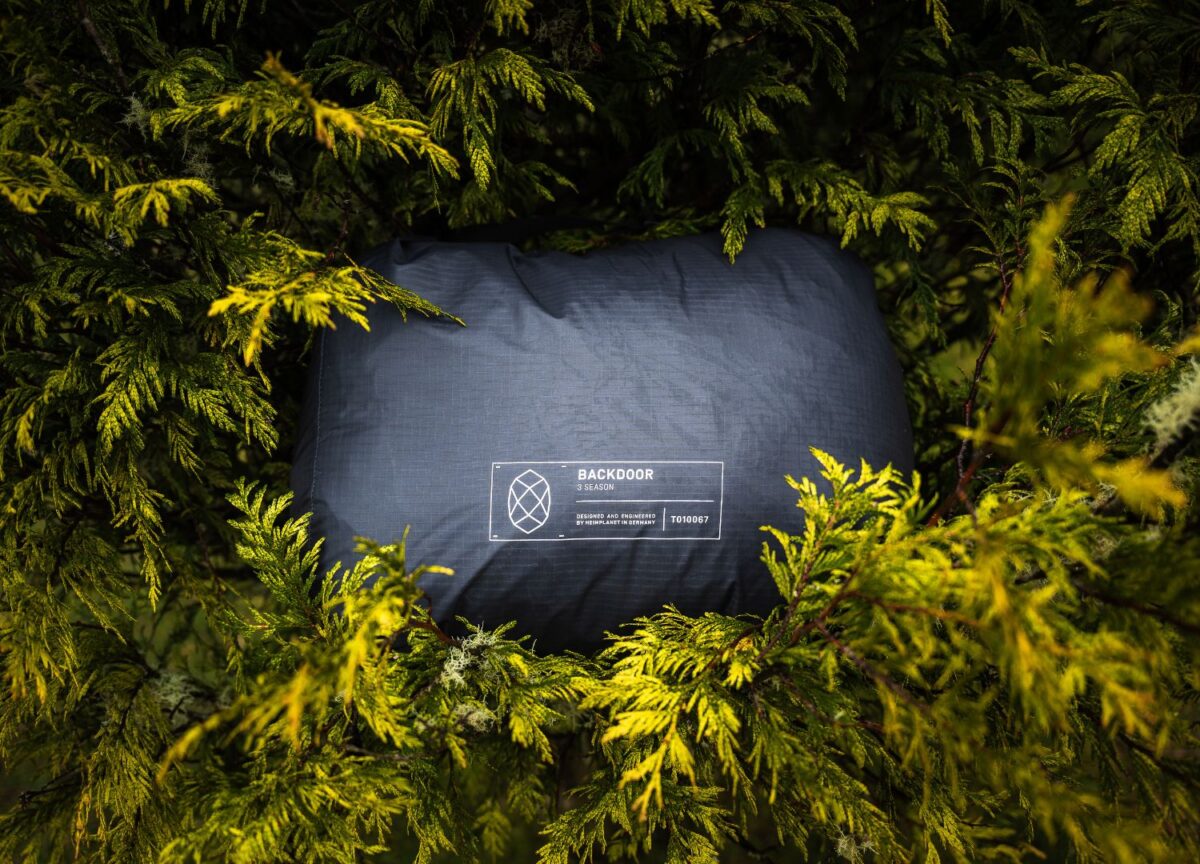
Your inflatable tents have a distinctly architectural identity, recalling geodesic structures and the experiments of Buckminster Fuller. Do you see HEIMPLANET’s products primarily as outdoor equipment, or as a new form of temporary, portable architecture?
Stefan Clauss:
“Both, and I don’t think you have to choose. What we build is outdoor equipment. It has to work in a storm on a mountain and it has to be portable so it allows you to move freely without limitations. But I’d call it portable architecture, because we think about it the way an architect would: proportion, light, how it feels to sit inside, and how it relates to the landscape around it. And this is actually where we started out. Geodesic structures, and Buckminster Fuller’s thinking in particular, were a big influence on us. He showed that maximum strength can come from minimum material when geometry does the work. Our inflatable frame follows the same idea: air replaces poles, and the geometry carries the load. Pressure is distributed across the whole structure, so even if one chamber fails, the shelter stays up.”
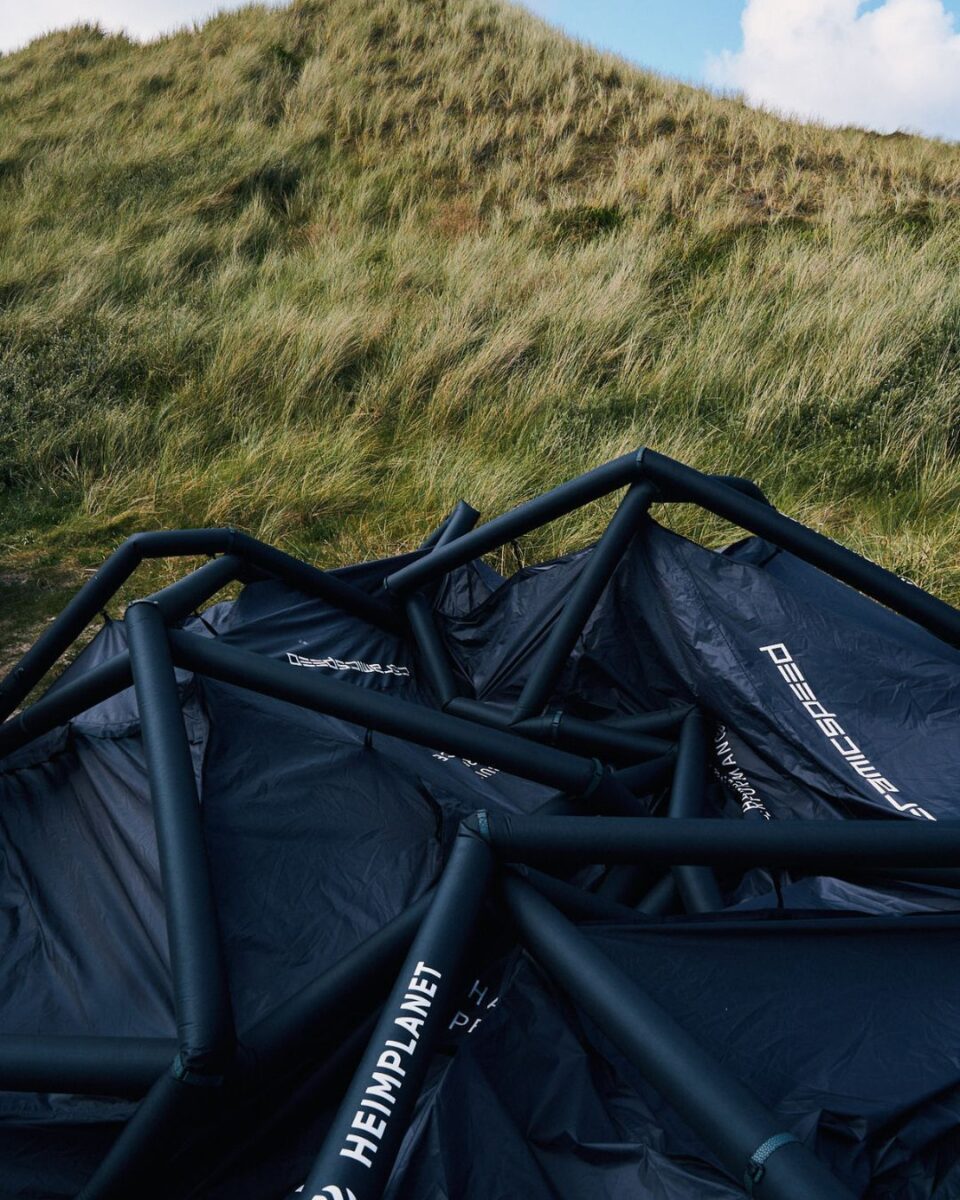
One of the most interesting aspects of HEIMPLANET is how engineering becomes an aesthetic language. How do you navigate the relationship between technical performance and visual identity? Can beauty emerge naturally from solving a functional problem?
Stefan Clauss:
“I believe that function has an aesthetic quality and we are trying to figure out this relationship with every product we work on. In practice that means we don’t add anything that has no reason to be there. Every seam, chamber and angle has a structural job. When you take away everything unnecessary, what’s left has a clarity that people read as beauty. In a way, the aesthetic is just honesty: you can see how the tent works by looking at it. Bucky once said: „When I am working on a problem, I never think about beauty, but when I have finished, if the solution is not beautiful, I know it is wrong.“
Of course there are decisions where the engineering leaves you freedom, but design never overrides performance. If a detail looks good and makes the product weaker, it goes. So yes, I believe beauty can come naturally from solving a functional problem. You see it in nature everywhere, in a honeycomb or the shape of a shell: forms that are efficient because they had to be, and beautiful because of it. That’s what we are aiming for.
What’s changing is that permanence and mobility no longer feel like opposites. People combine them.”
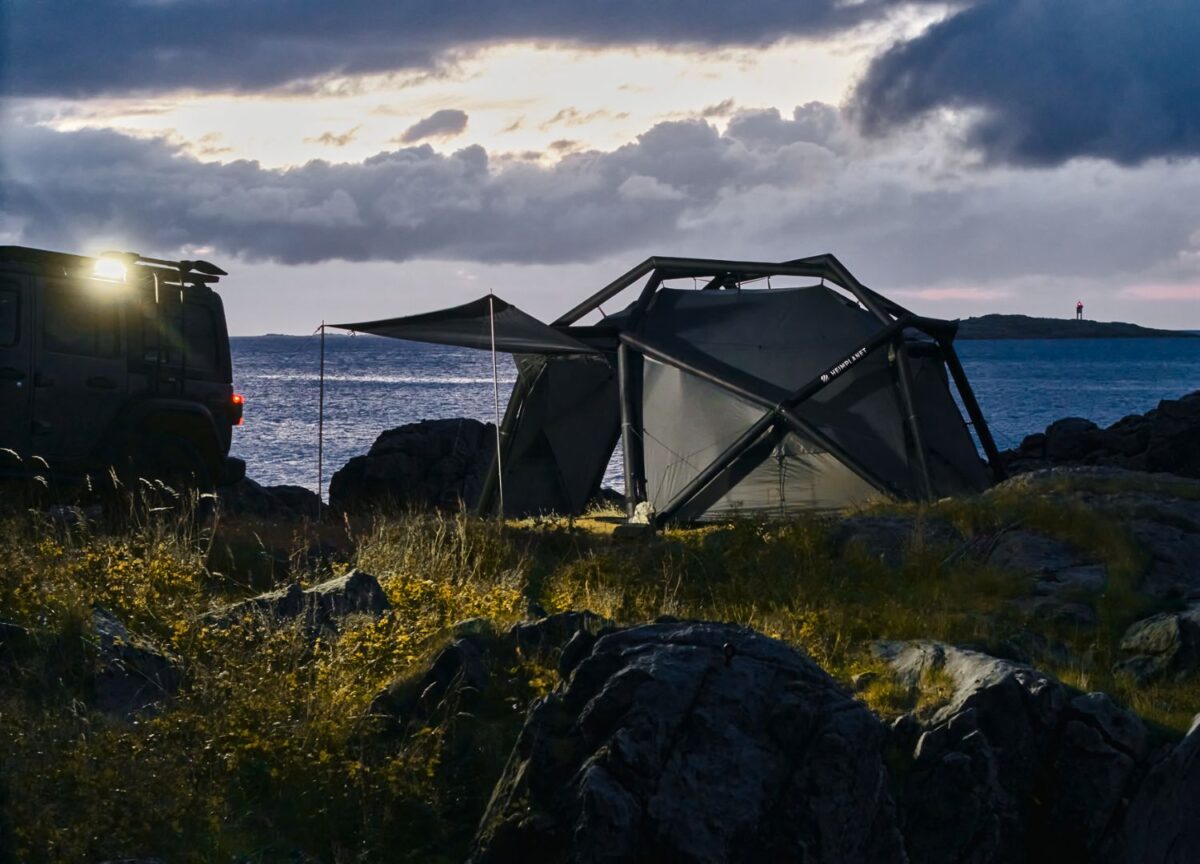
Contemporary design is increasingly questioning traditional ideas of permanence. We are seeing the emergence of mobile homes, modular architecture and temporary spaces. Do you think the future of living will become more flexible and nomadic, and what can the outdoor industry teach architecture about adaptability?
Stefan Clauss:
“I think living will become more flexible for many people, and technology is making that possible. At the same time, I believe most people still need roots. What’s changing is that permanence and mobility no longer feel like opposites. People combine them. Our name says it: a bit of home (HEIM) to take with you, something familiar to carry into the unknown (PLANET). What I do think our industry can teach is indeed adaptability. Well-designed outdoor gear lets you adapt to almost any situation. That flexibility turns into security, and we believe feeling secure is what matters most.”
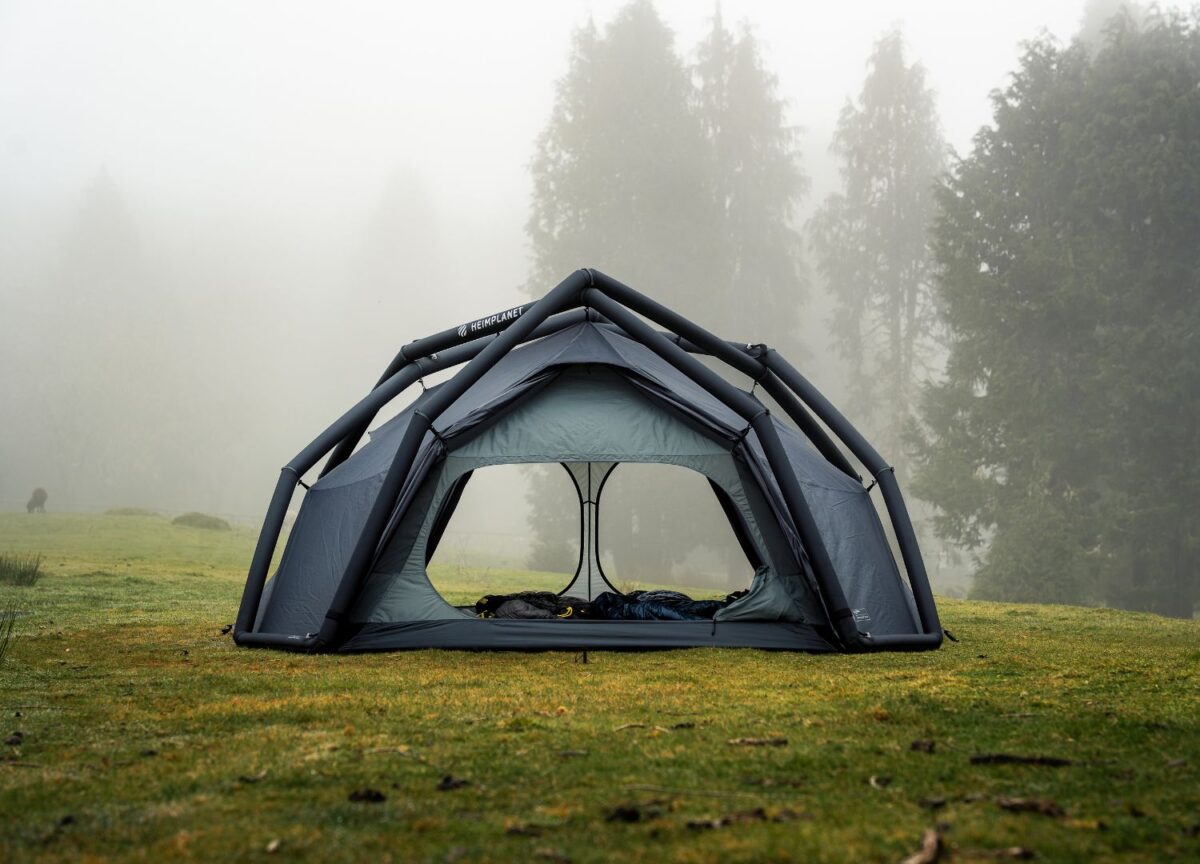
Sustainability is particularly complex for outdoor brands, which depend on technical materials while encouraging a deeper appreciation of nature. Through initiatives such as Re-Store and lifetime product support, how do you approach the tension between developing new products and encouraging people to consume less?
Stefan Clauss:
“There’s a real tension here, and I don’t think any outdoor brand should pretend otherwise. We make products from technical materials, and making anything has an impact. For us the honest answer isn’t to claim we’re sustainable. It’s to make sure every product we make is used as long as possible.
That starts with design. It’s why we choose sturdier over lighter, design components to be repaired, and think about the whole life of a product. The most sustainable tent is the one you’re still using in fifteen years. Lifetime product support and Re-Store build on that. If something breaks, we want to fix it, not replace it. And when a product is no longer right for its first owner, Re-Store gives it a second life with someone else instead of leaving it unused in a basement. Both change our relationship with customers: it doesn’t end at the sale, and we’re responsible for what we put into the world.
We still develop new products, but only when we can make something meaningfully better or solve a problem that hasn’t been solved. Not to have something new every season. If people buy less from us but keep it longer and love it more, I think that’s a good outcome for them, for nature and in the long run for us as well.
For a long time outdoor culture felt like it was only for experts, people with the right gear, the right skills and the right summit list.”
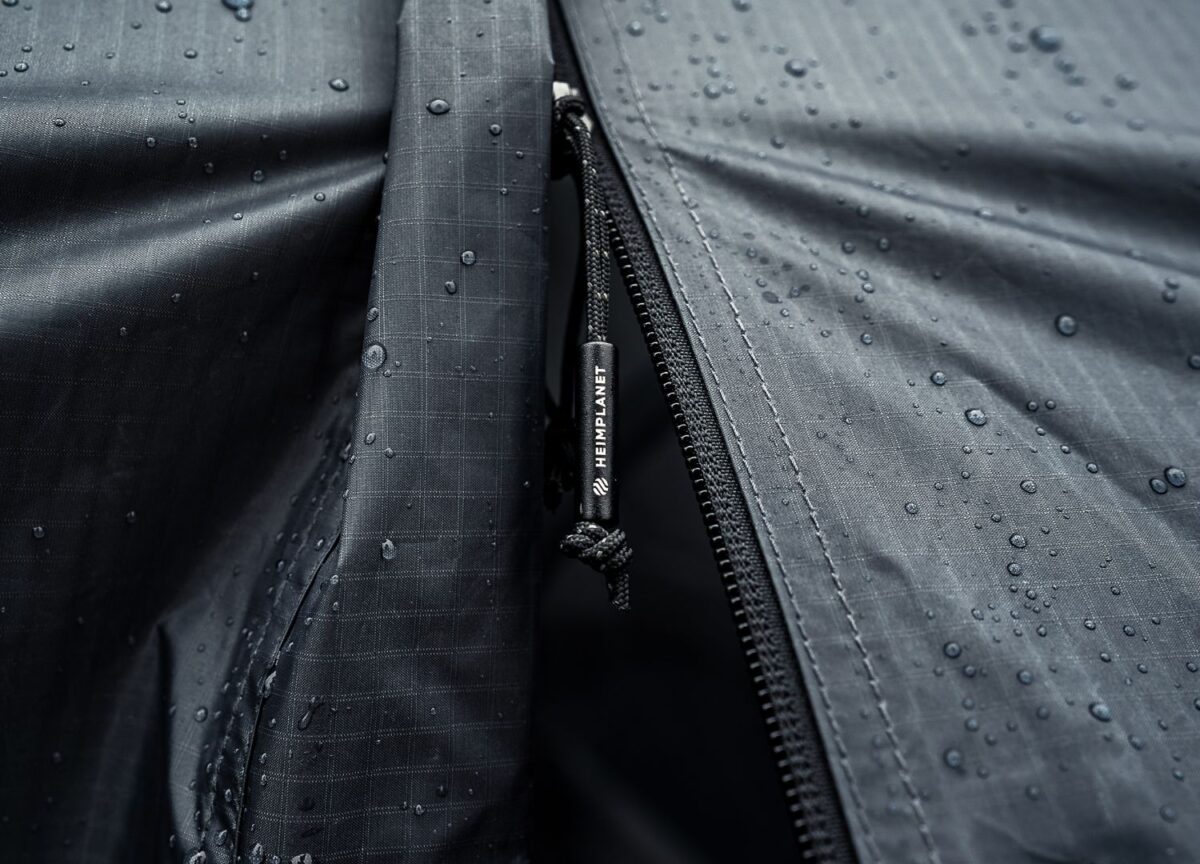
Outdoor culture has evolved significantly in recent years, moving beyond a purely technical or adventure-oriented audience to embrace design, fashion and contemporary lifestyle. Do you see this transformation as an opportunity to make nature more accessible, or is there a risk of turning outdoor experiences into another aesthetic trend?
Stefan Clauss:
“I see both, and I think both are real. The opportunity is there. For a long time outdoor culture felt like it was only for experts, people with the right gear, the right skills and the right summit list. The fact that design and lifestyle are now part of it has made it more accessible. People who would never have called themselves “outdoor people” are going camping, sleeping under the stars or just spending a weekend outside. If good design makes that first step easier, that’s a good thing.
The risk is that nature becomes a backdrop: a jacket that’s never been in the rain, a tent that only exists in photos. Then outdoor becomes a look rather than an experience. In the end a trend can be a good way in. If the aesthetic gets someone outside and the experience makes them stay, then design has done something useful.”
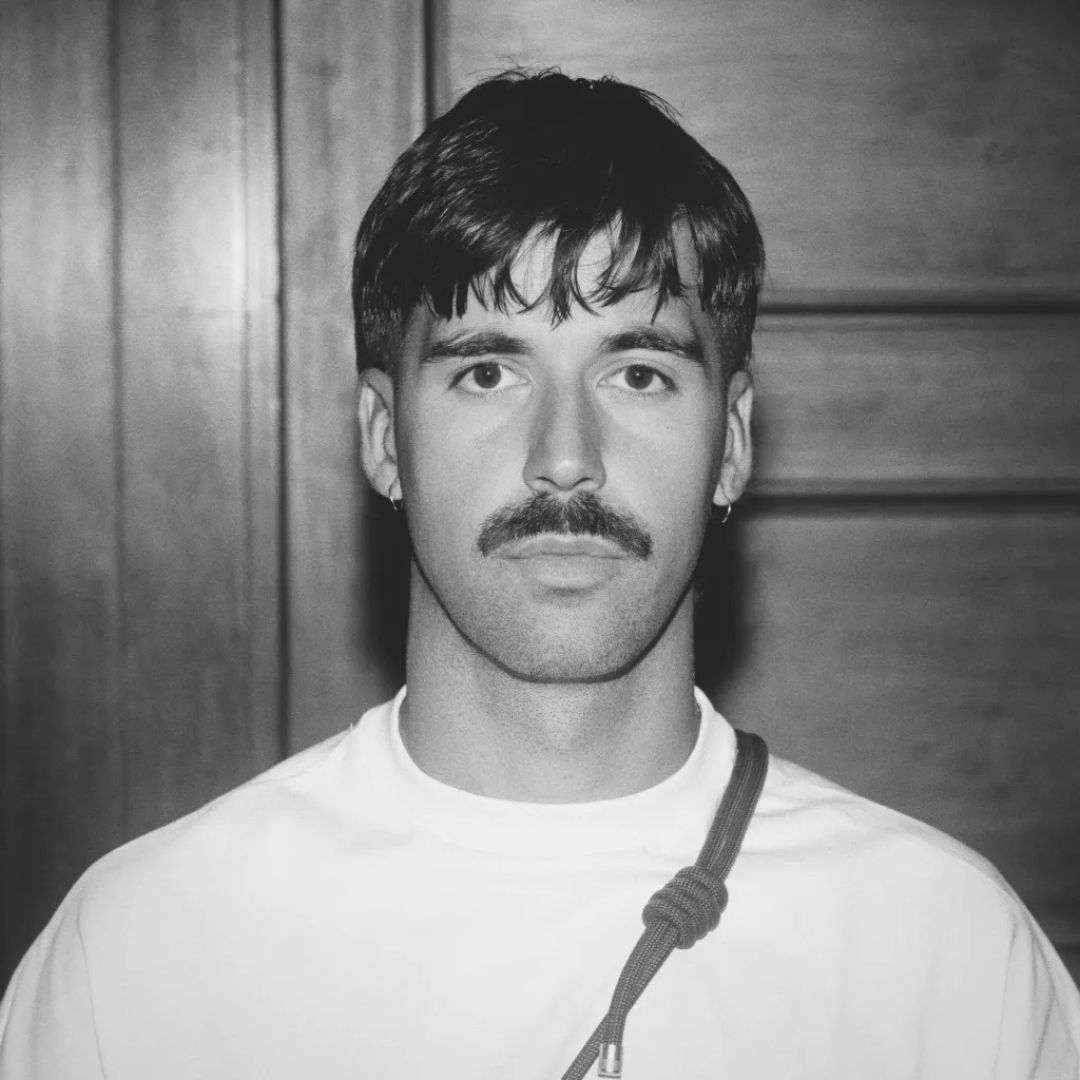
After years spent designing ways to bring people closer to nature, how has your own relationship with the outdoors changed?
Stefan Clauss:
“For me, being outdoors means a radical simplification and a direct confrontation with reality, and for me nature is that reality. It reflects who I am and helps me reflect on myself. In a way it’s a spiritual experience: it grounds me, inspires me and comforts me. That has never changed, and I don’t think it ever will. And it’s how it all started: camping with friends at a lake near my parents’ house, where I grew up and fell in love with being outside.”
Simone Lorusso
Multidisciplinary art director and storyteller crafting contemporary narratives across design, technology, politics and fashion, between Milan and Rotterdam.