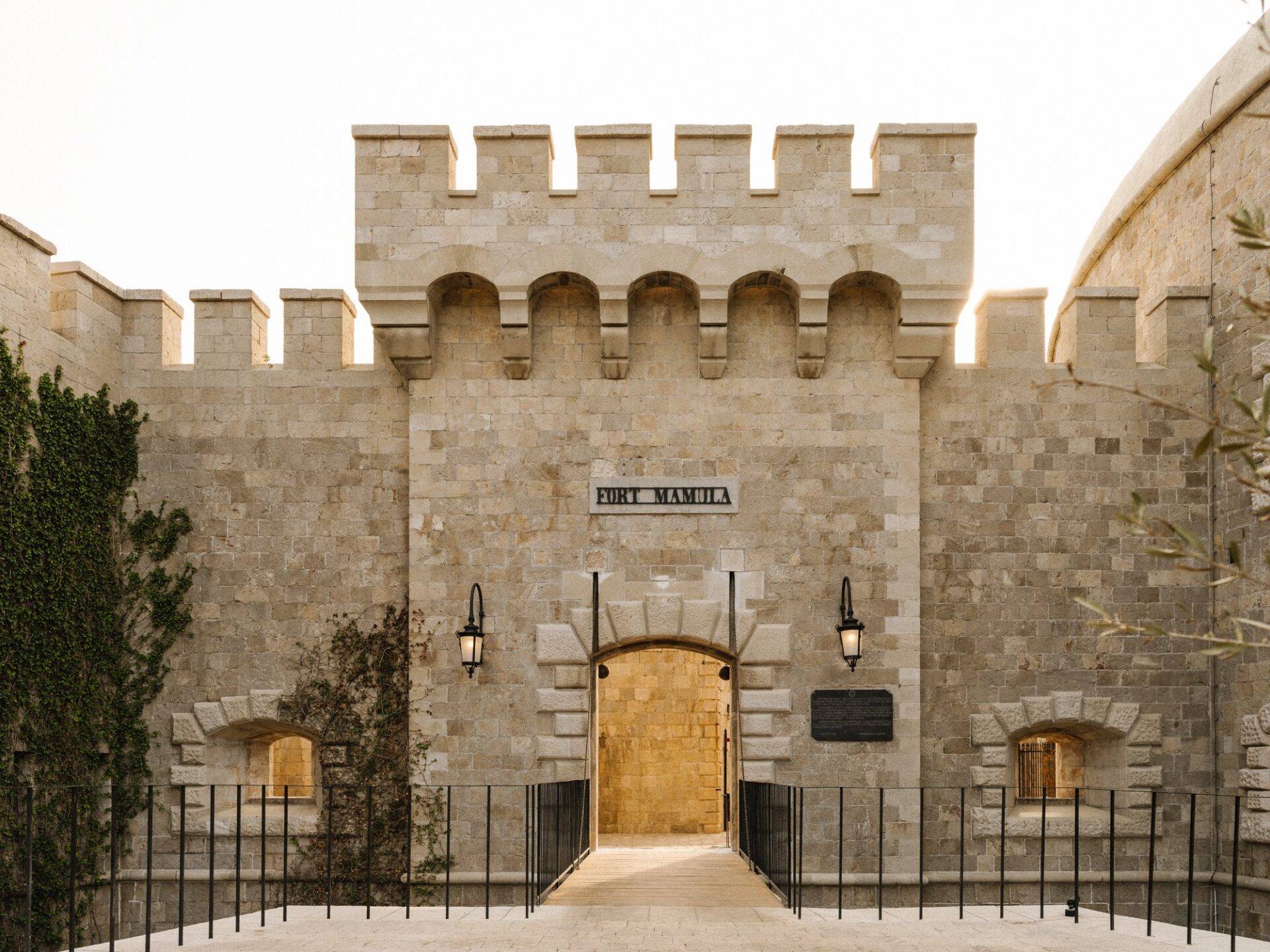
The Mamula Island hotel occupies a 19th-century fort on a small, rocky island at the entrance of Montenegro’s Bay of Kotor. ENFORMA, working with Portugal’s MCM Architecture & Design, has turned the circular fortress into a luxury boutique hotel without erasing its past — treating the monument’s heritage value as the project’s guiding principle.
Mamula Island – Highlights:
A fort, repurposed
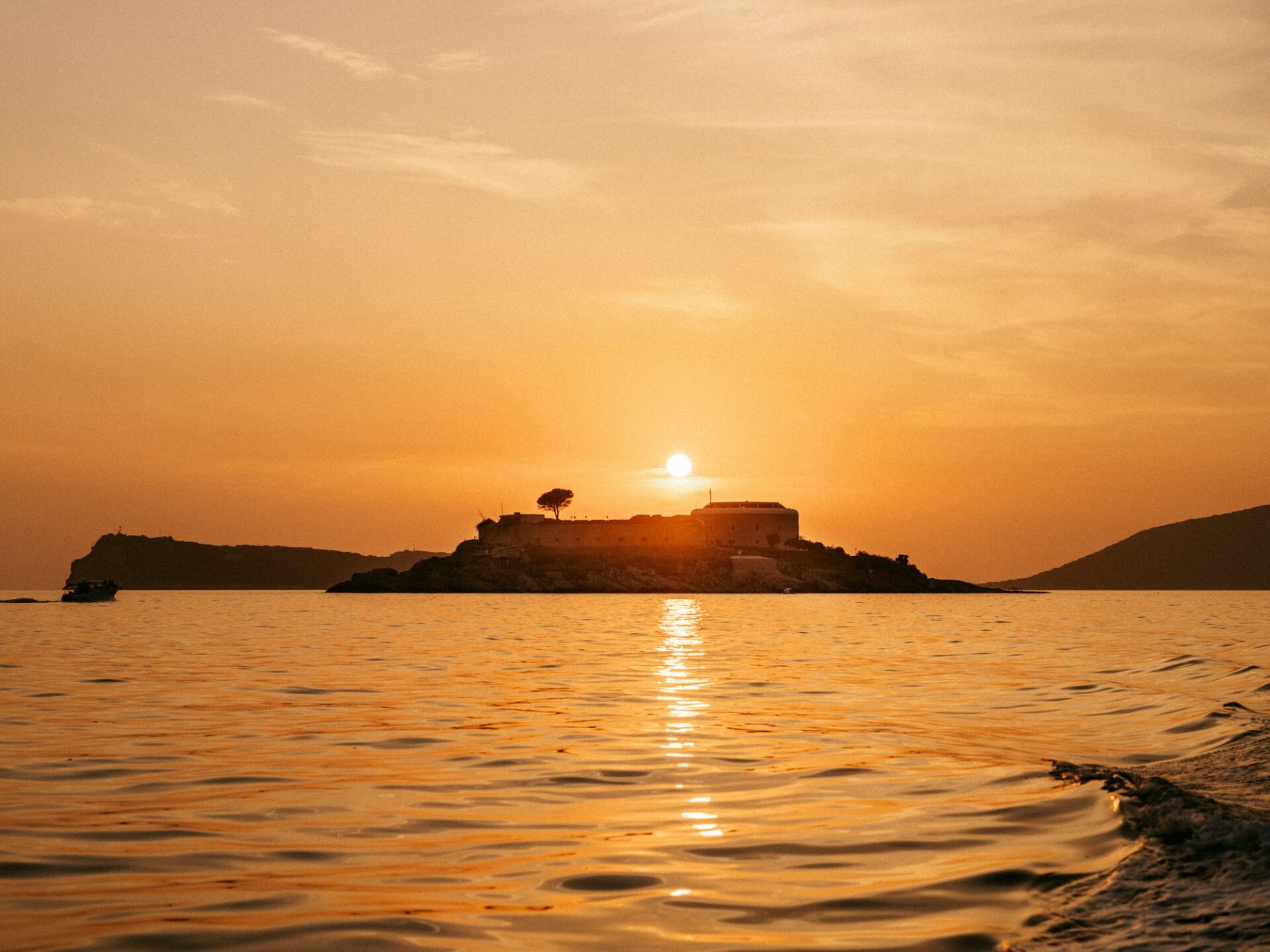
Built in the mid-19th century, Fort Mamula stands on the island of Lastavica, a circular rock some 200 metres across at the very entrance of Boka Kotorska, opposite Herceg Novi and between the Luštica and Prevlaka peninsulas. Once a defensive outpost guarding the mouth of the bay, the fort now frames the same water from a very different purpose.
That setting, and the fort’s value as cultural heritage, shaped the entire brief — the core of the task that the client, Orascom Development, handed to the design team, with the protection of the island and the fort at its centre. ENFORMA took part in the preliminary design alongside MCM Architecture & Design, then assumed the role of leading designer for the main design development of the reconstruction, which completed in 2022. The collaboration paired ENFORMA’s local knowledge with the Portuguese studio’s design direction.
Minimum intervention, reversible
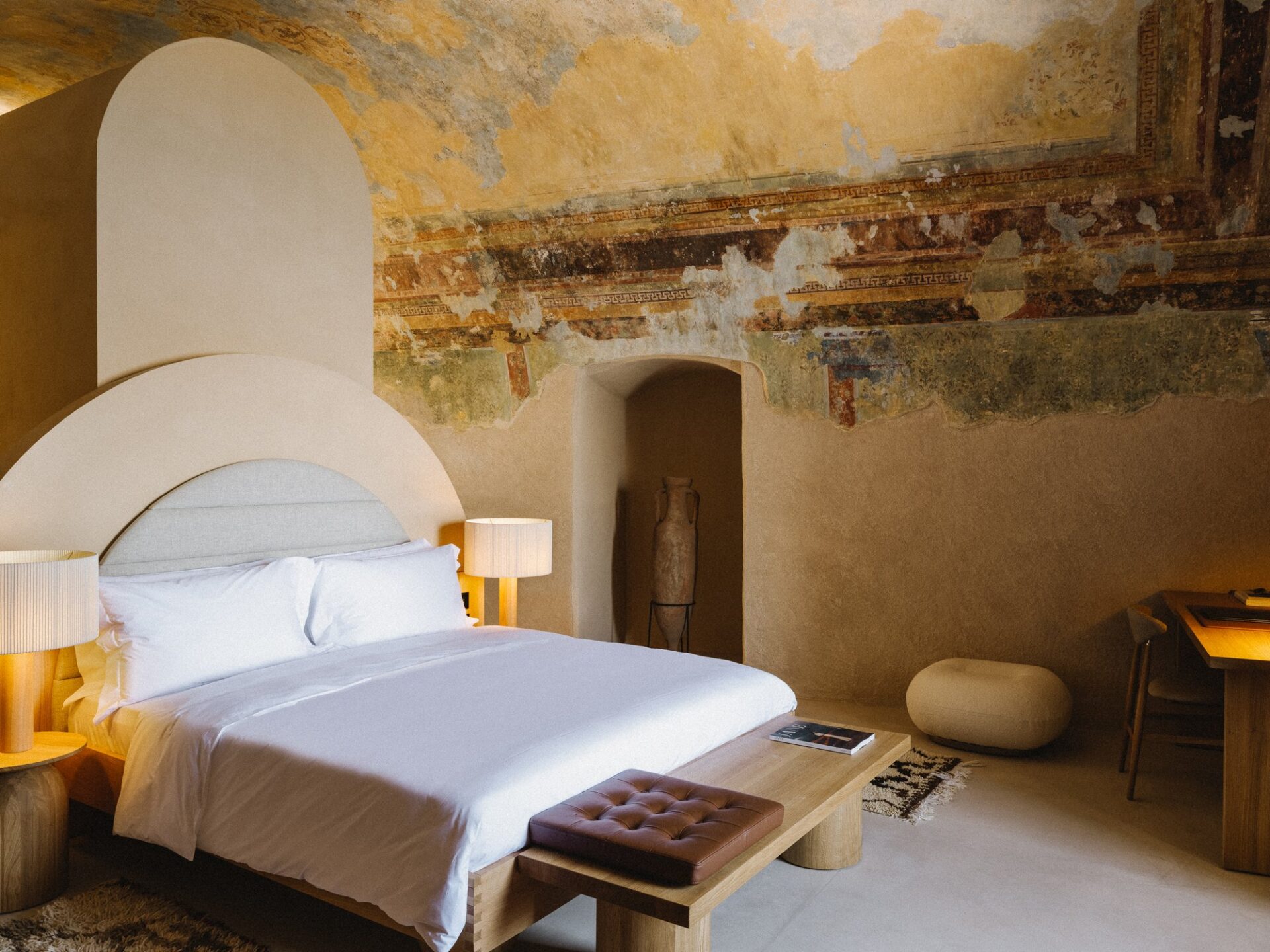
The fort’s complete lack of water and power supply, and the standards of a modern hotel, made new elements unavoidable. But they were reduced to a minimum, and rather than mimic the historic stone, the additions are clearly presented in space: simple forms in modern materials, light structures and green roofs that minimise their impact on the visual experience of the landscape.
The authenticity of the fort and its landscape values are protected, while the new structures stay deliberately distinct. The reconstruction is conceived as reversible — the added elements can be removed to return the fort to its previous condition. Minimum intervention and the preservation of authenticity governed both the design and the construction, which ENFORMA followed through continuously. It is an approach that treats conservation and contemporary use not as opposites, but as layers of the same place.
A hotel on the island
The result is a boutique hotel where stone courtyards, arched openings and sea views meet the amenities of contemporary hospitality. Pools, terraces and guestrooms sit against the aged limestone of the fort, while the surrounding water and the distant peninsulas frame every outlook. New additions read as contemporary — clean, light and clearly of their time — rather than as attempts to pass for the original stone. The fort’s thick walls and narrow passages give the interiors a quiet, protective quality that no new-build could reproduce.
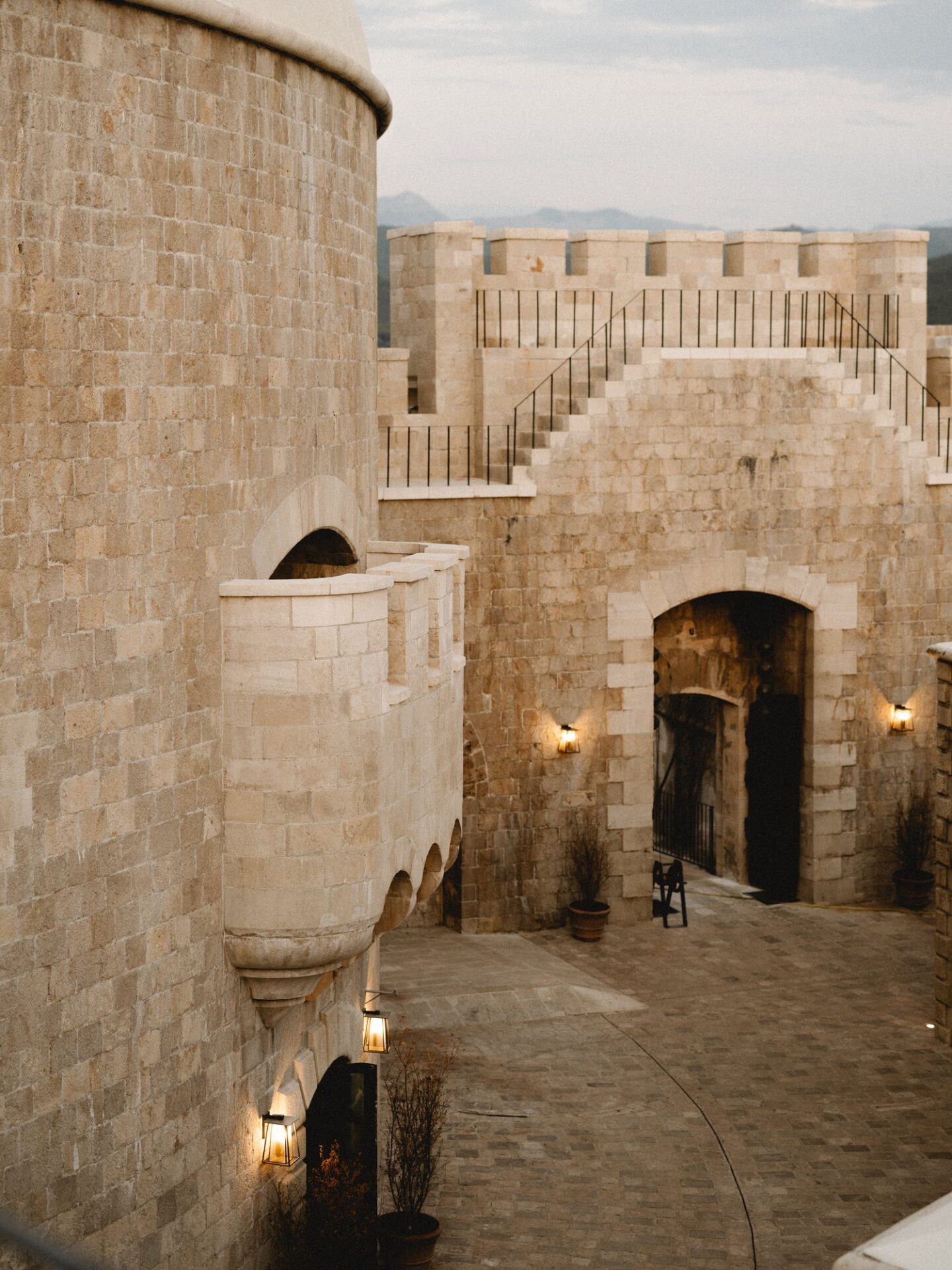
It is a careful balance: a heritage monument kept legible, and a high-end destination woven into it. The island’s history is preserved, and its future as a hotel is quietly added on top — reversible by design, so the fort could one day stand exactly as it did before. For ENFORMA, the project reads as a study in restraint: a monument treated as the protagonist, with architecture asked to serve rather than compete.

Editorial Team
Do you have a story to share? Feel free to reach us out and submit your design and inspiration, we are always looking for interesting design ideas!