Where is contemporary African design going?
The inaugural Africa International Design Awards crowned its first winners in 2026, showing the styles, directions, and perspectives the continent is taking on.

The Africa International Design Awards (AIDA) just announced the winners of its first-ever edition, closing a submissions cycle that pulled in more than 300 entries. A jury of 41 members, chaired by Senegalese industrial designer Bibi Seck, reviewed the work across four disciplines: Spatial Design, Product Design, Fashion Design, and Communication Design.
The fact that an awards body dedicated specifically to African design has taken this long to exist, and that its first outing drew in such a volume of work, says something about a gap in the industry that has mostly been ignored. Let’s see what it has to say.
Gallery
Open full width







Open full width
Africa International Design Awards 2026:
Why local awards matter
The infrastructure of design awards was built almost entirely in postwar Europe, with the purpose of rebuilding industrial export economies. The biggest contemporary awards are still mostly based in Germany, and while they are genuinely international in volume, they remain largely Eurocentric. “International” in this context has always meant open to the world, but run from Europe, and most importantly, judged by Europe.
What then happens in such a system is that when a culturally diverse proposal is submitted, the jury often lacks the knowledge or reference points to understand it fully compared to other entries, therefore creating a disadvantage. A jury’s default assumptions about what constitutes innovation, style, or sustainability are inherently shaped by where its members trained and what they’ve been taught to recognise as “good design.” Being eligible for a universal prize and being addressed by a prize built around your own reference points are not the same experience, as an African designer’s lineage and key references are often not treated as pillars but exotic footnotes.
We racked up four highlights from AIDA’s Product Design category winners: projects that explore cultural archetypes, artisanal making, material design and more in a contemporary key.
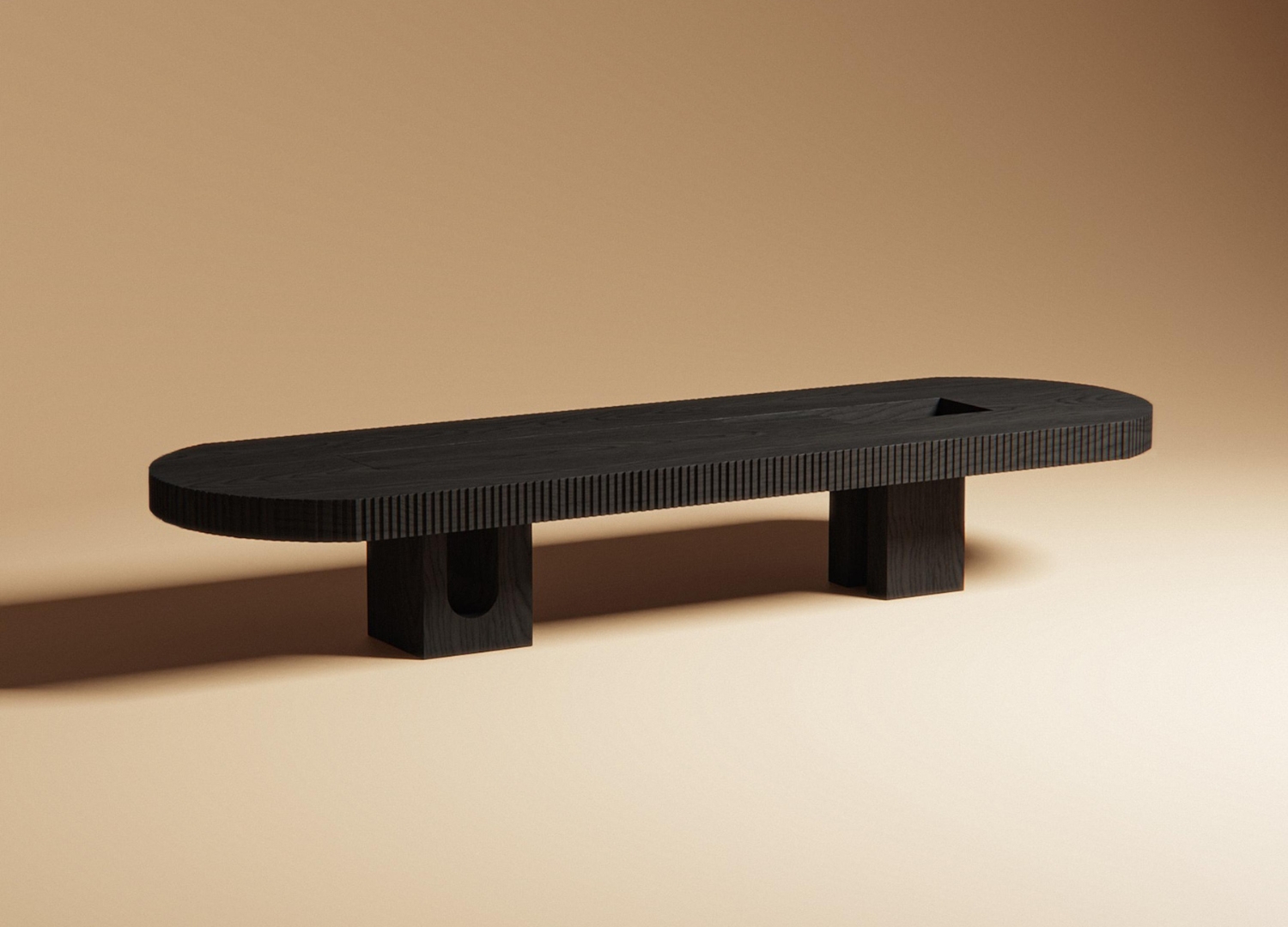
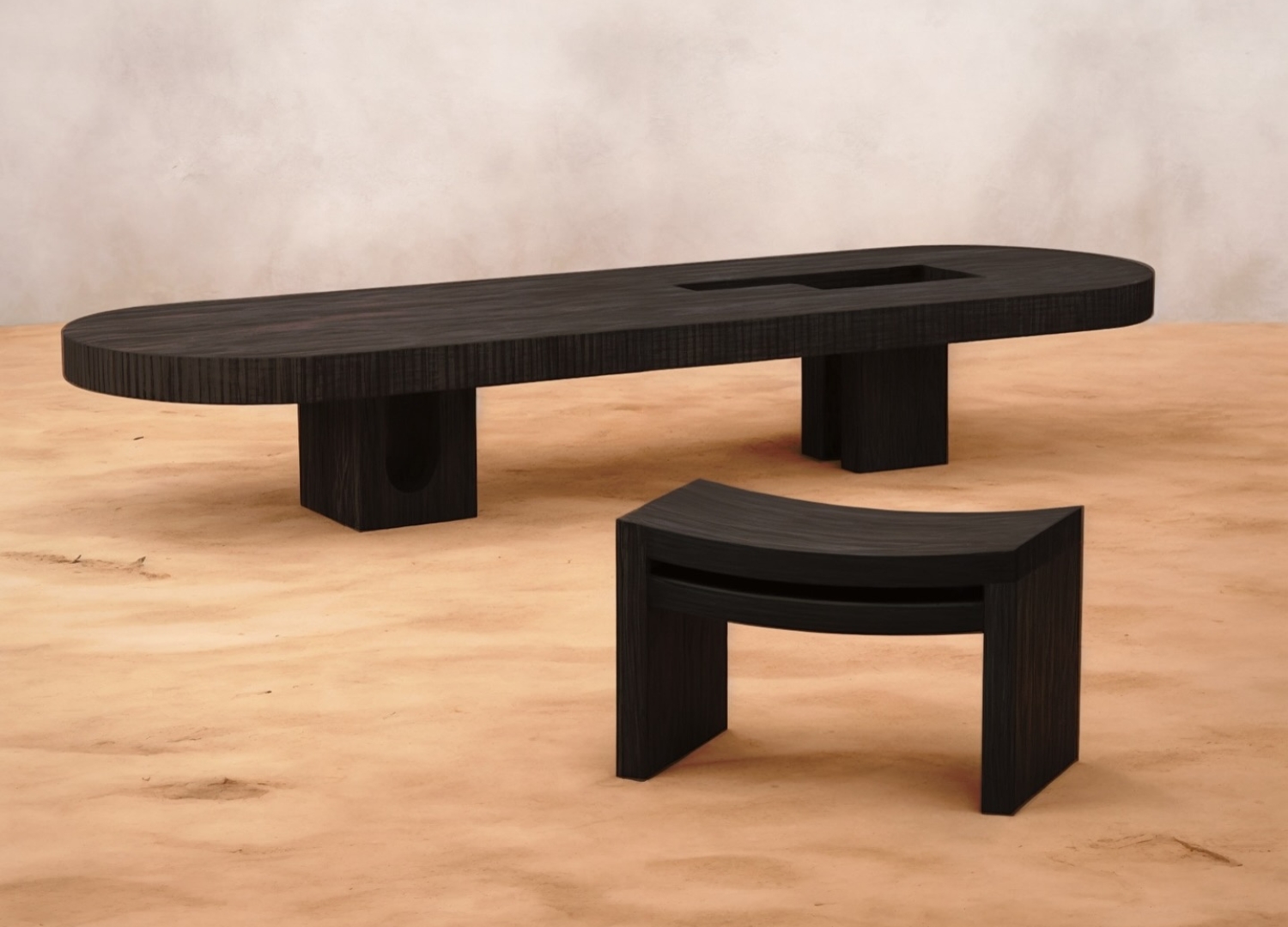
Kabila Collection by Terry Aidoo
Terry Aidoo took the Product Designer of the Year title with the Kabila Collection, a furniture series built around a coffee table and a single stool. Aidoo drew the collection’s circular logic from the African home courtyard, the communal space where a household’s social life usually happened. “Kabila” means tribe or community, and it becomes the collection’s operating idea as much as its name. The stool is deliberately singular, one seat meant to carry the symbolic weight of a whole circle of people.
Each component is CNC-engineered, then hand finished and sculpted so that the joint between machine and craft disappears, giving the impression that each volume was carved from a single block. The material is sapele wood sourced from Nigeria and finished in Italian workshops, which Aidoo frames as a cross-cultural exchange.
SOMO Solar Lighting System by Sonnenglas®
SOMO began as a response to energy poverty: a swappable, solar and USB-C rechargeable light module built to replace kerosene lamps in communities without reliable grid access. It holds up to 100 hours of light per charge, but beyond the tech specifics, what separates it is also where and how it’s made.
Every unit is assembled in a Fair Trade-certified factory in Lorentzville, Johannesburg, a district chosen specifically because of its high unemployment rate, with a starting wage set at more than double the local minimum. The factory itself runs on 90% solar power, generated by 105 rooftop panels. It’s a rare example of a product where the sustainability story, the labour story, and the design story all align: dignified jobs producing clean light for communities facing struggle.
WAYST Pendant 01 by Alkaline
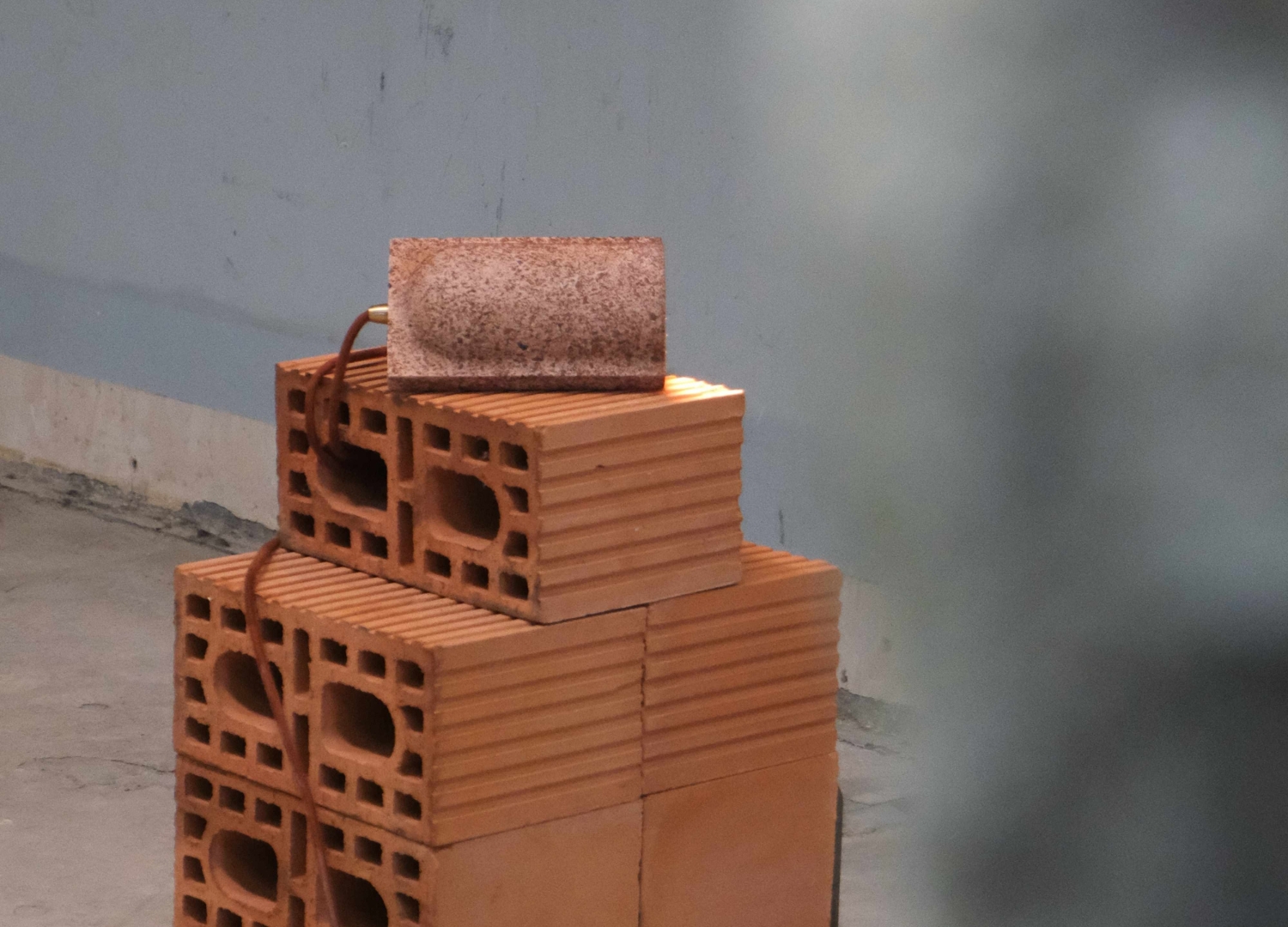
Made in Howick, in South Africa’s KwaZulu-Natal Midlands, WAYST Pendant 01 turns demolition waste into a lighting design. Alkaline‘s process crushes discarded brick into an aggregate, binds it into a terrazzo-like composite, and casts it into a pendant form whose proportions are taken directly from a standard brick, reduced to its most essential geometry.
The execution leans on a hybrid workflow: digital modelling and additive manufacturing establish the form, precise moulds allow the composite to be cast accurately, and a chemical process exposes the embedded brick fragments to keep the material’s origin visible. The waste then becomes an aesthetic characteristic of the object itself instead of being polished away.
IO Stool by Homenkà
The IO Stool opens with a direct challenge to a canonical design theory text, Adolf Loos’ 1910 lecture “Ornament and Crime,” which equated cultural progress with removing ornament from everyday objects. Zoë Chinonso Ene, the designer and Homenkà’s founder, argues that Loos’ claim is culturally limited rather than universal, as in some design traditions, such as in her Nigerian lineage, ornament carries encoded meaning and is not just a surplus.
The stool’s response is to build ornament back into the object’s structure instead of its surface: its rolled steel body bends around triangular gaps that reproduce isi oji, a motif from Uli, the graphical and body-painting language historically used by Igbo women in Nigeria to record status, spiritual belief, and communal knowledge. Homenkà pushes the work further by repurposing the steel cutouts to create marking tools for fabric work used elsewhere in the studio’s practice, closing the loop.