ReFrame by Becca Panter: a wardrobe designed to move with you
A Nottingham Trent graduate project treats furniture’s afterlife as a design brief, creating a wardrobe specifically for transitory living.
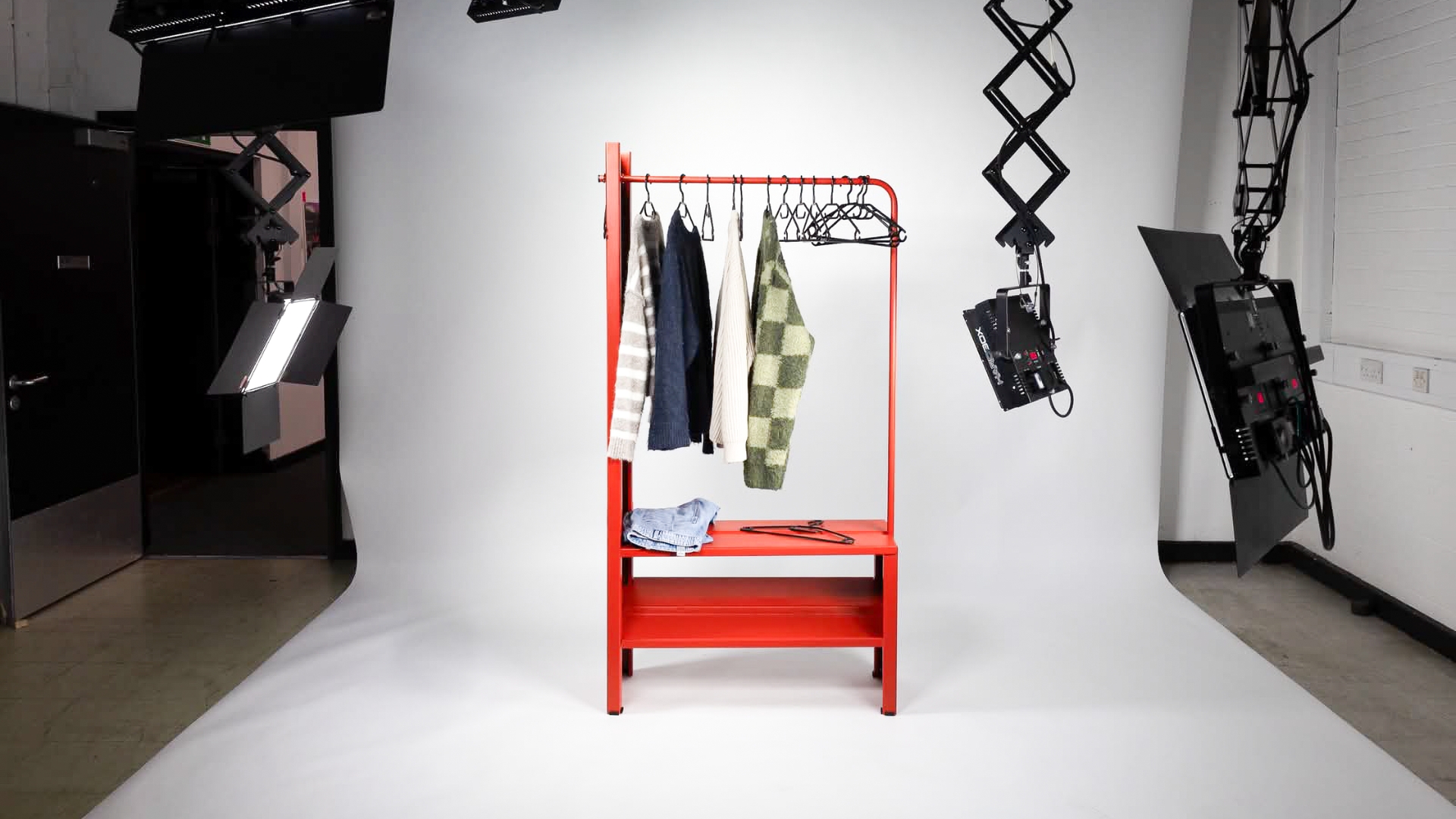
Every September, student wardrobes get dragged to the curb. Cheap flat-pack furniture, bought for a single tenancy, rarely survives being taken apart once, as the chipboard delaminates at the fixings, joints don’t hold anymore, and it all ends up in a landfill after a move or two. Becca Panter’s ReFrame, developed for her Furniture and Product Design degree at Nottingham Trent University, is a wardrobe designed to be dismantled, resold, and reassembled repeatedly.
The project began with a brief set jointly by Habitat and Vinted, asking students to rethink small-space living. Panter grounded her project in direct research, interrogating 32 students about their wardrobes. What came back was a complaint about logic, as they were described as too heavy to move, too closed off, too bulky and permanent for a situation that is, by definition, temporary.
Gallery
Open full width
Open full width
ReFrame by Becca Panter:
The frame
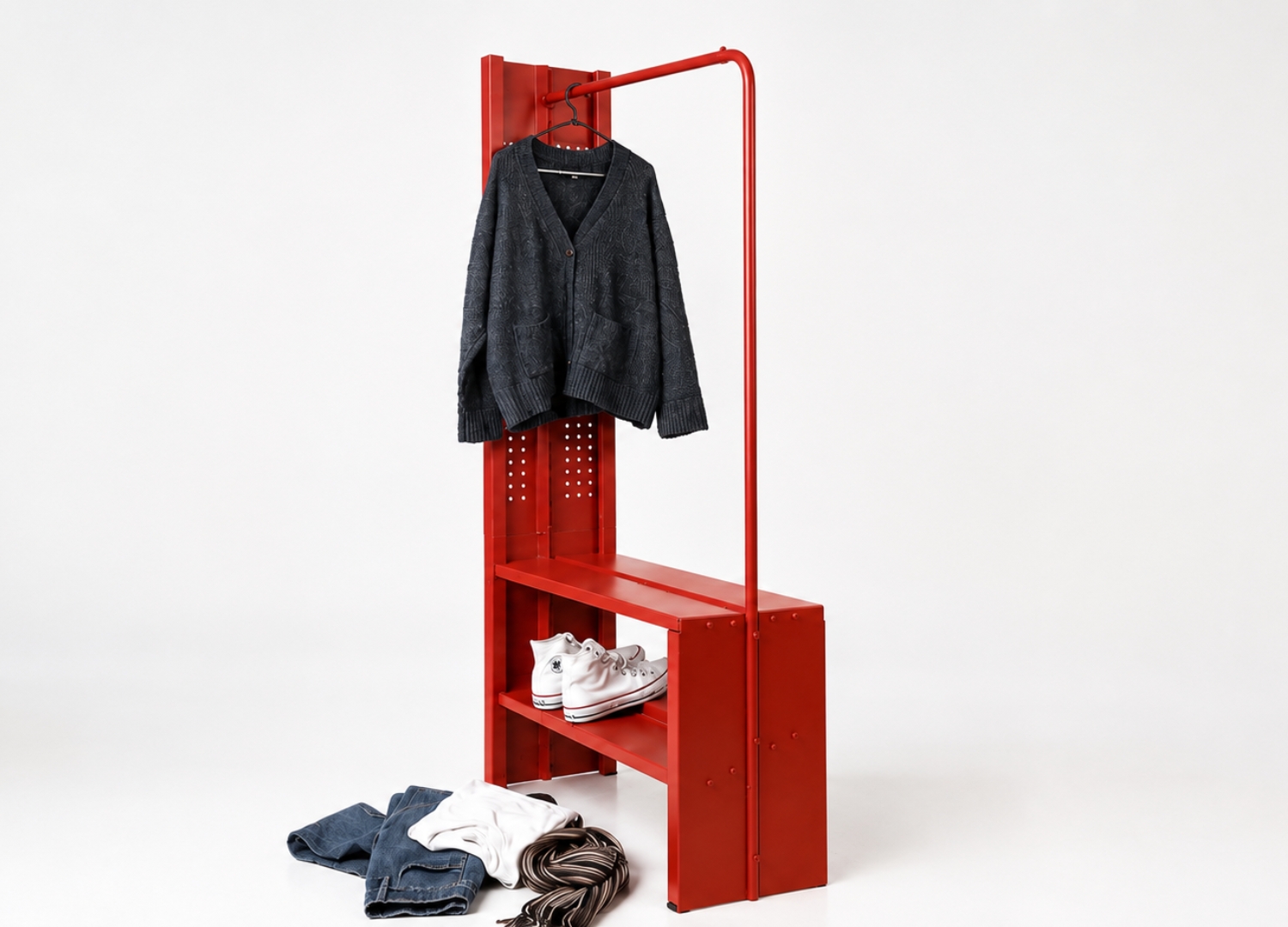
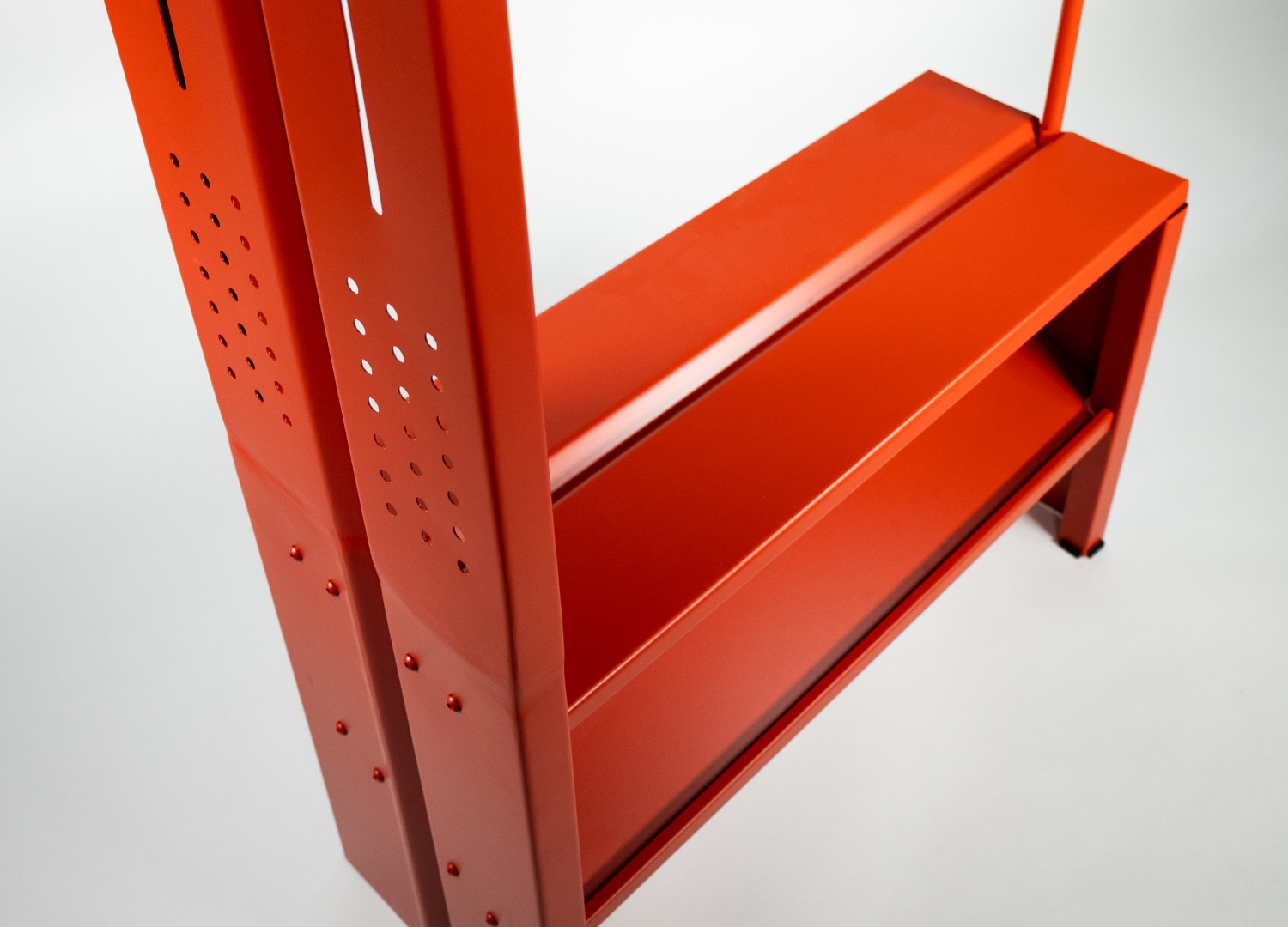
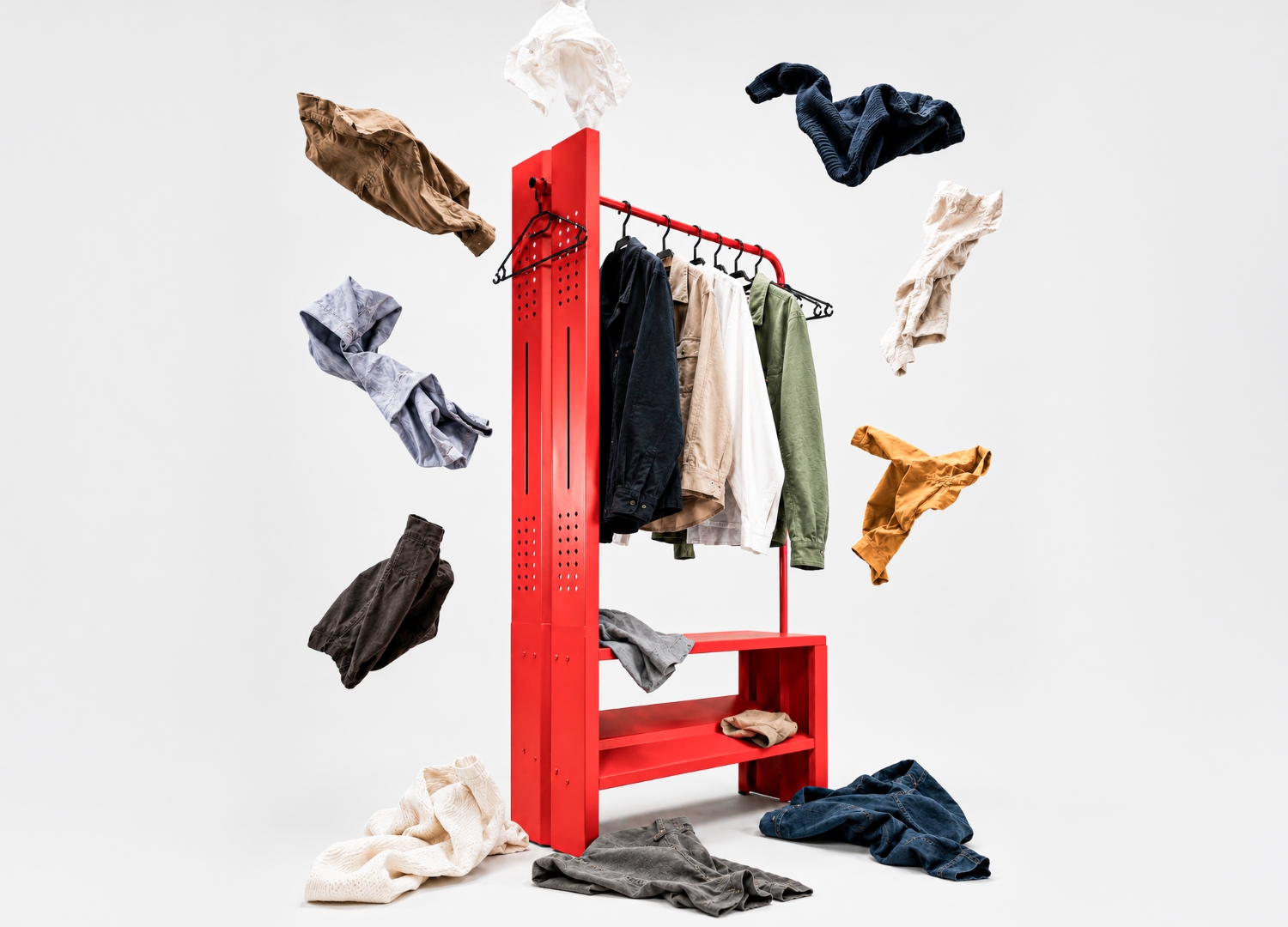
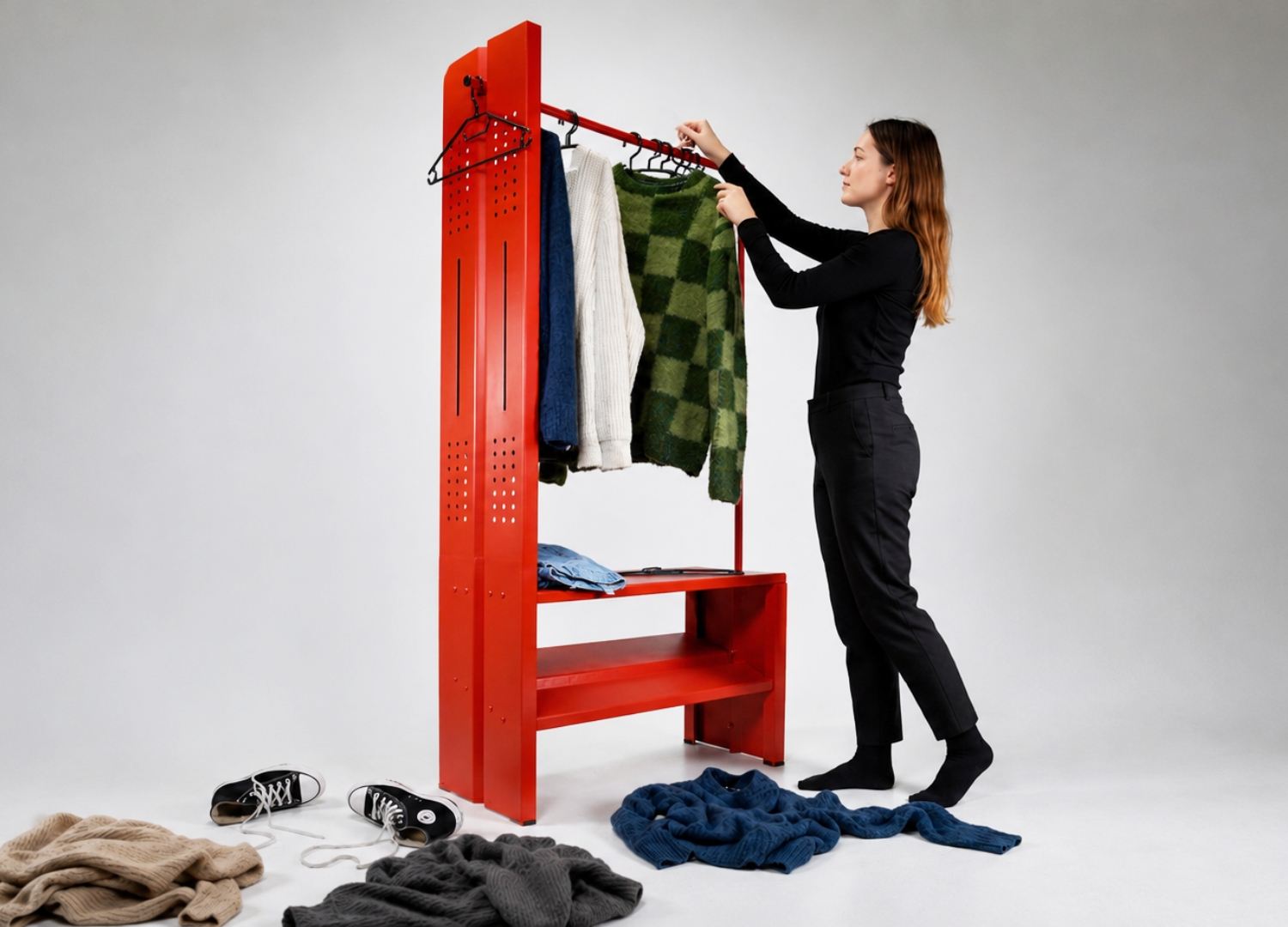
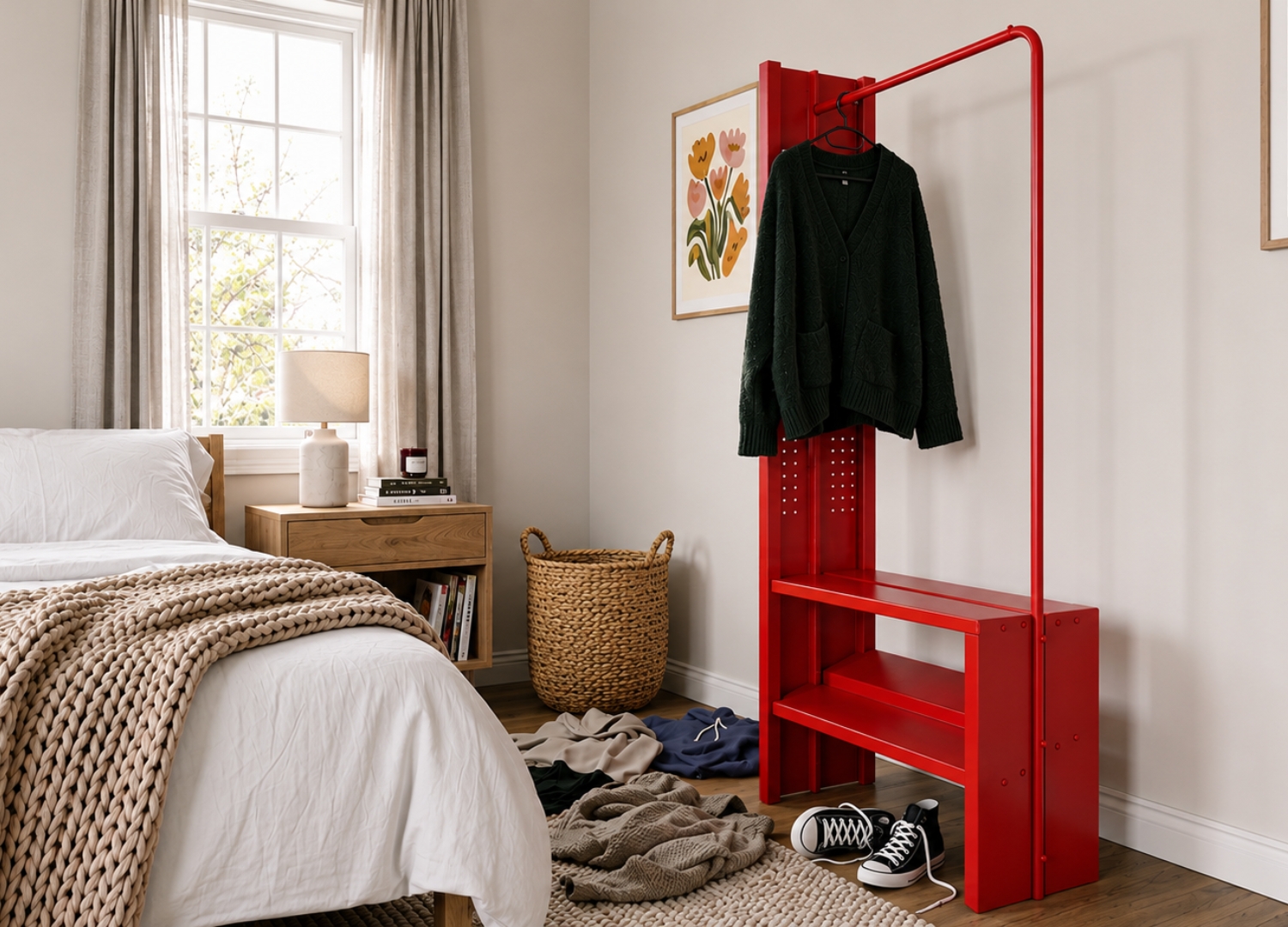
The piece is defined by an open sheet-metal frame that displays its own construction instead of hiding it behind doors and panels. The bolts, bends, and tube joints are all visible, which gives it a more scaffolding-like presence than a conventional blocked off wardrobe.
The form went through physical testing before being built in steel, and a full-scale model was built in MDF to establish proper height and proportions. The finished frame is built from mild steel sheet of 1.6 mm, though Panter specifies that 1.2 mm would be ideal to cut weight without giving up structural strength. Every panel is cut from a single sheet, so the whole piece recycles in one stream at end of life. The frame is held together by 16 identical M8 bolts, no adhesives or welds, so that the entire object can be assembled with an allen key.
Modularity
The uprights are perforated along their full height, so shelves and brackets can be bolted into any point on the grid, changing the configuration, for example, adding a low shelf for handbags, or more hooks and pegs. The same surface also doubles as a clean backdrop for photographing clothes to sell on Vinted, winking at the brief’s partner company.
About ownership
Vinted is not a furniture company, it’s a resale marketplace, built on the assumption that objects have value beyond their first owner. Pairing it with Habitat, a mainstream furniture retailer whose products are generally not designed with disassembly or resale in mind, created a natural tension for students to explore. Panter’s project treats the collaboration itself as the concept: what would furniture look like if it borrowed its economics from secondhand fashion?
The fast fashion industry has spent the last several years reckoning publicly with the environmental cost of disposable clothing, and platforms like Vinted have been protagonists of the broader cultural shift toward buying and reselling as the norm. Furniture has largely sat outside of that shift, stuck in a time period where the norm was to buy one house and live in it forever. While we all would love for that to still be true, it simply does not correspond to most people’s current living situations.
“ReFrame” describes the literal steel frame at the centre of the piece, but it’s also positioned as a statement about attitude: an invitation to reconsider what owning furniture means for a generation that has already made peace with wearing a secondhand jacket. Honest, lightweight, disassemblable, and reconfigurable are the key adjectives that keep emerging when referring to furniture for today’s younger generations, which, despite their nomadic nature, still want objects to be durable and long-lasting. Simply, the circumstances for what “long-lasting” means have changed, and furniture design must change with it.