


With this new episode of Behind, DesignWanted enters the multifaceted world of évoque lab, the Milan-based interdisciplinary studio founded in 2020 by architects and 3D designers Paola Frascerra and Emanuele Longo. What began as a digital visualization practice has grown into a hybrid studio where virtual experimentation and physical design seamlessly merge, forming a methodology that is both expressive and highly strategic.
évoque lab was conceived as a place for imagining and constructing digital worlds. In its early years, the studio worked primarily on visual narratives for clients in the design and fashion industries, translating abstract concepts into immersive, evocative imagery. This ability to craft coherent visual stories soon led clients to ask for more: not only images, but guidance, direction, and creative interpretation.
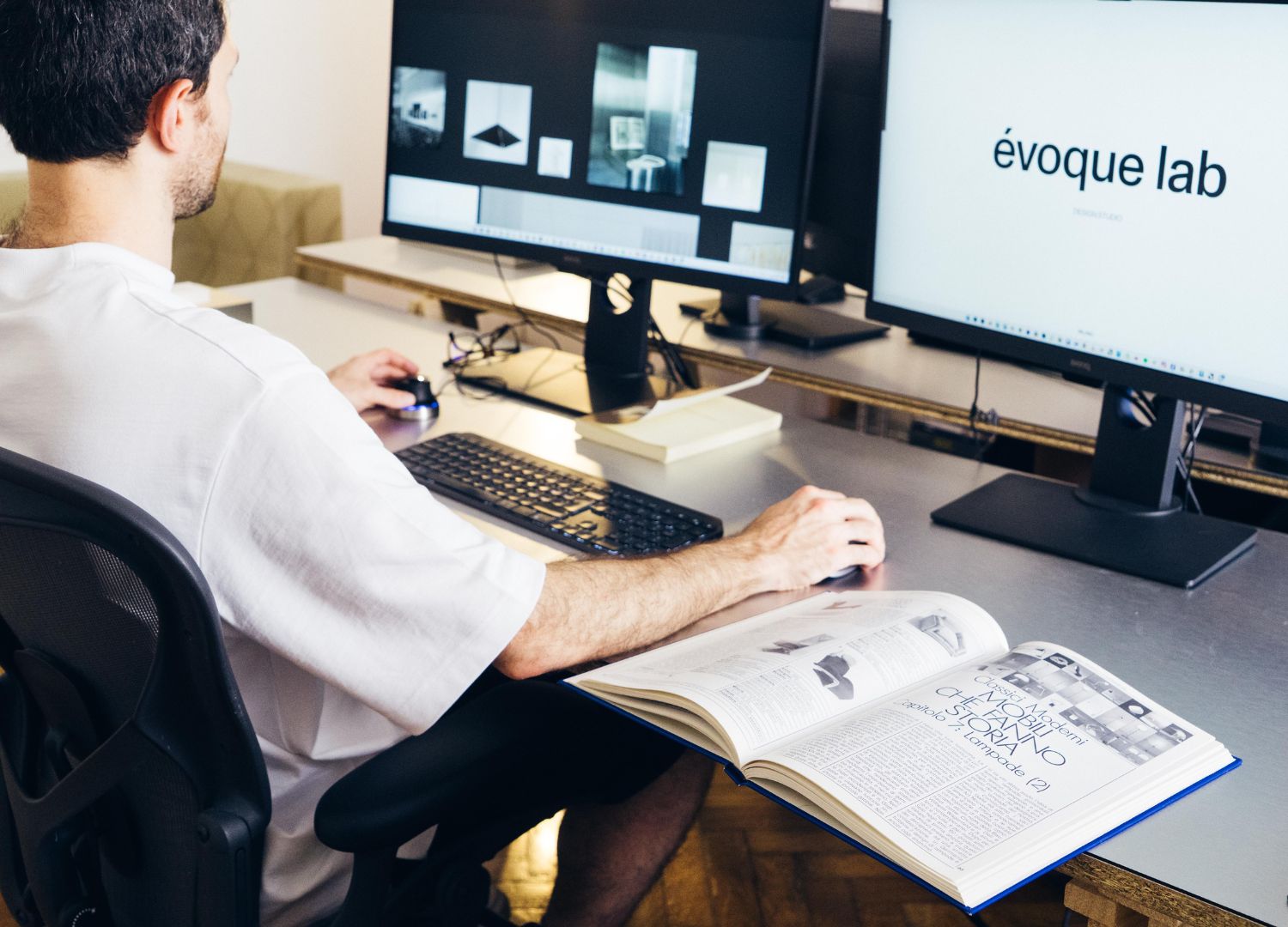
The decisive shift came when a client approached them with trust rather than instructions: “Maybe you can understand what I have in mind.” That moment opened a new path. Paola and Emanuele began moving from purely digital storytelling into the design of physical environments, using their architectural background to give shape to spaces that could embody the same narrative precision found in their imagery.
This transition was not abrupt; it unfolded as an organic evolution of the practice. évoque lab naturally gravitated toward an interdisciplinary identity, uniting architectural reasoning with digital craft. Their tools as computers, VR headsets, and 3D modeling software, were no longer just instruments for presentation. They became active components of the design process, allowing ideas to be tested, shaped, and refined in real time.
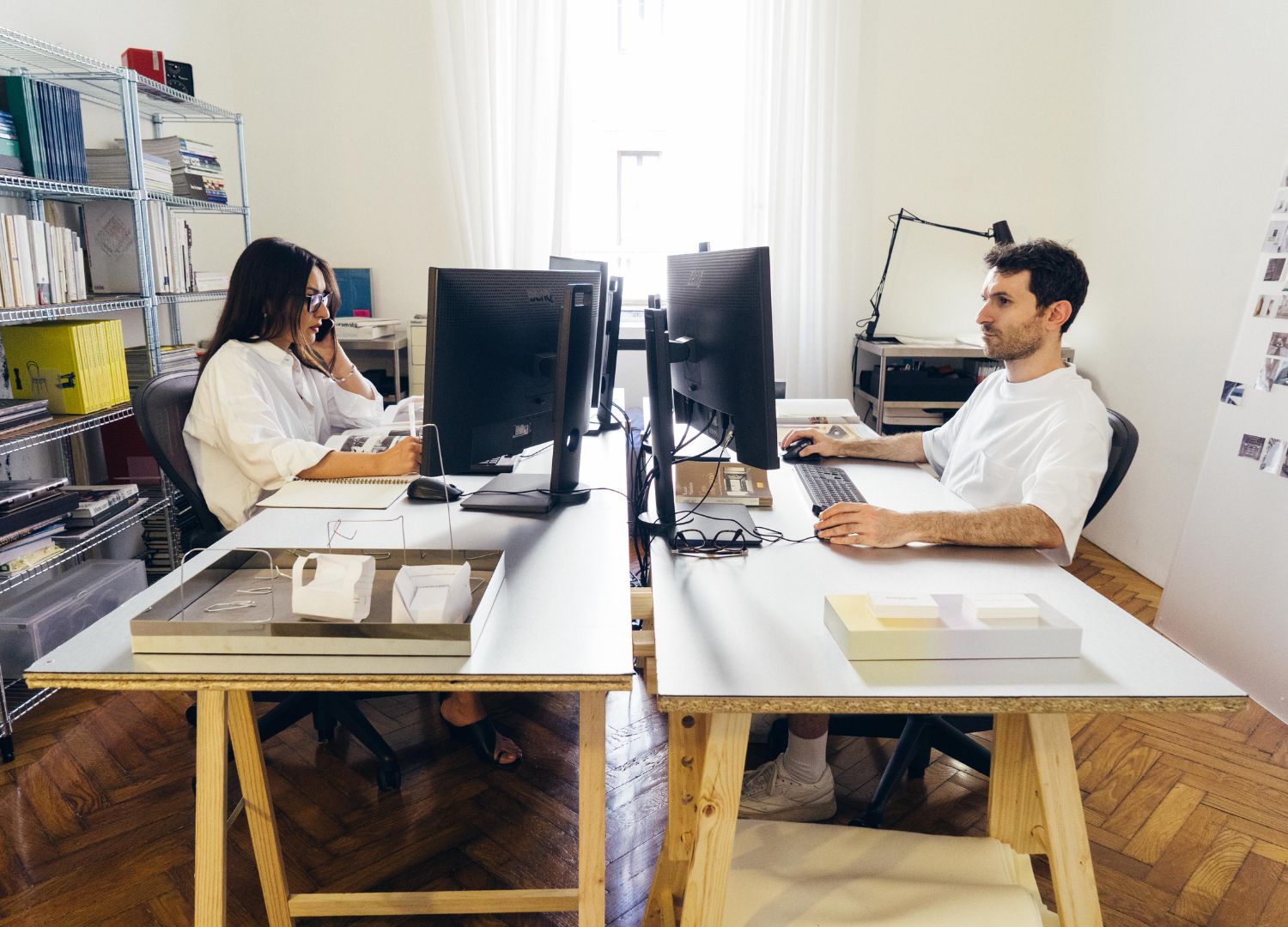
This approach offers significant creative advantages. Designing within digital environments enables the team to explore ideas unbounded by the initial constraints of physical construction. Paola and Emanuele often describe this stage as a return to childhood-like freedom, where imagination leads and logic follows. Unusual paths, new perspectives, and unexpected solutions emerge precisely because the medium allows them to work beyond the limits of reality (at least at first).
Equally important is the efficiency this workflow provides. By presenting concepts as 3D sketches from the outset, clients can immediately understand spatial intentions and narrative gestures. Technical verifications can happen early, and projects move forward with greater clarity. Instead of relying solely on drawings or abstract descriptions, the process unfolds in an intuitive visual language that bridges creative expression and practical decision-making.
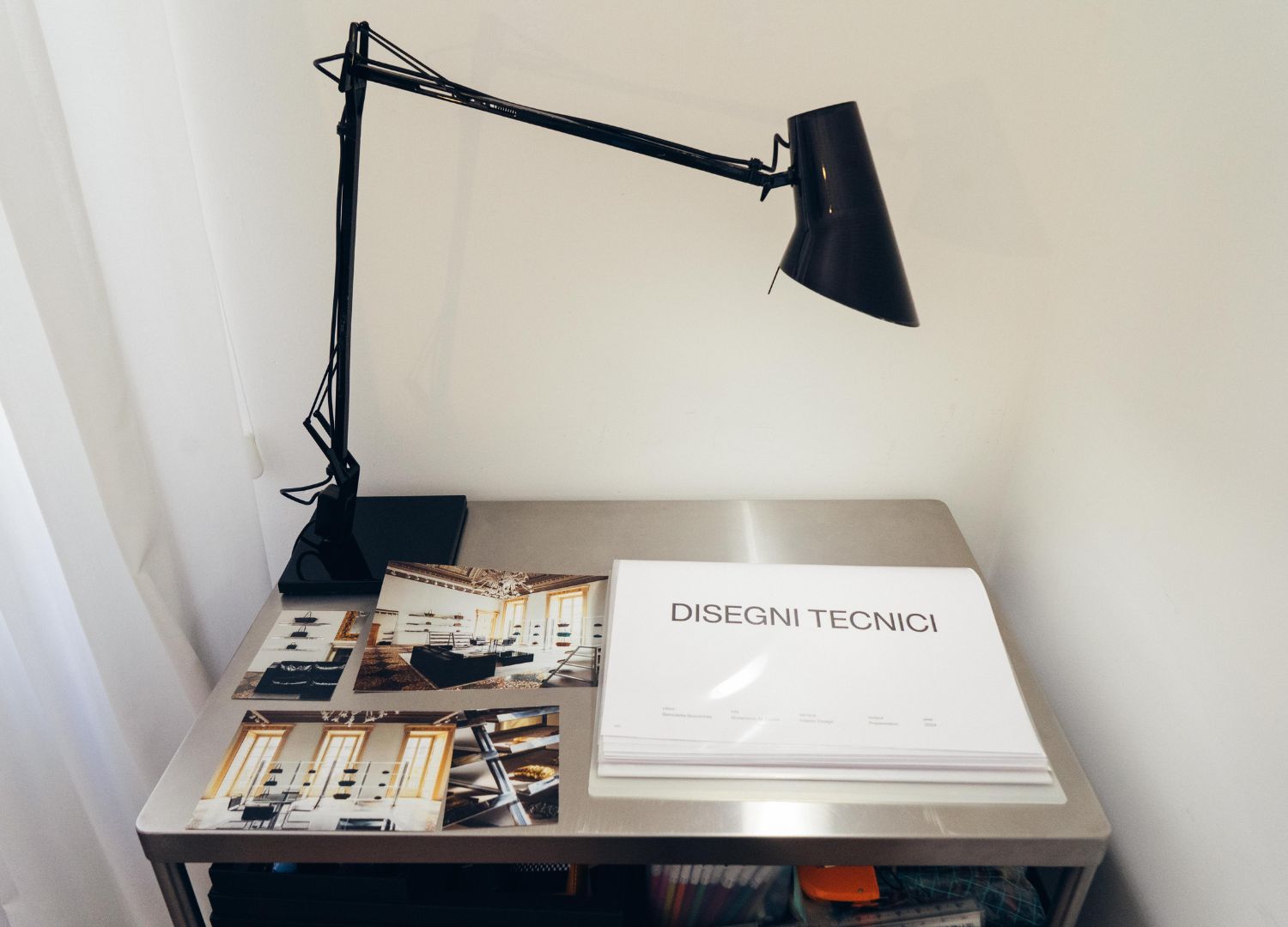
The design journey typically begins with extensive dialogue and mood boards prepared with the client. Once the visual and conceptual framework is aligned, évoque Lab transitions directly into digital sketching. Because the first iterations take shape in 3D, the studio can focus on narrative depth before addressing physical limitations. Only after the essence of the concept is established do they begin adapting the project to materials, mechanisms, and architectural logic.
Central to their philosophy is the belief that every project must authentically represent the client. évoque lab’s work is therefore highly tailored, shaped around the specific traits that distinguish one brand from another. They focus on defining gestures capable of expressing a narrative identity, embedding these elements into the project at every scale.
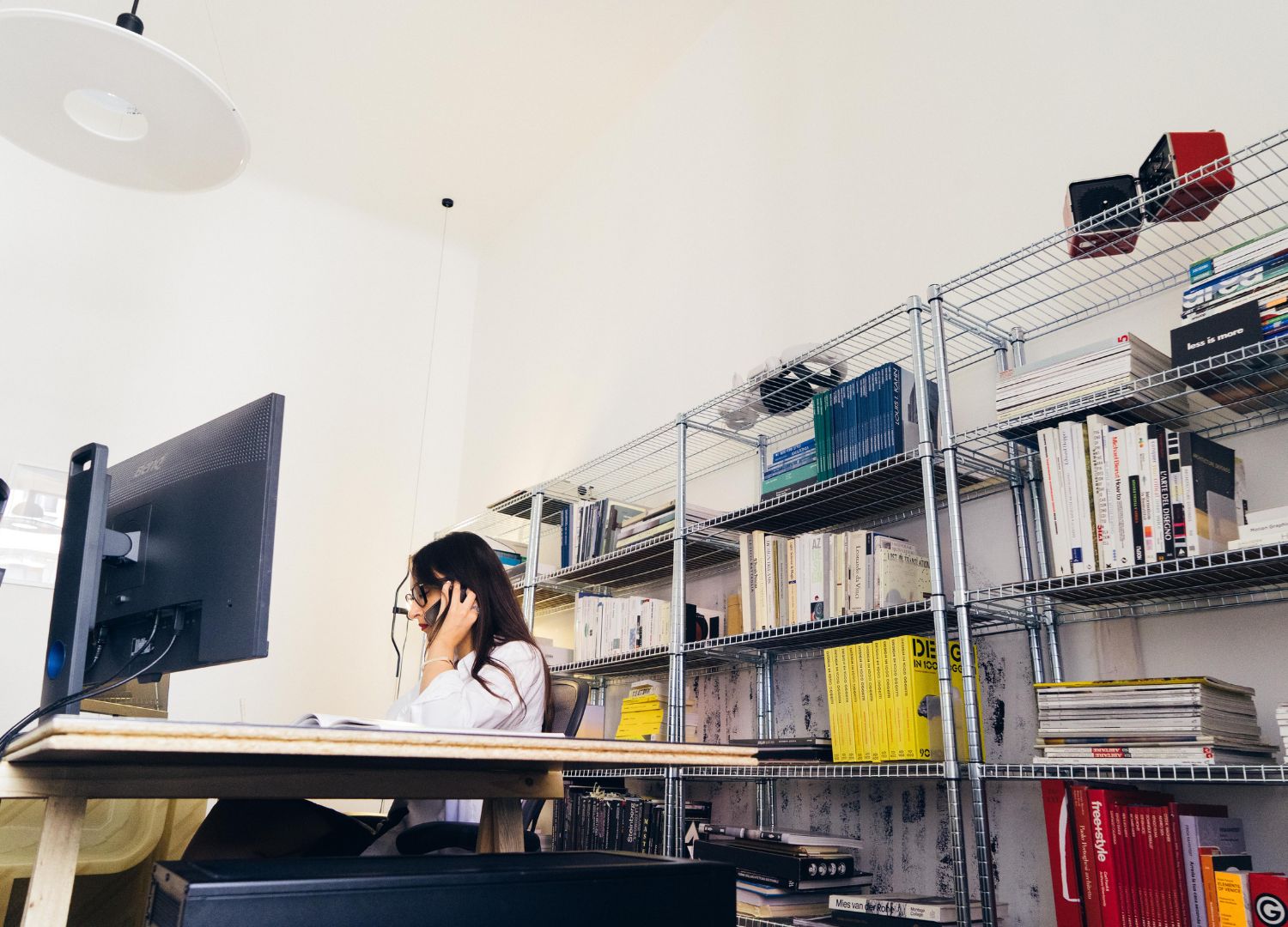
A clear example of this approach is their collaboration with Benedetta Bruzziches. For the brand, évoque lab designed a series of custom drawers inspired by antique haberdashery furniture—wooden chests with tiny compartments once used to store threads and ribbons. Fascinated by these historical objects, Paola and Emanuele reinterpreted them for contemporary use, replacing traditional materials with modern ones and reimagining the mechanisms to match current needs.
The entire system was initially conceived and tested digitally. Through 3D modeling and virtual reality, they could explore the proportions, interactions, and movements of each component. They observed how drawers slid open, how volumes related to one another, and how the furniture would integrate within a space. Only once the functionality and narrative gesture felt coherent did they move to the physical phase, refining details to suit production without compromising the conceptual core.
This project encapsulates the essence of their hybrid design method: a continuous dialogue between imagination and construction, where storytelling and technical rigor coexist. Digital tools do not replace the sensibility of architecture—they expand it, enabling the studio to move fluidly between intangible vision and tangible form.
As the studio continues its evolution, its identity remains anchored in this interdisciplinary balance. évoque lab stands as a testament to the possibilities that emerge when digital freedom meets the discipline of spatial design. Through this episode of Behind, their practice reveals itself as a place where images become spaces, concepts become objects, and design unfolds across both virtual and physical worlds.
The original BEHIND series comes to life thanks to the invaluable support of our trusted partners: