CIVICITY: challenging the Design Week format
An interview with the protagonists of the two CIVICITY editions – Pete Fung, Studio Method, Demo-practice, and Ned Kaar – exploring their approaches to co-design, Milan’s neighbourhoods, and the redesign of design weeks

On the occasion of MIlan Design Week 2026, CIVICITY – Redesigning Design Weeks returns, the long-term co-design project that investigates the ecological, social, and urban challenges generated by design weeks.
Developed by the Nieuwe Instituut in Rotterdam and the Milan-based cultural transformation agency cheFare, in collaboration with the Embassy and Consulate General of the Kingdom of the Netherlands in Italy and curated by Collective Works, the programme annually brings together two Dutch design studios – selected through an open call – to participate in a residency across different Milanese neighbourhoods.
Gallery
Open full width
Open full width
CIVICITY connects MDW to its wider context, treating the event less as an isolated moment and more as a pretext for a two-month open-air laboratory. Through this extended project, it becomes possible to observe both the “before” and “after”, and to better understand what actually makes such a large-scale manifestation possible: the context, the connections, and the people who shape it.
Designers engage with existing relationships, dialogues, and tensions, and – thanks to their experience – they are able, on one hand, to develop a reference case that can inform and inspire future approaches to big events, and on the other, to explore situated responses tailored to specific communities and neighbourhoods. The focus is less on producing isolated outcomes and more on engaging with processes that remain open and responsive to the social fabric they enter.
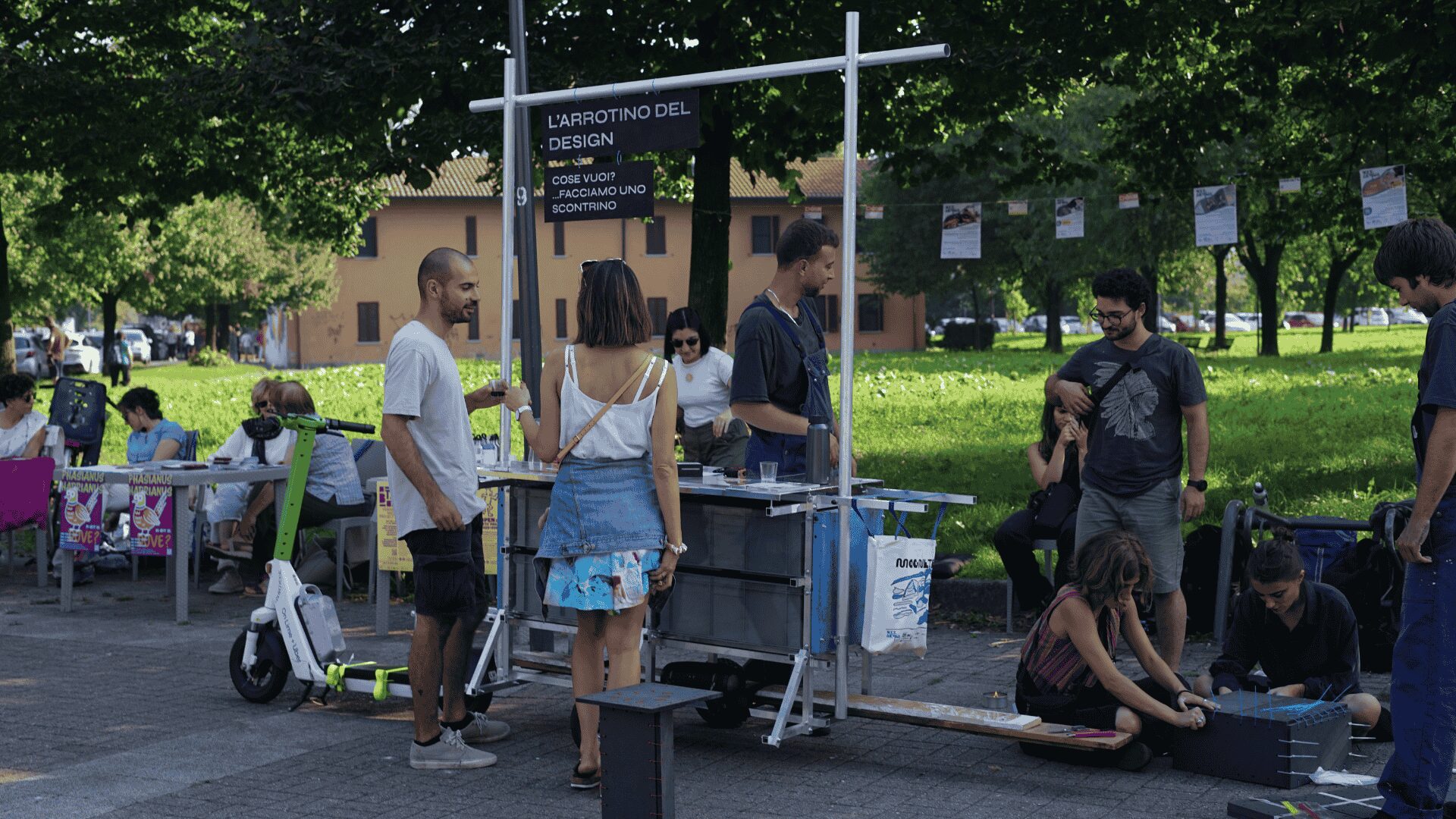
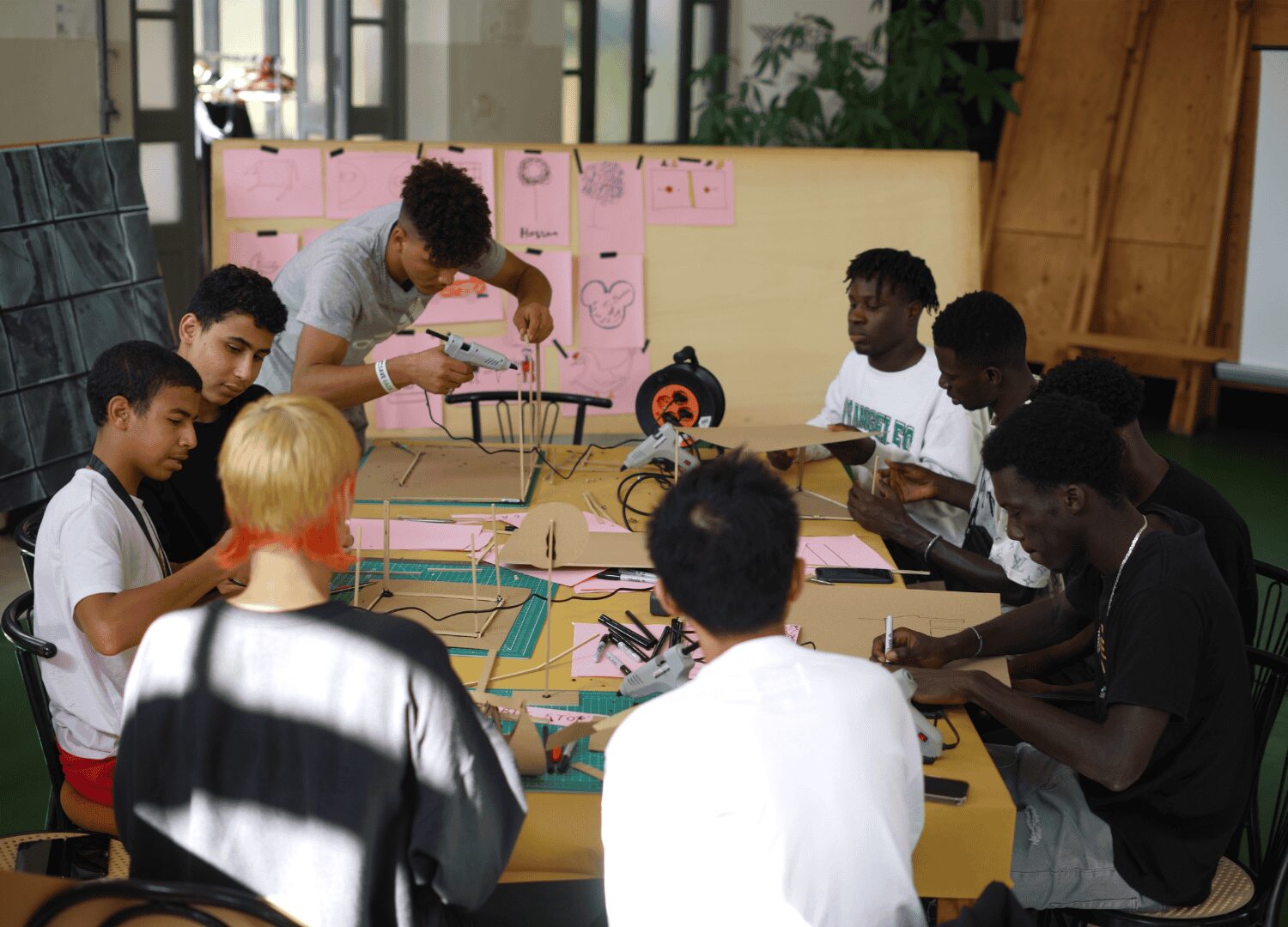
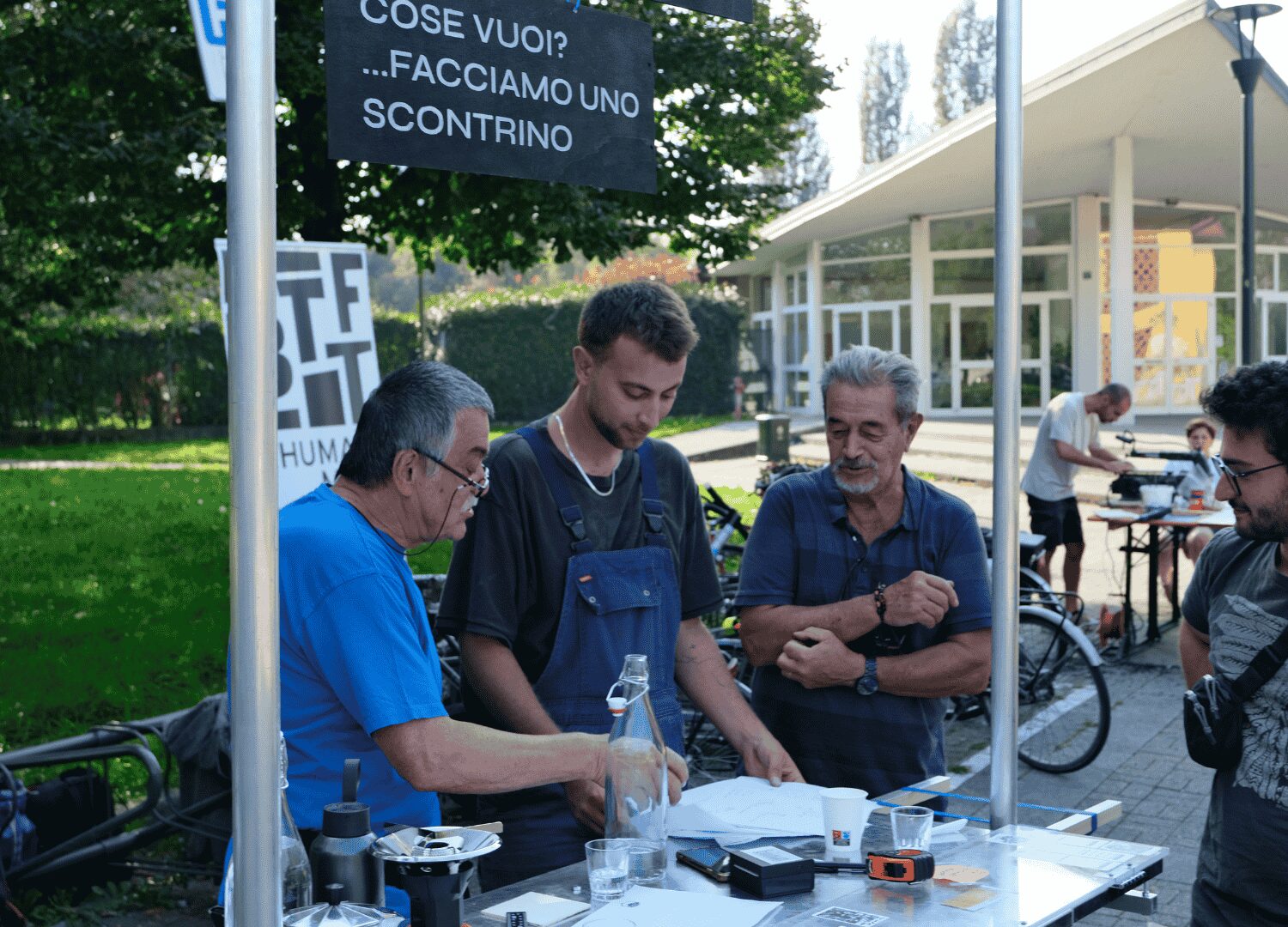
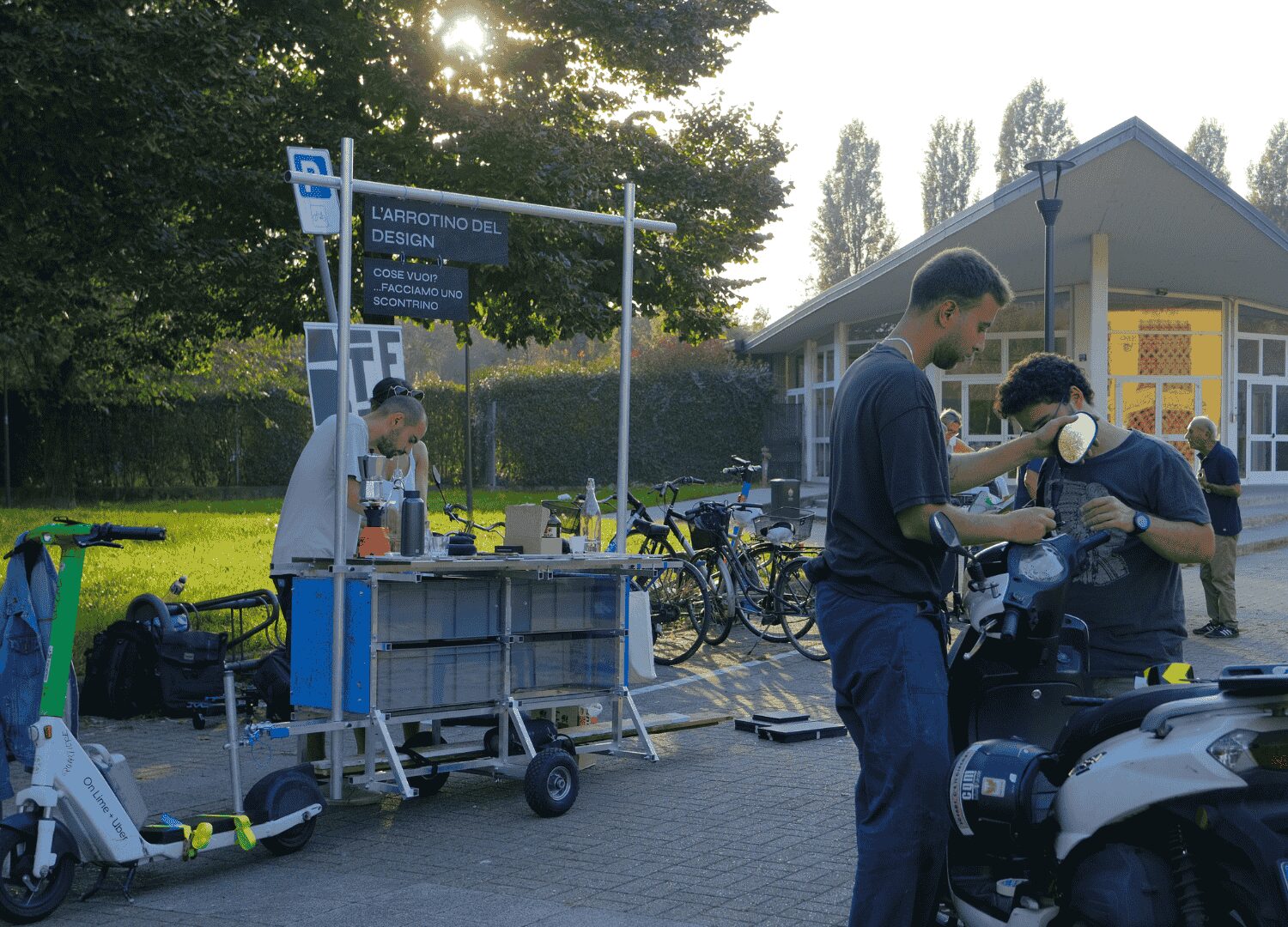
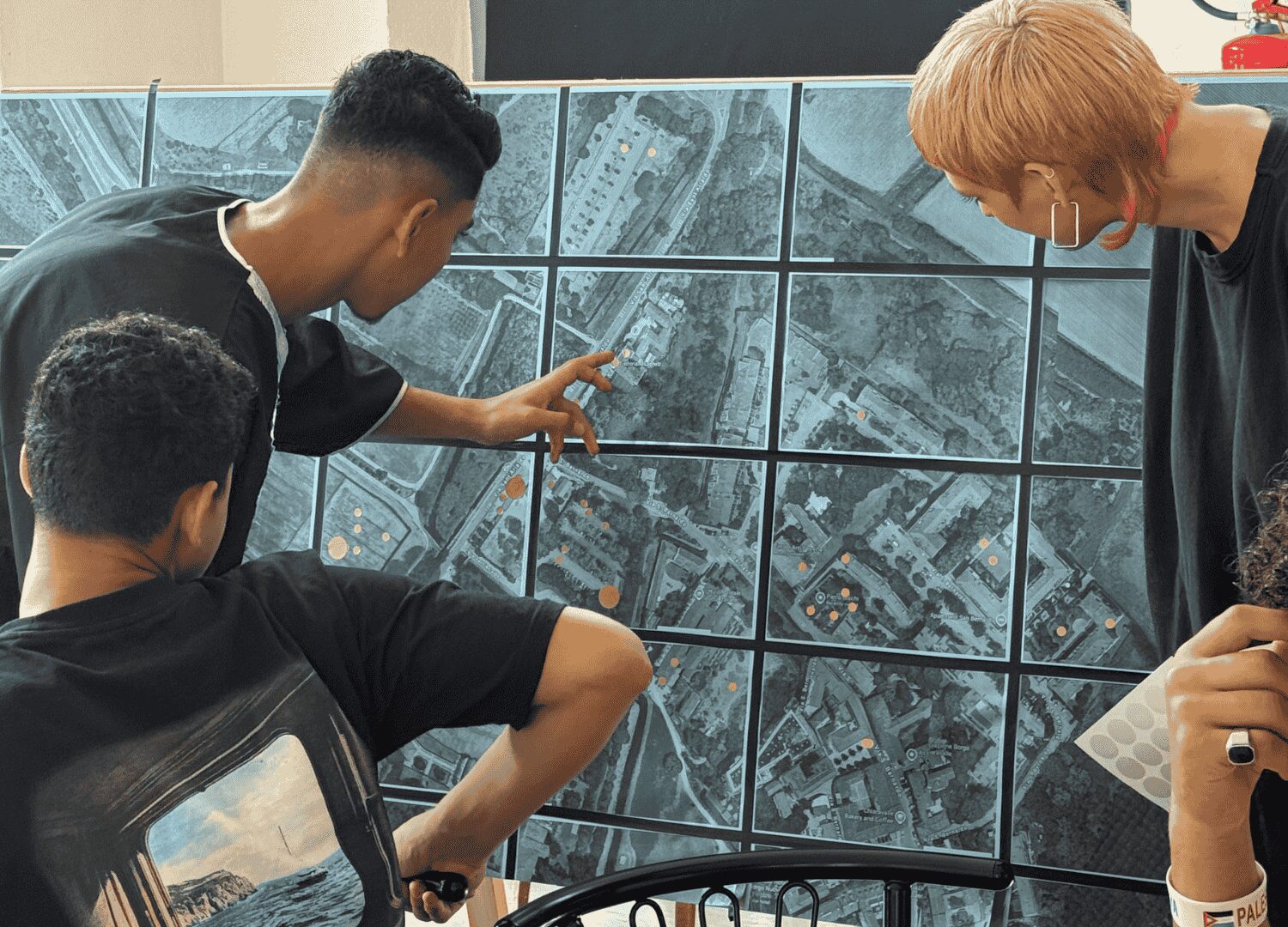
The protagonists of the 2025 edition of CIVICITY were Pete Fung and Studio Method, who developed respectively the Pizzeria of Promises project in the Chiaravalle district with Terzo Paesaggio and Fondazione Fratelli di San Francesco, and Arrotino del Design in the Adriano area with Magnete. The studios will present the outcomes of their work at Villa Mirabello from April 21 to 23 and at BASE on April 24. In parallel, Milan Design Week 2026 marks the beginning of CIVICITY 2026, with the resident designers Demo-practice and Ned Kaar.
We talked with the protagonists of the two editions of the project to better understand their approaches, experiences, and reflections on working within CIVICITY and engaging with Milan’s neighbourhoods.
The project stems from an important question: what if design weeks were enriched rather than extracted? How does your project interpret this tension between cultural value and urban extraction?
Studio Method:
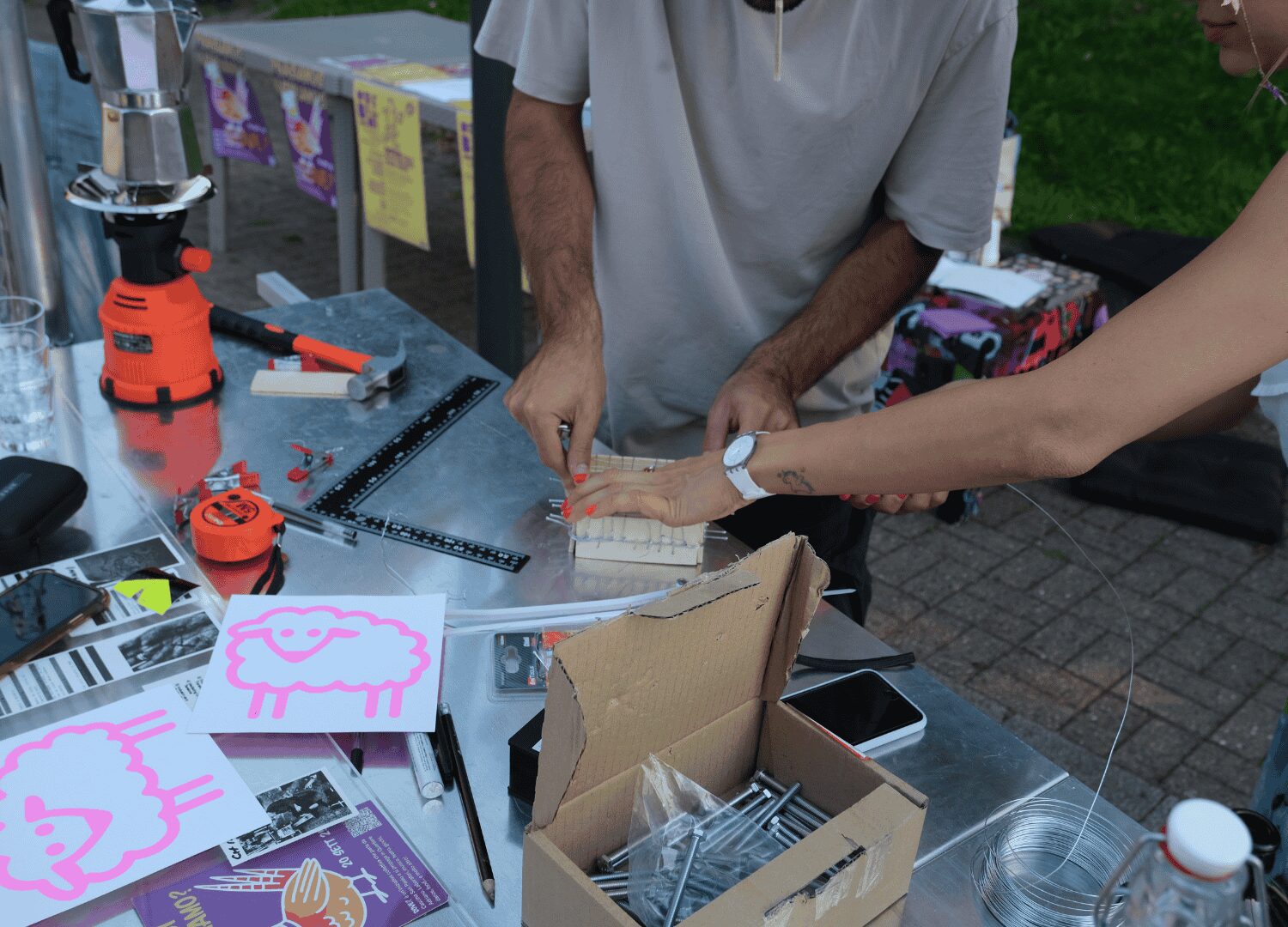
“Arrotino del Design attempts to bridge these two spheres. It asks whether design can embed itself in the places and communities it inhabits, while still maintaining the quality and precision associated with professional practice. Rather than opposing community-driven work to expertise, the project repositions where expertise operates and what it enables.
Can self-building and autonomous production also produce beauty and technical rigour? The cart acts as a nomadic public space, creating proximity through shared working methods. It invites residents to engage in repair and reuse as active participants. In this sense, it becomes a vehicle for a different kind of civic literacy – one that includes the ability to care for and transform one’s surroundings. Over time, expertise accumulates, and design thinking becomes more open and situated.“
Pete Fung:
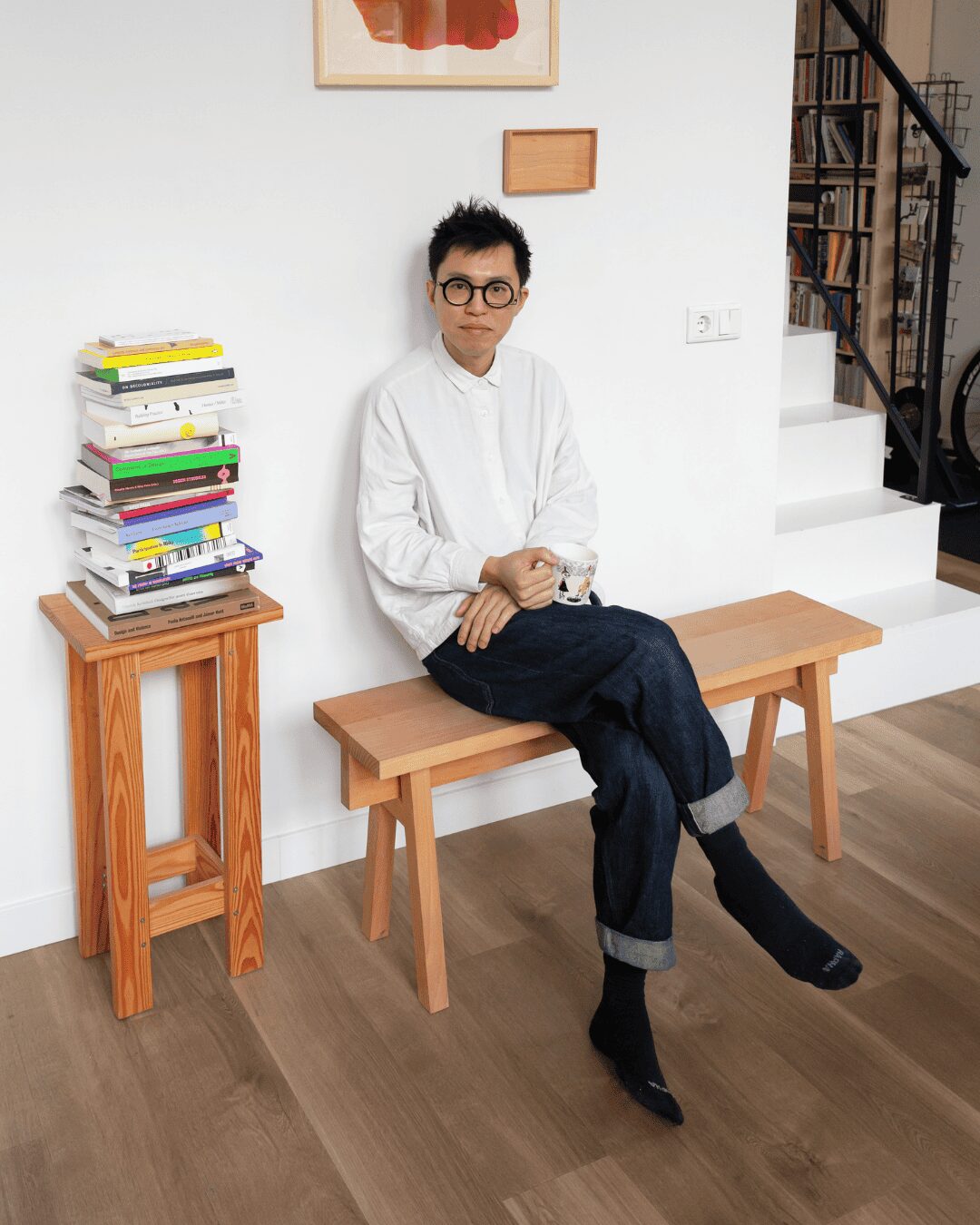
“On my first day visiting Terzo Paesaggio, I encountered a graveyard of past projects, abandoned and overgrown. It reflects many design weeks and similar cultural events: in trying to cater to international audiences, they often neglect local social realities and lack long-term engagement. It was a reminder not to repeat the external visitor trope. What I develop needs a lasting impact, or at least an aftercare strategy. This connects to my fascination with promises, specifically design promises: we often discuss what design does or will do, but rarely what it did or didn’t do.
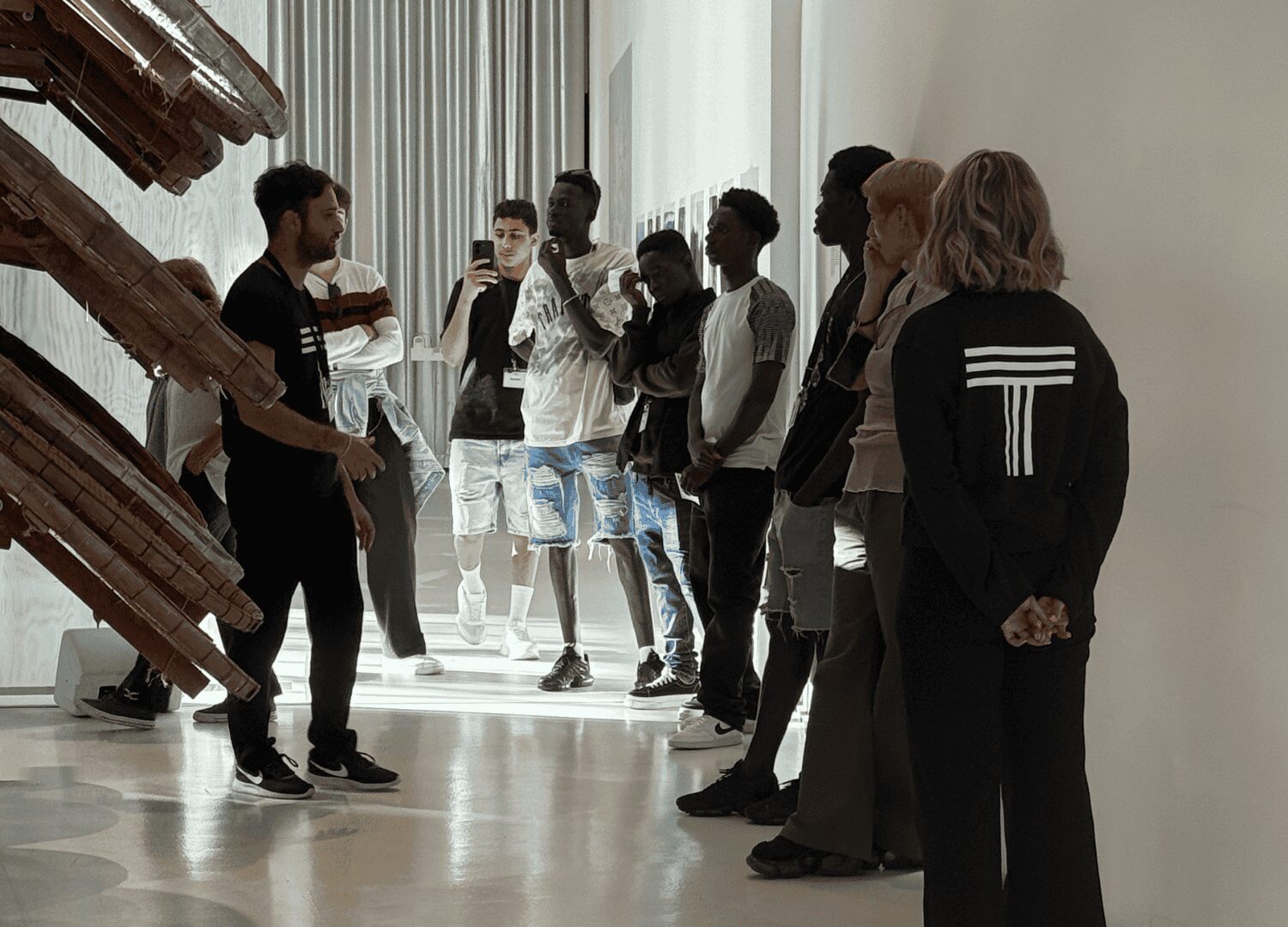
The parallel between the boys I collaborated with – who traveled unaccompanied to Italy in search of better conditions – and design promises of “better” became central. For Milan Design Week, the Pizzeria of Promises and the workshop “Designing in Flux” emerged from two months of relations developed during my residency. The project highlights the contrast between the hyper-mobility of design culture and the constrained mobility of those awaiting visa papers, grounding the discussion in lived experiences of food, work, and aspiration. It suggests that design’s transformative potential lies less in final outcomes than in reorganizing who gets to act, earn, and belong.“
What was the community’s response to Arrotino del design?
Studio Method:
“Across the city, and particularly in the two neighbourhoods where we activated the cart (Adriano and Tucidide), the response was varied but consistently engaged. Proximity was created intentionally by mixing formal and informal modes of working. When moving through the neighbourhood, the cart often felt less like a service and more like a small gathering, or even a temporary party, where participation could happen at different levels and without obligation.
At the same time, there was also a degree of confusion, especially in peripheral contexts: the project operates outside the more familiar, solution-oriented model of design, where outcomes are clearly defined and immediately legible. Here, the intention was less about delivering a finished product and more about opening a process, which is slower and harder to read. Interestingly, the moments that generated the highest level of participation were often the most direct ones: repairs. Their immediate usefulness created an entry point, allowing people to engage first through necessity, and then, gradually, through curiosity and involvement. “
What did you learn from this project in this context?
Studio Method:
“There are challenges in trying to ‘help’ communities through design. Helping can become a form of extraction, and sometimes communities are already functioning well without external intervention. This raises the question of whether design is always the right response. The project also highlighted larger political and structural hurdles – inequality, and the influence of big capital – that shape what design can achieve.
At the same time, the value of aesthetics should not be underestimated. Quality and form can contribute to a sense of dignity and make people feel they deserve well-made environments. Finally, repair emerged as an important and often overlooked design brief, deserving more attention as a way of thinking about care and continuity.“
In co-designing with UFM (Unaccompanied Foreign Minors), what did you learn as a designer?
Pete Fung:
“First, I recognised that their hierarchy of needs is very different from mine, yet their lived experiences are equally – if not more – important than mine as a visiting designer. As a two-time immigrant, I am influenced by Thomas Nail and his writing on movement, which challenges static ideas of politics and identity. This helped me move beyond the binary of seeing these young minors as either victims or problems. They are also teenagers exploring new opportunities, sons with responsibilities, friends, and residents of Milan facing everyday challenges.
Second, designing with them is less about the final outcome and more about the process itself. Co-design is often used to justify decisions, but it can instead be a mode of engagement. By opening up the design process, participants can discover things for themselves through making and reflecting together. Rather than simplifying complexity or aiming for “feel-good” results, designing with others becomes a relational practice – one that works through contradictions and shared realities instead of resolving them too quickly.“
What role does design play in society today?
Pete Fung:
“Many of the challenges we face today, planetary crisis, technological dominance, and ongoing oppressions, can’t be solved by design alone. We need shared literacy, ways to navigate our differences, spaces for critical optimism and imaginaries.
As a discipline that has a long tradition in engaging with people, design is in a unique position to break down these seemingly out of reach issues into the scale of everyday lives. Instead of solely providing solutions, I always see design as a medium that can help facilitate our collective agency in neighbourhoods, communities, and in all forms of participatory and democratic processes.”
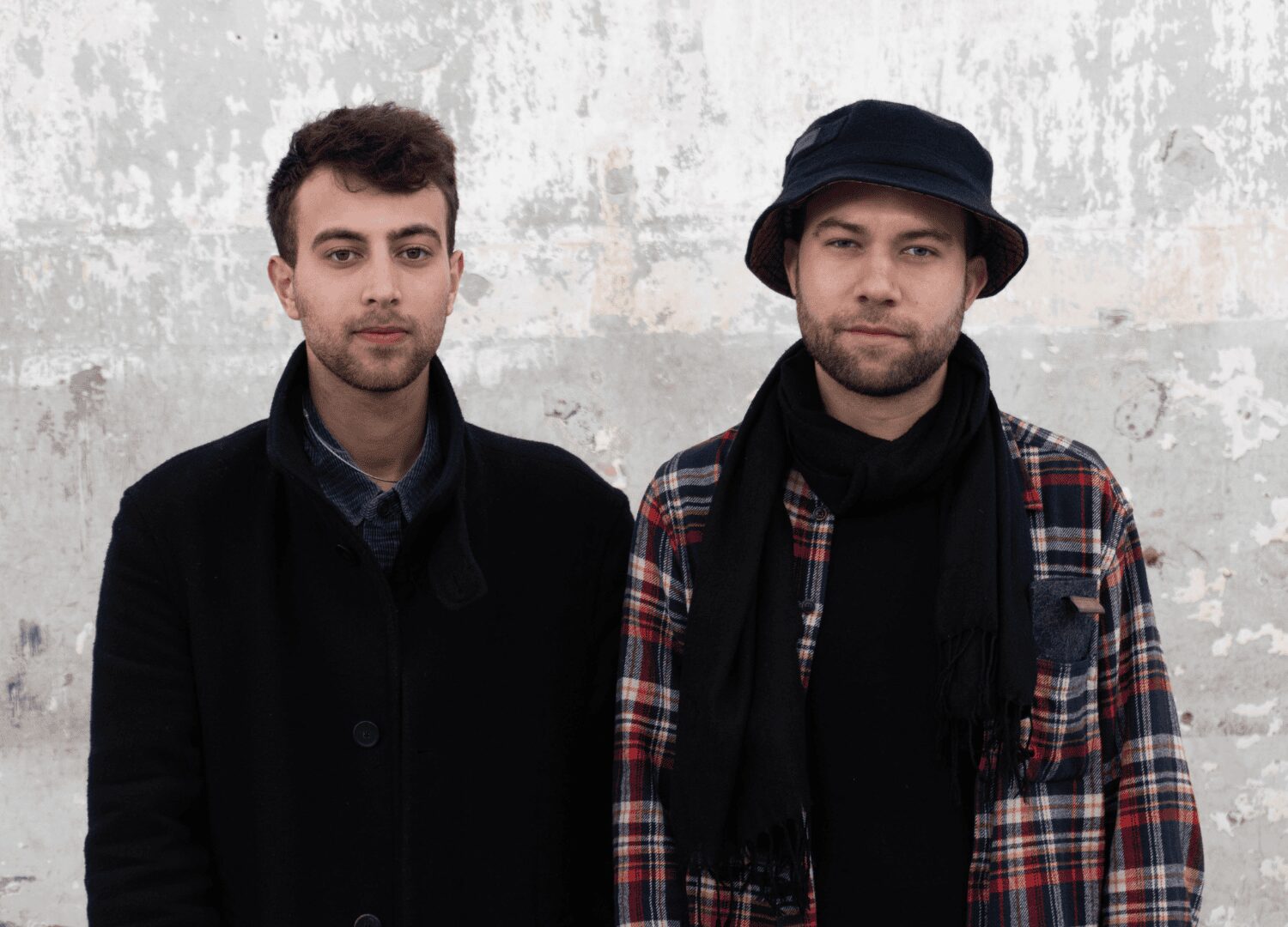
As aforementioned, CIVICITY 2026 will feature the resident designers’ Demo-practice and Ned Kaar. The first studio, founded by Alessandra Pandolfi and Phoebe Hotopf, explores social life as a designed system, investigating through collaboration, active participation, and civic engagement how behaviours, technologies, and governance structures shape collective access to public space.
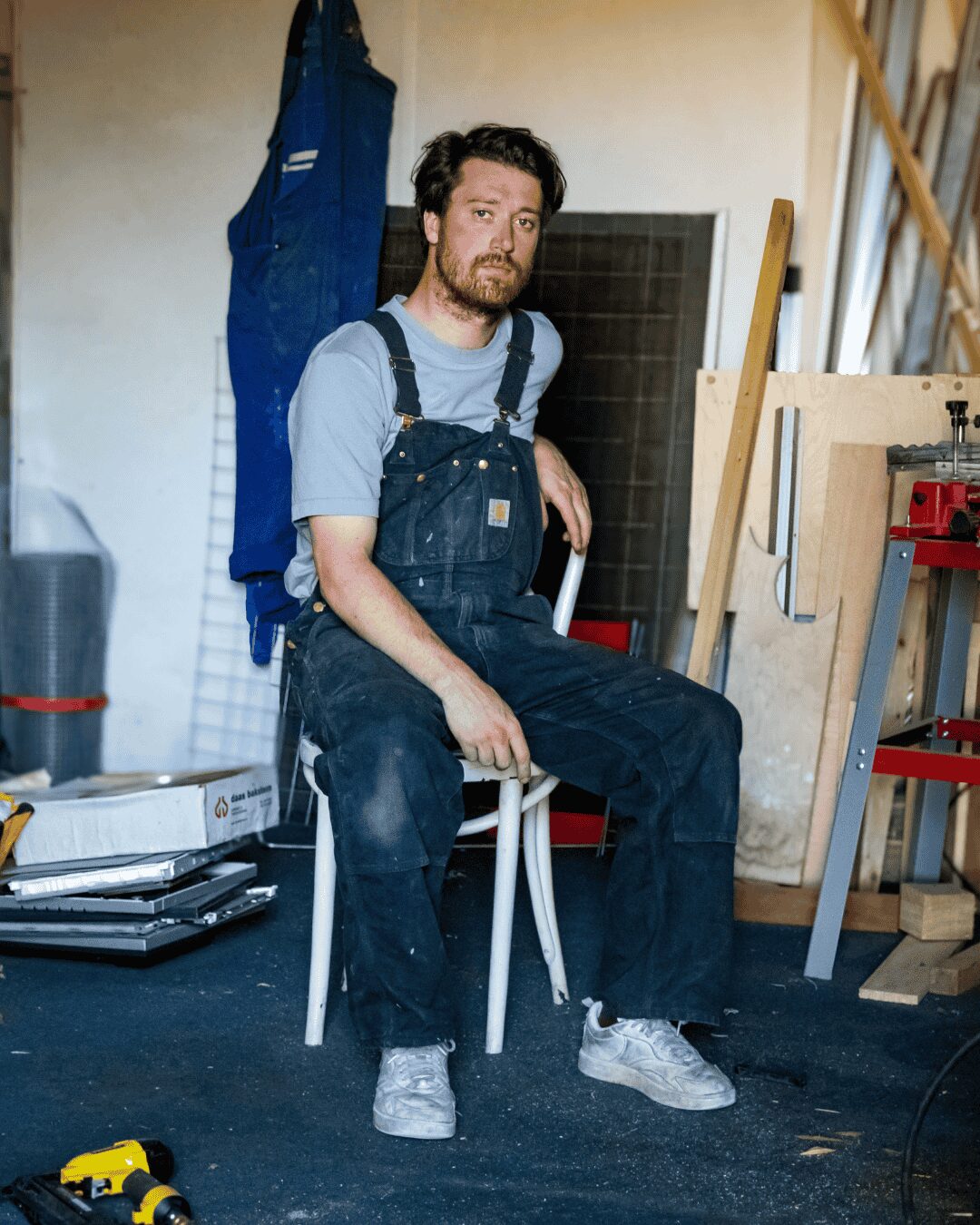
Ned Kaar, meanwhile, is an Irish designer based in Eindhoven whose interdisciplinary practice examines the concept of value in design, the working conditions of freelancers, and the role of craftsmanship and materials within global urban economies. We asked them how they plan to approach the residency and the project.
Why did you apply for the residency?
Demo – Practice:
“Before applying to this residency, we had been discussing how to formalise our collaboration around a shared vision: reflecting on community engagement through social and participatory design, and approaching civic life as a designed system. In this sense, CIVICITY’s framework and its invitation to question both design weeks and our roles as designers directly align with our research.
We are interested in how to challenge existing structures within complex socio-cultural contexts, and how collaborative methods can strengthen community structures. Ultimately, we are exploring how relational forms of design can support community-driven responses, building on shared neighbourhood practices. The residency offers a space to further engage with these questions and connect with Milan, its communities, and a wider network of collaborators.“
Ned Kaar:
“I was the initiator of an exhibition last October in Eindhoven that aligned somehow with the ideas of Civicity and the vision of Karin, Peter and the teams at Nieuwe Instituut and cheFare. It aimed to redistribute attention and leverage the infrastructure of an international design event towards the practical needs of participating and local designers. This exhibition – which was brought to life through a collaboration of 33 other designers – in small ways managed to put its finger on some of the tensions that arise around such events and design in general. It is a desire to follow that impulse that explains why I applied to the open call for this edition.“
What are your expectations?
Demo – Practice:
“Our expectations focus on our engagement with Fondazione Abitamo, where we aim to build relationships with both the organisation and the community. We want to better understand how it operates as a housing co-op in residents’ daily lives, while reflecting on the history of a neighbourhood like Niguarda. We are also interested in how this connects to our research on gentrification in Milan, particularly in relation to Niguarda and its identity, especially when compared to areas shaped by large cultural events like design fairs. Finally, we hope these insights will not only inform our project, but also contribute to ongoing reflections on the role of social design within design weeks, especially when the outcome is not a commodifiable product.“
Ned Kaar:
“I’m looking forward to getting out of the routines I have in the Netherlands, to sit and to focus. I think the time will feel very short, because I’m expecting to have a lot to learn. I believe that being more porous might be my best approach. I anticipate immersing myself in Milan, Barona and Barrio’s, exploring how these places are known and understood, the pressures that exist around them, their languages, cultures, and the activities that keep them alive. I want to write and discuss, rewrite and question, move from rambling thoughts to a clear outcome. “
How does your other work resonate with the principles behind Civicity / Redesigning Design Weeks?
Demo – Practice:
“We found ourselves quite naturally aligned with the principles of participation, inclusion and situated practice that the residency is based upon. In our own work, we treat invitation and interaction as fundamental parts of the process, and apart from its final outcome, we seek to create spaces or tools that can hold on the dialogue and reflection around complex issues, continuously questioning our role as designers and proposing how we may work as mediators or facilitators.
This approach is greatly informed by our own background and shared path in Social Design studies, but lately more grounded in our collective, where we have found common ways of engaging with different communities, translating what we encounter within a community both to them and the public. As seen with our individual works, such as Urgency Toolkit, (Alessandra Pandolfi in collaboration with the San Salvario neighborhood at Circolo del Design in Turin, 2025) and KIOSK T//WASTE, (Phoebe Hotopf and collaborators for Stadtarbeit, Vienna Design Week, 2024), where we explored how local governance and community projects may facilitate these intentions.“
Ned Kaar:
“My work searches for structural alternatives – exploring new ways of organising, alternative legal structures, or novel ways that objects might circulate – and Civicity similarly searches for structural alternatives when looking to redesign Design Weeks. Civicity challenges the designers involved, those interviewed here, to deal with the bed and the bedfellows they have adopted in Milan and further afield. In a way, it is the structural conditions of my work as a designer that resonate with the principles behind Civicity, but I believe that these principles echo with a vast number of independent designers and creatives from other fields.“
CIVICITY 2026 will be documented by journalist Hani Salih, taking over from Nuria Ribas Costa, who reflected on the 2025 edition. Their contributions, together with those of Collective Works, cheFare, and the resident designers, will be included in the final project report.
From Tuesday 21 to Thursday 23 April, Villa Mirabello (Via Villa Mirabello 6) will host the CIVICITY exhibition, presenting the outcomes of Studio Method and Pete Fung’s projects as well as introducing the new residents Demo-practice and Ned Kaar. On Wednesday, 22 April, from 3:00 to 5:00 PM, a public event will take place at Villa Mirabello, featuring a conversation moderated by Angela Rui on how design work, urban environments, and design events themselves can create space for social initiatives. From Friday 24 April, the exhibition will move to BASE (Via Bergognone 34).