Beyond the project: building a culture of learning in the design studio
What makes a design studio a meaningful place to learn? Its value emerges through the questions students ask, the relationships they build, and the judgments they develop while working through uncertainty.
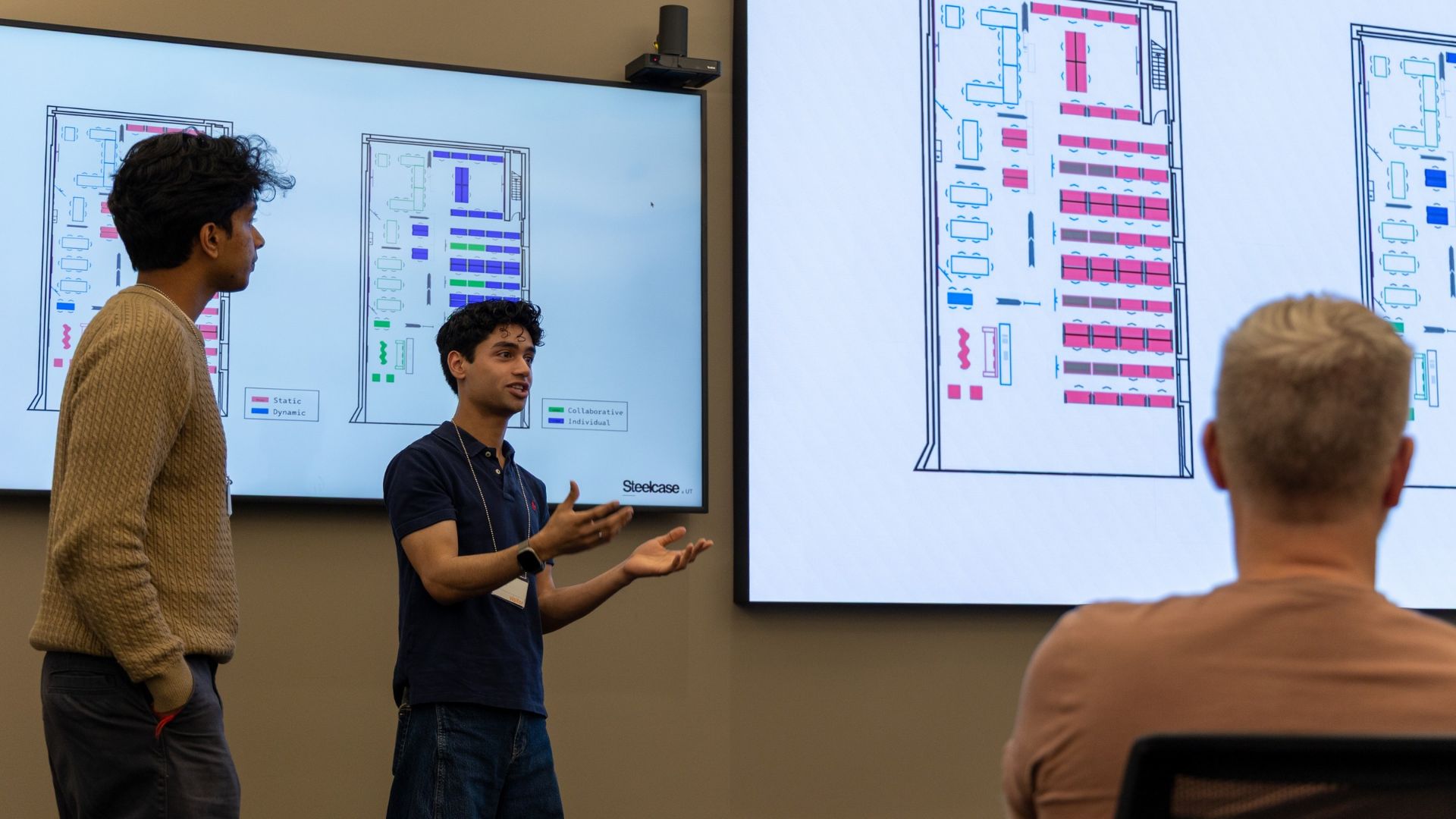
While preparing for my fall courses at the University of Michigan—UT 402: Design for Longevity Across Scale and UT 430: Strategic Design and Urban Systems—I read Studio Properties: A Field Guide to Design Education (Jones et al., 2025).
The book prompted me to reconsider the relationships among studio spaces, teaching practices, and learning experiences (Figure 1).
Following our midterm presentations, I returned to these questions with greater urgency. What are students learning beyond the project itself? How can studio teaching help them connect research with action? And what responsibilities do educators and external partners share in shaping that experience?
Three priorities are guiding my reflections:
- Engaging with real-world challenges
- Treating external partners as collaborators
- Building research and design capabilities together
The studio as a learning culture
When people mention a design studio, we might picture shared tables, sketches pinned to walls, unfinished models, and conversations unfolding around work in progress. These physical arrangements matter because they make thinking visible and create opportunities to learn from others.
Studio education also develops through interactions: observing a peer’s process, explaining an emerging idea, receiving criticism, and deciding what to try next. Studio Properties offers a useful entry into this complexity by examining the studio through its activities, interactions, and experiences (Jones et al., 2025).
Educational psychologist Lee Shulman’s (2005) concept of signature pedagogies helps explain why these studio routines matter. He describes them as characteristic forms of teaching and learning that prepare students to think, perform, and act with integrity within a profession.
These pedagogies have three dimensions:
- Surface structure: The observable activities through which teaching and learning occur.
- Deep structure: The underlying assumptions about how professional knowledge and skills are best learned.
- Implicit structure: The values, attitudes, and dispositions conveyed through teaching.
Applied to studio education, these dimensions encourage us to examine how making, presenting, and critiquing work develop students’ judgment. They also draw attention to what everyday teaching practices communicate about expertise, authority, and responsibility.
Studio teaching shapes what students produce, how they explain their decisions, and how they understand their role as designers.
Cultivating studio culture is therefore part of teaching. Public critique can help students articulate their reasoning, but its educational value depends on whether they feel able to ask questions, acknowledge uncertainty, and act on feedback. I hope and want the studio to nurture both the confidence to propose an idea and the willingness to reconsider it.
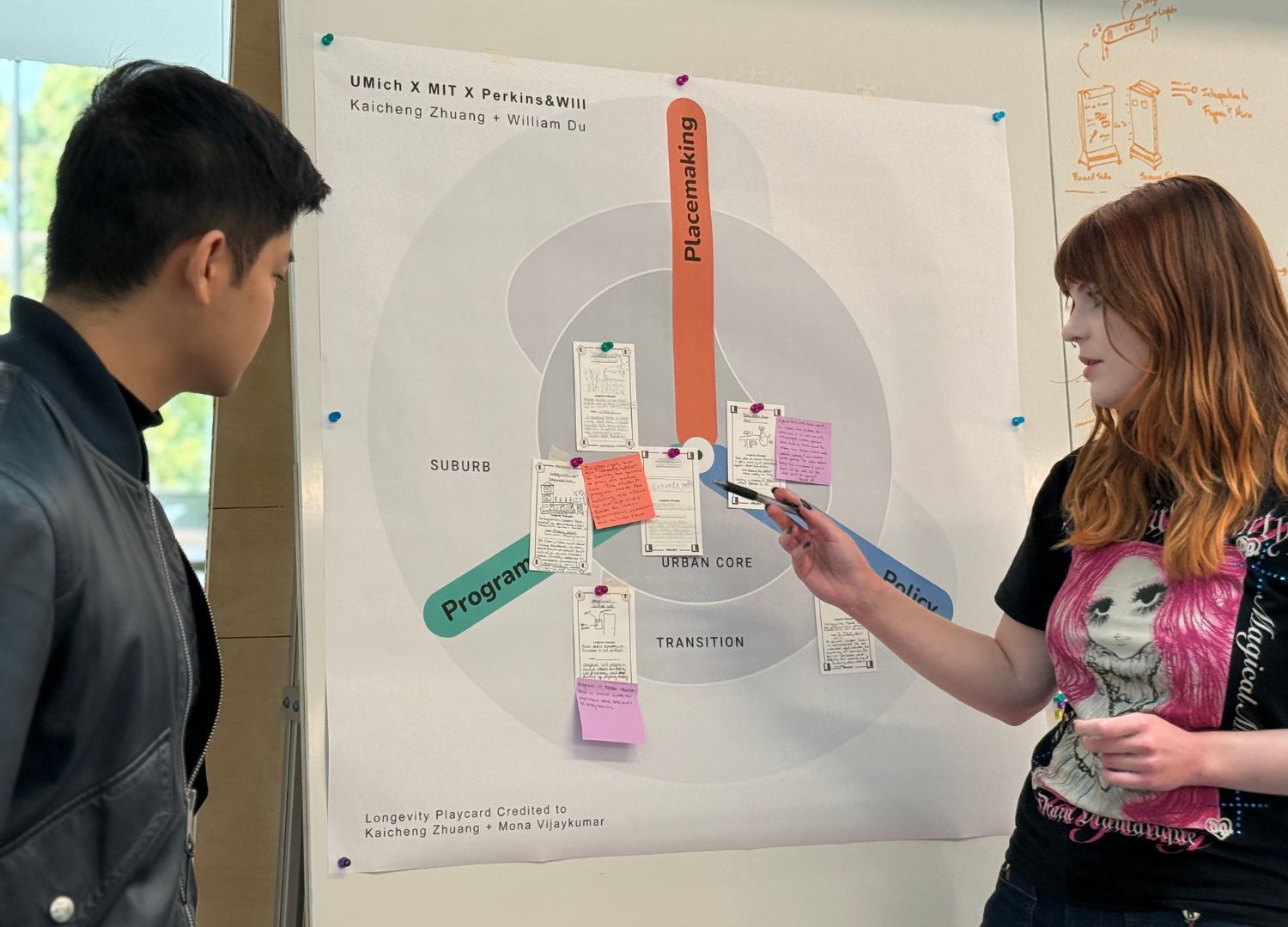
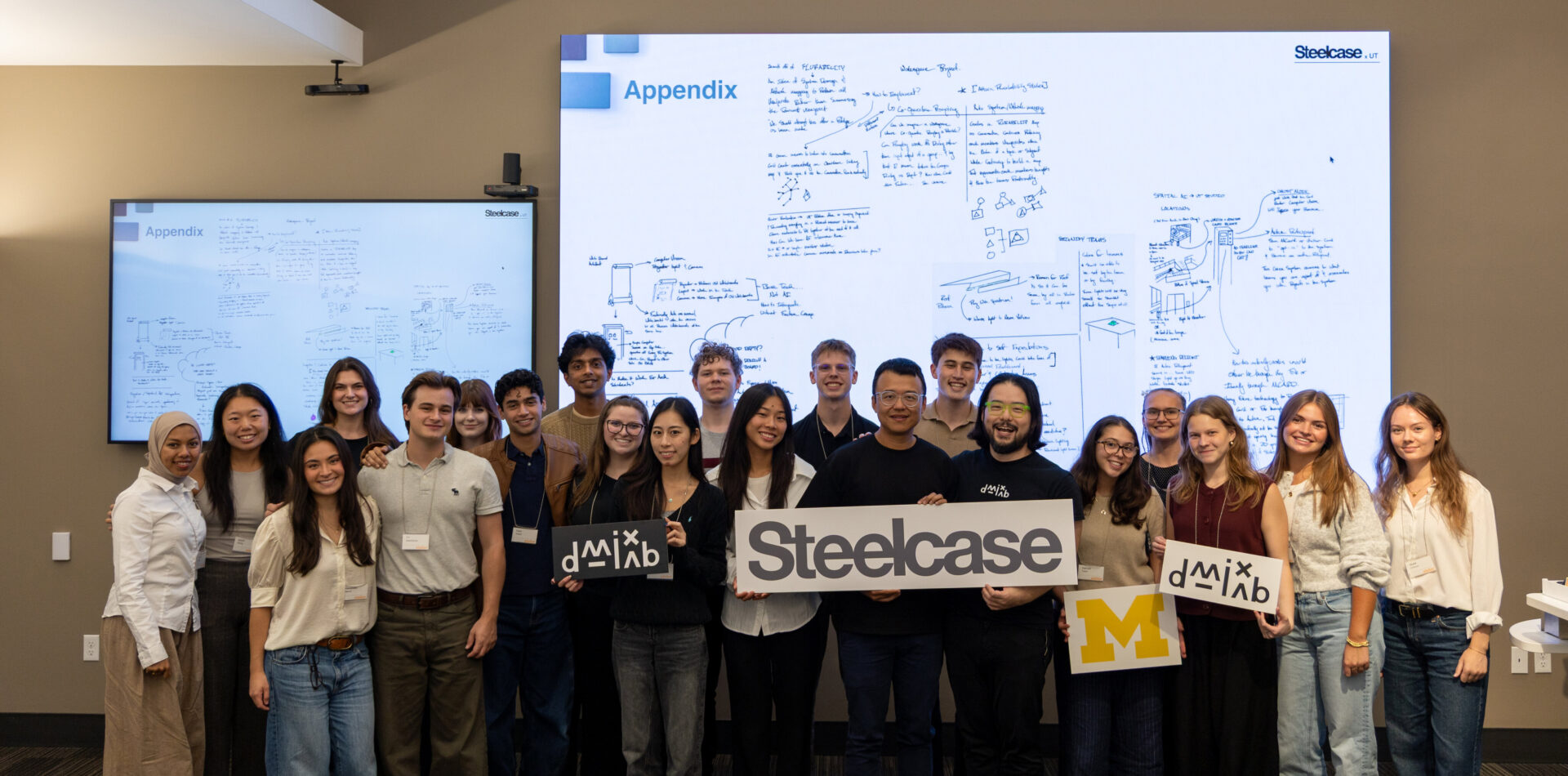
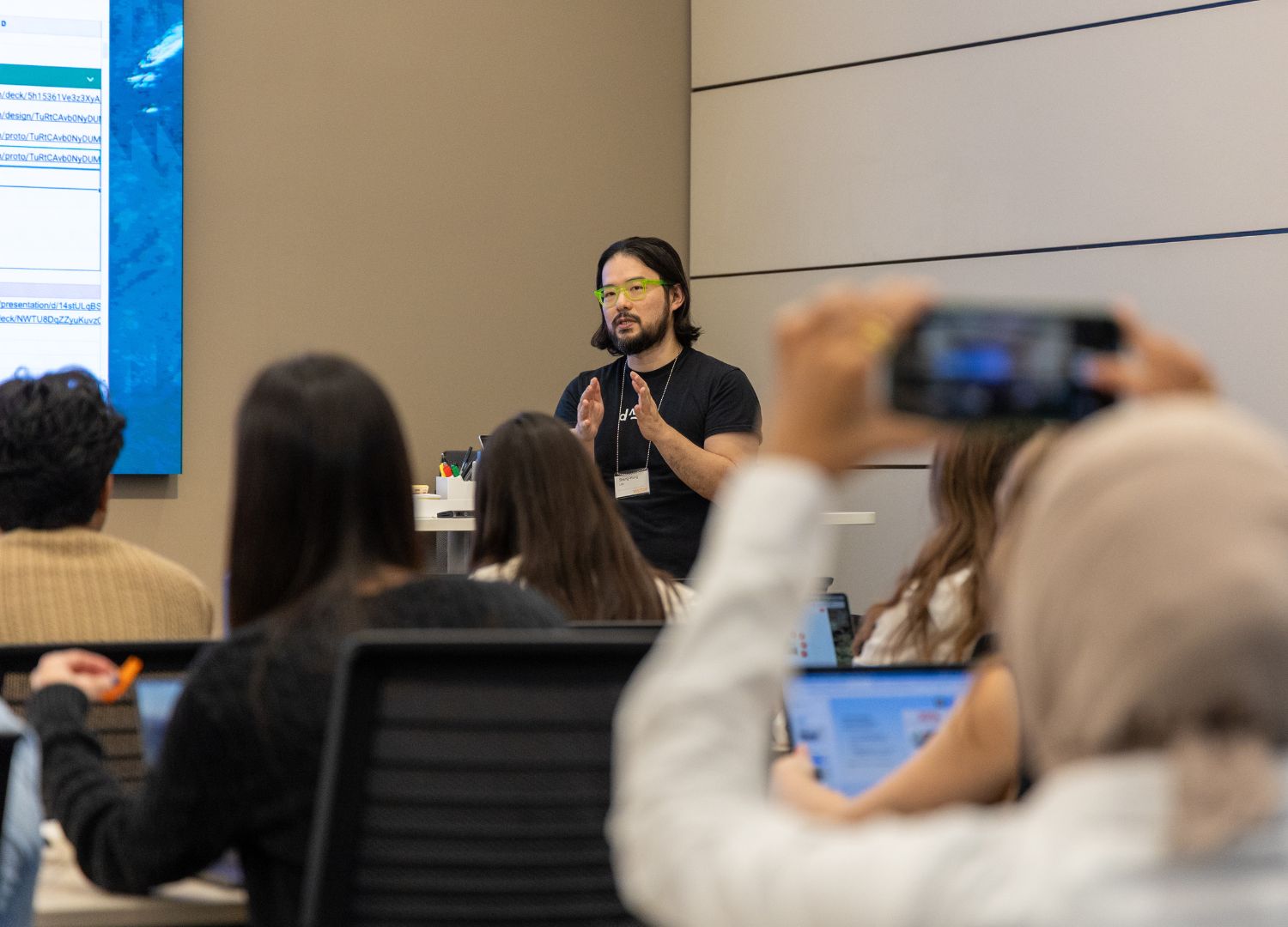
To support this learning culture, I invited Kaicheng Zhuang, a designer at Perkins&Will, and William Du, a designer at PAYETTE, to share their projects and professional experiences with students in UT 402 and UT 430 (Figure 2).
During a participatory workshop, they introduced their design processes, cards and posters, prompting thoughtful conversations and new ideas. The session offered an example of the learning culture I hope to cultivate: a welcoming space where students and practitioners from different fields learn from one another through dialogue, experimentation, and play.
Engage with real-world challenges
As artificial intelligence (AI) becomes part of students’ design workflows, I find myself placing greater emphasis on in-person fieldwork. AI can support exploration and synthesis, but students still need opportunities to encounter the people, places, and conditions their projects concern. A plausible account of an experience needs to be examined against lived experience.
In my UT 430 section, 16 senior students work in four teams with mentors from General Motors (GM), Steelcase, HOK, Michigan Medicine’s Turner Senior Wellness Program (TSWP), and Grandmont Rosedale Development Corporation (GRDC). The projects bring students into contact with organizational priorities, everyday routines, and competing expectations.
During the first six weeks, students concentrated on research, including literature reviews, field visits, observations, and interviews. My intention was to give them a basis for questioning the brief before committing to a solution. What appears to be a spatial problem might also involve communication, service coordination, or organizational practice.
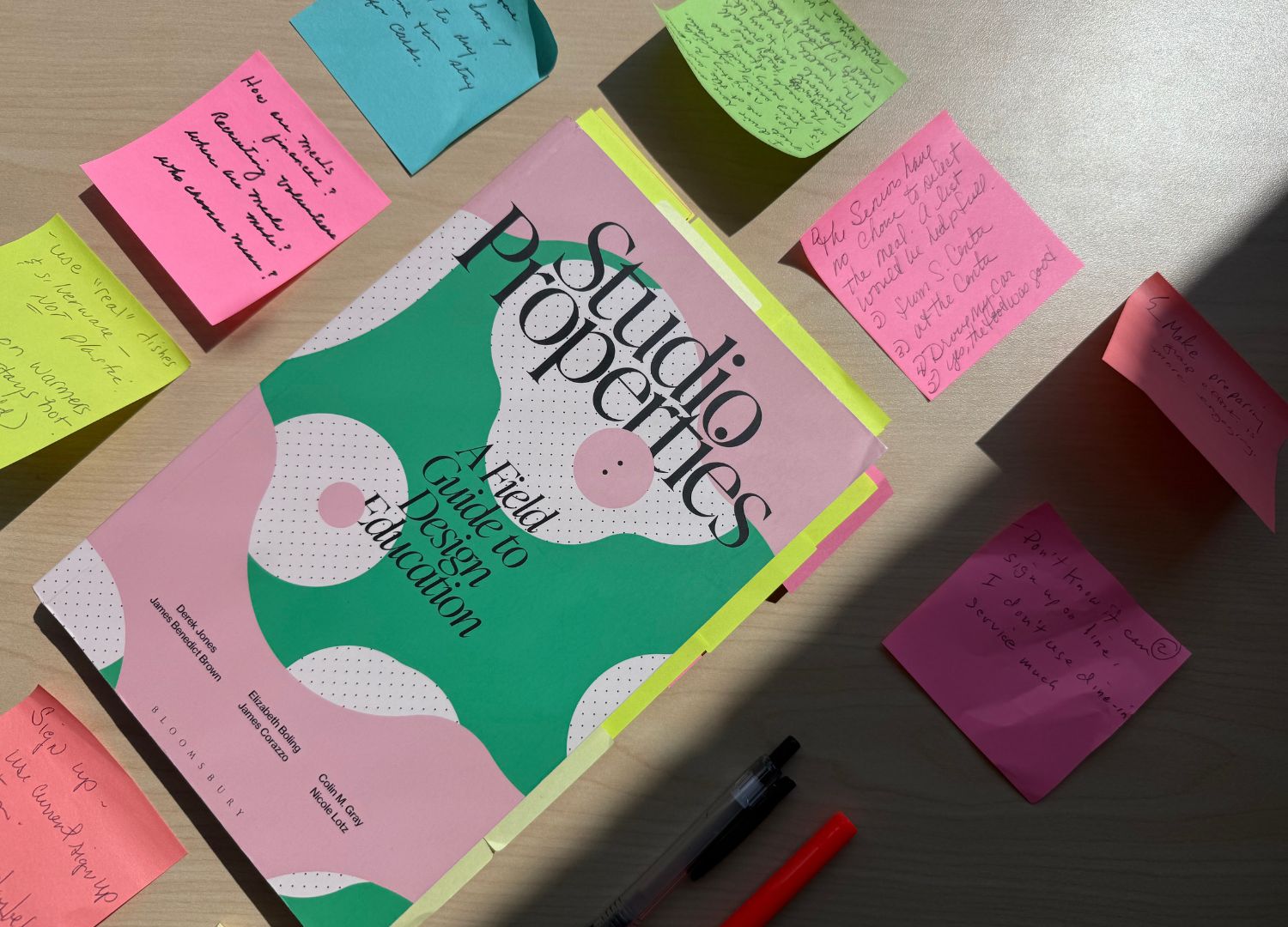
One team, guided by Steelcase, proposed using time-lapse documentation to examine when and how the Urban Technology studio space is occupied (Figure 3). Another team, working with HOK and TSWP, investigated TSWP’s welcome area through repeated visits and brief, informal interviews.
These approaches give students ways to examine differences between what they assume, what people describe, and what happens in practice.
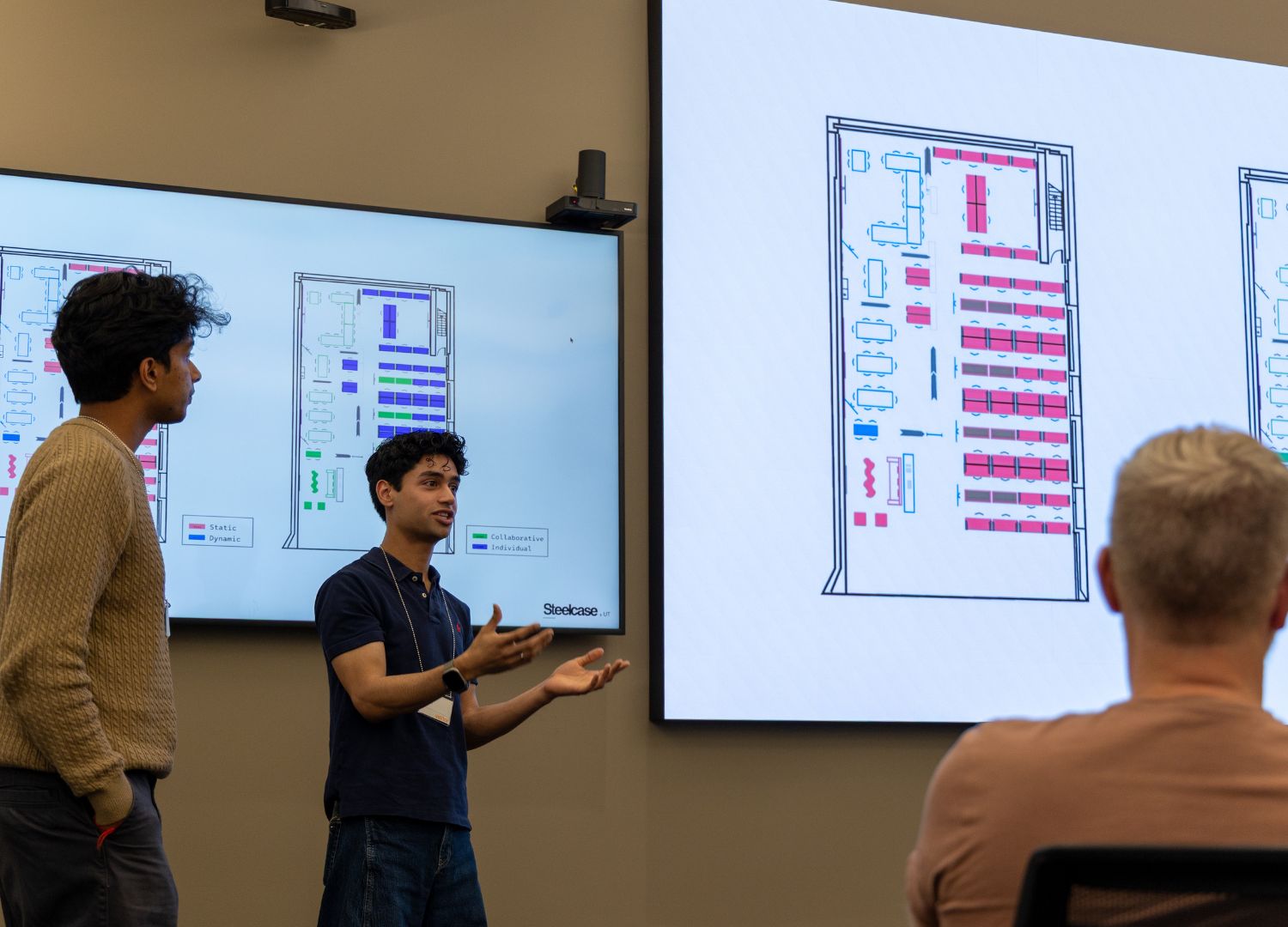
Educator and scholar John Dewey’s Experience and Education (1938) provides an important foundation for thinking about the educational quality of experience. In my teaching, a site visit becomes more valuable when students examine how it changes their understanding and what questions it leaves unanswered.
I therefore see fieldwork as part of an ongoing design process. Students can return to a place with a new question or prototype, allowing what they learn to reshape what they make.
Treat external partners as collaborators
This semester, I am fortunate to work with experienced designers, researchers, and community leaders. I describe these partners as collaborators because I want our relationships to support shared inquiry, learning, and responsibility.
In the studio, this language emphasizes an ongoing exchange in which everyone contributes to shaping the work. To me, the term “client” suggests a more transactional relationship, so I prefer “collaborator” to emphasize shared inquiry and learning in my design studio.
The term collaborator also signals an educational expectation. Students need room to question assumptions, explore alternatives, and explain why a promising direction may differ from the initial request. Partners contribute situated knowledge and practical constraints; students contribute research, experiments, and emerging interpretations.
Sanders and Stappers’s (2008) discussion of co-creation offers a useful reference for this approach. Their account of evolving roles and responsibilities in design invites us to consider whose knowledge informs a project and who participates in shaping it.
Co-creation also requires attention to power dynamics: who frames the questions, whose perspectives receive attention, and who influences decisions. Examining these dynamics can help students understand stakeholders’ and communities’ needs and expectations while reflecting on their own role in the process.
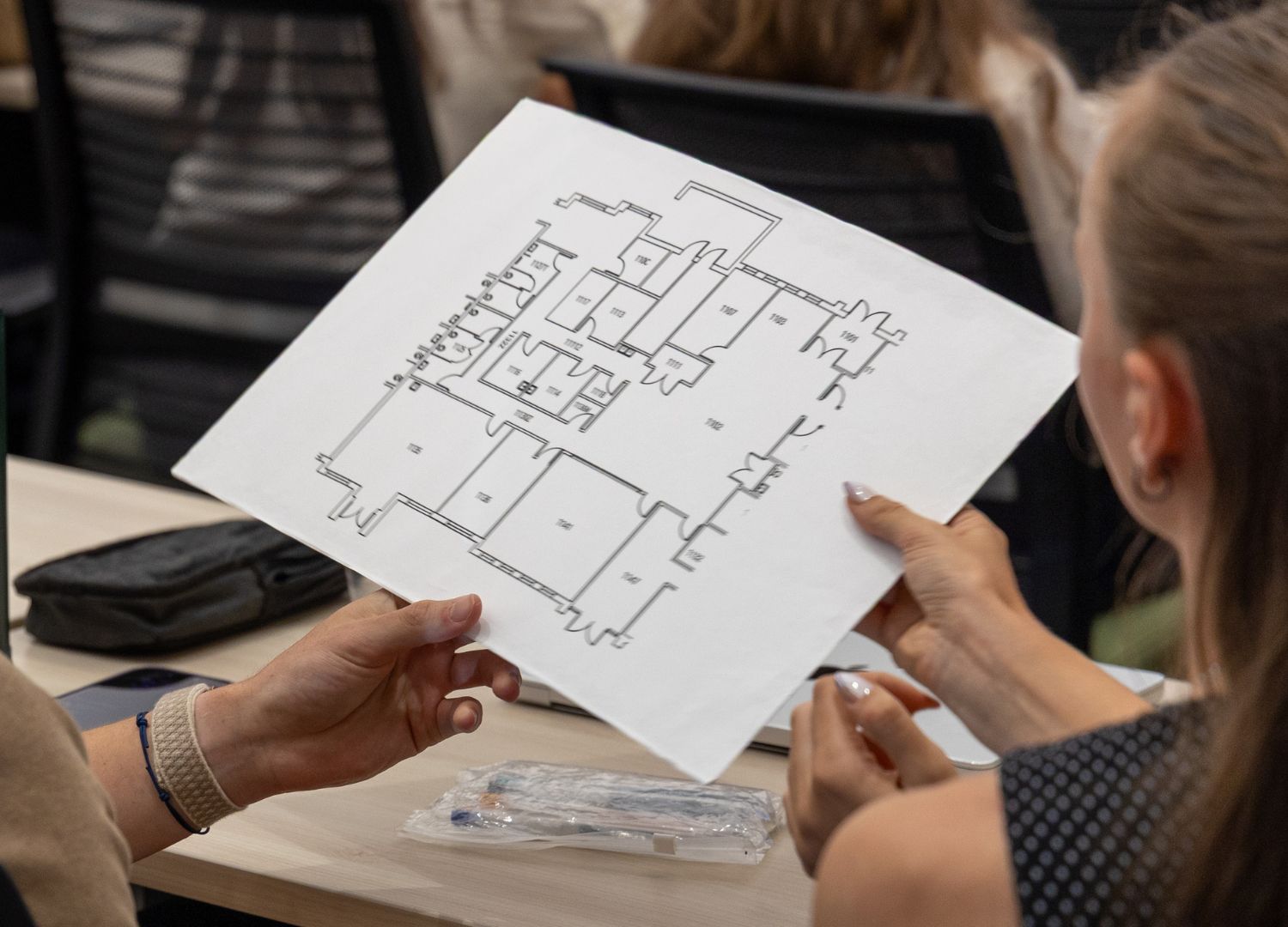
In UT 402: Design for Longevity Across Scale, for example, I collaborated with Dexter Senior Center. My students and I visited the center to explore opportunities to improve its service experience, drawing on the perspectives of staff, volunteers, older adults, and the wider community (Figure 4).
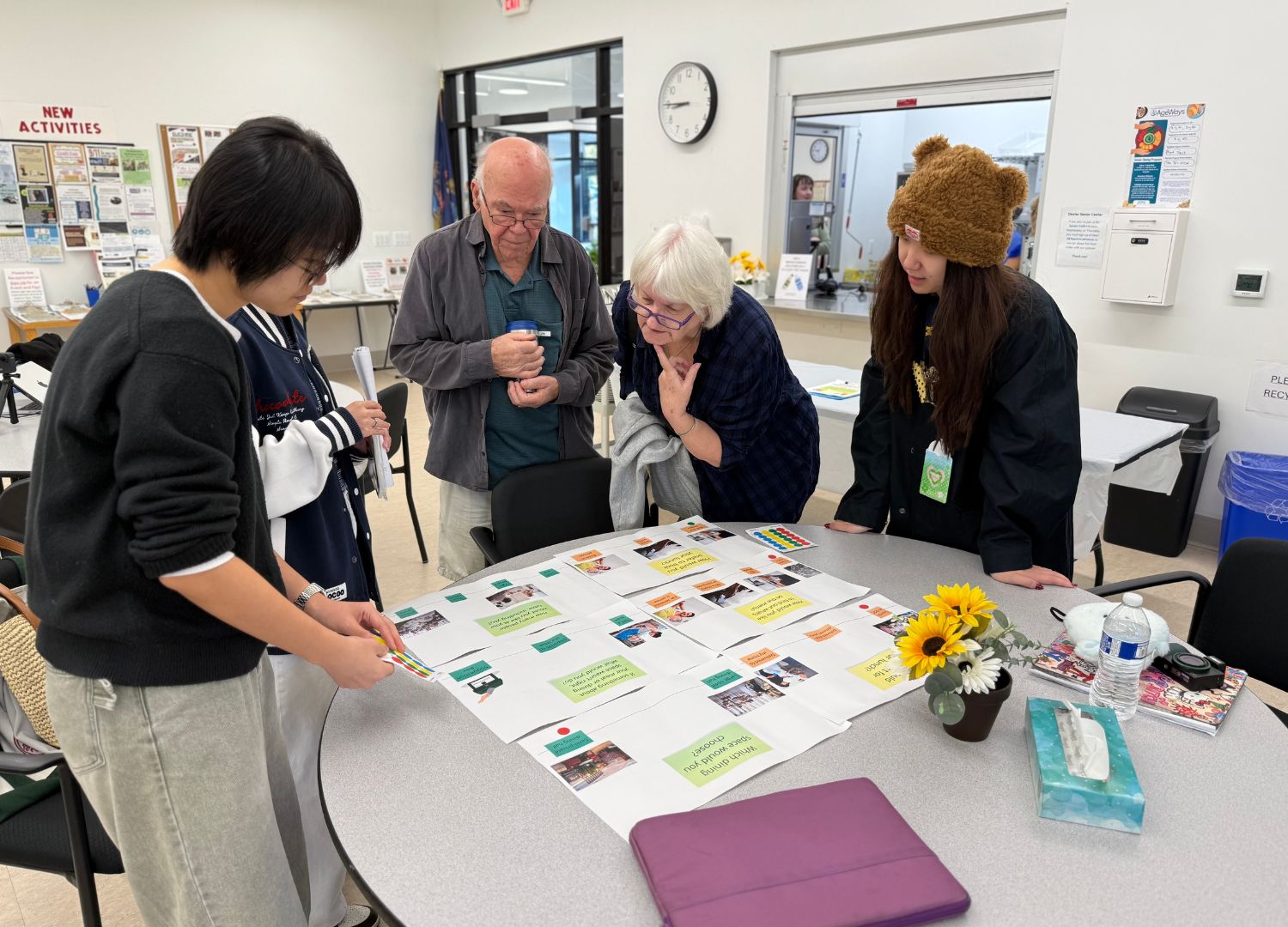
Participatory activities and conversations helped students identify challenges in everyday service experiences and understand how decisions are made, whose priorities shape them, and where opportunities for change might emerge.
For example, one student team initially assumed that improving the welcome area meant rearranging furniture. After speaking with older adults and staff, they discovered that visitors also struggled to understand where to go and whom to ask for help.
This prompted the student team to explore wayfinding, communication, and staff interactions alongside the physical layout and furniture.
This collaboration raises a practical question for studio teaching: how can students move beyond presenting ideas to experts and learn with the people who will experience the consequences of their proposals?
Mentors contribute valuable perspectives within a wider system. Students also need to understand the experiences of participants, staff, residents, and others affected by their work. Learning to navigate these perspectives—and the tensions among them—is part of designing responsibly.
I sometimes compare the final presentation to a wedding: a public expression of commitment after months of preparation. For students, that commitment extends to the work and the relationships that have shaped it. It also carries a responsibility to remain open to revision as new evidence emerges.
What I hope to see is ownership: students taking responsibility for their research and design decisions while developing their own creative voice. They should be able to explain which interview changed their initial direction, what they learned from a failed prototype, and how a disagreement helped clarify a decision.
These accounts reveal how deeply students understand their process and how collaboration has shaped their learning.
Build research and design capabilities together
Design requires craft, conceptual understanding, and judgment. Reading, observing, making, testing, and reflecting all contribute to that development.
I often use the term design process because it draws attention to the work involved: gathering evidence, framing questions, developing representations, testing possibilities, and explaining decisions.
Research is integral to this process. A prototype can reveal an unanswered question; a paper can offer a concept that changes what students notice in the field.
In the studio culture I am developing within Urban Technology, reading has an explicit place. I ask students to present selected papers so that each person contributes to our shared knowledge. The aim is to connect scholarship with the situations students are investigating and help them explain how these ideas inform their design choices.
This practice feels especially relevant amid growing attention to AI literacy. Alongside learning how to use emerging tools, students need to judge which questions deserve attention, where to find credible information, and what evidence would justify a design decision.
These capabilities help them assess their own assumptions and the outputs of the tools they use.
Generating many ideas with AI does not, by itself, demonstrate design judgment. Students still need to assess which ideas respond to the context, what evidence supports them, and which deserve further development.
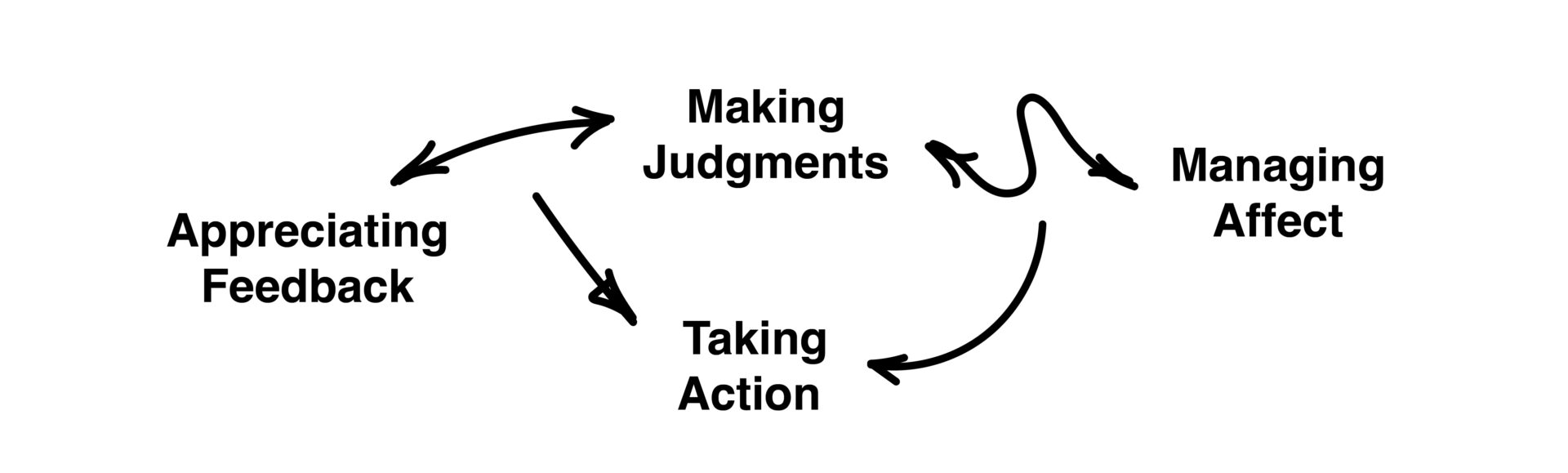
Giving and receiving feedback also contribute to this intellectual training. Carless and Boud (2018) describe feedback literacy through four interconnected capacities:
- Appreciating feedback: Recognizing the value of feedback and understanding one’s active role in the process.
- Making judgments: Developing the ability to evaluate the quality of one’s own work and that of others.
- Managing affect: Navigating the feelings, emotions, and attitudes that feedback can evoke, including defensive responses to criticism.
- Taking action: Using feedback to guide revisions and inform future work.
Their framework helps me understand critique as a learning process that continues after the conversation ends (Figure 6).
One practice I want to develop further is asking students to document the feedback they receive, identify which comments they will act on, and explain the reasoning behind their next steps. This would make the relationship between critique and subsequent design decisions more visible, while encouraging students to engage thoughtfully with feedback.
The practice is like a typical academic peer review, in which authors respond to reviewers’ comments, revise their manuscripts, and explain their decisions. This process can be demanding and tedious, but it offers a useful model for studio learning: students practice weighing different perspectives, supporting their choices, and demonstrating how their work has developed through revision.
Teaching through reflection
What makes a design studio a meaningful place to learn?
For me, the answer becomes clearer when students can explain how their thinking and action has changed: which encounter challenged an assumption, which piece of feedback prompted a revision, and why they chose a particular direction.
Donald Schön’s Educating the Reflective Practitioner (1987) places the architectural studio at the center of an inquiry into professional learning. His notion of reflection-in-action offers a way to understand how designers learn as they work through ambiguous situations.
I recognize this process in my own teaching when a classroom discussion prompts me to reframe a question or adapt an activity. Students practice it as they move among fieldwork, research, prototyping, and critique, allowing what they discover to reshape their next steps.
These reflections continue to inform my teaching, particularly as students address interconnected challenges involving senior centers, shared learning spaces, and community services. Such projects offer sustained opportunities to encounter complexity, work with others, make decisions, and examine their consequences.
For now, these reflections have sharpened my sense of what a design studio can offer: sustained opportunities to encounter complexity, work with others, make decisions, and examine their consequences.
The projects give this learning a concrete form. I hope the capability to keep questioning and learning can accompany students long after the final presentation. The studio becomes a proactively learning culture when students, educators, and collaborators can question their assumptions together—and use what they learn to decide what to try next.
Acknowledgement
I am grateful to the UT 430: Strategic Design and Urban Systems (Section 2) studio mentors—Kai Yu (Steelcase), Qingyu Cai (HOK), Suzette Malek, Wade Bryant, and Alejandro Lozano Robledo (General Motors), Michael Randall (Grandmont Rosedale Development Corporation), and Shannon Etcheverry (Michigan Medicine’s Turner Senior Wellness Program)—for guiding students through the research phase, helping them frame design challenges, and deepening their understanding of stakeholders’ needs.
Special thanks to Anna Pekrul, Director of Dexter Senior Center, for supporting UT 402: Design for Longevity Across Scale and creating opportunities for students to learn with the center’s staff, volunteers, and older adults. I also thank Kaicheng Zhuang (Perkins&Will) and William Du (PAYETTE) for facilitating a participatory workshop that expanded students’ perspectives on design practice. Together, these collaborators’ generous contributions of time, expertise, and feedback have enriched our learning experience within the University of Michigan’s Urban Technology program.
References:
- UT 402: Design for Longevity Across Scale
- UT 430: Strategic Design and Urban Systems
- The Development of Student Feedback Literacy: Enabling Uptake of Feedback
- Experience and Education
- Studio Properties: A Field Guide to Design Education
- Co-creation and the New Landscapes of Design
- Signature Pedagogies in the Professions
About the author

Sheng-Hung Lee is an Assistant Professor of Urban Technology at the University of Michigan and Director of the d-mix lab. Trained in both design and engineering, his work explores how technology and human-centered design can shape more equitable and longevity-ready societies.
WebsiteInstagramLinkedin