Ideas for Business – Call#3: Meet the winning projects
In the third edition of the contest, DesignWanted asked designers to reinterpret an object that defines the fall season: the umbrella stand, and for the first time, the call included a monetary prize for the Absolute Winner.

On October 15, the third edition of Ideas for Business came to a close, announcing the three winners of the contest – dedicated to an often-overlooked object that perfectly captures the welcoming spirit of a home or retail space in autumn: the umbrella stand. This time a €1,000 prize for the Absolute Winner has been introduced, reinforcing its belief that talent deserves concrete investment. Moreover, each of the three winners will receive an exclusive editorial article and an Instagram post, as well as a feature in a dedicated winners’ article promoted on social media and included in the newsletter. Additionally, from partner Shin Software, they will get a three-month free license for SHOWin3D, six hours of one-to-one training, and two hours of technical support.
Supporting emerging designers means creating real opportunities, built on trust and shared vision. For us, fostering new business possibilities is not just about challenging shapes and imagining new design output on everyday objects, it’s also about cultivating a culture of collaboration and growth.
Few objects define a season as clearly as the umbrella stand. It sits in our homes with a precise purpose, yet allows endless possibilities of form and interpretation. Its history is closely tied to that of the umbrella itself – evolving from ancient status symbols to the mass-produced pieces of the Victorian era.
Gallery
Open full width




Open full width
While ancient civilizations used large parasols in ceremonial contexts, the modern umbrella stand appeared in the late 19th century as a practical furnishing, reflecting the growing popularity of umbrellas in Victorian society. Early examples were often ornate cast-iron designs, sometimes featuring sculpted animals or figures, while later versions explored new materials and aesthetics. The first U.S. patent for an umbrella stand was granted in 1885 to an African-American inventor named Carter. Today, umbrella stands span a vast range of styles, from sleek contemporary designs to rustic and traditional interpretations.
The three winners of this edition each embody a contemporary take on the umbrella stand, celebrating the freedom of interpretation. Whether reflecting on its role in everyday life or questioning the typology itself, the challenge was to create something as distinctive as the function it serves.
Ideas For Business Call #3 – The Winners:
CLU by Estudio Gris – Absolute Winner
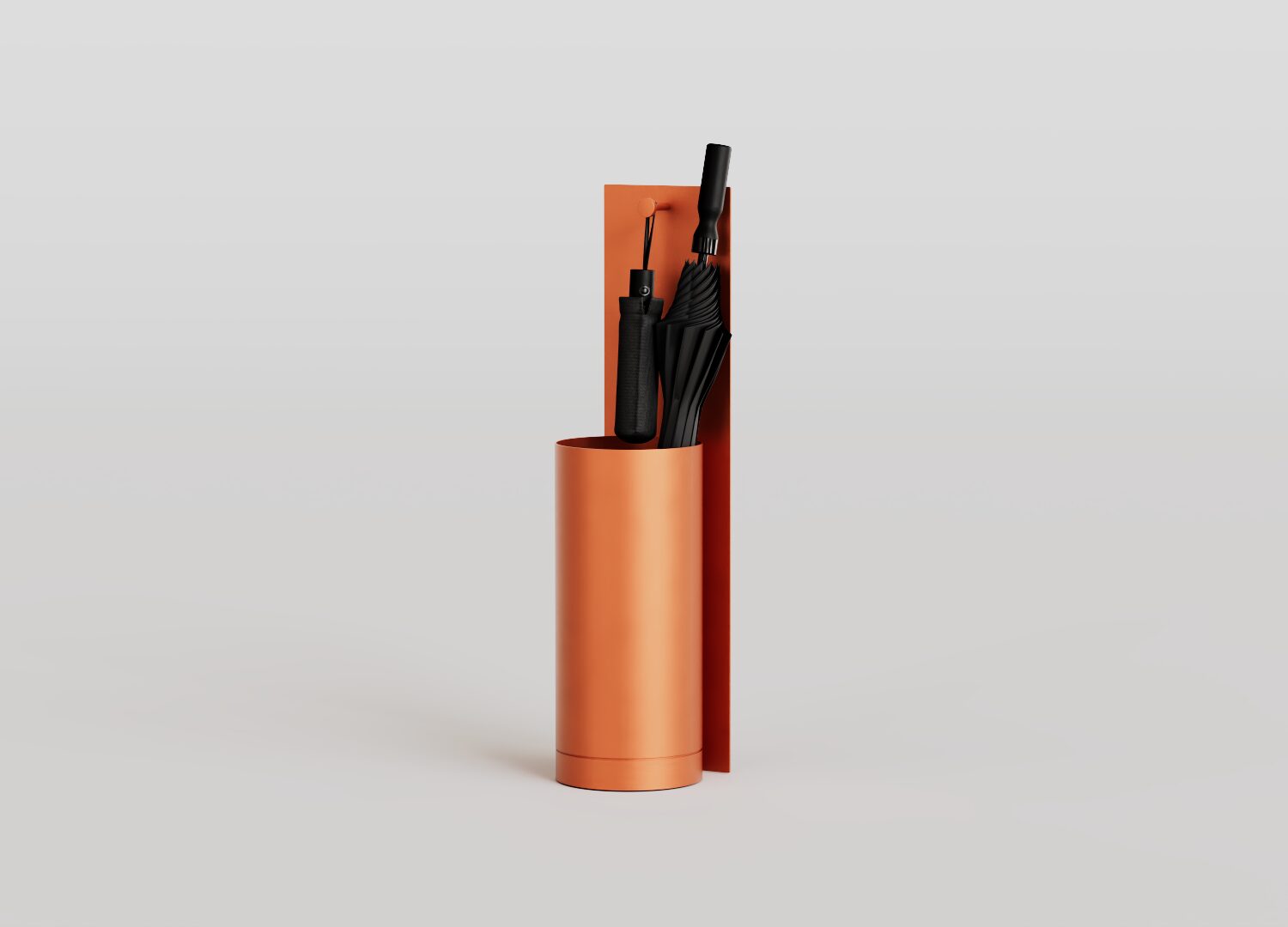
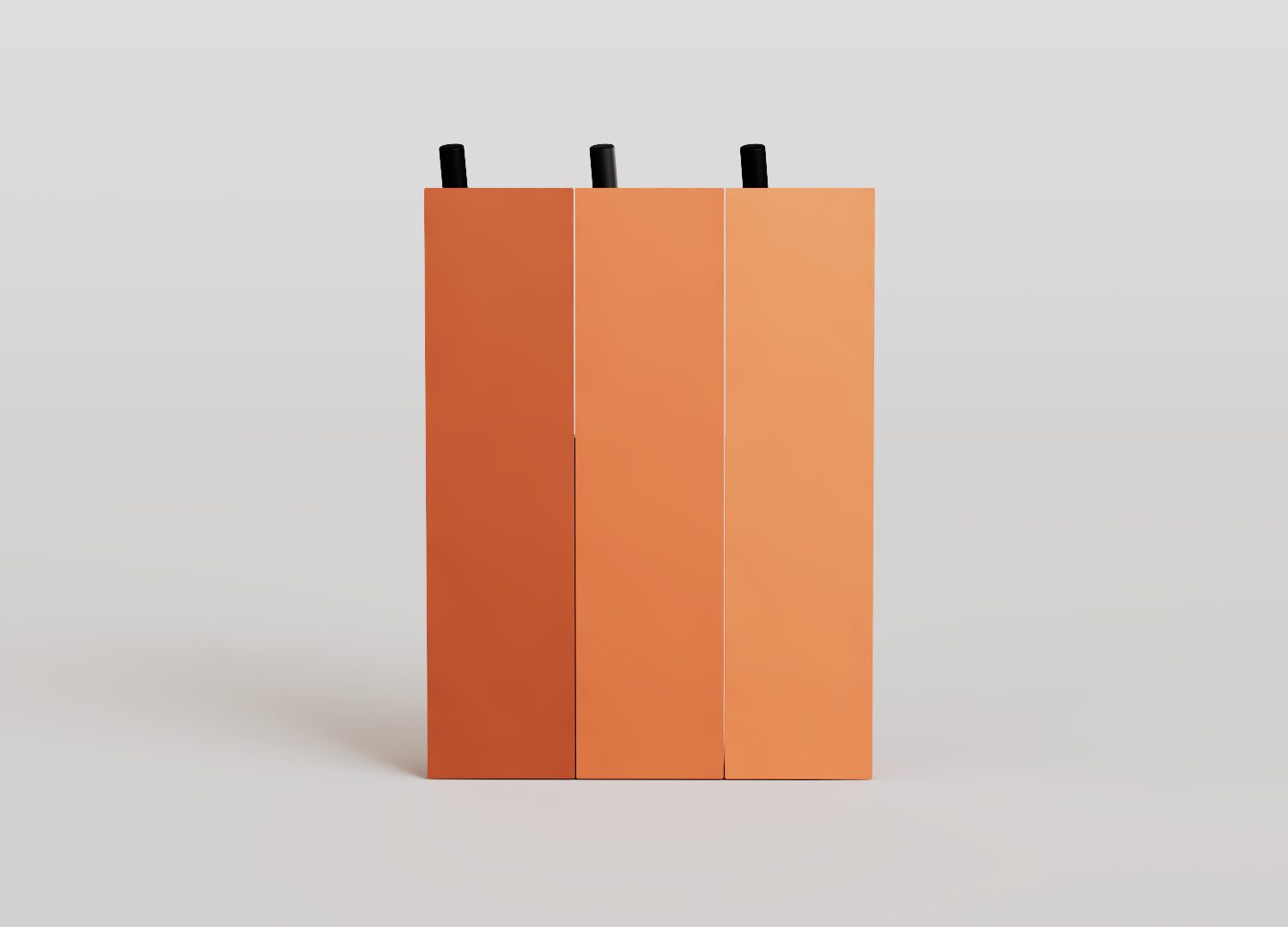
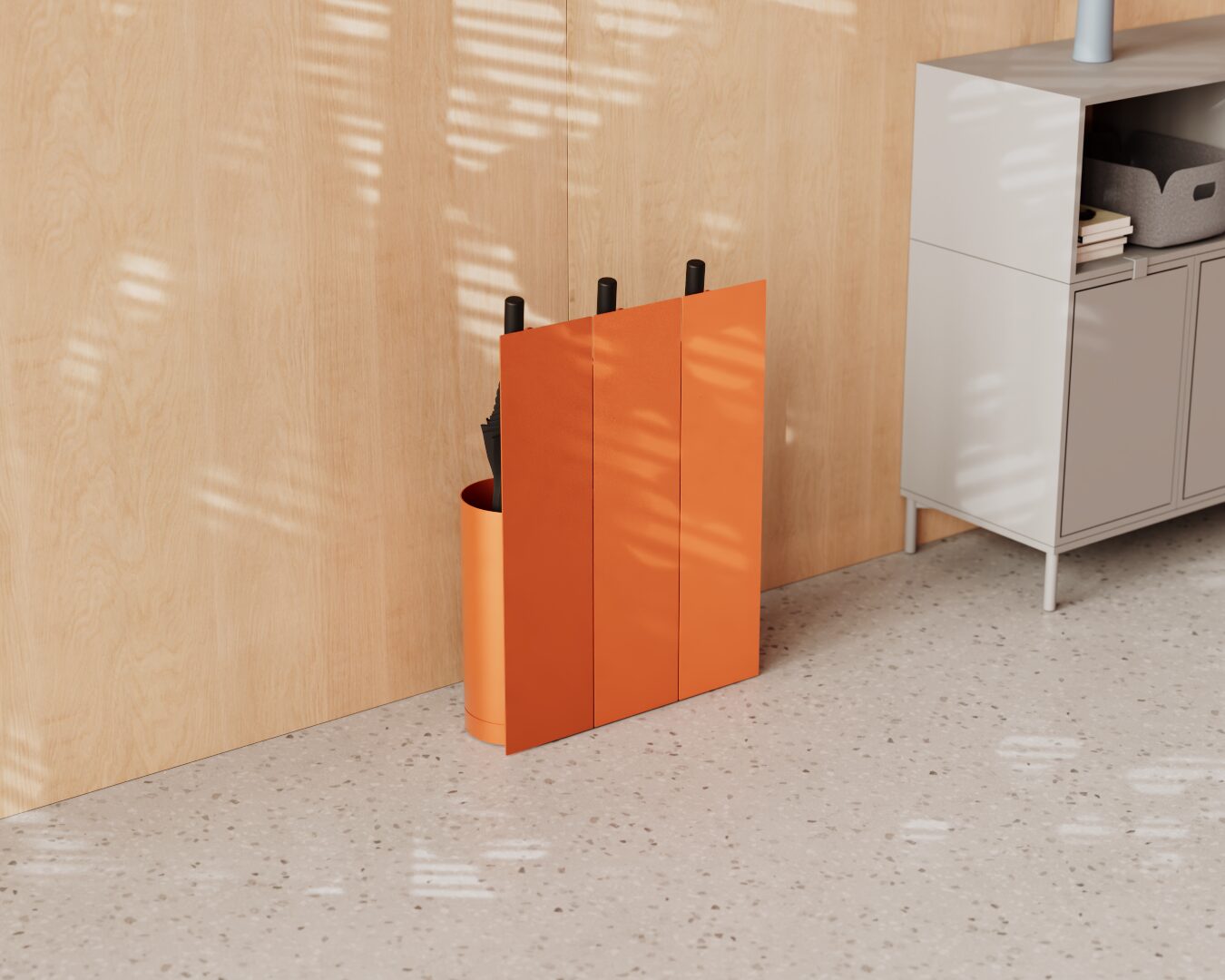
The Absolute Winner of this third edition of Ideas of Business is CLU by Estudio Gris: an umbrella stand able to transform itself into a sculptural presence beyond mere functionality. It becomes a minimalist totem that conceals the everyday chaos of wet fabrics and metal ribs, leaving behind a pure volume of color. Its modular design – conceived in Mono, Duo, and Trio versions – creates subtle chromatic gradients that recall a fading rainbow, shaping the entrance space even when empty.
With a removable drip tray and a top peg for compact umbrellas, this piece combines practicality and emotion, turning storage into a quiet gesture of order and beauty. Lightweight, flat-pack, and made of powder-coated metal, CLU adapts effortlessly to any environment, celebrating, through color and restraint, the harmony of the calm after the rain.
Spine by Studio Milla
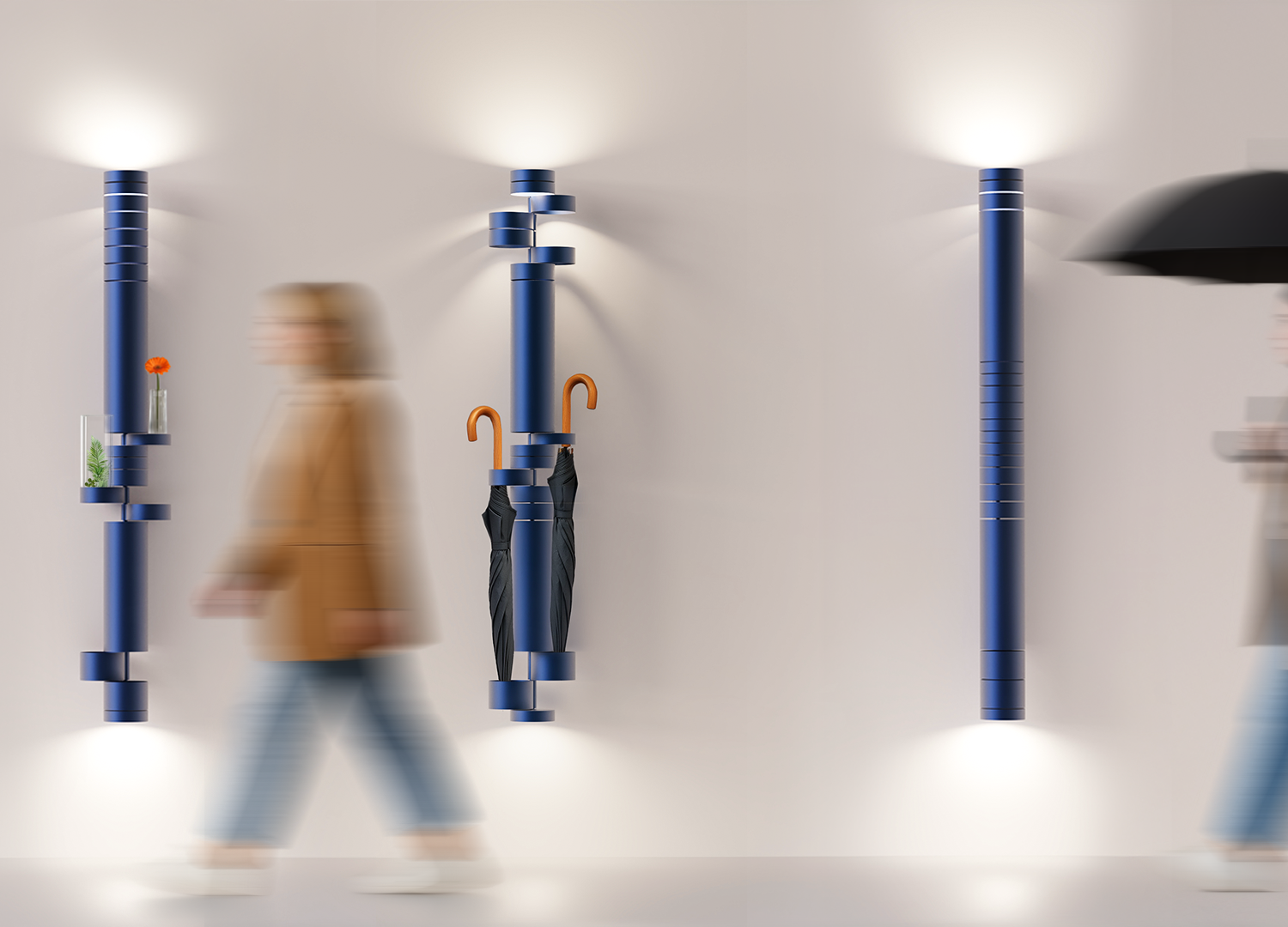
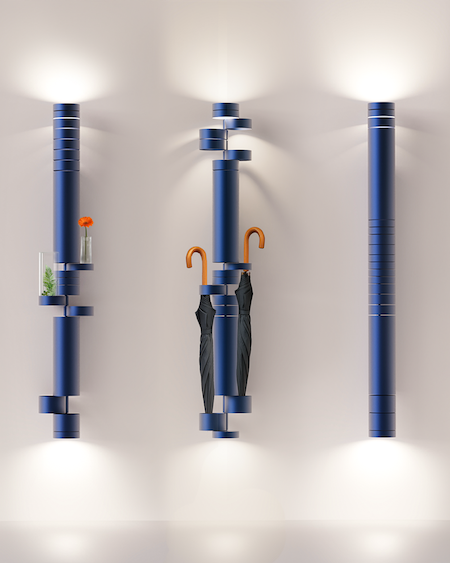
Invisible when not needed, indispensable when it rains, Spine by Studio Milla, founded by Milla Lack is a different perspective on the logic of presence and absence, transforming an object built for bad weather into one that quietly earns its place every day of the year. This umbrella stand is a wall-mounted anodised aluminium cylinder that shifts seamlessly between functions – becoming a source of soft ambient light, a discreet shelf for everyday items, and appears only when required.
Durable, tactile, and architecturally precise, Spine merges utility, light, and restraint in a gesture that integrates rather than intrudes, showing how, in a world saturated with objects competing for attention, true design should justify its existence.
DIP by Michela Brescia
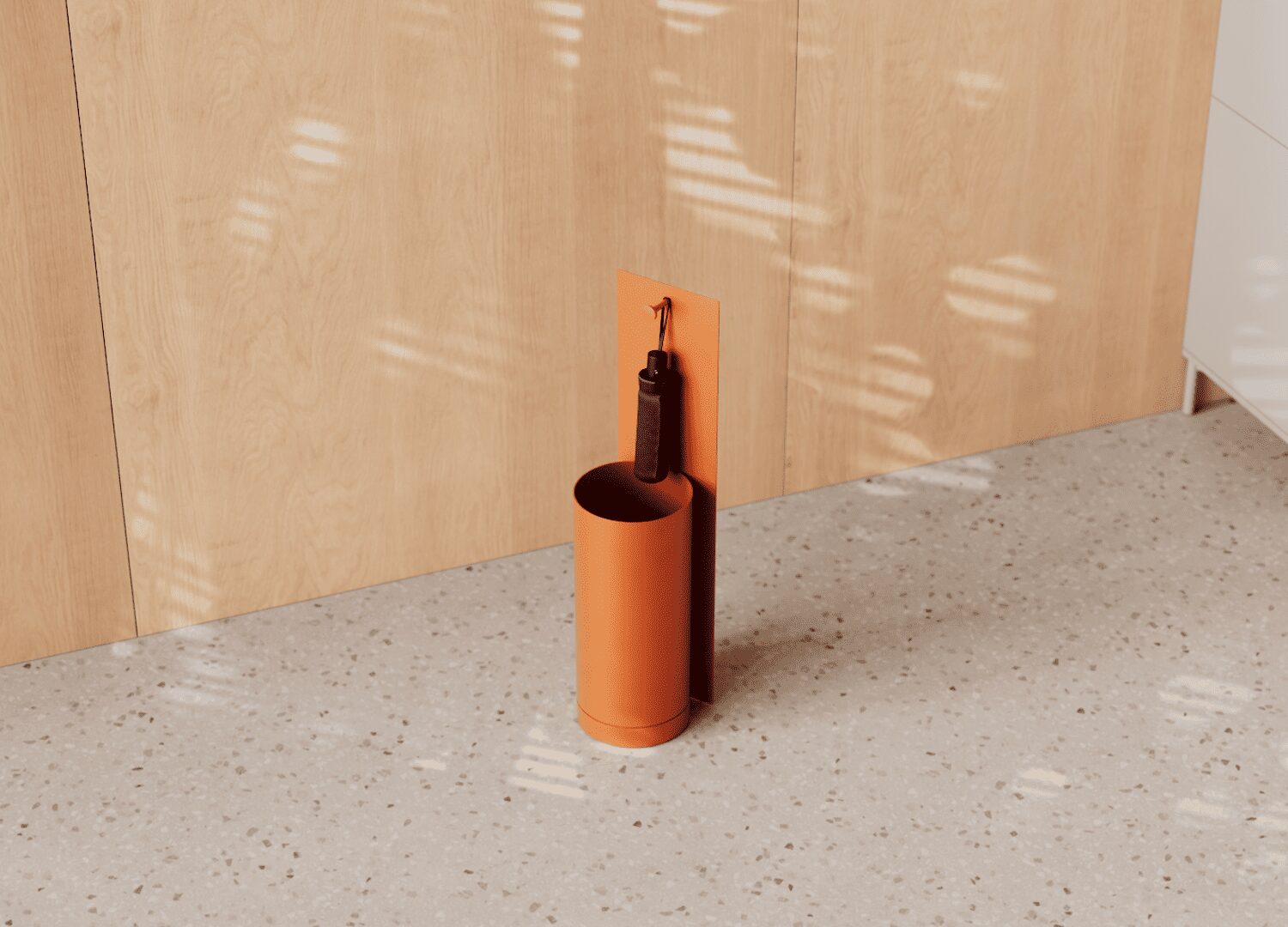
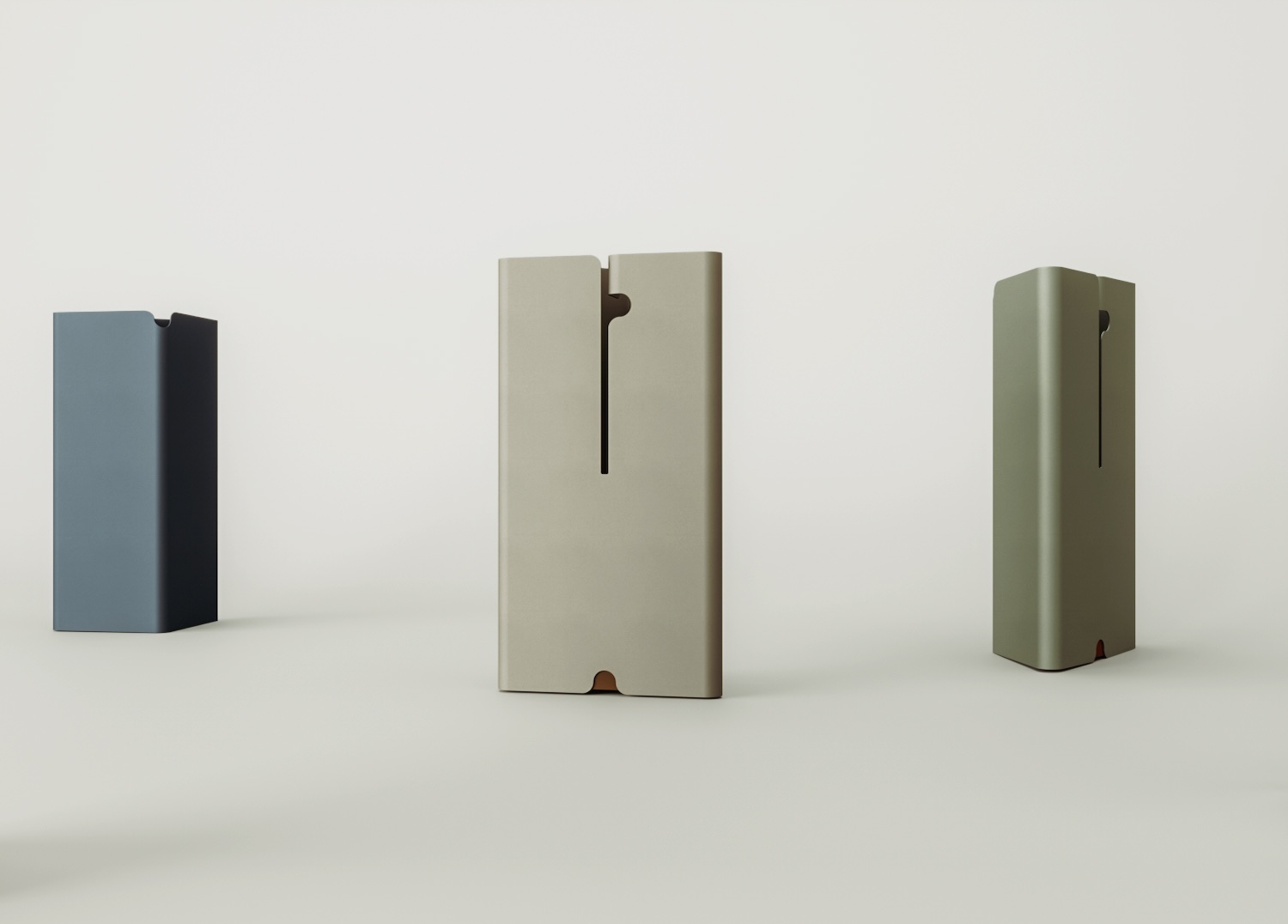
Made from a single sheet of press-bent steel, DIP by Michela Brescia reveals the material’s precision, purity, and strength. Its triangular plan with rounded corners fits neatly into corners, minimizing footprint while maximizing capacity – a natural extension of the domestic wall. Inspired by iconic designs such as Artek’s 115 and Magis’s Poppins, DIP stands as a sculptural, essential presence that turns an everyday object into an architectural element.
A vertical slit allows natural evaporation and extends to form a hook for small umbrellas, while a removable tray at the base collects water, ensuring cleanliness and durability. The satin chrome finish, with its sandblasted texture, enhances the tactile and visual qualities of steel, while a two-tone contrast at the base lightens the monolithic form, embodying design as a precise, restrained, and quietly functional statement.
Behind the story and symbolism of the umbrella stand, what truly stood out in this project was how effortlessly designers managed to shift the paradigm of such a subtle object, transforming it into something completely new each time. Multifunctionality, minimal footprint, adaptability – but also poetry, sculptural form, color, and gradient – all became part of the challenge to rethink an object often forgotten yet essential. An object that speaks of habits and trends more than anything else, silently reflecting its counterpart as something that has evolved alongside human history.
In this third edition, designers engaged with an often anonymous object, pushing it into the contemporary realm through technology, form, materials, and finishes. And that is precisely what Ideas for Business aims to do: to push boundaries, to rethink, to make objects exciting again – and to invite us to see design from a different perspective.
What will the next challenge be? Stay tuned for the upcoming call.
About the author

Ludovica Proietti, journalist, design historian and curator, teaches in universities and curates events, always exploring projects with fresh, unconventional perspectives.
Instagram