Guatemala Designs by Hand: rediscovering craft through modern vision
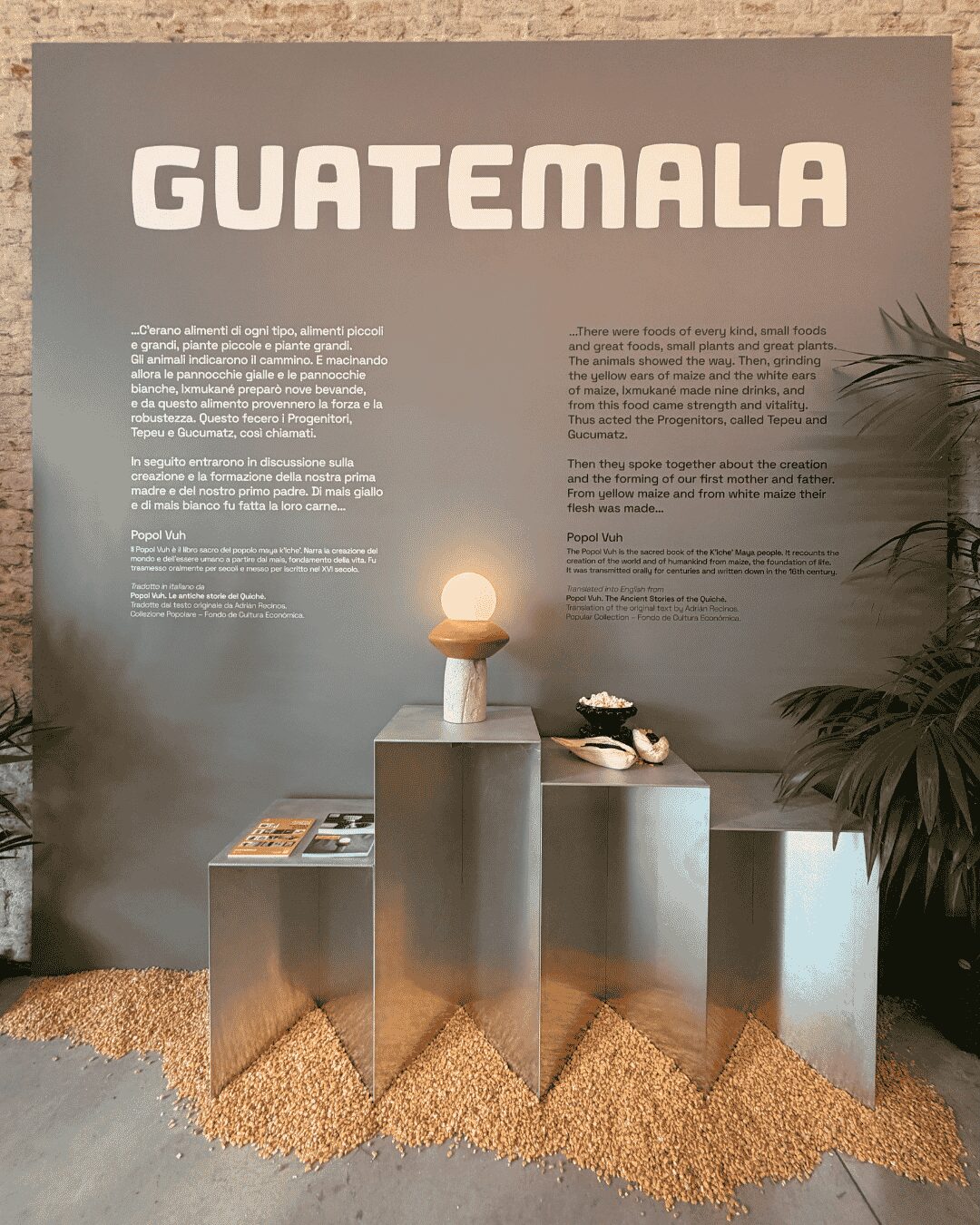
At Milan Design Week, Guatemala Designs by Hand, the exhibition promoted by the Guatemalan Institute of Tourism (INGUAT), showcased ancestral making and textile innovation, revealing how heritage, material knowledge, and creative exchange shape a vibrant contemporary landscape.
One of the most enriching aspects – for both visitors and professionals – of international events such as Milan Design Week is the opportunity to encounter projects in which design becomes a lens through which to explore the cultural identity and craftsmanship of distant countries. A compelling example of this 2026 edition has been Guatemala Diseña con las Manos / Guatemala Designs by Hand, the exhibition promoted by the Guatemalan Institute of Tourism (INGUAT), designed by Idonika in collaboration with the architectural design of Amarillo Studio.
Presented in Milan’s 5VIE district, the exhibition celebrated the excellence of Guatemalan craftsmanship through an authentic dialogue between tradition and innovation. From ancestral techniques to local materials, the project reinterpreted vernacular knowledge through a contemporary lens, inviting visitors to discover the country’s rich cultural and creative heritage.
Gallery
Open full width
Open full width
Guatemala Designs by Hand – Overview:
A research project connecting craft and contemporary design
The travelling exhibition began two years ago as a research initiative, and last year it was presented in five cities across four countries: Spain, Italy, Germany, France, and Mexico. For its second edition, an open call was launched. As curator Emiliano Valdés (INGUAT) explains:
“The first edition was built through direct research, but we quickly realised there were many more studios and initiatives working at this intersection. The open call was also a research tool for us – a way to map and understand this ecosystem. It was open to Guatemalan studios, but also to designers and artisans who are not necessarily Guatemalan, as long as they live and work in Guatemala.”
The call, addressed to designers, artisans, and textile artists, led an international jury to select works by 17 Guatemalan design studios, highlighting the vitality of the country’s contemporary creative scene. As Pablo Bautista, Partner at Idonika, adds: “The result is a capsule installation with an overarching narrative about the country, interwoven with the messages INGUAT wants to use to promote Guatemala. In this project, always rooted in Mayan culture and heritage, we built together with INGUAT the idea of a pyramid as a mirror of the Pyramid of Tikal, incorporating new design techniques each year.”
A textile installation inspired by Maya culture
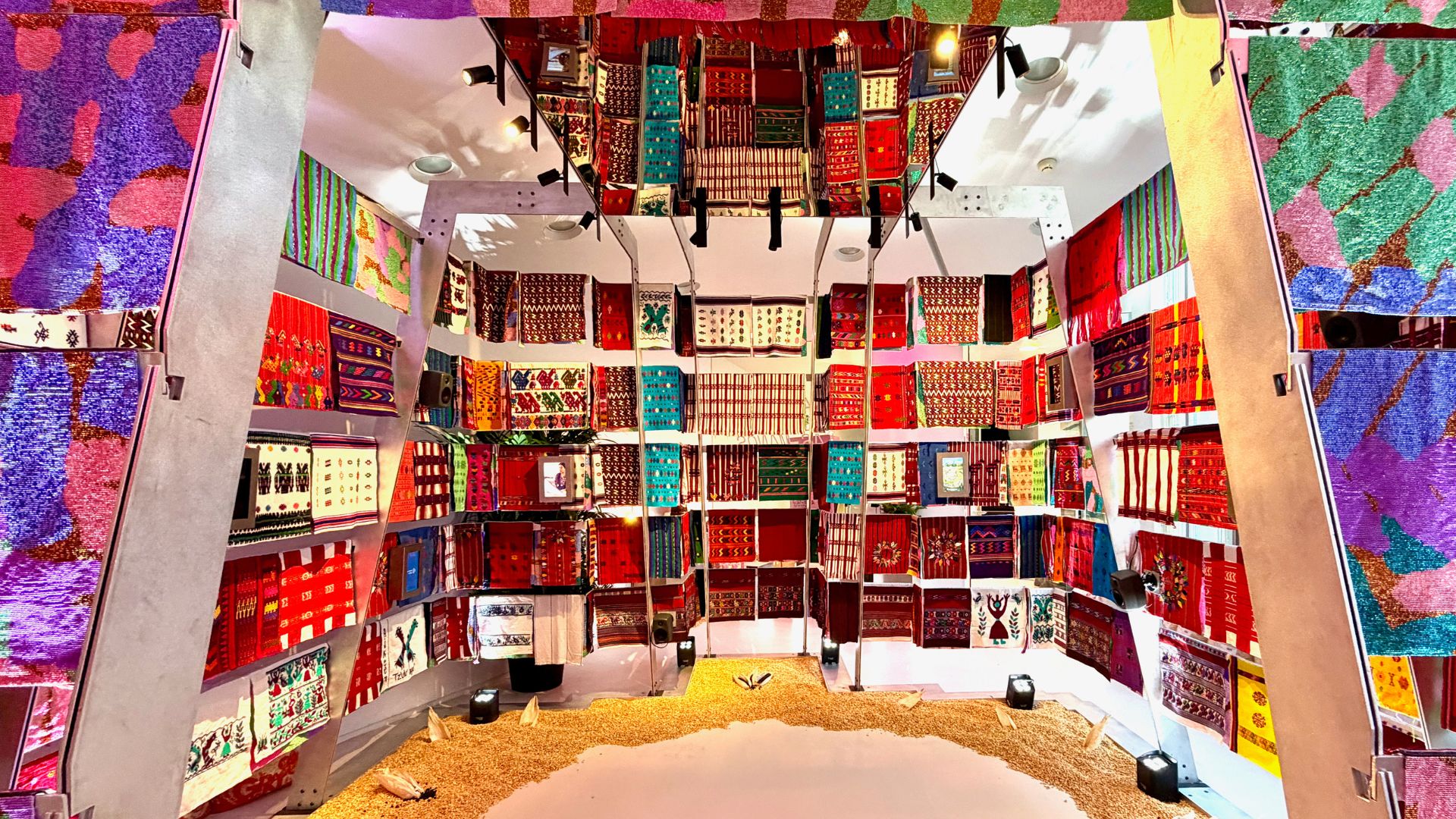
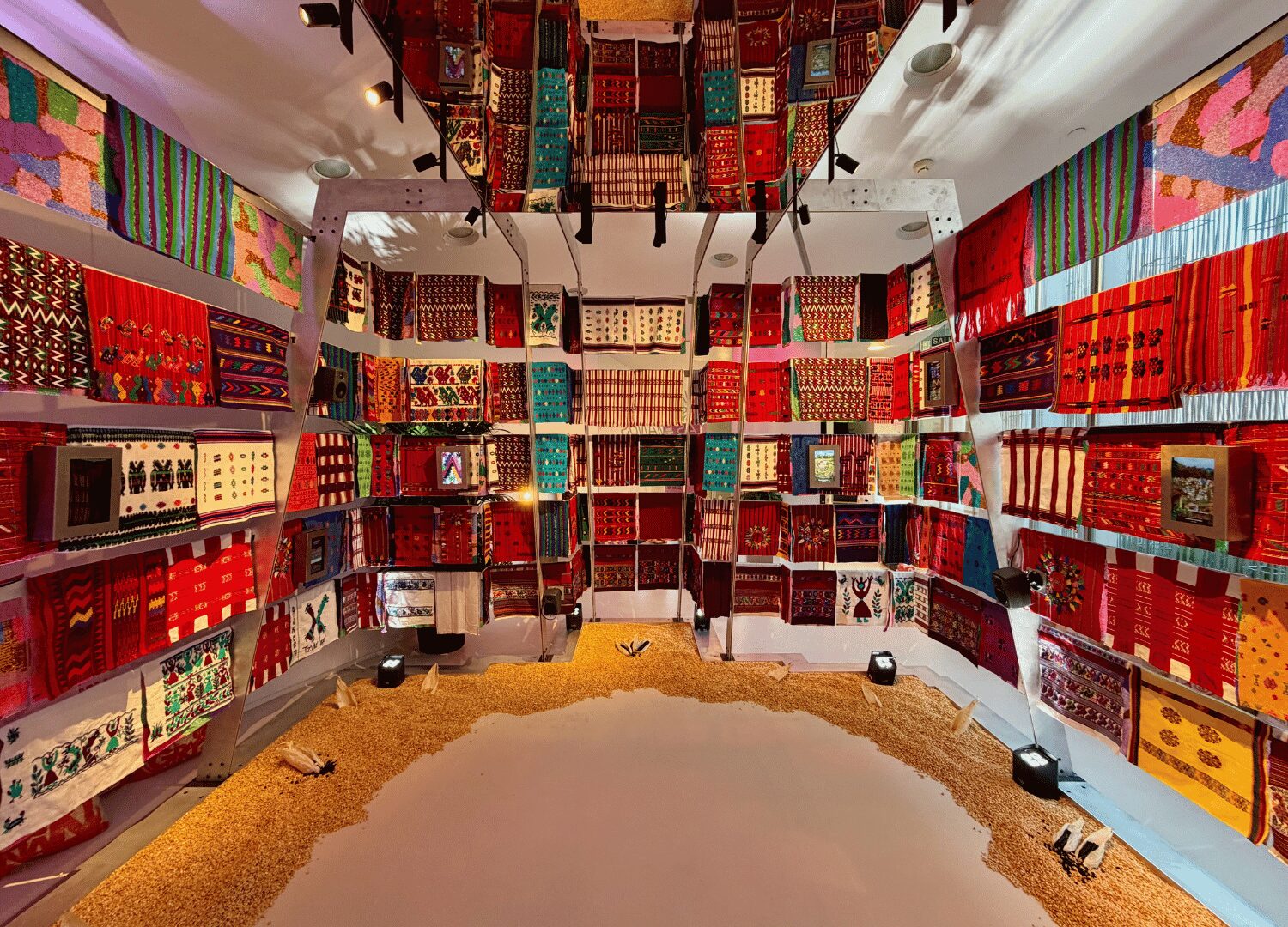
The central element Bautista refers to is a collaborative installation inspired by the Temple of the Great Jaguar in Tikal (Temple I, c. 700 AD), conceived as a symbolic meeting point between past and present. Its aluminium structure is wrapped in two textile layers, representing the connection between tradition and innovation.
Weaving techniques across Maya communities
The exterior skin, Tejiendo Color, combines traditional Guatemalan textile techniques with digital tools, using glass beads (mostacilla) as its primary material. It was developed by Nebula Handmade in collaboration with artisans and artists from Lake Atitlán, following a fair-trade model that generates dignified employment and strengthens local communities.
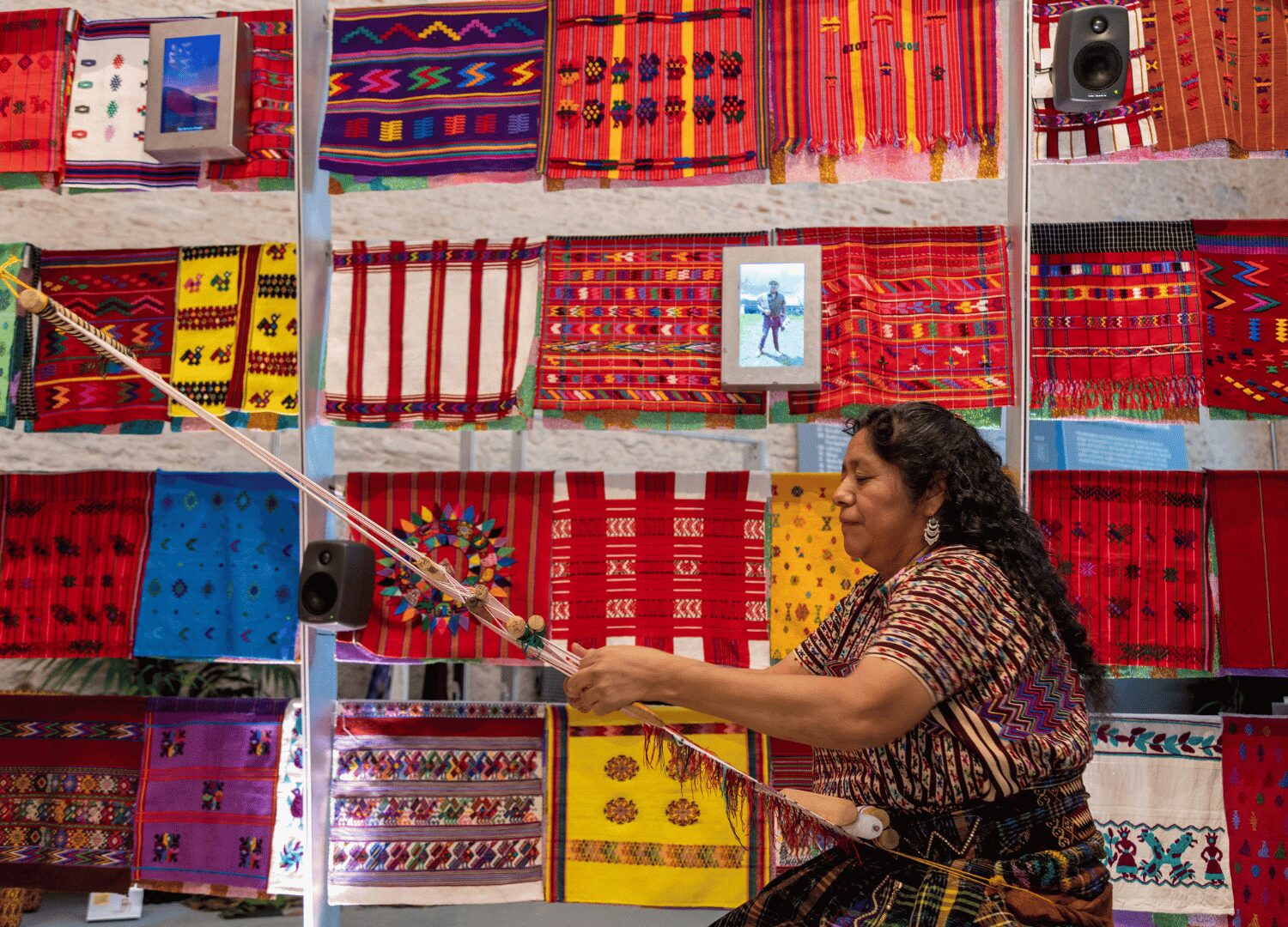
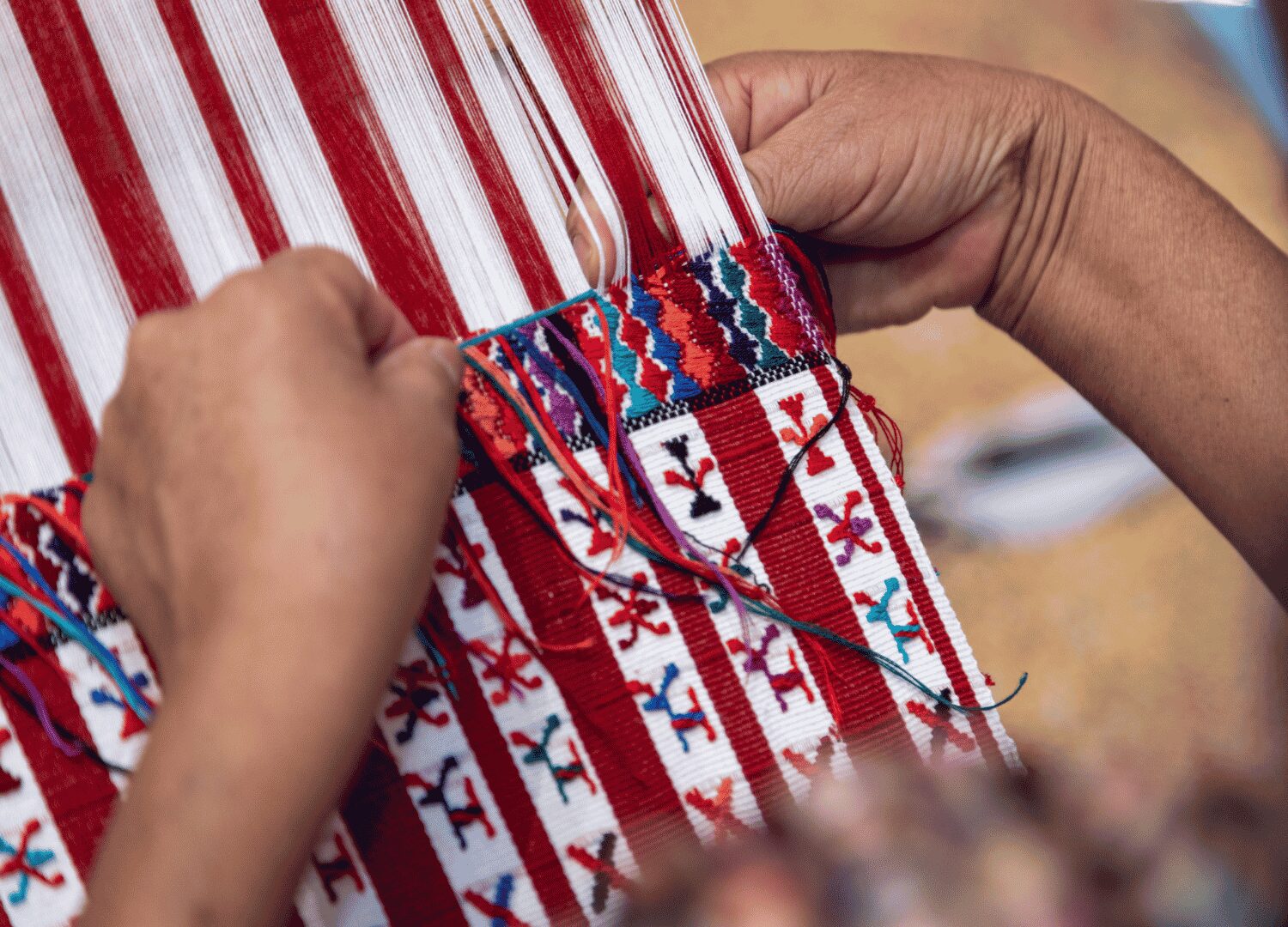
The inner lining weaves together motifs, colours, and techniques from different Maya communities into a single collective textile. It was created by women from 21 weaving councils across Guatemala, including the Movimiento Nacional de Tejedoras and the Asociación de Artesanas Tejedoras Tactiqueñas B’atz’ of Alta Verapaz.
Inside the pyramid, visitors were immersed in a multisensory experience that connects design, territory, and memory. Through an immersive soundscape by Near Sound and audiovisual works by Producciones Tres Mares, the installation evokes Guatemala’s textures, landscapes, and cultural echoes – its markets, natural environments, Maya languages, and textile traditions – offering a journey that presents design as a living expression of identity and future.
Contemporary objects rooted in local materials
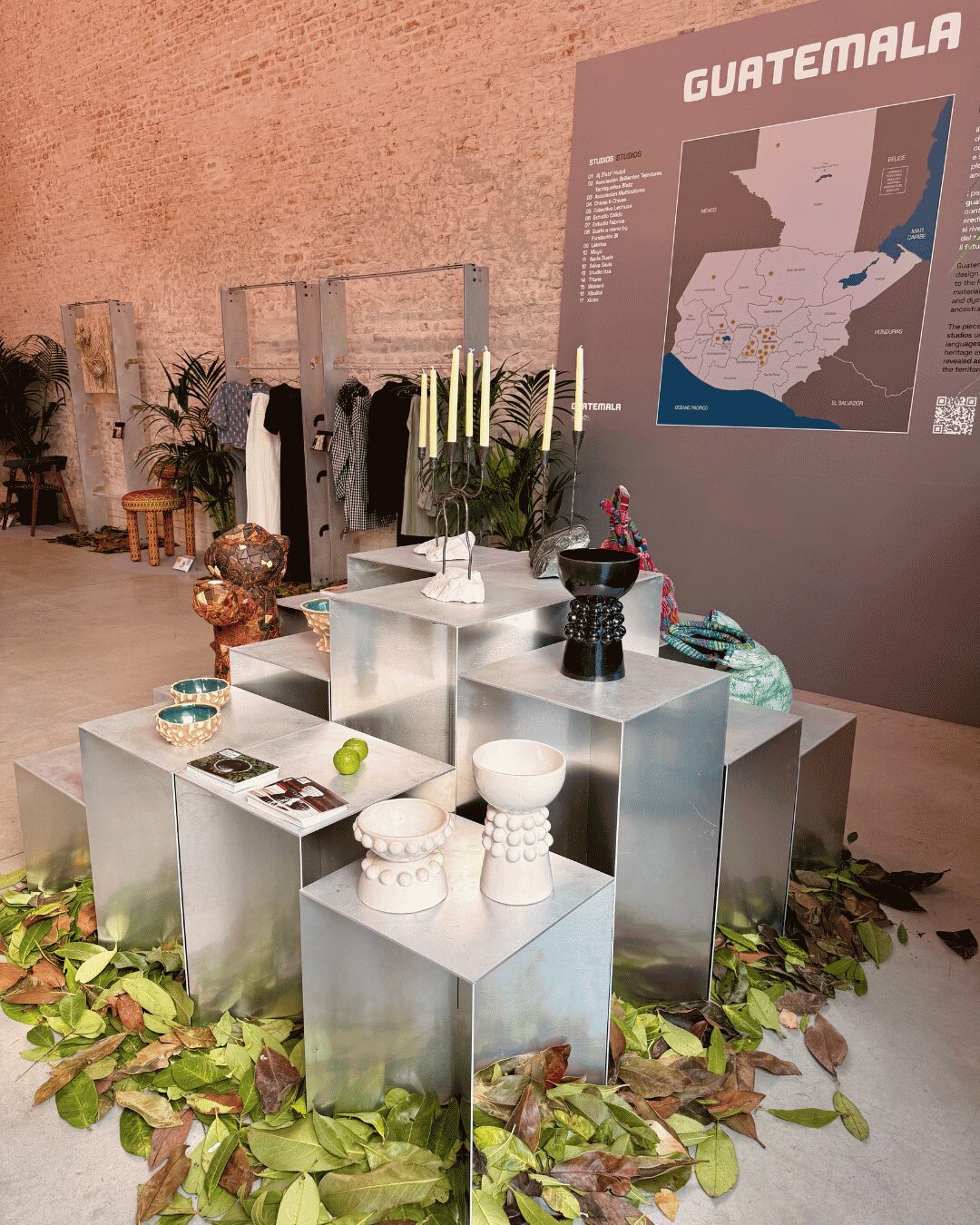
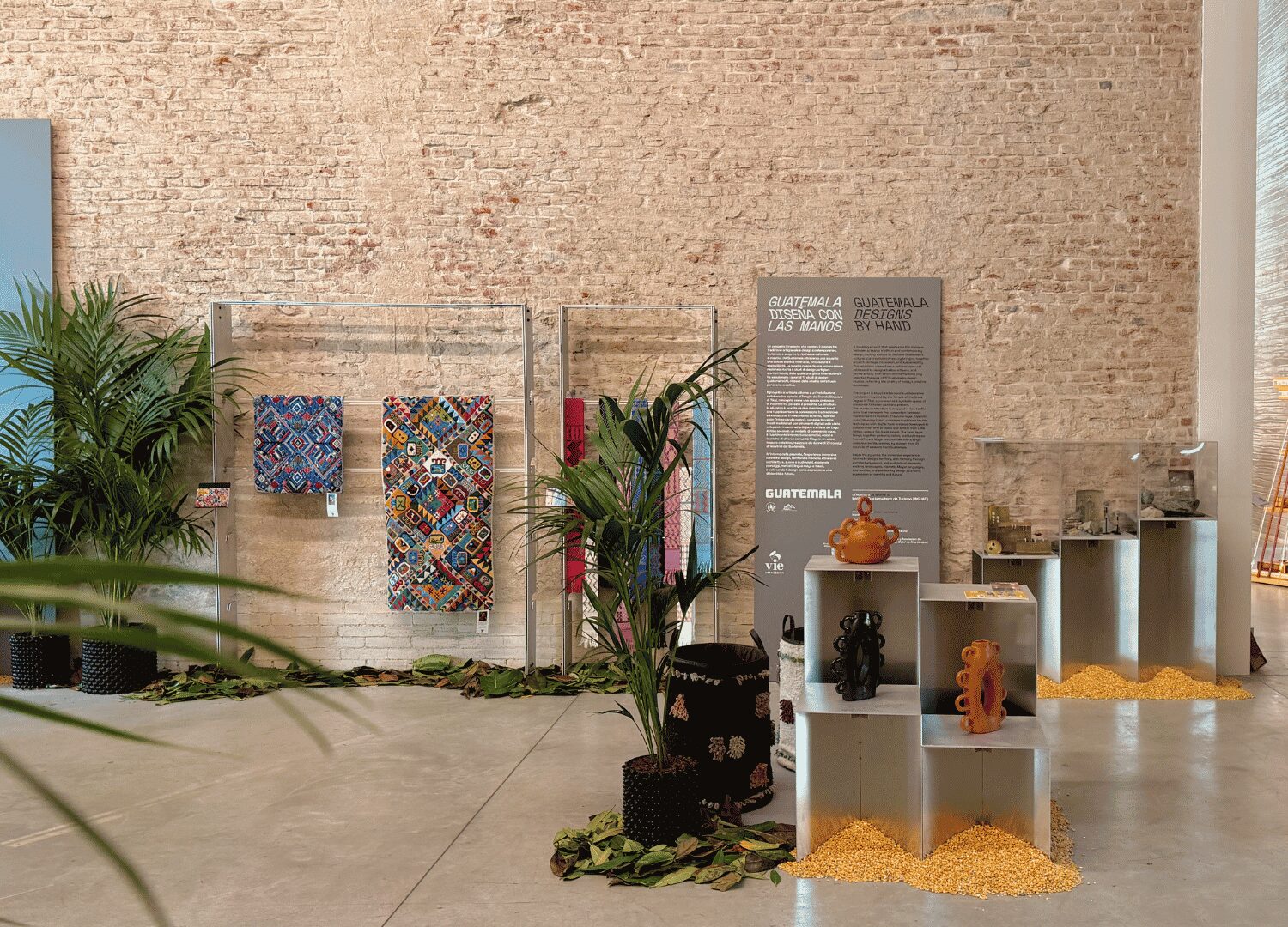
Alongside this temporary architecture, the exhibition features accessories and objects developed through traditional techniques and contemporary languages, testifying to a vibrant creativity in constant dialogue between heritage and experimentation.
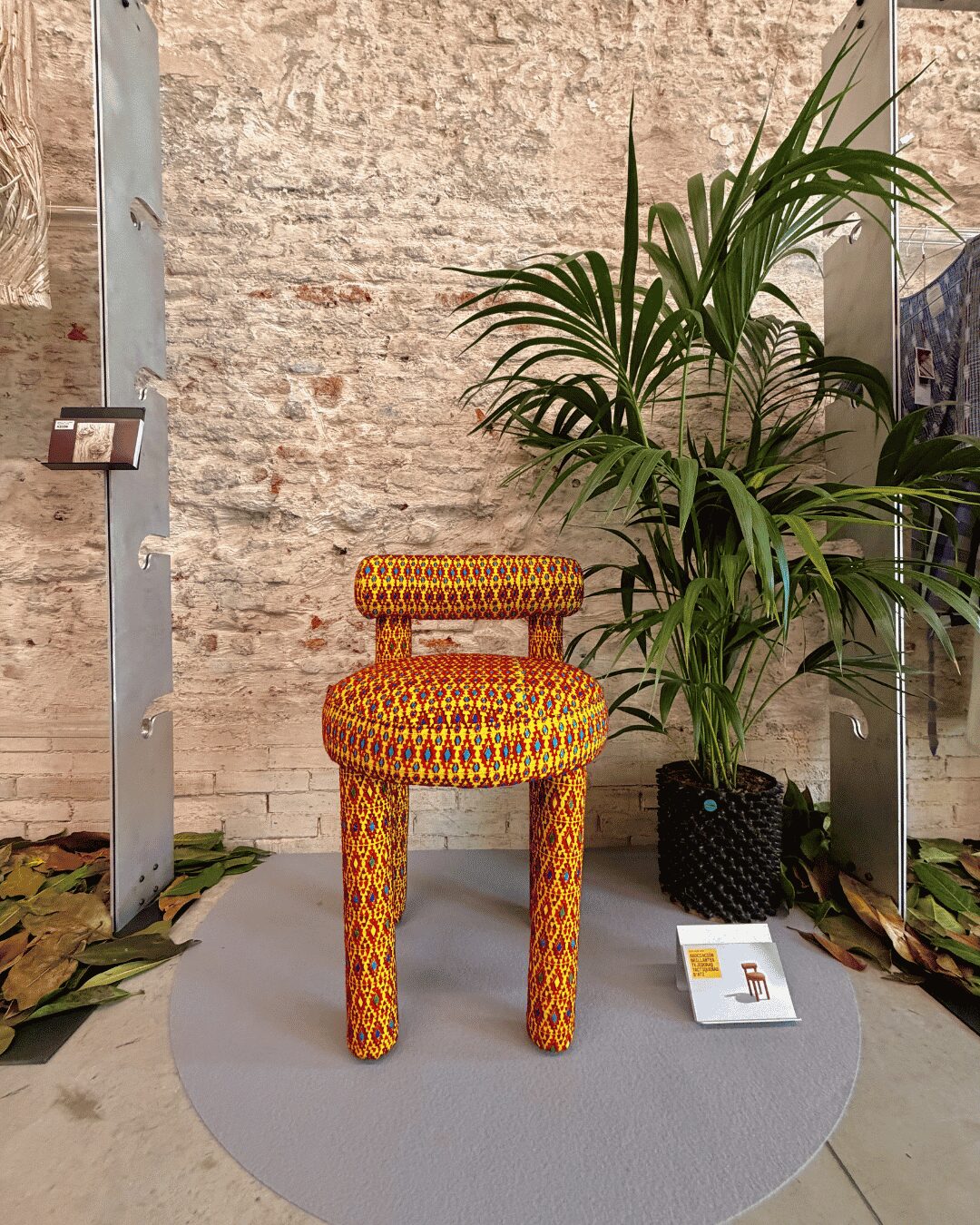
Among the highlights is the B’atz Living Chair, created by artist David Luna in collaboration with the Asociación Brillantes Tejedoras Tactiqueñas B’atz. Combining backstrap weaving with a wooden structure, the chair conceives textile as both a structural and symbolic element. Its aesthetic is inspired by the Maya vision of the cosmos and the relationship between body, territory, and memory.
Estudio Fábrica, with Ana Claudia González and Hubert Schoba, presents Silla Canto and Taburetes Ojo de Dios. The former emerges from a constructive logic in which technique defines form: wood and metal are combined through folding and weaving as structural principles. The latter takes inspiration from the spool as a device for stretching and supporting flexible material, with the weaving carried out directly on the object. Both pieces engage with traditional references and local production, transforming technical limitations into a language of contemporary design.
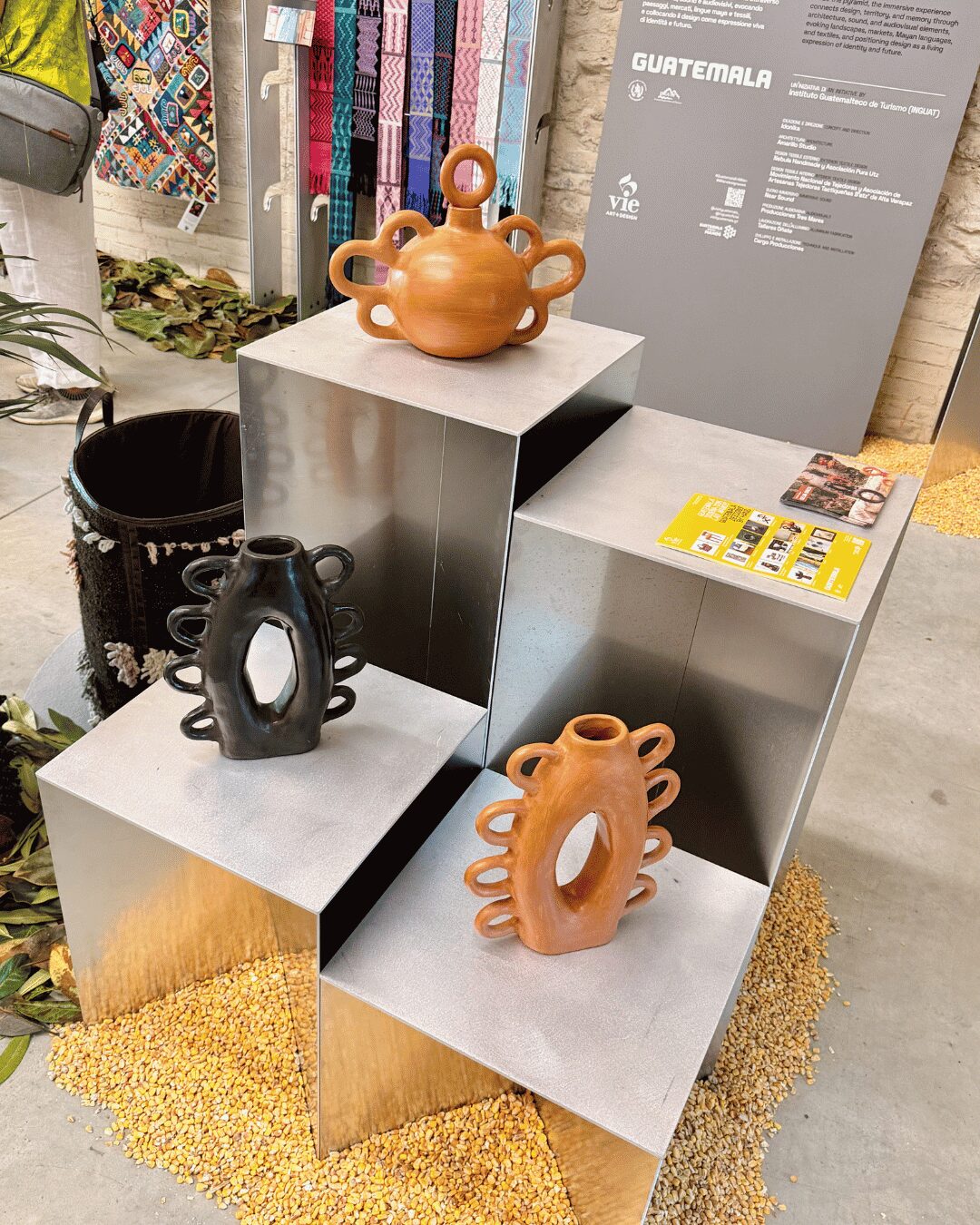
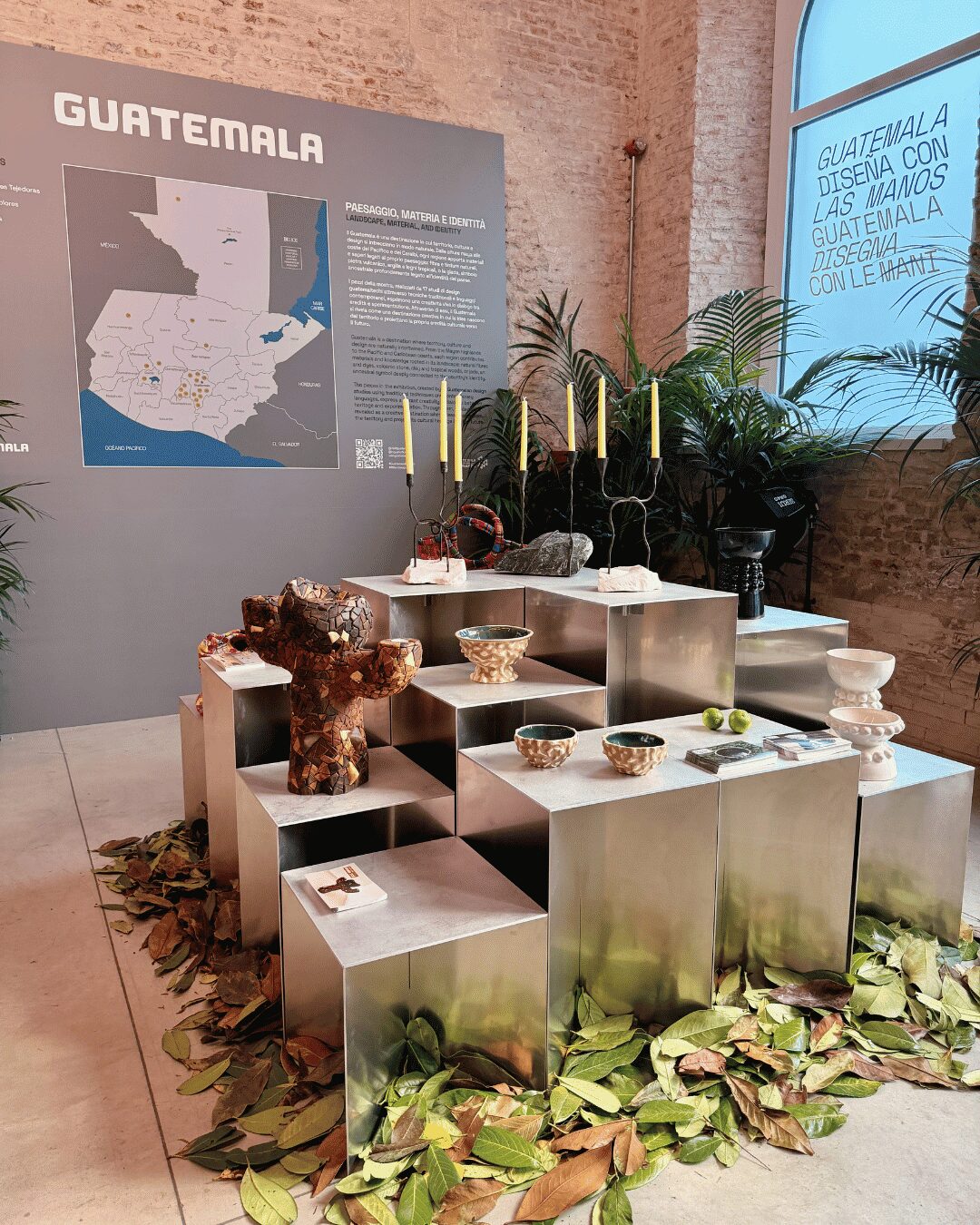
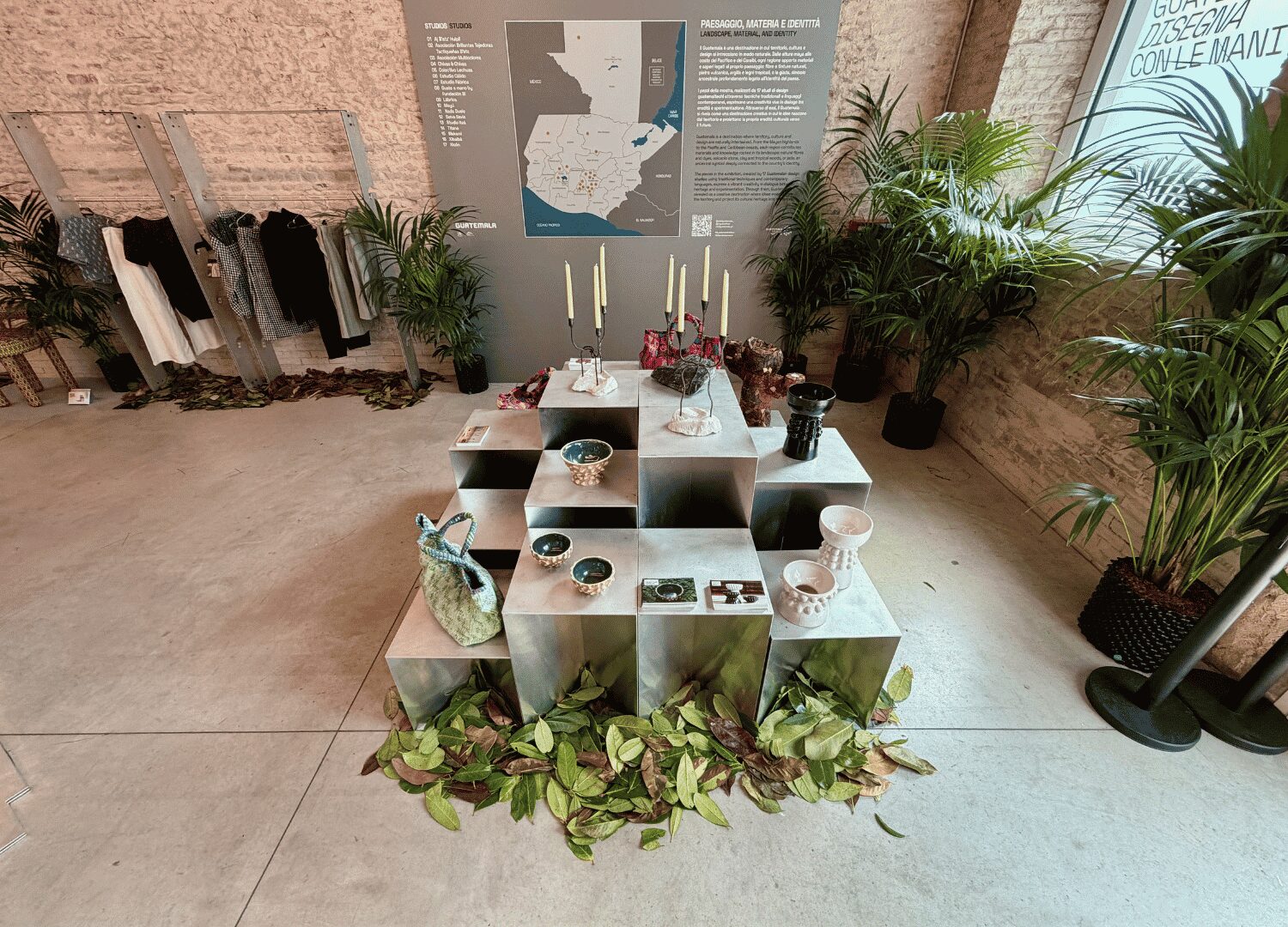
Other featured works are Colección Cenote by Colectivo Lechuza with Salvador Stanley Gutiérrez Olivares – sculptural pieces in high-fired ceramic made from local clays, whose forms evoke Mesoamerican cenotes. Also on display are the Lámparas Faro y Reflector from the “Piedra – Chinautla” series by Estudio Cálido. Rooted in materials from the Guatemalan territory, these works explore the relationship between contemporary design, craftsmanship, and material memory, proposing a slow, sensory lighting experience.
Further ceramic collections include Susurros Mayas by MAYÚ, which reinterprets pre-Columbian forms and Maya jewellery through surfaces composed of spheres applied manually, one by one. Vasijas Semilla by Selva Savias, created with Marta Hilario, Rosa López, and Ana Vázquez, is shaped from clay sourced in Chinautla. Their rounded forms evoke seeds, roots, and wings, balancing strength and softness.
Among the lighting and decorative objects, Altar de la Selva by Studio Itzá stands out. Inspired by the rainforest and hand-carved from eight native woods, its feather-like motif generates texture and movement, evoking the macaw and the ceiba tree – understood in Maya cosmology as the axis connecting sky, earth, and the underworld.
Similarly evocative is No Hay Luz Sin Sombra, a series of sculptural candleholders reflecting on the experience of forced migration in Guatemala: through the contrast between natural stone and forged iron, the pieces translate emotions of rupture, displacement, and oppression. The project was developed by Nada Duele in collaboration with Giselle MacDonald, Mariano Orellana Hierro, and blacksmith Alonzo Toscano.
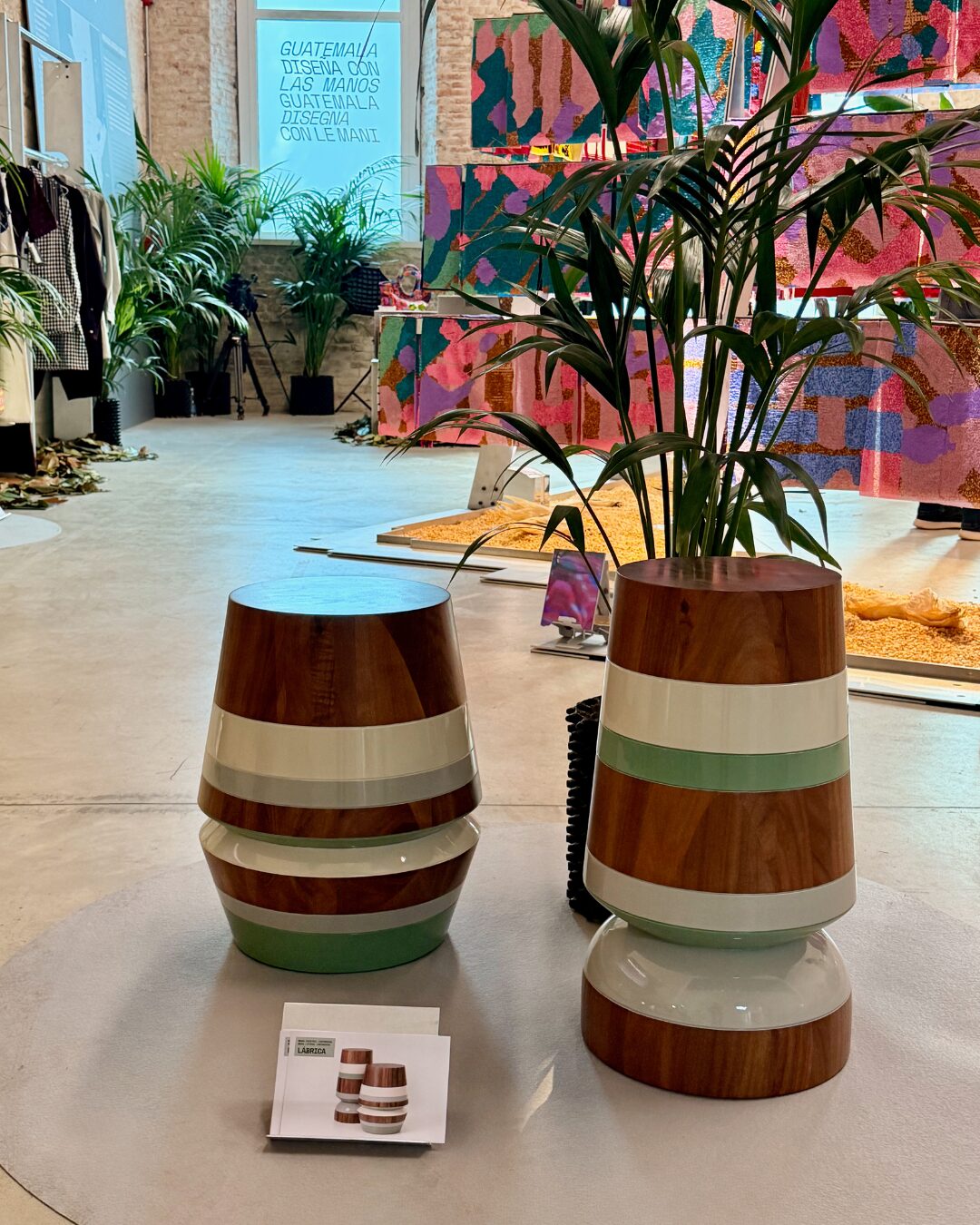
Studio Lábrica presents the Mesa Cocktail Capirucho and Mesa Lateral Capirucho, created in collaboration with artist Lorena Velásquez. Crafted from solid conacaste wood, these pieces combine artisanal turning with modern design, reinterpreting the traditional Guatemalan wooden toy capirucho through a contemporary sculptural language.
Memoria Tectónica, by Xibalbá Studio in collaboration with artist Laura Spillari, is a jade jewellery collection based in Antigua Guatemala. Here, jade – a sacred stone in Maya culture – is treated as both a geological and cultural archive.
Textile experimentation and cultural identity
Textile experimentation is equally central to the exhibition: Xicón presents Médula, from the Unleashed Paths series, a conceptual textile work created with Keneth Isaí Tomás Xicón. The piece reflects on the transmission of traditions, family legacies, and their transformation over time.
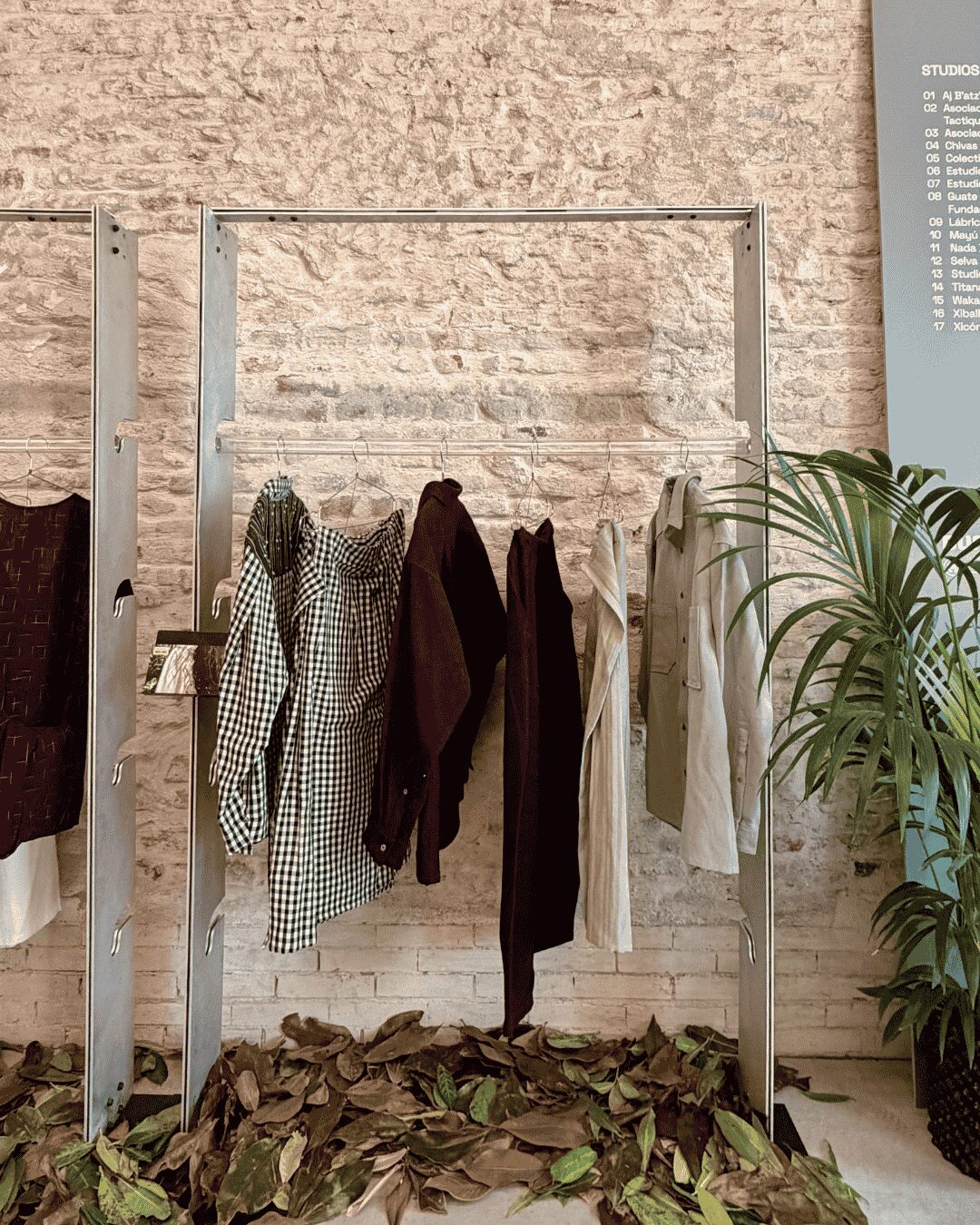
AJ B’ATZ’ HUIPIL, with Melany Marisol Aj Ixtuc and María Clara Ixtuc Och, proposes a collection of tote bags, including Quetzalteco Esmeralda Tac Tic Cobán. Made from different huipiles, these pieces embody Guatemala’s rich textile tradition. Far more than objects, they function as living books that tell stories.
The Asociación Multicolores, with Micaela Churunel Ajú and Petronila Jorge Set, showcases El Laberinto Vibrante: Sueños en el Universo, a series of textile works handmade using the rug-hooking technique. Created from recycled garments on a cotton base woven on a foot loom, the pieces engage with Maya cosmology and ancestral memory through colour, geometry, and rhythm.
Also featured is the Colección ATI by Chivas & Chivas, developed with Violeta Gutierrez, Jan De Bruijn Prieto, and Candelaria Chocoyo. This series revalues the ancestral technique of floating supplementary weft brocade, known as chiva, woven on a backstrap loom. Inspired by Lake Atitlán, the works evoke its landscape and cartography through colour and form.
The Colección MOMO, developed by Guate a Mano by Fundación BI with designer Eduardo Ovalle and the Grupo MOMO Kem Ruk’q’ab, is made from wool sourced in Momostenango. Inspired by cliffs and mountainous landscapes, the collection reflects the layered textures and contours of the land.
Titana presents a selection of fajas – accessories that reinterpret traditional designs through colour, innovation, and contemporary elegance. Developed with artisans from Alta Verapaz, the project is grounded in co-creation, respect for ancestral techniques, and fair trade.
Finally, the Colección HILAR by Wakami, created with Ana Gabriela Samayoa and Alejandra Cabrera, combines contemporary design with Guatemalan textile tradition. Featuring versatile, timeless silhouettes, the garments are made from handwoven cotton on foot looms and incorporate ancestral techniques such as jaspe alongside experimental processes.
As the Guatemalan Institute of Tourism explains: “Our mission is to make Guatemala known abroad – but also within Guatemala itself. This is also a way for us to shift how we look at handicrafts and textiles. In a country where almost 50% of the population is Indigenous, there has historically been structural racism. Rethinking the way we see and value these techniques is also about changing how we relate to Indigenous peoples – recognising ourselves as a much more complex, richer, more diverse culture, and treating that diversity as a strength rather than a weakness.”