Is what you see what you get? A conversation with ceramicist Jacques Monneraud
One of the most compelling emerging voices in contemporary ceramics, the French designer explores how an ancient material can be translated into a personal, contemporary language while still respecting its history. In this conversation, we encounter a distinctly lateral gaze, an out-of-chorus voice that offers a fresh way of looking at clay.
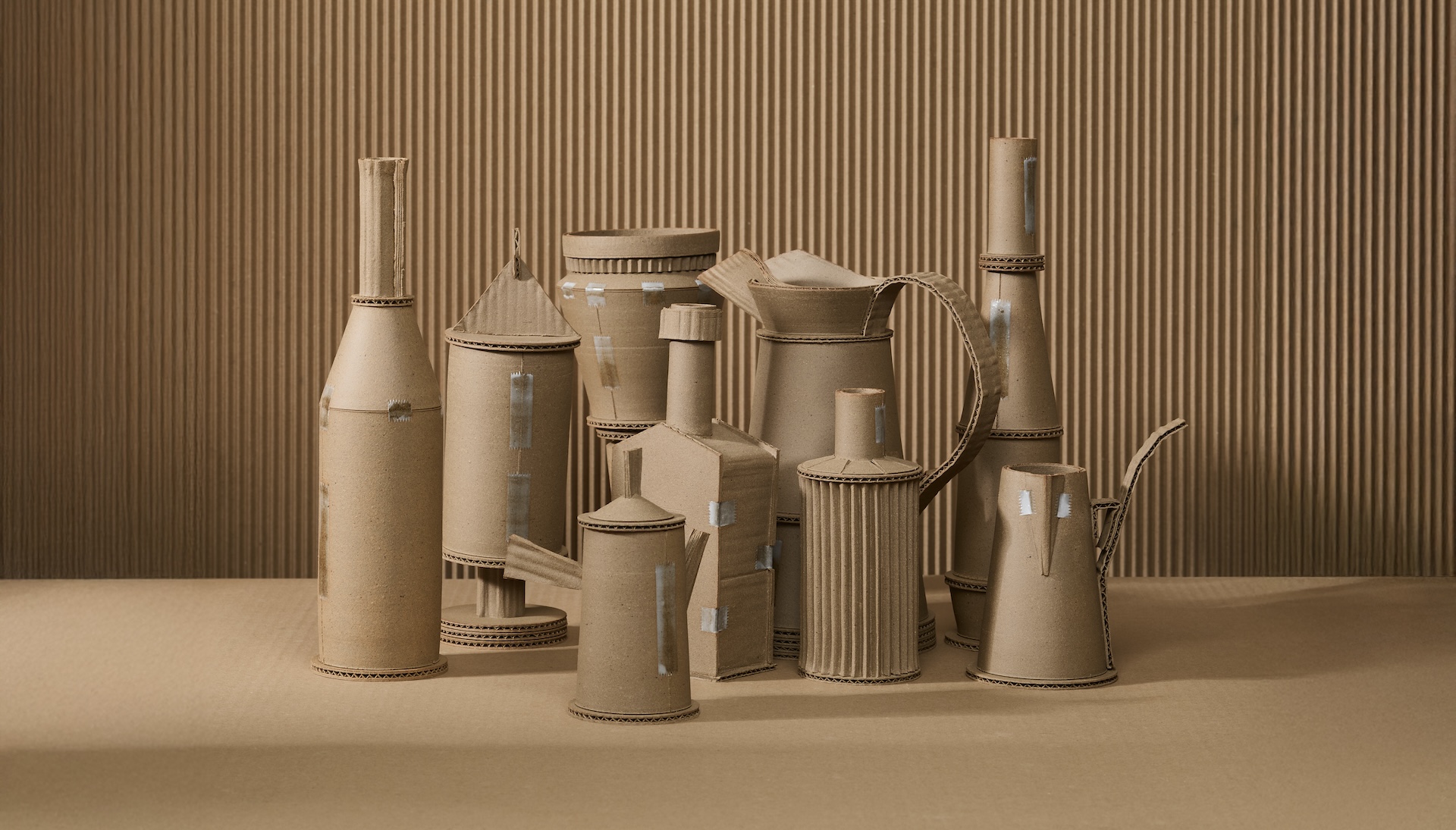
Jacques Monneraud is a ceramicist based in the southwest of France. Before turning to clay, he built a successful career as an art director in Paris, earning major international recognition, including a Gold Lion at Cannes. Yet despite the accolades, advertising left him deeply unhappy. In 2021, he chose to step away from that world and return to a practice rooted in the body, in time, and in making.
Coming from a family of artists and craftspeople – a painter and sculptor mother, a carpenter grandfather, a painter great-grandfather – this shift felt less like a rupture than a return. At the potter’s wheel, Monneraud reconnects with gesture, slowness, and material intelligence. His work carries with it an ironic, expansive gaze shaped by years of image-making and storytelling: a lateral path, slightly out of frame, that design constantly seeks yet rarely finds.
Gallery
Open full width
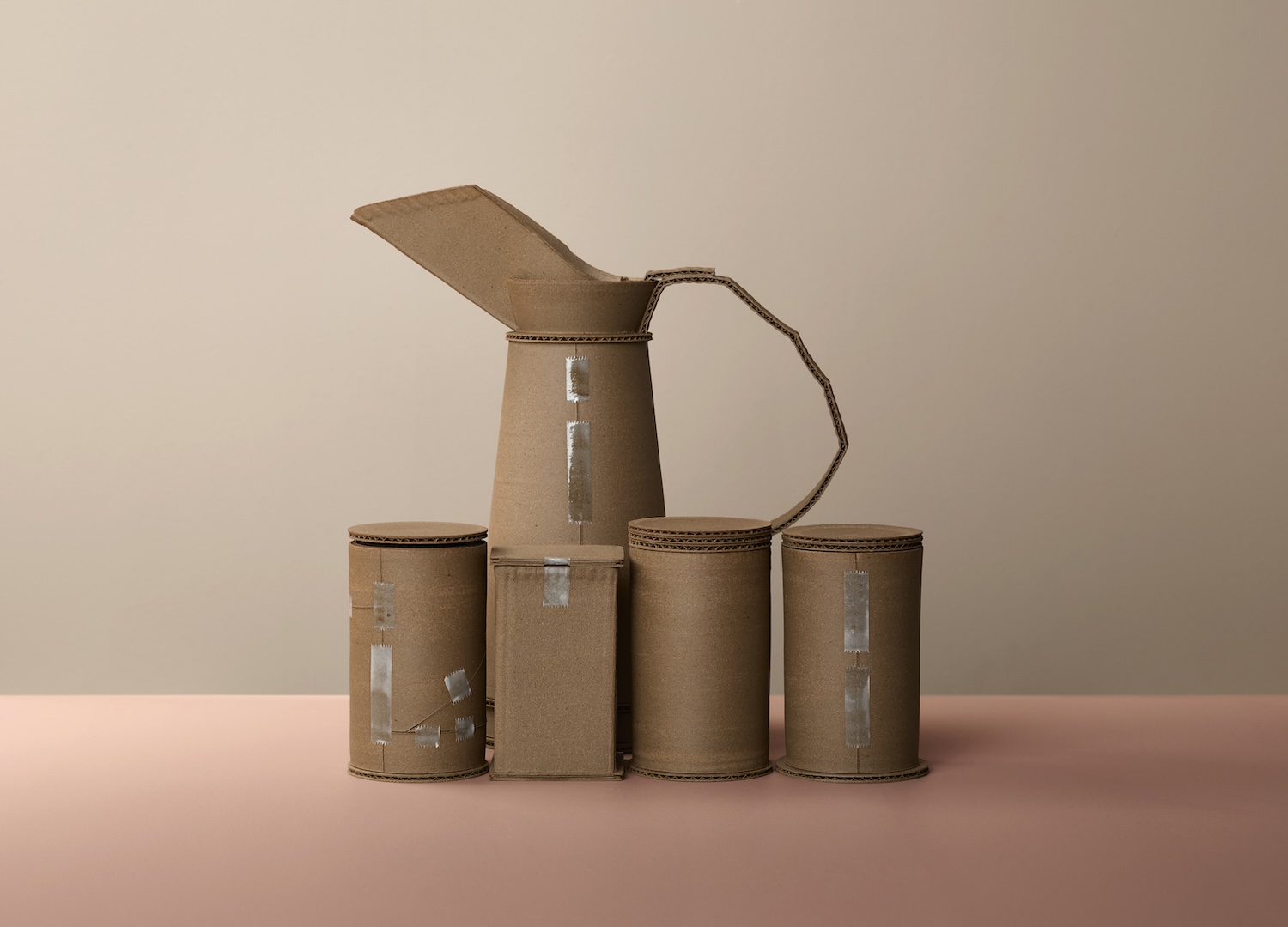
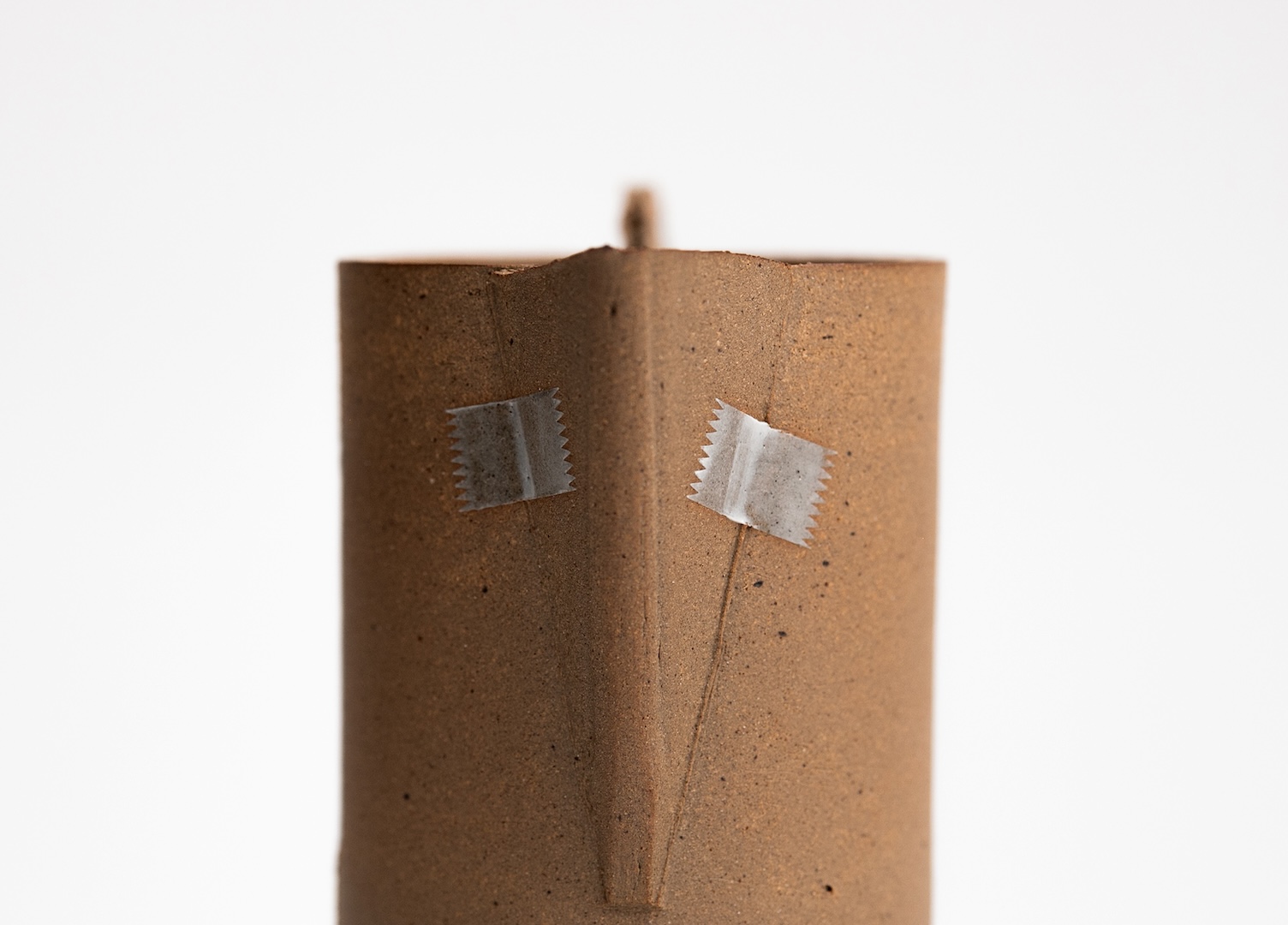
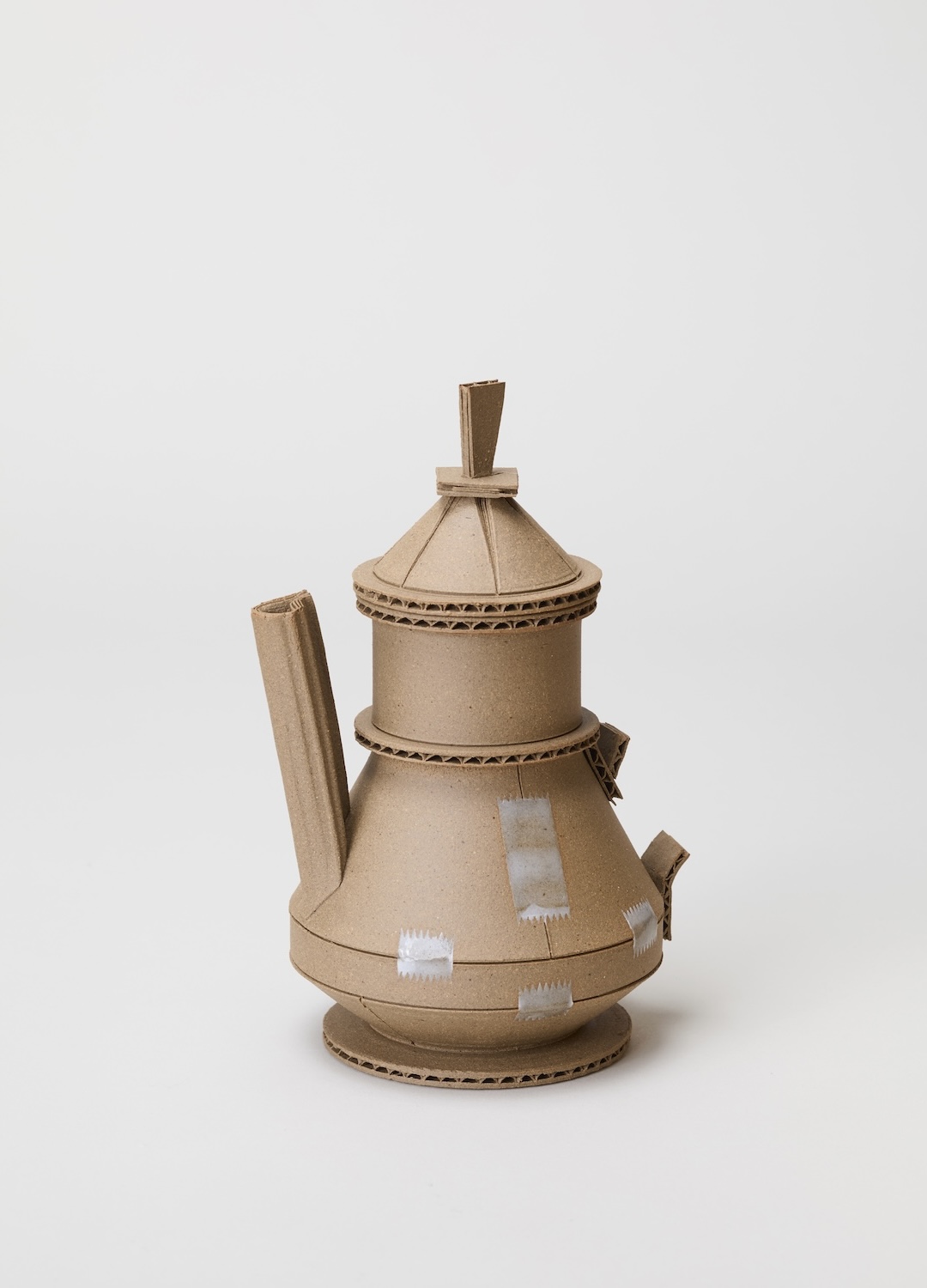
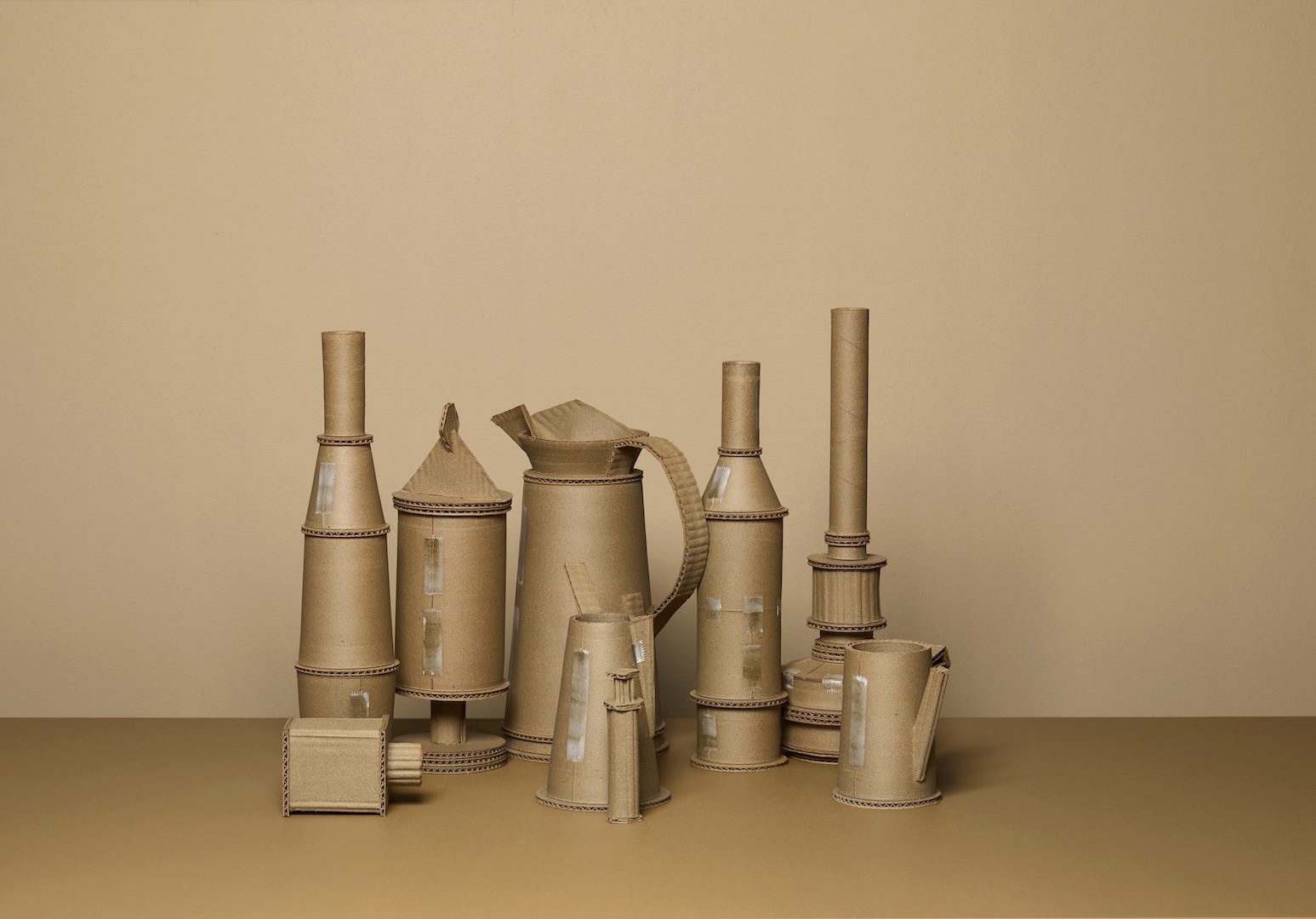
Open full width
In our conversation, Monneraud spoke about acceleration and control, about leaving advertising out of necessity, and about ceramics as a material that is often misunderstood. We discussed illusion, process, and the idea of fixing something provisional – like cardboard – into an almost eternal form, moving between making, communication, and a broader cultural reading of objects.
What strikes me about your work is how quickly everything has taken off. In a very short amount of time – just over the past year – you exploded as a name in ceramic design.
Jacques Monneraud:
Oh, yes! Everything is moving very fast. I can’t complain, of course. It’s amazing. But at the same time, it’s also a bit frustrating.
My girlfriend once said something that felt very accurate: I never have both feet on the same step. I’m constantly trying to adapt to a situation, but things evolve so quickly that by the time I’ve settled into one level, it’s already obsolete. Suddenly I have to adjust to a new scale – different clients, international shipping, new expectations. It’s difficult, but at the same time, very exciting.
How did it all begin?
Jacques Monneraud:
I think it really started with my family. My mother is the most creative person I know. But professionally, I began as an art director in an advertising agency. I worked on images and concepts for more than a decade.
Over time, as I was progressing in agencies, I realized I was moving further and further away from actually making things with my hands. I wanted to return to that, and I was looking for a way out. A few years ago, I discovered ceramics. I had always known about stoneware, of course, but I suddenly realized it could be a real profession. So after a few months, I just tried. I quit my job and enrolled in a class. I started with a very intense four-day course and I was instantly hooked.
Knowing your background in advertising, I can clearly see that mindset in your work – the ability to shift perspectives, to evoke something else through form and image. But working with ceramics is very different from advertising.
Jacques Monneraud:
Absolutely. Advertising helped me a lot. It trained me to take an idea and consider not only what it is, but the entire environment around it: how to present it, how to talk about it, how to adapt it depending on the goal. I started with images and concepts, and now I work with objects – but in the end, it’s still about a relationship between someone and an object or an idea.
Do you work alone?
Jacques Monneraud:
I mostly do. Until recently, I was completely alone. Now my girlfriend works with me, but only on the business side – legal matters, accounting, structure. I’m fully in charge of production. Everything is made by my hands, that’s why I design very small series. Extremely small.
Your work often uses ceramics to mimic paper or cardboard. Where did that idea come from?
Jacques Monneraud:
There’s something important I should say, even if it’s a bit difficult as a ceramist: I’m not sure I actually like ceramics. The possibilities are endless, of course, but I only like a very small part of them – certain glazes, certain colors. Most of it doesn’t interest me. So naturally, I was drawn to evoking something else: wood, metal, other materials.
At the same time, I was attending a glazing course with an extraordinary French teacher who really masters that world. Glazing is incredibly complex, and I’m still at the very beginning of that journey. Back in the studio, I wasn’t satisfied with my test results, so I decided to focus on raw material – raw stoneware.
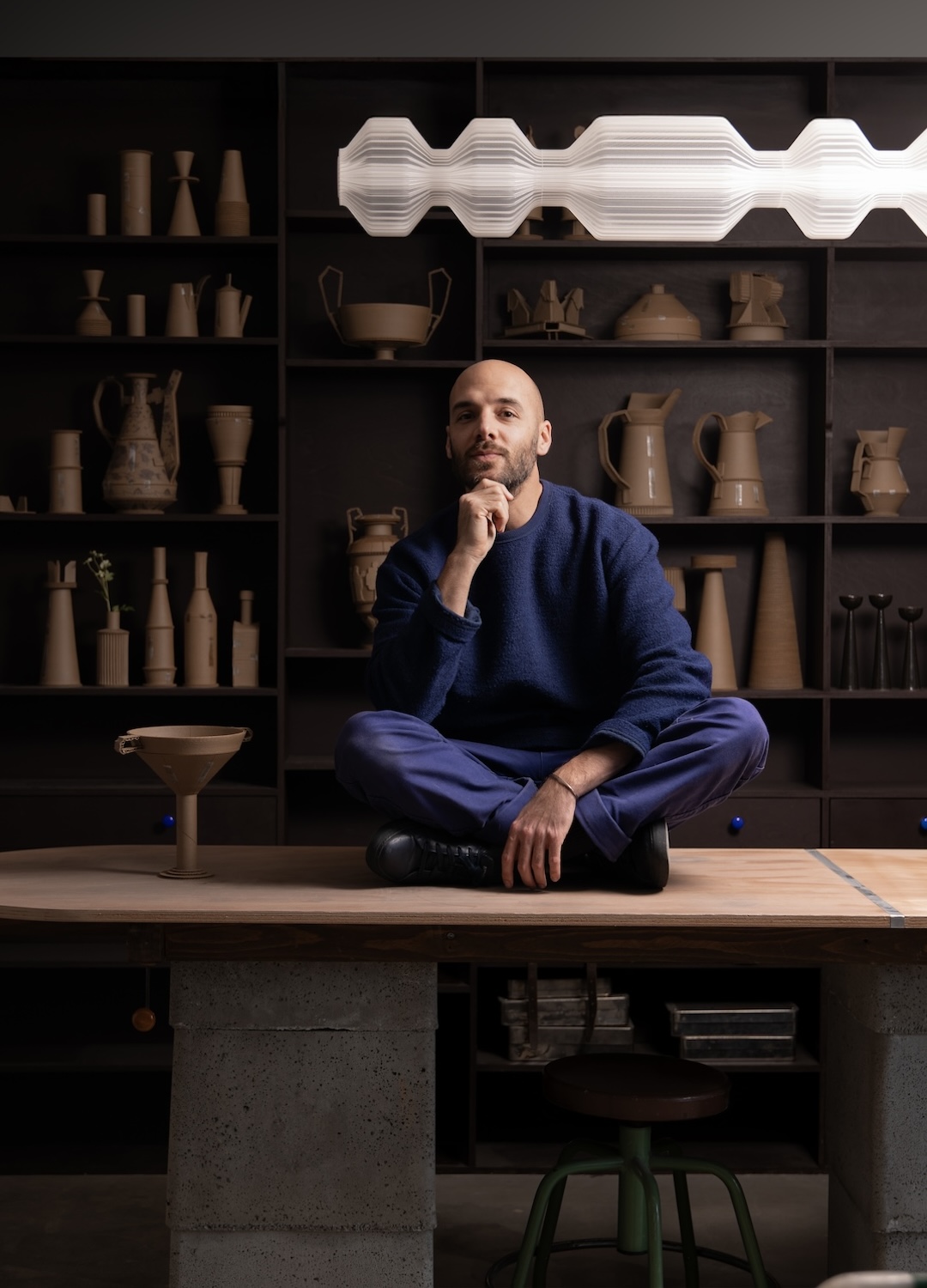
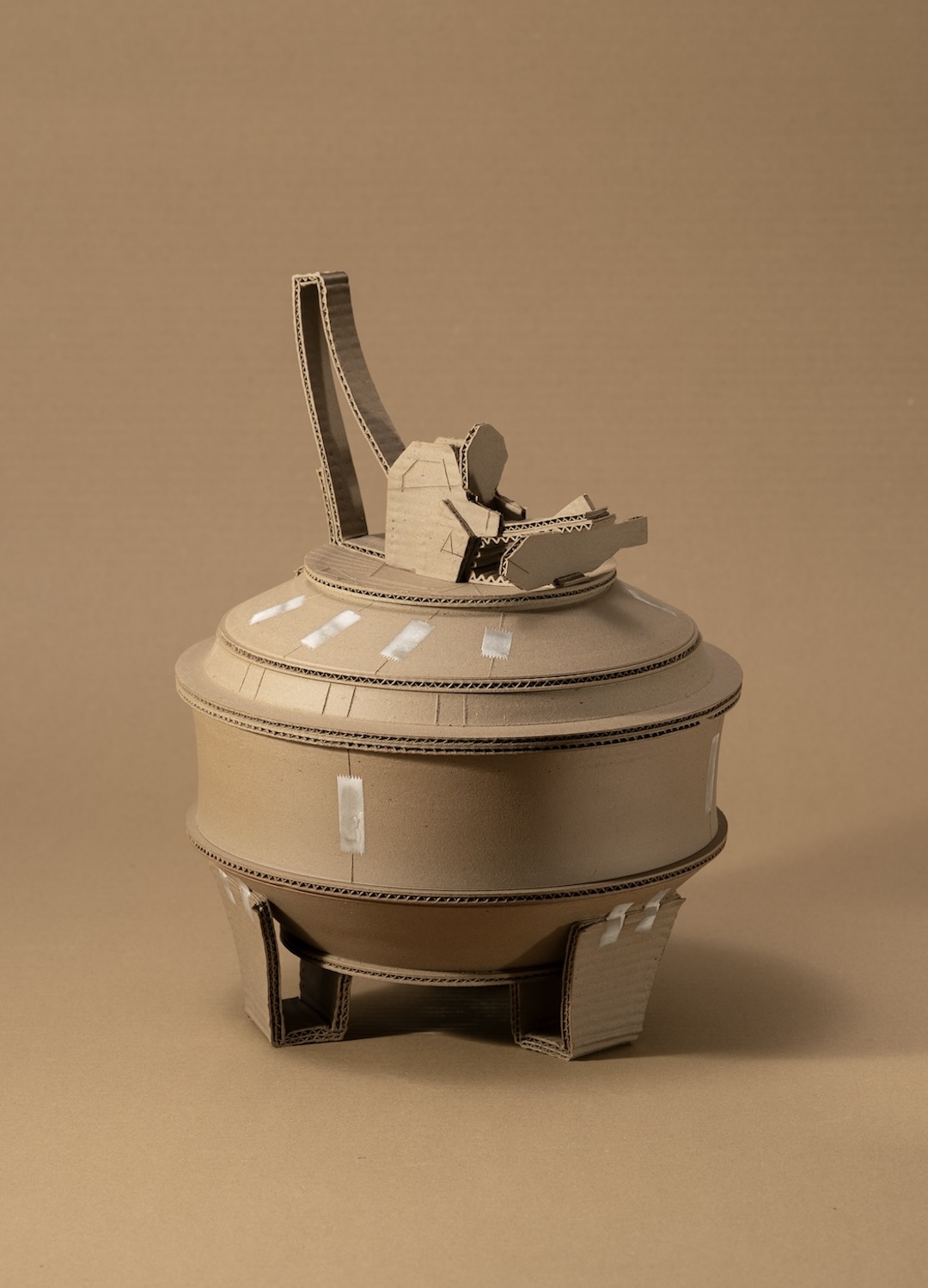
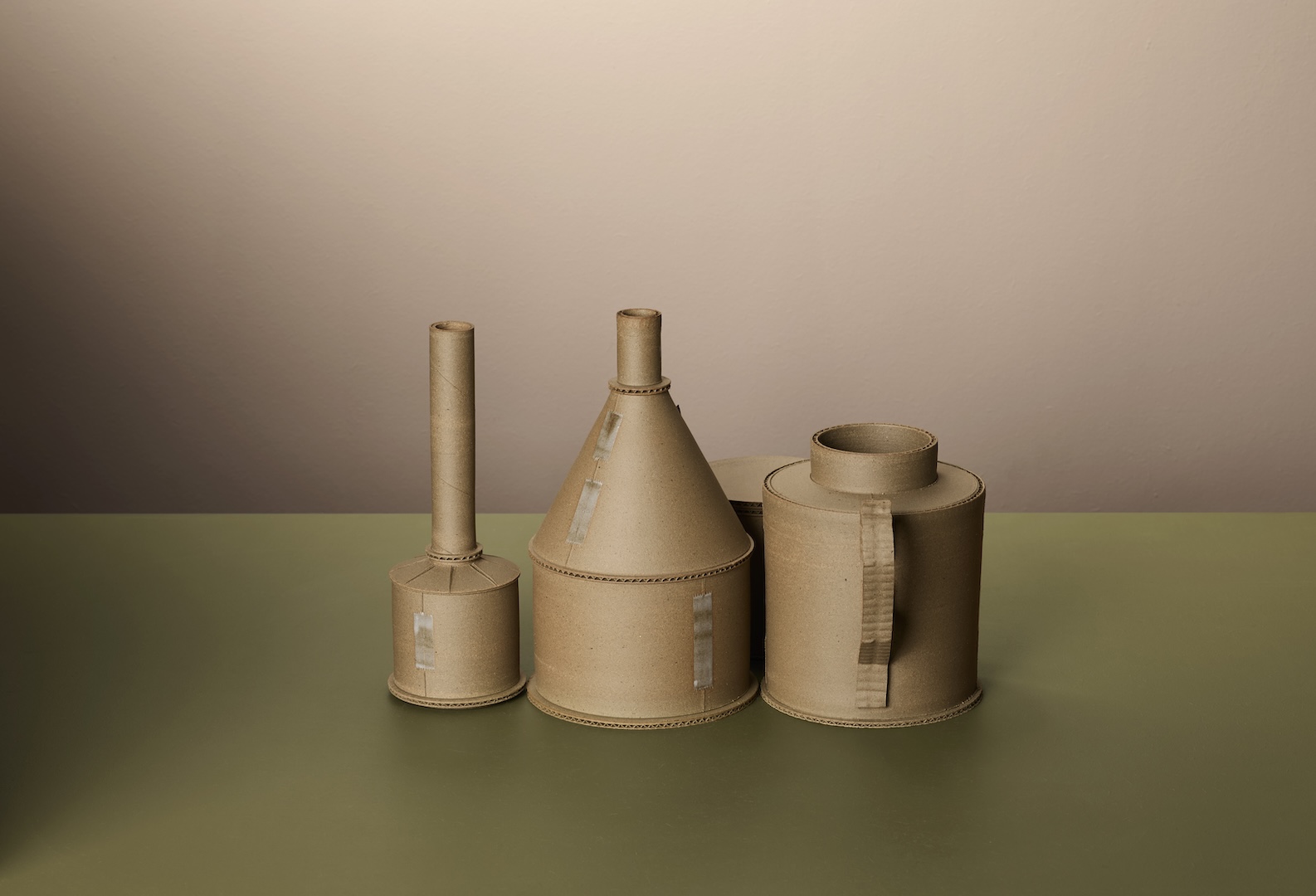
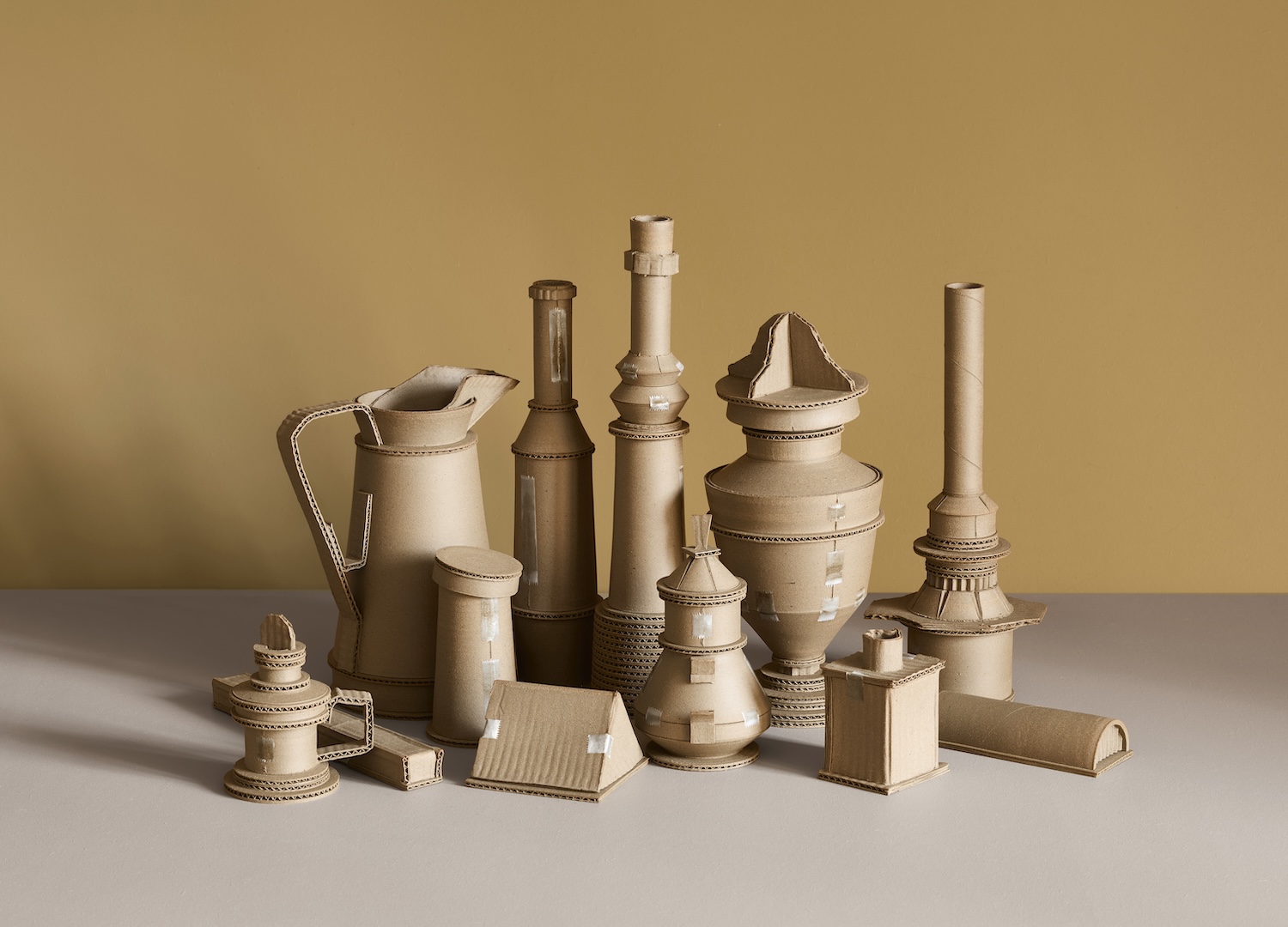
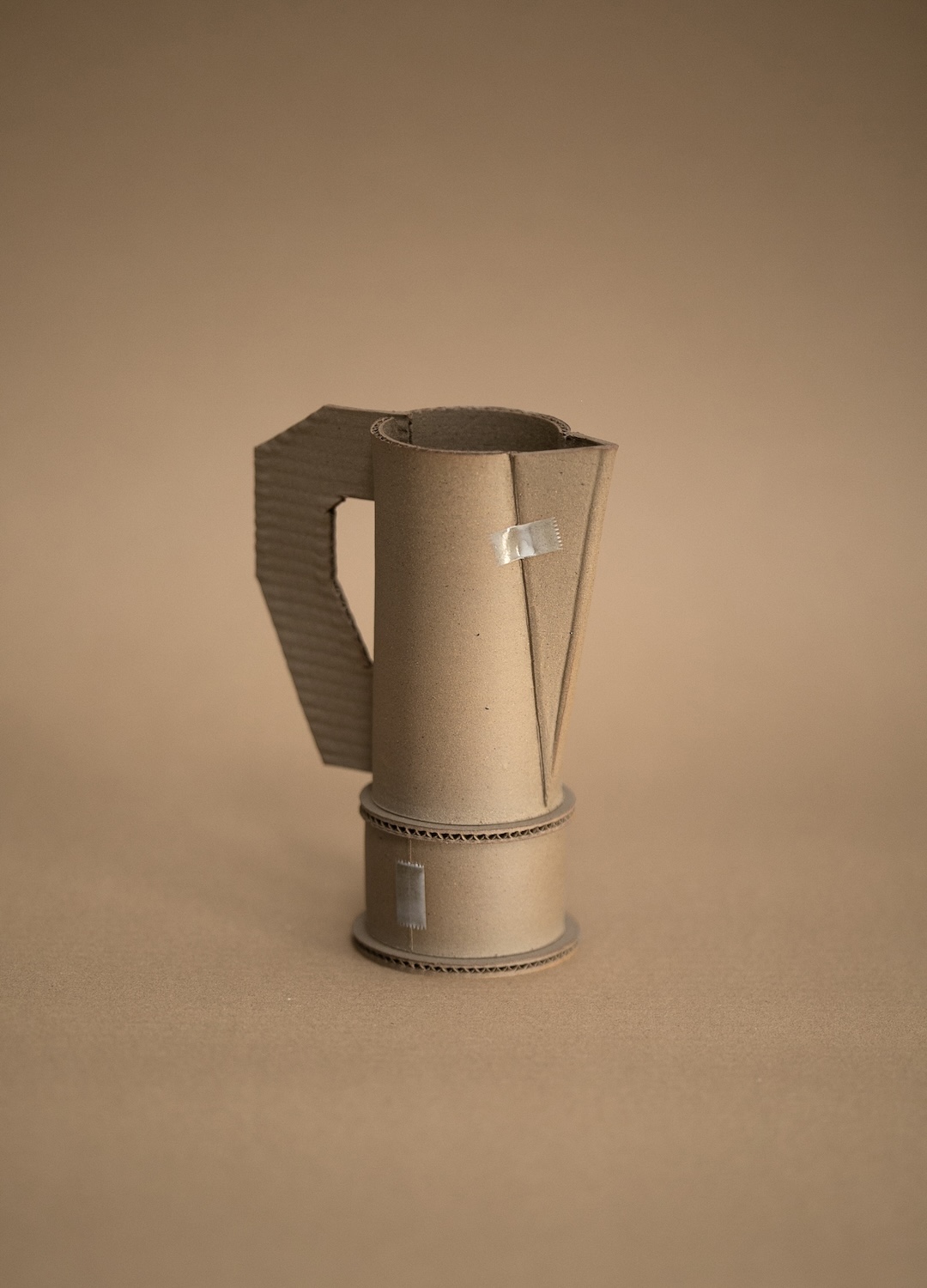
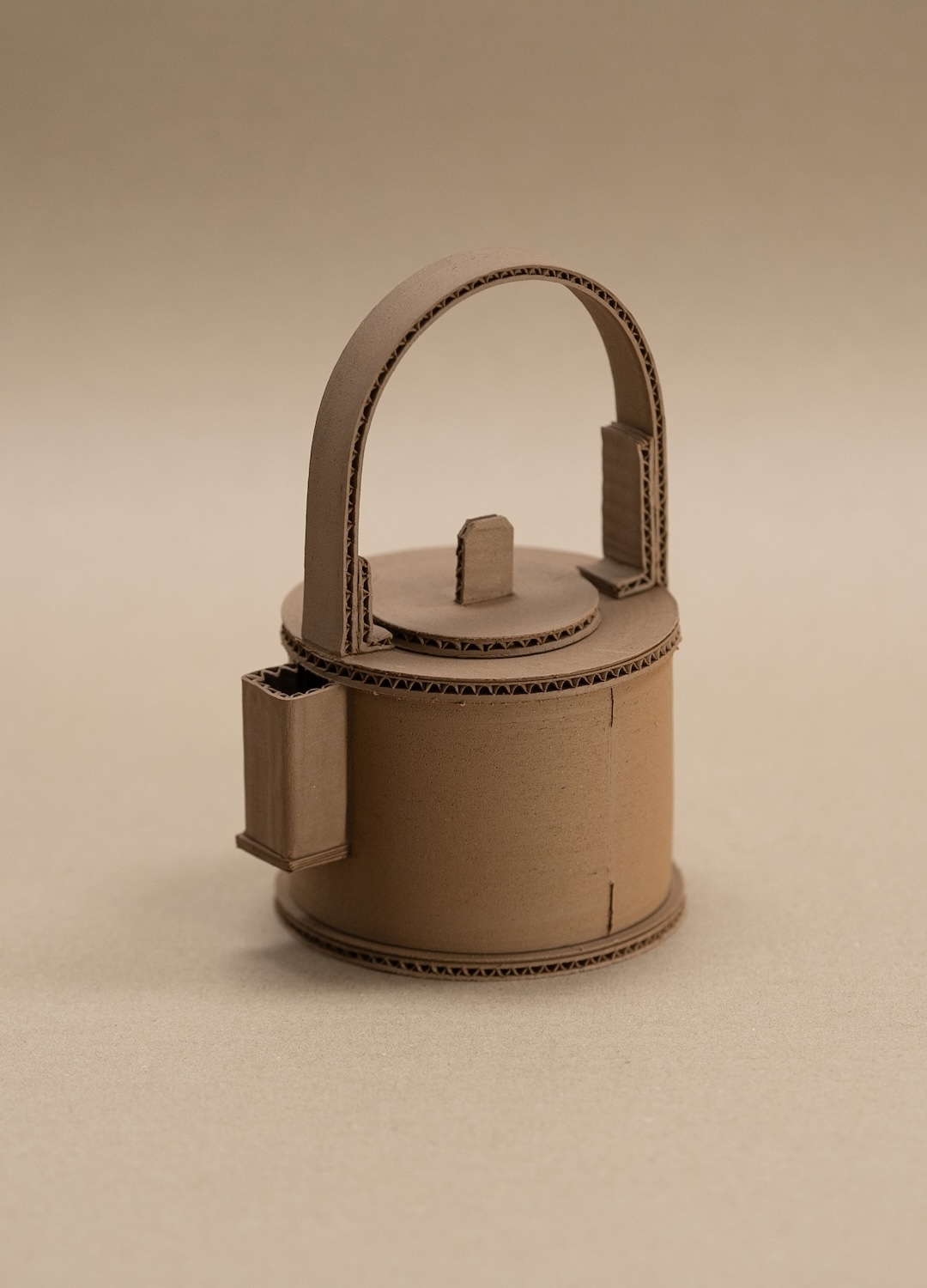
I started mixing different clays, and one day I ended up with a small piece whose color looked exactly like cardboard. That’s when my advertising background kicked in. Cardboard is the opposite of eternal – it’s provisional. Ceramic, on the other hand, can be found in a grave three thousand years later. The idea of freezing cardboard in time felt powerful.
From there, I started experimenting. It wasn’t perfect at first, but people immediately understood the idea. Clay is a material that everyone knows, everywhere. It speaks a universal language.
Ceramics is often perceived as an easy material – almost childish.
Jacques Monneraud:
Exactly. Many people see it as approachable, almost like modeling clay. It becomes the easiest door for someone tired of their job who wants to make something with their hands. But that’s the biggest misconception. Ceramics is incredibly complex. It’s hard to emerge, hard to be different, especially with a material that has been used for thousands of years.
That’s why you have to be brave – or maybe stubborn – if you want to make a career out of it. Finding your voice is very difficult.
That’s why your work stands out. The illusion is central: it activates curiosity.
Jacques Monneraud:
Yes, but I didn’t invent optical illusion. What I developed were techniques that allow me to push the illusion far enough that people still hesitate when they’re very close to the object, unsure whether it’s actually ceramic.
Do you still want to mimic other materials, like wood or metal?
Jacques Monneraud:
Wood, especially ebony, is something I’m working on. It’s very challenging because of how it reflects light – shiny and matte at the same time. It can even look like plastic. I have a very specific idea, but it will take time.
That said, I don’t want to be “the guy who mimics things.” Every idea has its own environment. For example, the matchbox I designed: clay makes sense there because the box is used to strike the match. I want the material and the idea to justify each other.
Do you see yourself as a ceramist or as a designer exploring clay?
Jacques Monneraud:
I definitely want to be a ceramist. My father keeps telling me I’m a designer, but I still suffer from impostor syndrome. I have no formal education in object design, so it’s hard for me to claim that title. Still, I believe every ceramist is a designer.
But I also believe in focus. To be good at something, you need to specialize. Other materials attract me – wood, plastic, resin, glass – but for now, ceramics is where I want to stay.
Is that also because clay allows total control?
Jacques Monneraud:
I quit advertising because I was tired of seeing my ideas distorted when executed by others. Not because people weren’t talented, but because something always changes when it leaves your hands. Working alone allows me to maintain a very sharp point of view.
I’m extremely curious, not only about design but about everything. When you want to express something deeply personal, you don’t count hours. Every object is a part of me. In advertising, everything is about producing more and faster. Here, spending time on tiny details is the core of the work.
I think about Steve Jobs insisting on designing the inside of products no one would see. Or my grandfather, an engineer, who wanted to paint engine parts in different colors simply because it was beautiful. That impulse – you can’t escape it.
In advertising, this was a handicap. People told me to stop refining details because “no one cares.” Now it’s my job, and I can finally breathe.
You’ve turned a former frustration into your strength.
Jacques Monneraud:
I don’t see it as bravery. I see it as necessity. I was deeply unhappy before – dark thoughts, really. This wasn’t courage; it was survival.
Objects, then, are not neutral. They affect us. Ugly objects affect our lives whether we admit it or not. We live with them. They shape our space and our mood.
One last question: the toilet paper pieces. Where did that come from?
Jacques Monneraud:
Surprisingly, very late. Toilet paper is one of the most universal cardboard objects, but maybe it wasn’t novel enough at first. Later, I developed techniques for larger pieces, including that helicoidal line typical of paper rolls. It’s technically very difficult – you have to turn the piece slowly on the wheel and carve the line in one single movement.
From there, I moved backward: from complex forms to the simplest tube. At the same time, I was working on international shipping solutions and discovered unused sheep wool as packaging material. When I saw the wool rolls, everything clicked.
Good design is when everything serves a purpose and conveys a message. The reaction online was immediate.
Your work is immediately readable, even when it’s ironic or illusory.
Jacques Monneraud:
That comes from advertising. I started posting on Instagram for my family – people who don’t care about ceramics at all. I had to speak in a language they could understand. Simplifying complexity became a habit.
About the author

Ludovica Proietti, journalist, design historian and curator, teaches in universities and curates events, always exploring projects with fresh, unconventional perspectives.
Instagram