With JAWF, Studio Sarah Naghawi shapes stainless steel with air. The project, presented at Amman Design Week 2026, uses hydromechanical forming — internal pressure rather than external force — to turn flat metal into concave, cavity-like forms, a first for a Jordanian studio. Behind it is Sarah Naghawi, a multidisciplinary architect and designer whose practice converges art and architecture. The collection explores what happens when a rigid material is made to behave like something soft.
JAWF – Highlights:
Inflation as a shaping force
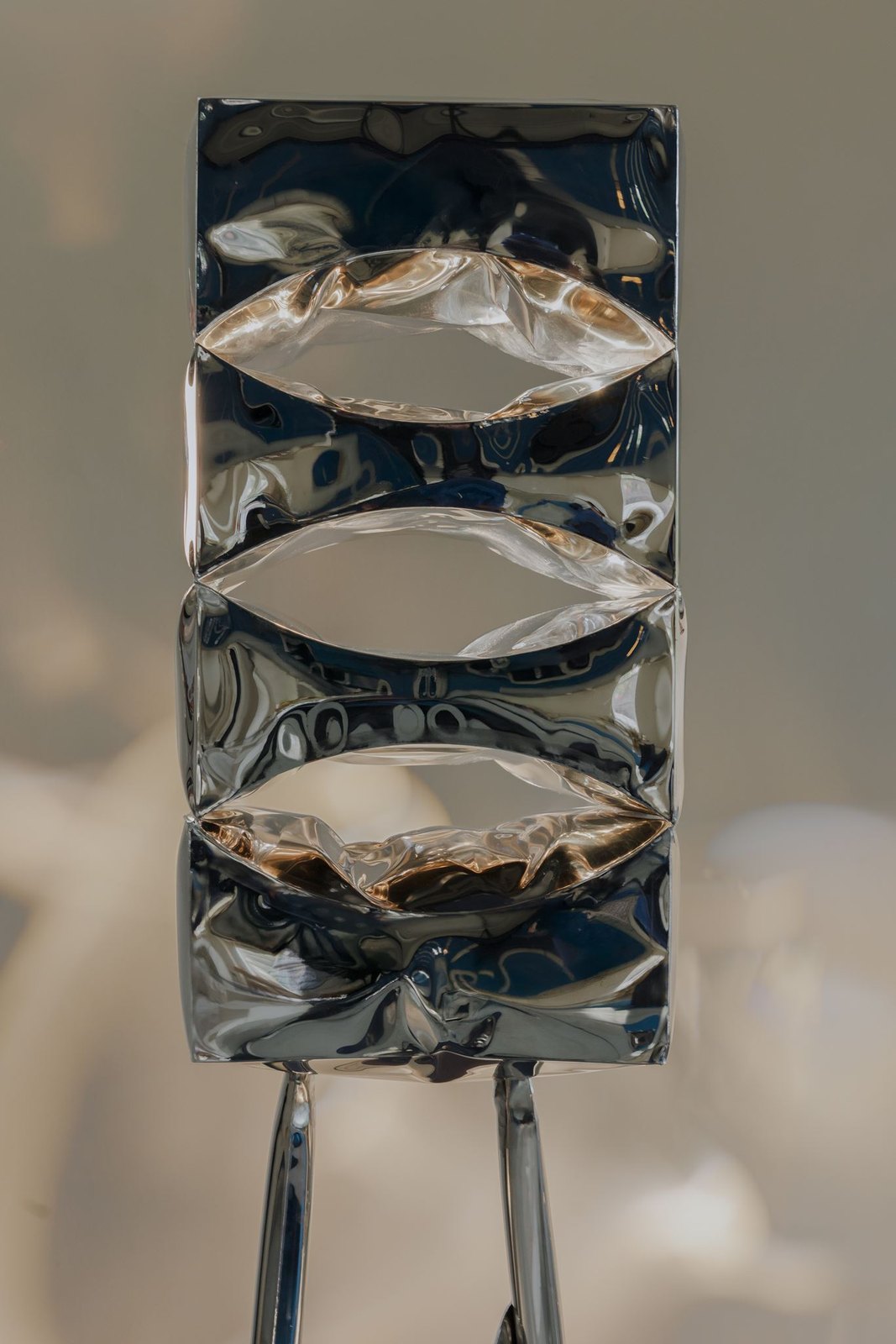
The pieces are formed through the effects of inflation and deflation. Rather than pressing a fixed solid into shape, Studio Sarah Naghawi lets positive and negative tension exhaust the material: internal pressure accumulates and redistributes the steel’s surfaces, producing strong articulations of force and a surface that behaves like a membrane, pulled into curves a conventional press could not reach. The forms hover between sculpture and furniture — hollow enough to suggest a cabinet or vessel, without committing to a single use.
Unlike a balloon, whose form vanishes when the pressure is released, the steel keeps the deformation permanently. The resulting objects preserve a visible memory of the internal forces that shaped them — the surrounding material acting at once as structure, enclosure and function, and remaining reflective, compressed and displaced. The soft, pillowed appearance is an illusion of light and curve: the objects are solid metal throughout.
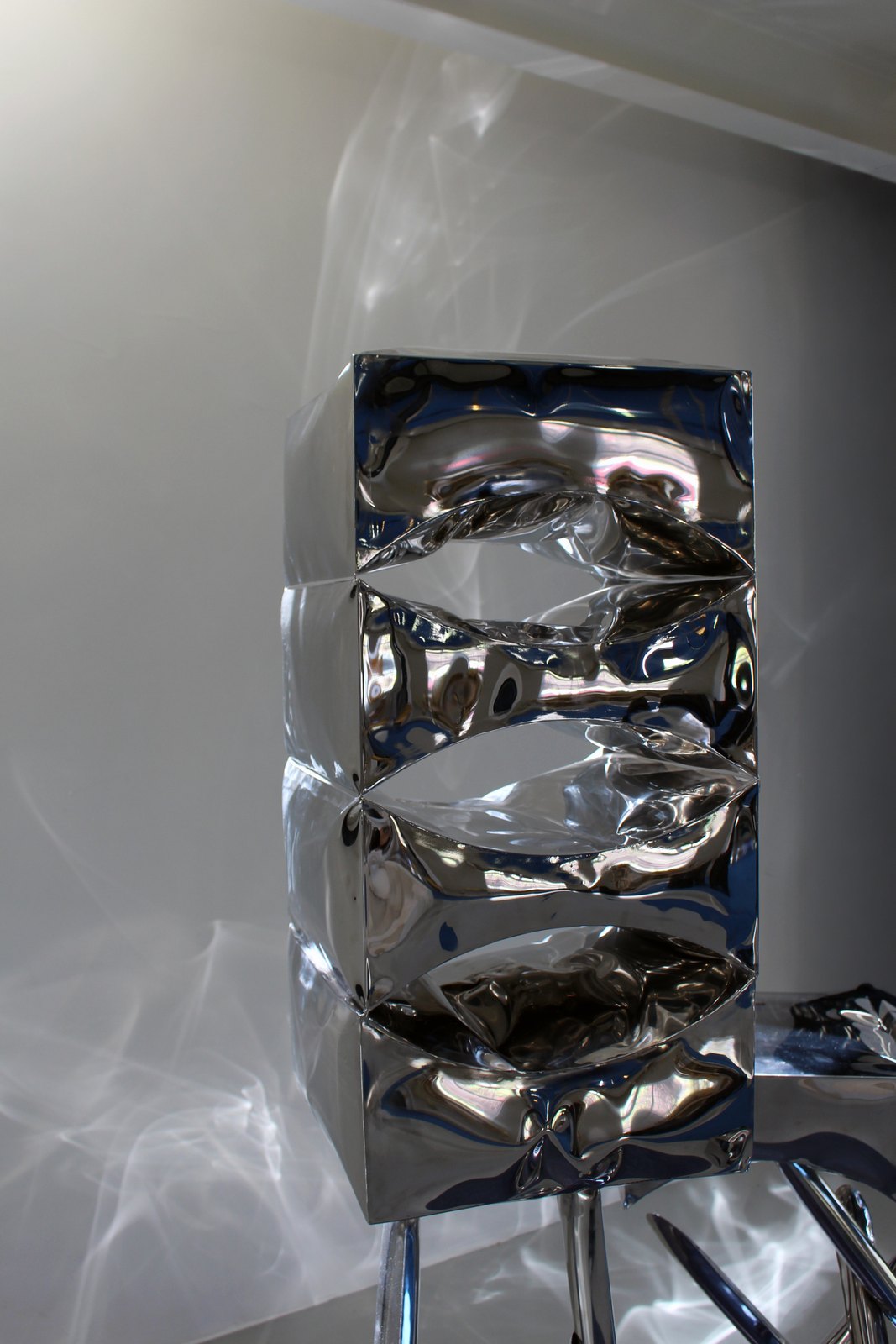
Cavity as material
JAWF borrows its name from the Arabic word for an inner chamber or protected cavity. The project investigates the emergence of cavity as a material phenomenon: concave and convex surfaces arrive simultaneously as reciprocal conditions, a continuous negotiation between membrane and cavity in which deformation gives rise to protected interiority.
It is a reading of form that inverts the usual logic — the hollow is not what is left over, but the very thing being made. The void is understood not as absence but as a condition held by matter, a protected interior that only exists because the steel around it was made to yield. Function, in JAWF, emerges through deformation rather than assembly: the cavity is not carved or built, but grown from pressure.
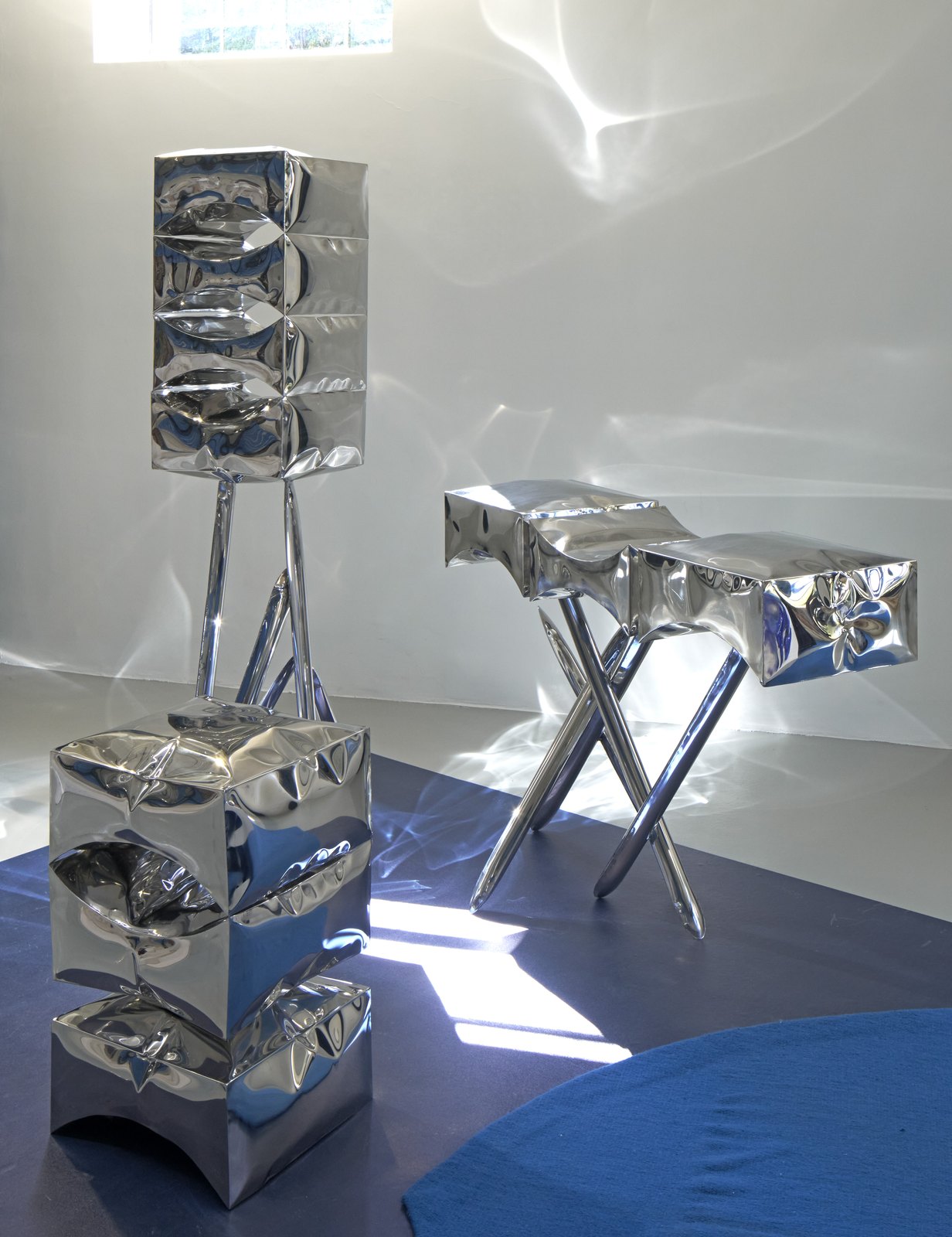
The balloon trace
A companion study, Balloon | Project Trace, makes the logic explicit. It reads the balloon as an object shaped entirely through internal pressure, where membrane and cavity depend on one another, and where enclosure disappears with the release of force — leaving the collapsed balloon as residual evidence of a geometry that can no longer sustain itself. The balloon, in other words, is the limit case: form that exists only while the pressure lasts.
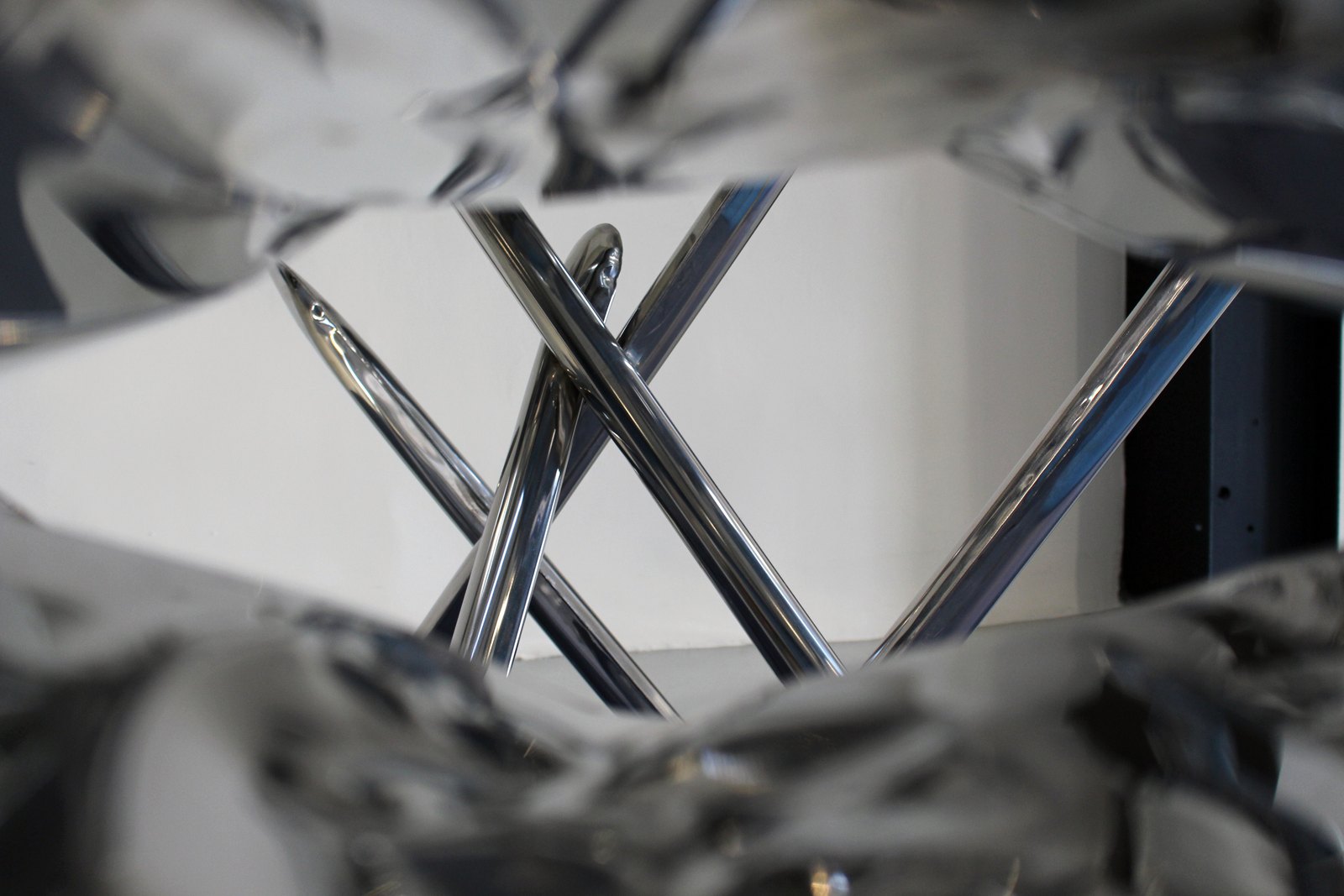
JAWF takes that condition and makes it permanent. By letting steel record the same forces rather than relax from them, the project turns a moment of pressure into a lasting form — and asks, in the process, what happens when a material is made to remember what shaped it. The collection reads as a study in what steel can do when pushed from within, and how a material’s behaviour can become the design itself.
Editorial Team
Do you have a story to share? Feel free to reach us out and submit your design and inspiration, we are always looking for interesting design ideas!