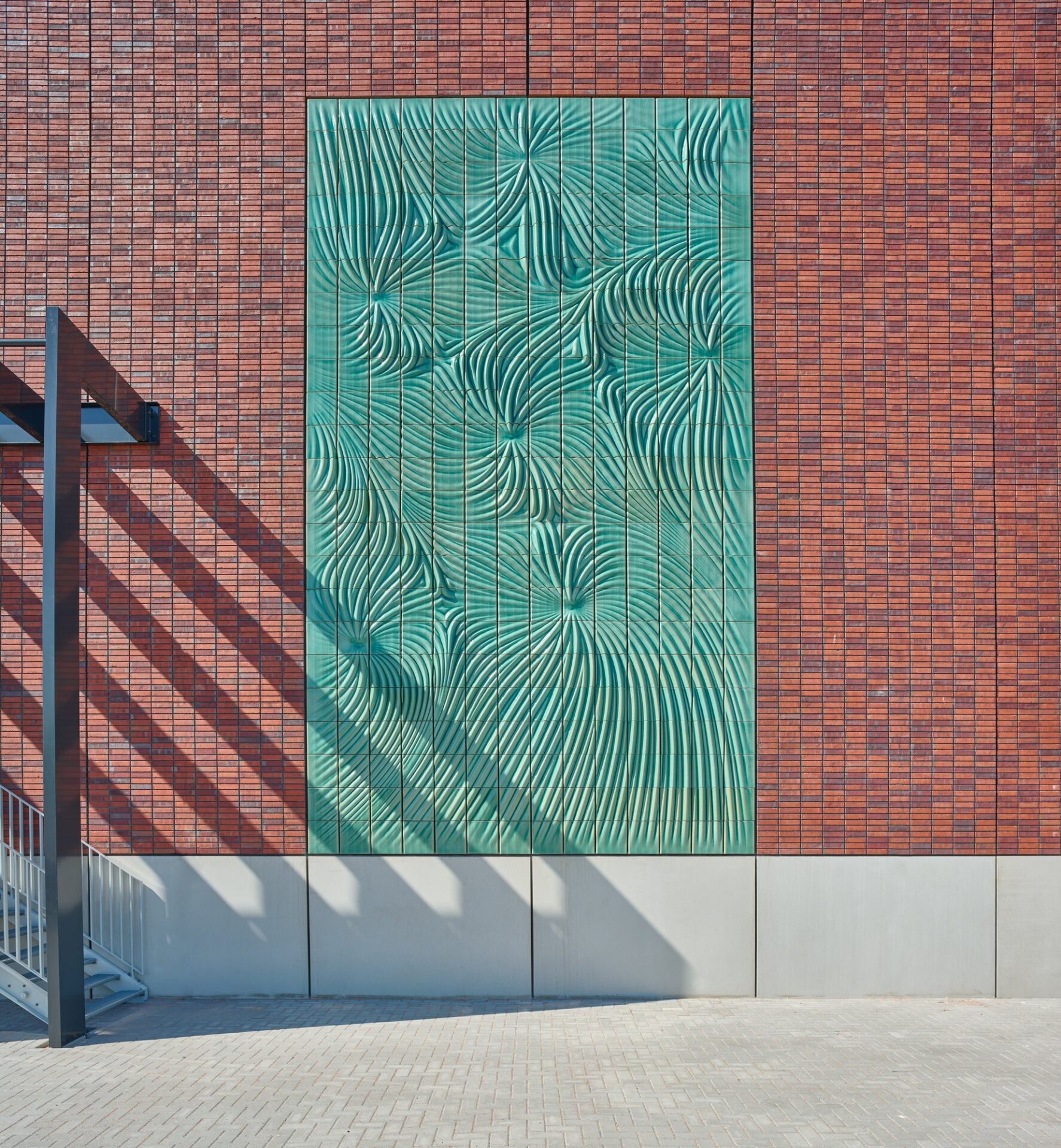
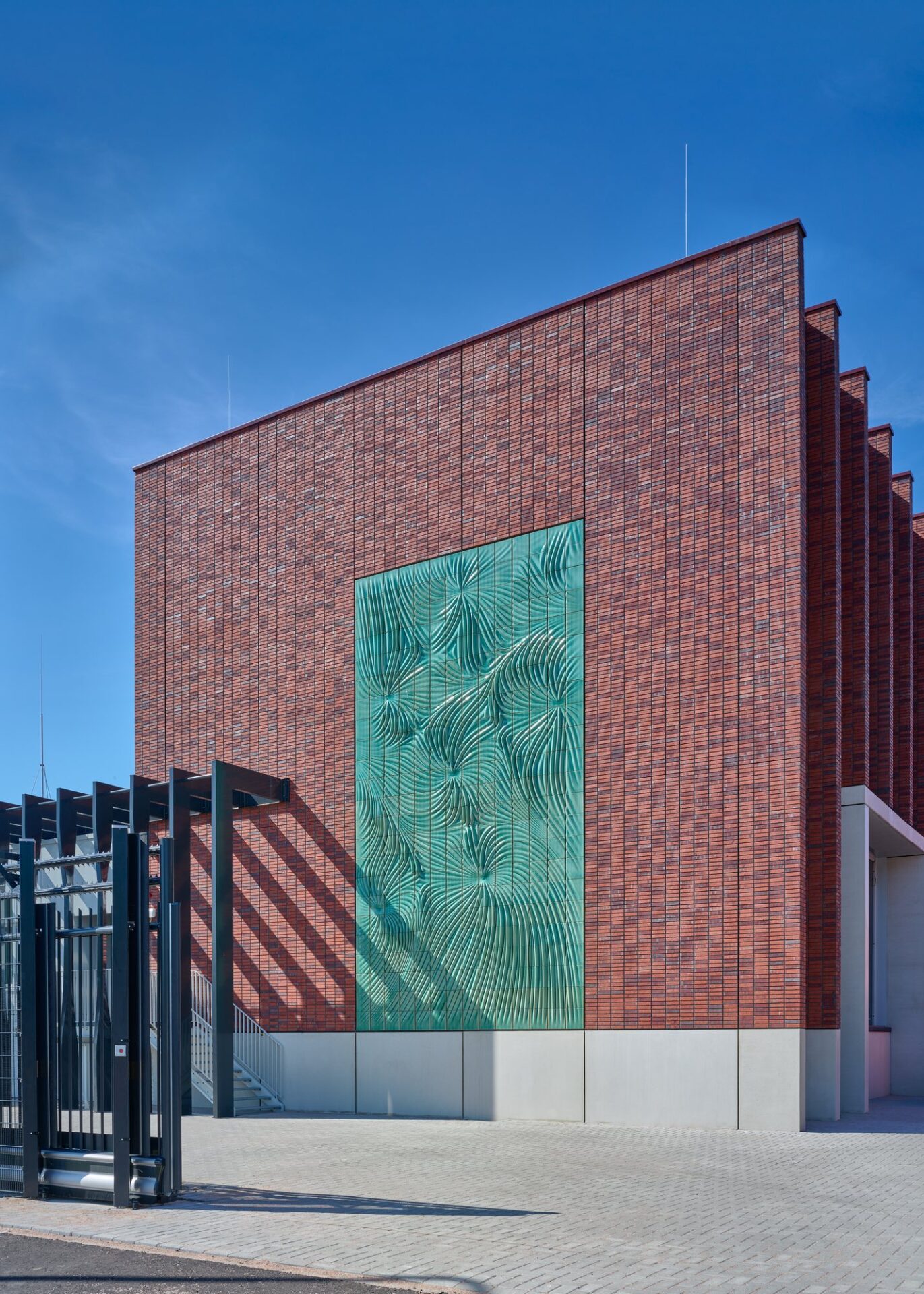
Utility buildings are often treated as if they exist outside everyday life — a thought that Powerhouse Company set aside for a new switchstation in Beverwijk. Into its brick facade the studio set Powerwall, a ceramic artwork by Studio RAP that turns the building’s invisible electromagnetic fields into a visible relief.
The result is a piece of essential energy infrastructure with a strong architectural presence — a building that invites curiosity rather than being ignored.
Powerwall – Highlights:
Infrastructure with a public side
The switchstation, commissioned by TenneT to meet the area’s growing electricity demand, sits beside the Bazaar in Beverwijk, where housing, workspaces and public space are planned around it. The building is organized into two volumes: a taller brick volume for the primary electrical installation and a lower metal volume for secondary functions.
Deep brick piers give the facade rhythm and depth, while sculptural metal lamellas wrap the lower volume, their gently undulating form casting patterns of shadow. “Utility buildings are often treated as if they exist outside everyday life. In reality, people live beside them, pass them every day, and experience them as part of the city.” explains Paul Stavert, partner architect at Powerhouse Company.
From electromagnetic fields to ceramic
Powerwall gives the switchstation’s purpose a figurative expression. Inspired by the invisible electromagnetic forces at work inside the building, Studio RAP translated their movement into a flowing relief set into the brick facade — its scale and vivid appearance catching the eye from afar, its detail rewarding a closer look.
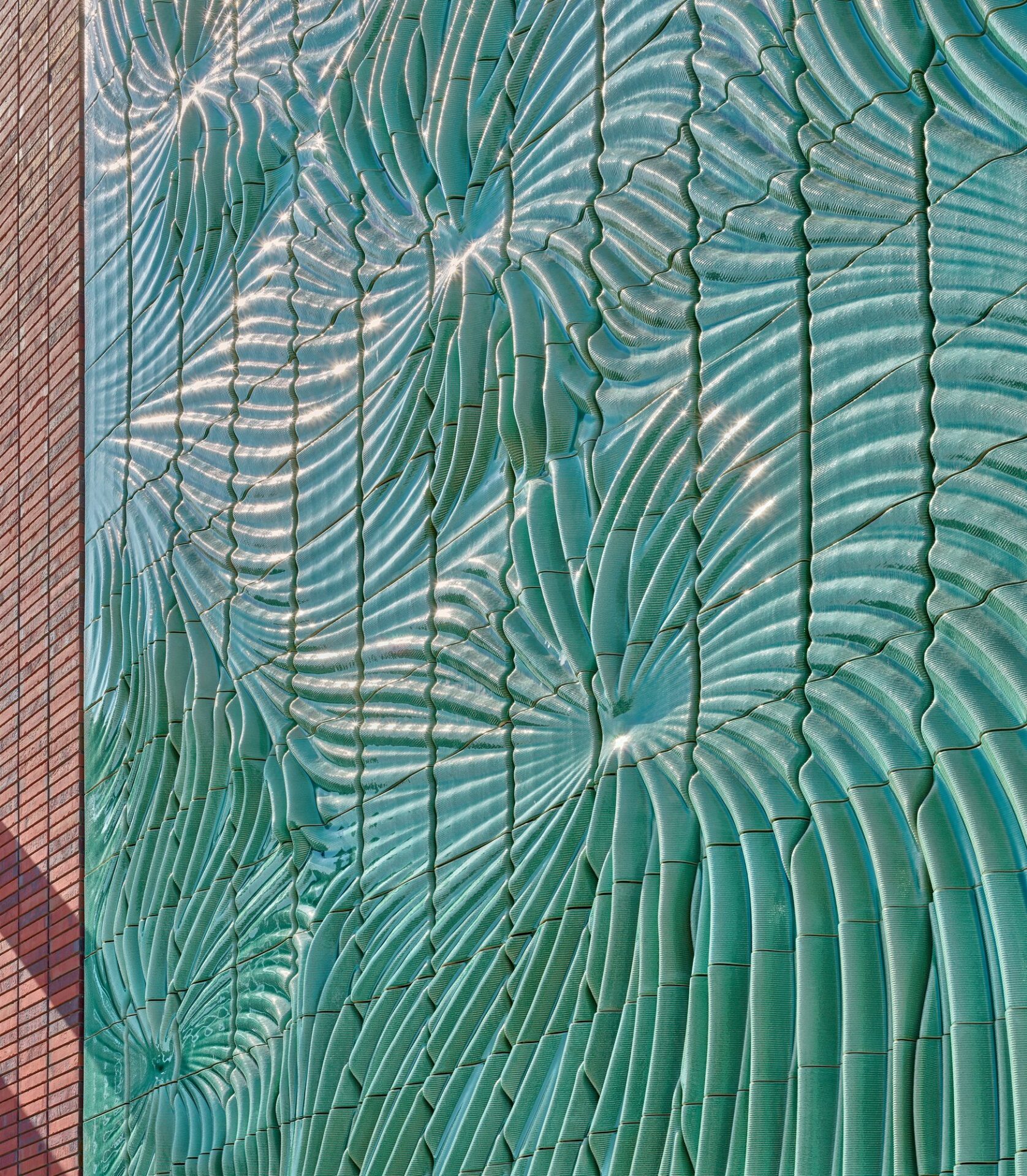
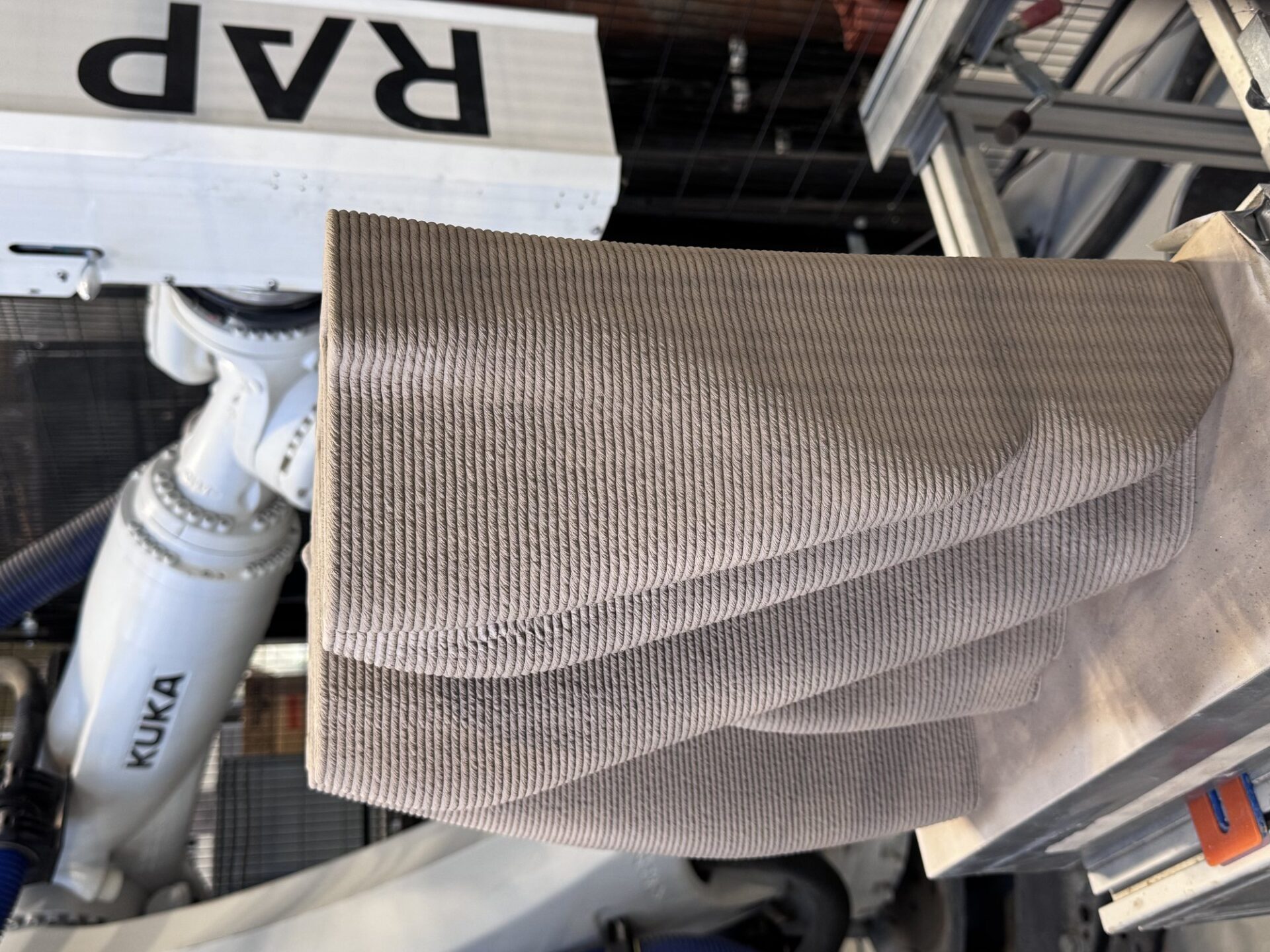
Using computational design, the studio created 322 unique tiles that together form an eight-by-five-metre relief, among the largest robotically 3D-printed ceramic artworks in the world. Each tile was produced in the studio’s Rotterdam workshop with in-house robotic clay printing, then fired and finished with a translucent turquoise glaze that settles into the grooves and recesses.
Digital craftsmanship in clay
The glaze is what makes the relief feel alive: as light shifts across the surface, the turquoise deepens in the recesses and brightens on the ridges. “With Powerwall, we wanted the artwork to reveal something that would otherwise remain invisible,” says Lucas ter Hall, co-founder of Studio RAP. “The electromagnetic fields informed the movement and depth of the ceramic relief.”
The project reflects a wider shift. As the energy transition brings substations into the urban fabric, the two studios argue that these buildings deserve the same care as any other part of the neighbourhood — secure and functional, but also a thoughtful presence for tomorrow’s community.

Editorial Team
Do you have a story to share? Feel free to reach us out and submit your design and inspiration, we are always looking for interesting design ideas!