


Habit, Vibra, and Limen: the 3 new dimensions of design by Novamobili
3 collections explore different ways of working with walls, from the warmth of wood and the texture of vertical slats to doors that disappear into the surface, combining storage, finishes and architecture in a single system.
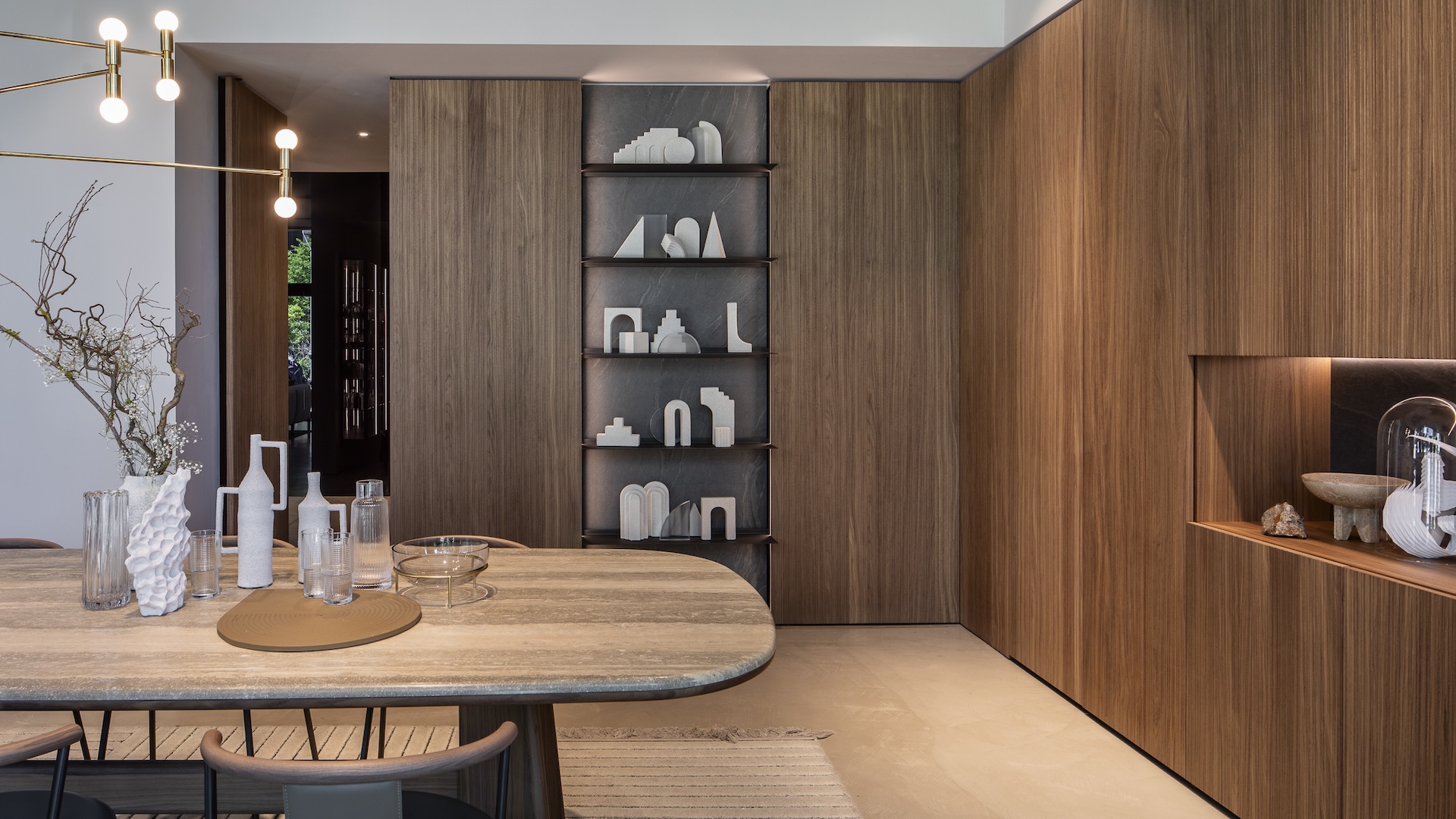
For centuries, walls have been more than just boundaries. Long before ornate French boiserie took center stage, people in Europe used timber panelling simply to keep out the cold and damp. By the eighteenth century, walls evolved into intricate backdrops, layered with panels, doors, moldings, and furniture – all working together as one big design. The French menuisiers en bâtiments (building joiners) didn’t just make lambris (wood panelling), they built walls like architects, usually following an overall plan.
Now, the look is subtler, but the idea still holds. A wall can be just a divider or a plain background, but today’s walls can hide things, shape light, connect spaces, or pull them apart. The materials and methods have changed, swapping carved wood for sleek modular systems, integrated tech, and all kinds of new surfaces, but the concept stand until nowadays.
Novamobili is interested in this aspect, and to bring it in contemporary habits with its Living 2026 collection, presented this year at the Fuorisalone and comprehending three different approaches to design and finishings. Habit, Vibra, and Limen: each one rethinks the wall, its surface, or its edges, nudging these elements into new roles inside the home. In Habit, the brand transforms the wall into an organized structure. With Vibra, the finishing aspect brings depth with its textured surface. And Limen is the one who turns a simple threshold into a seamless part of the space. Every collection is a different face of the brand’s knowledge of the market and culture of design.
Gallery
Open full width
Open full width
Novamobili’s history is closely tied to Battistella Company, founded in 1953 in Pieve di Soligo by Alfredo Battistella, who began his career as a woodworker before moving into furniture production. Established in 1967, Novamobili grew alongside the evolution of furniture manufacturing, with technological research shaping both its production processes and its approach to materials. Novamobili, established in 1967, jumped into new technologies just as that was changing how furniture was made – and innovation became a true push on the production and its techniques, like water-based lacquering launched in 2002, and BIO water-based paints in 2023, all feed into their current approach: modular, flexible, and super detail-oriented.
3 new dimensions of design by Novamobili:
Habit, a wall with a secret side
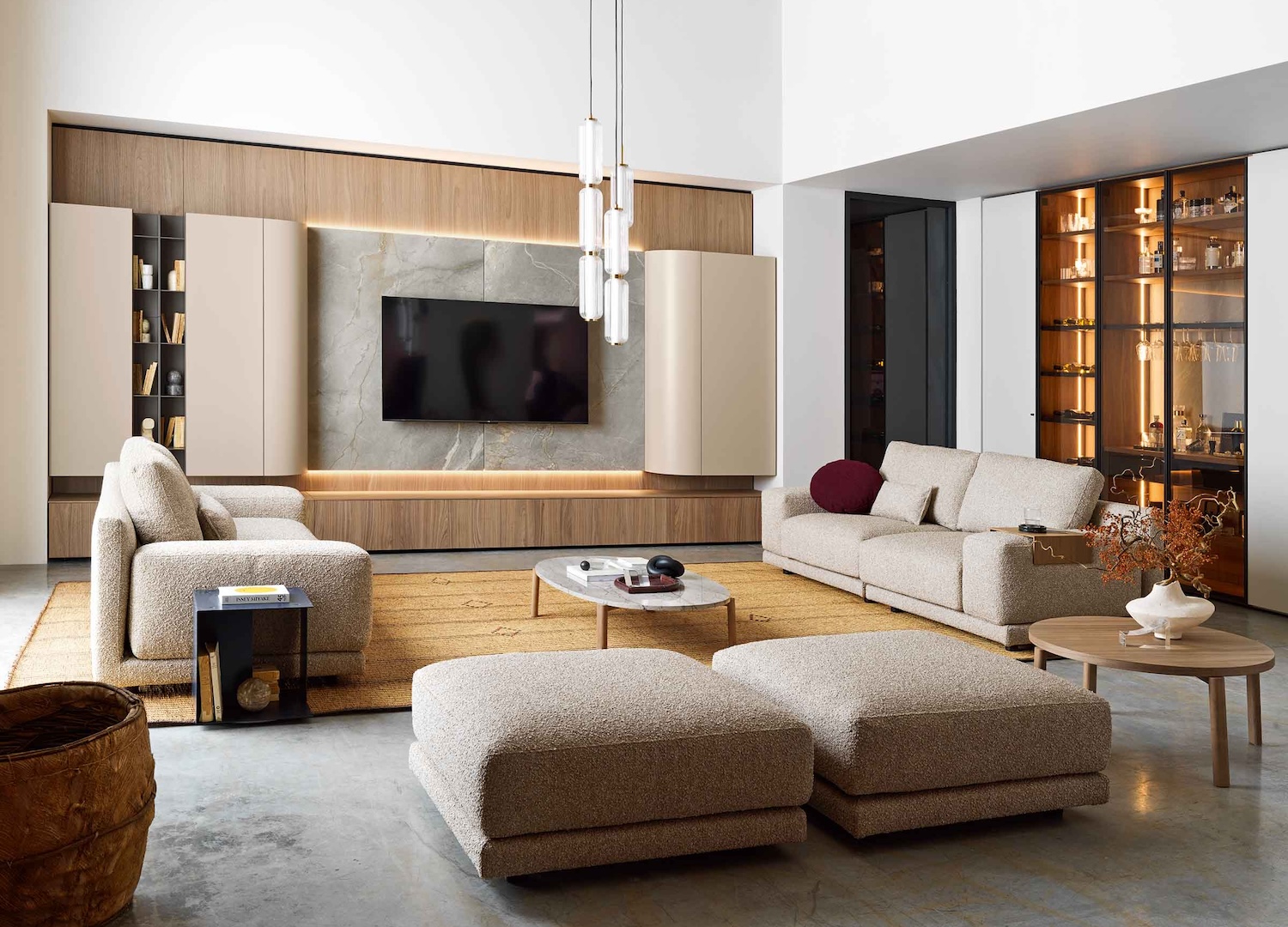
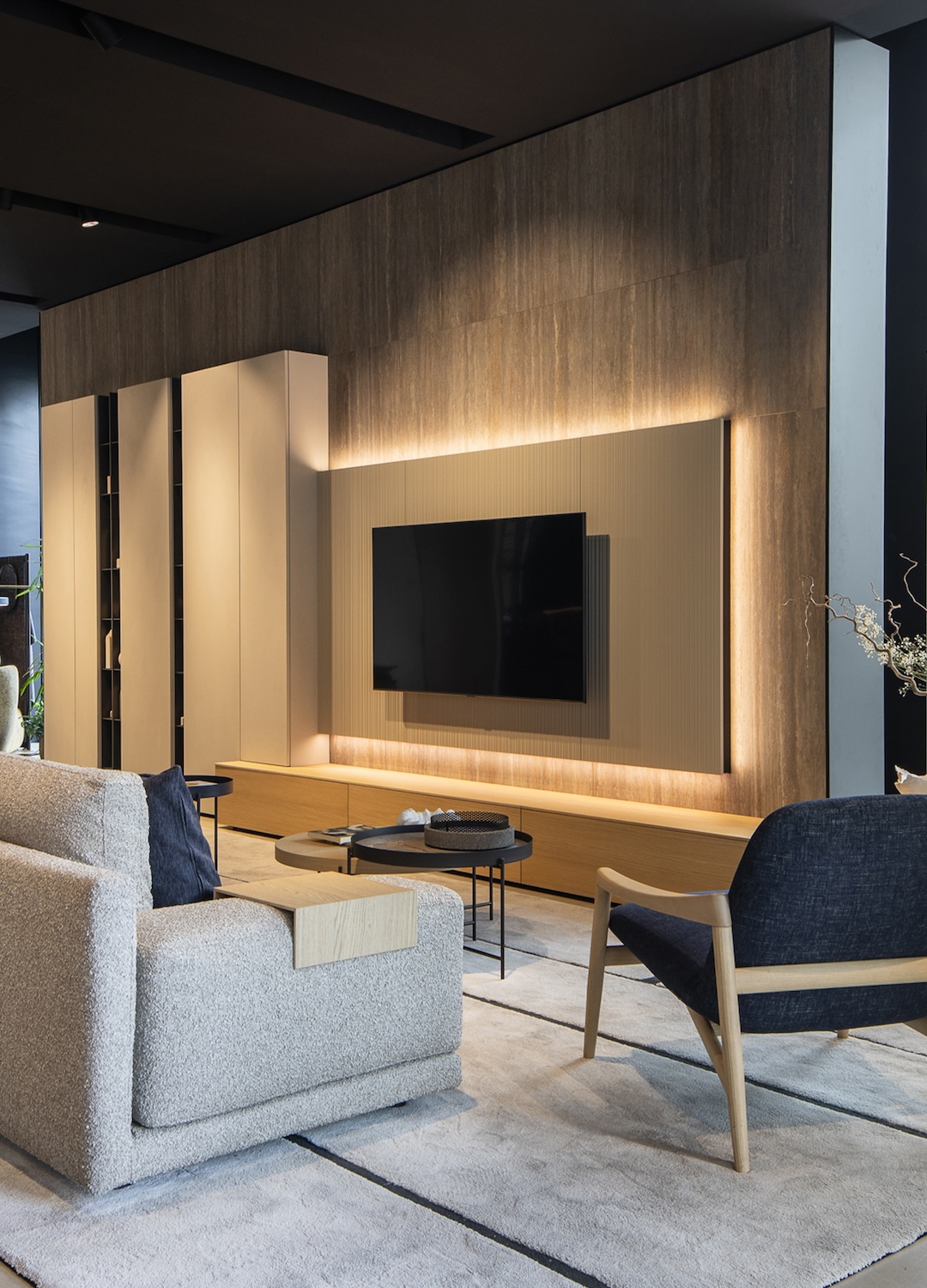
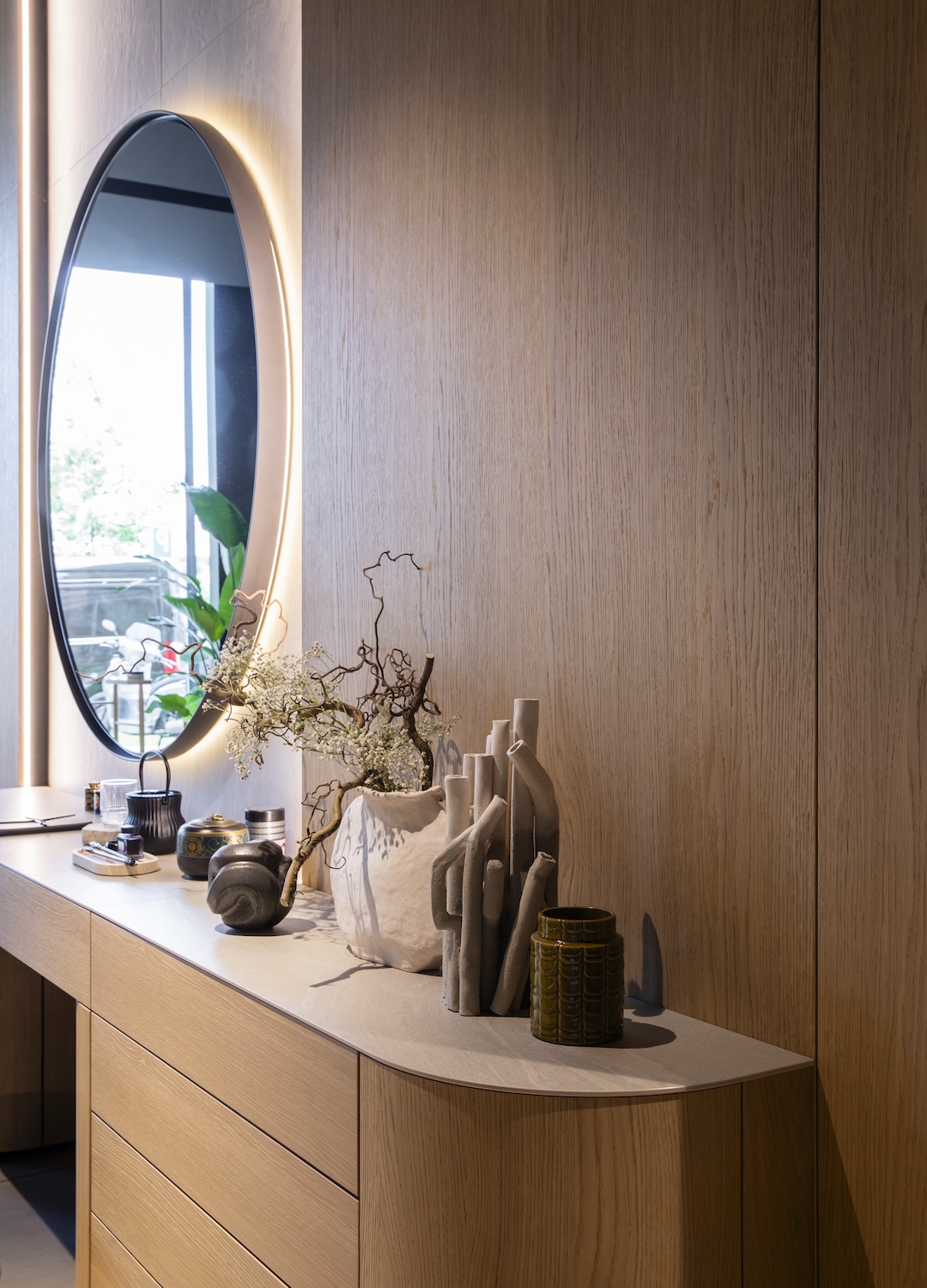
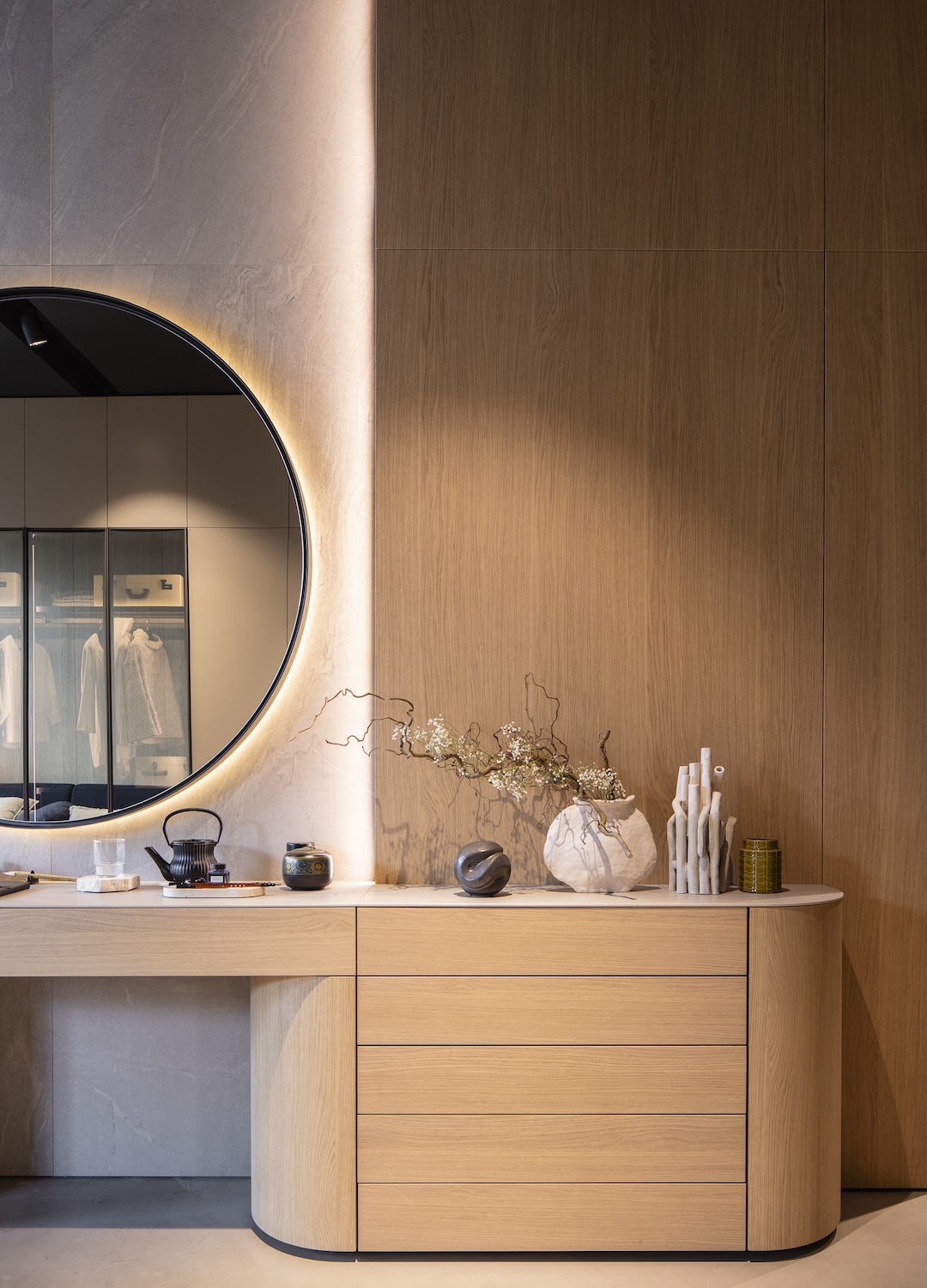
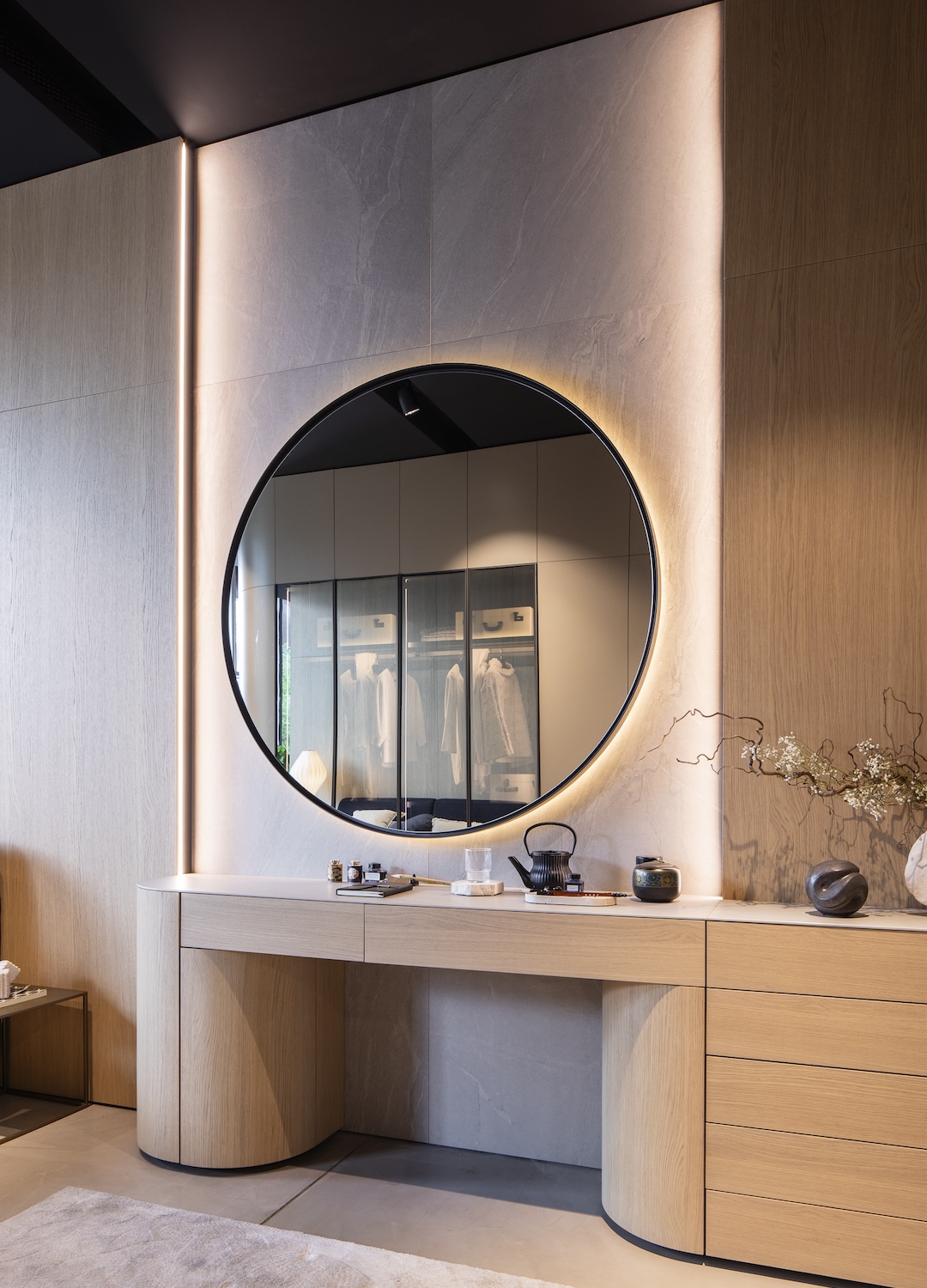
Habit draws from the old tradition of wall panelling but adds a clever twist: the real magic happens out of sight. Novamobili designed this modular system to work across living or sleeping areas, where the visual vibe leans into classic boiserie, but it’s wired for modern needs. Panels just 18 mm thick stand a few centimeters out from the wall on spacers, leaving a hidden cavity behind, and, in that little gap, you can stash away cables, transformers, and electronic bits – keeping TVs and lighting built in but without visible mess. The cavity smooths over any odd features in the building structure, too.
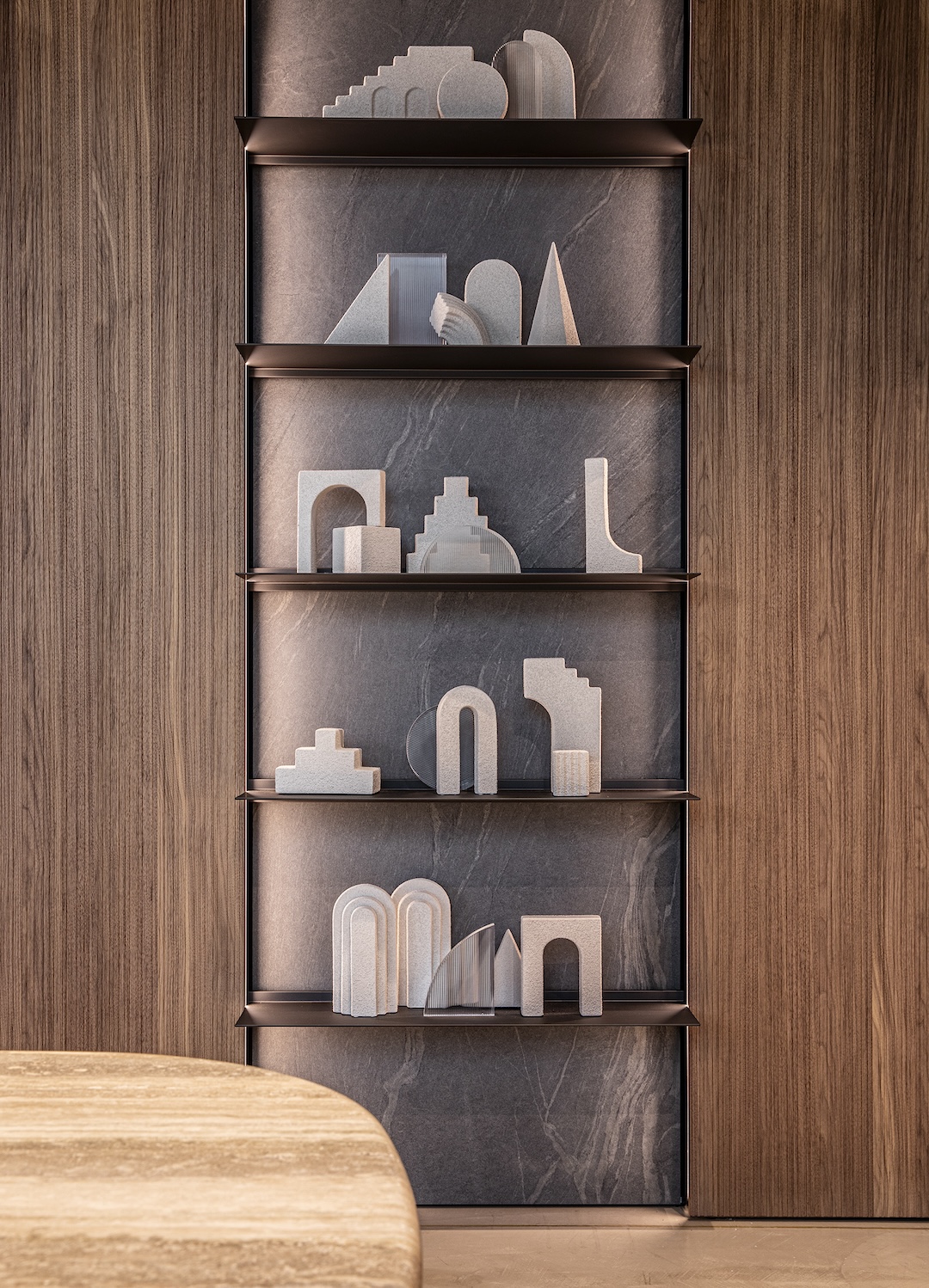
This gap between panel and wall isn’t just about practicality, either – it creates visual depth. And the wall gets a new dimension, casting shadows and picking up highlights as light moves across it, because here LED strips can outline the edges or vary the depth, turning the wall into a blend of geometry and glowing accents.
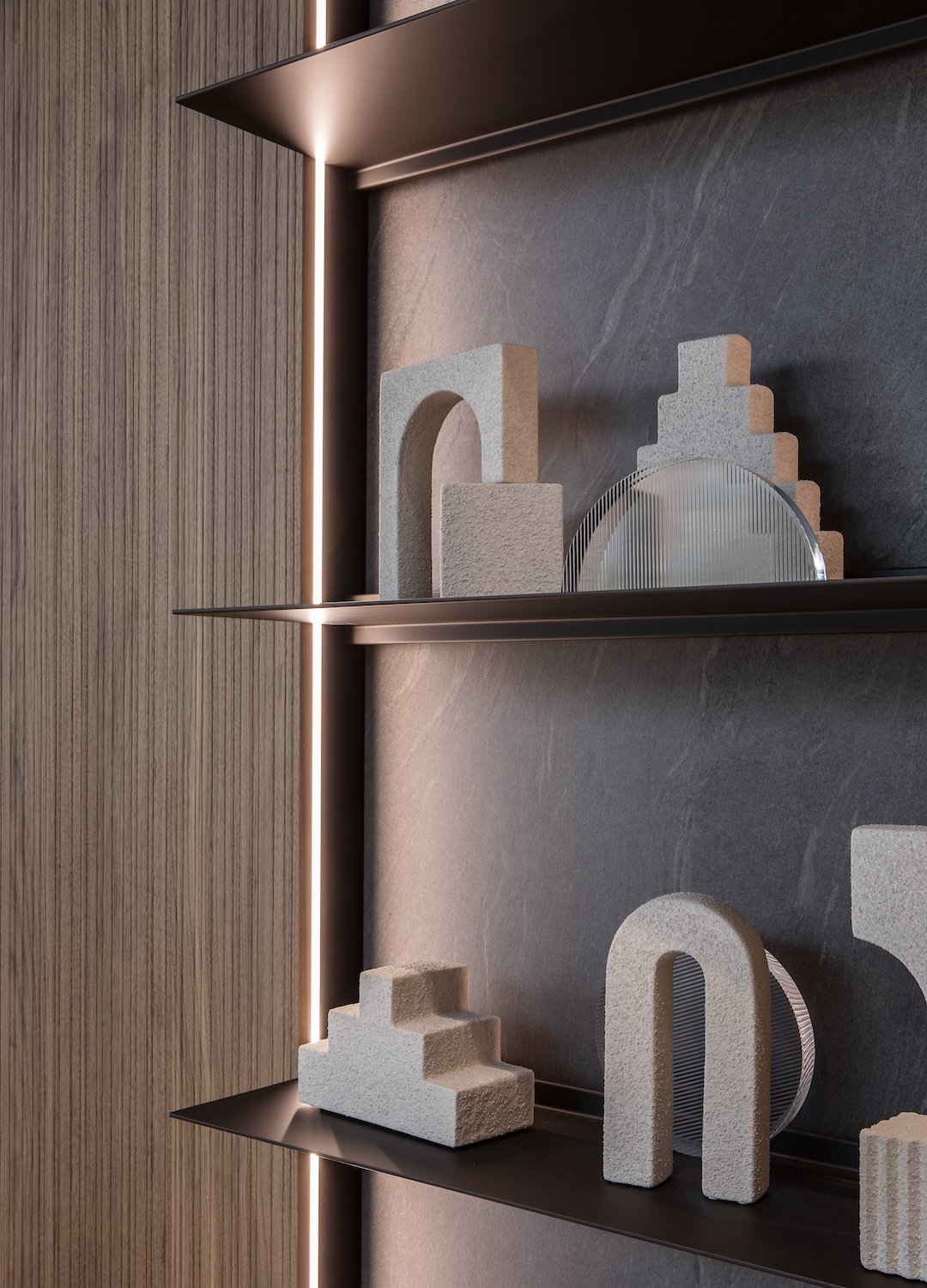
Habit adapts itself also to different configurations, thanks to the material choices – comprehending lacquer, super-matt and eco-wood finishes, veneers, light stone, leather, and mirror – that let the same wall look soft, stark, or dramatic. Adding slim aluminium shelves with integrated lights, or hanging storage units (like Box 18 and Velia, other collections from Novamobili) on the front, some modules sit forward, others back, but the whole wall stays visually cohesive.
What you end up with is a wall that appears almost empty, although it conceals a considerable amount within its surface. Storage, cables, lighting and screens are integrated into the design, while subtle changes in depth add definition and character to the wall.
Vibra, texture takes the lead
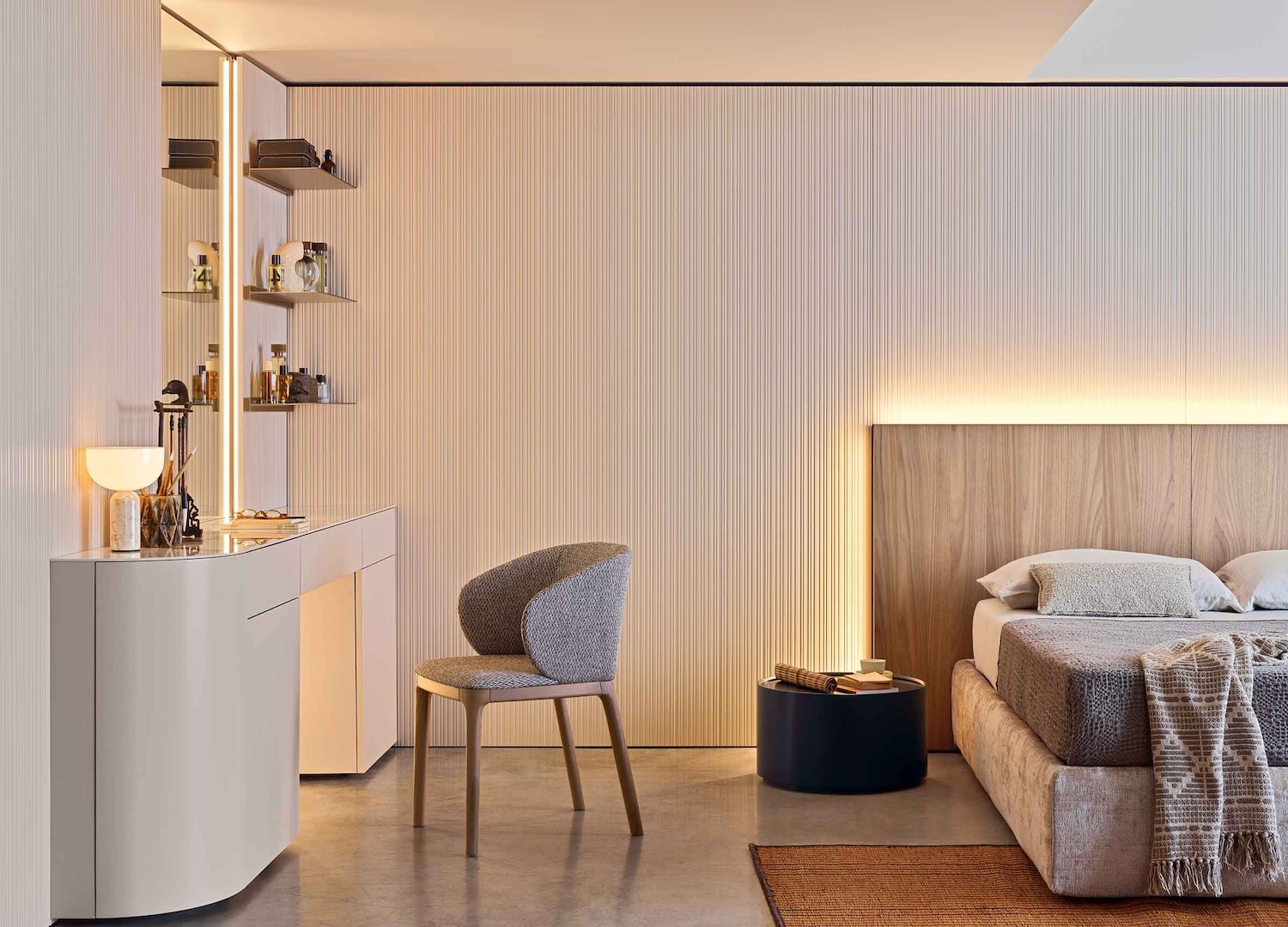
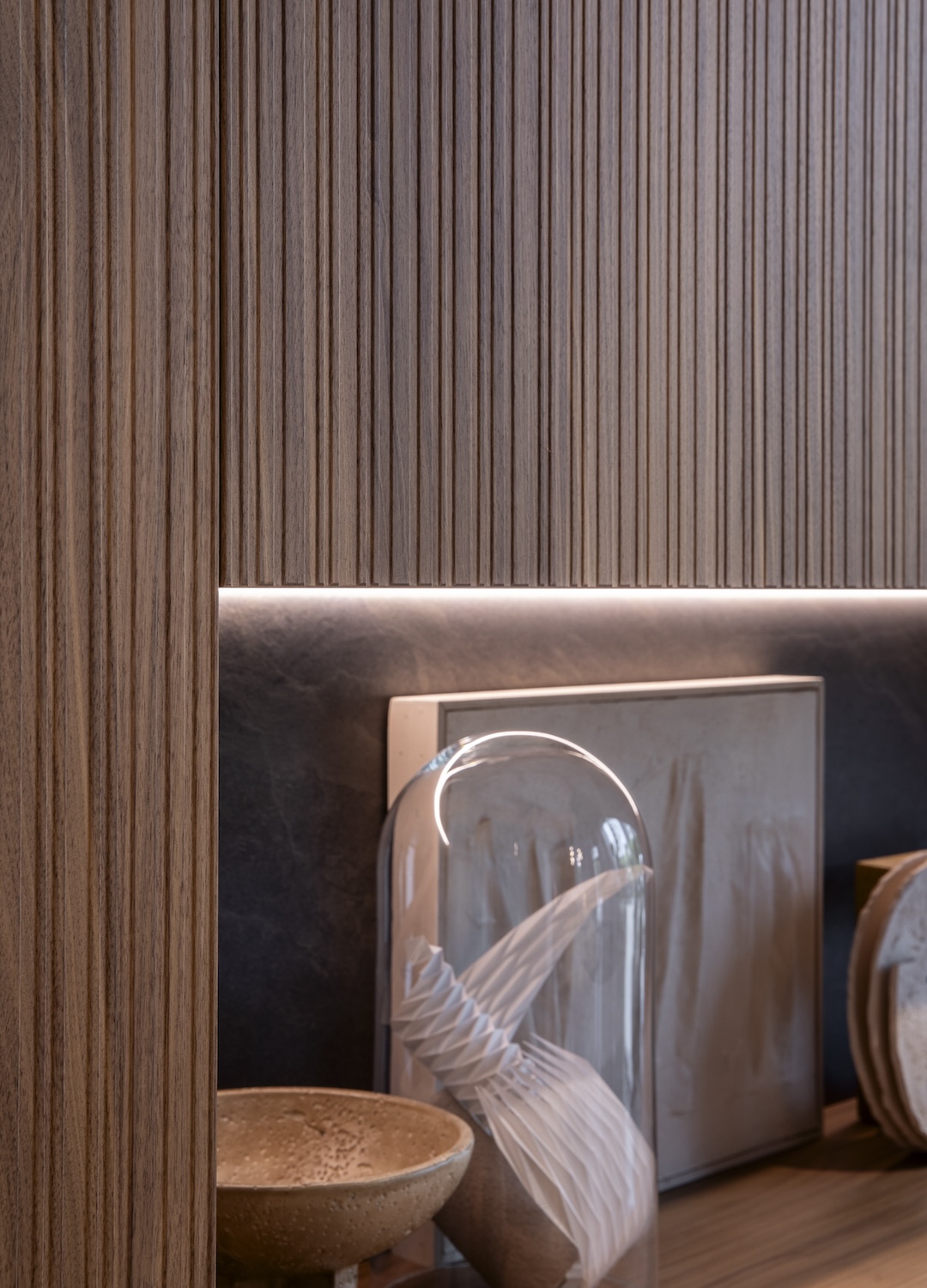
Vibra approaches things more by feel. Instead of plain flatness, it uses vertical slats in varying widths, some jutting out, some set back. Without any tricky pattern, the look of this finishing comes from simple repetition, proportions, and how the light plays in the grooves. And following the idea of texture shifting throughout the day, depending on where you’re standing or the angle of sunlight, walls can look soft or dramatic, and the same surface can sweep over wardrobes, bookcases, or storage units and even merge into the Limen door, so texture flows from one element to the next with zero interruption.
Vibra stands out for its restrained character, working with pared-back vertical slats and a subtle interplay between solid and void. Here, rhythm and movement take precedence over additional decoration.
The material construction is equally considered. Veneer and wood-effect versions use a particleboard core with carefully finished edges, bringing the brand’s technical approach into the details of the system. Lacquered versions are made from MDF with an acrylic layer and Laccoboard technology, which creates a nearly seamless transition between the front and the edges. Panel thickness varies according to its application: 18 mm for wall panels, 22 mm for doors and 30 mm for Limen doors, whose textured front is paired with a smooth rear surface.
Vibra can be paired with flat panels, too, following the flexible approach of all the collections. In this case, the contrast makes the textured wall pop – shadows, highlights, and bold surfaces become the real feature.
Limen, making the door disappear
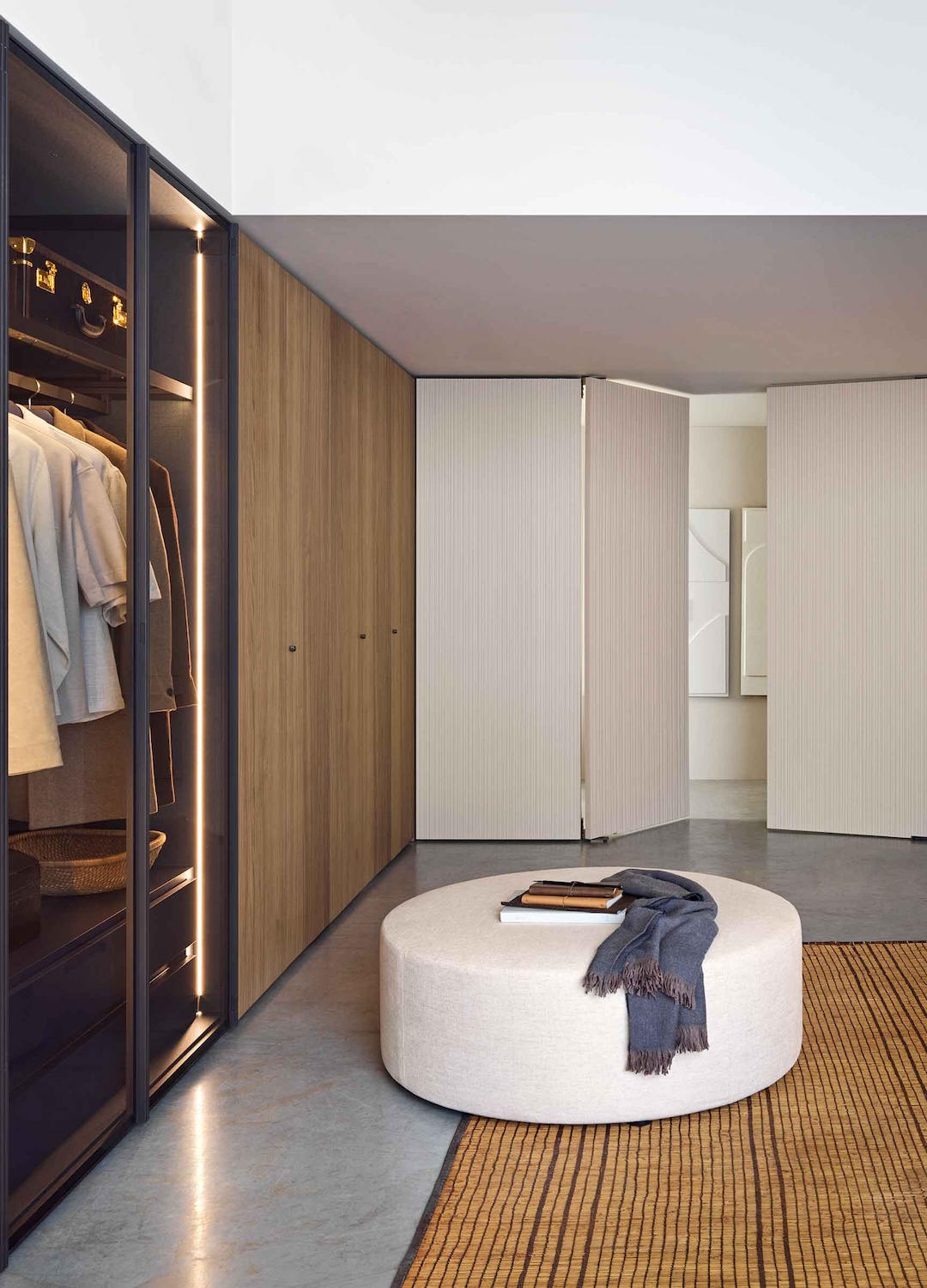
Limen extends the idea of continuity to the point where the wall itself becomes an opening. Presented during Fuorisalone 2026, the door swings in both directions on a concealed pivot and aligns with adjacent wardrobes or bookshelves. The elements traditionally associated with a door – frame, hinges and jambs – are all integrated into the construction, leaving a continuous surface in view. When closed, Limen almost disappears into the wall: the same finish continues across the surface, making the door difficult to distinguish unless its presence is known. Once opened, the wall transforms into a passage.
The system allows for different dimensions. Single doors range from 80 to 100 centimeters in width, while double doors extend from 160 to 200 centimeters, with heights of up to 2,75 meters. The two leaves open simultaneously, creating a broad connection between adjacent spaces, such as living and dining areas.
Limen is available in the same finishes as the rest of the collection, including veneers, solid wood, lacquer, eco-wood, super-matt surfaces and Vibra’s textured finish. The same material treatment can therefore continue from wall panelling to furniture and across the door itself, creating a consistent surface language in which the different elements remain legible while contributing to the continuity of the overall composition.
Surfaces being more than just finishings
Habit, Vibra, and Limen show three ways to give the humble wall a bigger job in the room. Habit builds in the infrastructure, Vibra plays with how the wall feels and looks, and Limen lets the wall open up–without ever breaking the flow.
Novamobili’s approach weaves materials, proportions, lighting, and storage straight into the wall’s design, without focusing just on style. Doors, bookcases, or panels don’t need to feel separate – the finish and the details connect everything. This approach brings the wall back to its roots, when panelling was part of making the room, not just stuck on as decoration. The difference now? Modern walls tackle more challenges with barely any visual clutter.
And that’s the real draw: these walls quietly carry more responsibility. There’s a cable behind that smooth panel, a shelf that doubles as a light, a wardrobe hiding behind texture, or a door that almost isn’t there. The wall is still a surface – but it’s no longer just waiting in the background.
About the author

Ludovica Proietti, journalist, design historian and curator, teaches in universities and curates events, always exploring projects with fresh, unconventional perspectives.
Instagram