AI and design authorship: the case of Seed 6143
What happens if Google DeepMind begins to create like Ross Lovegrove? Modem’s latest project Seed 6143 exposes the ethical fault lines of AI-generated design.

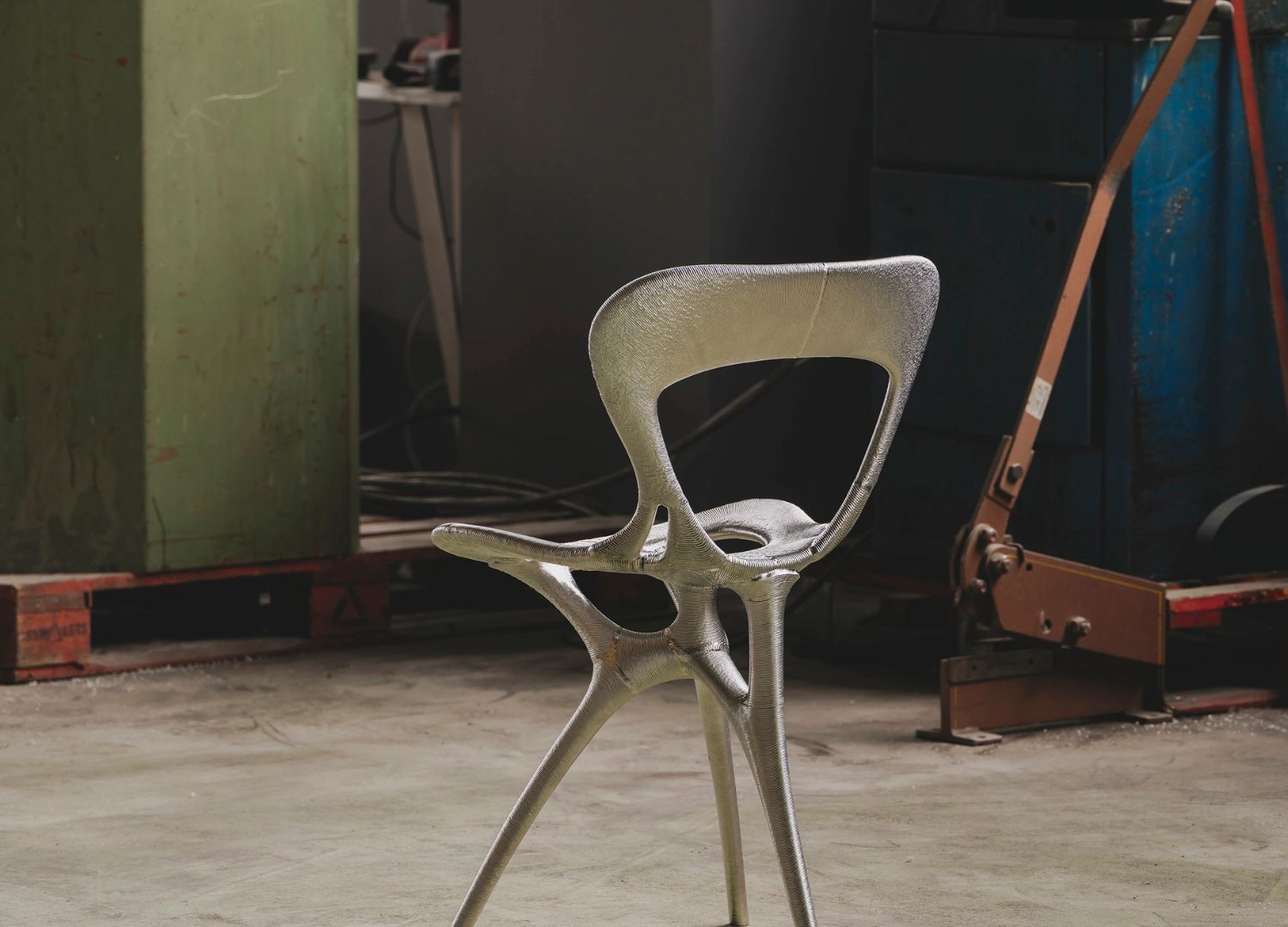
Modem Works, in collaboration with Google DeepMind and Studio Ross Lovegrove, recently introduced Seed 6143, a research project that explores the intersection of design, AI, and advanced manufacturing. The work shows how artificial intelligence can become a real design partner, shaping new forms through the intersections between human intent and machine intelligence.
The project began with an ambitious premise: could an AI model be trained to think like one of the world’s most renowned designers? Ross Lovegrove is a Welsh industrial designer known for his organic, biomorphic aesthetics, which draw inspiration from natural forms. His work acted as the raw material for the Google DeepMind model’s training. The team fed the model Lovegrove’s sketches and prompted it to give back a new chair, using experimental approaches which could open up richer semantic territories.
Gallery
Open full width


Open full width
Seed 6143 was the 6143rd iteration of this process, which was chosen among countless other generated possibilities. Transforming this AI design into a physical object is another process, where industrial designers had to develop the sketch into a complete 3D silhouette and CAD model, adjusting some structural details for feasibility. Finally, the files were sliced and subdivided for direct robotic-arm 3D printing in metal.
While Seed 6143 represents a consensual collaboration, it raises questions about design authorship. Lovegrove agreed to have his visual language extracted and replicated, but what happens when consent is absent? The project demonstrates that a designer’s life’s work can be distilled into training data and generated into infinite variations, each carrying the visual signature of the original creator. Even if properly attributed as “AI-generated” and “inspired by”, they will be new objects entering the world with an unmistakable resemblance to their human-designed counterparts.
This can create a new form of reputational impact, as every AI-generated piece, whether good or bad, becomes associated with their name and legacy. The designer loses control over quality, context, and narrative surrounding their contributions. The economic impact is another key issue, as external people can potentially profit from an artist’s personal work if legislation does not move quickly.

Another issue is AI’s bias for certain design languages over others. Lovegrove’s biomorphic style, with its flowing curves and organic transitions, perfectly aligns with how diffusion models process shapes, making it an easy style to replicate for the model. However, design languages built on precision and rigidity pose a struggle to AI, think of hi-tech design styles like in the Nomos table by Norman Foster. With those constructions, AI often creates corners that don’t quite meet, structures that don’t provide support, and imprecise shapes.
This technological bias suggests a potential bifurcation in design culture. As AI-generated organic forms become increasingly prevalent and affordable, they risk becoming the wallpaper of our environment. And on the other side, would the non-AI design approaches gradually disappear, or strengthen as markers of authorship and craft? The harder something is for AI to replicate, the more it might signify human presence and expertise. These are questions that future designers will have to ask themselves when developing the styles of the next decades, thinking of how they will or won’t interact with machine learning.
Seed 6143 is more than just a chair; it acts as a proof of concept that forces us to confront uncomfortable questions about creativity, ownership, and the meaning of design. The technical achievements developed by Modem with Google DeepMind with AI are undeniably strong, but they open up a myriad of ethical challenges. The way we will tackle those challenges will shape not only individual careers, but also the future of design culture overall.