What if getting around the city didn’t require a car that takes up so much space, but a scooter with too little room to carry anything wasn’t the answer either? This is the balance between agility and practicality that inspired the electric vehicle LUV1, developed by Belgian startup ANY, which has taken this challenge head-on, looking at both the present and the future of urban mobility.
Short for Life Utility Vehicle (LUV), LUV1 positions itself as a middle ground between two familiar forms of transport. Combining compact dimensions, cargo capacity, and flexible use, it sets out to rethink the vehicle not simply as a way to get from point A to point B, but as something that can adapt to different people and their everyday needs.
LUV1 – HIGHLIGHTS
A new category between scooters and cars
The purpose of LUV1 is already embedded in its name: Life Utility Vehicle. The concept places it somewhere between a conventional scooter and a car in terms of size, speed, and practicality. The familiar limitations of both – too little room to carry belongings or too much space required for parking – become the starting point for the project. LUV1 aims to bridge this gap through a compact, adaptable format. It offers 120 litres of cargo space, enough for grocery bags, work essentials, or even a beloved four-legged companion. Its claimed top speed is 100 km/h, while its estimated range is between 100 and 140 km.
The result is an interpretation of right-sized mobility: finding the right balance between dimensions, functionality, and agility without adding bulk where it isn’t needed. The approach also raises questions about how urban space is used, although the vehicle’s actual impact will depend on how people use it and which existing modes of transport it ultimately replaces.

One vehicle, different ways to move
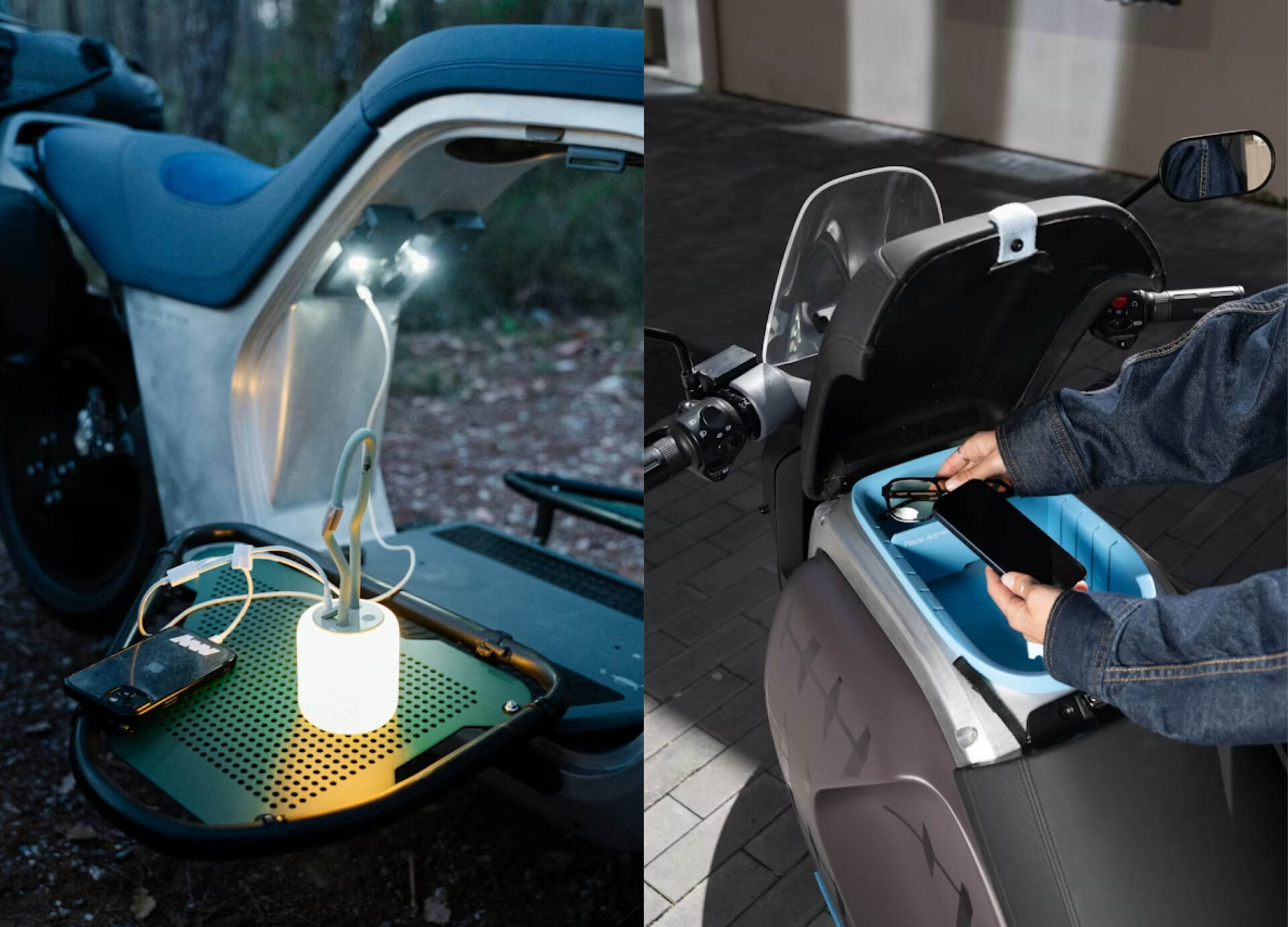
Versatility is one of the defining features of LUV1. ANY offers a range of configurations, finishes, and accessories to suit different needs, from commuting to carrying everyday essentials. An online configurator allows users to explore the available options and build their preferred version before purchasing. Customisation is therefore about more than aesthetics; it is primarily functional. Those looking for additional cargo capacity can add side bags, an upper backpack, and a front luggage rack. The side panels open up to provide convenient supporting surfaces, while an optional cover offers protection from the rain.
Attention to detail extends to the interior, too. A front storage compartment includes smartphone charging, the doors feature integrated storage pockets, and automatic LED lights illuminate the compartments when opened. The technical components follow the same practical approach. According to information provided by the startup, LUV1 features a modular die-cast aluminium frame and two removable lithium-ion batteries, with a claimed combined capacity of 6.5 kWh. The batteries can be taken out and carried indoors for charging, eliminating the need to plug the vehicle into a public charging station. Charging is estimated to take between 2.5 and 4 hours using a 220 V power supply.
The project illustrates how innovation in mobility can extend beyond the motor and performance specifications to the everyday gestures and seemingly minor details that shape how we interact with a vehicle.
LUV1: more compact, more sustainable urban mobility
LUV1 is electric and produces no tailpipe emissions while driving, although its overall environmental impact will also depend on battery production, the energy used for charging, and the vehicle’s lifespan. Beyond its environmental footprint, its potential lies in combining everyday practicality, flexibility, and cargo capacity to offer an alternative to the car without sacrificing the ability to carry bags and other essentials.
This is precisely where ANY’s vision begins: designing a vehicle that is as agile as a scooter yet as practical as a small car. For the Belgian startup, LUV1 represents the first step towards a new category of vehicles. Rethinking mobility means starting with how we actually live in and move through cities, designing vehicles that adapt to our habits rather than expecting us to adapt to them.

Annamaria Maffina
With a background in classical/humanistic studies, I work in communication and collaborate with design magazines. I write what I’d love to read.