When Luigi Antolini founded his company in 1956, natural stone was seen mainly as a raw material to be extracted and processed. Antolini saw something else: its uniqueness — every vein, every pattern, a treasure trove to be discovered and shared.
Seventy years on, that way of looking still guides the company. It has also just found a new home: Stone Gallery London, the first space outside Italy.
The stone that cannot be replicated – Highlights:
A vision of the unique
The anniversary traces a line from a small Verona workshop to a presence in 182 countries. At its centre is the idea that no two stones are alike: Antolini‘s catalogue now gathers more than 1,300 natural stones, over 90 of them exclusive, selected from quarries around the world.
Alongside the research sits a strand of technological work — proprietary processes such as Azerocare®Plus, Azerobact®Plus and AvacuumProcess® — built, in the company’s framing, not to alter nature but to understand it more deeply and draw out its potential.
A gallery as a living catalogue
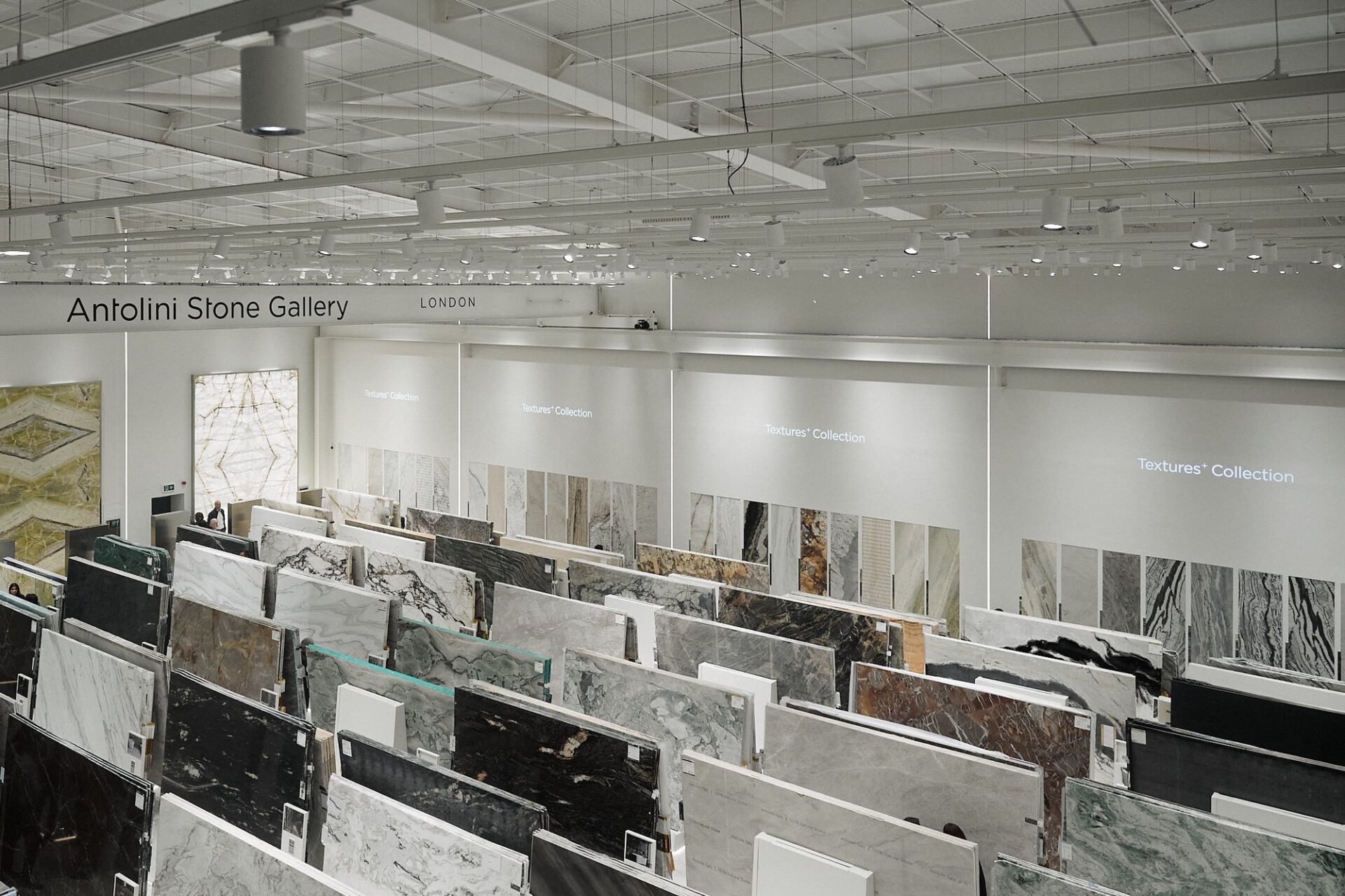
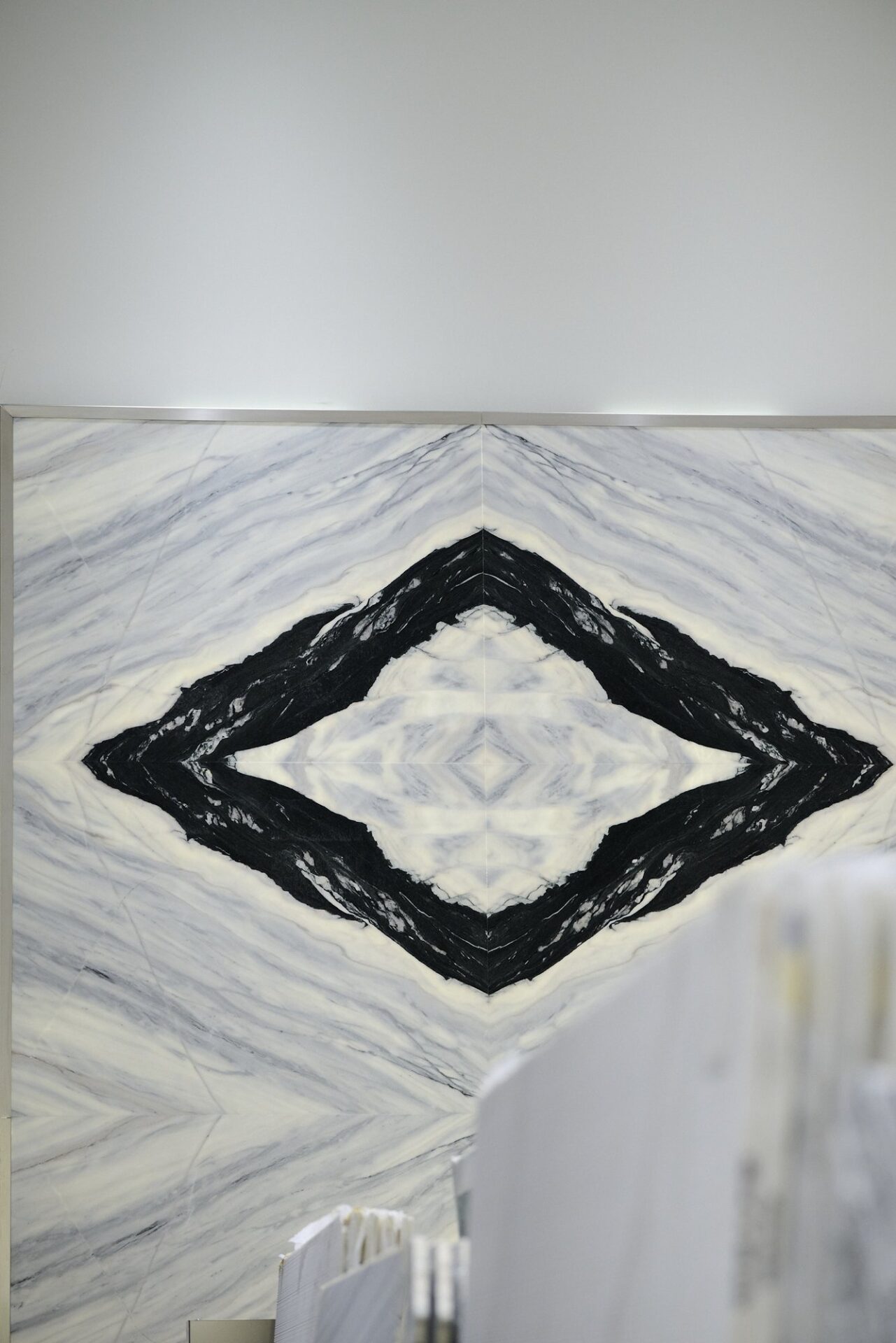
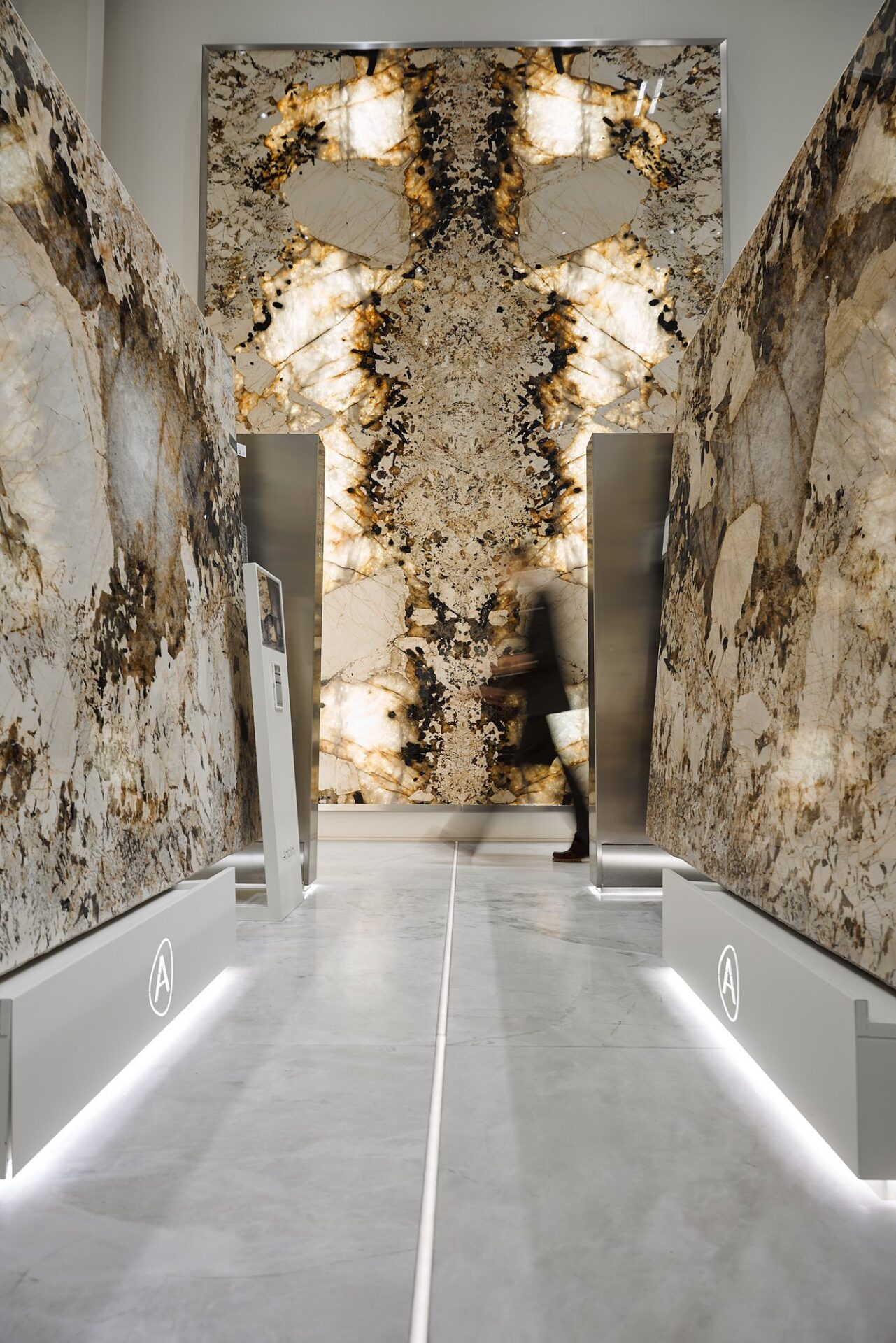
Stone Gallery London, in Nine Elms, opens in a neighbourhood undergoing regeneration between Battersea and Vauxhall. Designed by creative lead Alessandro La Spada across two levels, it presents a selection of the catalogue the way an art gallery would: slabs mounted on easels, bookmatched stones on the walls, and around fifty finishes in the Textures+ Collection.
“For Antolini® Stone Gallery London, the concept stems from the idea of subtraction, not addition: creating a neutral, off-white, almost silent architectural setting that allows the natural stone to take centre stage,” La Spada explains. “Light becomes the design’s second material.”
Stone as protagonist
Across the space, materials change expression with the way they are worked and lit. The entrance centres on Cipollino GreyWave, the exit on Irish Green®; backlighting in the kitchen and bathroom draws out the veins and translucency of Irish Green® and Cristallo Vitrum®, while Bianco Lasa | Covelano Vena Oro and Quarzite Madeirus define the first floor.
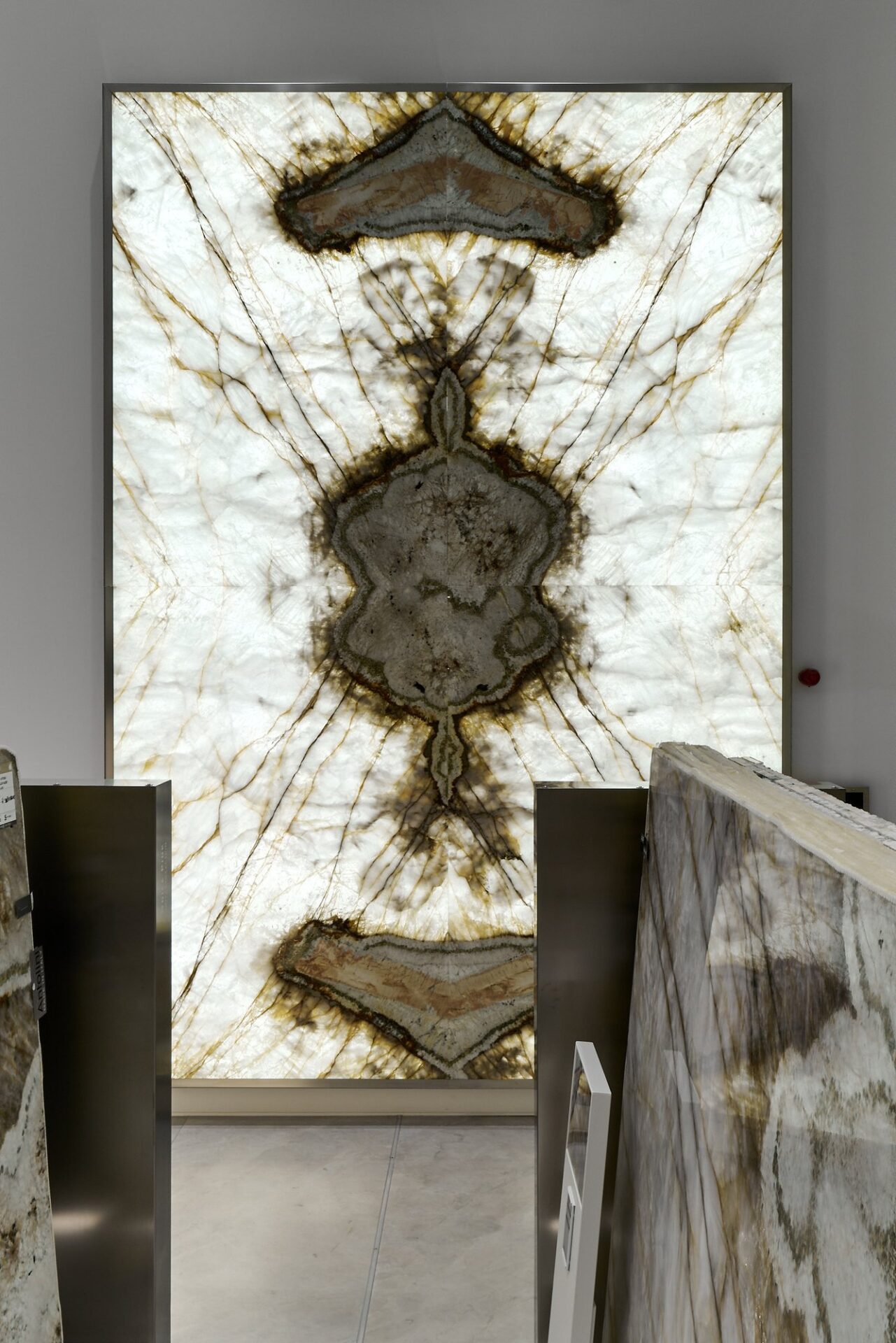
It amounts to a living catalogue: a place where architects and interior designers can touch the materials and read their potential, rather than choose from a page.

Editorial Team
Do you have a story to share? Feel free to reach us out and submit your design and inspiration, we are always looking for interesting design ideas!