A train station is cleaning the city’s air with Active Surfaces® sustainable ceramic surfaces
What if the walls around us were not inert but alive with purpose? At Arden Station in Melbourne, commuters live in this reality every day, walking by a façade that removes pollutants, promotes health, and is entirely autonomous.

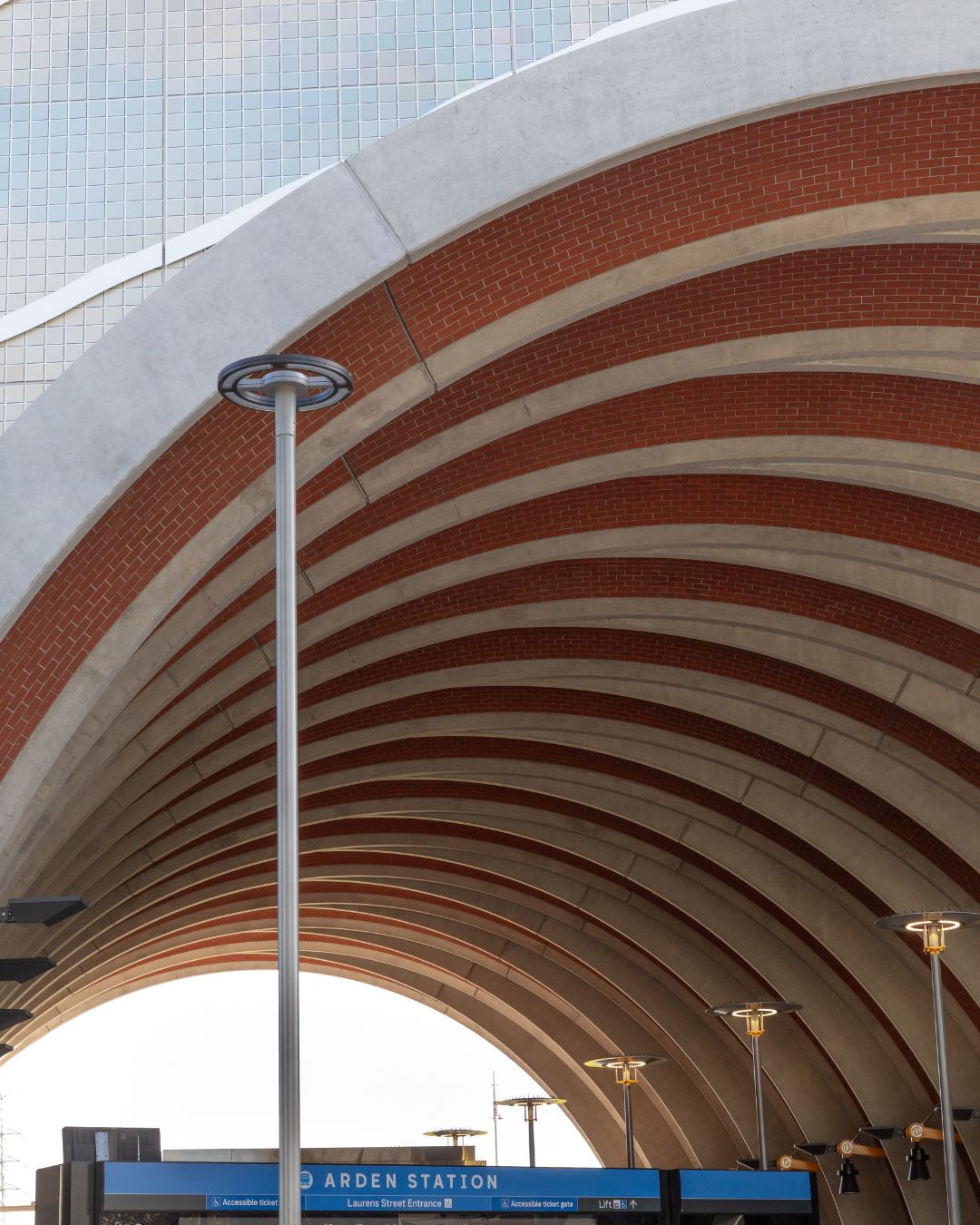
Train stations in city centres are urban areas often associated with dirt and pollution. However, in the heart of Melbourne, a railway station is quietly cleaning the air around it. The Arden Station façade actively fights pollution, kills viruses, and maintains itself with nothing more than sunlight and humidity – thanks to the innovative Active Surfaces® by Iris Ceramica Group. The technology making this environmental magic possible comes from Fiandre, Iris Ceramica Group’s premium architectural brand, which produces the Active Surfaces® ceramic slabs.
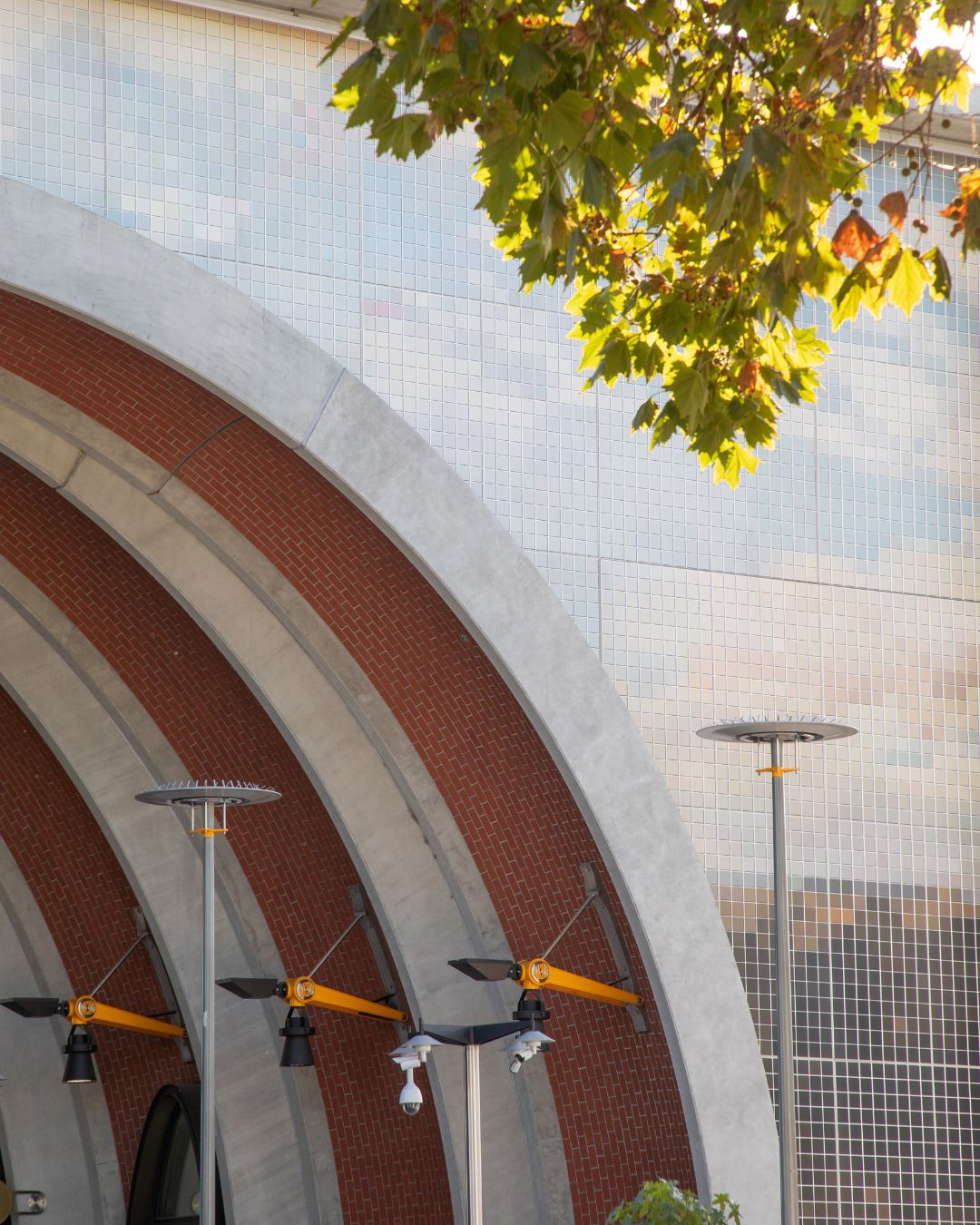
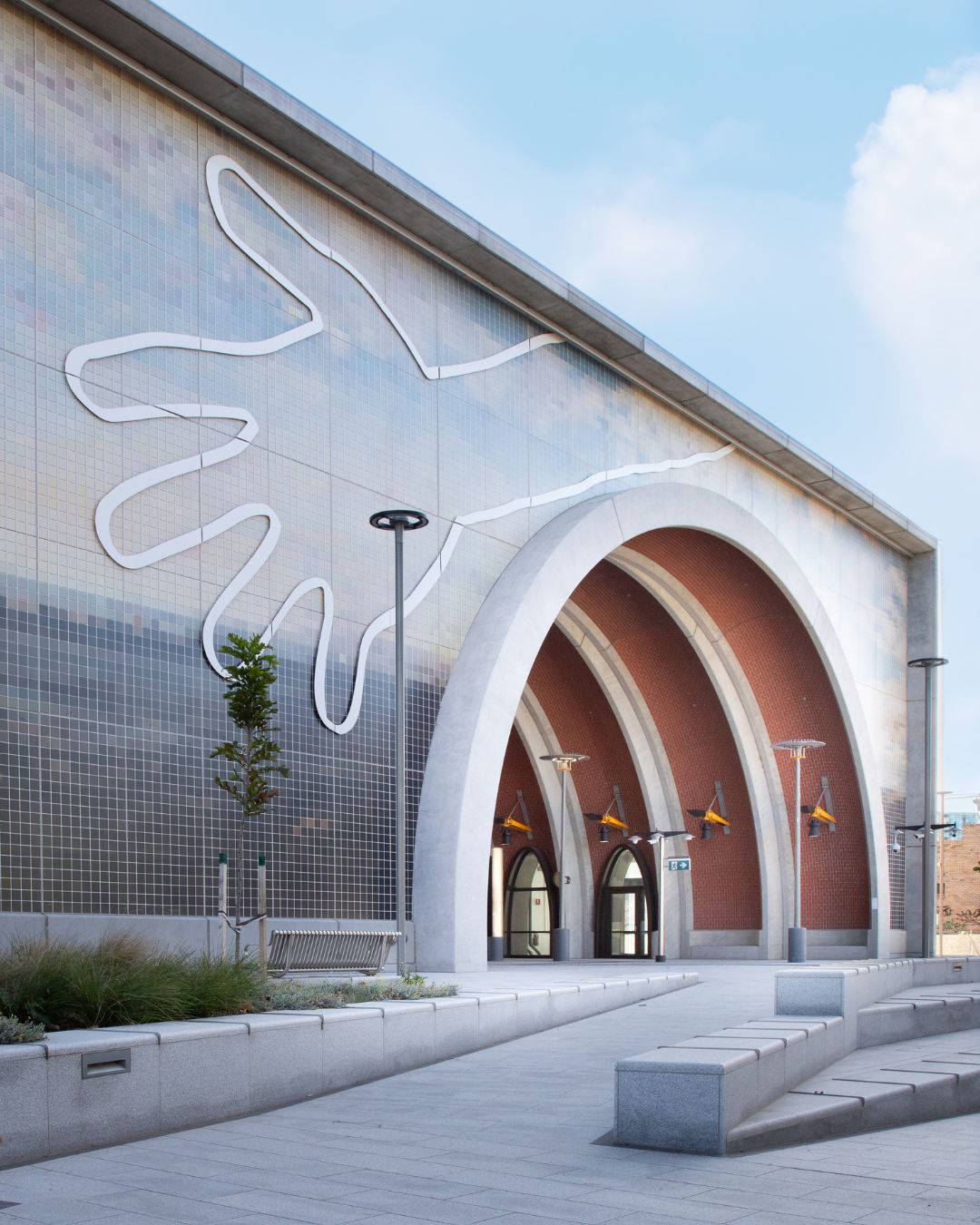
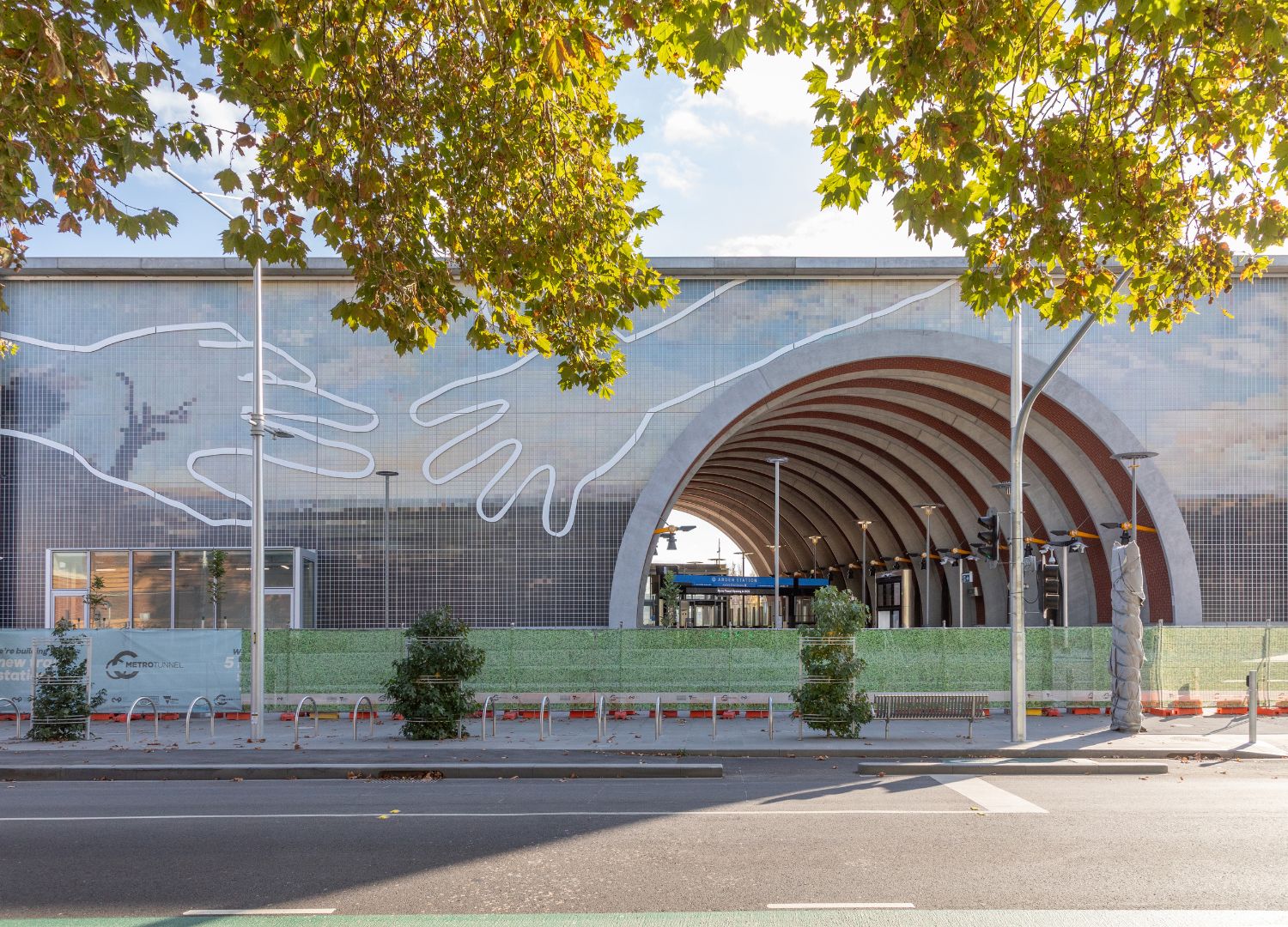
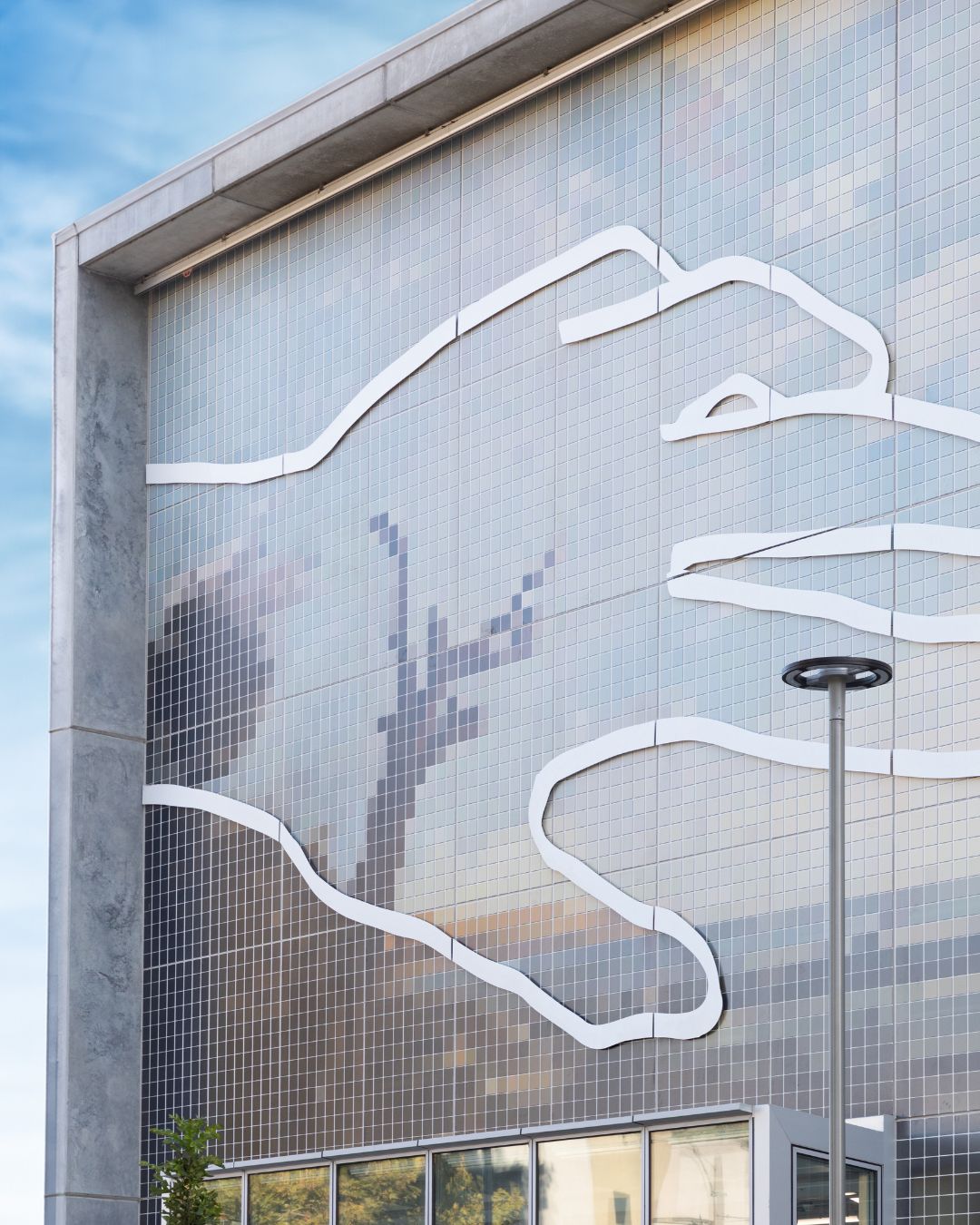
The story of the station’s architecture begins with artist Abdul Abdullah’s vision to transform J.S. Calder’s painting “View from Royal Park across West Melbourne Swamp” from 1860 into something entirely contemporary. With the theme of convergence, the artwork shows two massive aluminum hands reaching towards each other, representing the station as the meeting point between different cultures and between older and future generations. It is not only a nod to Melbourne’s multicultural character, but also a metaphor for public infrastructure as a mediator of collective identity.
Gallery
Open full width
Open full width
The interesting thing, though, is that this artwork is not just mounted on a building, but it is printed on Active Surfaces® ceramic slabs that span the station’s eastern wall. While commuters can admire the modern station, the surface beneath the artwork is busy breaking down air pollutants, neutralising odours, and eliminating harmful microorganisms.
What makes a ceramic surface “active”? The answer lies in a decade of research in collaboration between Iris Ceramica Group and the University of Milan’s Department of Chemistry. These surfaces are photocatalytic materials that use natural and artificial light to trigger continuous chemical reactions. When the light hits the material’s surface, it activates a process that breaks down nitrogen oxides, which are the pollutants released by cars and the industry into the air. Tests show that the Arden Station’s façade can degrade 6.5 kilograms of these pollutants annually, equivalent to 9600 square metres of green space. This means every slab of Active Surfaces® works like a micro-garden, contributing to the city’s air quality without demanding land, irrigation, or upkeep.
The Arden Station features 522 square metres of Uni-Ice Maximum natural slabs, while the building’s characterising artwork is realised entirely on Maximum Active Surfaces© big panels. The West façade instead spans 590 square metres and is clad with Active Surfaces® customised slabs of 300×150 cm. To put this into perspective, the total coverage exceeds 1,100 square metres, becoming essentially the equivalent of a vertical urban park.

Incredibly, pollution fighting is only one of Active Surfaces® ‘s properties. The same photocatalytic process that tackles nitrogen oxides also dismantles the molecular structure of harmful viruses and bacteria. For example, testing from the University of Milan revealed that 94% of SARS-CoV-2 particles, the virus we know as Covid-19, are eliminated within just four hours of light exposure. The process also attacks effectively other common strains like E. Coli or Poliovirus.
Melbourne’s unpredictable weather actually works in the façade’s favour, as the Active Surfaces® technology creates a hydrophilic effect, where water spreads evenly across the surface rather than forming droplets. When rain touches the building, a sheet of water is created that carries away dirt and grime, essentially washing the façade autonomously. As traditional building cleaning usually relies on harsh chemical cleaners that create runoff, and human labour that is often time consuming and expensive, this solution cuts maintenance costs as well as minimizes environmental impact. Other than the practical benefits, it is great to see a building that is always clean and beautiful all year long, as many cities have issues in dealing with public maintenance.
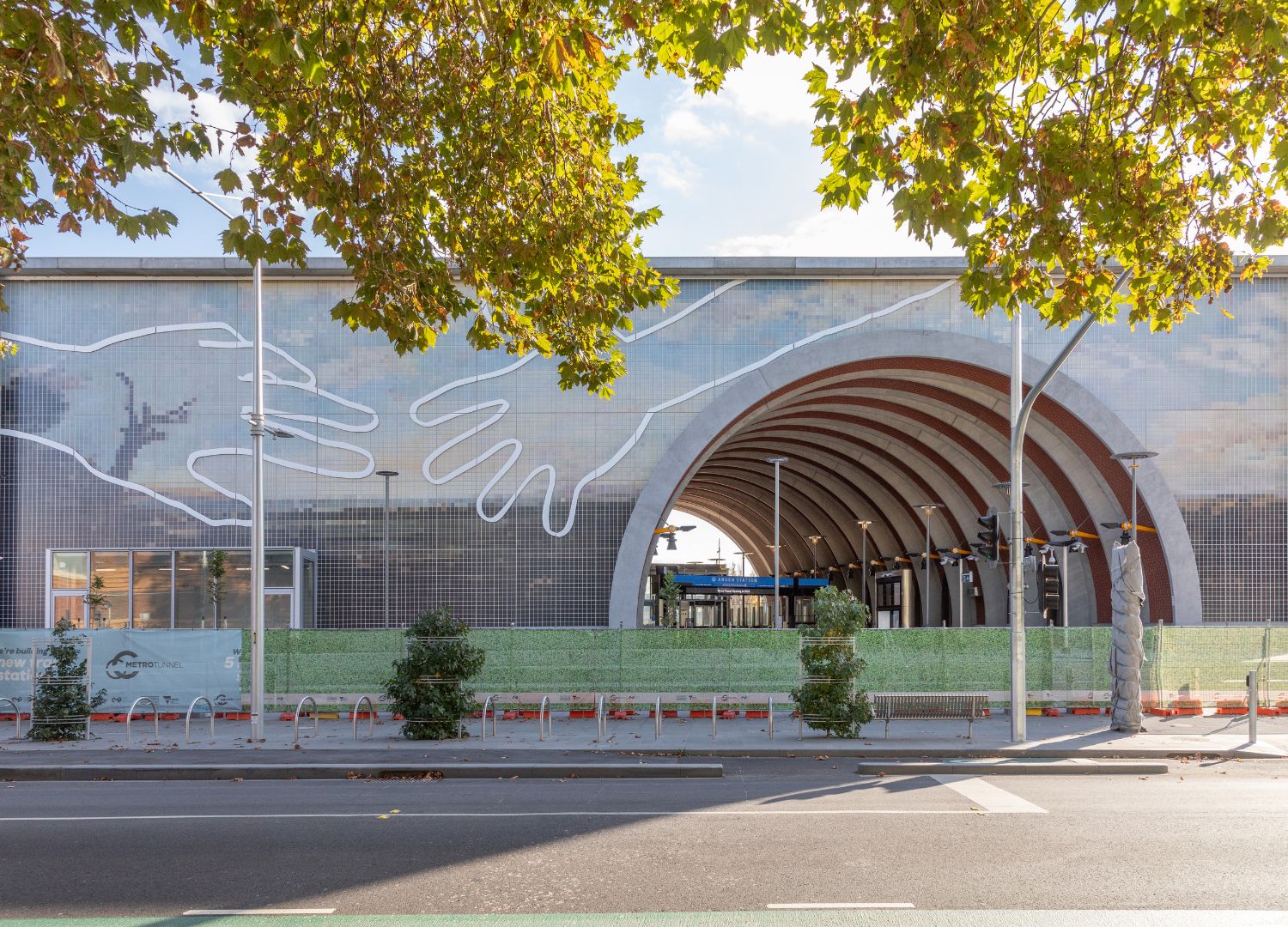
One of the main difficulties in the construction of the Arden Station was also to be able to replicate Abdul Abdallah’s artwork on the façade through manufacturing. This was done through Iris Ceramica Group’s Design Your Slabs (DYS) technology, which offers the possibility to customise ceramic surfaces with any image or illustration. The result is a skin that serves as public art that is inherent in the architecture, instead of being applied as an afterthought.
The manufacturing process is also part of Iris Ceramica Group and Fiandre’s sustainable approach. Active Surfaces® incorporate at least 40% of recycled materials and are also fully recyclable, giving back even at the end of their lifetimes. As the manufacturing process embeds the eco-active properties directly into the ceramic structure, the effectiveness and reliability of them never ends or diminishes during the product’s life, offering potentially decades of continuous air cleaning and antimicrobial action.
Of course, one building alone cannot neutralise the entire city’s air or undo decades of urban pollution. But it does prove a point: that innovation is possible, and the next step is no longer invention, but scale. Arden Station’s success as both public art and environmental infrastructure suggests new possibilities for future urban development. If surfaces that already exist for shelter and aesthetics can also clean air, reduce maintenance efforts, and promote health, the cumulative impact could be transformative. As cities worldwide struggle with air quality and public health, the Arden Station façade offers a more conscious vision: buildings that give back to their environment rather than simply taking from it.