Elegant gestures and cherished memories: how Cecilia Rinaldi’s creations come to life
Raised in an Italian family where craftsmanship is a daily practice, Cecilia Rinaldi founded Atelier Nuanda with the aim of creating authentic works of art and design, born from exquisitely Italian values and shaped by intimate memories.

“I believe that each of our futures is the result of many seeds that are constantly sown.” Founder of Atelier Nuanda, Cecilia Rinaldi is an Italian textile designer and artist whose work is rooted in three principles deeply connected to Italian culture: beauty, authenticity, and craftsmanship.
Cecilia’s work ranges from accessories and garments to decorative objects and furniture, each piece deeply marked by the memories and emotions left by her mother, who has made an indelible imprint on her. With a strong personality and refined elegance, her mother conveyed a story through every gesture and expression. A story that now lives on through Atelier Nuanda’s creations: spokespeople for a thought and an ideal that endures the passage of time.
Her curiosity for what she has yet to master leads Cecilia to explore new cultures and art forms with genuine passion, deep respect, and thoughtfulness. By studying new principles and philosophies, she enriches her perspective, which takes shape in her creations. We interviewed her to gently step into her world and discover the vision behind Atelier Nuanda, the stories her collections tell, and the values that guide her creative process.
Gallery
Open full width


Open full width
Tell us about yourself: who are you, where do you come from, and where are you headed?
Cecilia Rinaldi:
“I’m Cecilia Rinaldi, a textile designer and artist whose style has developed over time, closely linked to my surroundings, which influence my work. I live in Bologna, where I founded my studio with my husband in 2022: a place where craftsmanship and design come together. Passionate about design, knowledge and craftsmanship, I dedicate myself to listening and performing slow and skilful gestures. My curiosity and passion for different arts and traditions have always led me to want to discover what lies behind an artefact, an architectural work, a work of art, a thought and an ideology. Getting to know new worlds, new cultures, new philosophies, and people enriches my vision, the value, and the message contained in my creations. In my studio, I create designs and artefacts that convey the values and traditions of traditional craftsmanship, recounting my experiences and my connection with the local area.“
What is the vision behind the founding of Atelier Nuanda?
Cecilia Rinaldi:
” In its interdisciplinary approach, the design process interacts with different traditions, harmoniously blending a contemporary vision with a still-vibrant past characterised by balance and history: a distinctive feature of the Nuanda vision.“
In what way does Italian culture influence your work?
Cecilia Rinaldi:
“The value of beauty, authenticity and craftsmanship. These are themes that I have always viewed with great attention, fascinated by their essence, which lies in the culture and history of our country. Looking at what surrounds us, at our past, to enhance it and build our future, aware of the origin of beauty and the cultural cradle that our country still boasts in the world today. Knowing how to do things, creating with our own hands, is the true essence and expression of being, which speaks of ourselves, of the culture of the times, and which will remain unchanged in the face of any technological change.“
One element that defines and runs through almost all of your work is woven leather. Where does the inspiration for this come from?
Cecilia Rinaldi:
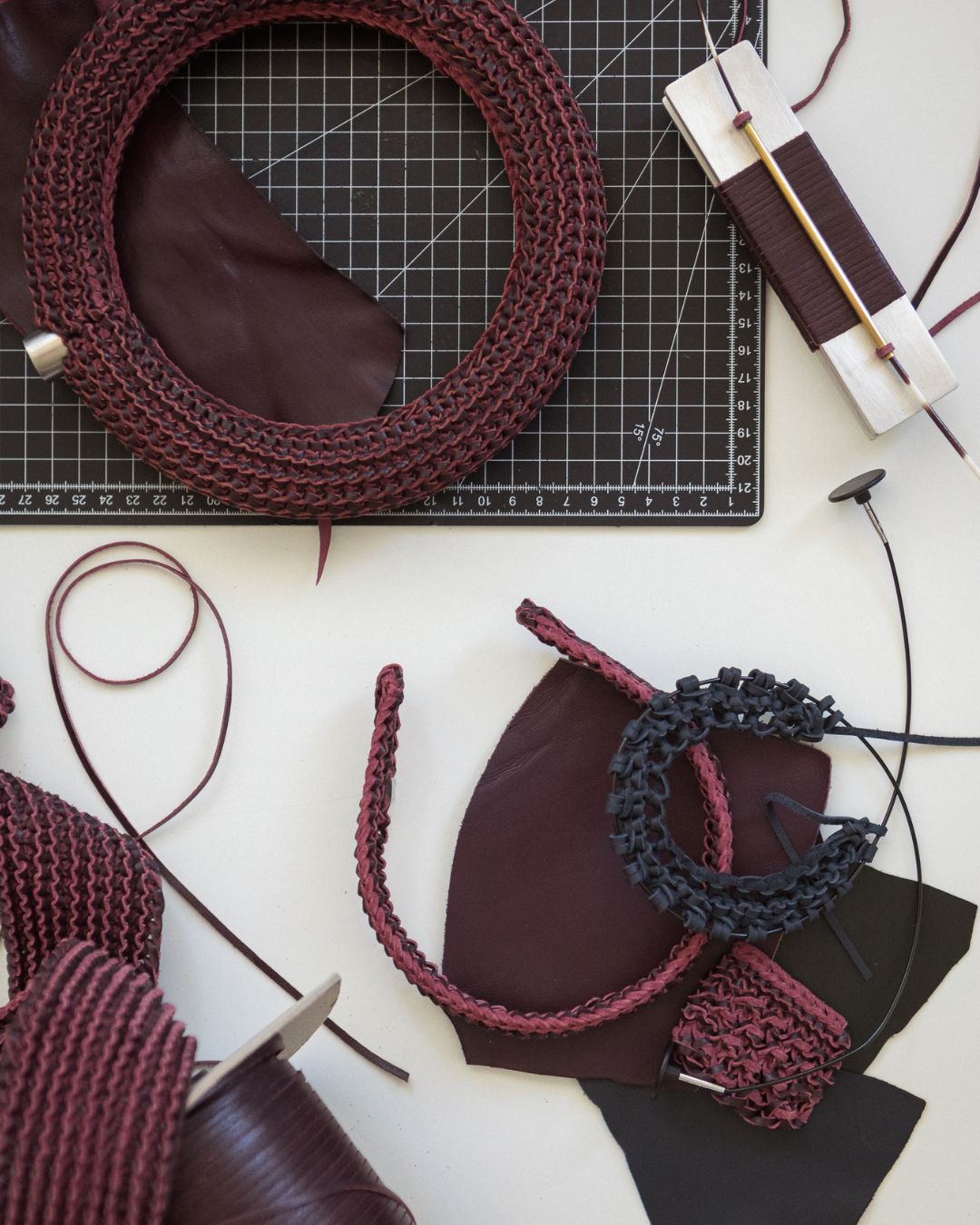
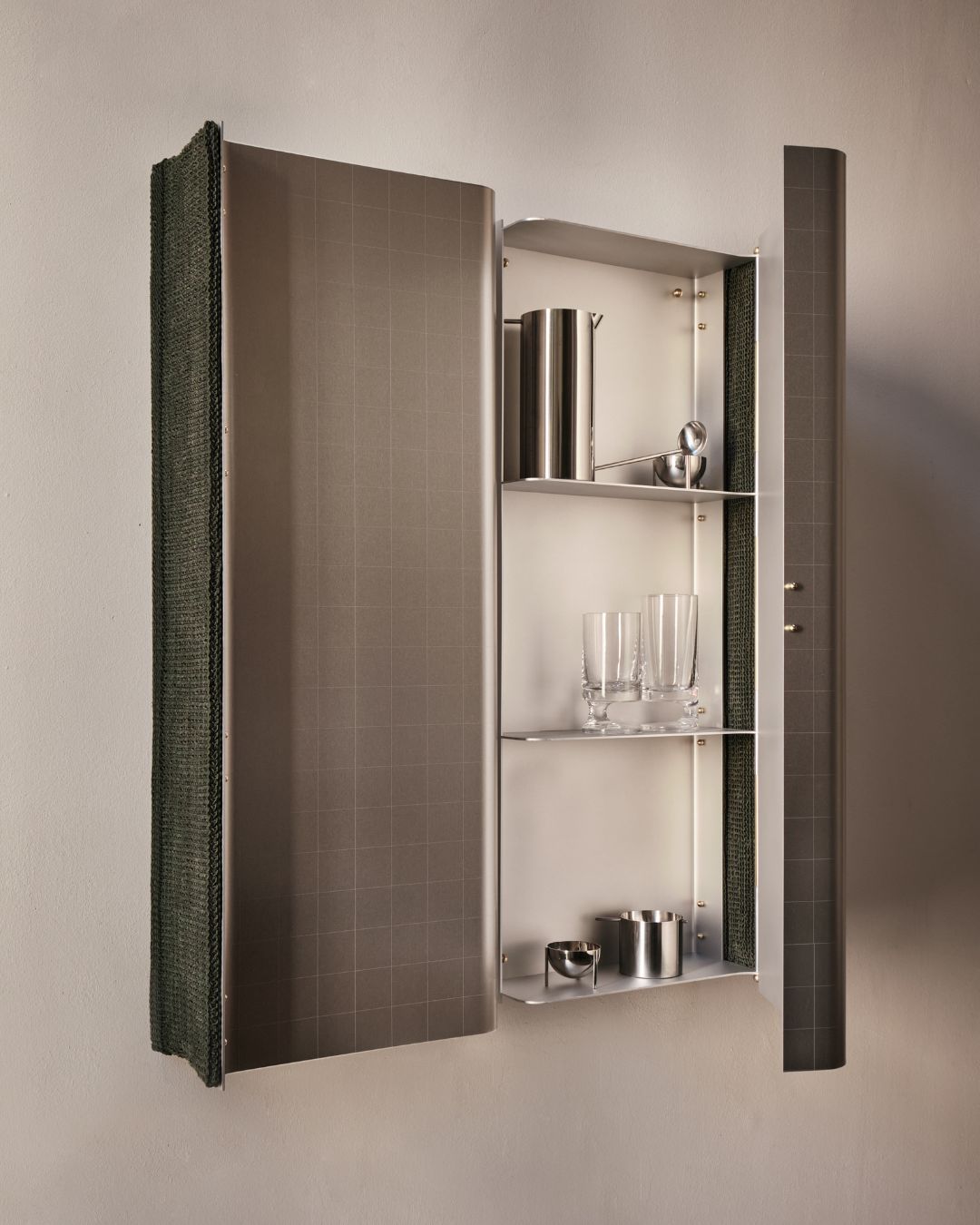
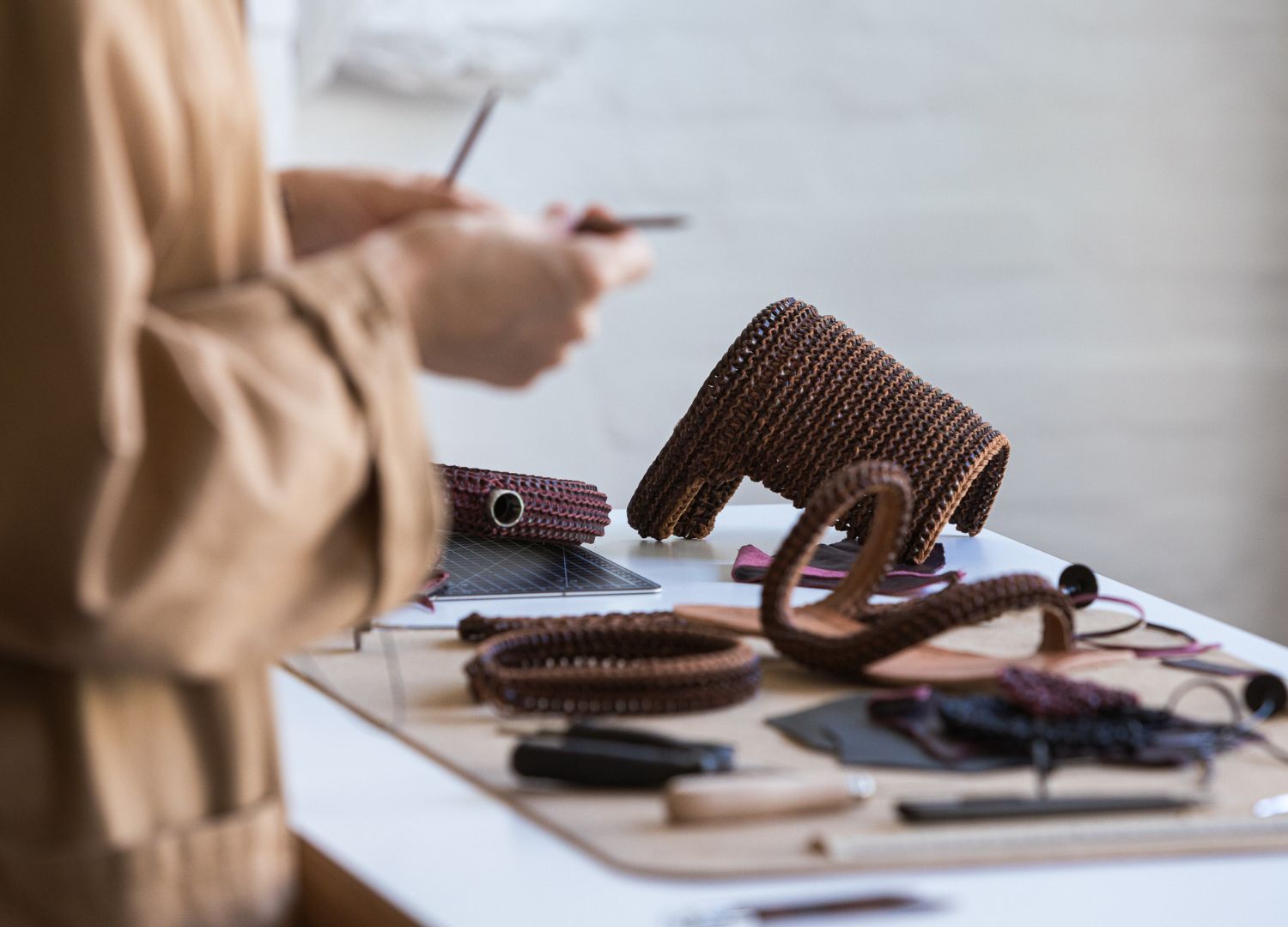
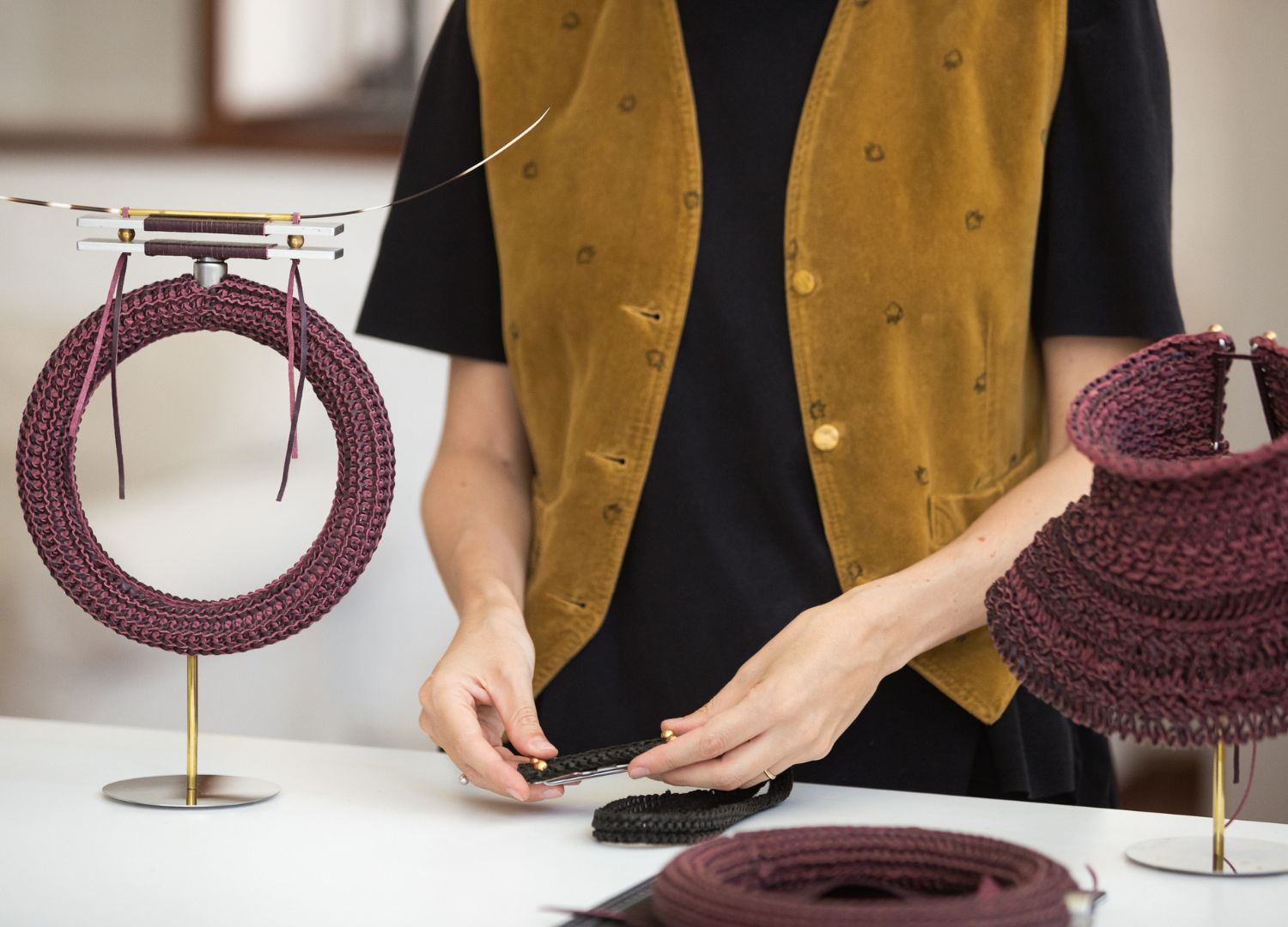
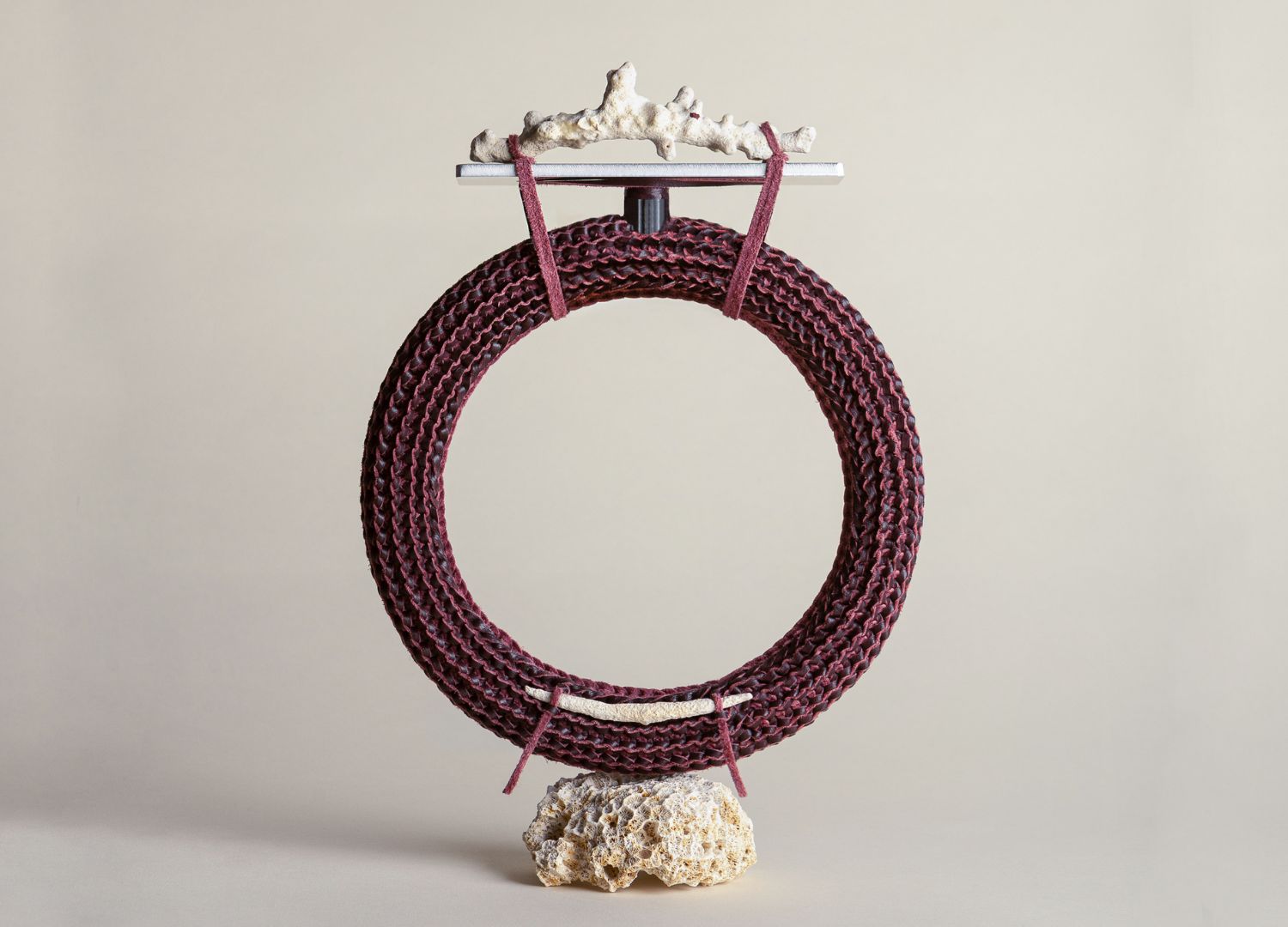
“The passion for materials, their transformation and evolution towards new forms of creation led me to experiment with an innovative leatherworking technique, giving rise to handmade design pieces characterised by a knitted textile structure and a completely new aesthetic. This technique has allowed me to look to the past, to the popular customs of knitters, maintaining distant references in its gestures, updated and made contemporary. The project focuses on leather, revisiting its processing and use within the production chain. Leather recovered from industrial surpluses is transformed into yarn, ensuring a total reduction in waste during the product manufacturing phase. The weave obtained from the dense processing creates a unique fabric that is resistant and extremely flexible and elastic in terms of use, aesthetics and finish, becoming a new textile structure for upholstery, fashion accessories and decorative objects.“
All of your projects – from accessories to garments, from furniture to decorative objects – convey a strong, expressive character, but above all, a refined elegance. Are these qualities you consciously pursue in your creative process? Tell us a bit more.
Cecilia Rinaldi:
“My personality has been shaped by my experiences, my history and what I was deprived of at a young age. I carry with me an important legacy: the expressive character and refined elegance that my mother exuded in her every gesture, expression and scent. Each project in the atelier is intended to be a way of telling her story through my creations, in the hope of reviving emotions that are now only distant memories. The transformation and mutation of those feelings and moods into artefacts, projects and collections is the common thread, the underlying reason behind Nuanda’s work.”
Tradition, craftsmanship and sustainability are values that matter deeply to you. How are they reflected in your work?
Cecilia Rinaldi:
“Growing up in a family where craftsmanship is still at the heart of everyday work has made me sensitive and imparted the values and passion that are central to my creative process. Creating with my hands, giving shape to my feelings and connecting them to memories and traditional experiences is the driving force behind all my study projects. Believing in craftsmanship, in production that focuses on the individual, on the end user, offering them the piece they desire, embodies the meaning of sustainability in the production of authentic, handmade objects.”
Your portfolio spans multiple creative fields – fashion, decorative arts, product design and set design. What is the underlying narrative that ties them all together?
Cecilia Rinaldi:
“The research and experimentation embodied in Nuanda products lead to the reinterpretation of ancient techniques and decorations. The careful study of the choice of materials and their processing aims to highlight distant references, updated and made contemporary through the use of modern tools and techniques. The presence of leather, thanks to the new texture created entirely by knitting, the result of alternating different stitches, allows us to revisit the language and aesthetics of the past, enriching it with details and a new finish that is light, resistant and extremely flexible.“
What do your projects reveal about you?
Cecilia Rinaldi:
“Experimenting and entering the world of craftsmanship with my creations has allowed me to express my intimate vision of the world, in the expression of a distant feeling, made up of references, memories, experiences and people. In the act of creating, my emotions and those moments are consolidated, and with them my lived experience, giving life to artefacts that become spokespeople for a thought and an ideal that persists despite the passing of time and all its changes.“
Among all the projects you’ve launched so far, which one holds a special place in your heart or tells a singular, meaningful story?
Cecilia Rinaldi:
“Nuanda’s MT55 collection of ornamental garments is the embryonic project, the most intimate and representative of my past history. Behind each creation is the desire to tell a fashion story made up of timeless textile structures, unique and refined pieces. Each garment, carefully crafted, carries with it a strong emotional connection, becoming a symbol of inner strength and beauty, a tribute to an extraordinary woman and mother, a muse of elegance, tenacity and femininity. Thanks to the dense textile weave, the skin becomes the supporting structure of a new fabric to wear.“
Are there any designers or artists who have inspired you, or whom you look up to?
Cecilia Rinaldi:
“Among the personalities and figures who inspire my projects are the Wiener Werkstätte movement, founded in 1932 by Josef Hoffmann together with Koloman Moser, and some of the most illustrious architects of the 20th century: Franco Albini, Piero Portaluppi, Carlo and Tobia Scarpa, Carlo Mollino, Gio Ponti, Ignazio Gardella and many others. These figures were able to express and communicate through their work an approach to design and planning that perfectly synthesised art and craftsmanship in everyday life.“
If you could glimpse your future in a crystal ball, what would you hope to see?
Cecilia Rinaldi:
“I believe that each of our futures is the result of many seeds that are constantly sown. Nothing is truly left to chance; we are what we want to be or hope to become, and it is in sowing that our hopes lie, the fulfilment of our desires. So I wait for the new shoots to give life to sturdy shrubs.“