Candela P-12, the first electric hydrofoil passenger ferry
Candela P-12 is the result of more than ten years of research into electric water transport. From the first hydrofoil boats to Stockholm’s public network, the Swedish company is changing how ferries move, charge and connect with the city.
In 2014, when Gustav Hasselskog started Candela Technology AB, he wanted to help accelerate the move to fossil-fuel-free lakes and oceans through the development of electric boats that would perform better than fossil-fuel-driven ones. At that time, this was still a dream of technological innovators. Today, we still see road, rail, and automobile based transportation as the norm for transportation systems.
However, waterways are integral to many cities’ ability to transport their citizens and the potential for electric-based mobility exists far beyond the shoreline. Over ten years since Hasselskog’s initial vision, the dream has come alive in the Candela P-12. This is the first high-speed, long-range electric hydrofoil passenger ferry, and, in August of 2026, it received Sweden’s most prestigious award for design excellence called Utmärkt Svensk Form (Excellent Swedish Design) for combining technology, engineering, and design in a new way to provide a well-known mode of public transportation.
Gallery
Open full width
Open full width
Candela Technology, P-12:
From electric boats to public transport: a path started more than 10 years ago
The path to creating the P-12 began many years ago. After researching and developing for five years, Candela launched its first electric hydrofoil recreational boat, the C-7, in 2019. In 2022, Candela launched the C-8, which brought the technology to a much broader audience. Finally, in 2023, Candela launched the P-12, bringing the technology to public transportation. The first P-12 was deployed into Stockholm’s public transportation network in 2024.
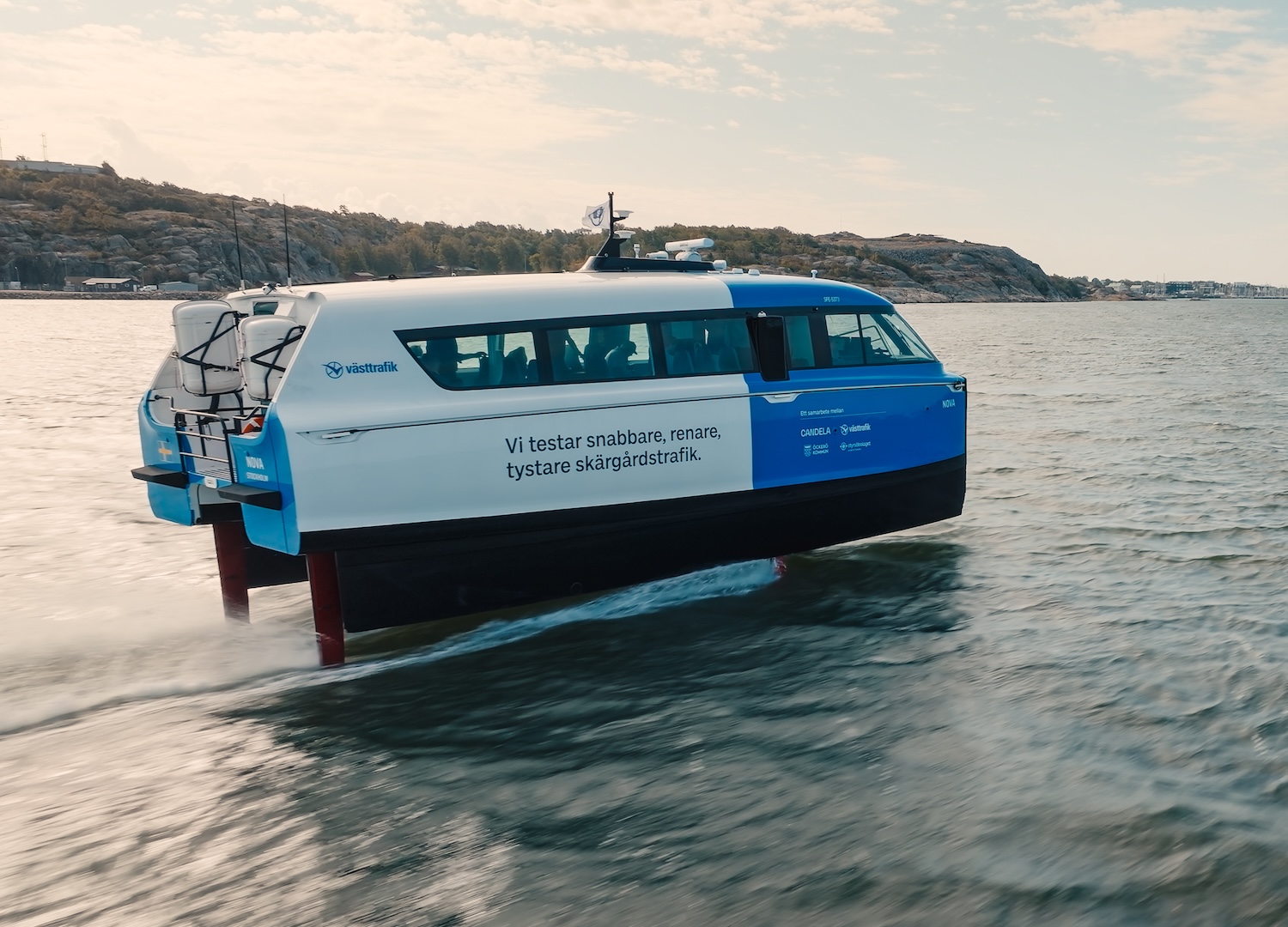
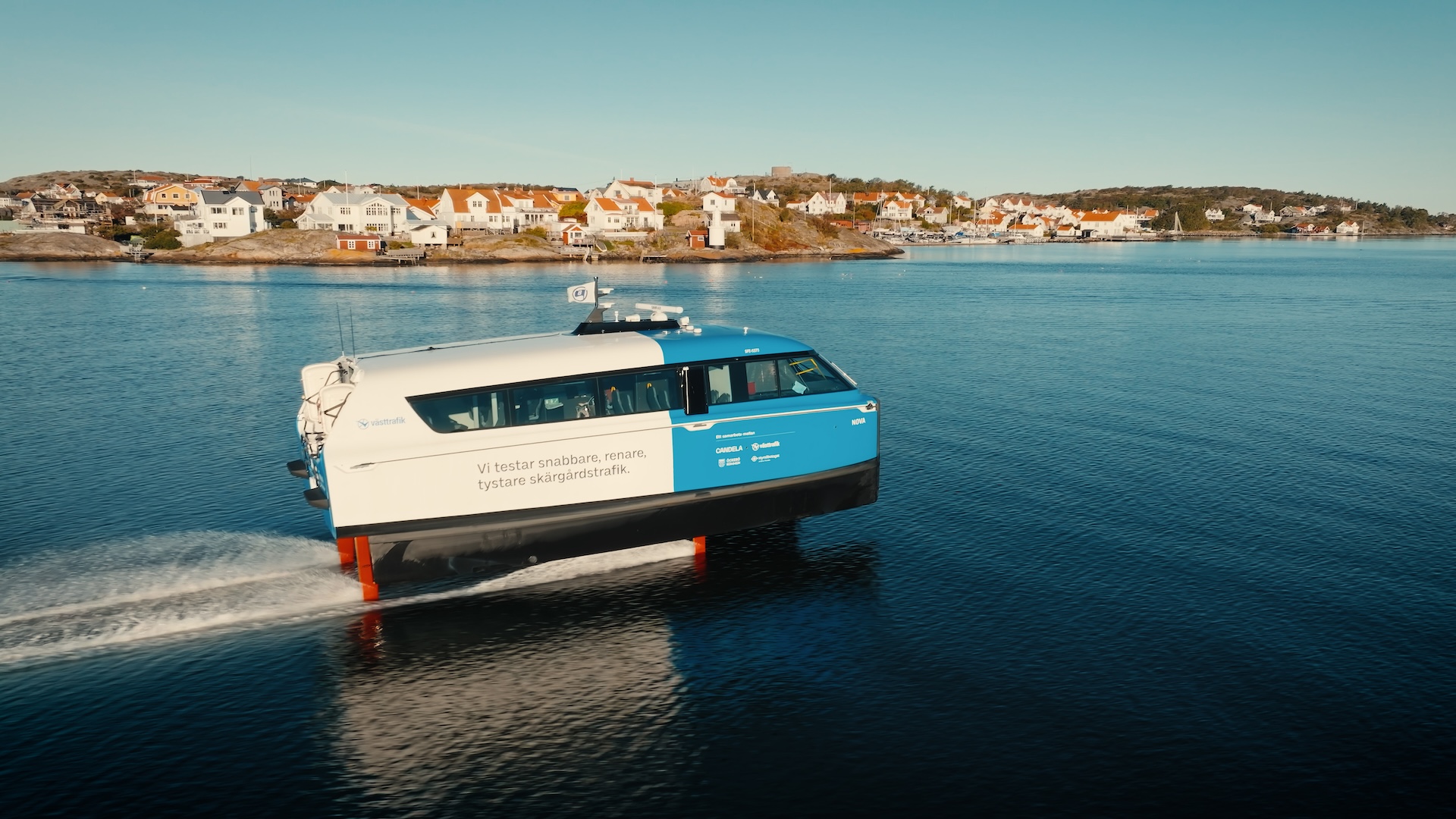
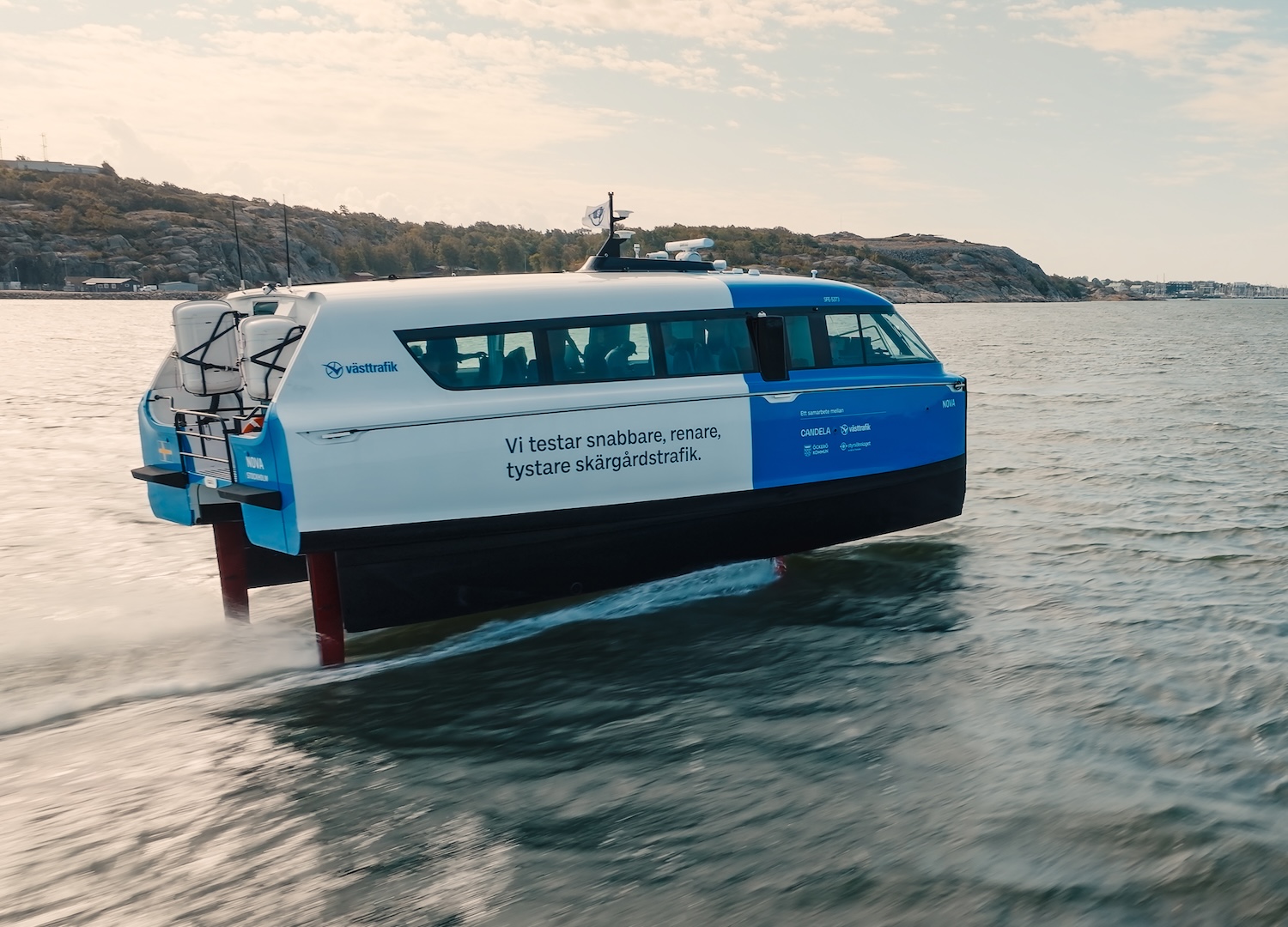
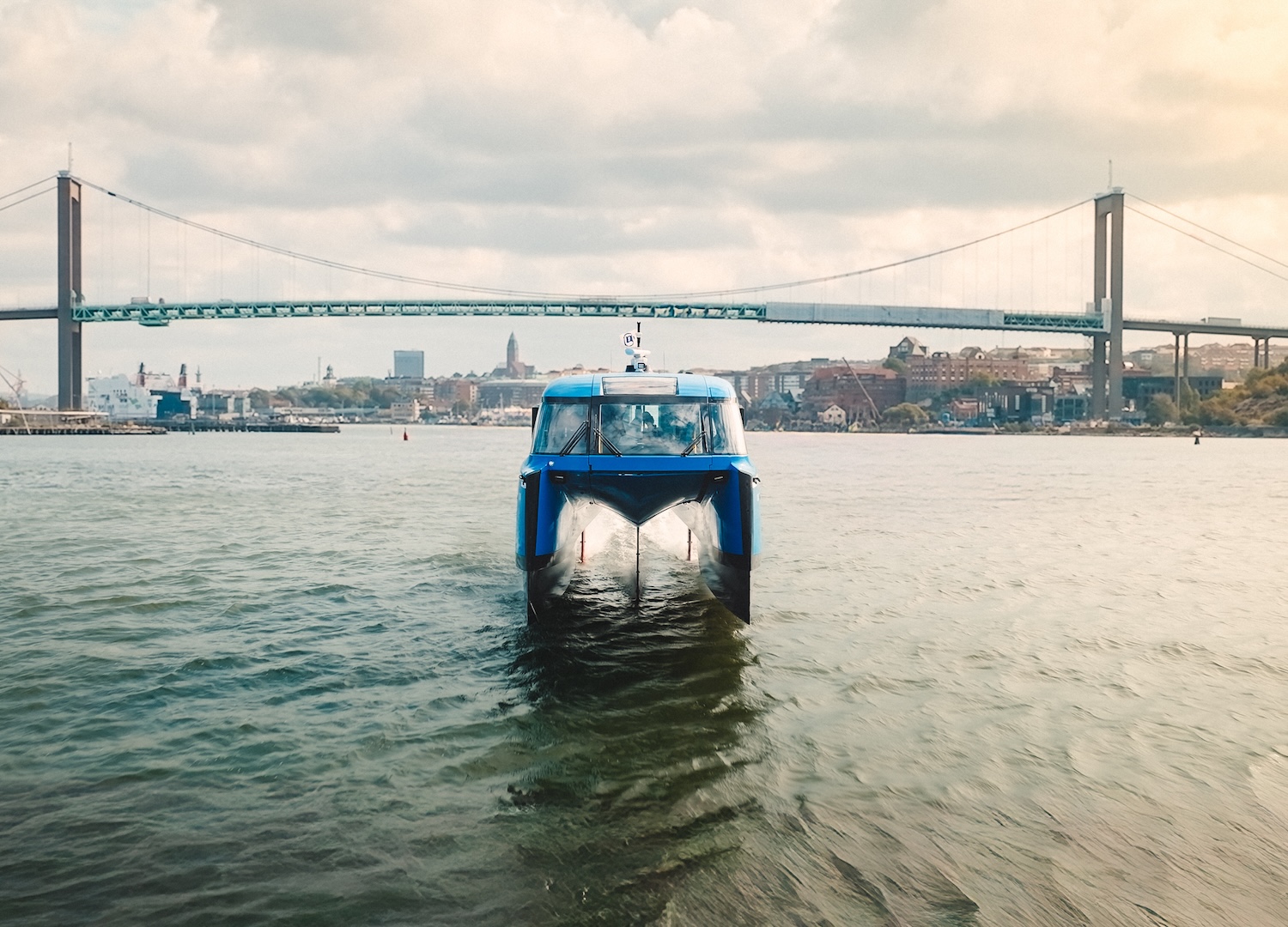
Unlike all other electric boats, Candela did not try to make an existing motor boat more efficient – instead, the company tried to create a boat that would reduce water resistance as much as possible. Computer-controlled hydrofoils lift the hull above the surface of the water and decrease energy consumption by 80% at higher speeds while creating zero wake.
The ferry can go at a speed of up to 30 knots and has a range of 40 nautical miles at 25 knots – from 55 to 75 kilometers per hour. To put it in simple terms, a fast, silent and environmentally friendly means of public transport for the water – and that is what makes the P-12 special, the innovative approach to motion of the ferry itself.
A ferry that flies above water
This new type of ferry also provides new opportunities regarding movement within a city: it can carry 30 passengers and only requires one person to operate, the lack of wake makes it possible to move at higher speeds without being limited like other ferries and because of its smaller size, and several ferries can be used rather than just a few large ones. There is something resembling a bus network here: more frequent departures, shorter time needed to get somewhere and public transport that uses the water already available in the city.
Efficiency is part and parcel of the design of Candela’s ferry as well. Every extra kilogram has been done away with, while the boat has been designed to have dimensions of 4.5 x 4.5 x 12 meters in order to make it possible for it to be carried by road transport. The charging system has also been kept simple, with the P-12 using standard automobile chargers, while an extendable bow ramp allows it to berth at different kinds of quays, from low-floating platforms to higher concrete docks, while accommodating both wheelchairs and strollers.
Inside the P–12
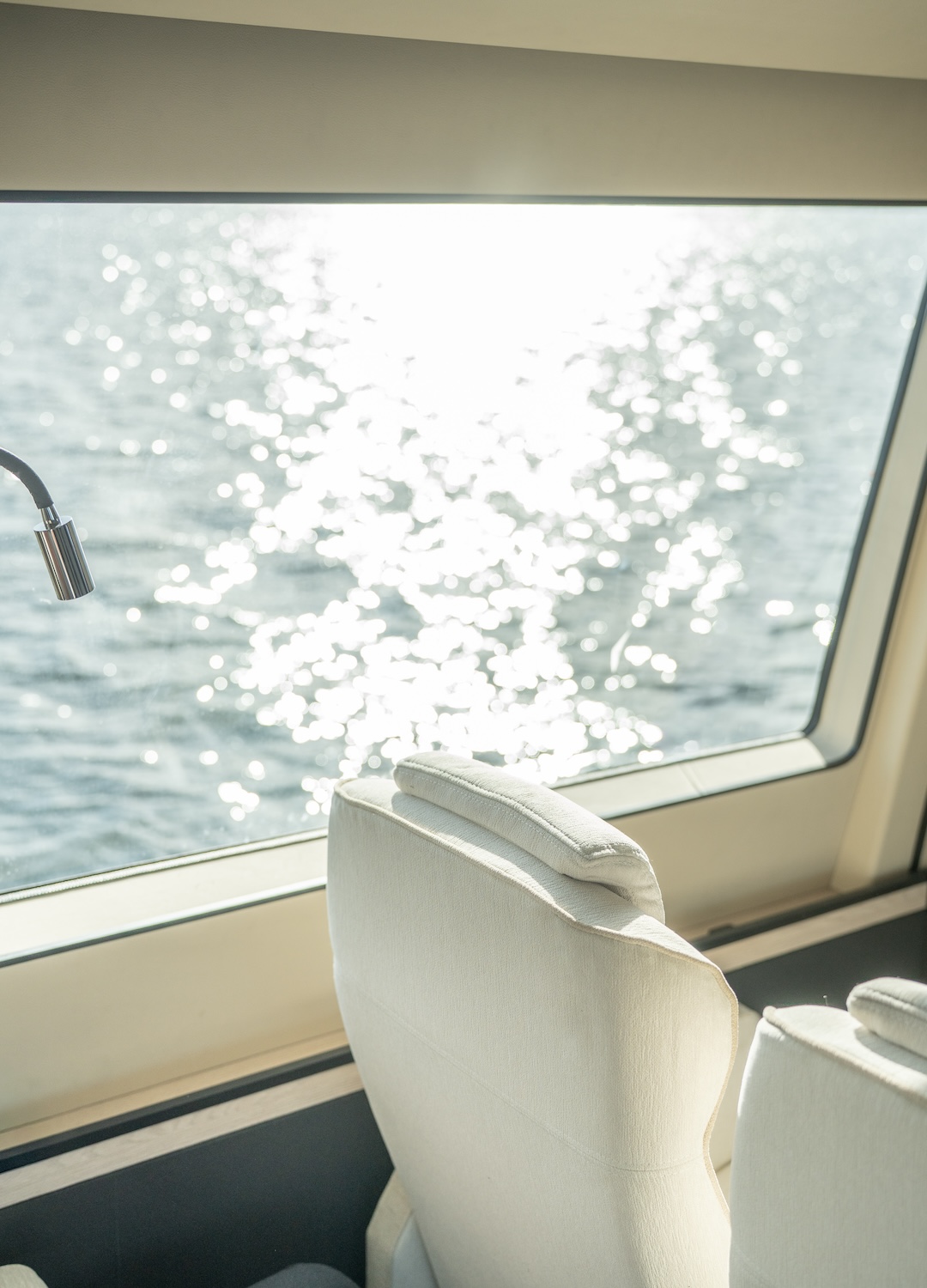
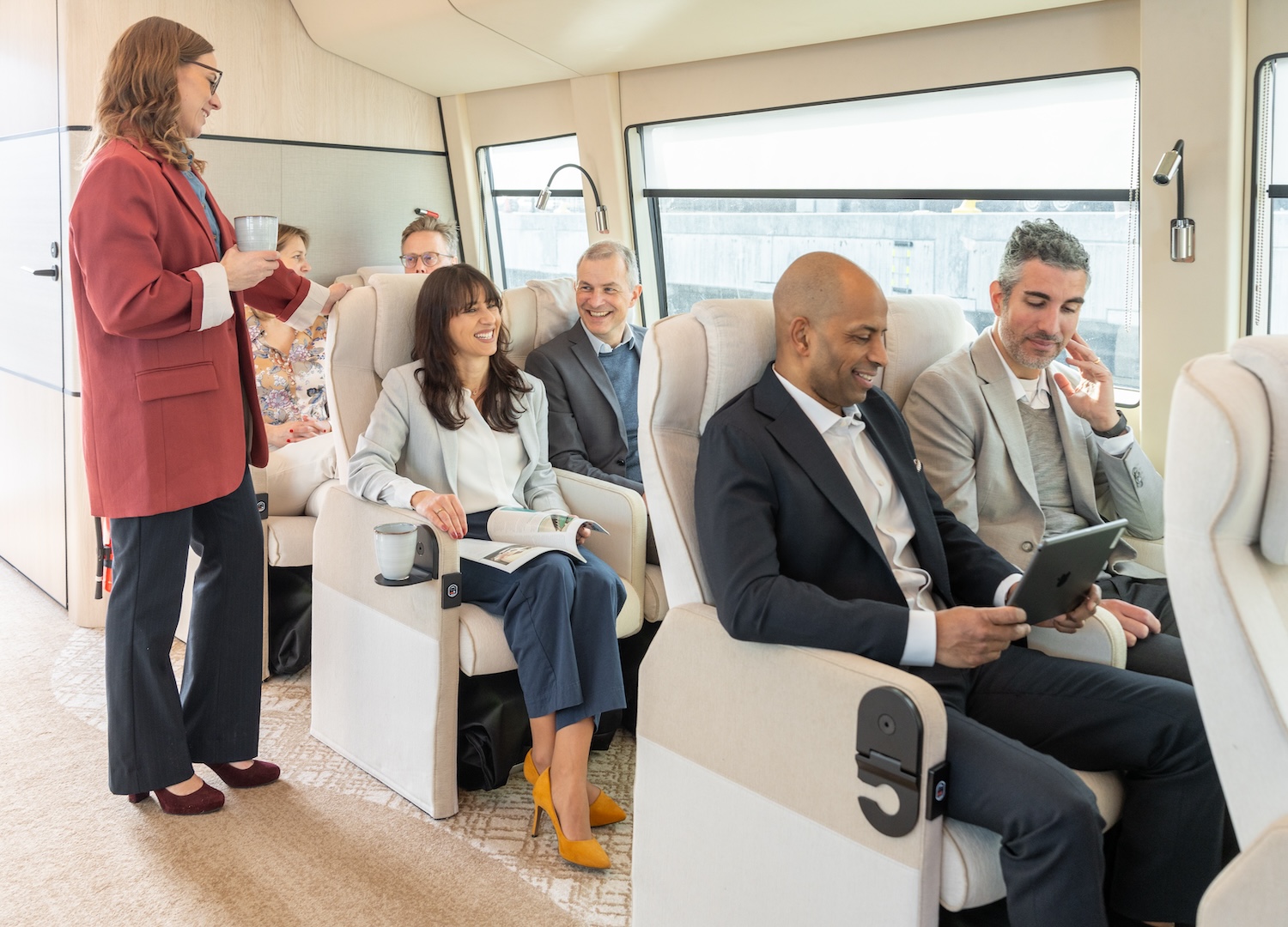
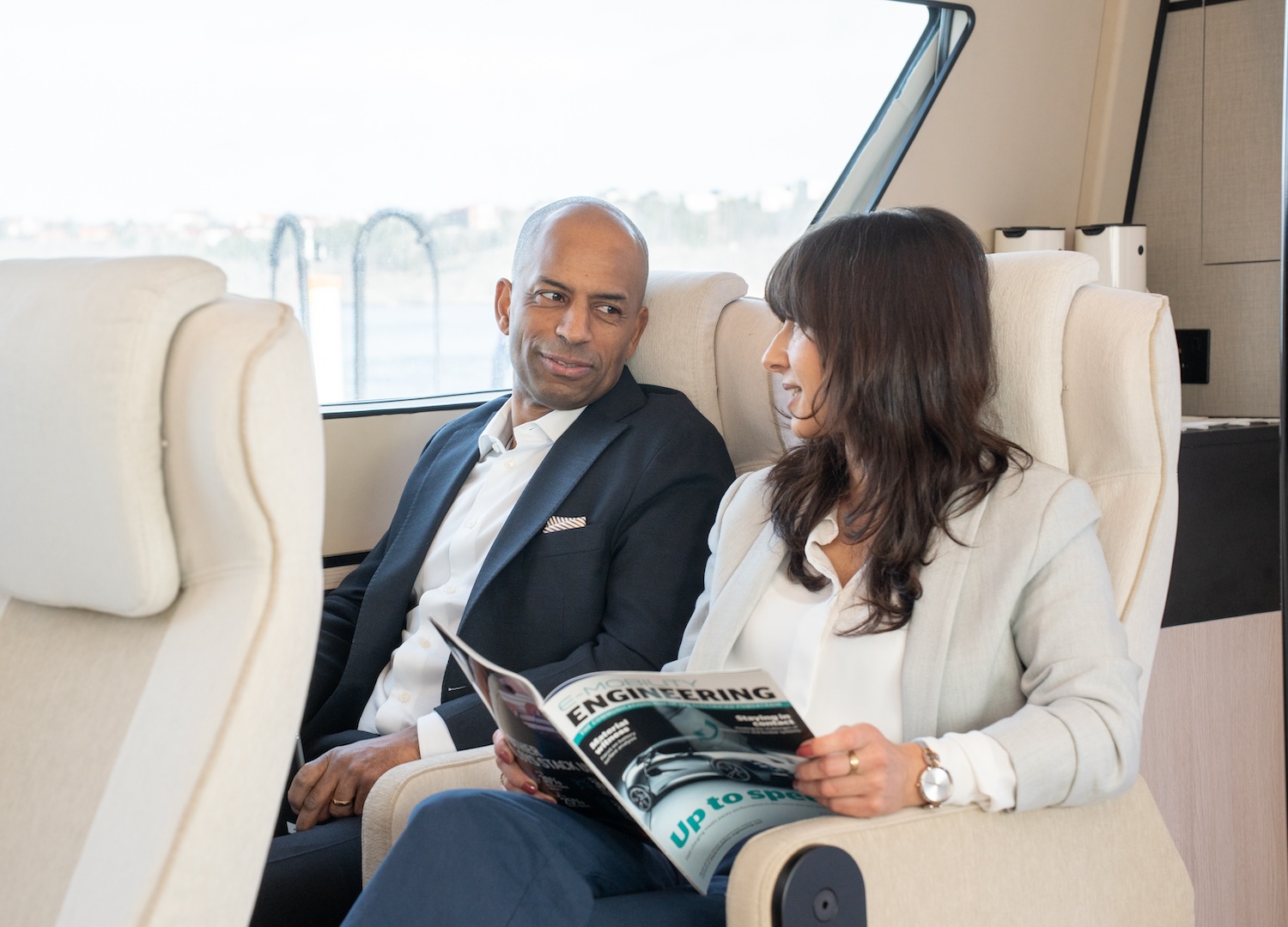
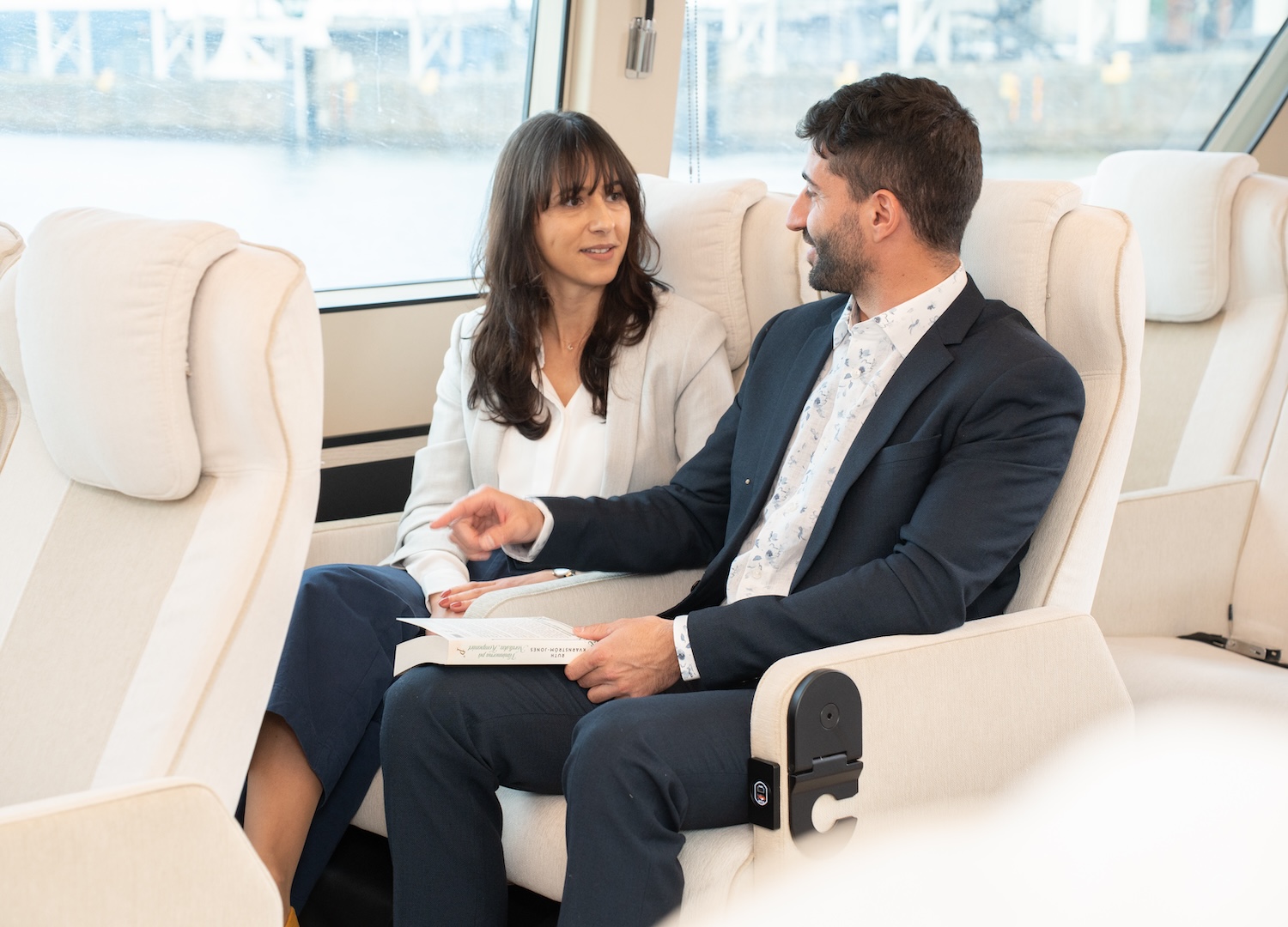
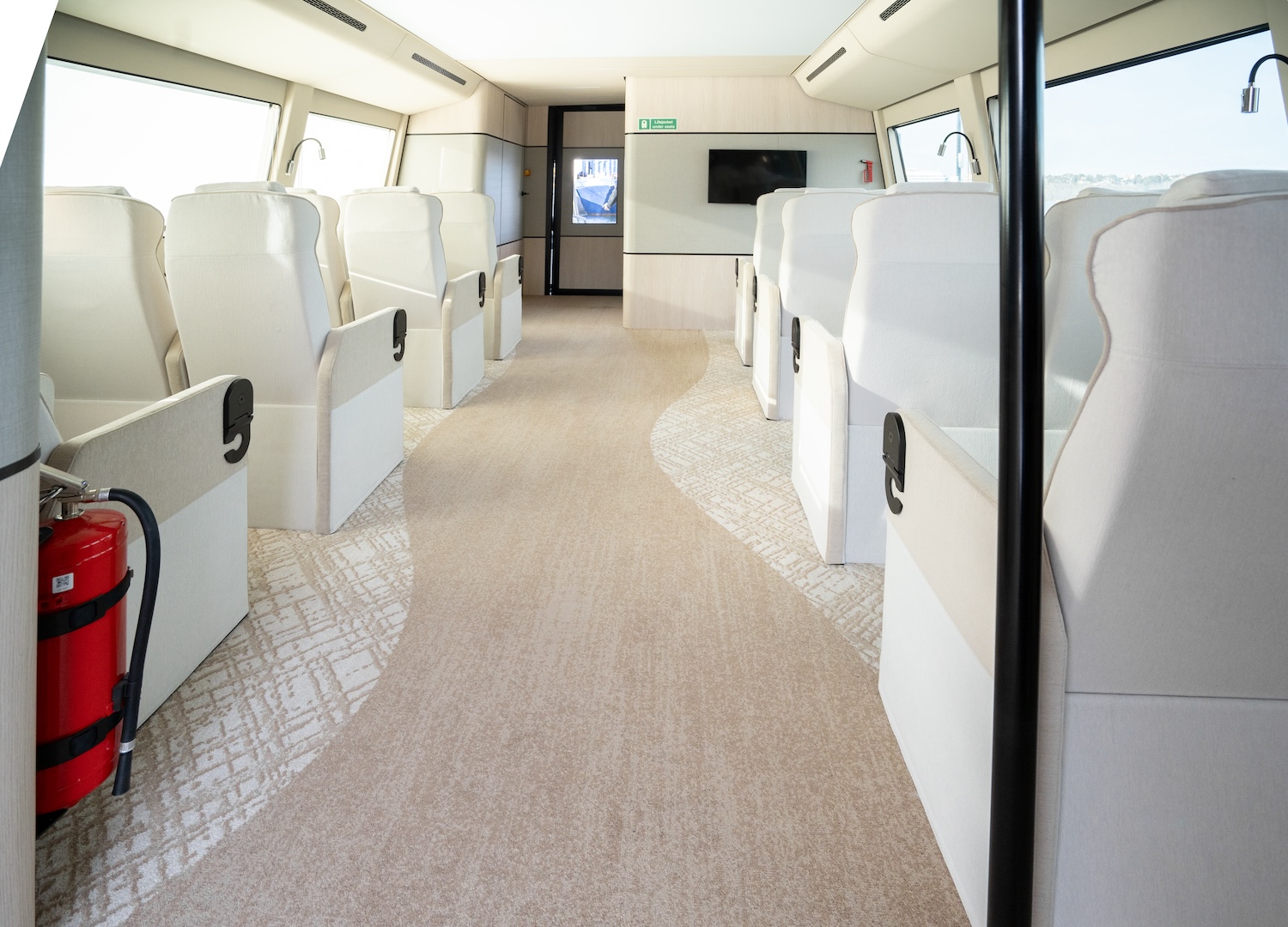
In the interior, the technology blends in seamlessly. There are 30 people sitting in a light cabin with large windows, and the water becomes the key feature of the ride. There are electric motors that are installed under the water and don’t require mechanical transmission. As soon as the vessel moves above the waves, a Flight Controller inside regulates the activity of the hydrofoils depending on the conditions, ensuring stability without drawing much attention from the passengers to itself.
The design of the P-12 directly depends on the way it moves. The moment when the hull rises above the surface, the connection with the air becomes different, and therefore the function of the design becomes different. The aerodynamic shape minimizes the resistance of the vessel and creates a design that resembles that of an airplane rather than of a usual boat. At 25 knots, what the P-12 leaves behind is a tiny white line on the surface of the water.
About the author

Ludovica Proietti, journalist, design historian and curator, teaches in universities and curates events, always exploring projects with fresh, unconventional perspectives.
Instagram