Your next chair will come with a passport: how the EU is enforcing product traceability
The Digital Product Passport (DPP) is the EU’s answer to devalue greenwashing, requiring companies to release transparent information about how a product is made.

“Sustainable” is one of the most elastic words in design marketing, placed on every product like a sticker, making it complex for customers to understand what is truly sustainable and what is simply greenwashing. Claims have mostly operated on trust, and trust, it turns out, is a cheap material. The Digital Product Passport (DPP) is the EU’s answer to that gap, and it will be asking companies to attach a permanent, checkable record to the object itself, letting anyone verify it.
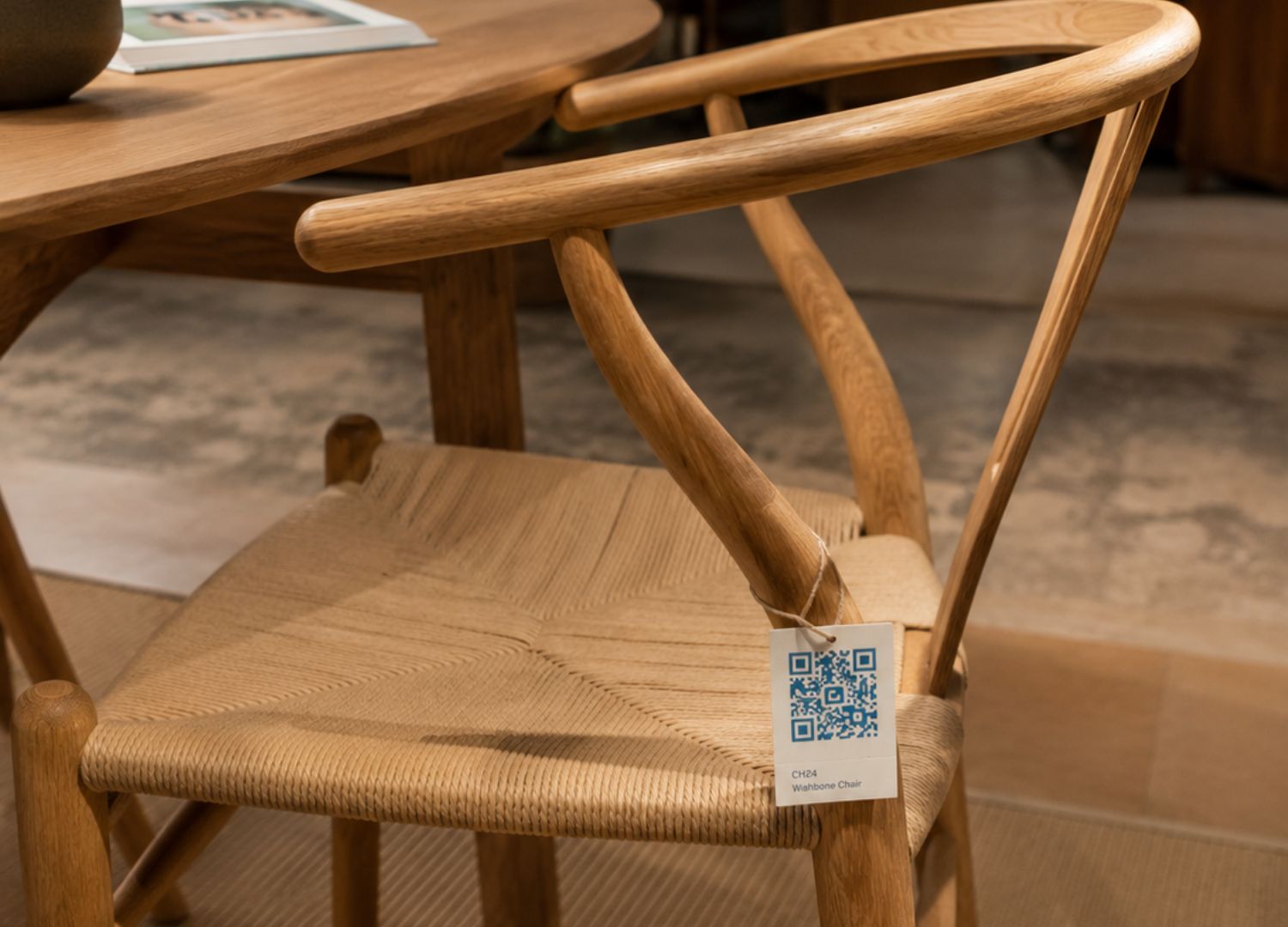
Starting in 2027, a growing share of physical products sold in the EU will need to carry a tag linking to a digital record: what the product is made of, where those materials came from, how it was manufactured, its footprint, and instructions for repair, disassembly, and recycling. It is one of the more consequential parts of the EU’s Ecodesign for Sustainable Products Regulation, which entered into force in July 2024. Batteries will be first, textiles and footwear will follow, while design products like furniture and consumer electronics will have to comply by 2028.
Gallery
Open full width





Open full width
Digital Product Passport (DPP):
How it works
The mechanics are straightforward enough on paper: each product gets a unique identifier, which leads to a record containing all relevant documents like lifecycle assessments and carbon footprint data. For design companies, the most immediate effect will be internal, as a digital product passport is only as good as the data feeding it, and most manufacturers don’t have such a structured record of information.
A design brand that has always been able to say “this chair is made from FSC beech and this specific wool blend” will now gain a structural advantage over a competitor that has historically sourced opportunistically and will struggle to trace back its components. Brands whose sustainability story was substantial rather than aspirational are the ones for whom this transition will be smoother, and hopefully, a genuine market differentiator.
What will change for designers?
There’s also a design-practice dimension that goes beyond compliance logistics. Because the passport will need to carry disassembly and repairability information, it effectively asks designers to spend more time thinking about a product’s second life; how a chair comes apart, how to make it easily repairable, how it can be recycled. This is, of course, not a new idea; modularity and repairability have long been marks of serious design thinking. However, they will now become market-wide expectations rather than differentiators, which over time should shift even base furniture products a little closer to a higher level of design thinking.
What will change for consumers?
The general public will be able to access information that today is either buried in a sustainability report online or that simply does not exist in an accessible form. For design-conscious buyers who already care about material provenance, the passport will facilitate research and make it a quick and easy task, while for others, it can instil curiosity, perhaps making the general public more aware of the impact of their choices. It also has a practical meaning: if a leg breaks or upholstery needs redoing years later, the passport should make it easy to identify the right replacements or compatible materials, encouraging users to take care of their products rather than throwing them away.
Towards environmental change
The furniture sector currently has low rates of material reuse and recycling, and a large part of that is an information problem, so the default is often landfill or incineration. Considering the substantial amount of money people usually spend on furniture, the hope is that when instructions become clearer, consumers will genuinely be more interested in repair, not only for the environment but also simply for their personal finances.
None of this guarantees an environmental outcome on its own, as the EU’s passport will only record information, but not force brands to comply with specific sustainability standards. Whether or not this will have an effect on production will depend mostly on customer response, whether the presence of the passport will steer consumer choices towards more sustainable options, or if it will simply go unnoticed.