The joint as a statement: Benedetta Licini’s FRAME
At Milan Design Week’s Salone Satellite, a young Italian designer turns the most overlooked component of an object into its central argument.
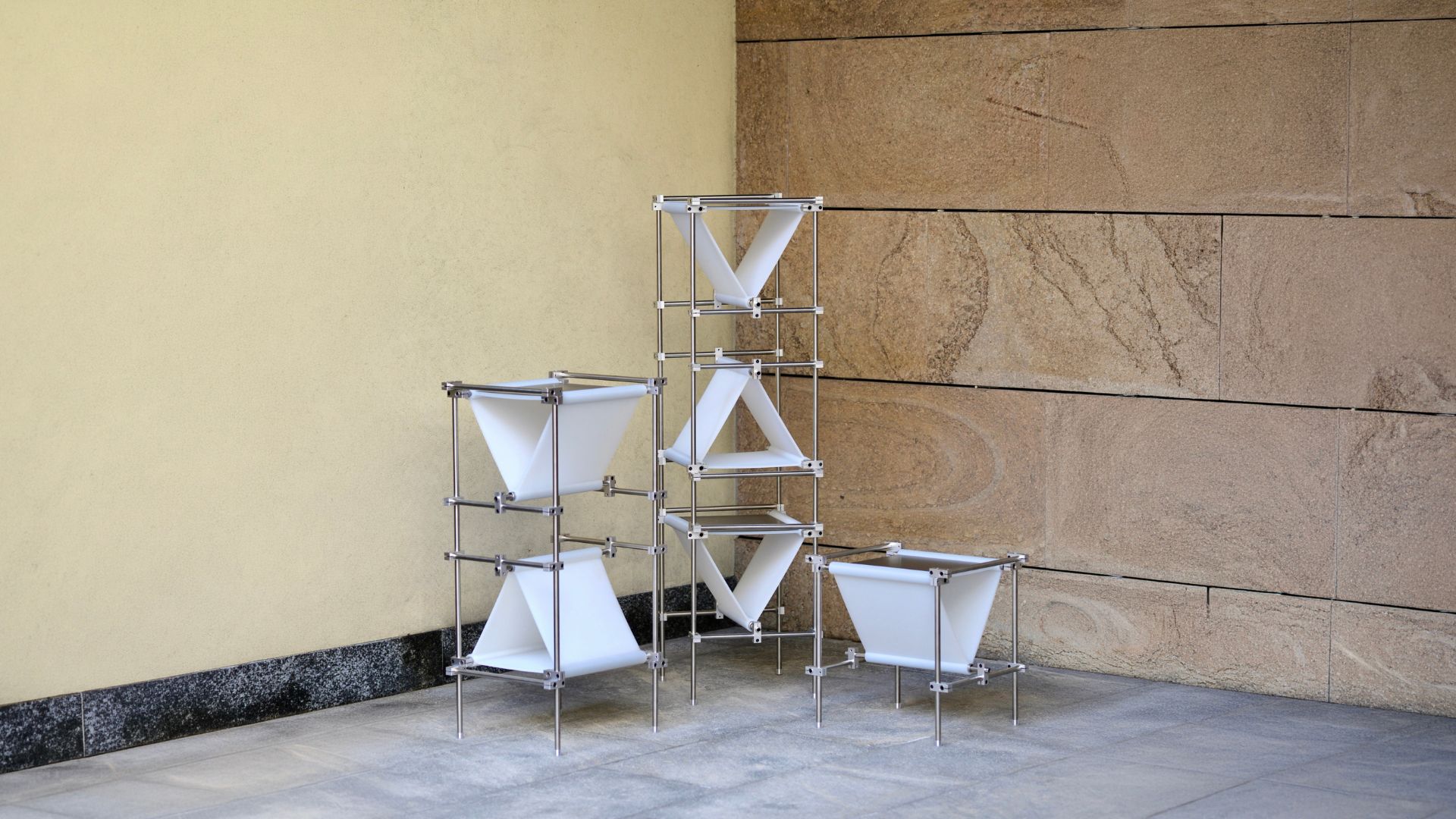
The joint has always been an often dismissed but attractive element for designers, explored in its most practical forms, like in Rietveld’s Zig-Zag chair, as well as in its conceptual aspects, for example, in Andrea Caputo and Anniina Koivu’s book U-Joints. Benedetta Licini’s FRAME takes the joint and places it centre stage, as the physical manifestation of an object’s intelligence. Benedetta Licini is an Italian product designer currently based in Copenhagen, and previously in Milan and Barcelona. FRAME is her latest project, revealed at Milan Design Week 2026, on show at Salone Satellite, the section of the main fair dedicated to designers under 35 and curated by Marva Griffin.
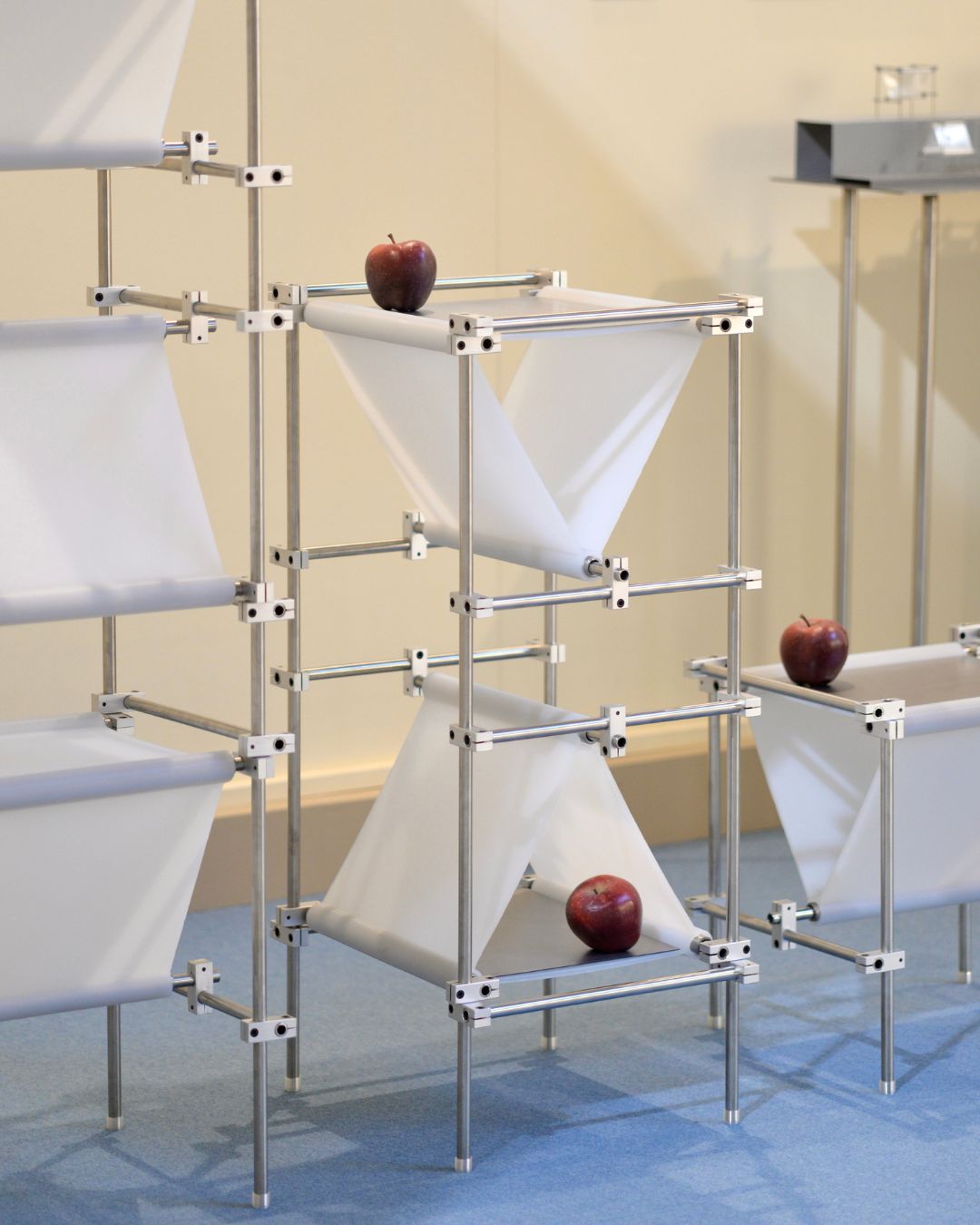
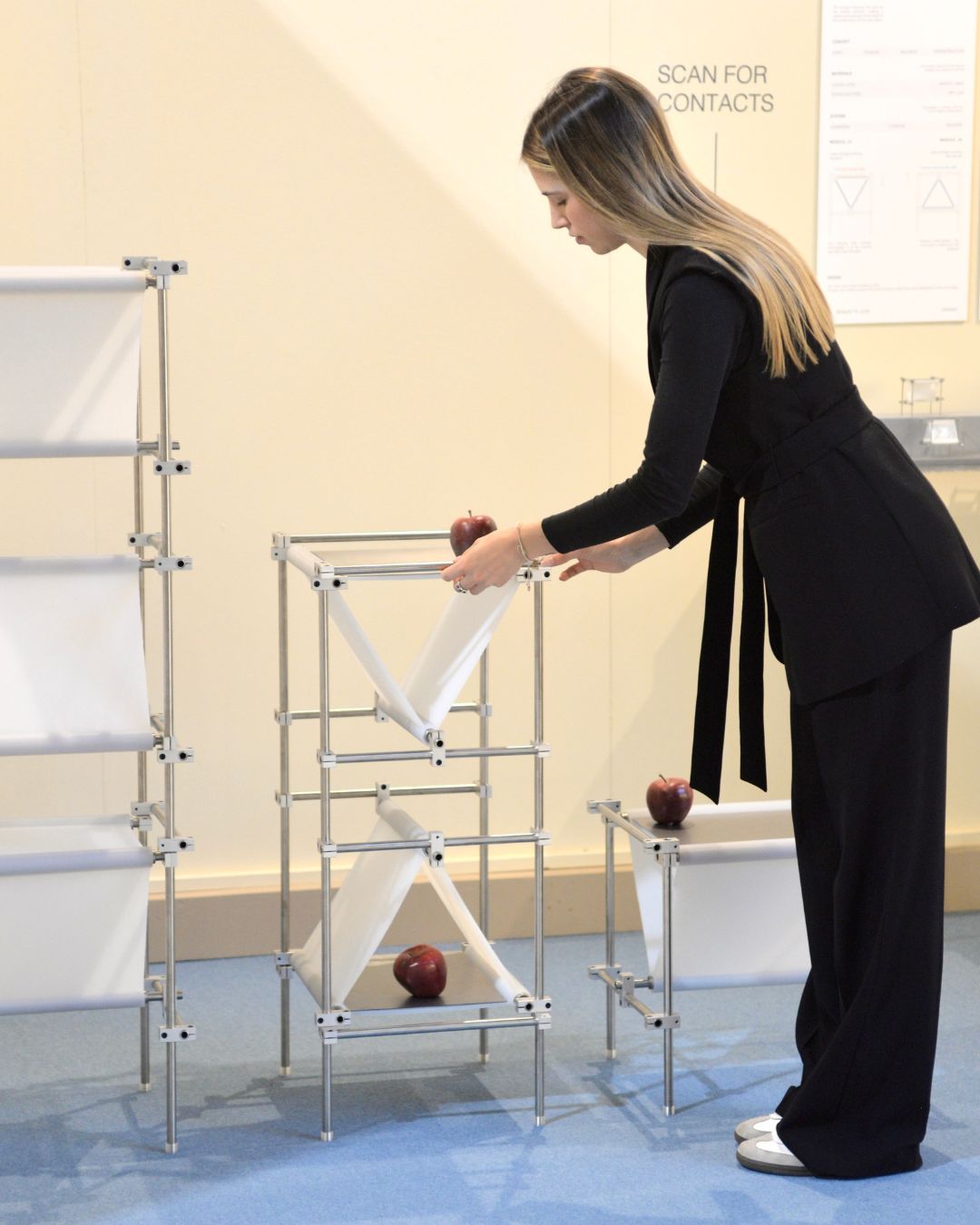
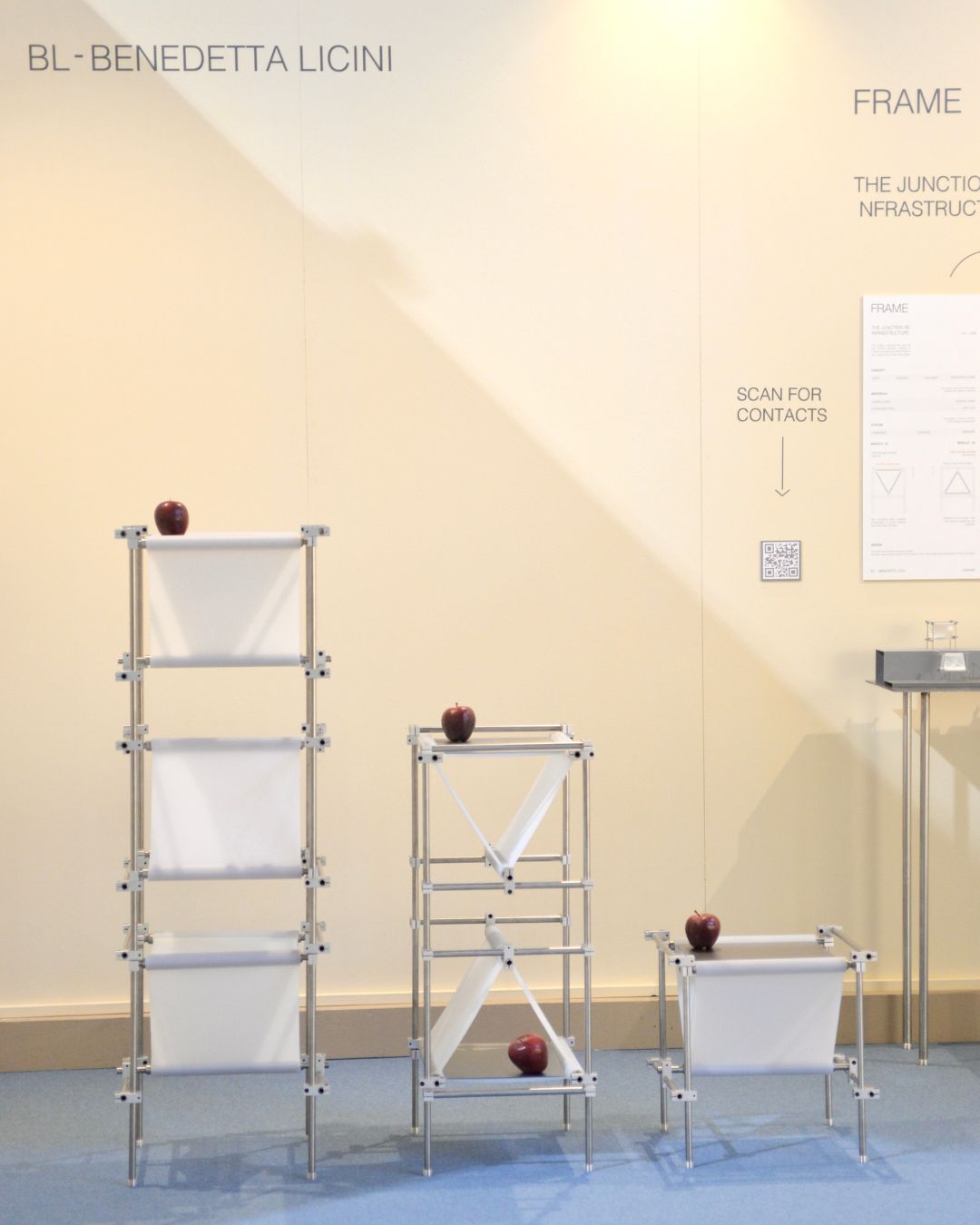
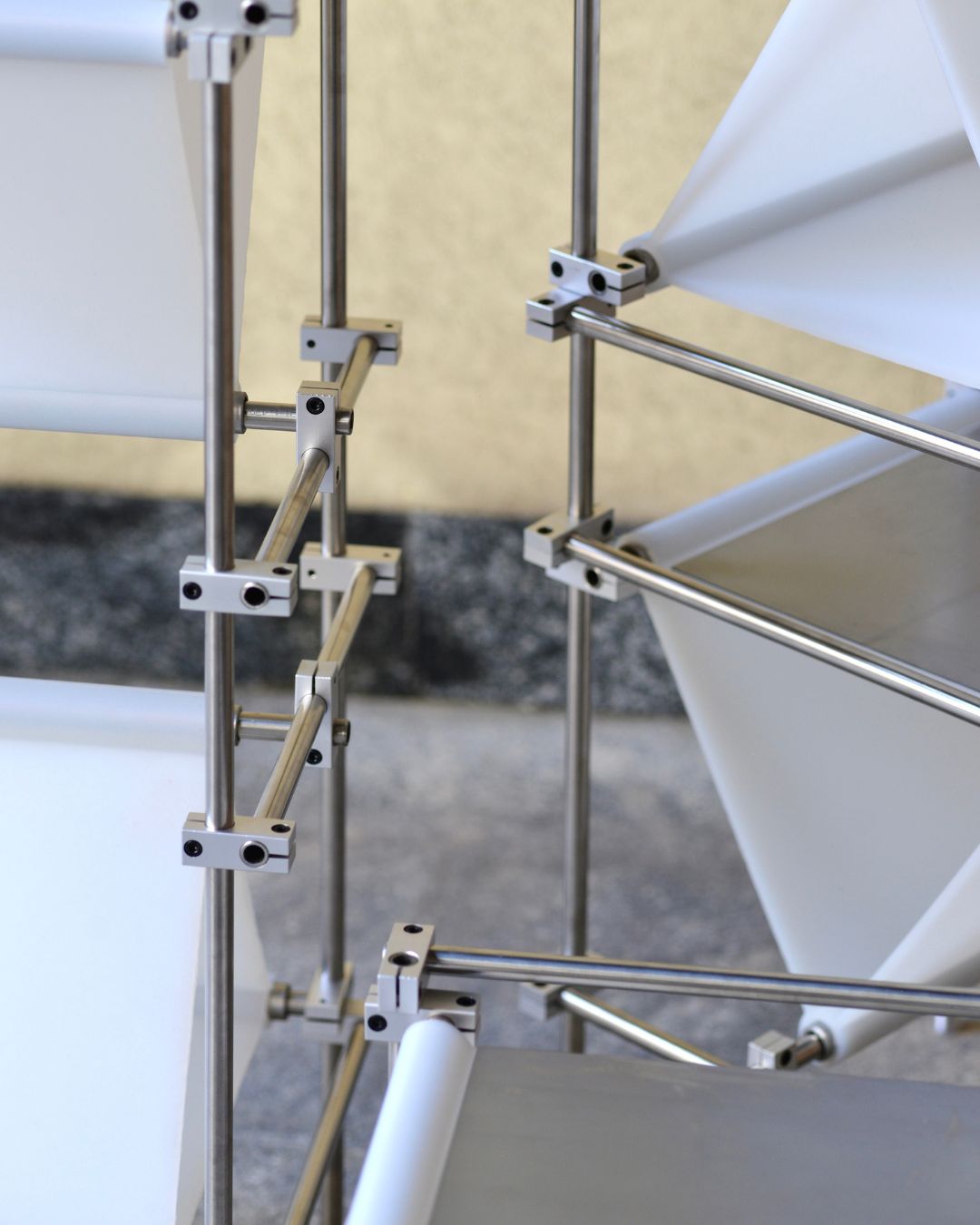
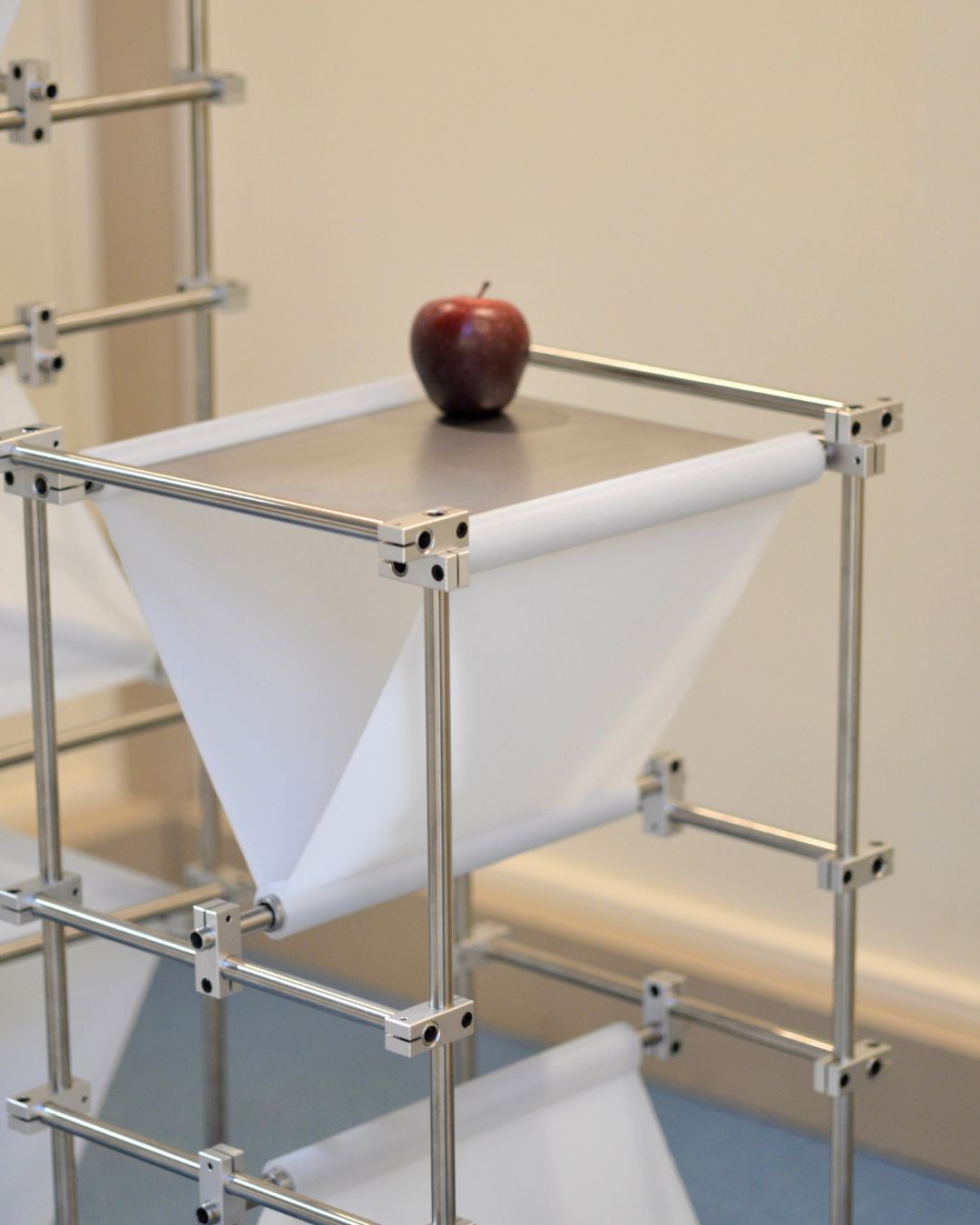
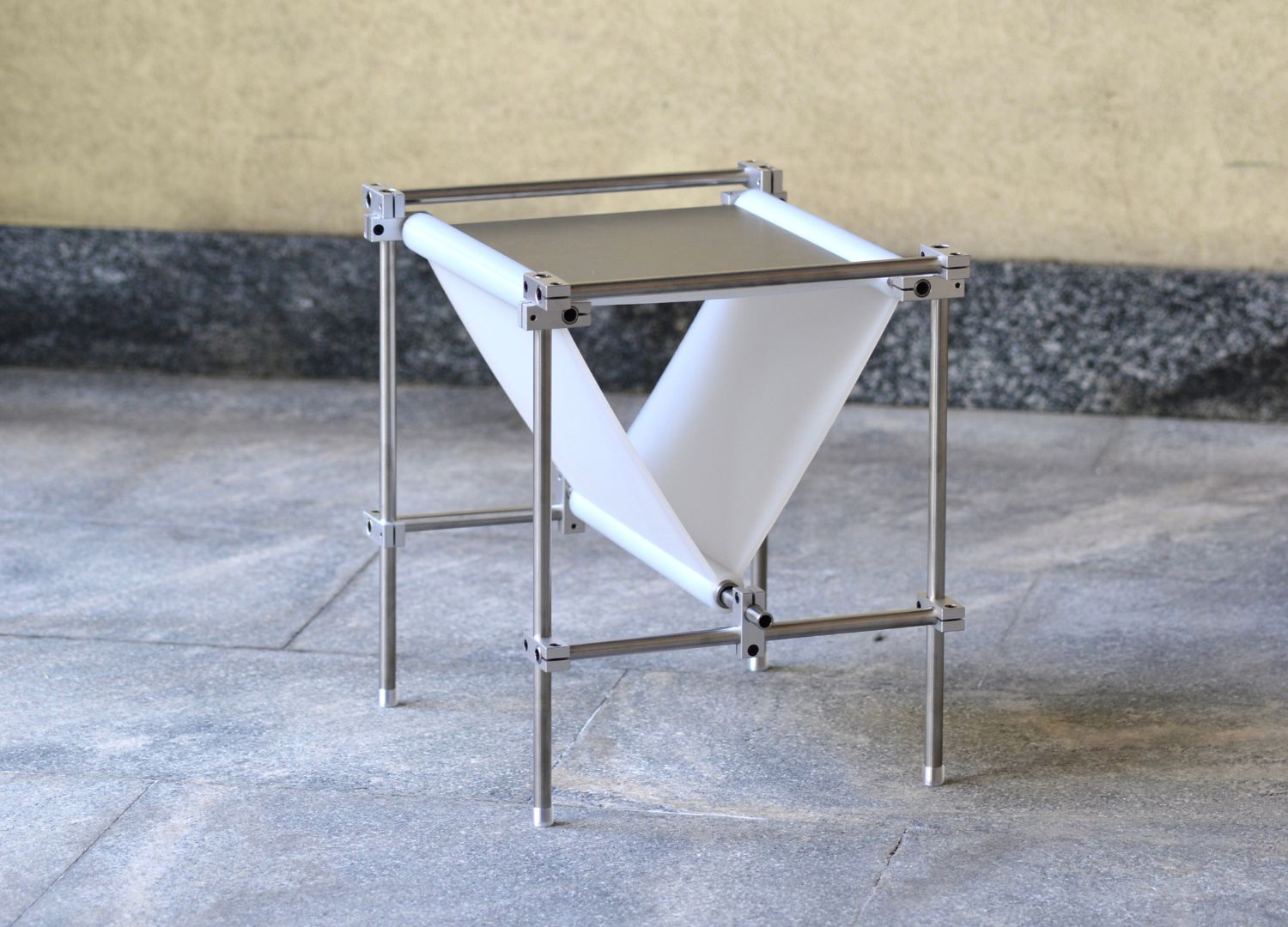
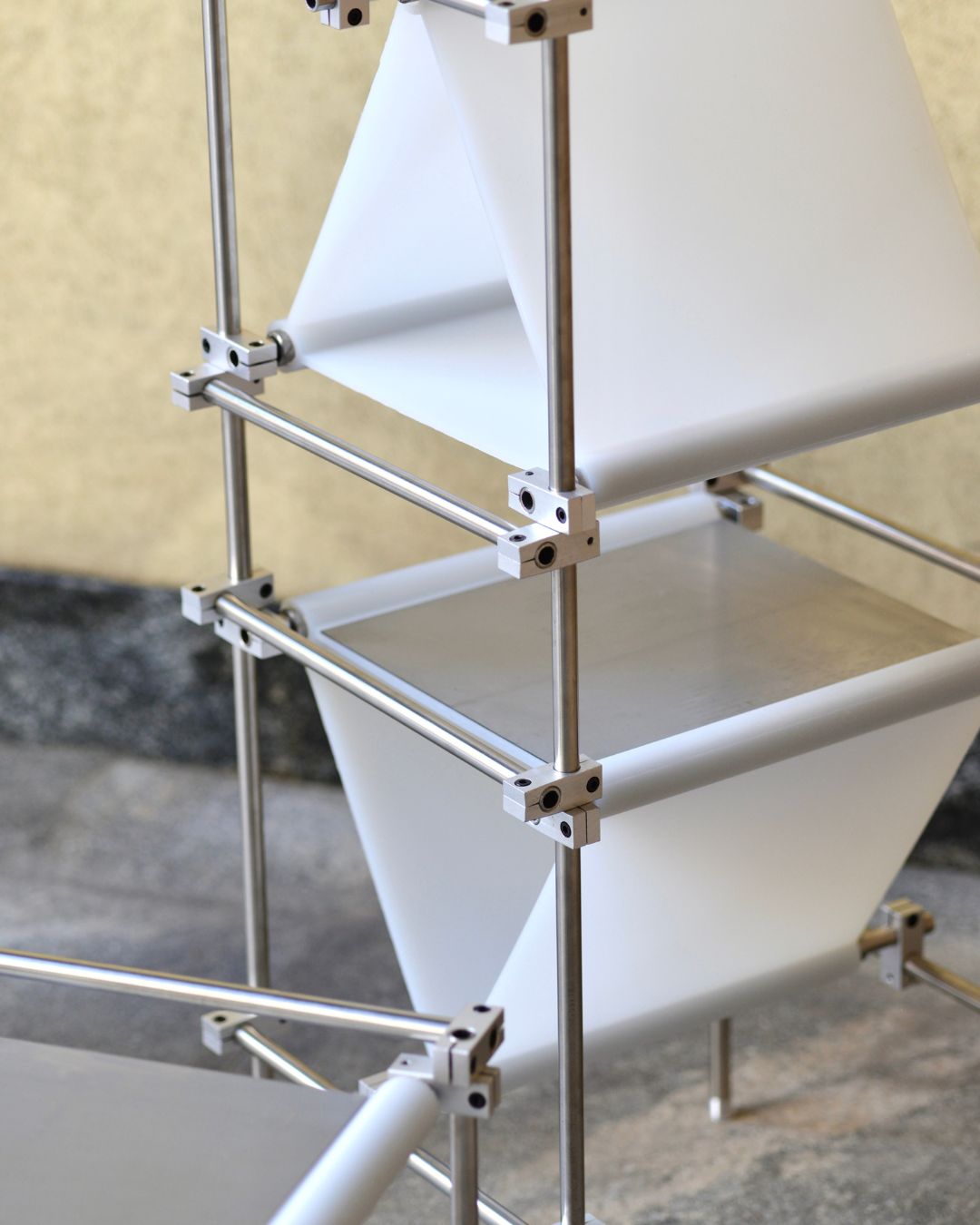
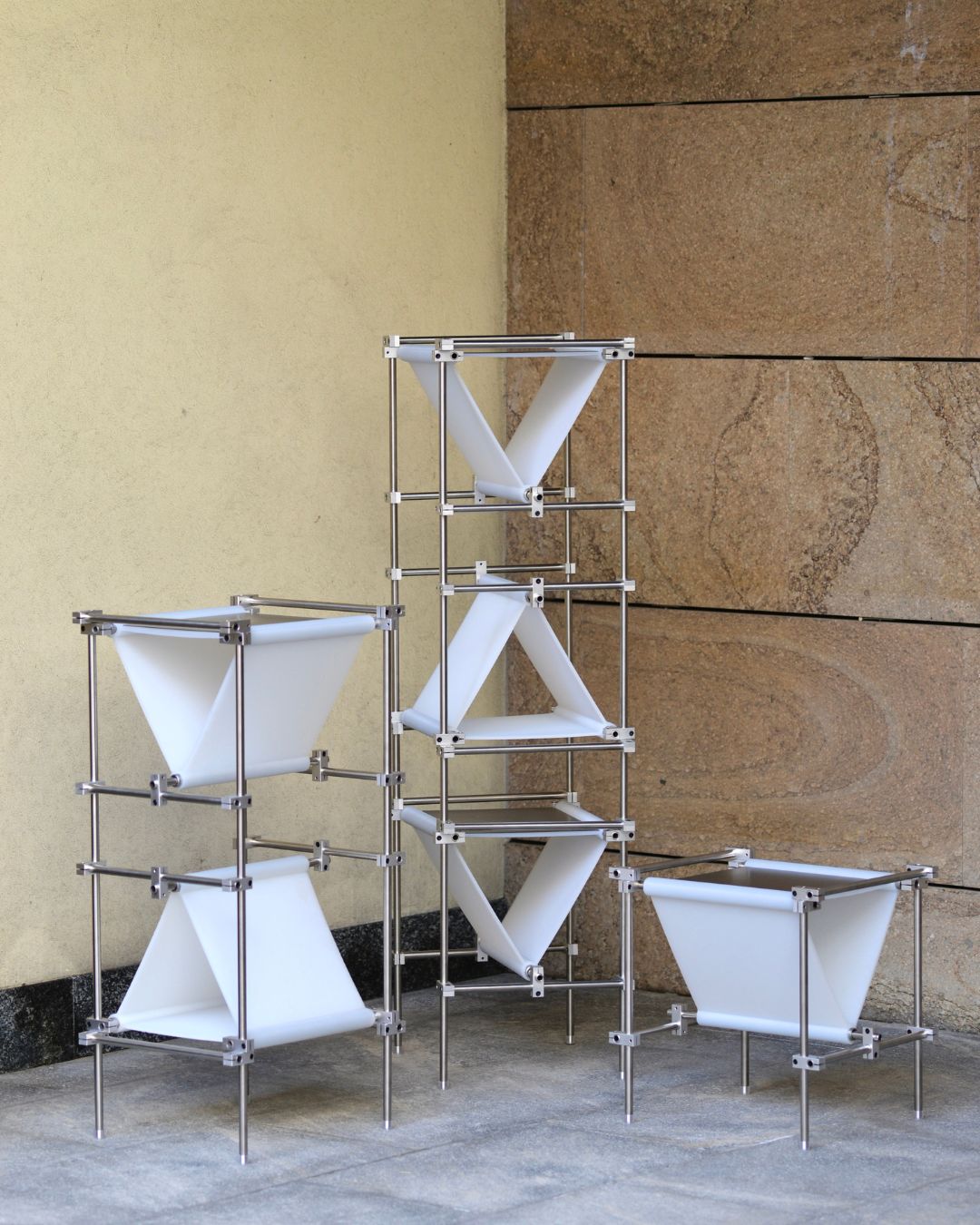
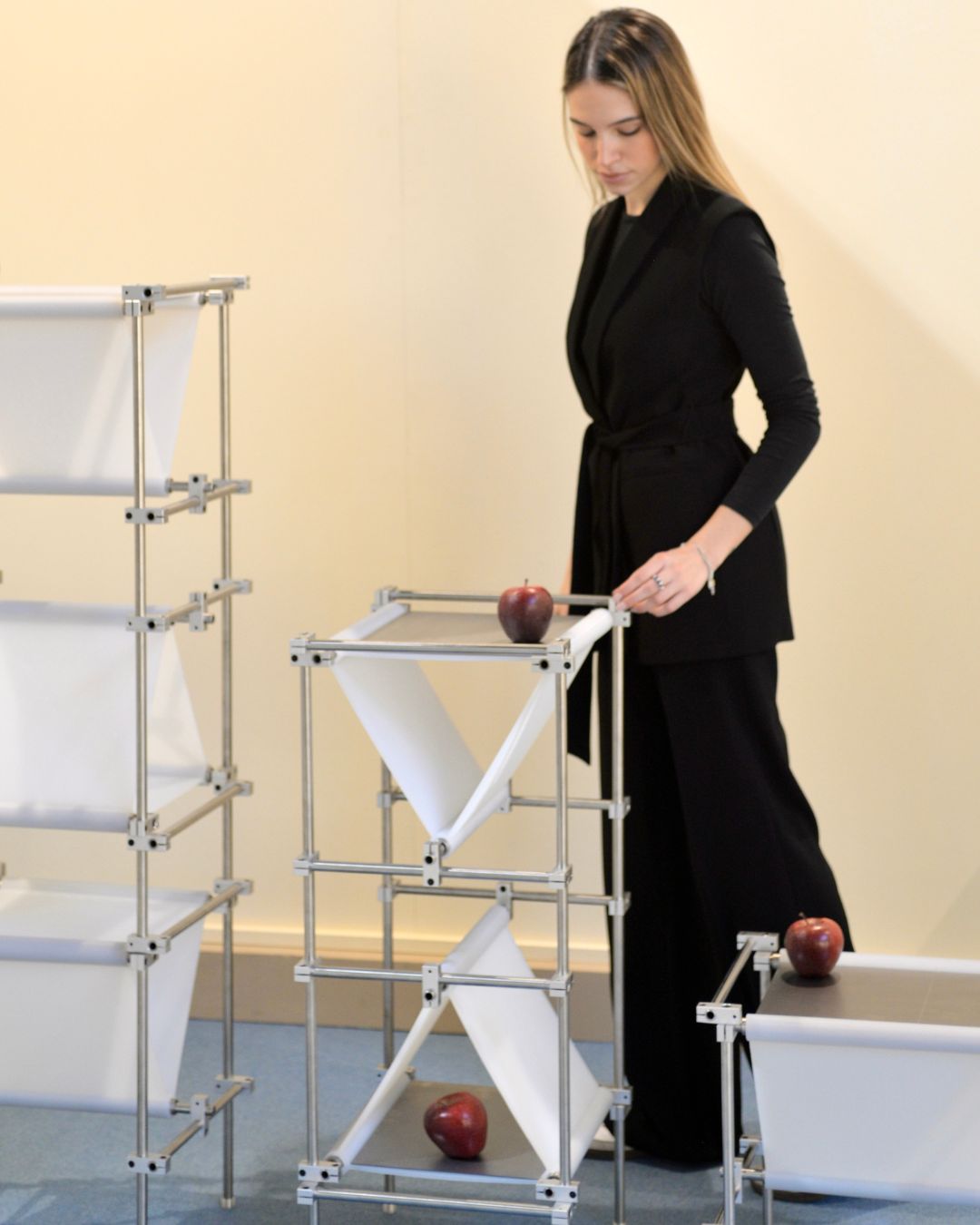
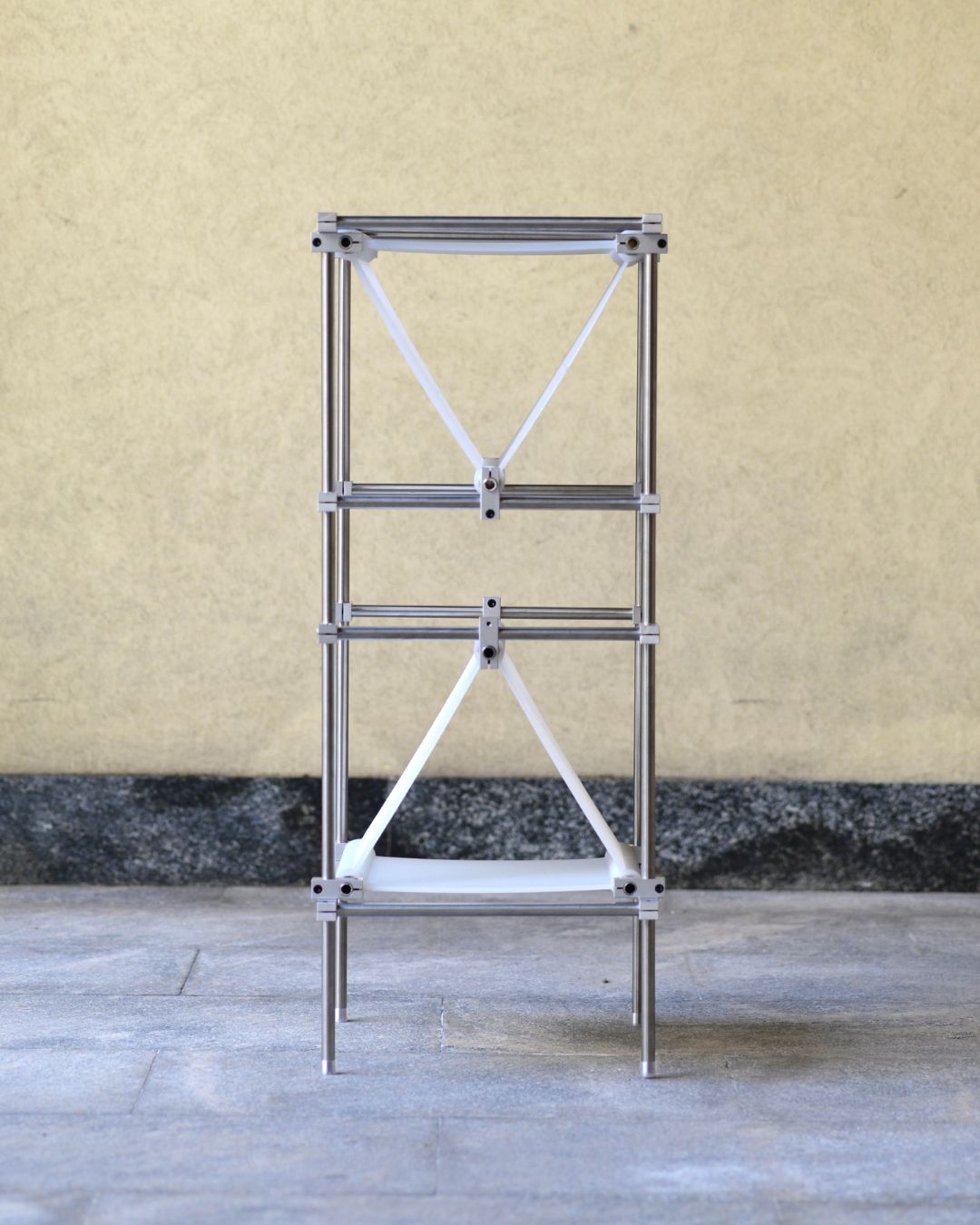
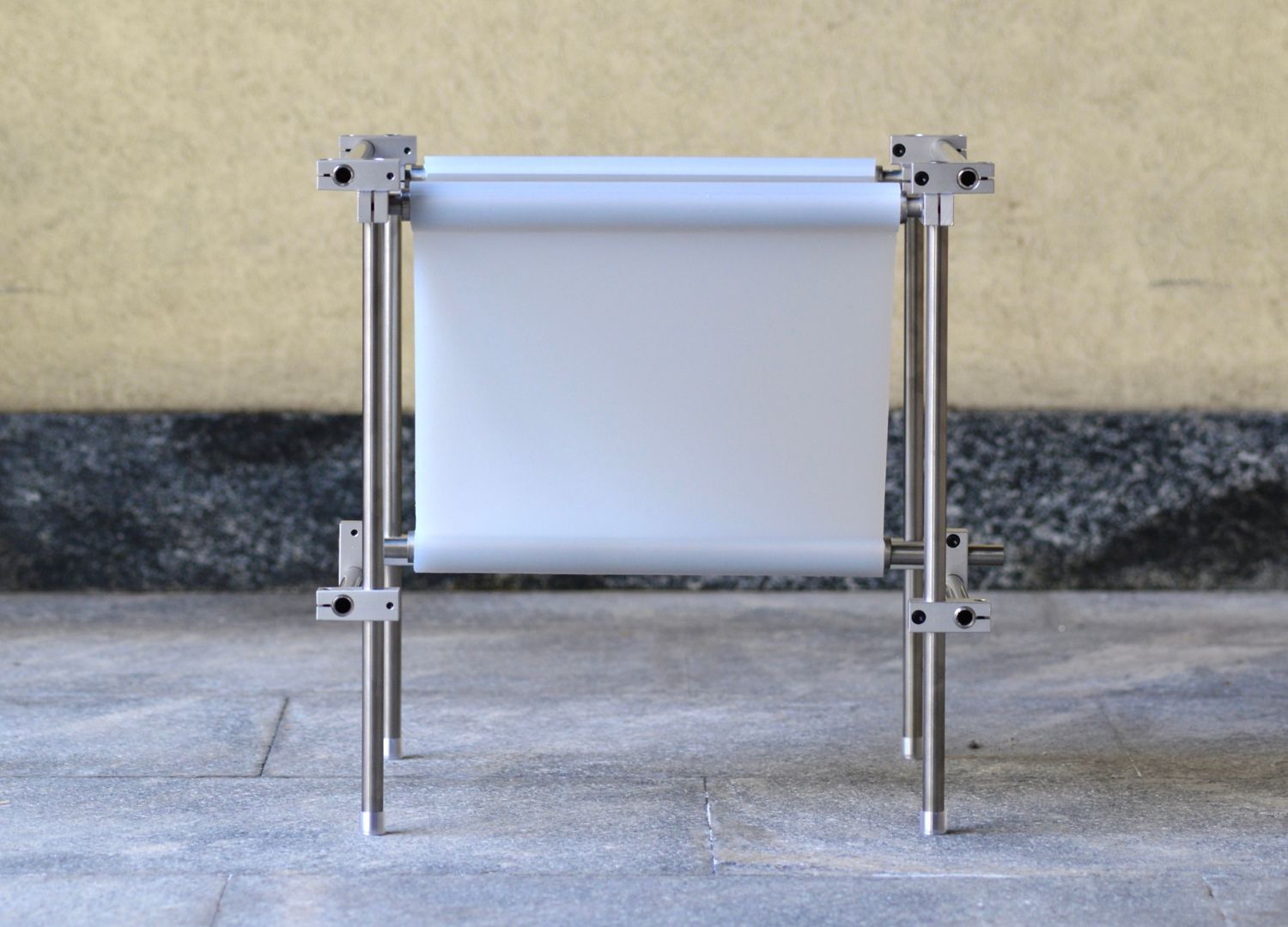
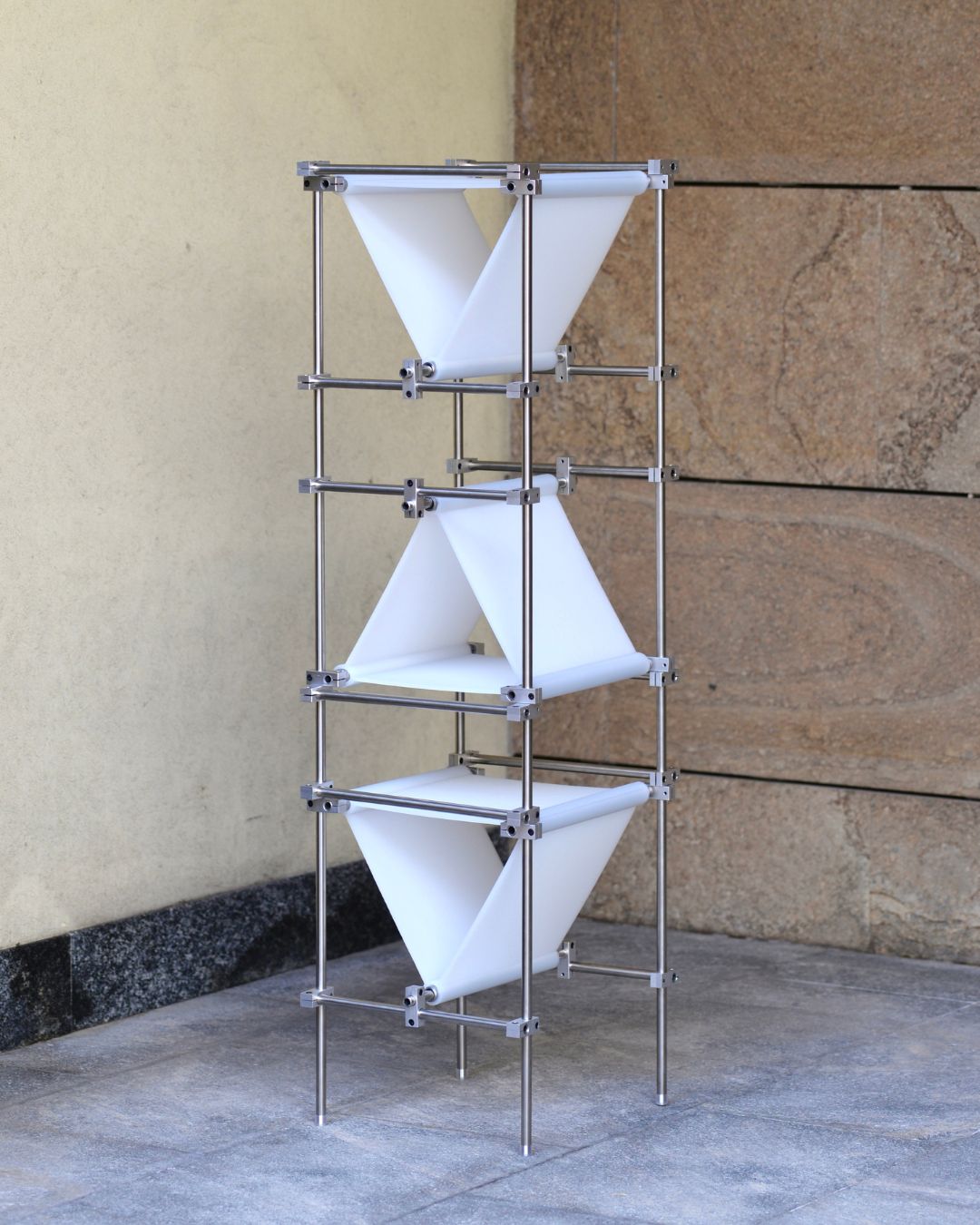
A rigid structure in stainless steel interfaces with modular inserts in opalescent silicone, cold against warm, fixed against flexible, industrial against bodily. The joint between the two is not minimised, but acts as an active threshold made legible. By allowing the object to reveal itself, FRAME unfolds a design problem that is not a problem of style, but of honesty and expression of the visible or invisible forces that hold things together.
Gallery
Open full width
Open full width
FRAME makes the argument that the joint should be visible rather than hidden. Where does that fascination come from? What made you see this component differently?
Benedetta Licini:
“The belief that the joint must be visible stems from a reflection on the relationship between structure, function, and design language. In most products, the connection point is hidden because it’s considered a purely technical element, something to be masked to preserve a supposedly clean form. With FRAME, I wanted to reverse this perspective: observing construction systems, I realized that it is precisely in the joint that the object’s intelligence manifests itself. It is the point where material, strength, and function meet, and therefore also the place where the project is most honestly expressed.
Viewing this component differently arose from an interest in design languages in which construction is not hidden, but becomes an integral part of the aesthetic expression. I began to consider the joint not as a detail to be resolved and then hidden, but as an element capable of generating identity, rhythm, and recognizability. FRAME starts from this very idea: making the construction principle visible, transforming a technical element into a design statement. The joint thus ceases to be a simple means and becomes the narrative and formal fulcrum of the entire project.”
Your work often centres around conveying emotional aspects through physical components. How would you describe your process? How do you choose which materials to work with?
Benedetta Licini:
“My process usually begins with observation rather than form making. I start by identifying a constructive or functional element that is typically considered purely technical, and then I explore its latent expressive potential. I’m interested in understanding how a physical component can communicate something beyond its function, tension, balance, precision, fragility, resistance. From there, the design develops through a dialogue between structure and perception. I work through prototyping, testing how proportions, connections and material interactions can generate not only performance, but also an emotional response. For me, emotion in design doesn’t come from decoration; it emerges when an object clearly reveals the logic behind its construction.
Material selection follows the same principle. I choose materials for their structural qualities, but also for the way they express force, weight and connection. Each material carries its own language: some convey tension and precision, others warmth or permanence. The choice depends on which narrative the project needs to communicate. In FRAME, for example, the materials were selected for their ability to make the joint legible and honest. I wanted the connection to be perceived not as a hidden technical necessity, but as a visible moment of interaction between elements, something capable of conveying both rationality and character.“
FRAME sits between object and infrastructure, which means it doesn’t fit cleanly within a product category. Was this ambiguity a hard decision to make, or was it the natural choice for the project?
Benedetta Licini:
“Rather than a difficult decision, this ambiguity emerged as a natural outcome of the design process. FRAME was never conceived with the intention of fitting neatly into a predefined product category. Instead, it gradually developed around the exploration of the joint as a structural and conceptual element, and with it, the relationships between parts. From the very beginning, the focus was not on designing a product that belonged to a specific typology, but on constructing a system capable of making a constructive logic visible. In that sense, forcing FRAME into a fixed category would have reduced its conceptual scope.
Its position between object and infrastructure comes directly from its structural nature: it has the presence and scale of an object, yet it operates with an infrastructural mindset, where connection, support, and relationships between elements become central. It does not exhaust itself in a single function, but instead suggests a broader system, almost a constructional grammar that can extend beyond its immediate configuration.
This in-between condition is, in my view, one of the most meaningful aspects of the project, as it challenges rigid product classifications. I was interested in exploring a space where the object is not only a finished, autonomous artefact, but also a manifestation of an open logic, a fragment of a potentially larger system. In this sense, the ambiguity was never a compromise or an uncertainty, but the coherent result of a research process aimed at blurring the boundary between product and structure, between functional object and constructive principle.“
Milan Design Week is becoming increasingly commercially saturated, often making it hard for research-driven processes to emerge. What was your experience like showing at Salone Satellite?
Benedetta Licini:
“My experience at Salone Satellite has been both stimulating and revealing. It sits within a much larger ecosystem that is increasingly shaped by commercial dynamics, and this inevitably influences the overall perception of Milan Design Week. However, within that context, Salone Satellite still represents a unique space where research-driven approaches can find visibility and dialogue.
As a young designer, I was very aware of this tension between visibility and market orientation. On one hand, there is a growing pressure for immediacy, recognisability, and product-driven outcomes; on the other, there are projects that originate from slower, more investigative processes that are harder to categorise but often more meaningful in the long term. What I found valuable at Salone Satellite was precisely the possibility to position FRAME within that research-oriented layer. It allowed for conversations that went beyond the object itself and focused more on underlying intentions, systems, and design logic.
At the same time, the experience also made it clear how important it is to protect spaces for experimentation. When the context becomes highly saturated, there is a risk that the narrative shifts too quickly toward the commercial outcome, leaving less room for process-based work to fully communicate itself. To me, the value of participating was not only exposure, but also the opportunity to test how a project rooted in structural and conceptual research is received in a real, fast-moving design environment.“
What would you like to see more of from the industry in the next Milan Design Weeks?
Benedetta Licini:
“I’d like to see greater attention not only to materials research, which is undoubtedly crucial, especially given the environmental and manufacturing challenges we are facing, but also to a deeper reflection on the functionality of objects. In recent years, the debate has rightly focused heavily on material innovation, sustainability, and new technologies. However, I believe it’s equally important not to lose sight of the primary role of design: that of giving shape to objects that function clearly, coherently, and necessarily.
I would therefore like the next Milan Design Week, and the Salone Satellite in particular, to maintain a stronger balance between material experimentation and functional design. Not as two separate fields, but as two dimensions that inform each other. An object can be innovative in its materials, but it should also be understandable in its function and its rationale for use. In this sense, I believe the value of design fully emerges when research and functionality proceed together, without one prevailing over the other.”
The fair has, over the past decade, become one of the densest commercial spectacles in the design calendar; brand activations, luxury installations, social media-ready launches. Against this backdrop, Salone Satellite occupies a pressured role as a platform reserved for designers under 35, ostensibly protected from the commercial logic that dominates the main fair, but inevitably in proximity to it.
For emerging designers, the economics of showing at a fair like Salone, between production costs, transport, and labour, are substantial, and they fall disproportionately on those with the least institutional support. The question of who gets to participate in the conversation about design’s future is inseparable from the question of who can afford to show up. Research projects like Licini’s keep getting rarer to encounter, as their main focus is more qualitative than profitable.
Still, research projects are fundamental to keep the design discipline moving forward. FRAME is a research theory and a prototype, a system and a series of possible objects, an argument about visibility, and an open question about where that leads. Whether it becomes a commercial product, a body of work, or simply a clear statement of intent from a designer at the beginning of her practice, it demonstrates that there is much more we need to cultivate in design beyond style and business.