Design without borders: contemporaneity as a universal language
FROMM. is a contemporary luxury brand rooted in Milan and Doha, shaping culturally inspired furniture and supporting the next generation of designers.
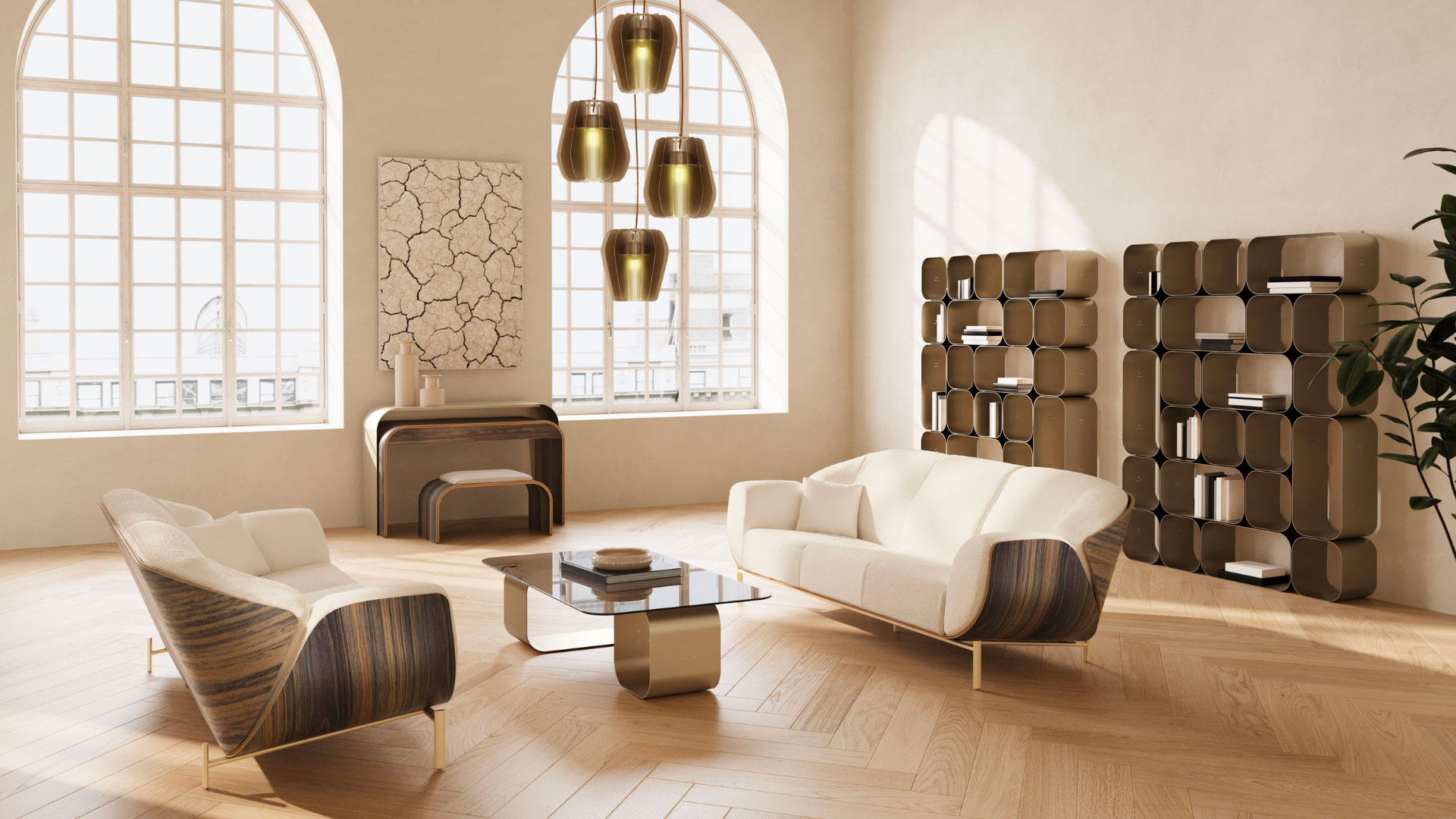
According to Alia Rachid, founder of FROMM., design should be able to cross oceans and continents while speaking a universal language. “Design should not require explanation to be valid. If an object needs excessive context to be appreciated, it has already failed,” she explains. This does not mean that objects are devoid of narrative. Cultural references add layers of depth to a project without tying it to a specific context.
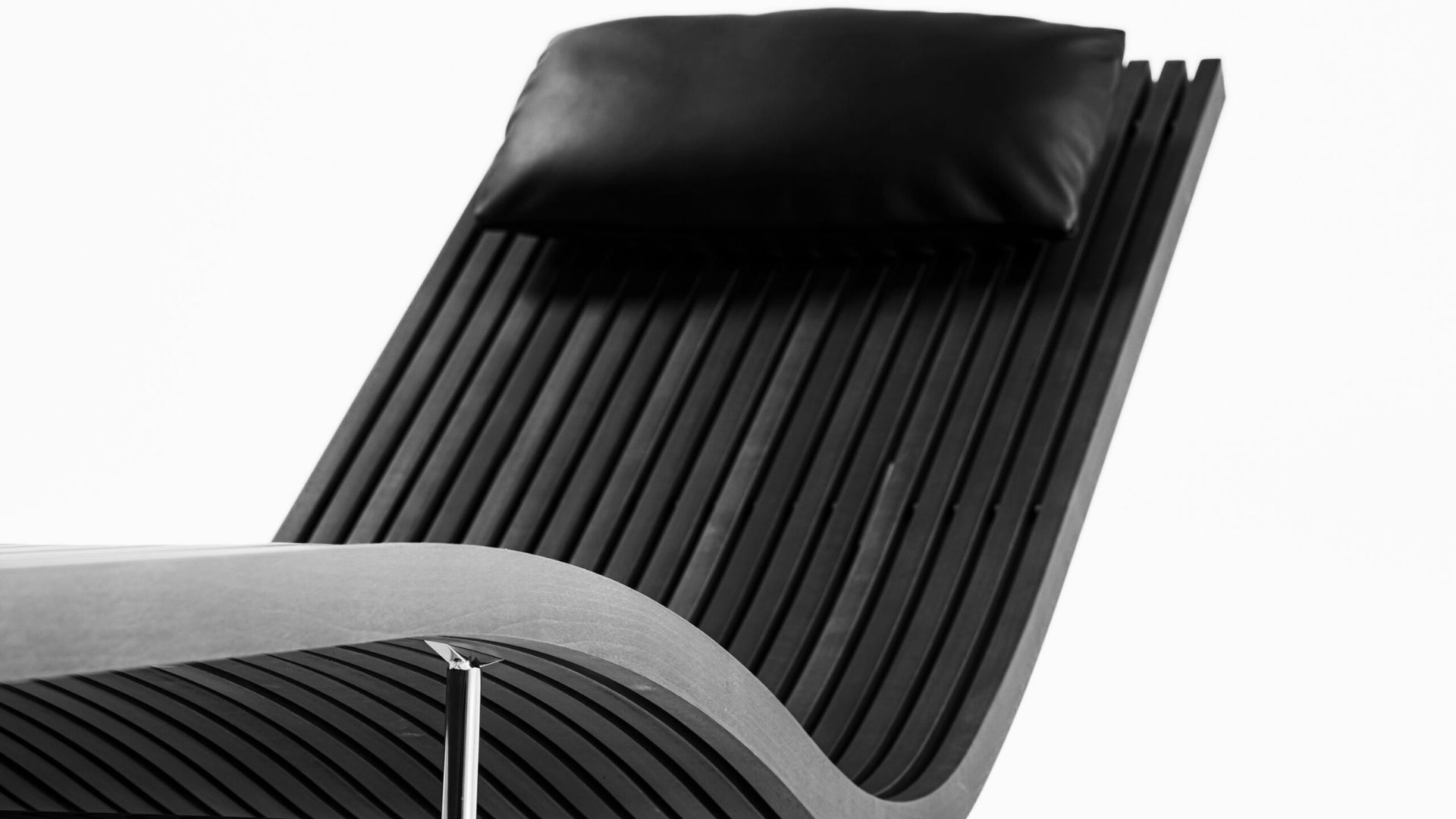
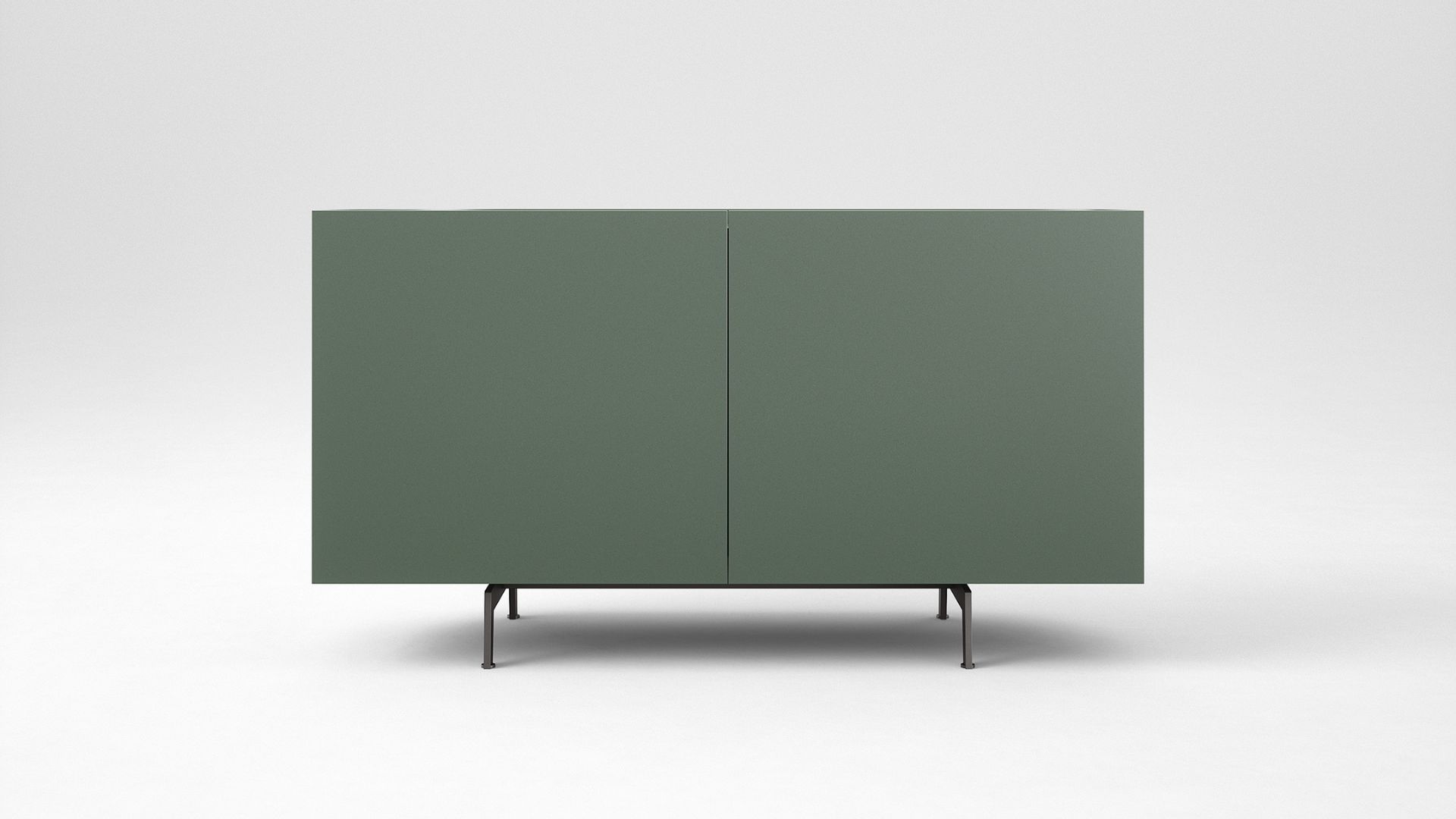
FROMM., in fact, is a contemporary luxury design brand with roots in both Italy—specifically Milan—and Qatar, in Doha. Two geographic anchors that do not mark the beginning and end of a single axis, but rather activate the strengths of each cultural landscape. The result is furniture that tells distinct cultural stories through a global, contemporary design language.
Gallery
Open full width



Open full width
While operating within the luxury sector, FROMM. firmly believes in the democratization of access to design. This guiding principle takes shape through FROMM.Lab, an educational and talent-scouting platform that supports emerging designers in finding their place in the market, with the guidance of leading industry players. A journey that starts with the design and ends with the creation of the final product and its distribution, passing through research, training and mentoring.
Strong ideas, distant cultures, and new narratives are developed collaboratively, giving form to projects that might otherwise remain unrealized due to a lack of structure, guidance, and professional support.
These cornerstones—transnationality, the sharing of know-how, and the democratization of resources—have shaped a brand in which the concept of luxury is expressed through quality, time, thought, and craftsmanship. Values that, by virtue of their universality, transcend cultures and national boundaries. FROMM.’s furniture deeply absorbs diverse stories, translating them into a clear and contemporary aesthetic. Rooted in cultural context yet designed to speak a global language, each piece balances meaning and form, allowing heritage to inform design without constraining it.
We interviewed Alia Rachid to further articulate not only the intrinsic values of FROMM., but also the contribution the brand is making to the contemporary design landscape.
What is FROMM., and how was it founded?
Alia Rachid:
FROMM. is a contemporary luxury design brand rooted between Msheireb, Doha’s innovative central district, and Milan. I founded it to address a clear gap in the design ecosystem: many talented designers have strong ideas but lack the structure, guidance, and professional support needed to turn creativity into refined, contemporary work. FROMM. was created to support that.
FROMM. exists to move design from idea to execution. We work closely with designers and artisans through a design-led, collaborative process, developing contemporary furniture and home accessories that are conceptually strong, technically resolved, and produced to the highest standards of Italian manufacturing excellence—ready for the global market.
A fundamental element of FROMM.’s philosophy is the reinterpretation of cultural heritage through a contemporary lens. What does Qatar’s heritage represent for FROMM. today? Which local values are conveyed through tradition and through the talents you work with? And how are these values translated into design?
Alia Rachid:
Qatar today is a global and forward-looking cultural hub. Through institutions such as M7, Design Doha, Fashion Trust Arabia, and soon Art Basel Qatar, the country has built a dynamic ecosystem that actively supports creative development and cross-cultural dialogue. Being headquartered in M7, in the heart of Msheireb, places FROMM. directly within this ecosystem.
Qatar’s heritage also highlights a core value that is central to FROMM.: hospitality. This aligns naturally with our focus as a brand, as we design furniture for living and dining spaces, and objects for hosting and gifting. Hospitality guides how we think about comfort, proportion, and the experience of bringing people together.
Operating within Qatar and the wider region’s open creative landscape allows us to collaborate with both local and international designers. This diversity is central to our cross-cultural approach: cultural references guide the concept, while a contemporary design language keeps the work clear and global.

How does local know-how engage in dialogue with the international and contemporary design landscape?
Alia Rachid:
At FROMM., local know-how is primarily about cultural perspective. We work with designers from different parts of the world, each bringing their own cultural context, references, and way of understanding form and space. This context becomes the conceptual foundation of a project.
The cultural knowledge is then developed through a design-led process that incorporates international methodologies and Italian manufacturing excellence. The result is a productive exchange where cultural perspectives inform the concept, and global design standards guide its refinement and execution.
Speaking to a global market through a local cultural lens can be a complex linguistic, aesthetic, and design effort. Have you ever feared not being fully understood? And how does FROMM., in your view, bridge what could initially appear to be a cultural gap?
Alia Rachid:
Design should not require explanation to be valid. If an object needs excessive context to be appreciated, it has already failed. Our pieces are conceived as contemporary objects first. Cultural references add depth, not limitation. A detail may carry meaning for those who recognise it, but the object remains universal in form, proportion, and use. This balance allows the work to travel naturally across cultures.
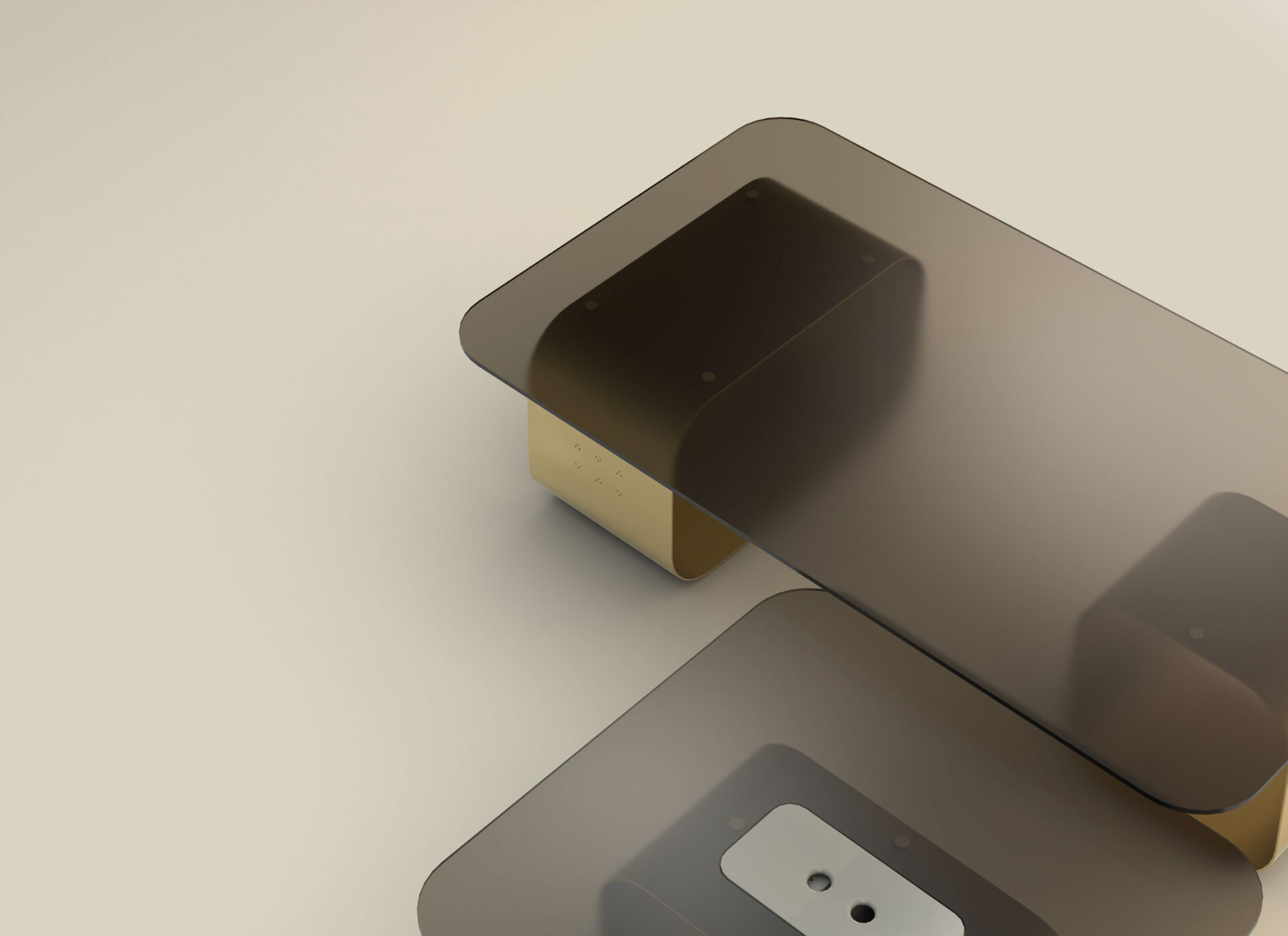
A piece like the Maiz table, for example, carries a detail that is meaningful in this region, but the object itself is still a refined, universal coffee table. The cultural layer adds depth without limiting who can connect with it. That’s how we approach all our work. Because our design language is intentionally contemporary, the cultural dimension adds meaning without limiting who can connect with the piece.

Thus, interculturality is a fundamental pillar of FROMM.’s identity. The brand’s two locations, Msheireb and Milan, act like the two abutments of a bridge connecting Middle Eastern and European cultures. How do these cultures influence one another? And what does each contribute to the other in your design processes?
Alia Rachid:
FROMM. was founded with the intention of working across two complementary ecosystems: the Middle East’s fast-rising creative landscape and Italy’s established design and manufacturing culture. This duality has shaped the brand from the beginning.
Ideas are not defined by geography but by the environments in which they are refined. Milan contributes discipline, technical depth, and executional excellence. Msheireb places us within a region investing heavily in creativity and new design narratives.
Each location offers a distinct strength. Working between them gives us a balanced process, energised by the momentum of this region and grounded in the rigour and craftsmanship of Italian design.
Shurouq Collection was the first collection launched by FROMM. Inspired by Qatar – its sand dunes and architectural references such as the pigeon towers – it was designed locally and produced in Italy, becoming an emblematic example of cultural cross-pollination. Could you tell us more about this collection?
Alia Rachid:
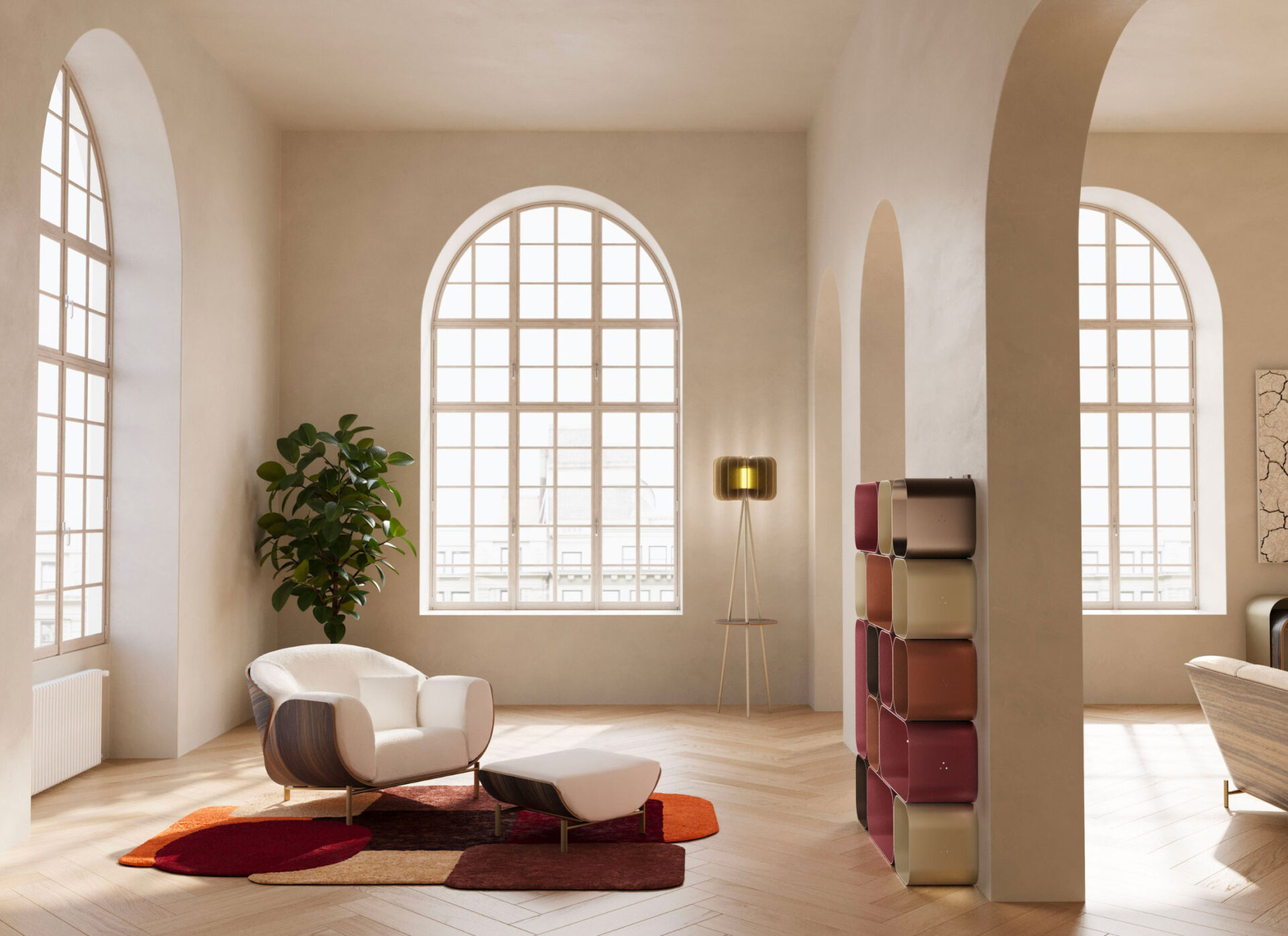
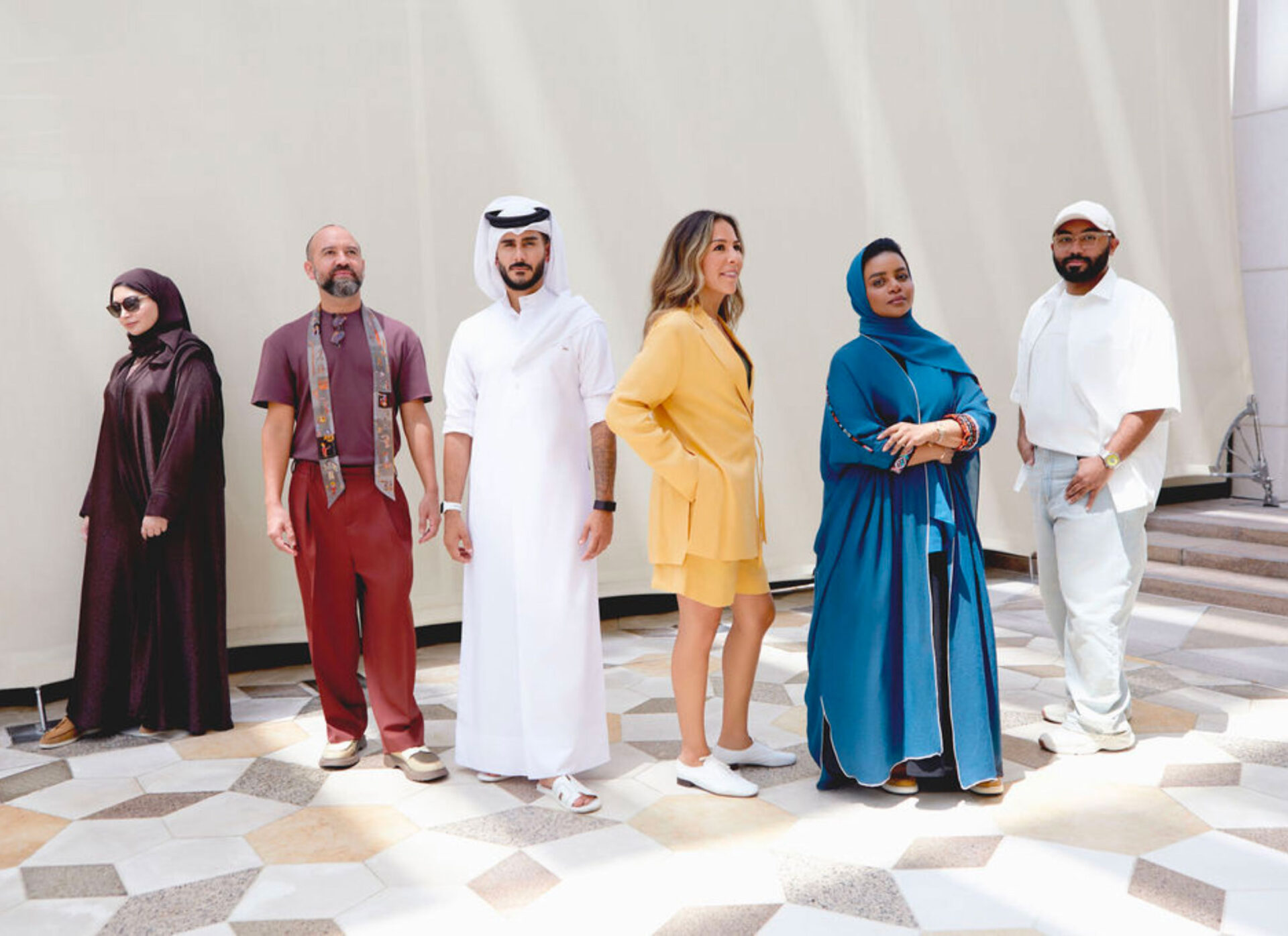
Shurouq, meaning “dawn”, reflected the beginning of FROMM. Developed with four Qatari designers, it drew on architectural and natural forms of Qatar: curved silhouettes referencing dunes, bouclé textures echoing sand grains, a palette inspired by desert dawn, and a subtle three-dot metal detail derived from traditional pigeon towers. These elements informed the collection without being used literally, allowing the expression to remain contemporary.The collection was designed in Doha and manufactured in Italy, setting a standard we continue to follow: culturally informed concepts realised through world-class manufacturing.
FROMM.Lab is the brand’s incubator of excellence, but above all, an initiative that gives voice, space, and opportunities to emerging talents through workshops, mentorship programs, and co-design processes, often connecting them with leading industry players and the global market. Why is this work of mediation and support so important?
Alia Rachid:
Empowering designers is central to our mission, and FROMM.Lab was conceived as an educational and talent-scouting platform that supports the different stages of a design journey. Many emerging designers have strong ideas and cultural narratives but limited access to professional feedback, structured processes, and industry exposure. The Lab responds to this gap by offering a space where early-stage ideas can be tested and refined through dialogue with mentors, peers, and the realities of the design industry.
For this reason, during the latest Milan Design Week, we announced the first international design competition by FROMM.Lab. The initiative calls on designers to reinterpret Arab heritage through a contemporary lens and received a strong response from a wide international audience. The finalists will be guided through a mentorship process led by industry leaders like Giulio Cappellini, Joseph Grima, and Aline Asmar d’Amman, together with a jury of esteemed international leaders whose expertise helps elevate the platform and inspire the next generation.
Through workshops, mentorship, design trips, and co-design processes, FROMM.Lab provides practical guidance that helps designers refine their concepts, navigate industry standards, and develop confident, informed approaches to their work.
By combining mentorship, production support, and access to the global design landscape, the Lab contributes to a stronger, more connected ecosystem and helps emerging designers move forward with confidence and clarity.
Design, therefore, is not only about creating the next collectible vase or modular sofa. It also means giving voice to cultures at risk of fading, and to emerging talents who (it must be acknowledged) often struggle to be recognised in highly competitive environments – sometimes simply due to a lack of resources. Do you agree? And do you think this is part of FROMM.’s contribution to the design sector?
Alia Rachid:
Yes. Design shapes culture as much as it reflects it. It has the power to bring forward ways of living, hosting, and thinking that are often missing from dominant design narratives.
At FROMM. we see heritage in a broad sense. It can come from landscape, architecture, daily rituals, or historical references. When designers draw from these cues and reinterpret them through a contemporary lens, the result is what we call heritage innovation. It allows design to remain rooted in context while speaking to the present. Our role is to create the conditions for this work to exist at a high level, conceptually, technically, and commercially. That is how diverse cultural perspectives earn their place in the global design conversation.