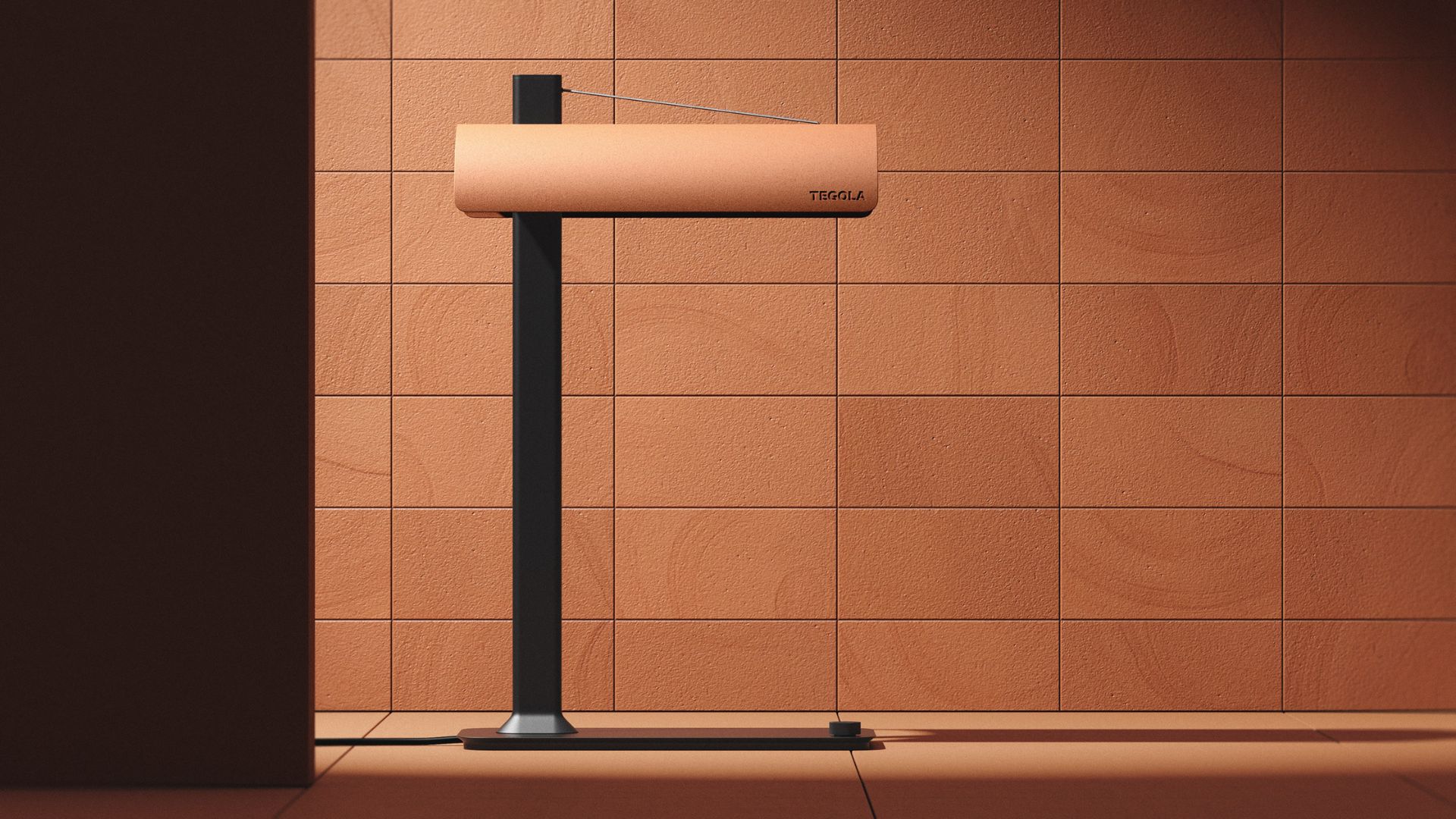
HYLEtech: fusing material, structure, and light in a single solution
What if lighting solutions were fully integrated into surfaces, instead of being an accessory to apply to them? Luce5’s new project opens up new horizons for professionals to play with in product and interior design.
There’s a moment in high-end design projects when the architect, interior designer, and lighting consultant will realise they’re sometimes working against each other. The architect wants clean surfaces, the designer wants the furniture to speak, and the lighting specialist needs somewhere to put fixtures that will inevitably interrupt both visions. However, for the past seven years, a Tuscan company called Luce5 has been working on an answer to this conflict.
The result is HYLEtech, a technology so fundamentally different from conventional approaches that it required creating an entirely new category. With the addition of Luce5’s Nex-S Light, it’s not just a lighting system nor a building material, but both, and the implications can transform how the luxury design world thinks about integrating illumination into form.
Gallery
Open full width
Open full width
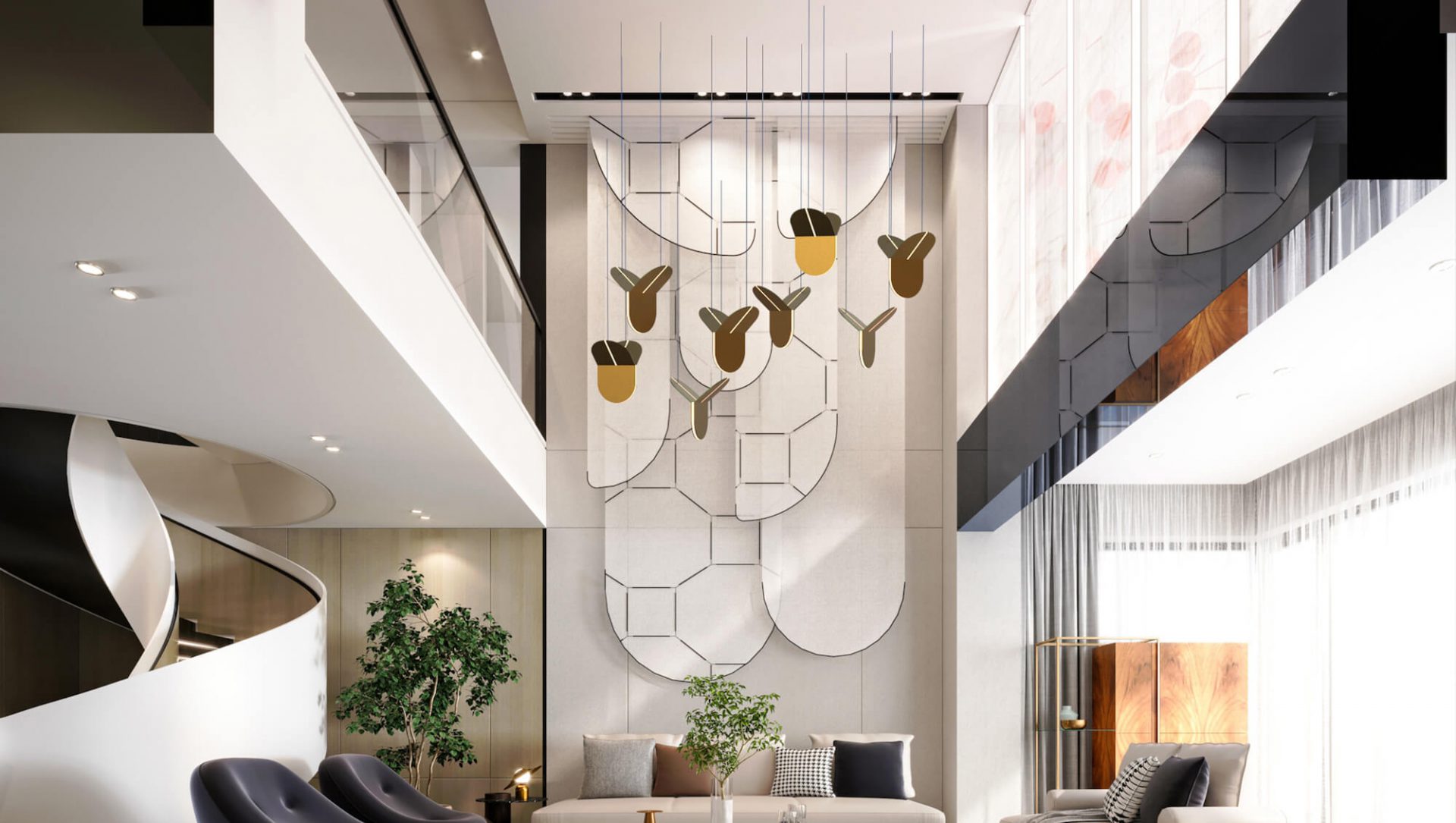
The name HYLEtech draws from the philosophical concept of hyle, a primordial matter, the fundamental substance from which all things emerge. Hyle becomes a metaphor for what the technology does: transforming light into matter and vice versa, allowing it to become an intrinsic property of a material rather than a separate object acting on it. Contemporary architectural trends increasingly favour invisible light sources that allow design elements to take centre stage, and HYLEtech addresses this demand by eliminating this conventional separation.
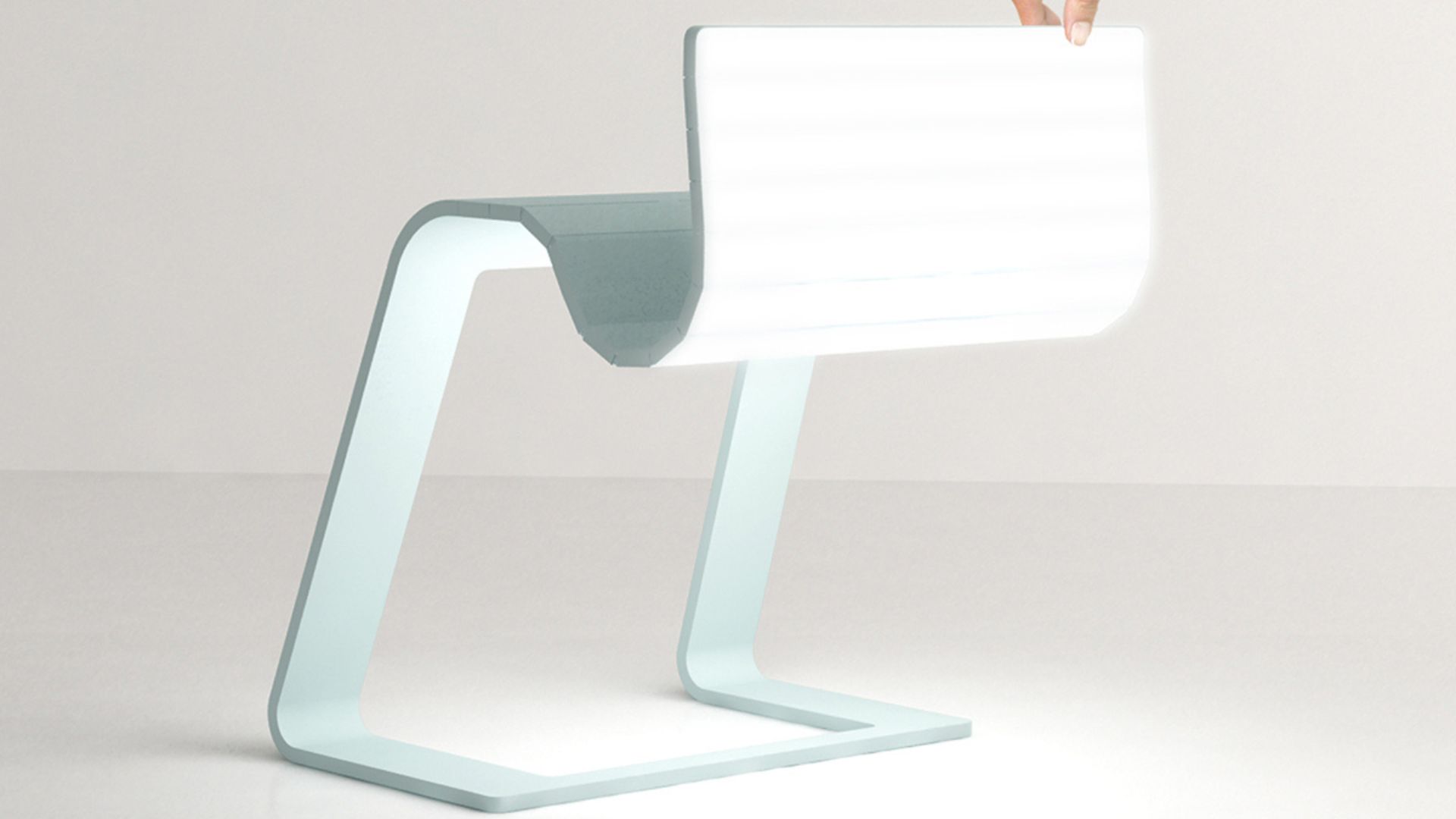
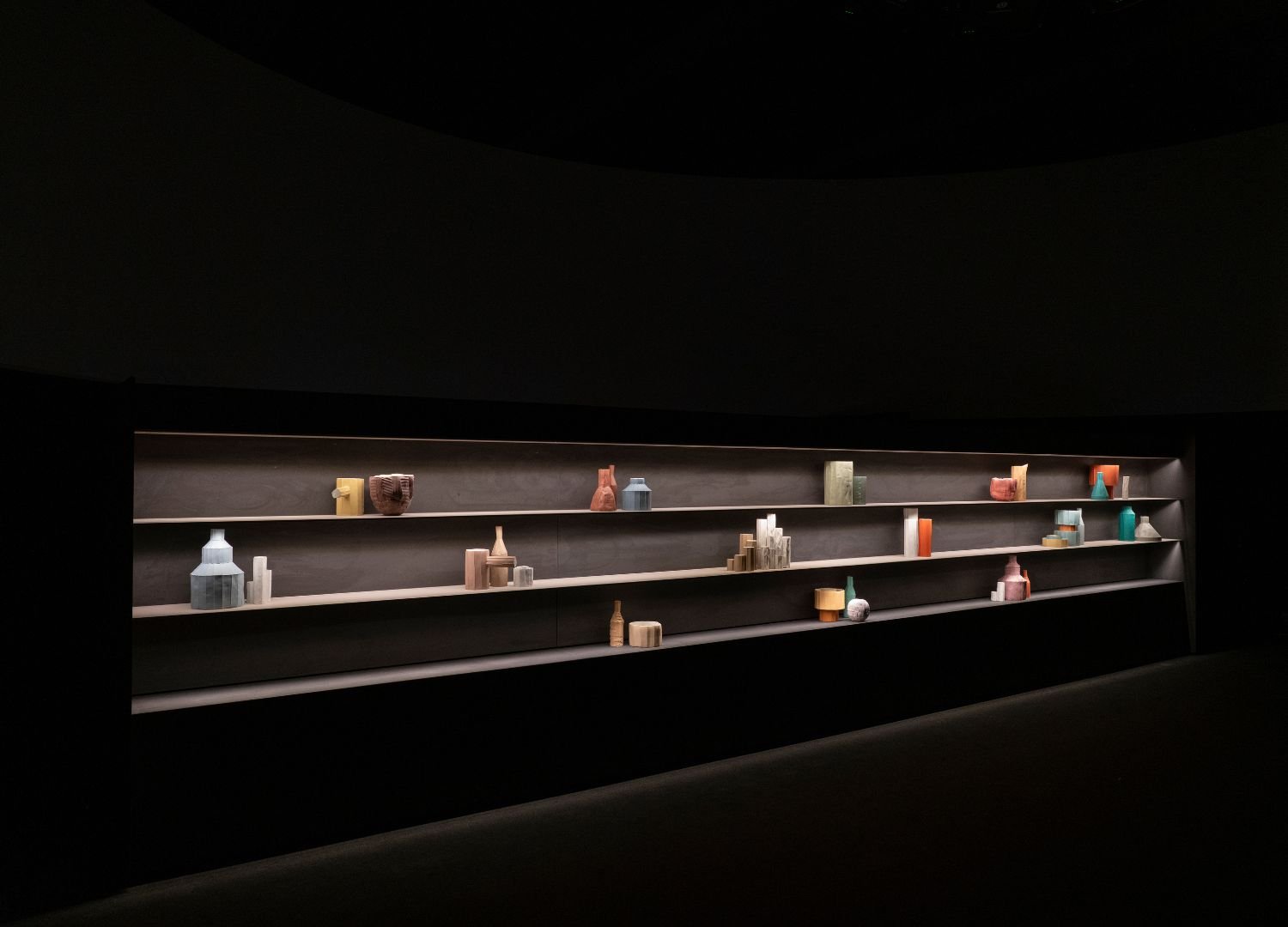
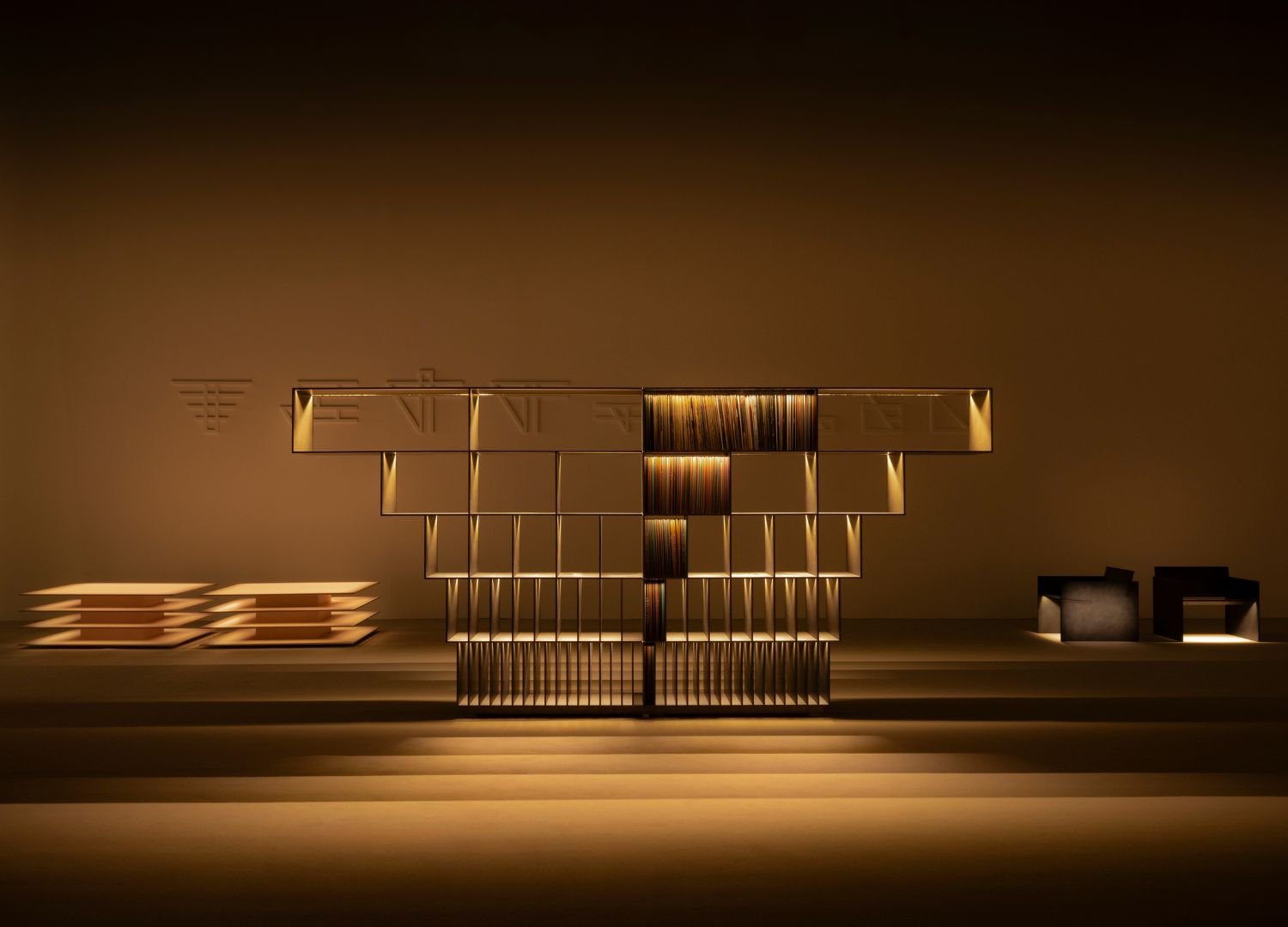
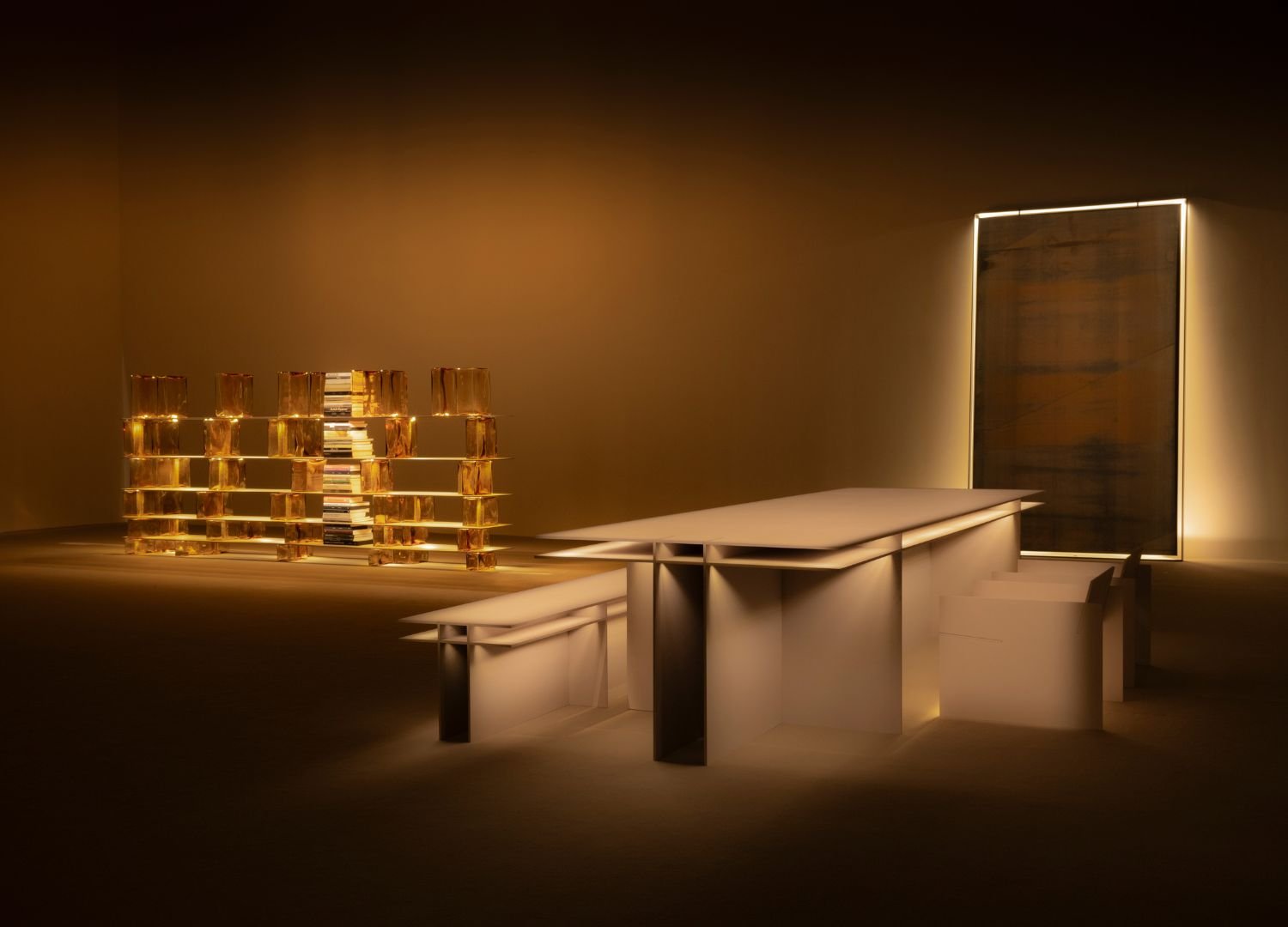
HYLEtech operates in two complementary modes, each with different possibilities. When paired with Luce5’s proprietary Nex-S Light, its panels become self-illuminating surfaces. This technology was showcased during Milan Design Week in “Light in Matter. Composizioni” by Emanuel Gargano, which showed furniture objects like tables, chairs, and libraries made out of these light panels. Their illumination lit up not only the objects but also their surroundings in a soft, diffused atmosphere, making the exhibition a space for introspection.
The Nex-S Light module is an innovation in itself, a plug-and-play, invisible LED system with black optics patented by Luce5. The system features 6 cm self-configuring modules that automatically synchronise when inserted, and offer adjustable dimming controls and beam angles, adapted to specific design needs. There are no visible polycarbonate or light sources, making it completely glare-free, and it runs on 24 V power through multipole tracks integrated into HYLEtech panels.
The HYLEtech+Nex-S Light system serves many environments, such as retailers seeking experiential design and custom lighting to highlight products properly, hospitality projects demanding atmospheric control, or art installations. The automatic synchronisation also provides a significant advantage in maintenance, which will be quick and easy.
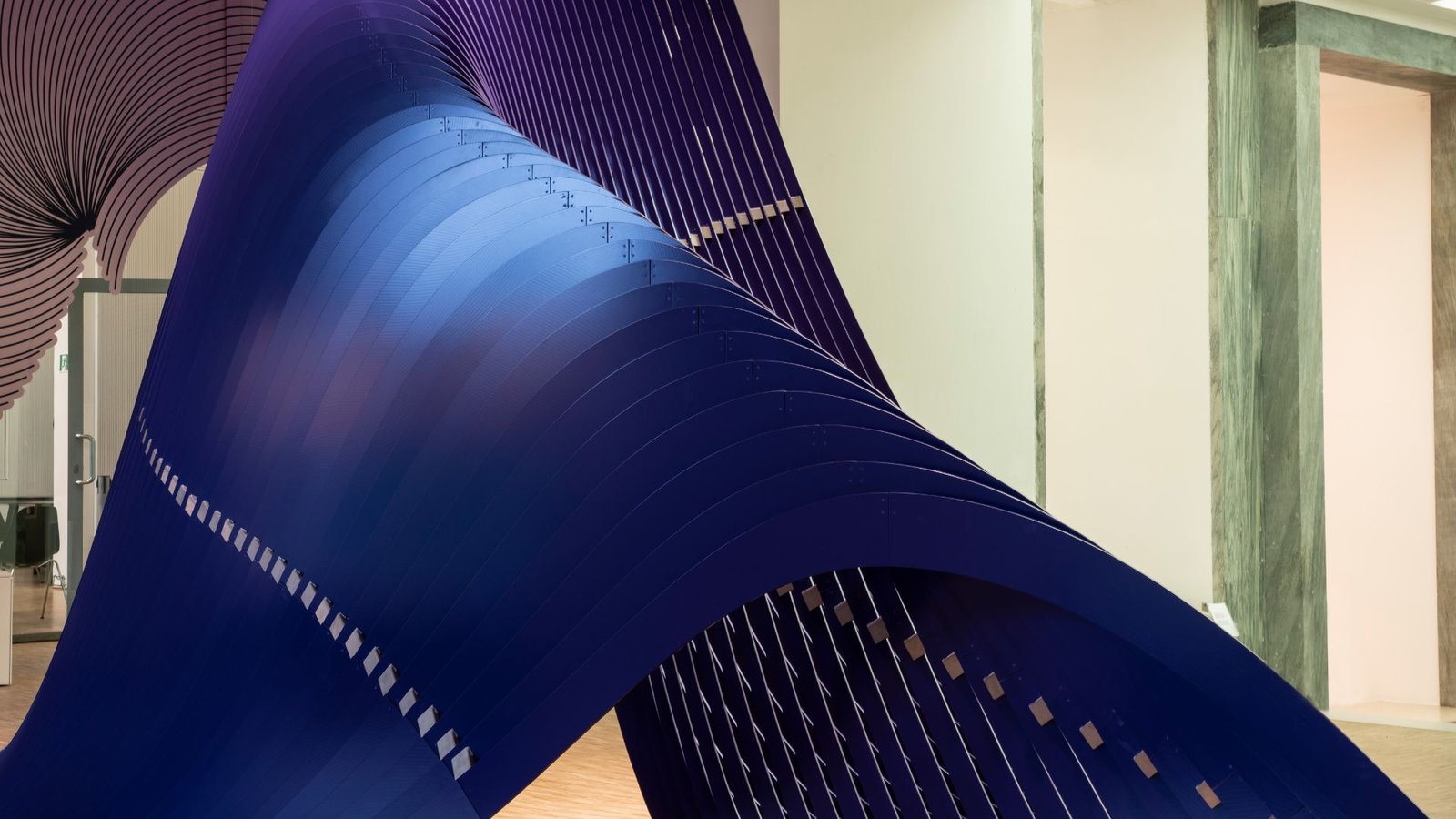
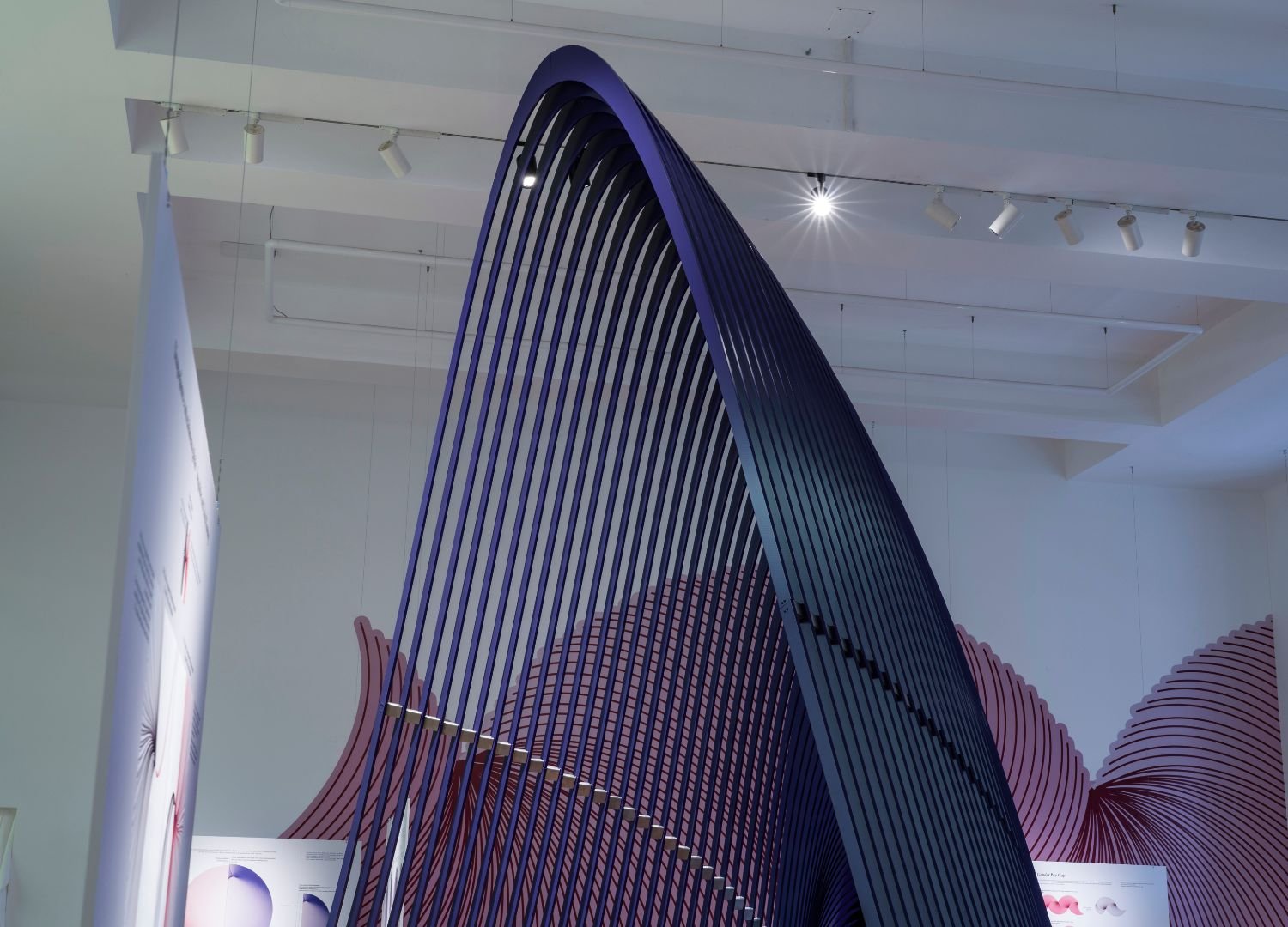
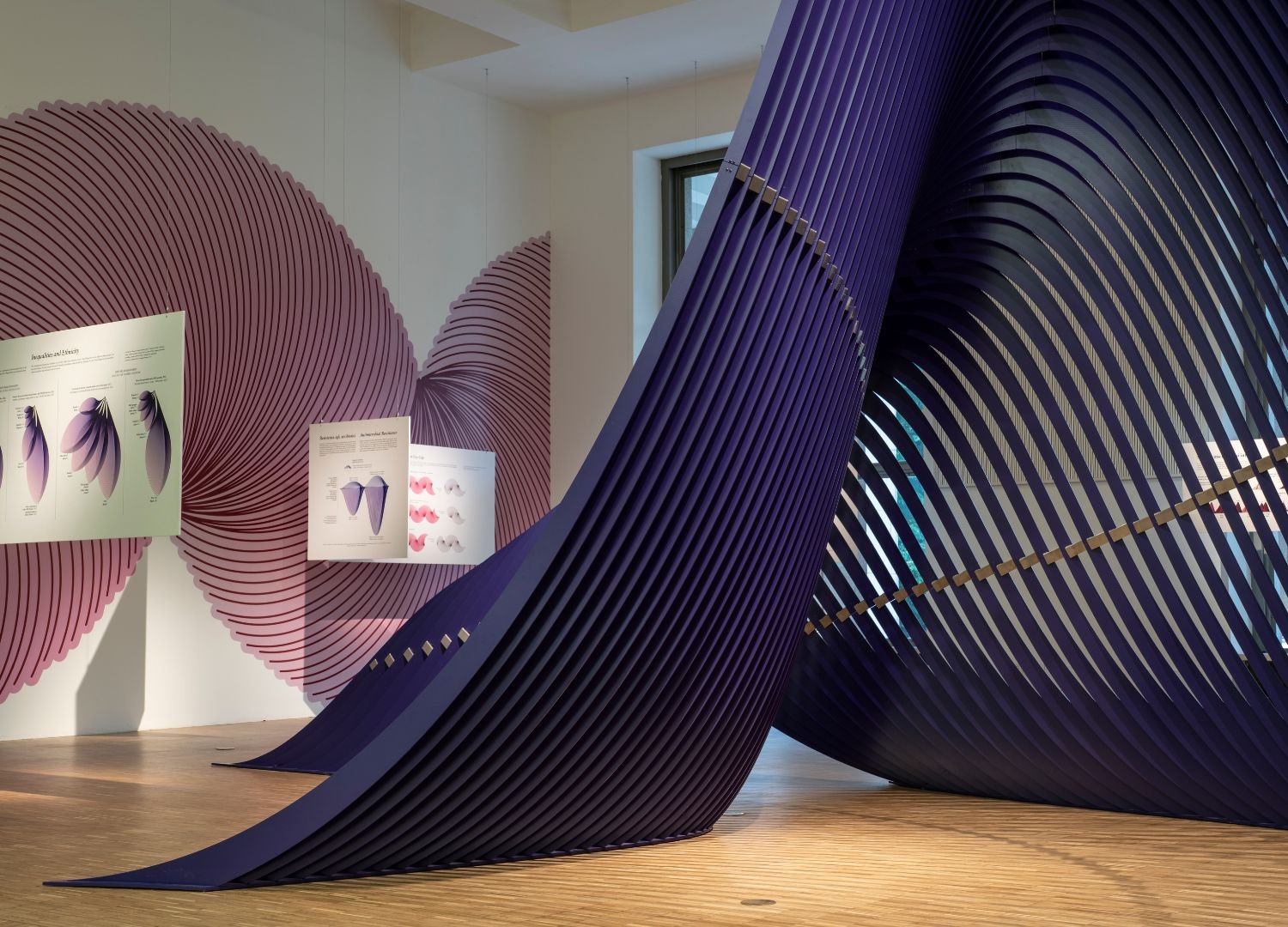
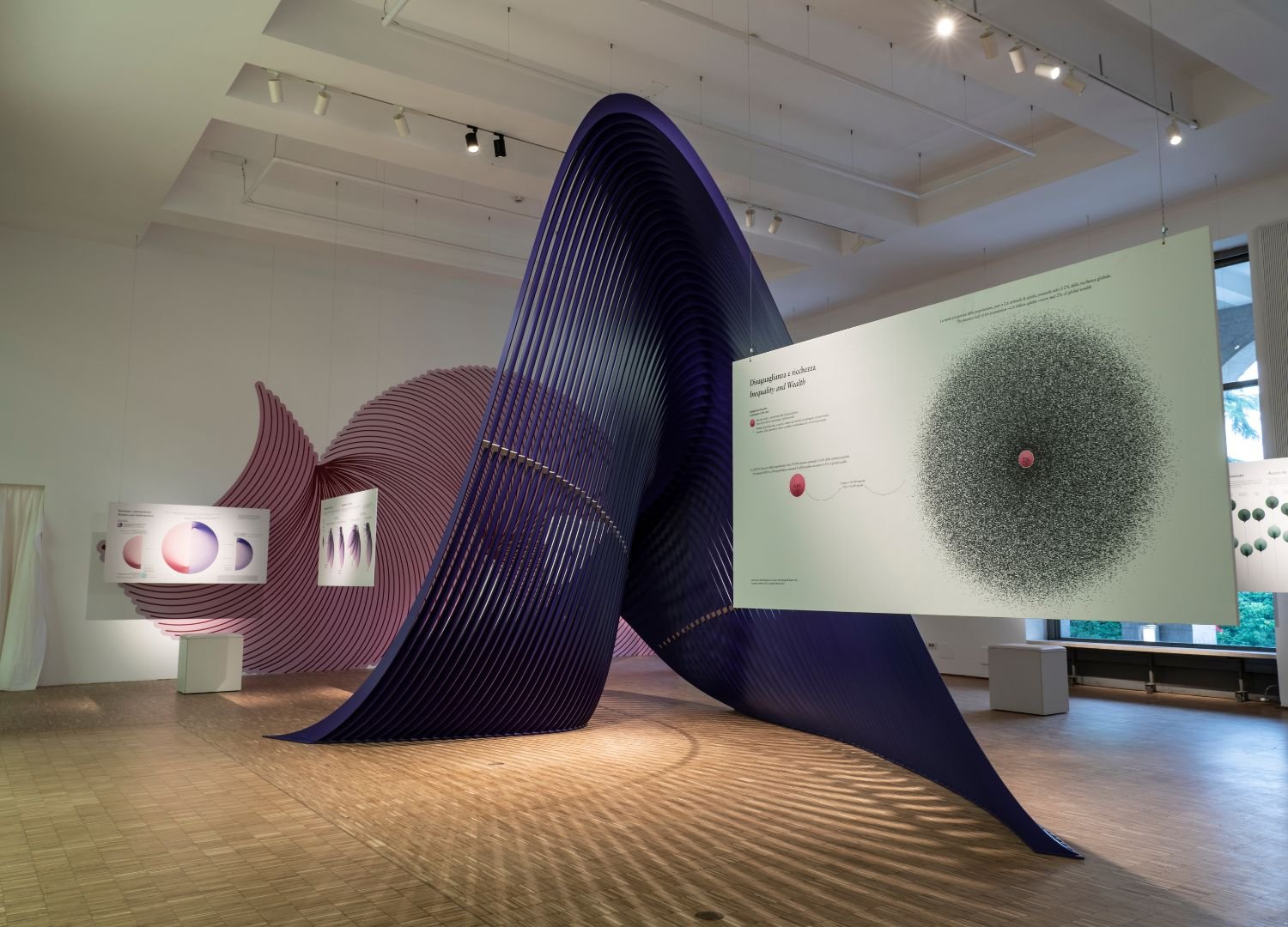
Another possibility emerged at the 24th International Exhibition “Inequalities” at Triennale Milano, in an installation called “Collina” by artists Federica Fragapane and Midori Hasuike. The installation was a self-supporting arch structure designed for data visualisation, made of 57 individual layers, spanning seven metres total in width. These layers are themselves HYLEtech’s material, aluminium panels just 1 cm thick. In this case, no light module was used, showing instead the simple strength and beauty of the brand’s material.
This installation shows the advantages of HYLEtech’s panels in comparison to wooden ones. While wood-based materials require 3 cm of thickness for equivalent strength, HYLEtech achieves it in 1. Maximum panel sizes reach 9 metres by 2 metres in continuous runs, compared to wood’s usual 4 by 2 metres. Weight per square metre also drops from 22 kilograms for wood to just 10, translating to lower transport emissions. Finally, every panel can be recycled, as aluminium is a material that can be recycled infinitely without material degradation.
Luce5 was born in 1991 in Montevarchi, a small town in Tuscany, Italy, from the minds of five electricians. Today, it is a global company that works on more than 700 projects per year, with hubs in London, New York, Hong Kong and Tokyo, working on the design and production of bespoke lighting solutions, and has never given up on its artisanality during this growth process. The company operates in four key areas, covering hospitality, retail, yachting, and art (galleries, museums, cultural institutions).
Artisanality is in fact a key area for the company to invest in, and they have created the Lightmakers Academy in order to keep pursuing it. The academy aims to keep the brand’s savoir-faire alive through theoretical and practical programs for technicians and designers. As many artisanal traditions are slowly disappearing, investing in a similar educational program is fundamental for their survival, especially in a country like Italy, which has always been recognised for its high-quality craftsmanship.
Another interesting department at Luce5 is InOpera, which stands behind creative projects like the one designed by Emanuel Gargano. InOpera is an internal creative hub where the company experiments with its products and possible new applications for them, cultivating relationships with designers and architects. This model, maintaining a space dedicated to exploration rather than just commercialisation, reflects the entire company’s investment philosophy. Luce5 allocates 10% of its revenue to research and development, a commitment that has sustained HYLEtech’s seven year development process.
HYLEtech’s development parallels broader shifts in how the design world thinks about materials, form, and integration, as designers increasingly expect comprehensive solutions to enter the market. Being both a material, a module, and a lighting solution, the product operates in a hybrid sector that opens up new possibilities for designers and architects, creating clean lines and uncluttered aesthetics particularly suited for modern and minimalist interiors.
Luce5‘s project doesn’t just solve technical problems like the glare issue; it expands what is possible in design language. When a material can be both a structure and a light source simultaneously, traditional distinctions become less relevant and allow professionals to be more fluid in the way they work, opening up new realms for both technicalities and aesthetics.