Ideas for Business – Call #4: Meet the winning projects
Building on the success of previous editions, Ideas for Business #4 confirms the strength of the format, attracting hundreds of submissions worldwide and proving how a focused, jury-led call can turn an everyday object like the coat rack into a meaningful design statement.
At its 4th edition, Ideas for Business confirms itself as a real way to build concrete opportunities. The open call, conceived as a system rather than a showcase, enables young designers to enter a global competition structured around a jury-led selection process that connects emerging designers with real industrial and editorial visibility. For this edition, the focus shifted to one often overlooked domestic object: the coat rack.
The coat rack is one of the most telling objects in the history of interiors. From simple ancient hooks to iconic modern design pieces, its evolution mirrors changes in domestic habits, social codes, materials, and technologies. What began as a purely functional solution has gradually become a marker of style, making it an ideal testing ground to question how design operates today, beyond icons and luxury narratives.
The projects awarded reflect this perspective clearly. Rather than proposing formal exercises or stylistic gestures, the selected designers chose to rethink the coat rack as an everyday system – responsive to contemporary living, shifting domestic behaviors, and new expectations of flexibility, affordability, and meaning. The result is a collection of proposals that treat design as a project embedded in real life, not as an isolated aesthetic statement.
Gallery
Open full width
Open full width
Building on the success of previous editions, Ideas for Business #4 once again attracted hundreds of submissions from around the world, confirming the strength and, overall, the credibility of the format. The selection was overseen by a jury composed of established designers and professionals – including Mario Alessiani, Deniz Aktay, Raffaella Mangiarotti, Rodrigo Benner, Valentina Lonati, Marco Martin, and Florian Seidl – ensuring a culturally grounded and rigorous evaluation process. Like the previous edition, a €1,000 cash prize along with dedicated editorial visibility was awarded to the Absolute Winner.
Behind the call is a precise vision. As Patrick Abbattista, Founder & CEO of DesignWanted, explains, Ideas for Business was born out of years of working at the intersection of communication, design, and industry, and to connect young designers all over the world through the great net of the web. A recurring issue kept emerging: young designers, especially those outside established networks, struggled to access companies, while companies often lacked structured ways to engage with emerging talent. The Absolute Winner of the 3rd call, Estudio Gris, in fact, is an emerging Colombian studio from Medellin. So, the call was created to turn this informal mediation into a real, accessible system – capable of connecting global creativity with brands willing to listen.
“This model”, said Patrick, “benefits both sides: designers gain a concrete opportunity to reach companies they would otherwise never encounter, and companies, in turn, gain access to a wide range of original ideas shaped by different cultural backgrounds, while reducing risk through a curated, jury-based selection. The web magazine, then, acts as a strategic mediator, ensuring both design credibility and communication value – positioning brands as attentive, culturally engaged, and open to new generations.”
And after four editions, the results are tangible. Each call received close to 200 submissions, and the introduction of even a modest budget has significantly raised the quality of projects. More importantly, what emerges is a shared approach to design: not spectacle, not excess, but clarity, function, and relevance. Ordinary objects become meaningful again, precisely because they are reconsidered in relation to how we live today. The final idea is not to proclaim a single winning style, but to confirm something more substantial: that design, when stripped of rhetoric, still finds its strongest ground in the everyday.
Now, it’s time to discover the projects selected as winners of this call.
IDEAS FOR BUSINESS CALL #4: WINNERS
Strap by Vladislav Ganzen (Absolute Winner)
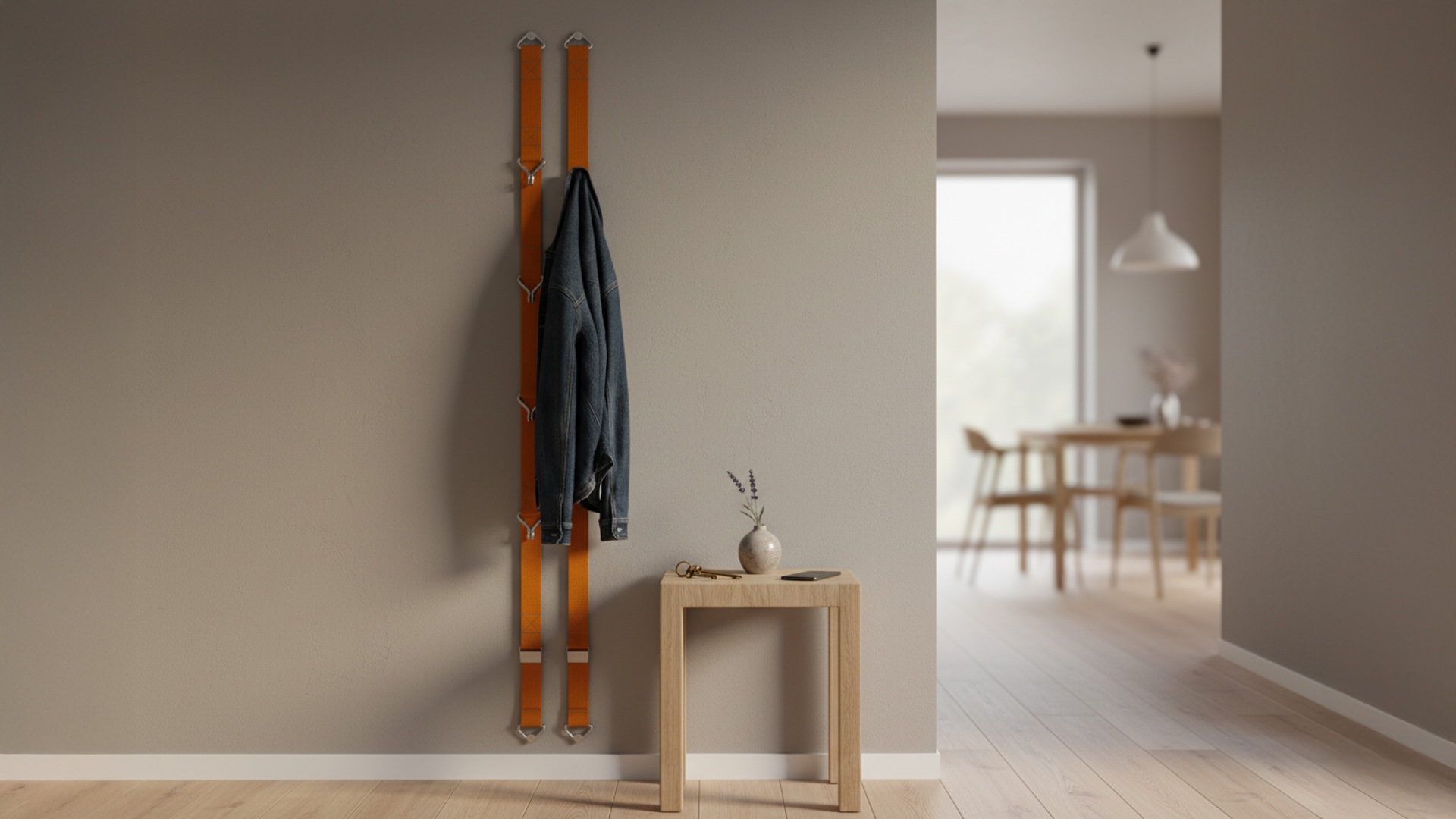
Strap – the Absolute Winner of this call – originates from the everyday practice of its designer, Vladislav Ganzen, who works as a technician in a prototyping and woodworking lab. Constantly dealing with fixing, securing, and tensioning materials, Ganzen became familiar with ratchet straps – standard tools in logistics and transport, yet almost entirely absent from domestic spaces. This gap sparked a simple but radical question: why not bring an object already designed for efficiency into the home?
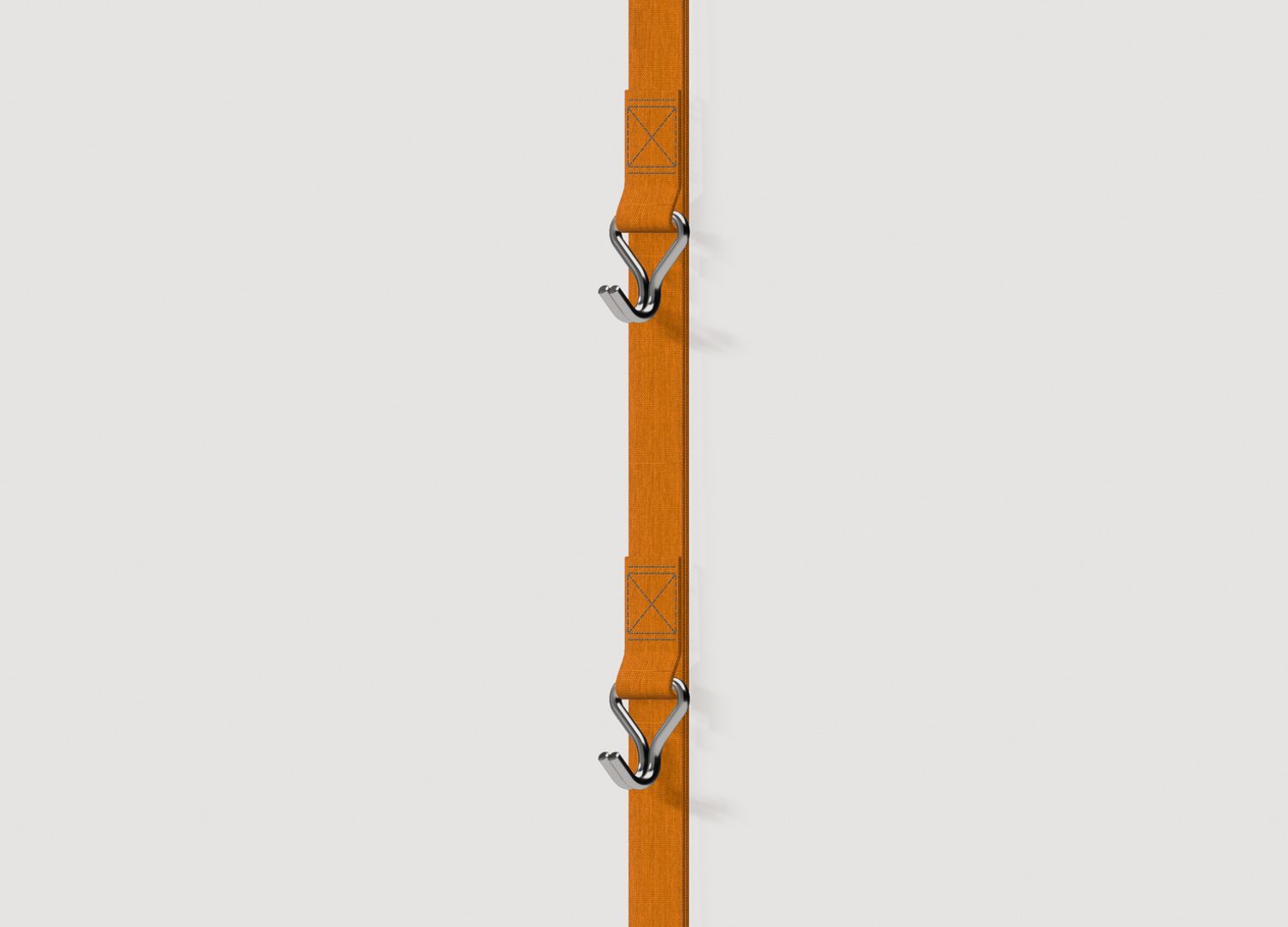
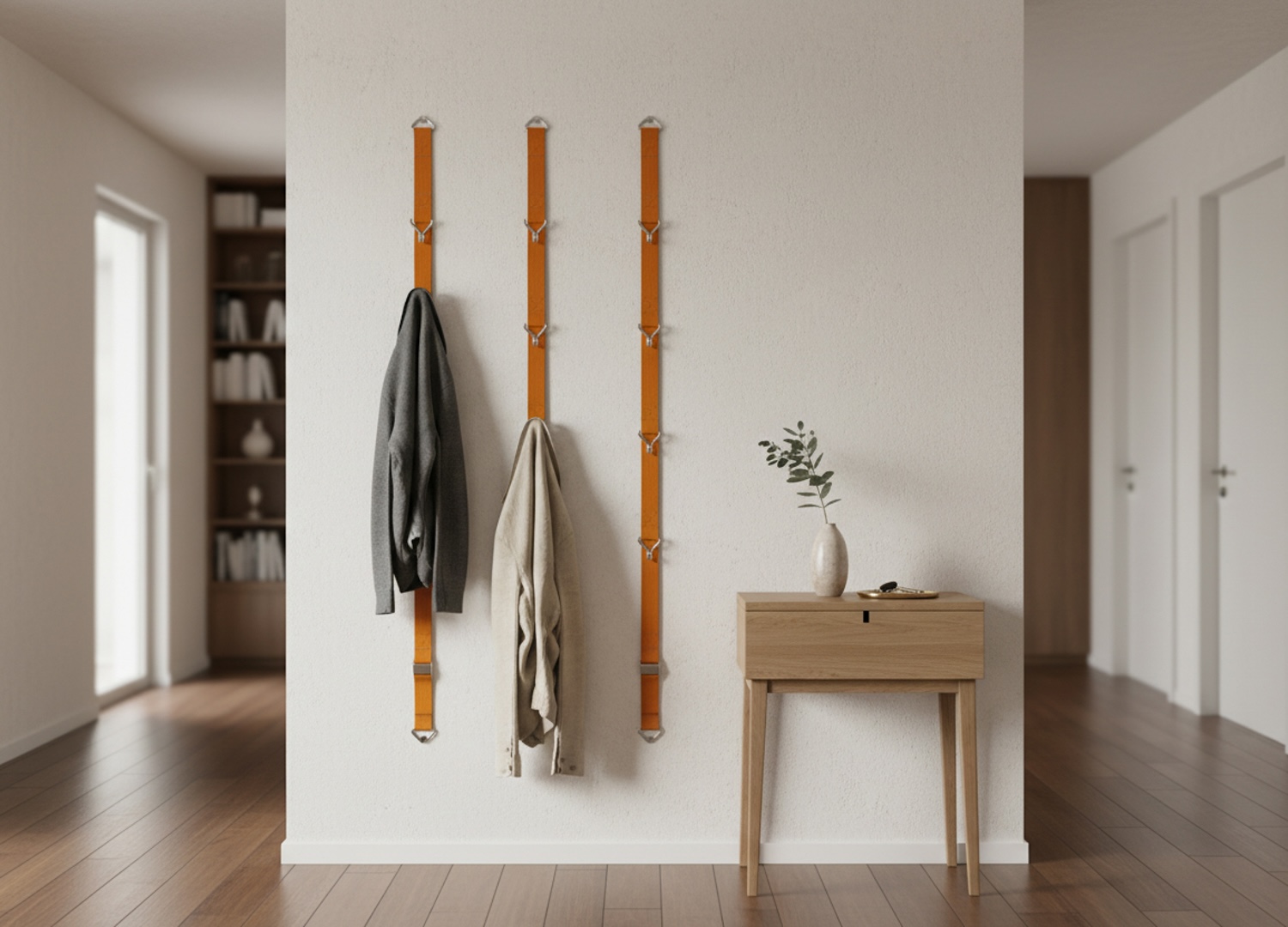
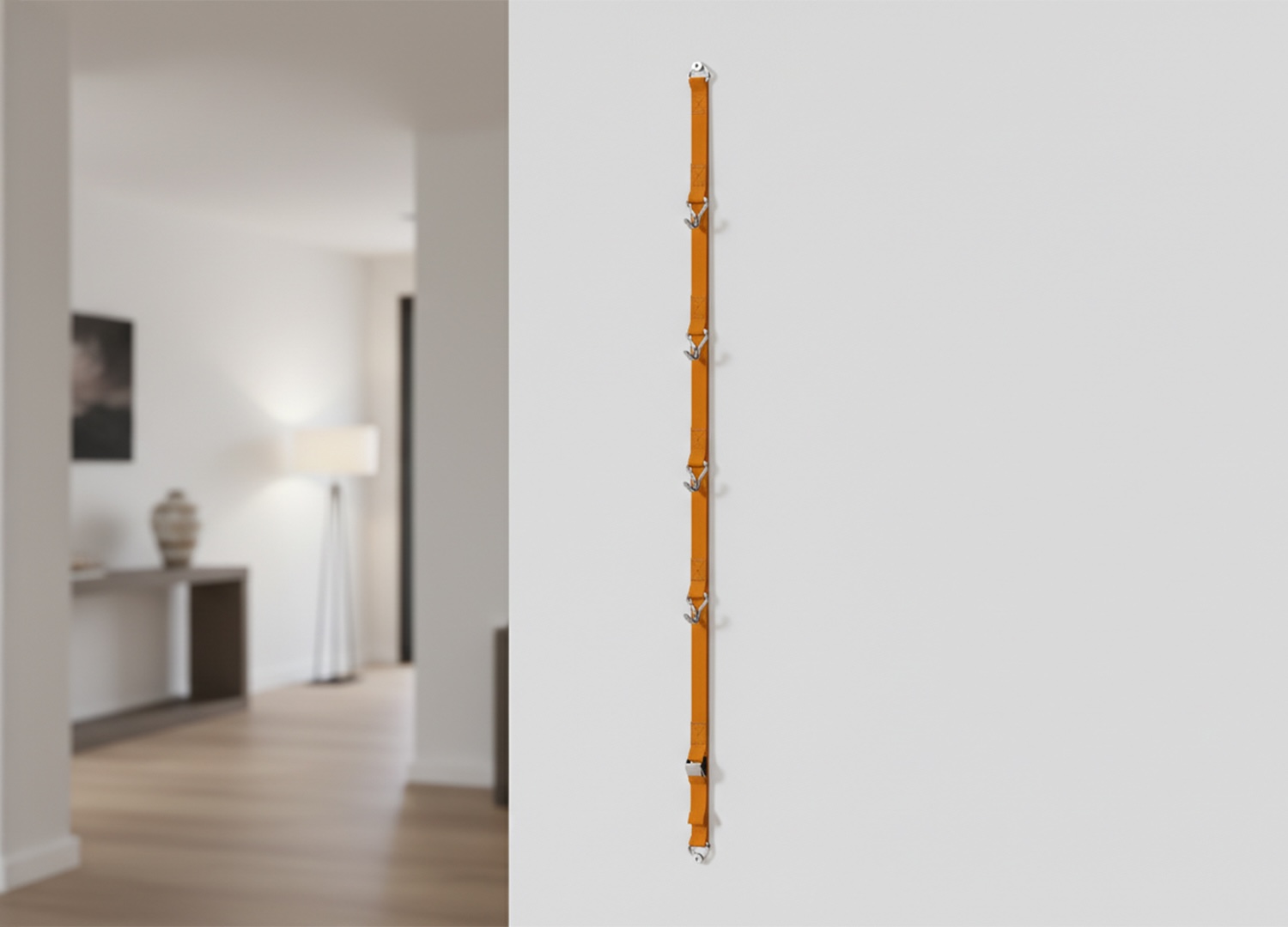
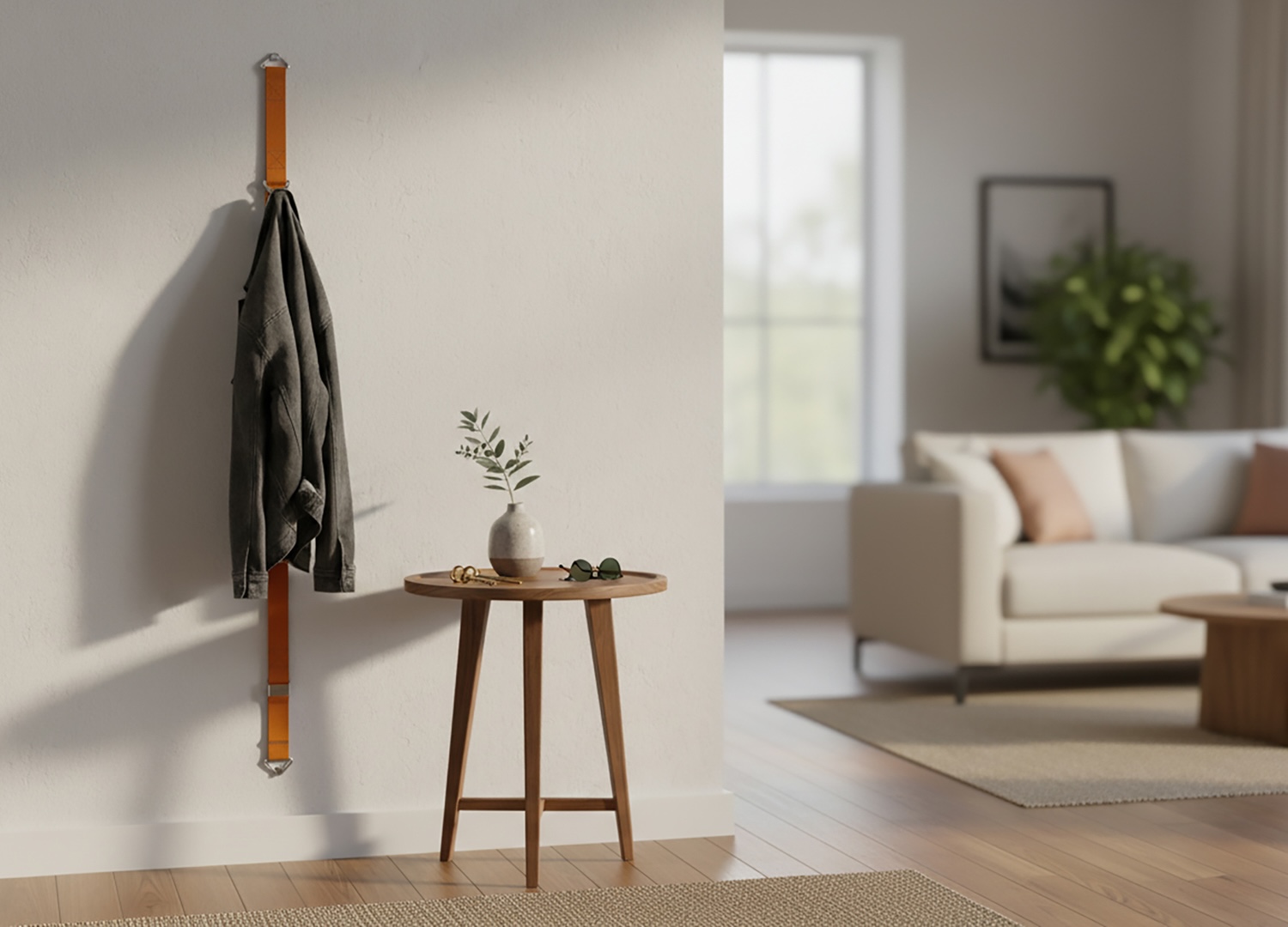
Ratchet straps already contain everything needed for multiple uses – hooks, loops, and a tensioning system – making them almost completely ready-made. Strap translates this industrial logic into a modular wall-mounted coat rack. Each unit consists of an orange nylon webbing strap, metal hooks for hanging objects, a self-locking buckle to adjust tension, and triangular metal rings that connect the system to the wall. These rings hook onto wall-mounted pins or screws, fixing the strap at the top and bottom while keeping it under tension.
The system is modular: if one strap is not enough, multiple units can be mounted side by side to increase hanging capacity. There is no added decoration – the object is the decoration. Direct, legible, and slightly unexpected, Strap stands out for its clarity and immediacy, qualities that led it to win the overall call.
VELTO by Brent De Maulenaere
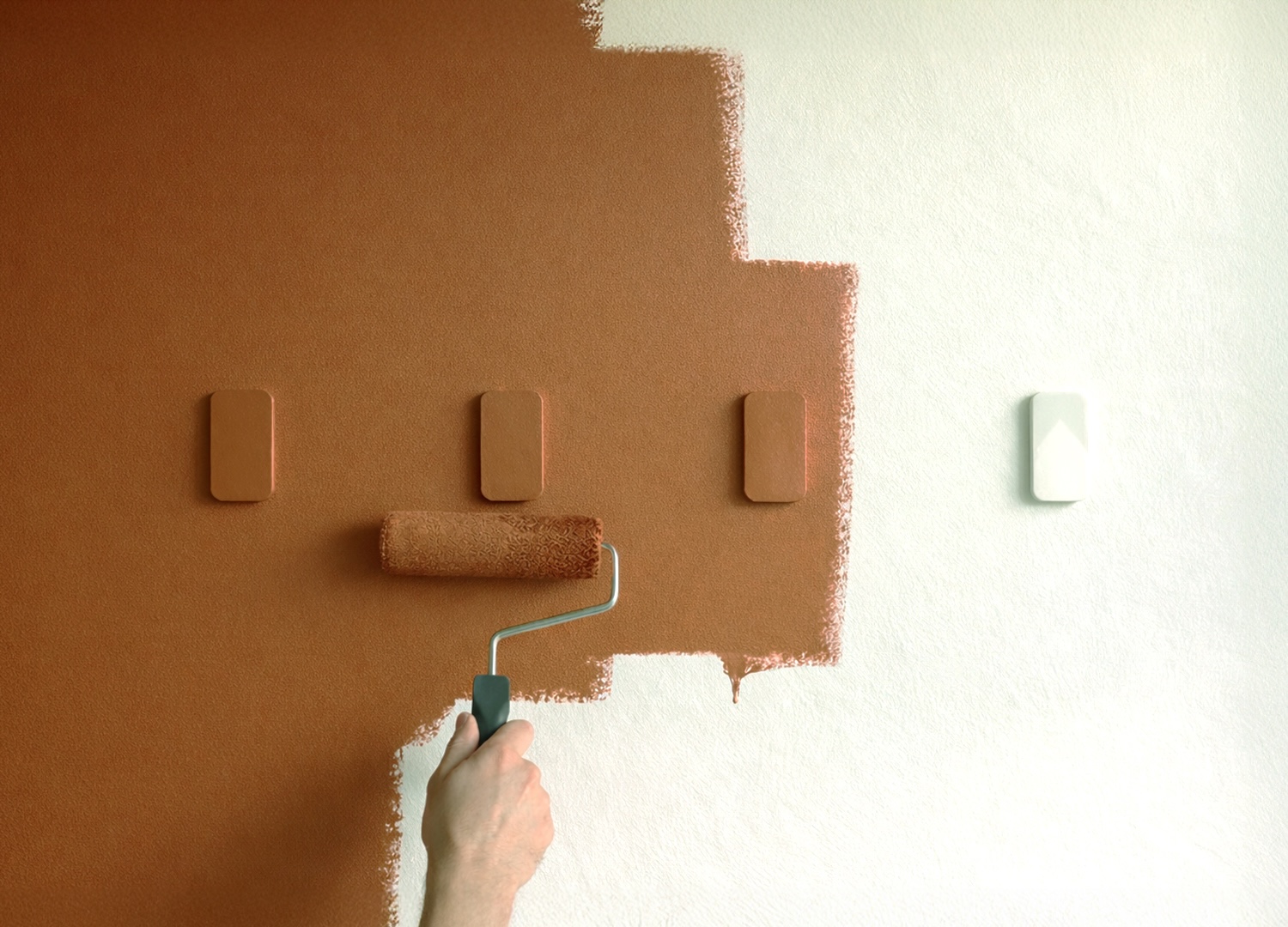
Why design something that is meant to be covered? This question defines the philosophy behind VELTO, the coat rack designed by Belgian designer Brent De Meulenaere. Instead of resisting this condition, the project embraces it. VELTO does not seek attention – it accepts its fate and turns it into a design statement.
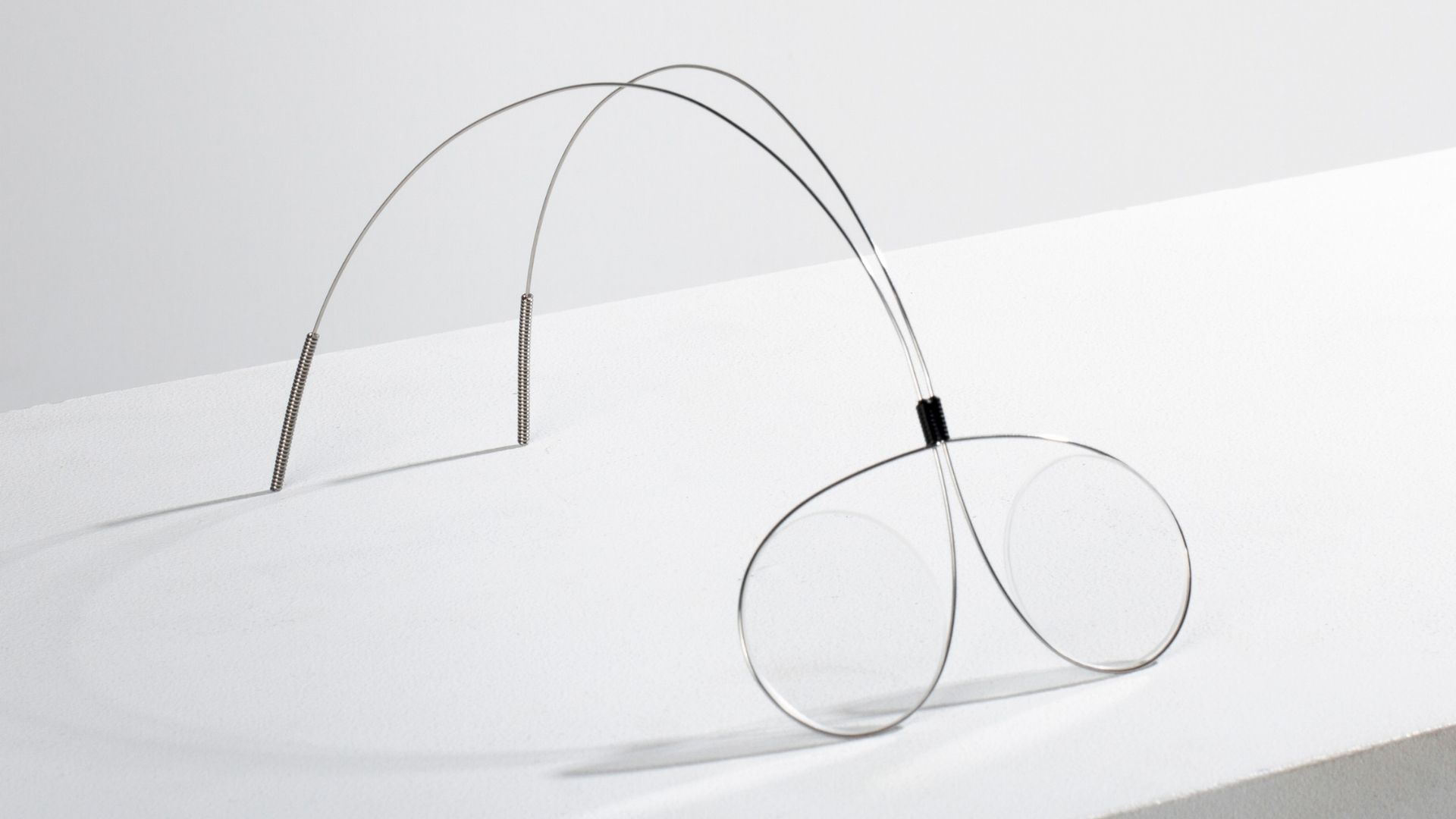
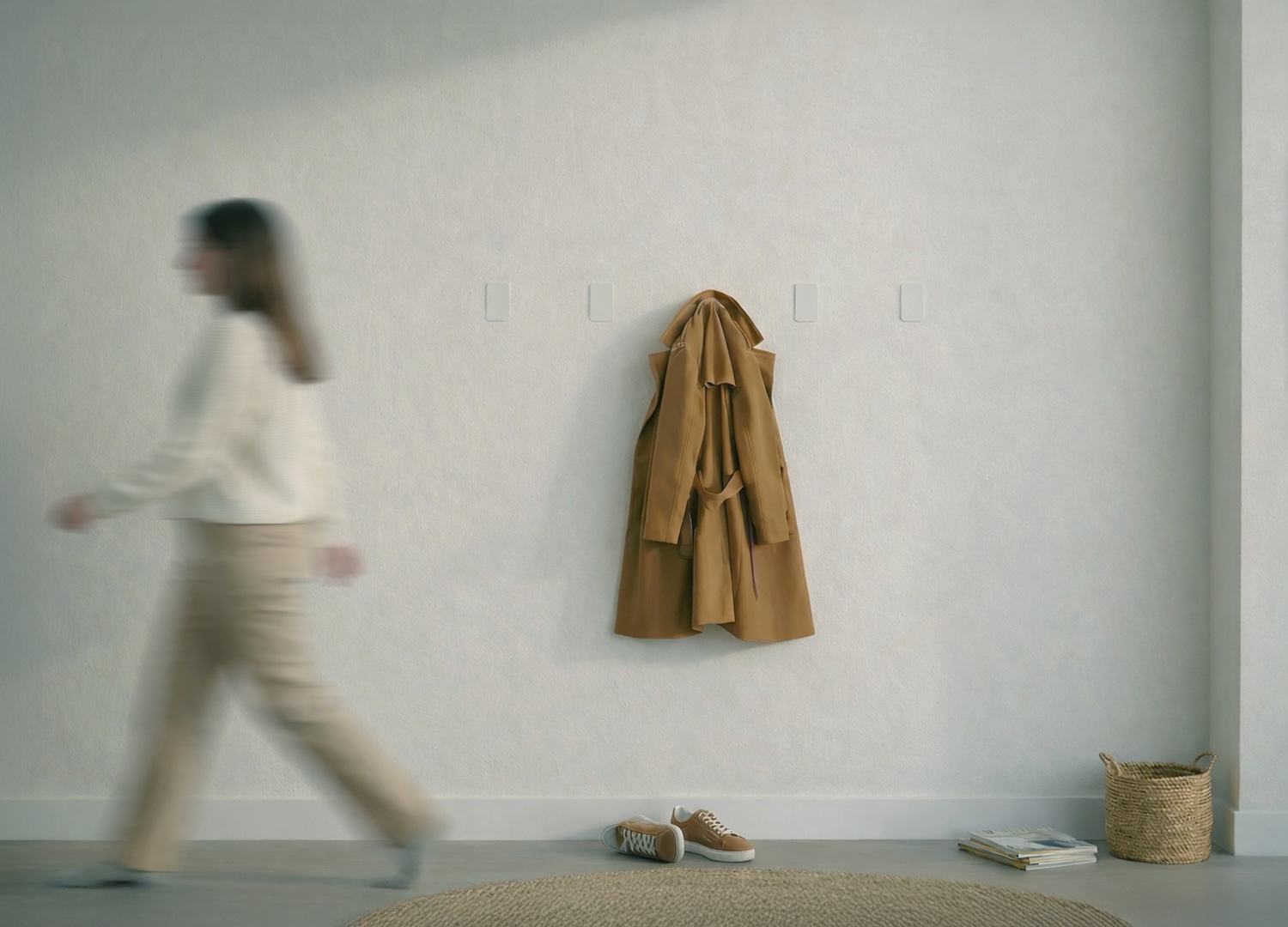
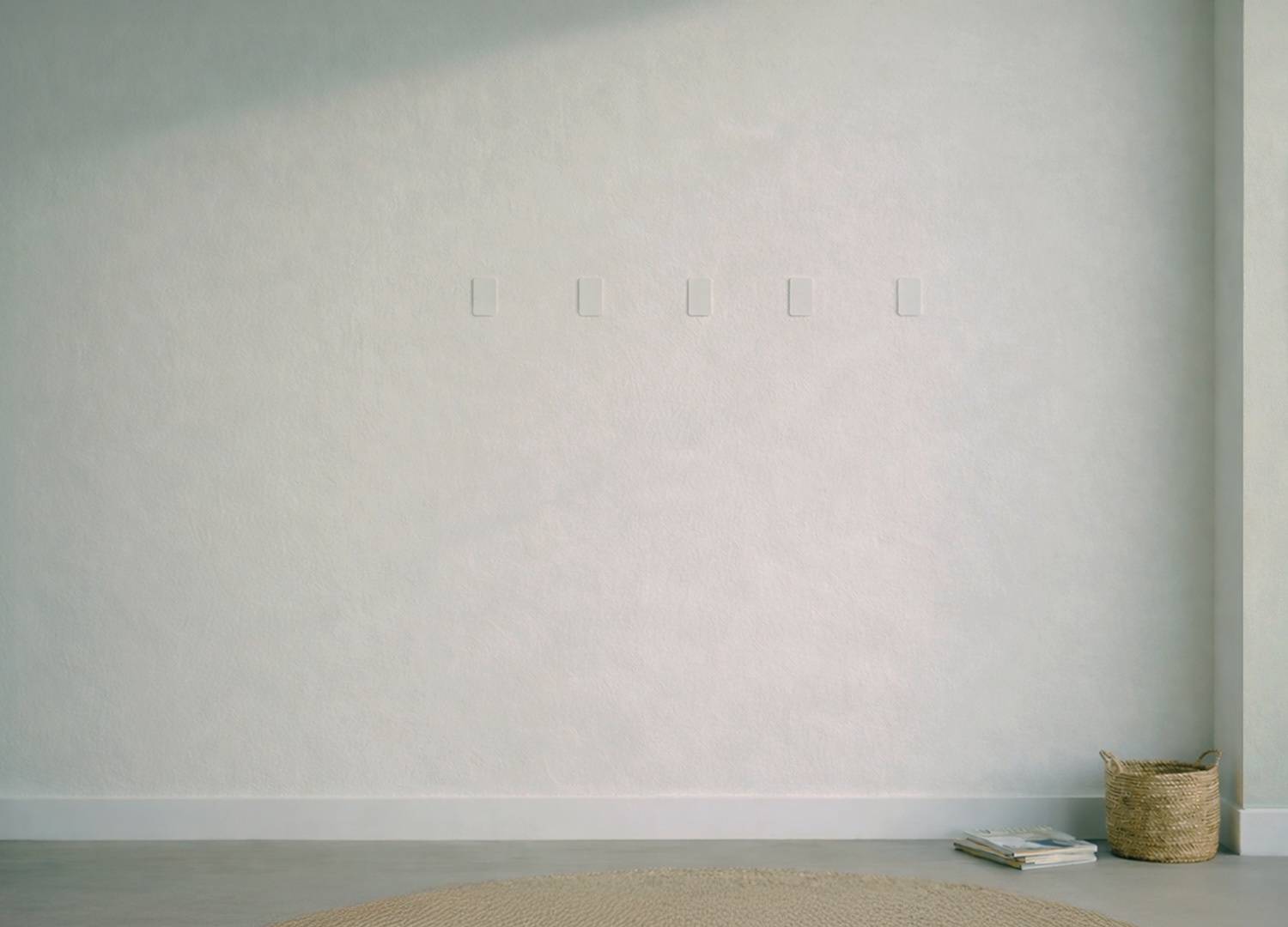
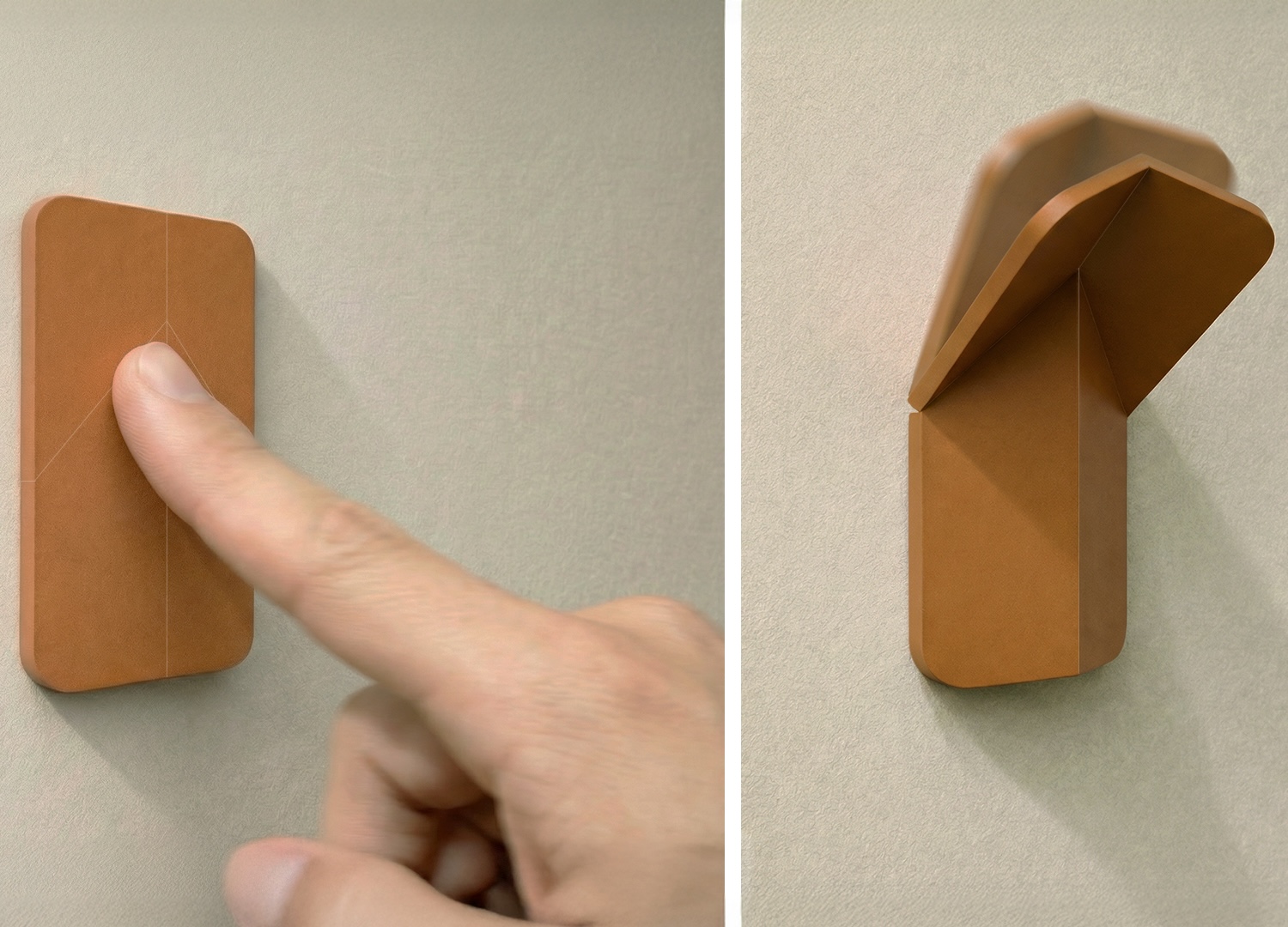
Designed to disappear when not in use, VELTO reveals itself only when needed. It challenges the idea that design must always be visible to have value, proposing instead discretion, restraint, and even absence as legitimate qualities. In its resting state, it appears as a small metal element integrated into the wall. With a single push, the structure unfolds, becoming a hook capable of holding coats, bags, and accessories.
Reduction is central to the project: this coat rack is conceived according to a strict flat-pack logic, and the entire object originates from a single flat shape, laser-cut from one sheet of polypropylene. The surface can be painted in any colour, reinforcing the graphic clarity of the concept. VELTO rethinks the coat rack by fully accepting its paradox, following a design meant to be covered, to disappear – and precisely for this reason, it works.
Walking Coat Rack by Cesare Miozzi
For Cesare Miozzi, the young Italian designer behind Walking, coat racks were always dull – almost irritating objects. Yet they are unavoidable, deeply embedded in everyday life, and historically connected to clothing, fashion, and human movement. Rather than redesigning the coat rack as a static object, Miozzi chose to rethink it through interaction.
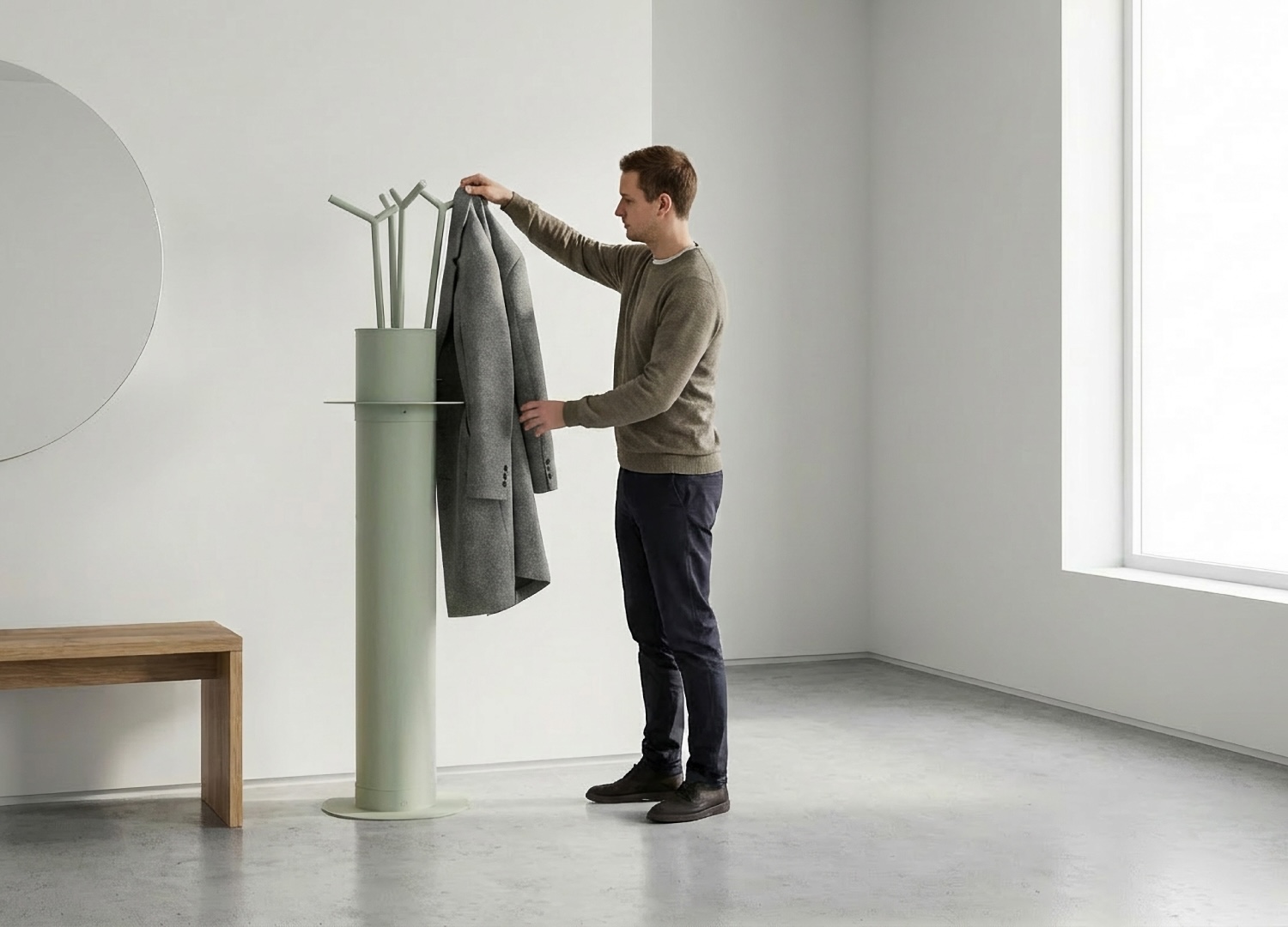
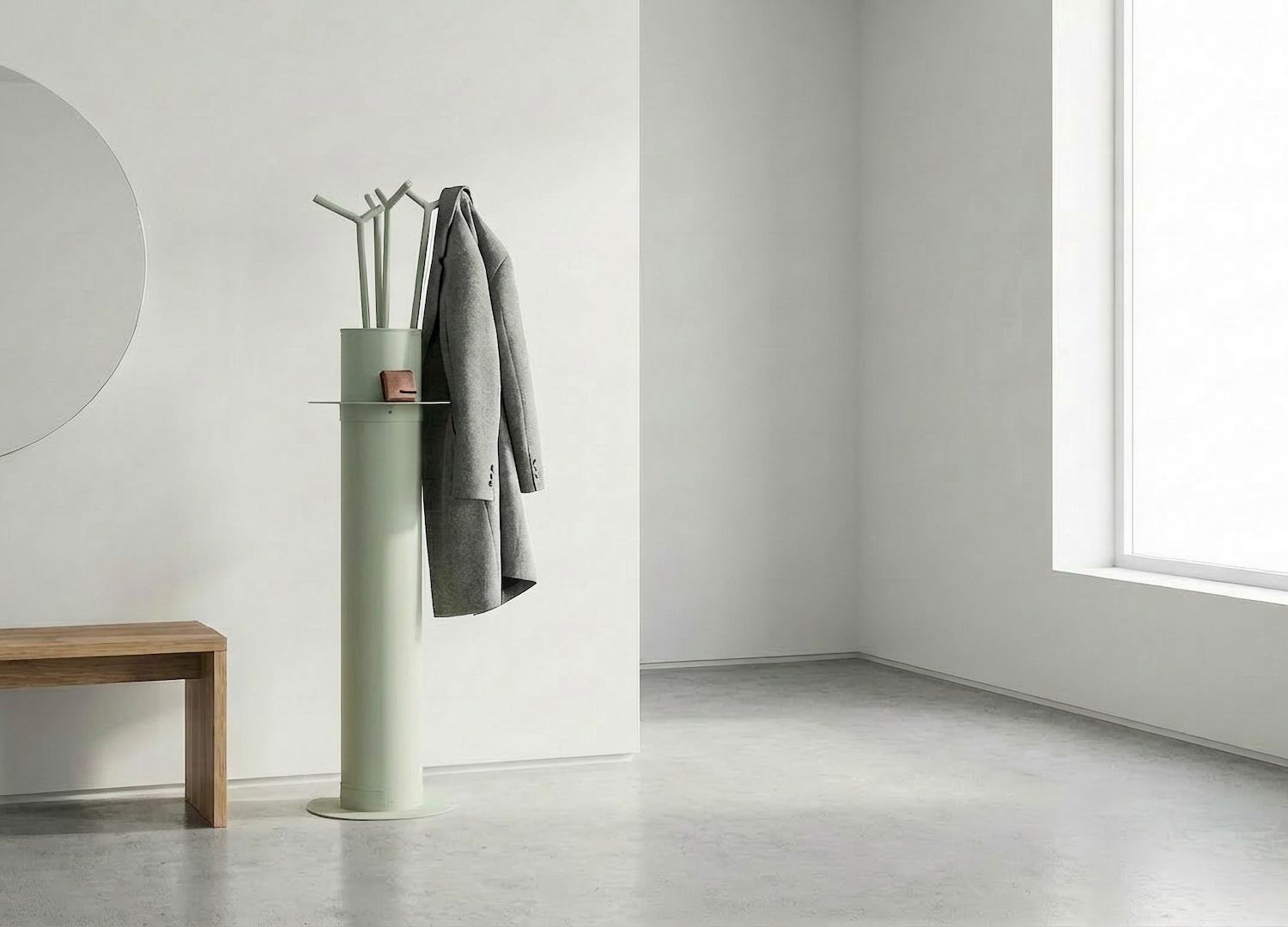
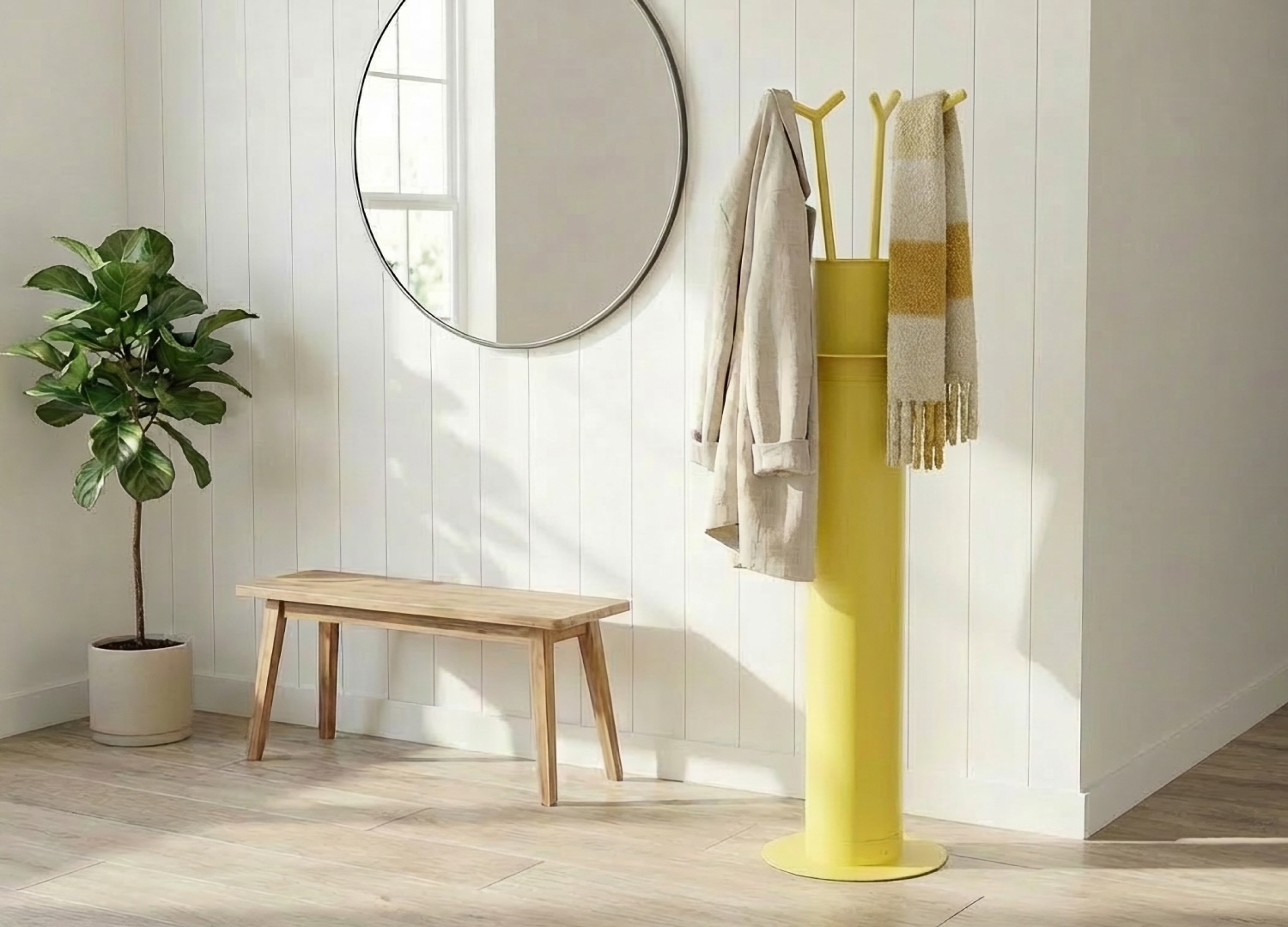
His approach was to add a new function – one that is both practical and playful. The form draws on a shared collective image: the tree. A central cylindrical element acts as the trunk, the main structural support. Inside it, removable sticks inspired by branches serve a dual purpose: they function as coat hangers, but can also be taken out and used as walking sticks when leaving the house.
This reference is not accidental. Historically, walking sticks were made from tree branches and accompanied humans in travel and exploration. The cylinder features two circular elements: the upper ring works as a small tray for keys or wallets, while the lower one acts as a stabilising base, echoing the role of roots. Made entirely of painted aluminium, the structure can be dismantled into individual parts. Users are invited to reconfigure it, mixing colours and elements according to personal preference.
About the author

Ludovica Proietti, journalist, design historian and curator, teaches in universities and curates events, always exploring projects with fresh, unconventional perspectives.
Instagram