How Bali’s community is building a working model for design: Jia CURATED 2026
Five editions in, Budiman Ong, Rudi Winata, and Yang Yang Hartono’s festival is treating nature as a collaborator, and the 18,000 people who showed up this August suggest the idea is working.
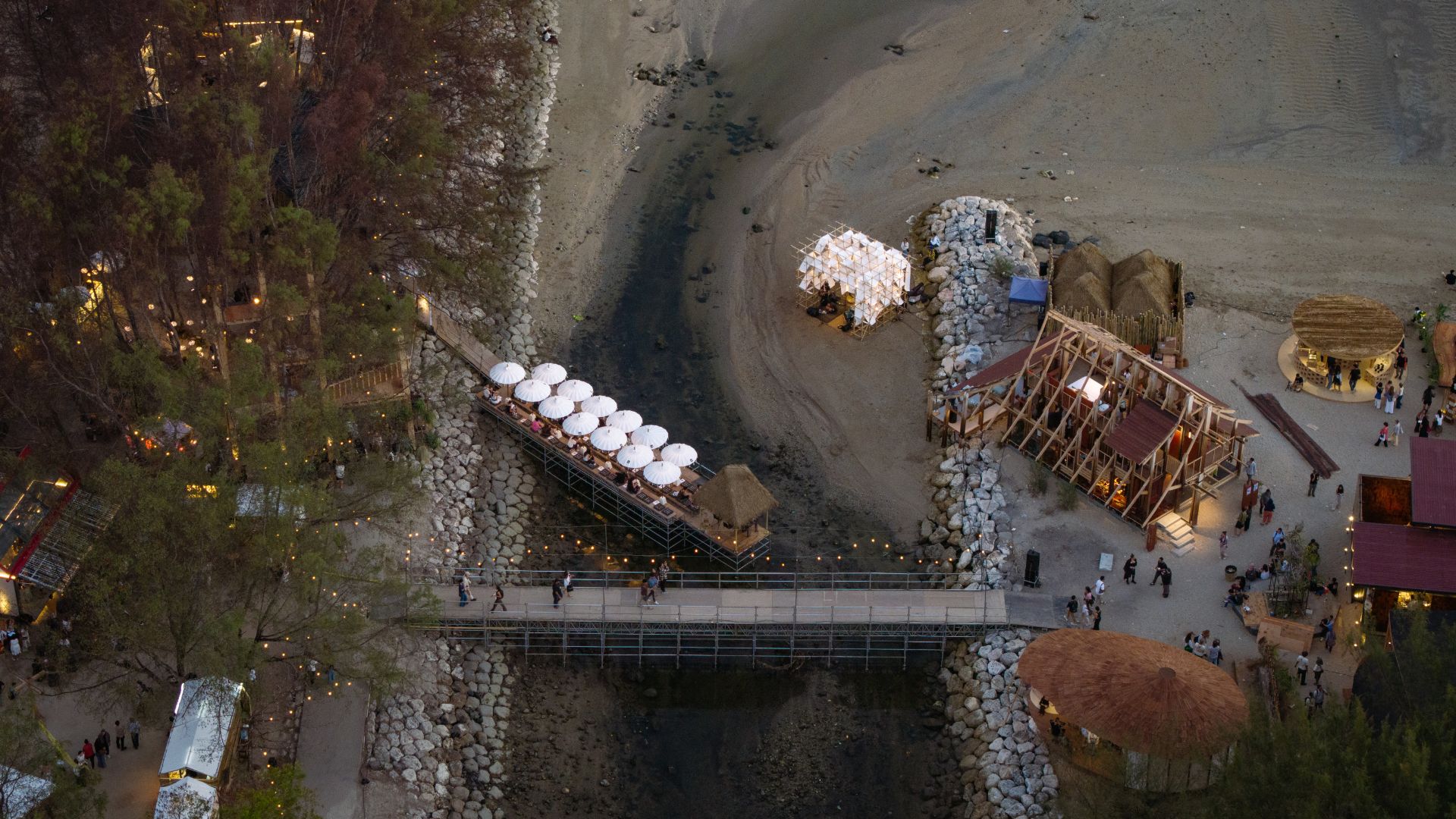
Jia CURATED closed its 5th edition, growing as a festival without losing the intimacy that made people fall for it in the first place. More than 18,000 visitors passed through Pengembak Beach in Bali between the 13th and 17th of August, rising sharply from the last edition, and more than 250 brands, studios, and makers from Indonesia and beyond took part.
This year, the festival relocated for the first time to a 15,000 square metre beachfront site, framed by coastline, mangroves, and open sky, letting the site itself set the terms of the show. The theme, “Nature Weave,” asked exhibitors to respond to the landscape rather than simply occupy it, creating architecture, materials, and objects designed to interlace with the environment rather than sit on top of it.
Gallery
Open full width
Open full width
The festival was founded by Budiman Ong, Rudi Winata, and Yang Yang Hartono in 2022, built around supporting local designers and brands through curated events and a market-style exhibition called Jia Curated Kiosks. Two editions later, they realised the market format had run its course, and replaced it with booths arranged as pavilions scattered through a park, bamboo and woven screens turning the site into a sort of “miniature jungle.”
Ong is particularly unshowy about what this year’s beach location demands of an exhibition. “I do not believe that you need to build a three- or four-storey pavilion to communicate an idea,” he says. “It could simply be a box, as long as the idea carries more meaning than the physical size of the installation. That is our role as curators: to bring these ideas together, make them visible and continually ask what we can do better — not only with the exhibition itself, but also with the connections it creates.”
The last point is the throughline to the festival’s arc: connection over spectacle, process over product. What follows is a closer look at some of the projects, products, and pavilions that gave the show its shape this year.
Jia CURATED 2026
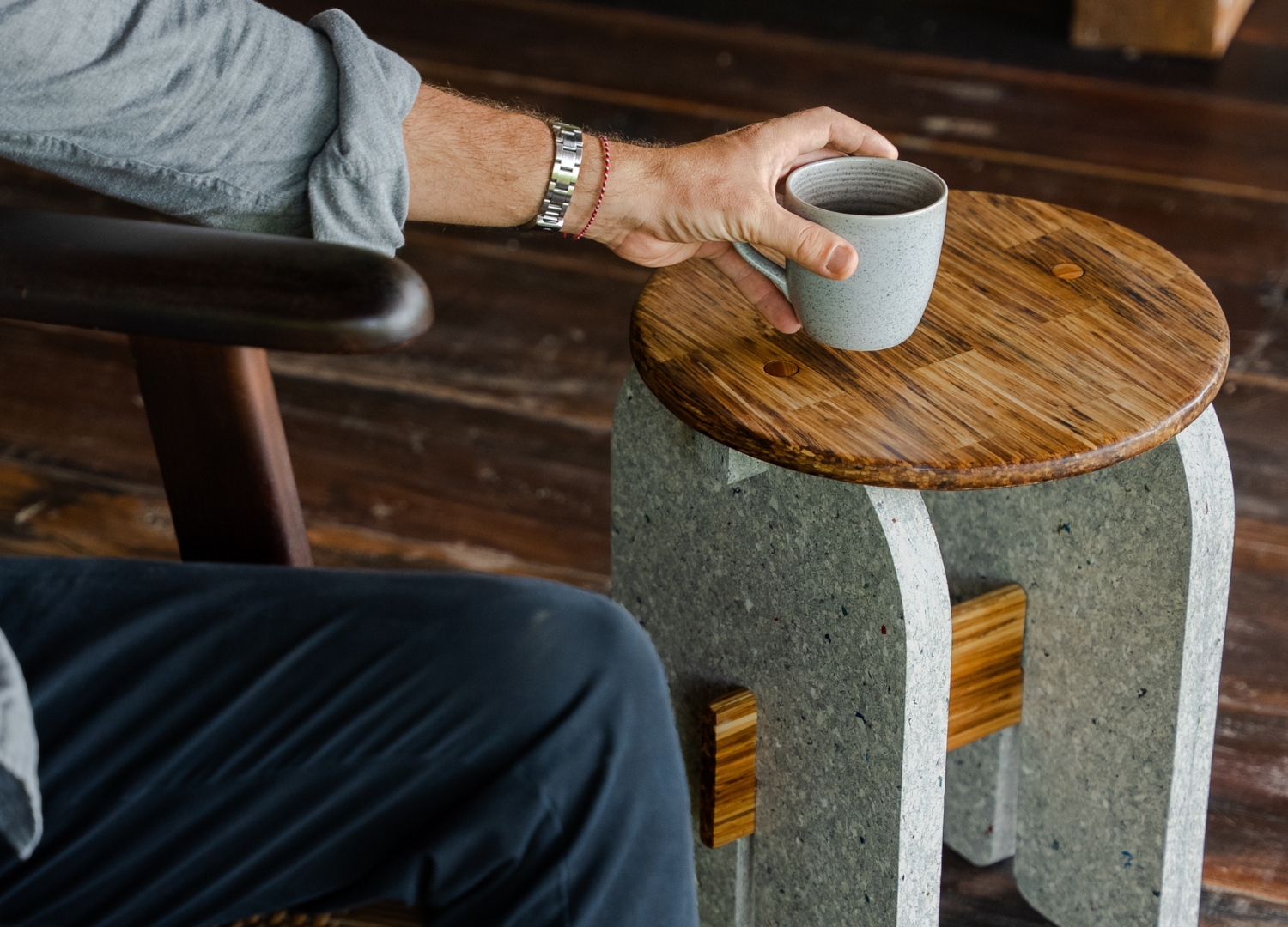
Muara Stool by Sungai Design x Chopvalue
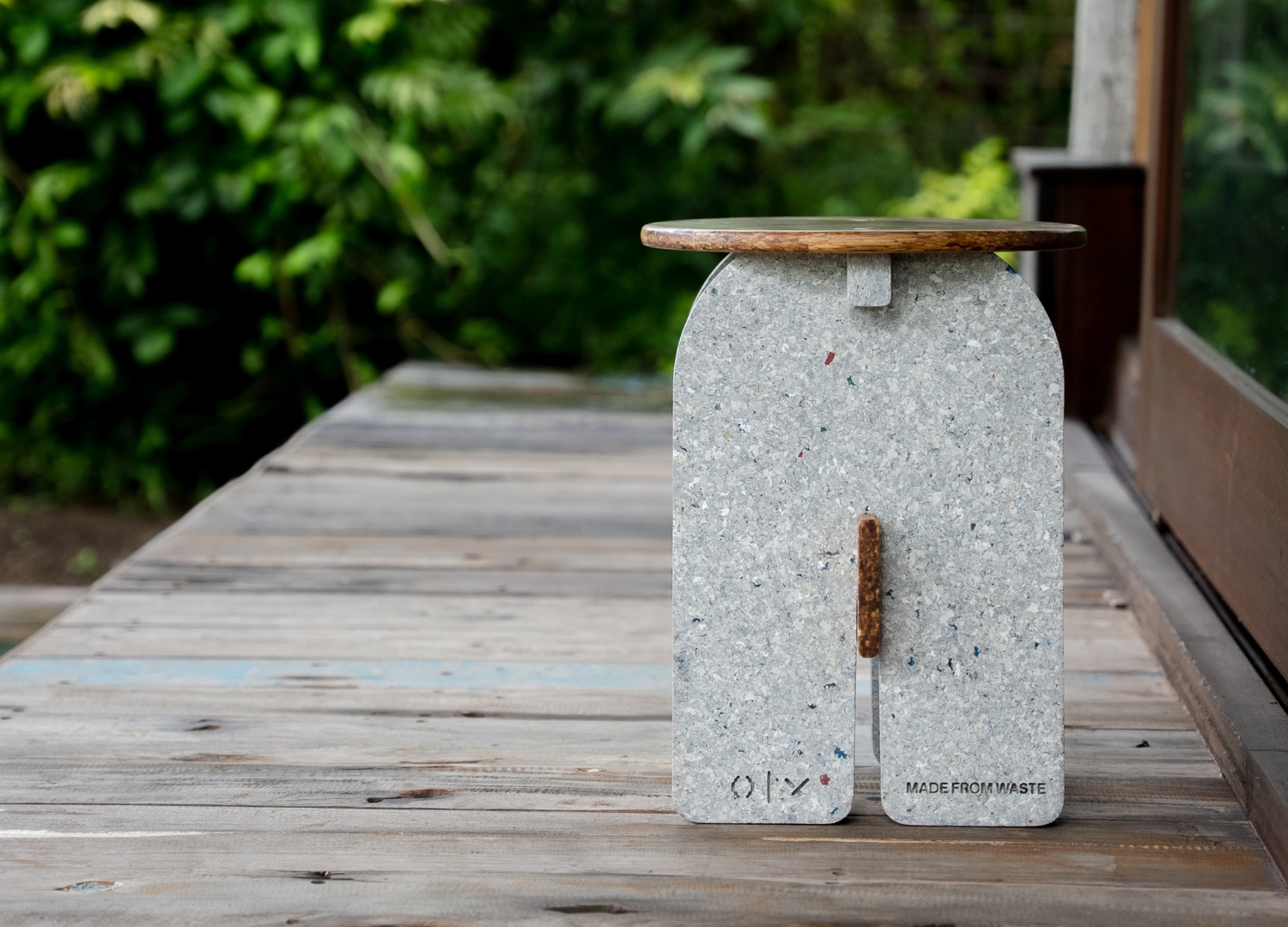
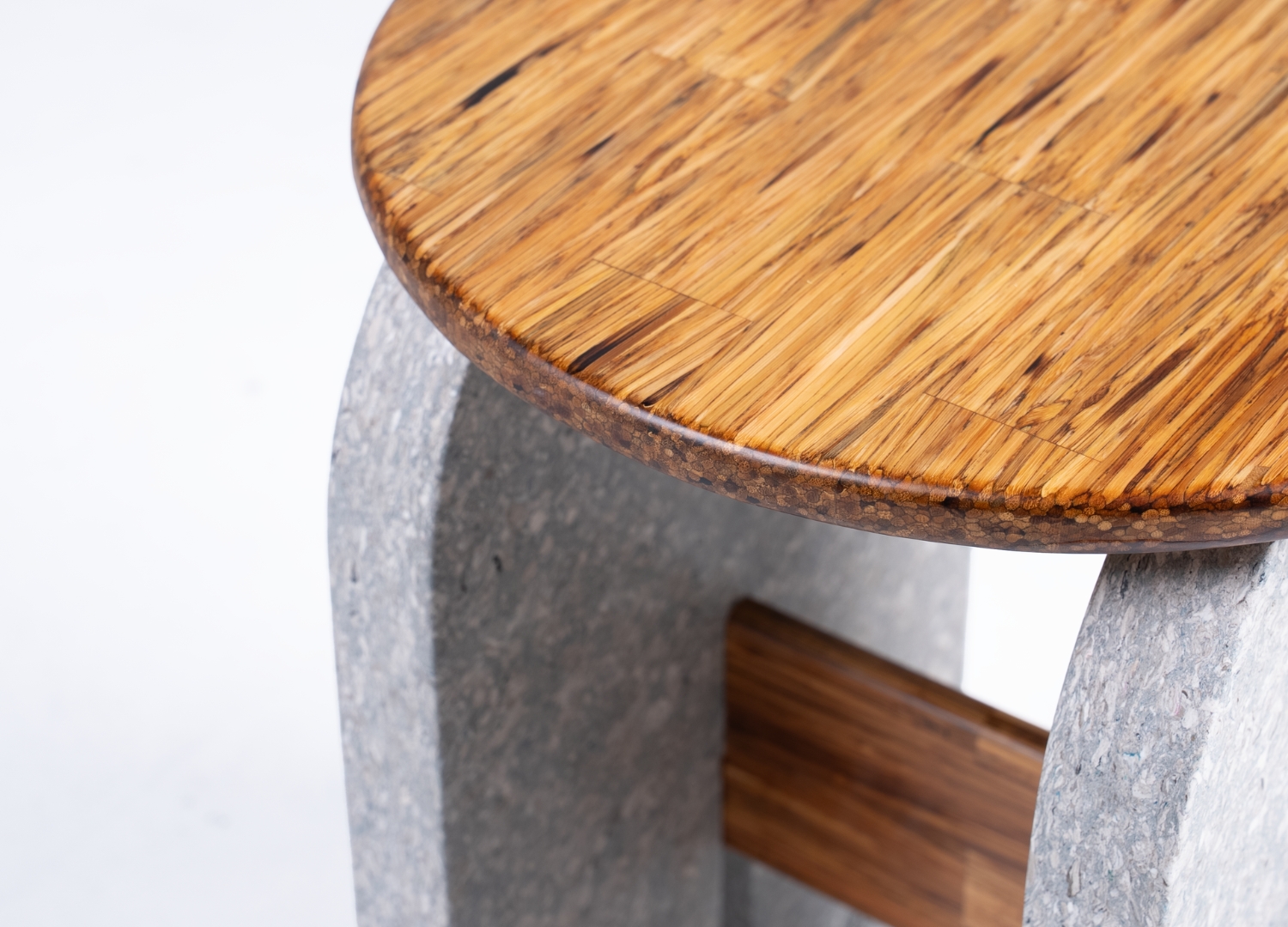
Sungai Design is the design arm of Sungai Watch, a Bali-based nonprofit that has spent years pulling plastic out of Indonesia’s rivers using custom floating barriers. Their signature move has been turning washed, shredded, and heat-pressed river plastic into CNC-cut furniture panels. ChopValue is a Vancouver-founded company they partnered with to create Muara, a stool based on an existing Sungai form, produced this time from a new material: discarded bamboo chopsticks.
The chopsticks were collected by ChopValue from restaurants through a global network of “microfactories,” compressed under heat and pressure into a composite that seems harder than maple and stronger than oak. By combining the recycled plastic base with a recycled bamboo top, the stool shows the potential that a material’s second life can hold.
Suar by Studio Aliri
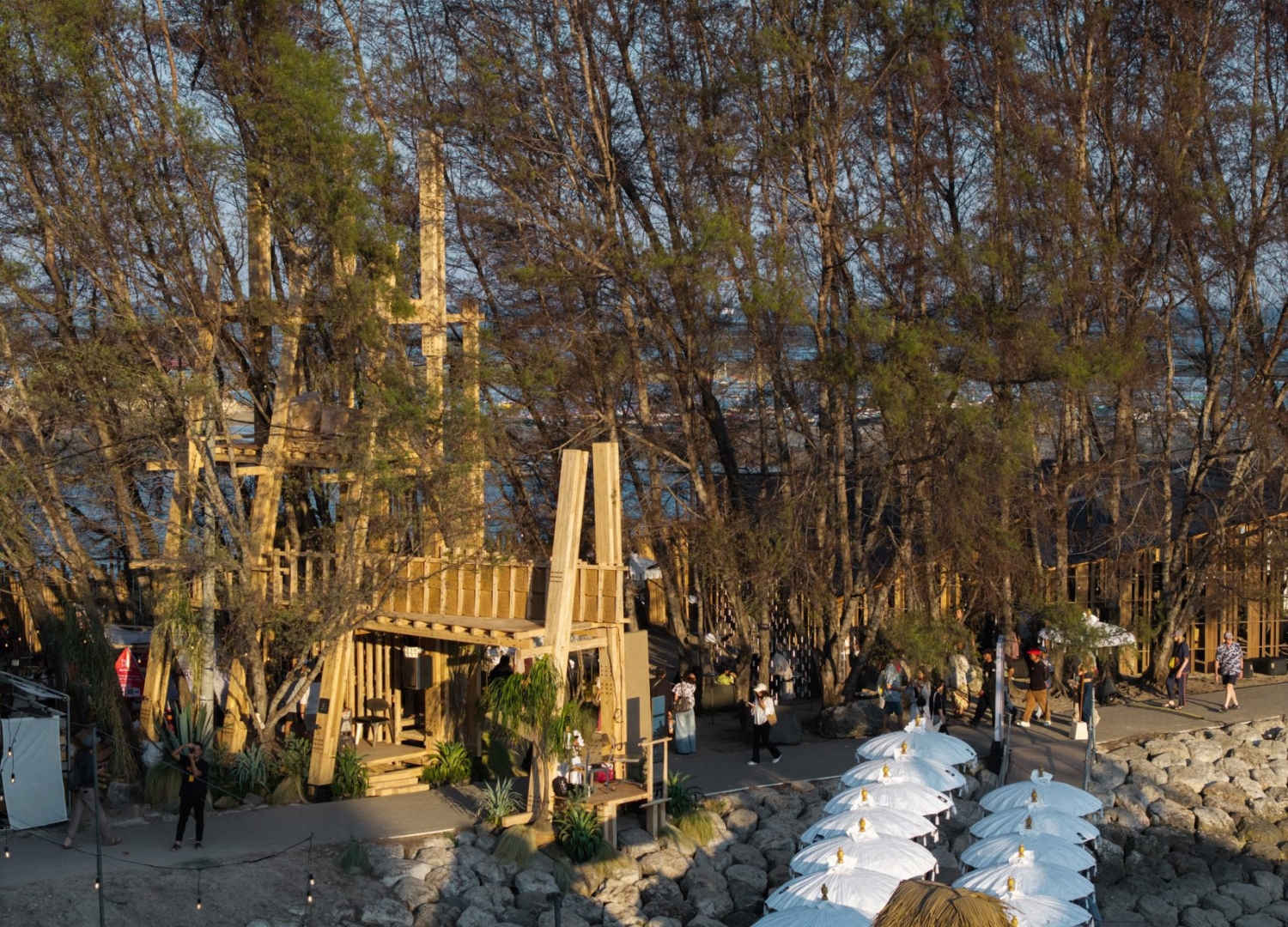
Suar (or Lookout Tower) was one of the standout structures of this year’s exhibition, a vertical wooden installation built on a plot of just 2.4 by 4.8 metres. It was designed as a comment on land scarcity in dense Indonesian cities, showing how new useful space can be created by building vertically. The project was developed by Studio Aliri in partnership with Studio Woork, Nouv, and Vita Lightworks.
Rather than clearing the trees on site, the studio threaded the tower’s timber columns and platforms around the existing trunks, with a staircase winding through the canopy itself. The structure was built from rubberwood glulam with rattan-woven safety railings, facing the ocean for a wonderful view. Following Jia, Suar will be relocated to Medewi Beach as a public lookout.
Natura collection by Bell Living Lab
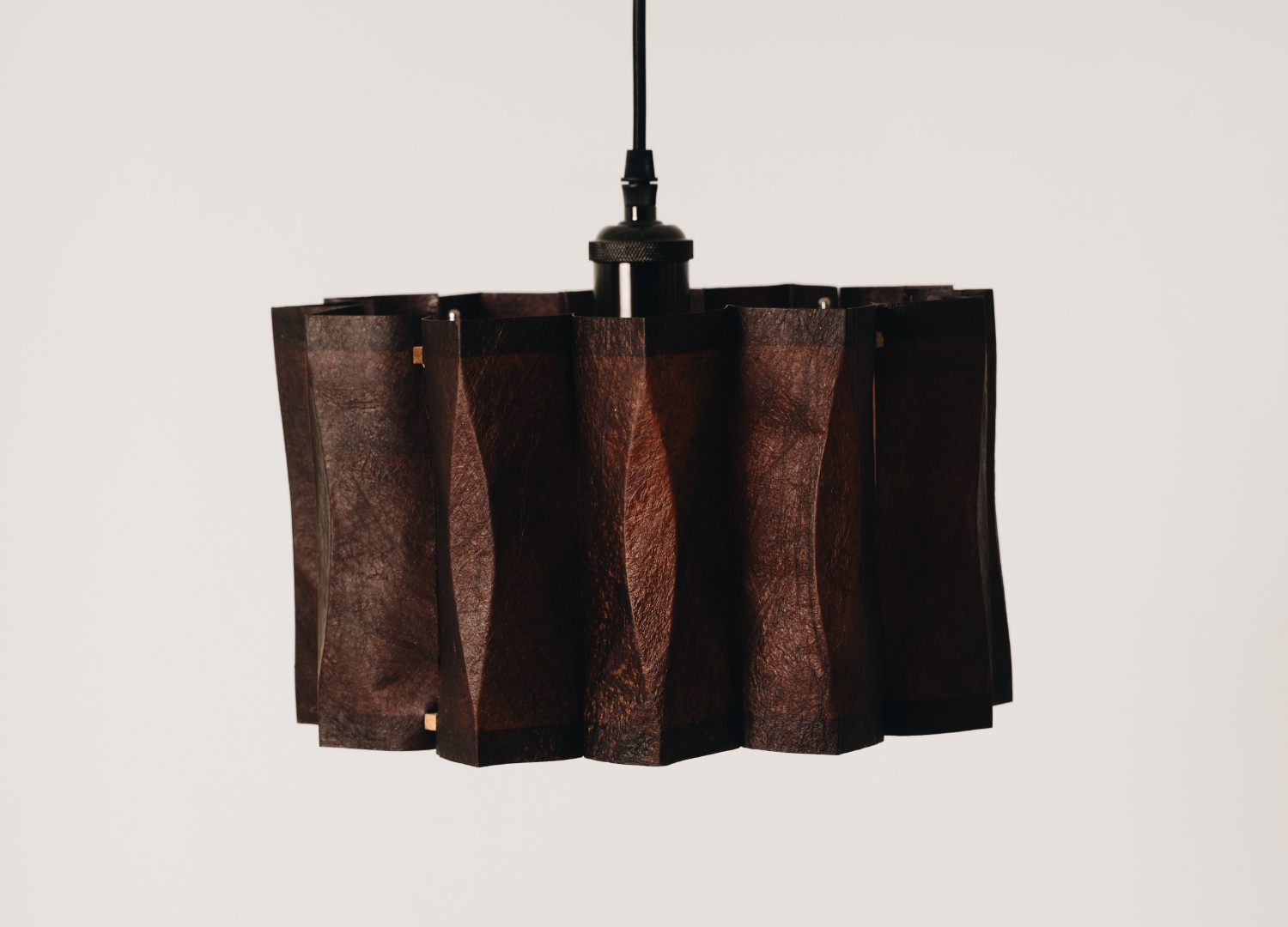
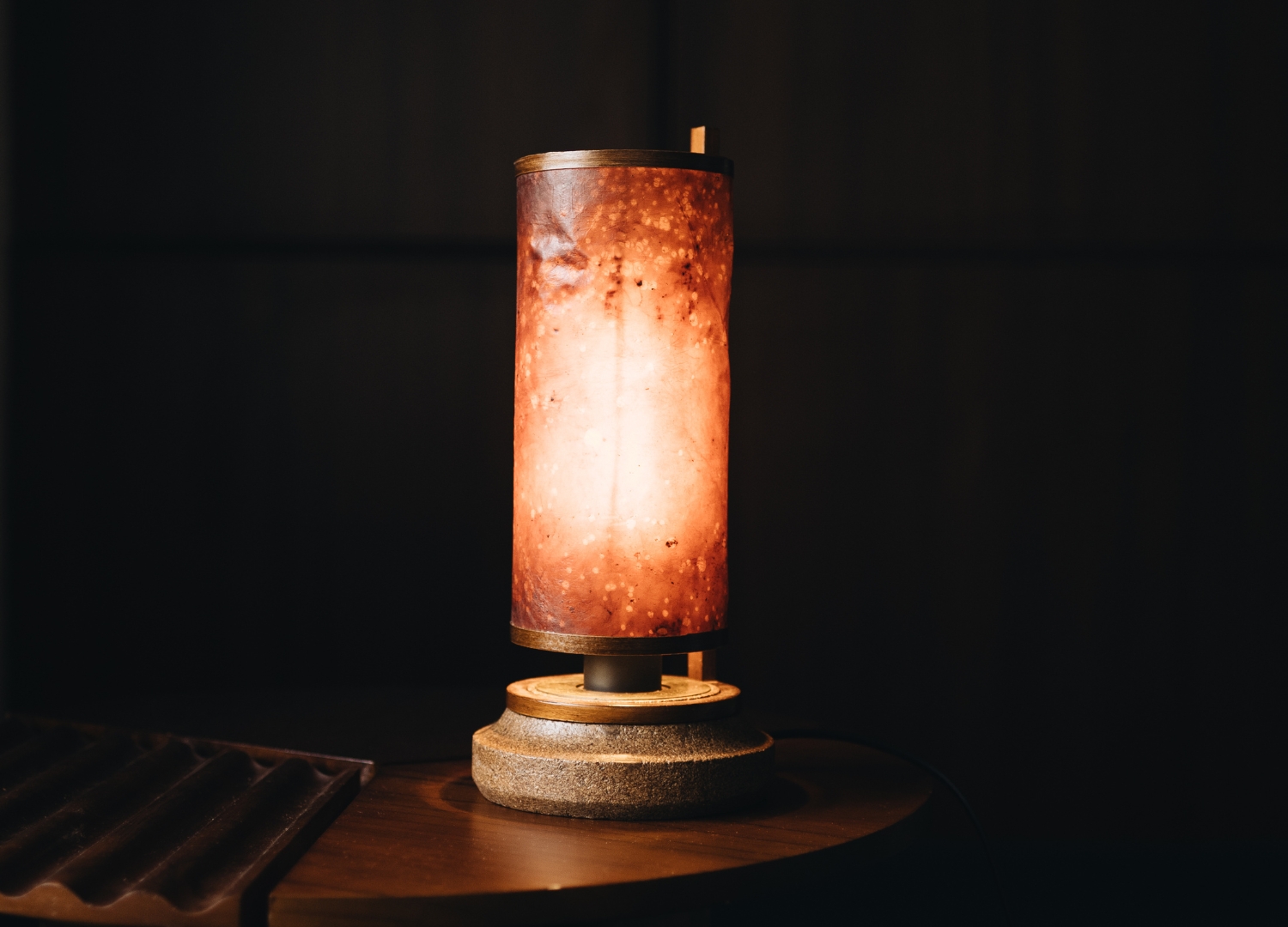
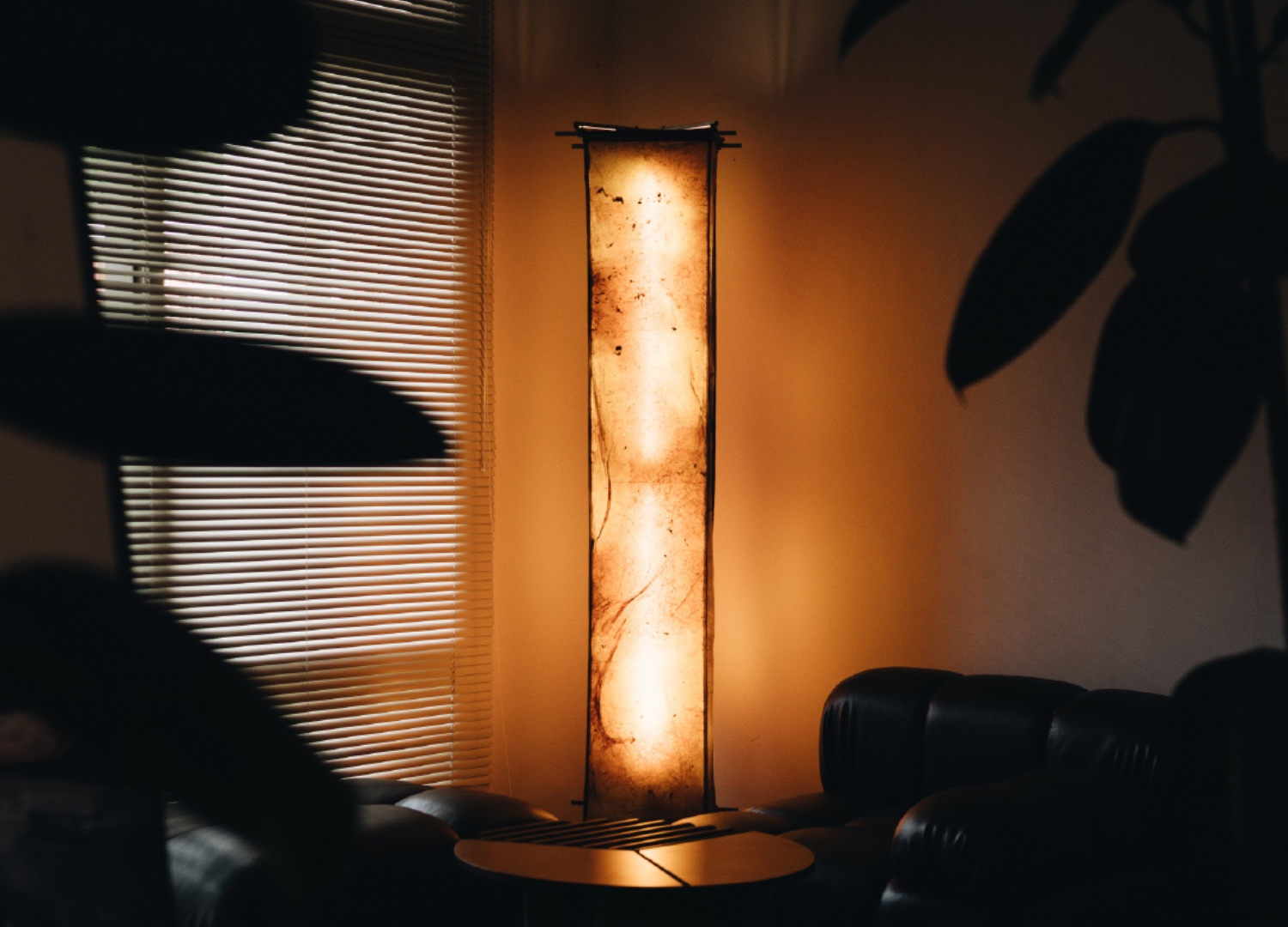
The Natura lighting collection is built around M-Tex, a leather-like sheet grown from coffee pulp and skin waste using bacterial fermentation. Bell Living Lab was founded to give Indonesia’s enormous and largely discarded coffee byproduct a second life, and it now processes several tonnes of coffee waste a month, working with farming communities around Bandung.
The Natura lamps put the material to use as a light diffuser. The shades are stretched, translucent sheets of material, applied to a table lamp, a floor lamp, and a hanging lamp.
Main Main Pavilion by Blancostudio and Kalpa Taru Bali
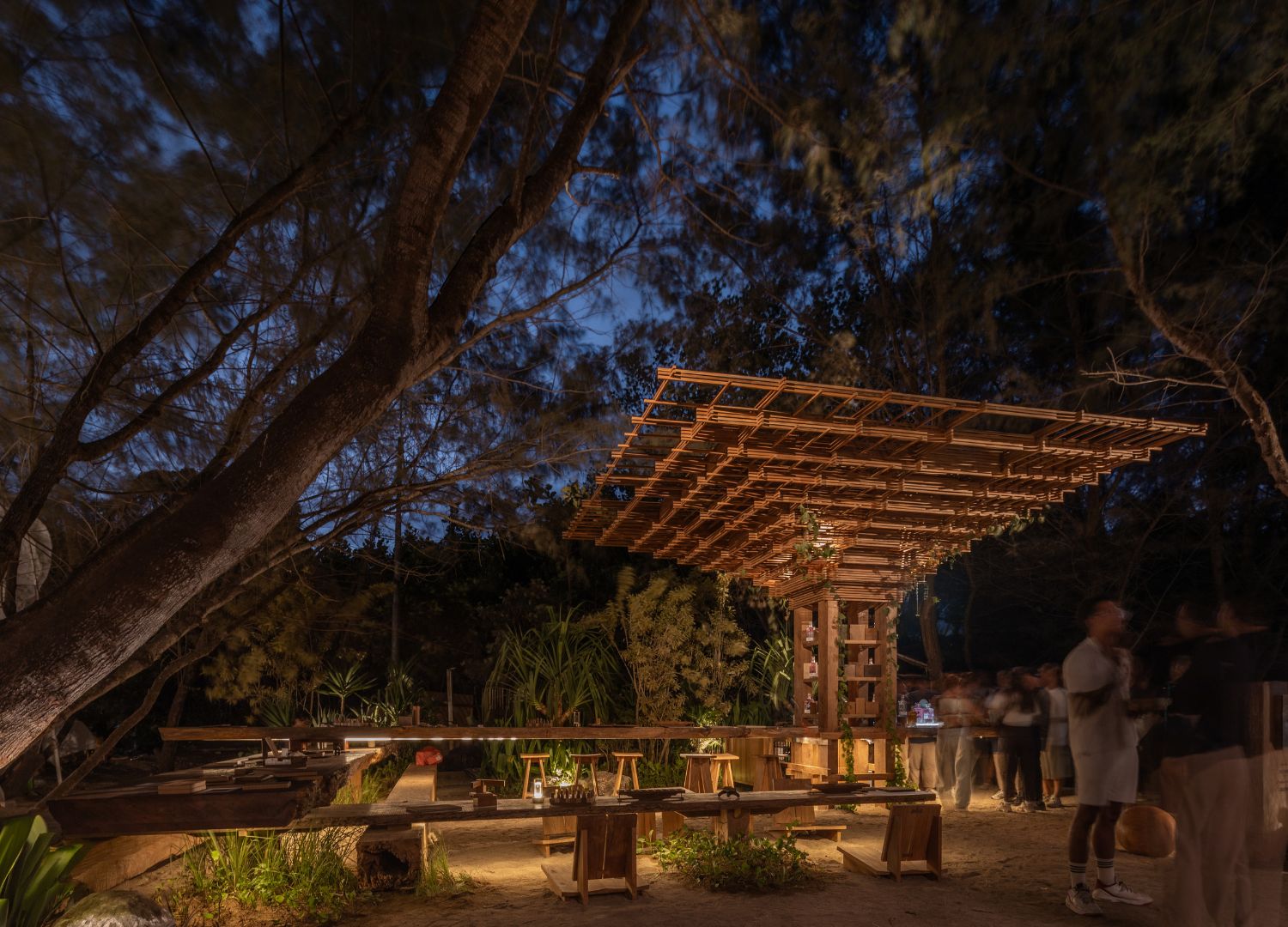
Main Main, Indonesian for “to play,” took this year’s Best Exhibition Booth award. Blancostudio and Kalpa Taru introduced an immersive pavilion rooted in the childhood nostalgia of gathering outdoors, and the daily rituals that foster connections. At its centre, four solid teak slabs create a communal area. On top of each table is a collection of limited-edition board games, positioned to encourage interaction and to create a community between Jia’s visitors through the simple act of play.
Developed in collaboration with Bali Landscape Company, the pavilion also presents a living canopy that gradually weaves through and around the structure, creating a dialogue between the architecture and the surrounding natural landscape. Made to feel light and in movement, the canopy seems different from every angle you look at it, casting different patterns of light on the space below.
V-Series by Sander Wassink x Method Inc.
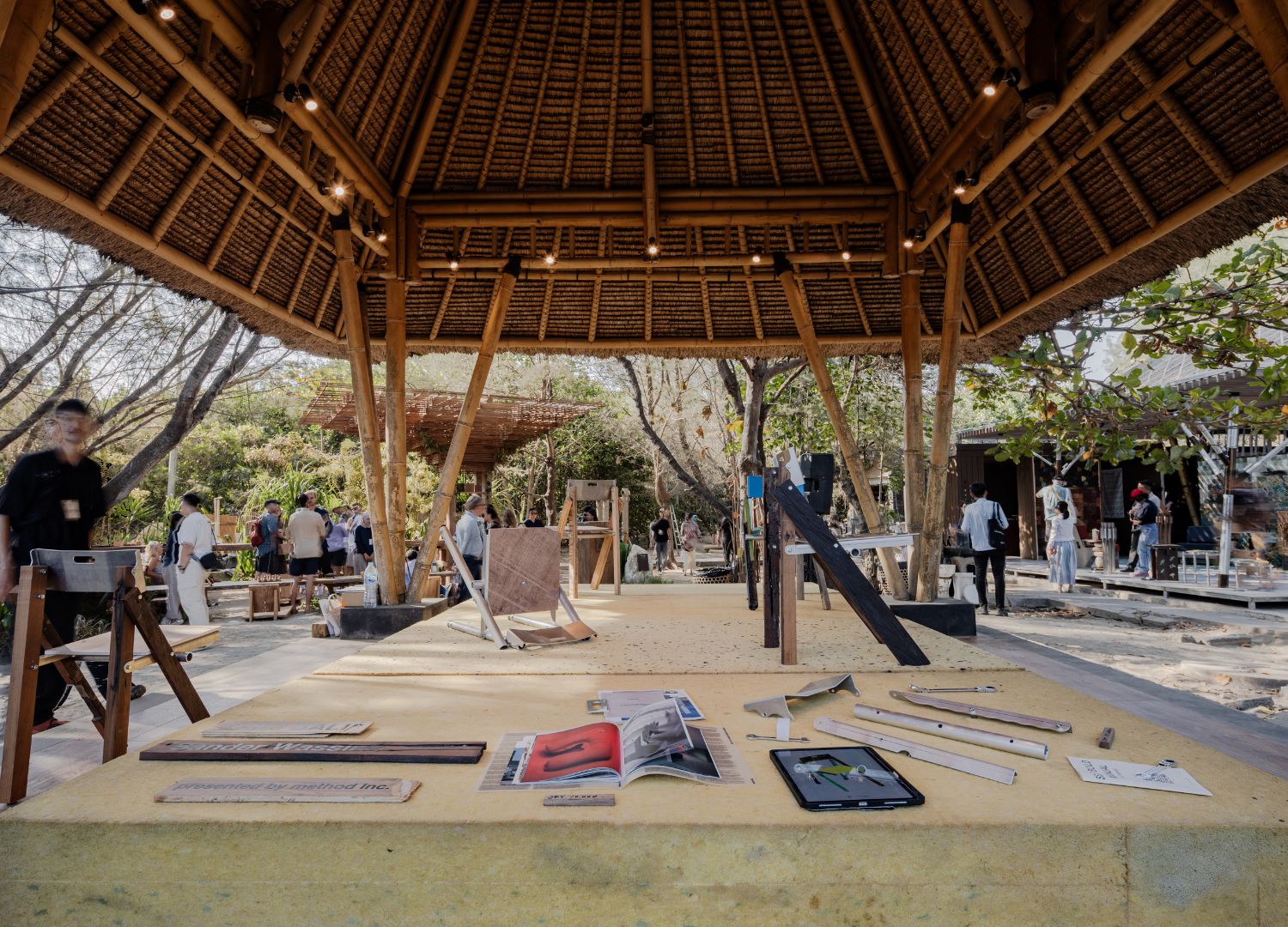
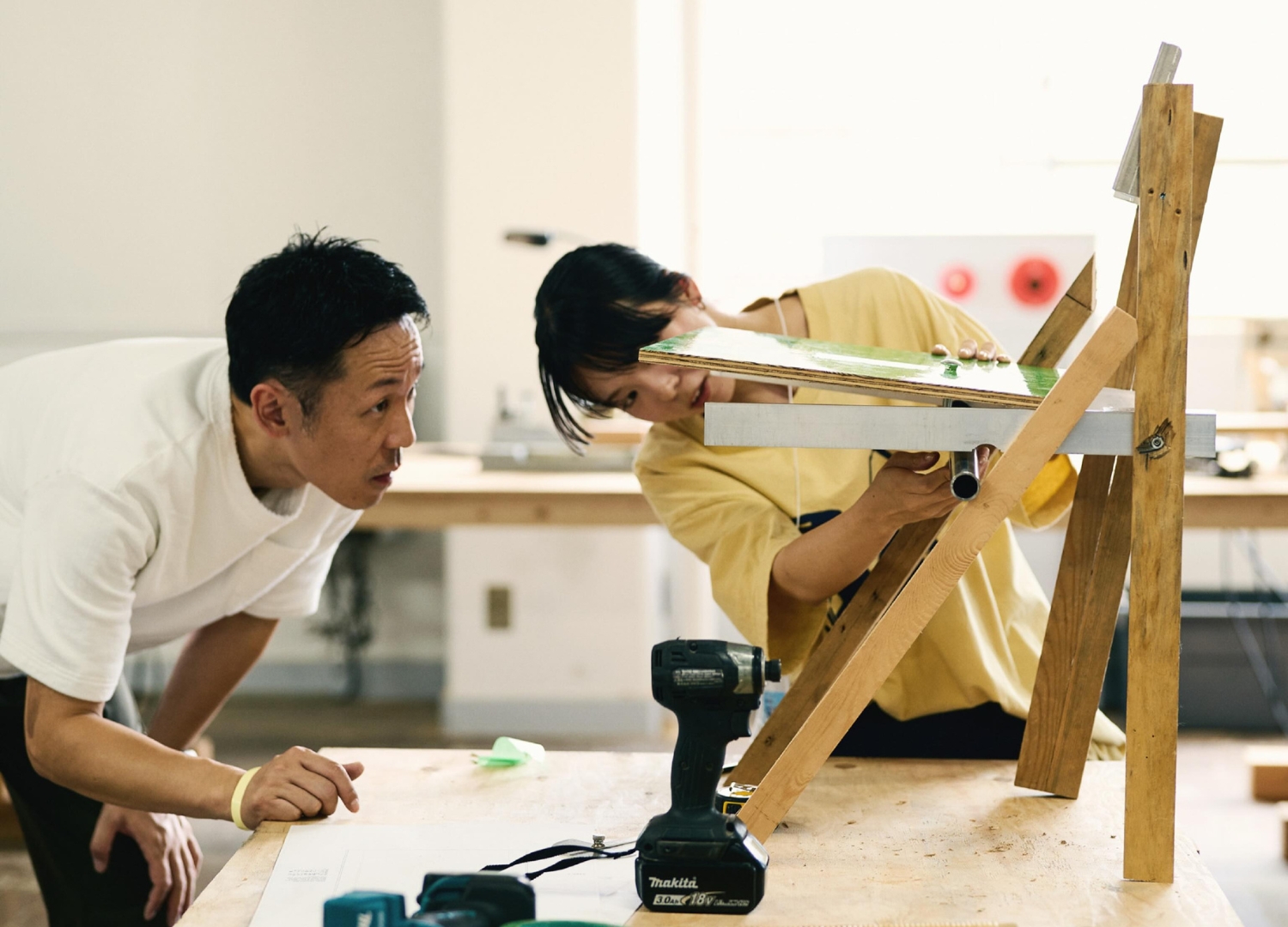
Sander Wassink, based between Japan and the Netherlands, has spent years developing a practice built around reconstructing the discarded into new forms. V-Series is the expression of this instinct applied to furniture: a system built around an aluminium joint that can be combined with different materials found on site to create a chair. Depending on what kinds of materials are chosen and how they are positioned, each chair develops its own personality and character despite living in a semi-standardised system.
Method Inc. called the artist to Bali for a hands-on workshop where participants could create their own V-Series chair using Balinese bamboo and reclaimed wood. The chair then becomes more than furniture, representing a cultural statement about localism, manufacturing systems, and material reuse.
Janur collection by Ong Cen Kuang
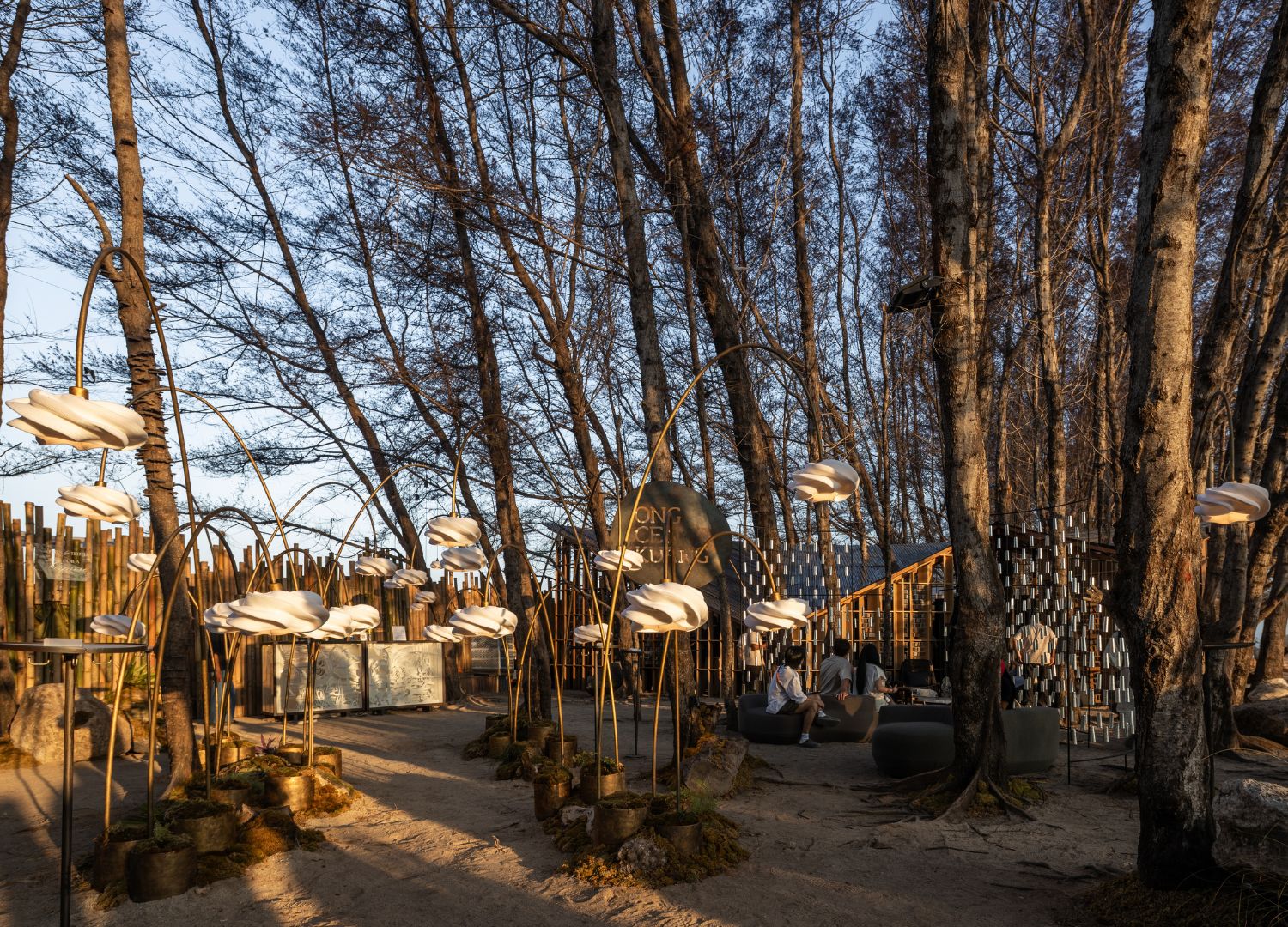
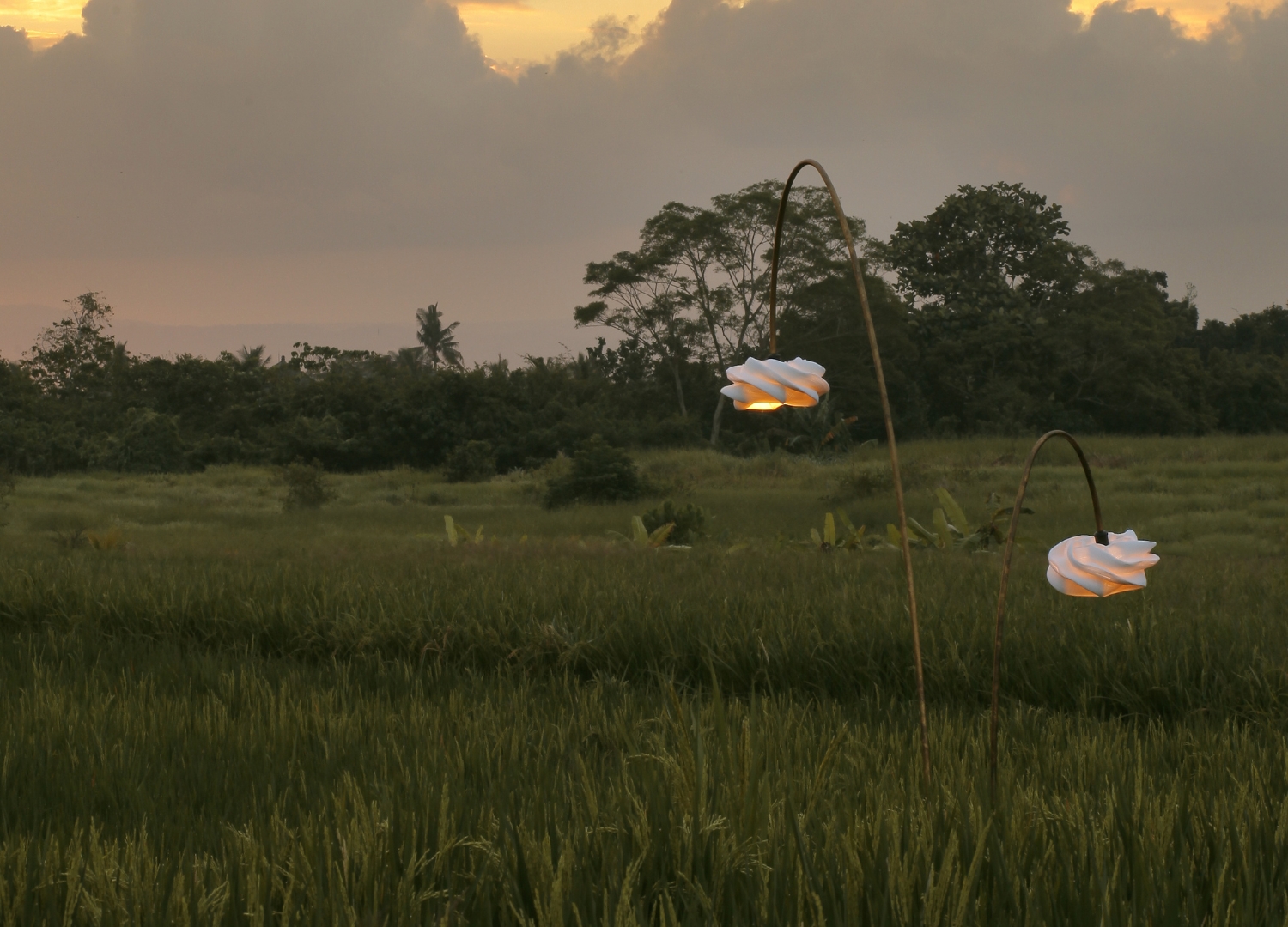
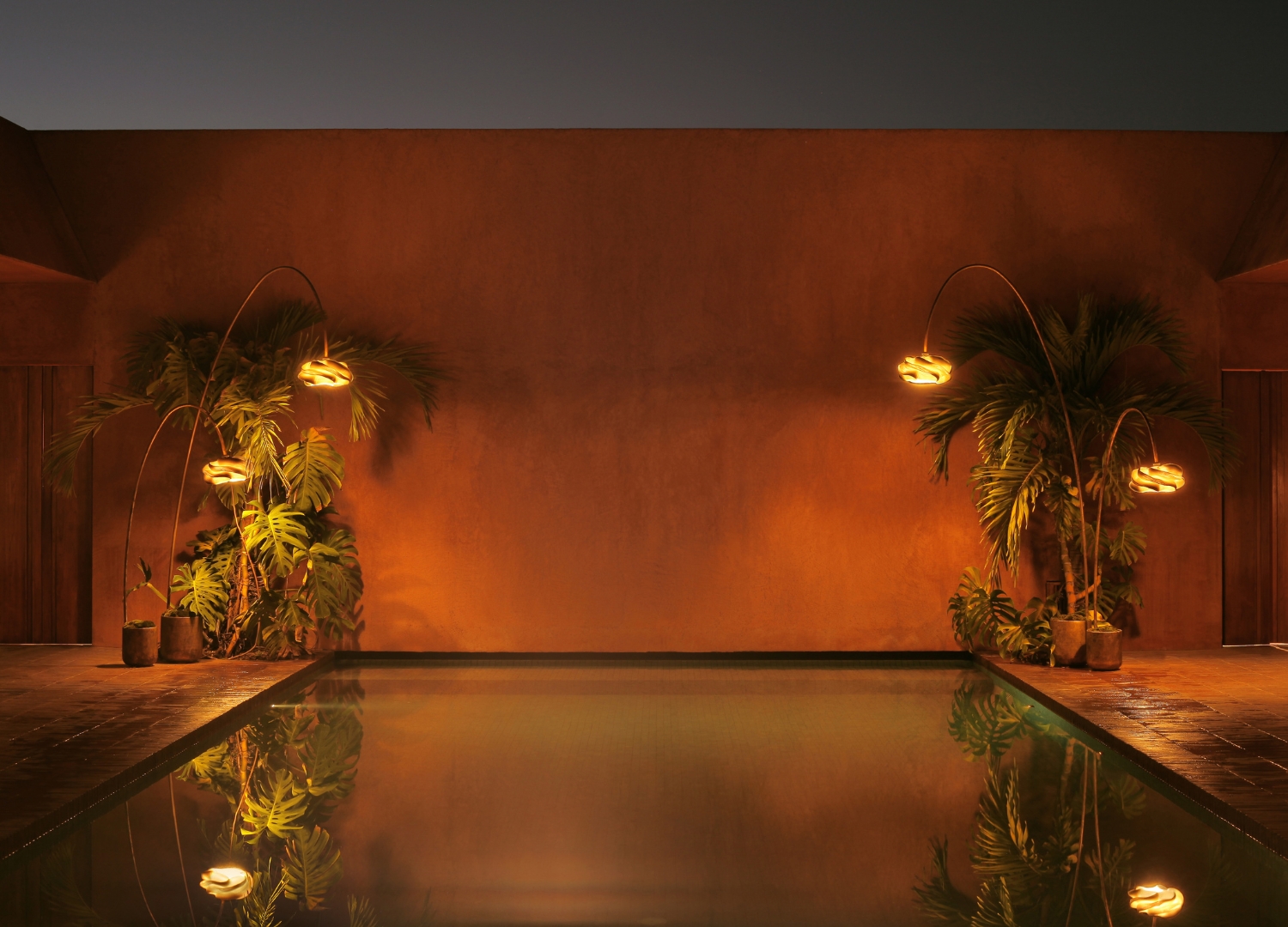
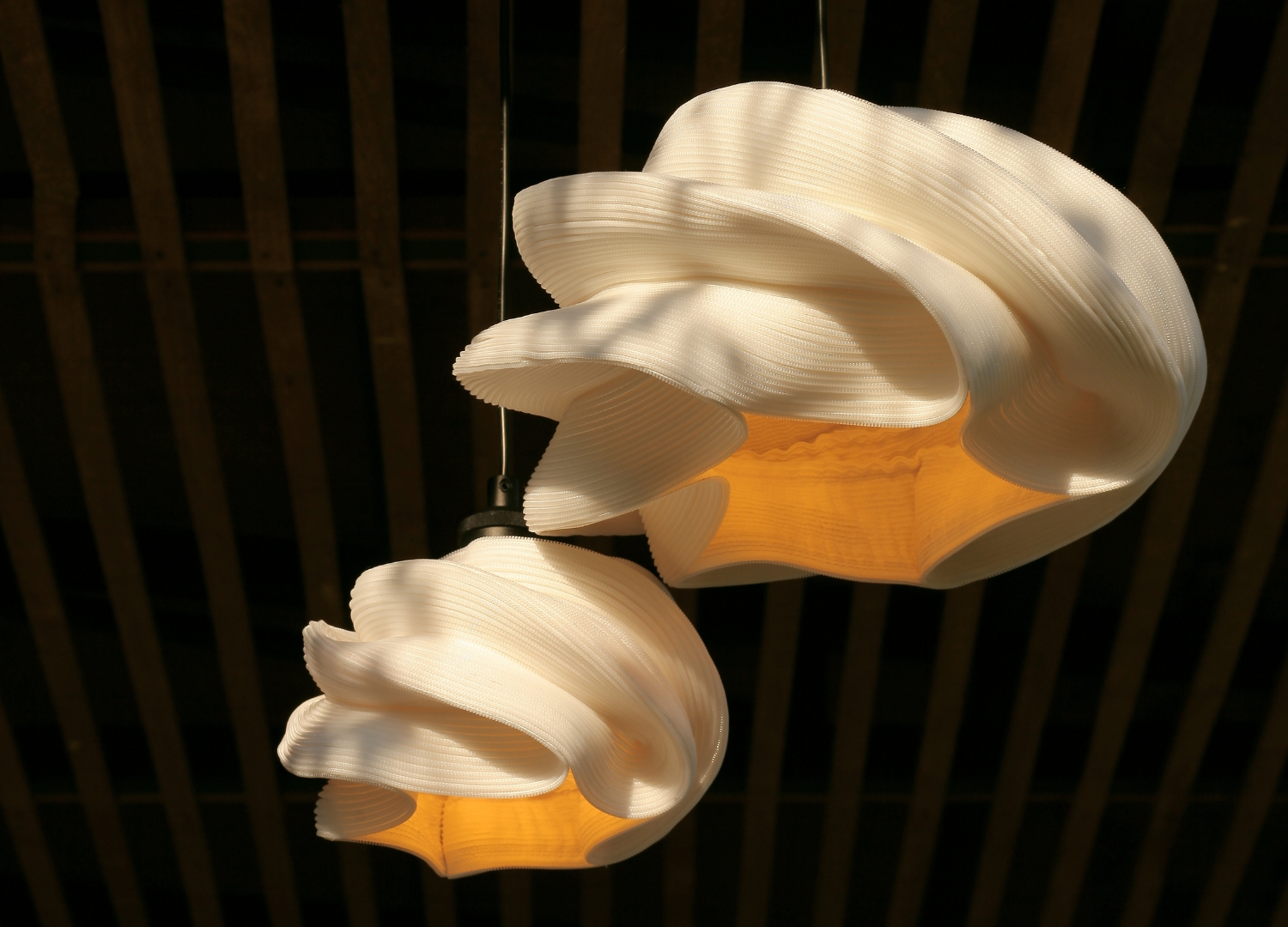
Ong Cen Kuang was founded by Budiman Ong – who is also Jia CURATED’s own co-founder – and he used this edition to launch his atelier’s first outdoor lighting line. Ong’s lighting collections often focus on underrated materials like copper wire or banana-fibre, and this new product is a development of the Alur series, built from kilometres of soft zipper fabric layered into sculptural shapes.
Janur extends the same zipper language into an outdoor register. The standing lamps reference the silhouette of the penjor, the tall, curved bamboo poles that line Balinese streets during religious ceremonies. The soft white zippers are arranged into diffusing shades, paired with oxidised brass stands.
Modular system by Post + Beam
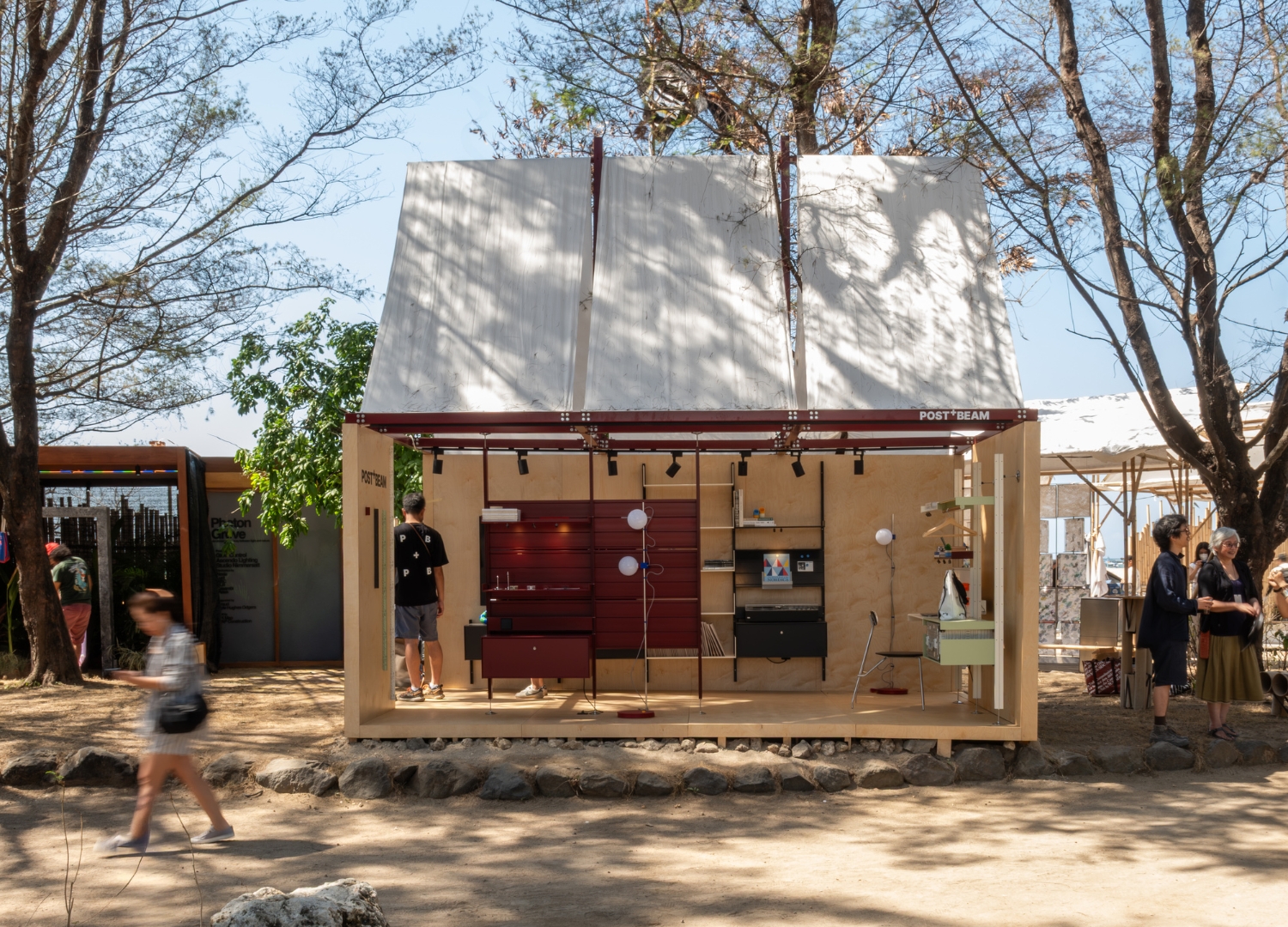
Post + Beam presented its modular shelving and display system as a direct response to Nature Weave’s theme of adaptability. Built mainly from aluminium and stainless steel, the system is designed as an open framework rather than a fixed object, as its components can be reconfigured, expanded, or repurposed as needs shift without requiring new furniture each time.
Its minimal design language allows the system to integrate seamlessly in any living environment. Instead of replacing furniture as needs change, Post + Beam asks people to adapt what they already have.
Tiltroom by Oaken Lab
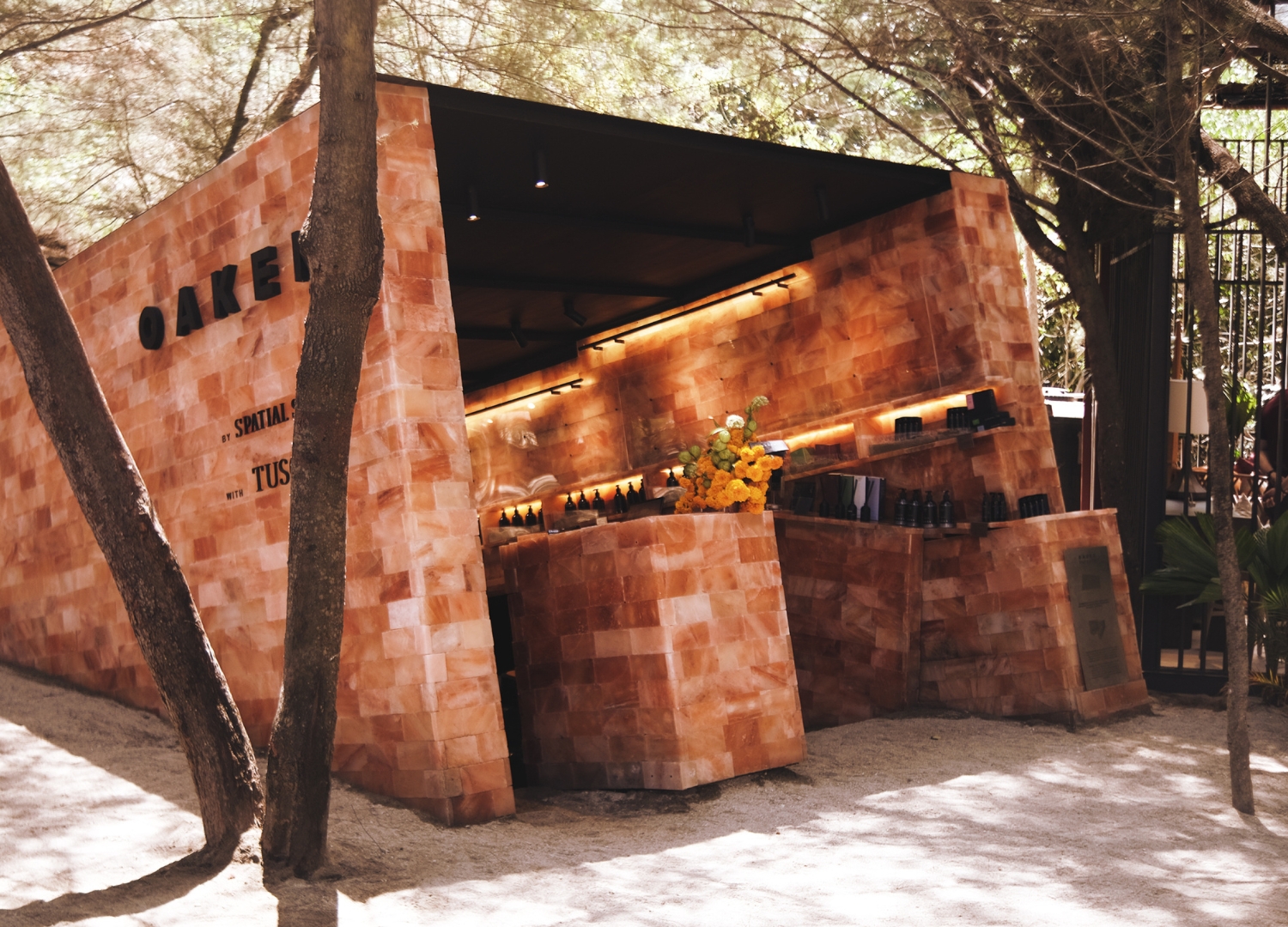
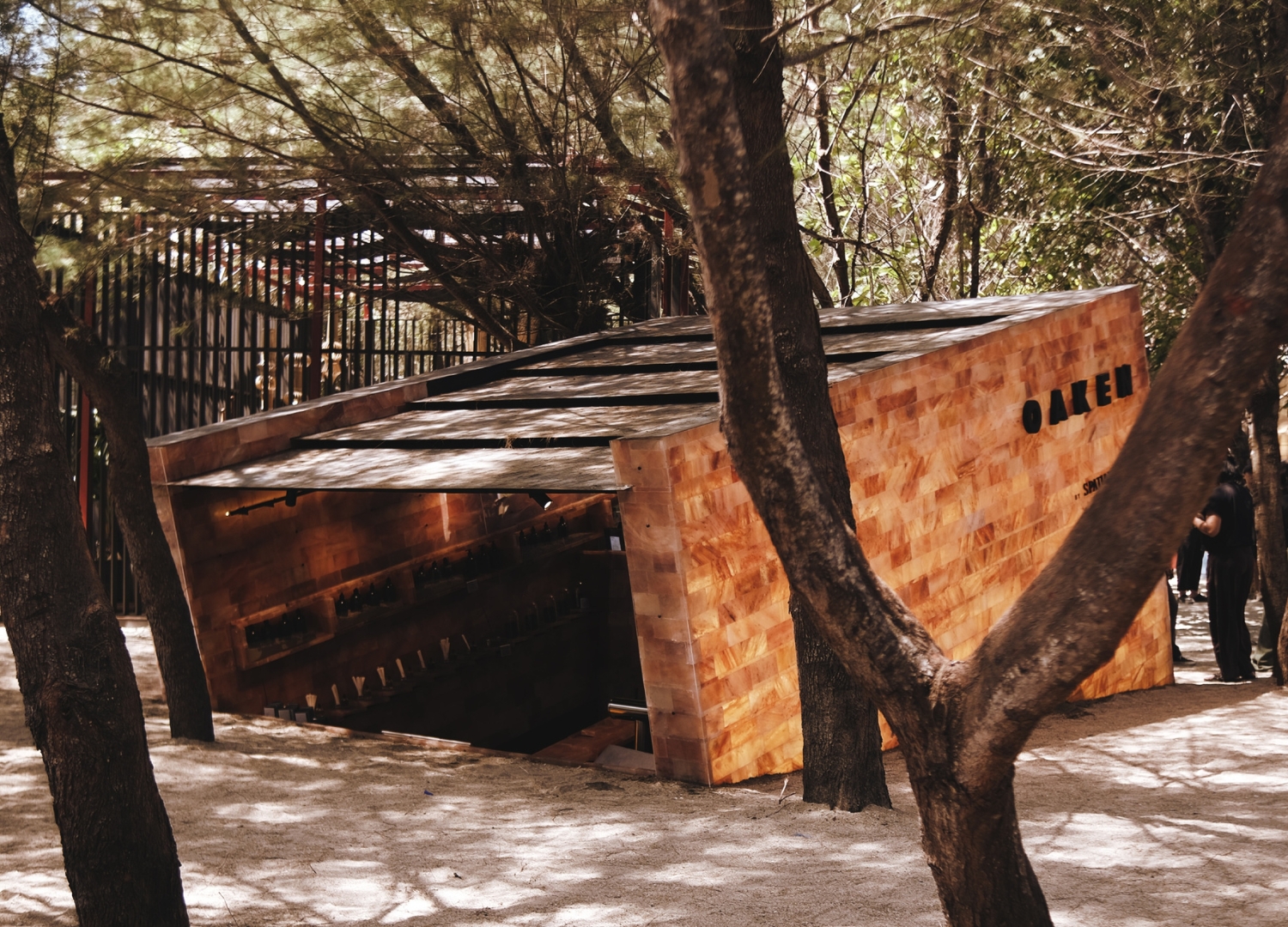
The artisanal perfumery Oaken Lab presented Tiltroom, an immersive pavilion that explores the relationship between fragrance, architecture, material, and ritual. Conceived as a contemporary interpretation of a traditional salt chamber, the installation is built from Himalayan salt bricks and partially embedded within the landscape of Pengembak Beach.
Developed in collaboration with Tuscany Stone Boutique and designed by Spatial Sonata, Tiltroom transforms Oaken Lab’s fragrances into a multisensory experience through touch, taste, atmosphere and movement.