At Lake Como Design Festival 2025, fragmentation is both a condition and a catalyst for regeneration and rebirth
The Contemporary Design Selection at Lake Como Design Festival explored fragmentation as a creative act, a form of resistance, and a right to multiplicity of expression.

From September 14 to 21, the city of Como and the stunning shores of its lake hosted designers, artisans, architects, and artists for the seventh edition of the Lake Como Design Festival. As in previous years, a thematic fil rouge ran through what has come to feel like an open-air gallery of art and design spread across the city.
This year’s theme, “Fragments,” resonates in particular for the interpretation offered by both the festival’s curators and its participants: fragmentation as a regenerative act, a process of rebirth, and an opportunity to remember, reconnect, and rebuild. It is a deeply contemporary and strikingly transgenerational theme, engaging with a historical moment in which fragmentation reveals itself in the social sphere, spreads through the environmental one, finds fertile ground in politics, and quietly echoes within the individual and intimate realm. What role, then, can design play in this age of fracture?
Among the many exhibitions dedicated to the idea of fragmentation as a design perspective, the Contemporary Design Selection, curated by Giovanna Massoni, developed along a winding exhibition path through the park of the Chilometro della Conoscenza, overlooking Lake Como. Designers, architects, artisans, and artists were invited to present works that explored the idea of fragmentation from three distinct perspectives:
- Fragility, understood as the aesthetics of breakage, the value of the ephemeral, and the beauty of transformation;
- Regeneration, seen as the recovery and transformation of what is often considered waste, restoring dignity and value to discarded matter;
- Memory, as an archive of stories and fragments that preserve and narrate cultures, techniques, and traditions.
Gallery
Open full width
Open full width
We encountered ten projects that, in our view, best interpreted the theme of fragmentation not only as a creative act, but also as an act of resistance and self-expression. Ten works in which, to borrow the words of Lorenzo Butti—founder and creative director of the festival—“fragmentation also emerges as a conscious gesture that challenges conformity and asserts the right to the plurality of expression.”
Contemporary Design Selection:
Testa, testae by Næssi
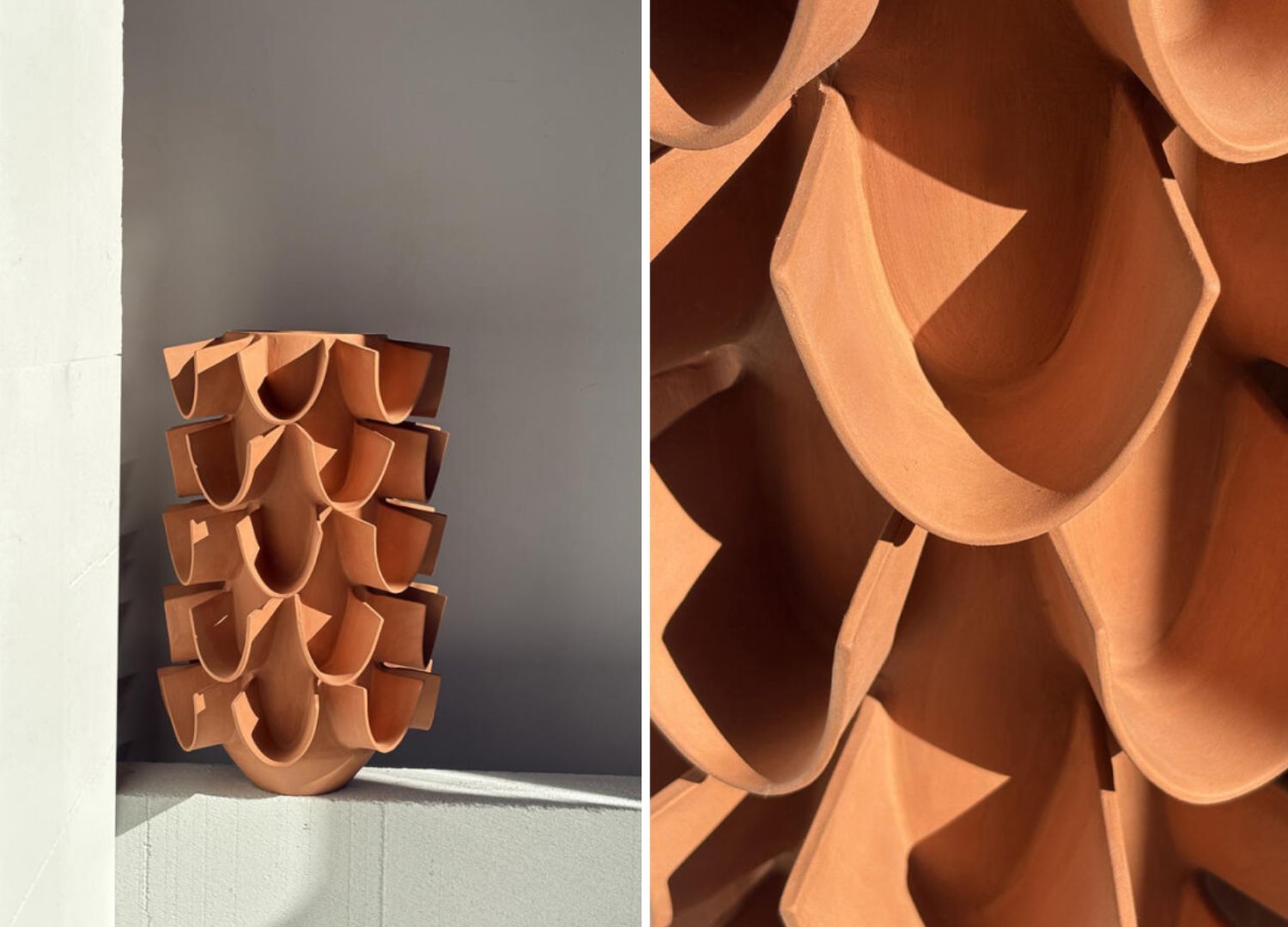
Rome is the city where the studio Næssi—founded by Eleonora Carbone and Alessandro D’Angeli—is based, but it is also the place where the studio’s visual and conceptual exploration around fragmentation was born and continues to evolve. Testa, Testae is the formal result of a long-standing investigation into fragments, with Rome as its ideal geographical and cultural backdrop.
The Testae terracotta vases are inspired by Monte Testaccio—also known as the “Mountain of Shards”—an artificial mound formed between the Augustan age and the mid-3rd century AD, made up of millions upon millions of broken terracotta amphorae.
The collection Testa, testae (from the Latin meaning “tile,” but also “brick” or “fragment”) represents a re-stitching of these fragments, which regain both life and value. Archetypal in form, these vases are decorative objects, but also narratives: they tell a fragment of Rome and its extraordinary history.
LoungeChair by FlatFlat
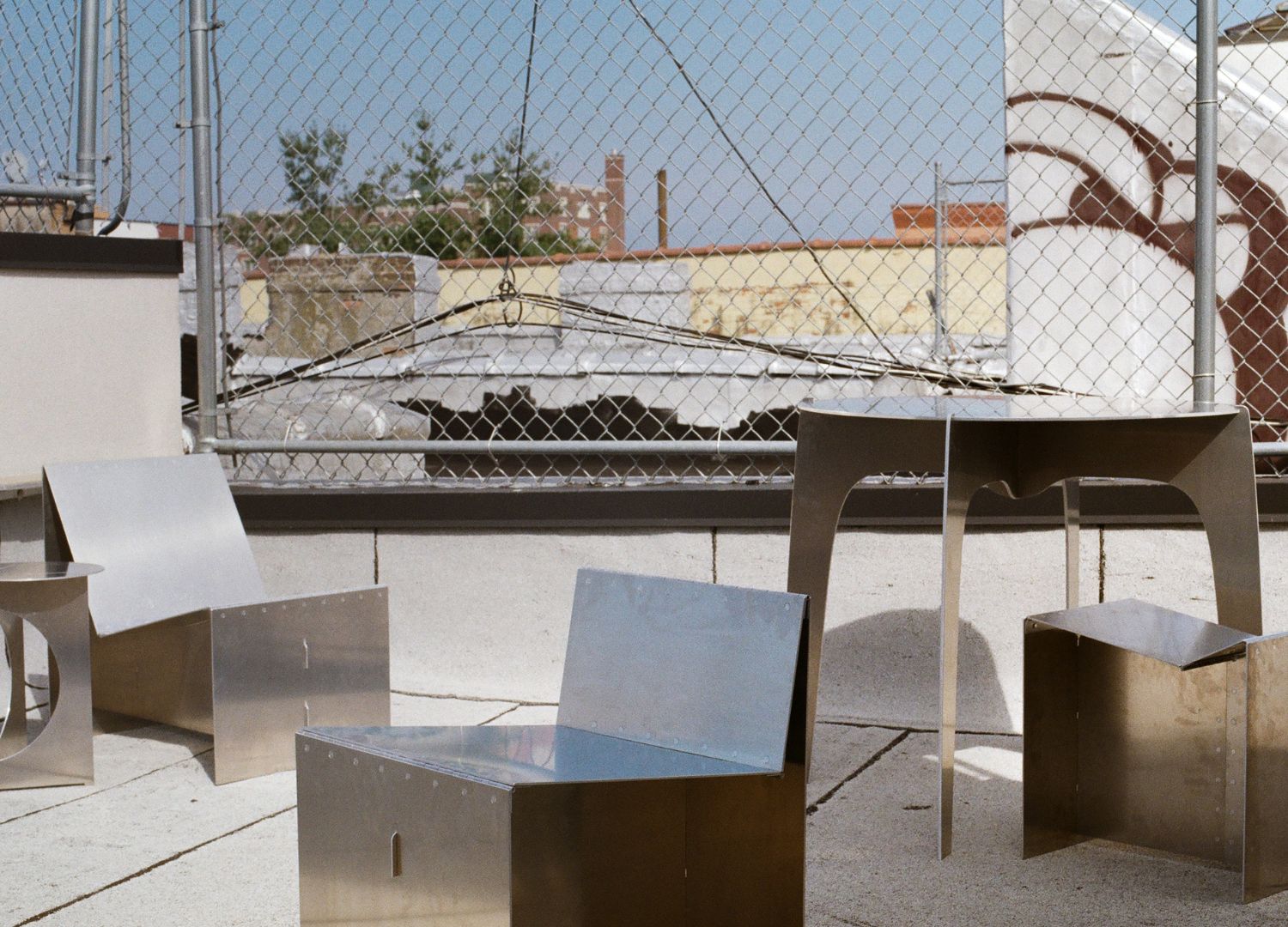
FlatFlat is the U.S.-based design studio founded by young designer Aidan Reinhold. The project Aidan presented at the 2025 Lake Como Design Festival stems from an experience that is both personal and collective: the abandonment of furniture. The LoungeChair was born from the need to ease the moving process from one home to another—a familiar experience for its designer—which often leads people to give up their furniture. But it also comes from observing the disturbing amount of waste and discarded furniture on the streets of New York City, where FlatFlat is based.
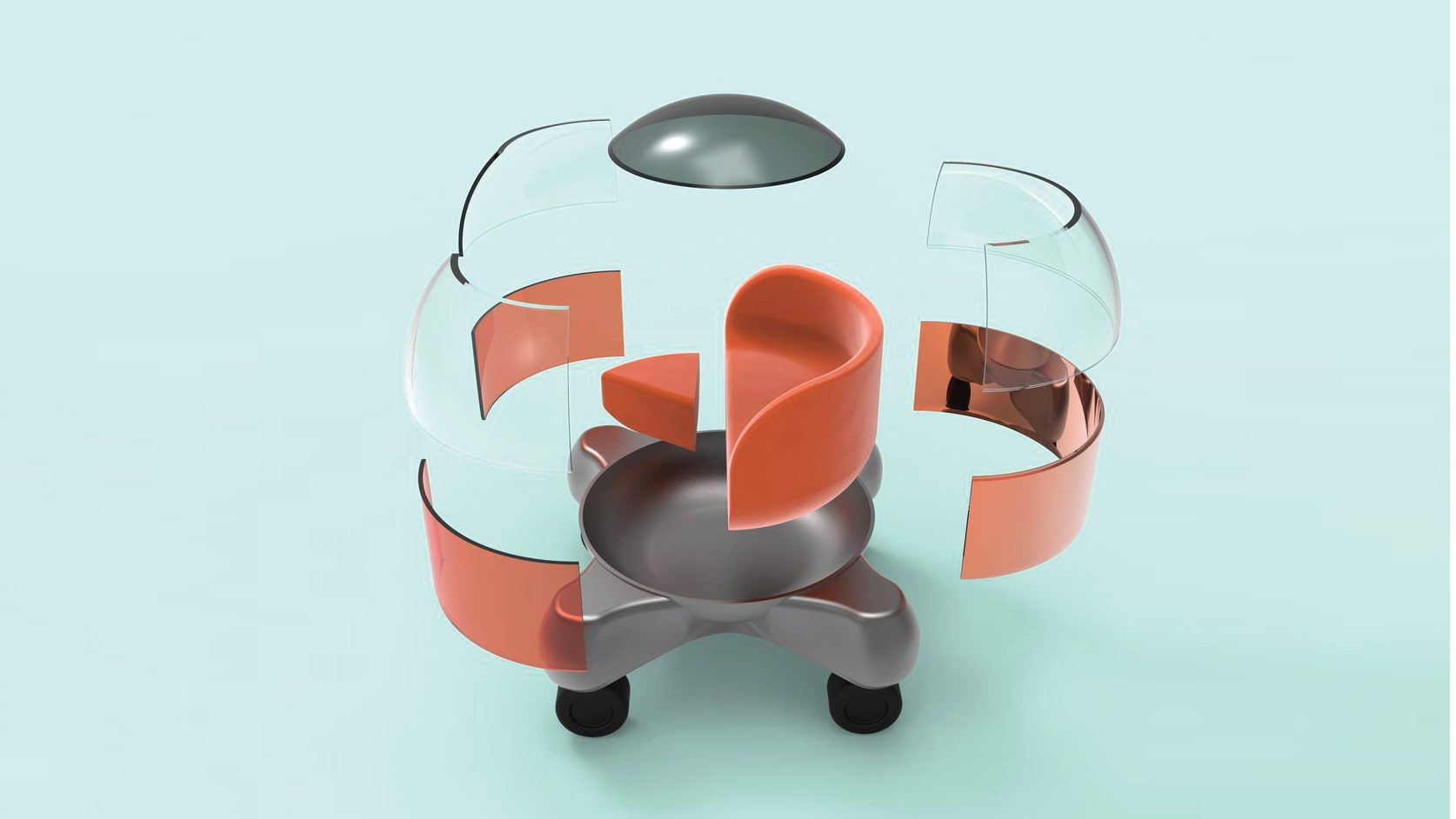
Laser-cut locally from aluminum sheets and assembled with aluminum hinges and rivets, the Lounge Chair is designed to fold in just a few seconds and be carried wherever your next destination may be. The choice of aluminum is no coincidence: it makes the chair infinitely recyclable, durable, and lightweight. In short, it’s impossible to leave behind.
Contemplation Bench by Verstrepen Studio
“The most ecological design is one that’s not made at all. We should avoid creating products solely based on trends and consider alternative solutions.” – Verstrepen Studio’s Manifesto
The manifesto of Belgian design studio Verstrepen Studio is both a critique and a strategic proposal aimed at contemporary design. From this self-authored statement emerges the studio’s design approach: a practice that embraces imperfection and the sensory dimension of objects, while aligning with principles of circularity and craftsmanship.
The Contemplation Benches—part of a larger collection—have been placed lakeside within the Parco del Chilometro della Conoscenza. Each bench features a block of black stone, a fragment manually recovered by designer Joris Verstrepen from the Bertrix schist quarry in Belgium. The stone rests on an aluminum structure, forming a seat that can also function as a low table. As one approaches the piece, the stone’s rich and unexpected texture is revealed, transforming the product into something to observe and interact with: an invitation to sit, pause, and contemplate.

Decoro Mediterraneo by Eleonora Todde
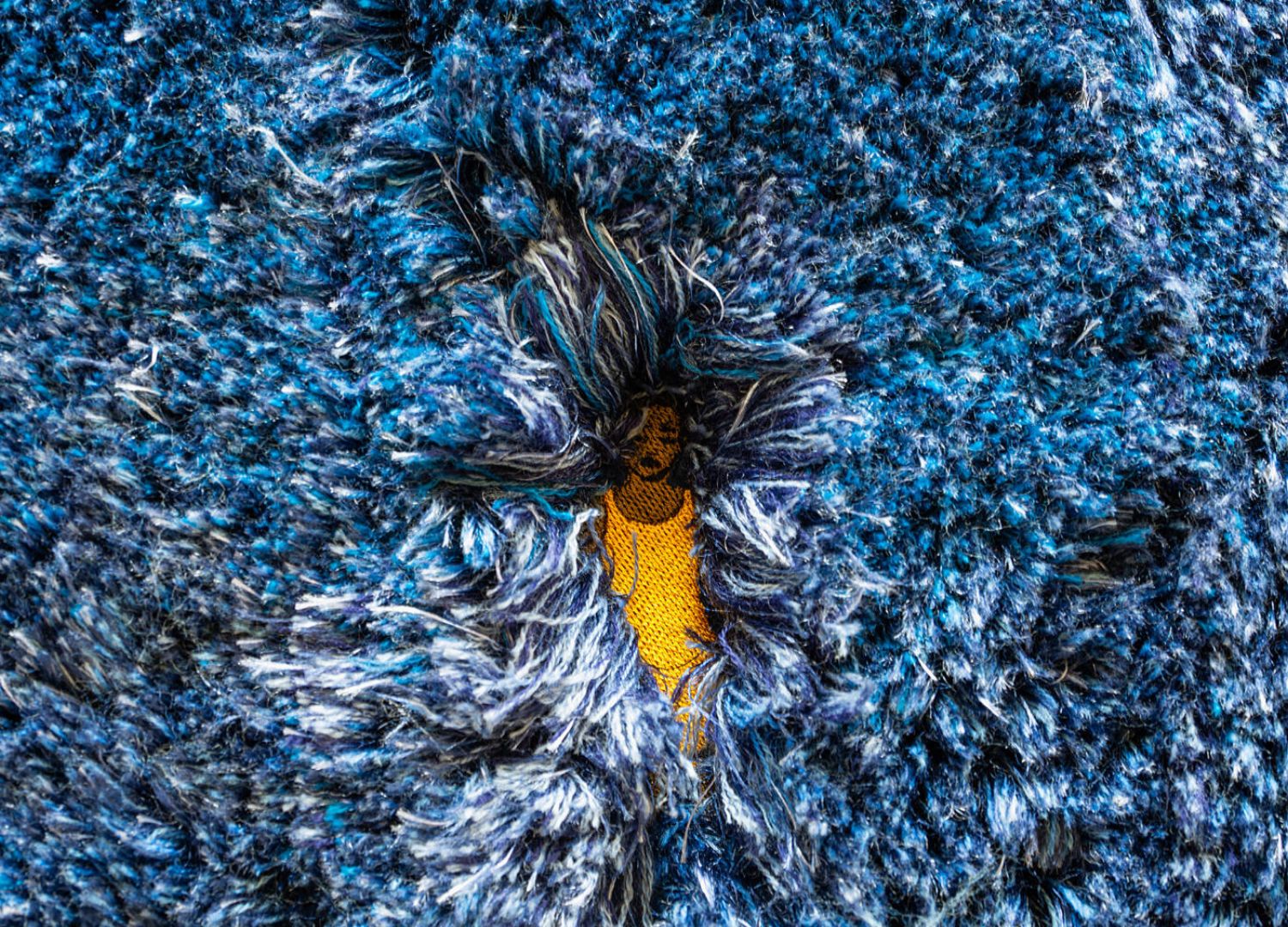
Eleonora Todde is an Italian designer who creates objects and spaces meant to evoke emotion, reflection, and wonder. The rug presented at the Lake Como Design Festival, Decoro Mediterraneo, is, in every sense, an interactive path of discovery. Designed to evoke a magnificent fragment of the sea, it reveals its full complexity only through touch. Hidden within its deep blue fibers are numerous human figures: men and women lying just beneath the surface.
These details, imperceptible at first glance, tell a dual story: they are bodies gently cradled by the waves, or lost, victims of a tragic fate, of a story born from the search for hope. They are fragments of narratives the Mediterranean Sea knows all too well, and which Eleonora brings closer to us through a work suspended between dream and tragedy.
A piece as beautiful and intense as it is, at times, “unbearable” for the emotional weight it carries; yet necessary, in the way it urges us to reflect on that fragile, shifting boundary between hope and despair, between the search for safety and the threat of tragedy.
Tempesta Bench by Monostudio
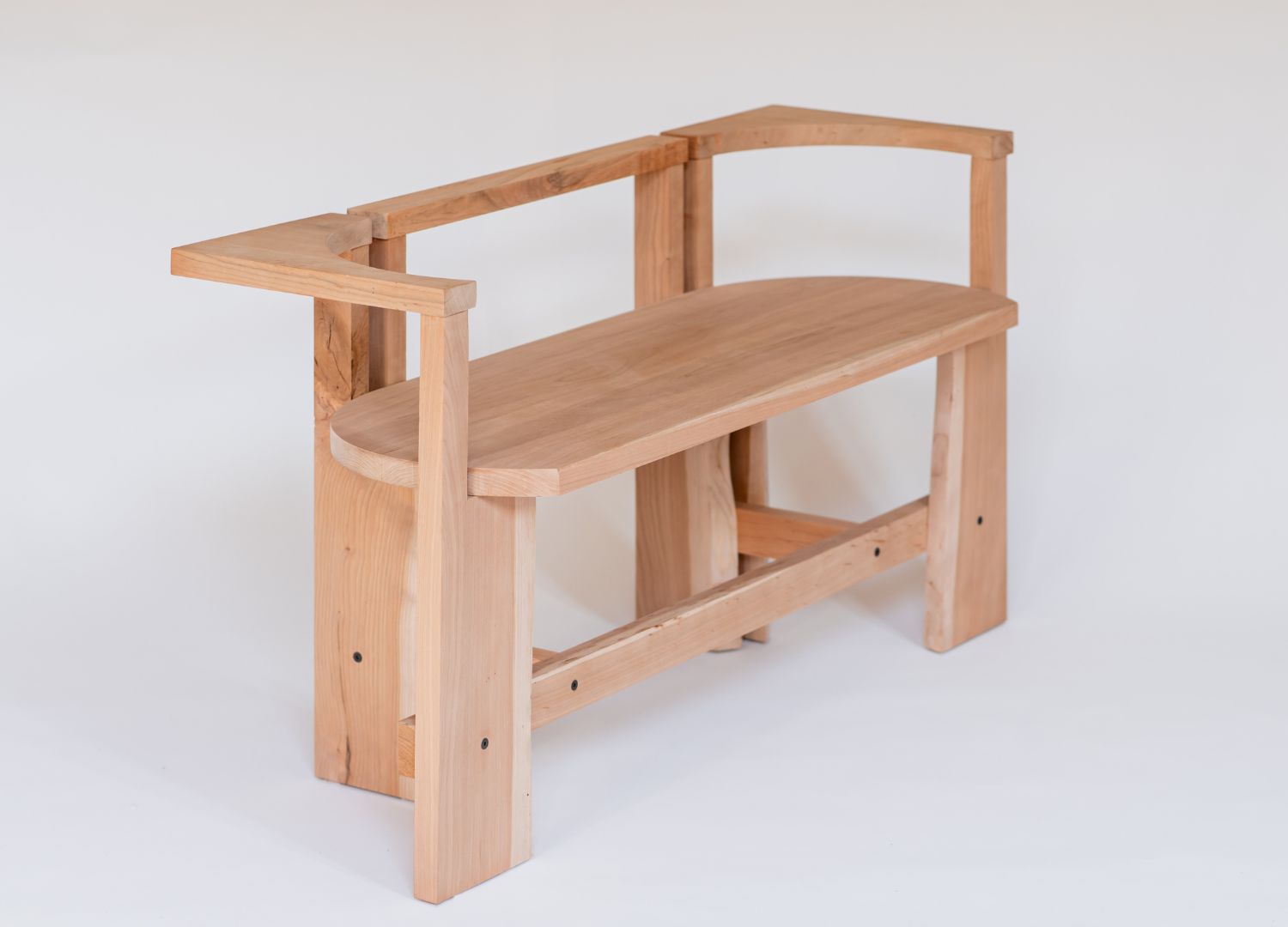
Storytelling is central to Monostudio’s design approach, which values the power of stories to reveal how each object is made. In the case of the Tempesta Bench, the story is embedded in the name itself. The bench was crafted from the recovered wood of a tree felled by one of the increasingly frequent storms that hit the Lombardy region of Italy, where the studio is based.
From these fragments of destruction, the Tempesta cherry wood bench was born. The bench is designed for nature lovers and dreamers alike, bringing the raw essence of natural materials into domestic or public spaces. The bench is part of a wider furniture collection—crafted according to the same principle and recovery process—that honors the earth, sun, and sky through its materials and tones, celebrating the connection between nature and design.
Specimen by Ludovica Corti
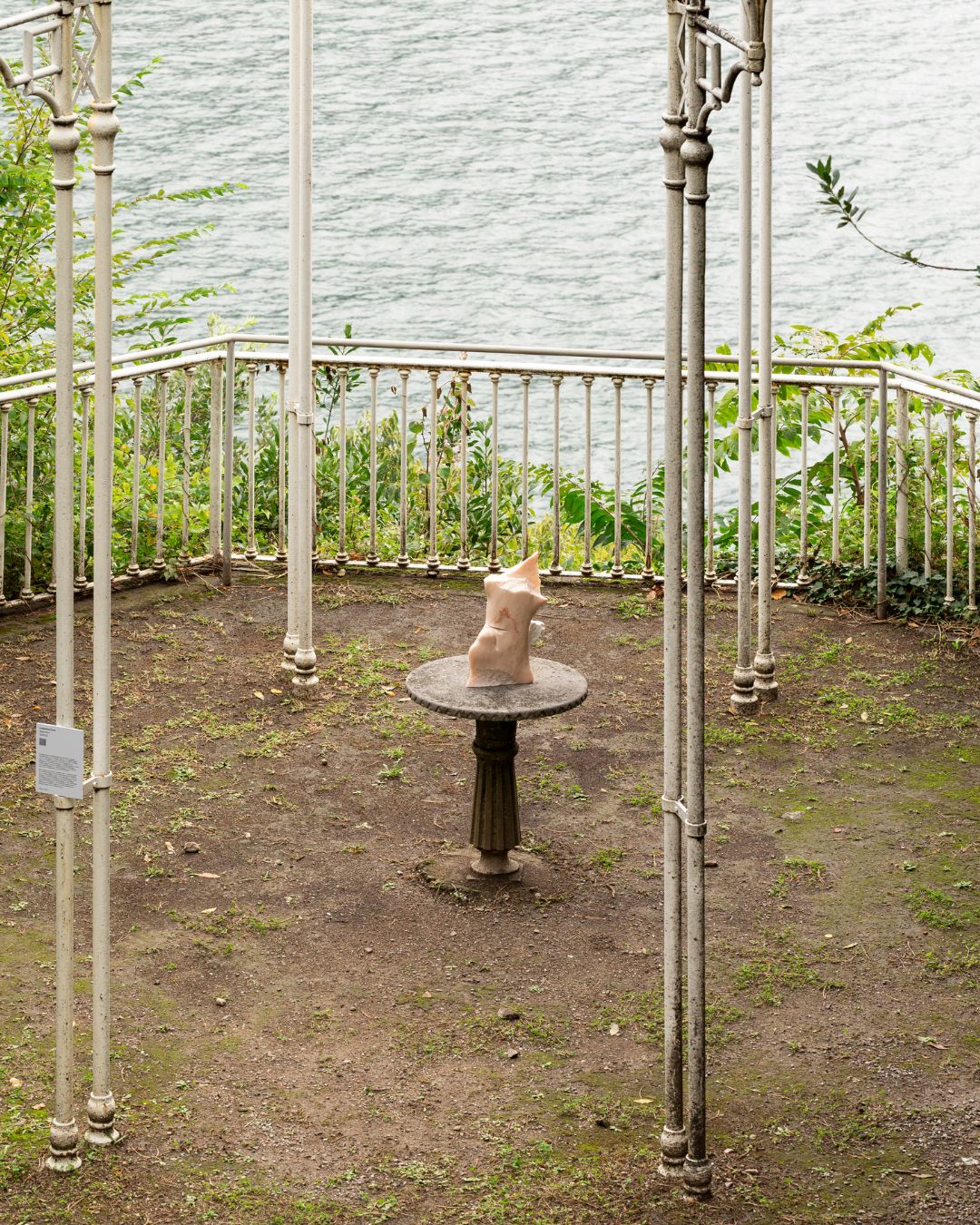
Ludovica Corti is an experimental Italian designer, guided by an instinctive approach to both material and design. Her project Specimen brings together fragments of zoology and botany in a sculptural exploration. The Specimens are a series of sculptures that belong equally to the flora and fauna realms, born from a journey through the alchemy of materials: ink, oil, pastels, plastic, marble, rocks, metals.
These sculptures represent a potential state of existence in which all possibilities coexist. Their very materiality oscillates between softness and rigidity, porosity and density, smooth and raw surfaces. By interacting with matter in a primal way, Ludovica presents works that evoke fragments of different natural worlds: objects that spark an immediate, almost instinctive sense of connection.
Remains by Omniaworks x Payam Askari
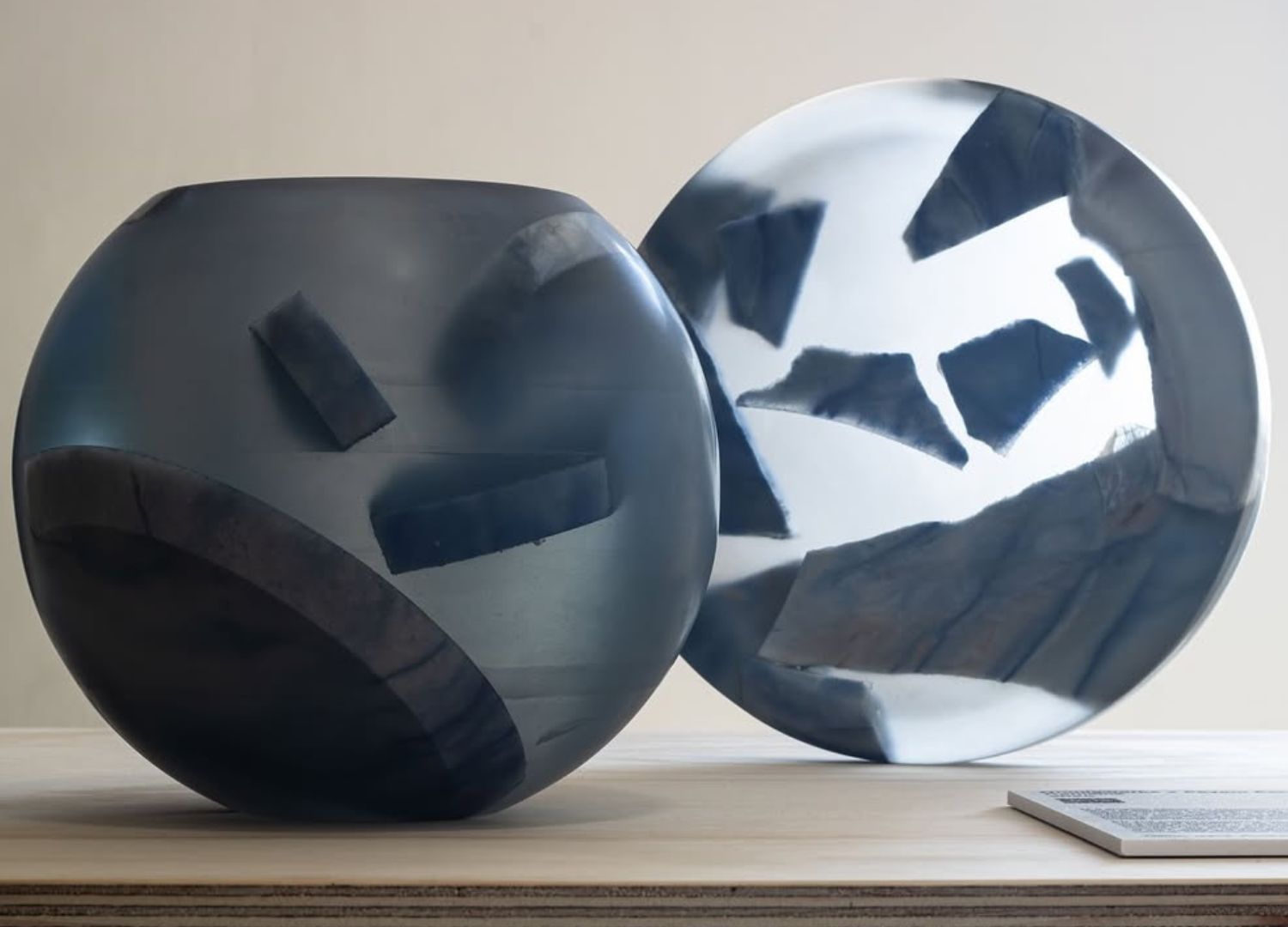
The collaboration between Omniaworks—a company operating in the field of interior design—and Payam Askari —a multidisciplinary architect and designer —led not only to the creation of a design collection called Remains, but also to the development of a new and unexpected material. Remains originates from the recovery of discarded marble fragments, collected from industrial “marble cemeteries.” Poured in layered resin, these fragments regain value, transforming into a material that highlights the shapes, colors, and extraordinary veining of the stone. This process gives rise to a striking contrast between the organic chaos of marble and the clarity of resin.
This hybrid material was then used to create the collection exhibited at the Lake Como Design Festival, which consists of a series of objects and a shelving system. The shelves themselves combine the heaviness and austerity of marble with the lightness and modernity of aluminum: once again generating a material, stylistic, and chromatic contrast that enhances both structural elements.
Ceramic Totem by Adelie Ducasse
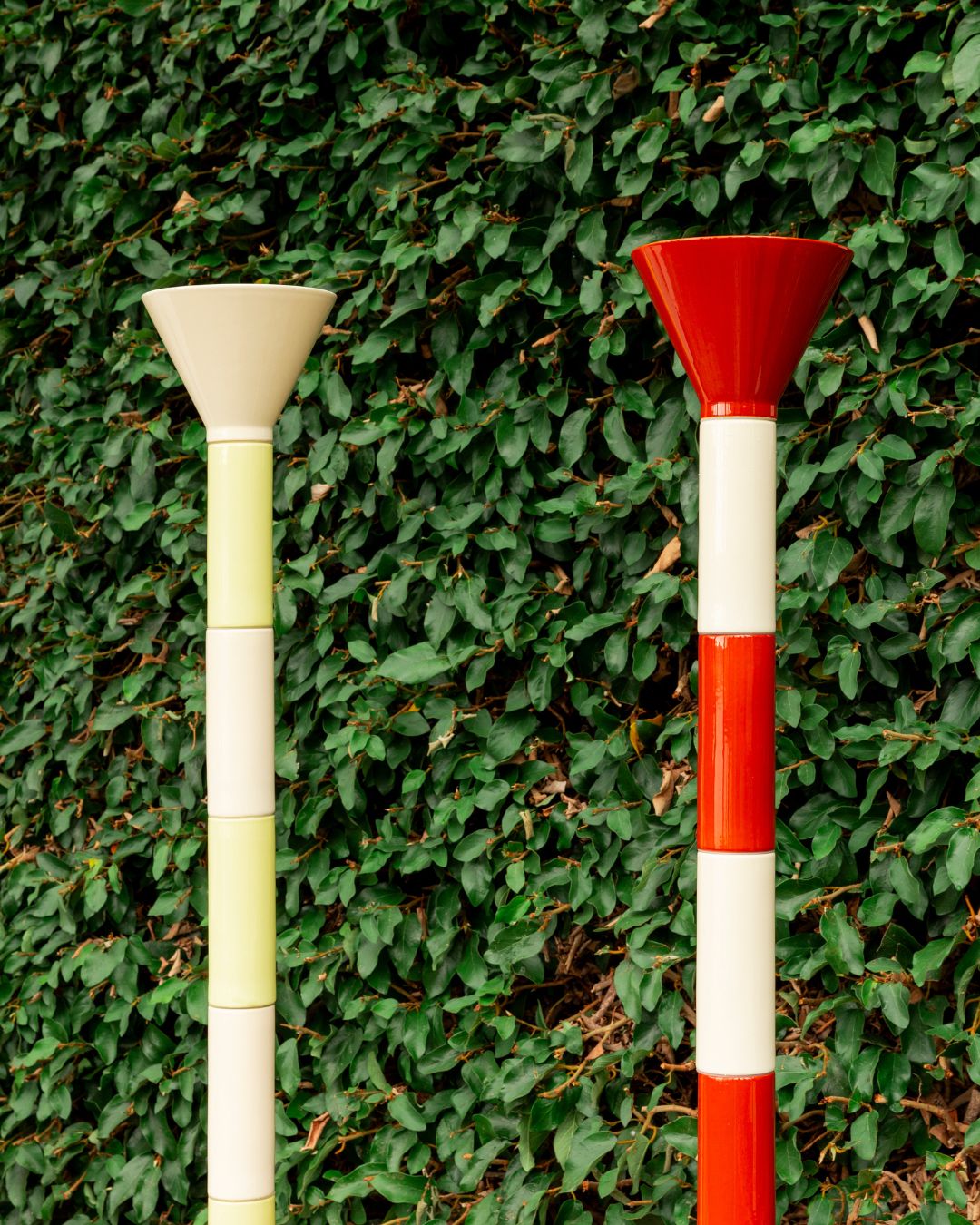
French designer Adelie Ducasse invites us into a joyful, playful universe. Inspired by the spontaneity of childhood and the vibrant colors typical of children’s toys, Adelie creates sculptural objects that are both fun and expressive. The Ceramic Totems are luminous sculptures composed of stacked simple geometric shapes and bold color combinations—like fragments of a puzzle reassembled. Each totem—handcrafted in Italy—is named after a city the designer has visited and found inspiration in, becoming a tangible fragment of her life experience.
Moonlight by Yunju Jung
There are countless dualities in the world: pain and blessing, joy and sorrow, beginning and end, heaviness and lightness. When these opposing forces meet within the individual, they can give rise to a sense of unity, from which a feeling of harmony emerges. According to interdisciplinary artist Yunju Jung, it is through the encounter—and ultimately the union—of these opposites that we can begin a journey of healing.
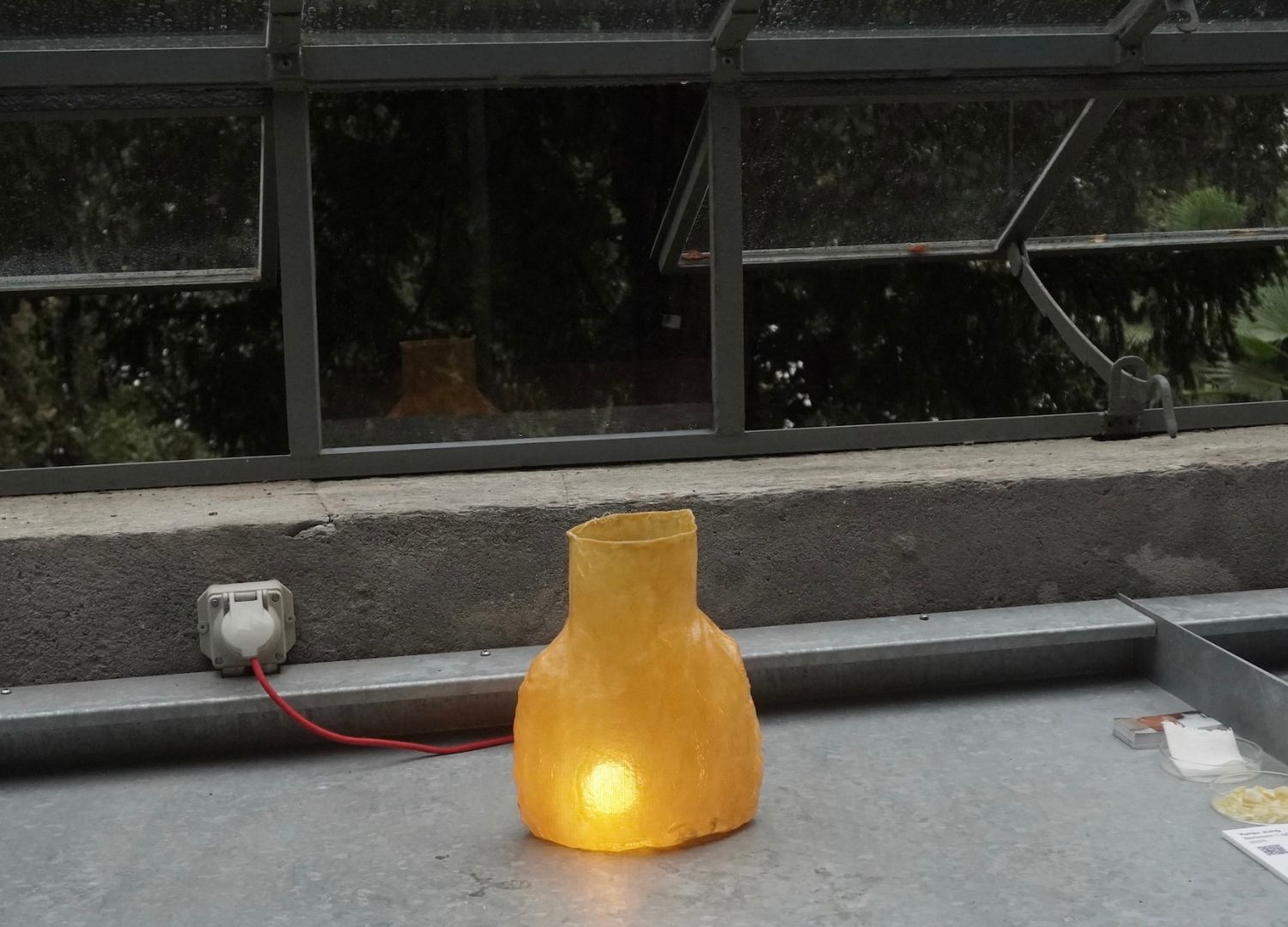
In the Moonlight piece, Yunju Jung explores this theme through the contrasting properties of materials and opposing shifts in texture. At the core of the project is the use of pine resin, a natural balsam that seeps from trees as a protective and healing substance. The making of Moonlight begins with the sewing of fabric, which is then immersed in the resin. Finally, air is blown into the piece, shaping it into form. These last two steps allow organic, accidental shapes to be captured in the object, resulting in a harmonious fusion of fabric and resin: two different elements interwoven, just like the dualities that define our lives.
Juhi Series, Houyou by Super Rat
The Juhi Series is a tribute to the Trachycarpus fortunei plant, whose bark—used for centuries in Japan as a natural alternative to nylon and vinyl in various traditional crafts—naturally wraps and protects the tree trunk. In the Hoyou portable lamp (part of the larger collection, the Juhi Series) designed by Super Rat, a Tokyo-based design studio founded by Kazuki Nagasawa, the bark is transformed into a small sculptural object that celebrates its versatility, strength, and beauty.
In the making of Hoyou, the Trachycarpus fortunei bark is shaped into a hollow conical form, topped with a metallic dome and a light source. When switched on, the lamp reveals the intricate texture of the material, and its many filaments appear to gently embrace and envelop the light. The earthy color is achieved by combining a traditional persimmon tannin dyeing technique with a mordant extracted from iron scraps, resulting in a palette of natural tones.