A fictional home, carved in stone, beneath a Brera Garden
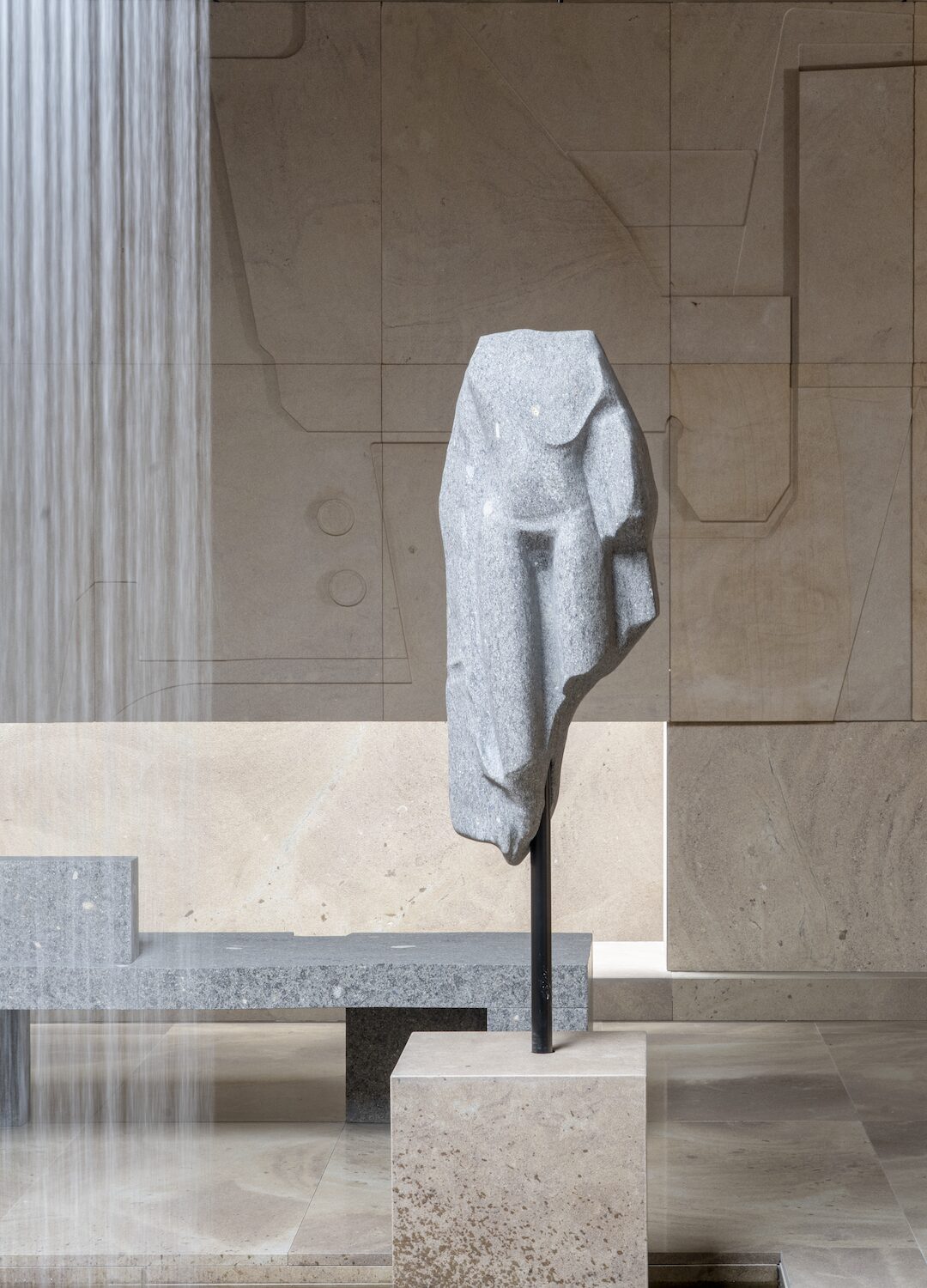
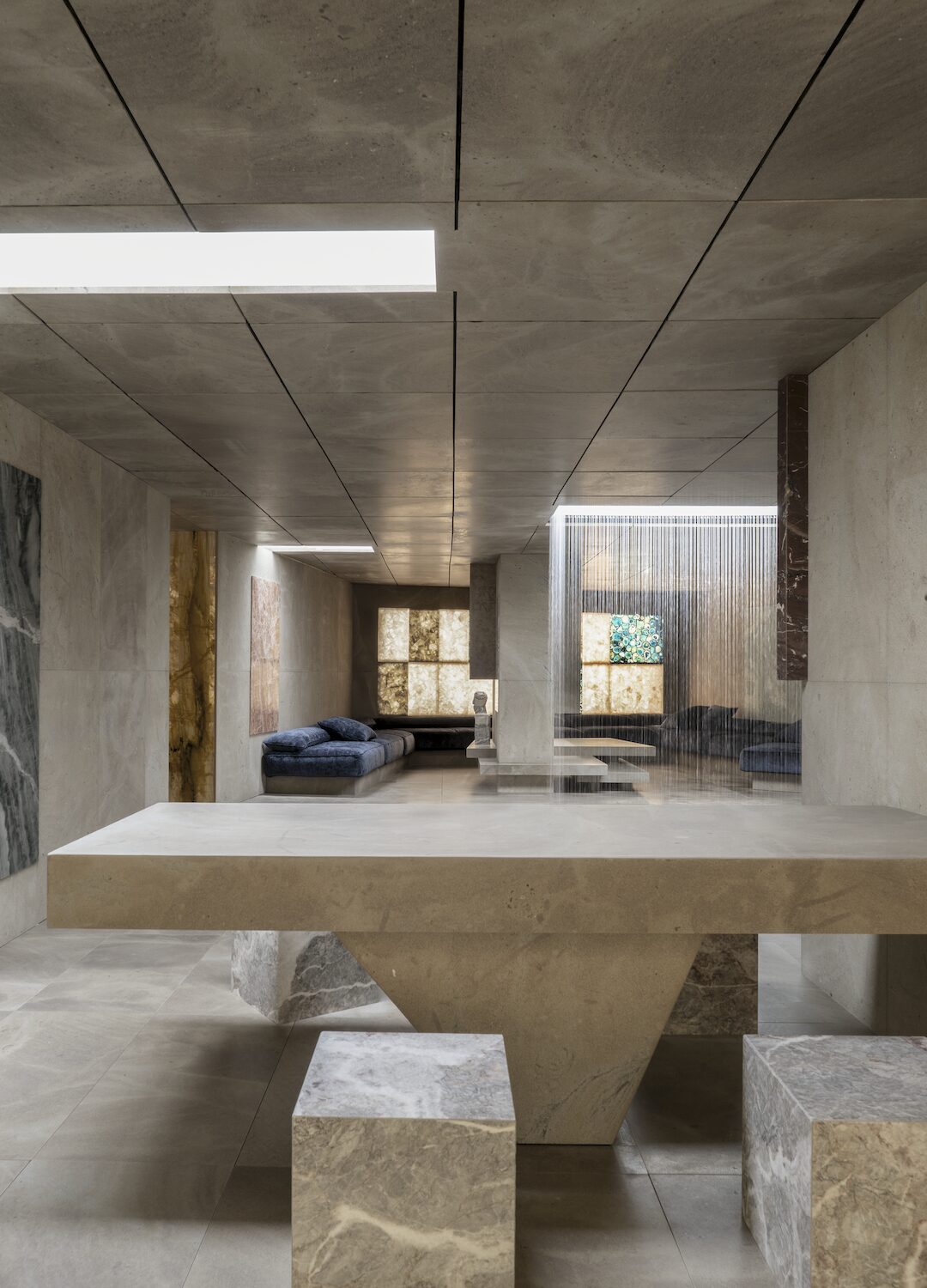
La Casa di Marmo is the result of Hannes Peer and Margraf’s collaboration for Milan Design Week 2026, an underground space where Santafiora marble covers every surface, light arrives artificially but feels almost real, and water anchors the whole like a Roman villa’s courtyard.
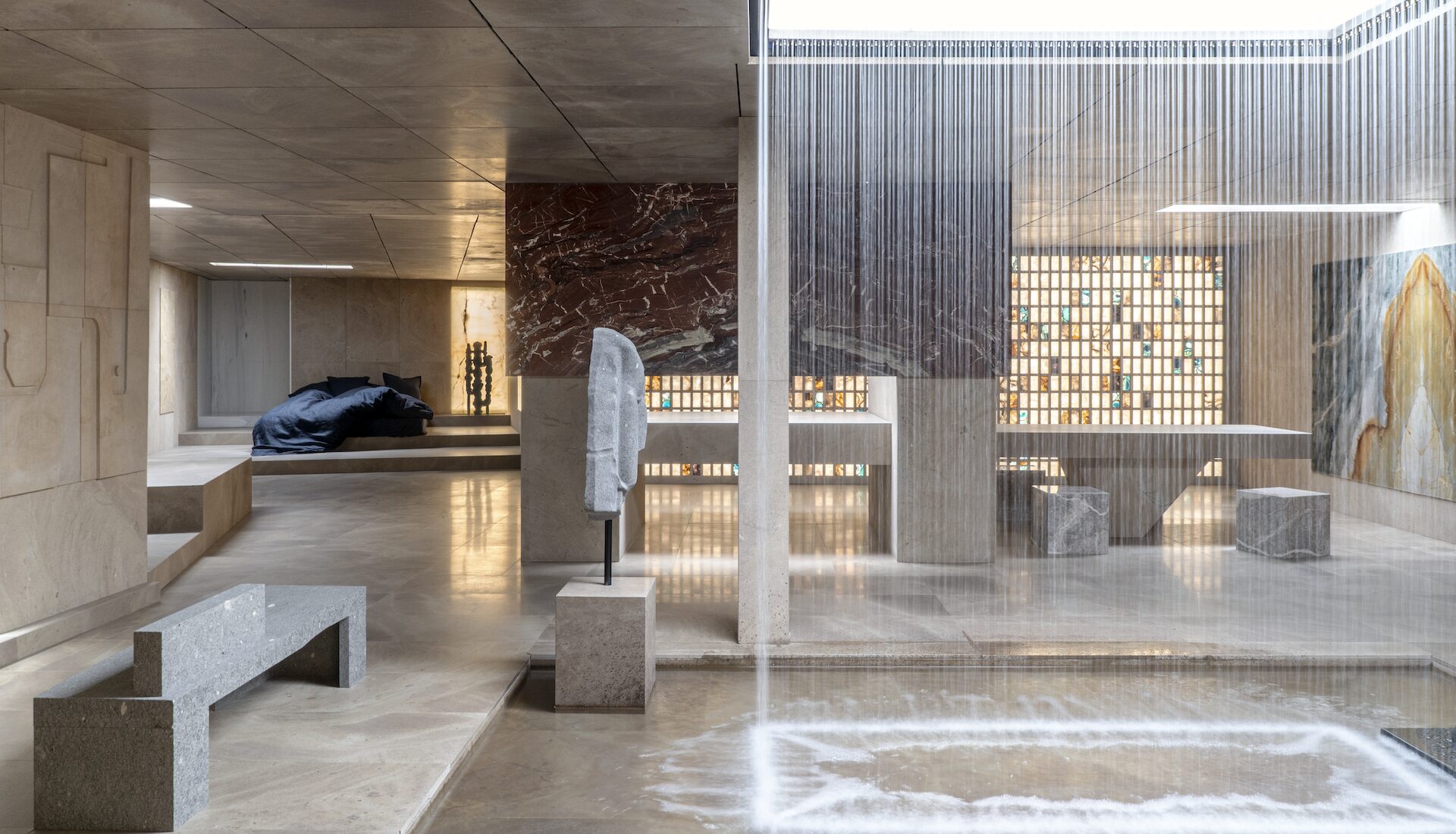
Entering the spaces of Via Cernaia 1, where Margraf and Hannes Peer showcased their work together, you enter a space that is sacred, familiar and uniquely domestic even within this underground environment where natural light cannot reach. This is something deliberately counter-intuitive in presenting a house made entirely of stone at a fair defined by novelty and surface. And yet that is precisely what La Casa di Marmo, after the success of last year’s CRASH exhibition, has done for this year– not as provocation, but as a considered position.
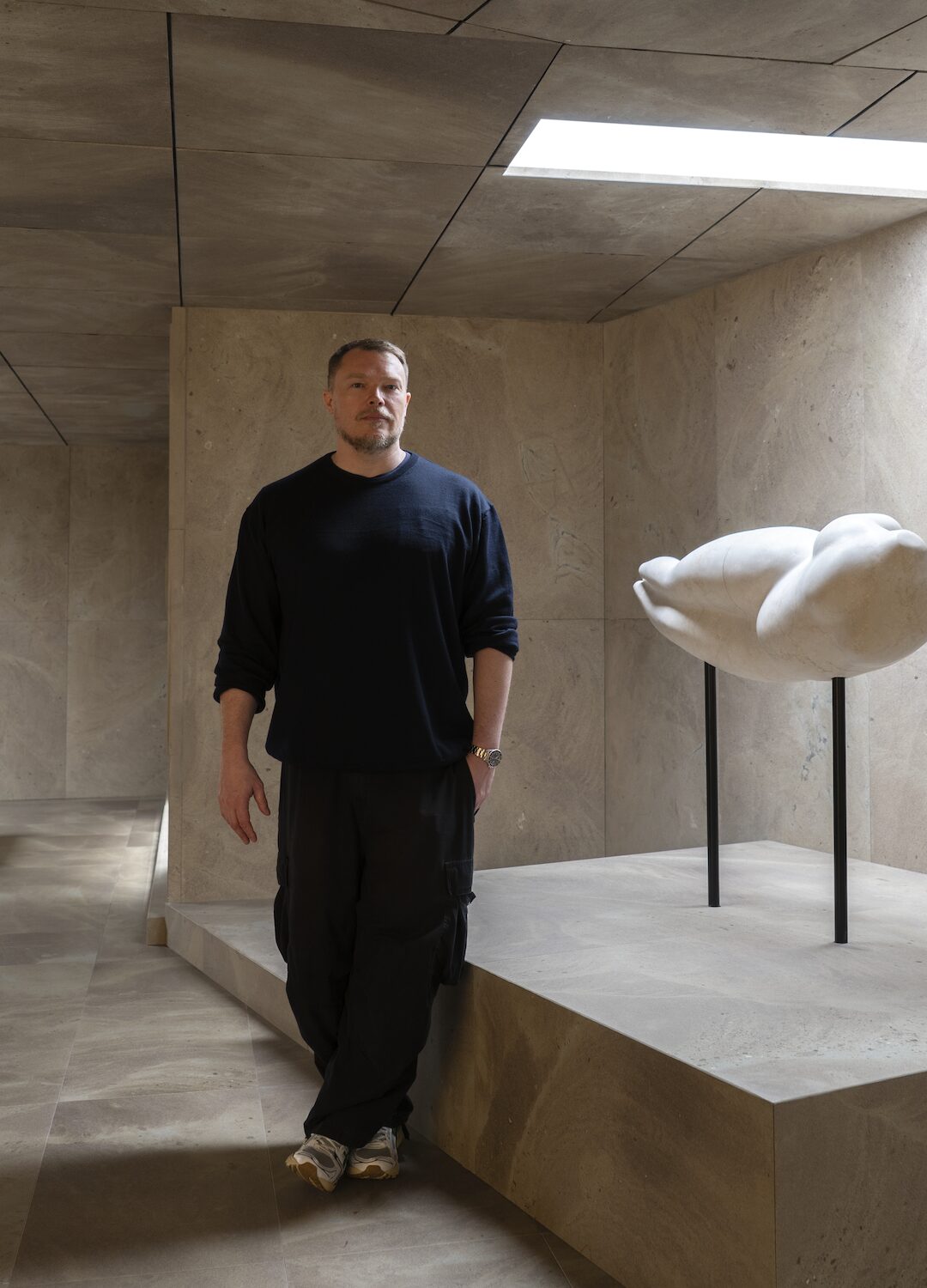
Hannes Peer built his practice between craftsmanship, material design, cultural research, spatial and architectural experimentation, which is evident in the work presented at Milan Design Week 2026. The starting point for La Casa di Marmo was, in fact and by his own admission, a very challenging one. “It’s a garage,” Peer says. “Underground, no light, no natural light.” His response was not to work around the limitations but to contradict them entirely. “I was really thinking: we’re gonna make it work, but we will completely contradict the space as it is. Bring life into the space, make it domestic.”
Gallery
Open full width
Open full width
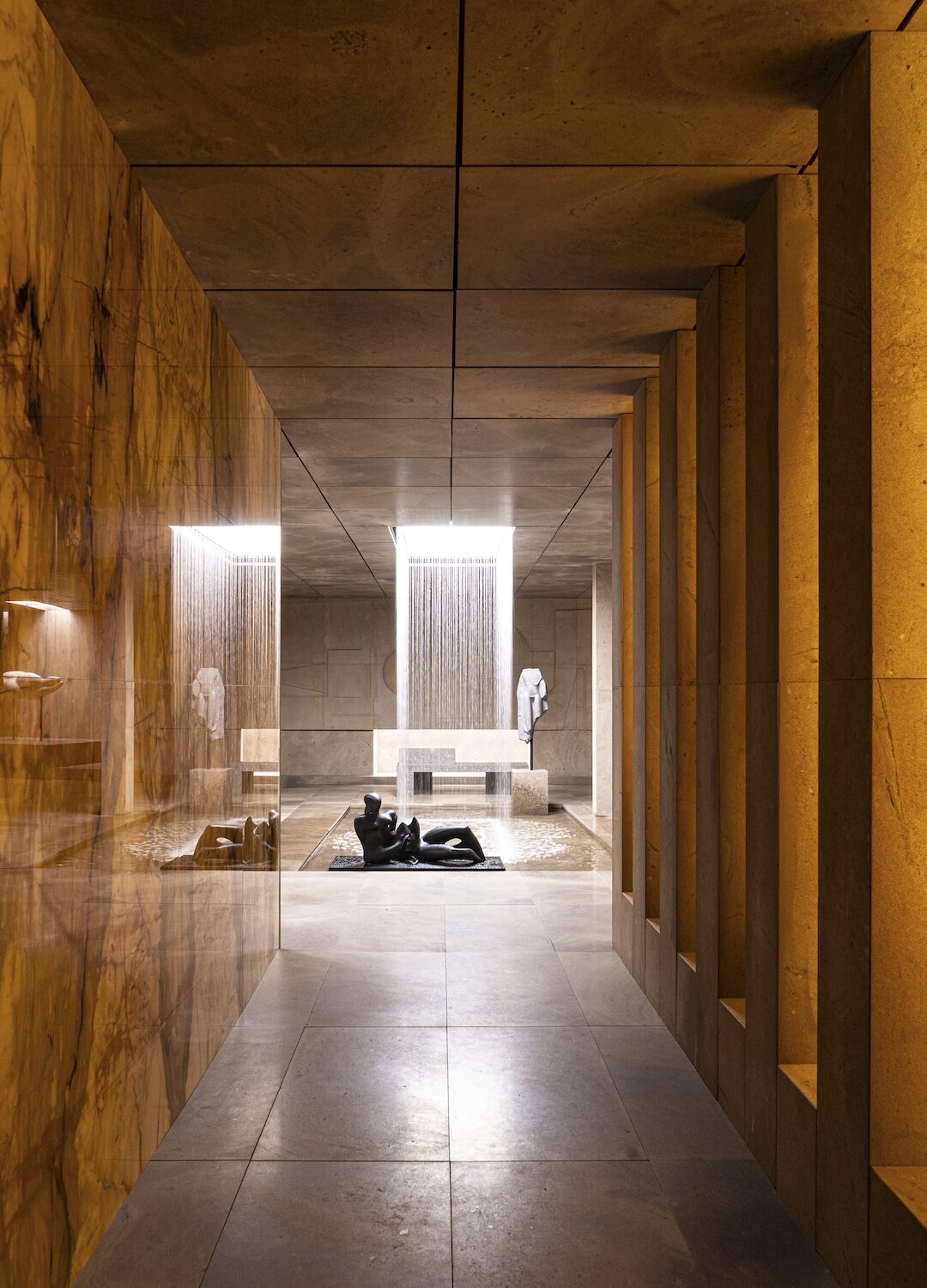
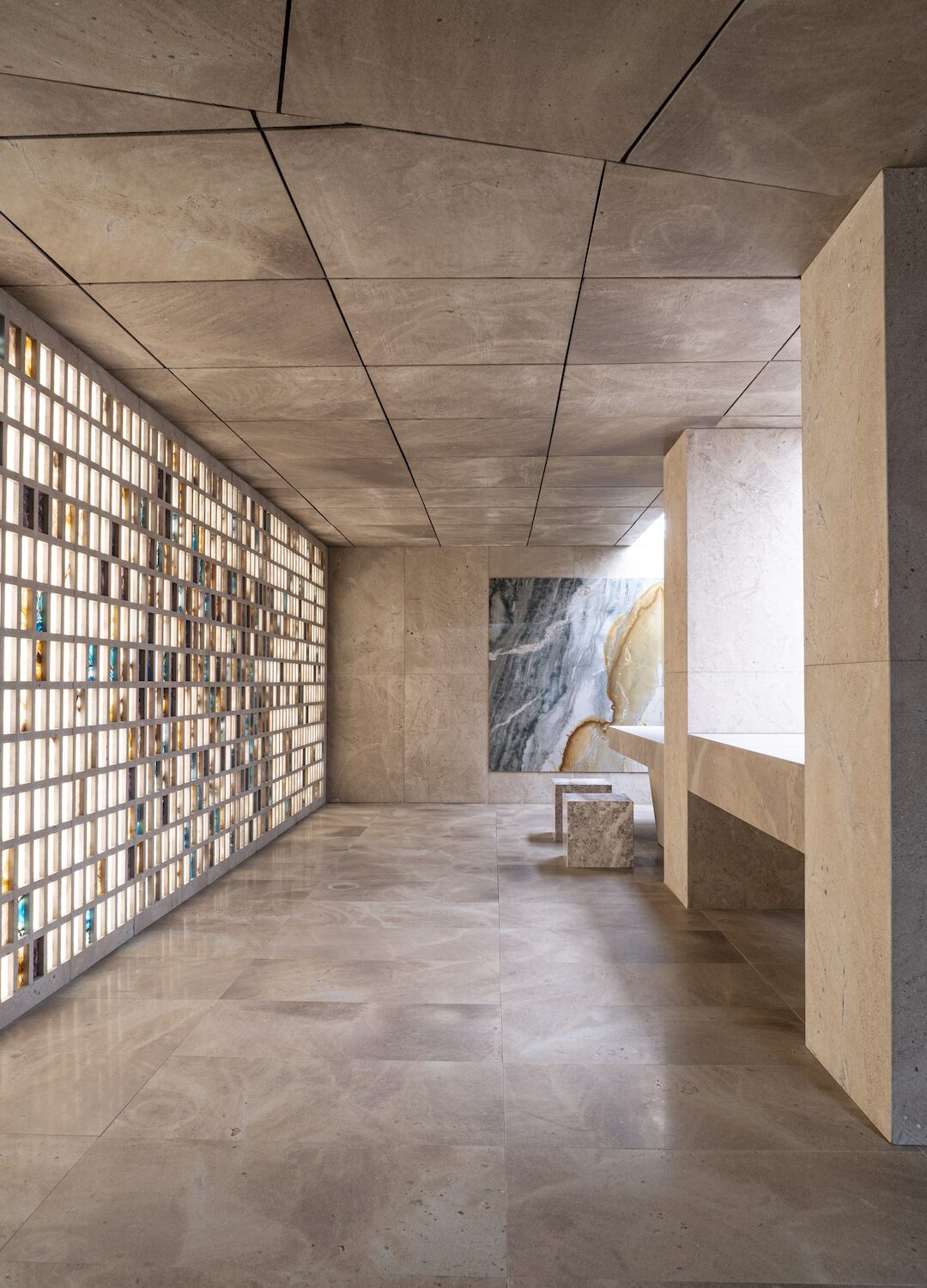
The result reverberates with the atmosphere of Carlo Scarpa but also with the visual world of Prometheus, and occupies an underground space beneath the garden of a historic villa on Via Cernaia. You descend into it via a helicoidal staircase, through a threshold that is anything but casual, into a world where walls, floors and ceilings share the same marble origin.
The primary stone is Santafiora marble, quarried in the open-air cave of Manciano in the Tuscan Maremma: dense, low-porosity, resistant to fire, thermal shock and weathering. “It’s an Italian marble, a very particular one,” Peer says. “Resembles a little bit concrete, but also it’s a bit softer, warmer.”
Santafiora clads the entire interior while the more translucent varieties – onyx, quartz, agate – were given a different role altogether. “We used the more precious marbles as paintings. So we presented them as paintings – marble on top of marble. Something quite unprecedented.”
Against the weight of all that stone, light became the critical variable. With no windows and no natural source, the lighting scheme by Buzzi & Buzzi had to convince with zenithal light and backlighting – luminous incisions woven through the space to pass through translucent stone, revealing its internal stratification. “A lot of architects were actually asking where the light is coming from,” Peer says. “So I think we achieved quite a good illusion. It’s all, of course, a metaphysical illusion – that is the main idea here.”
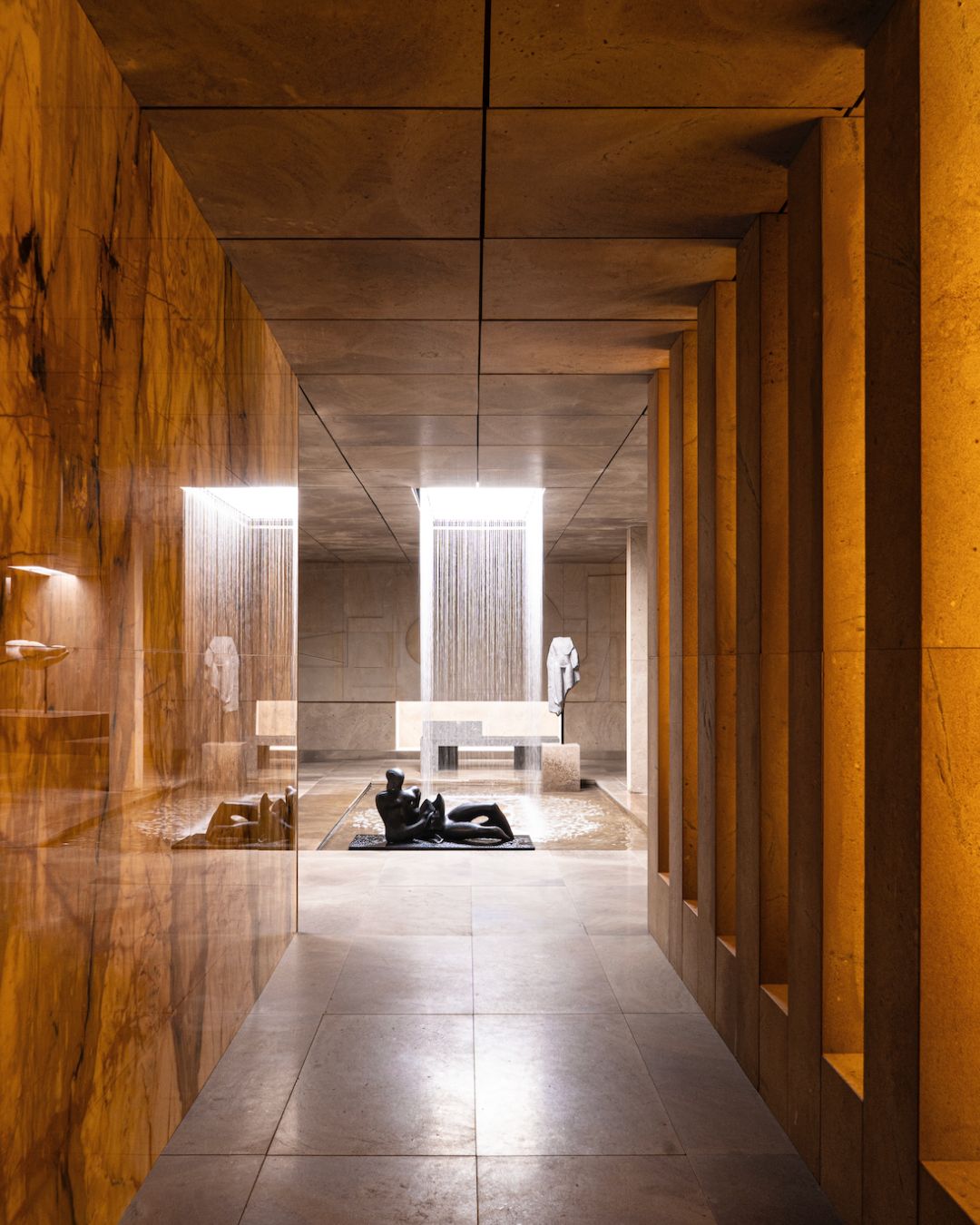
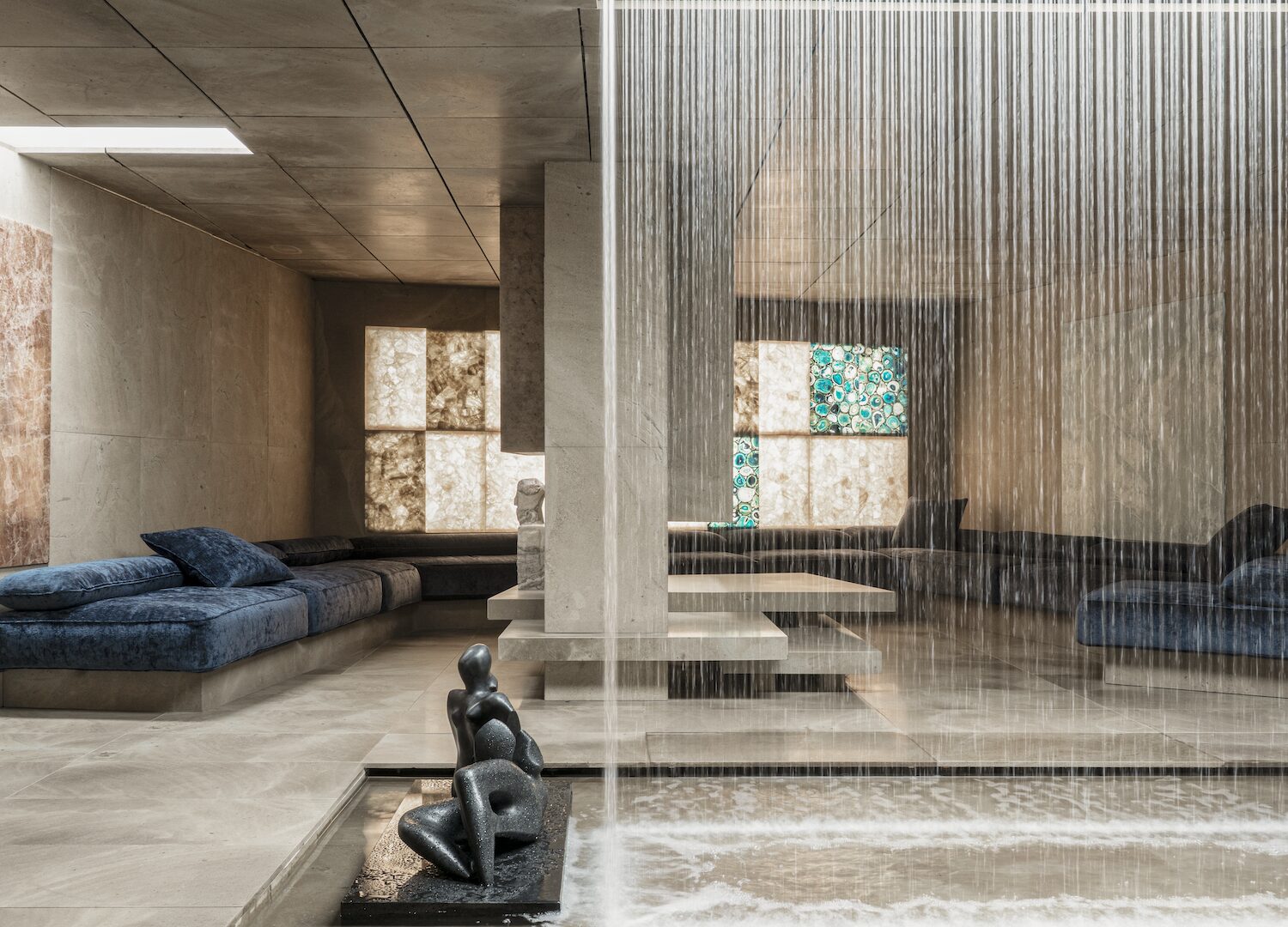
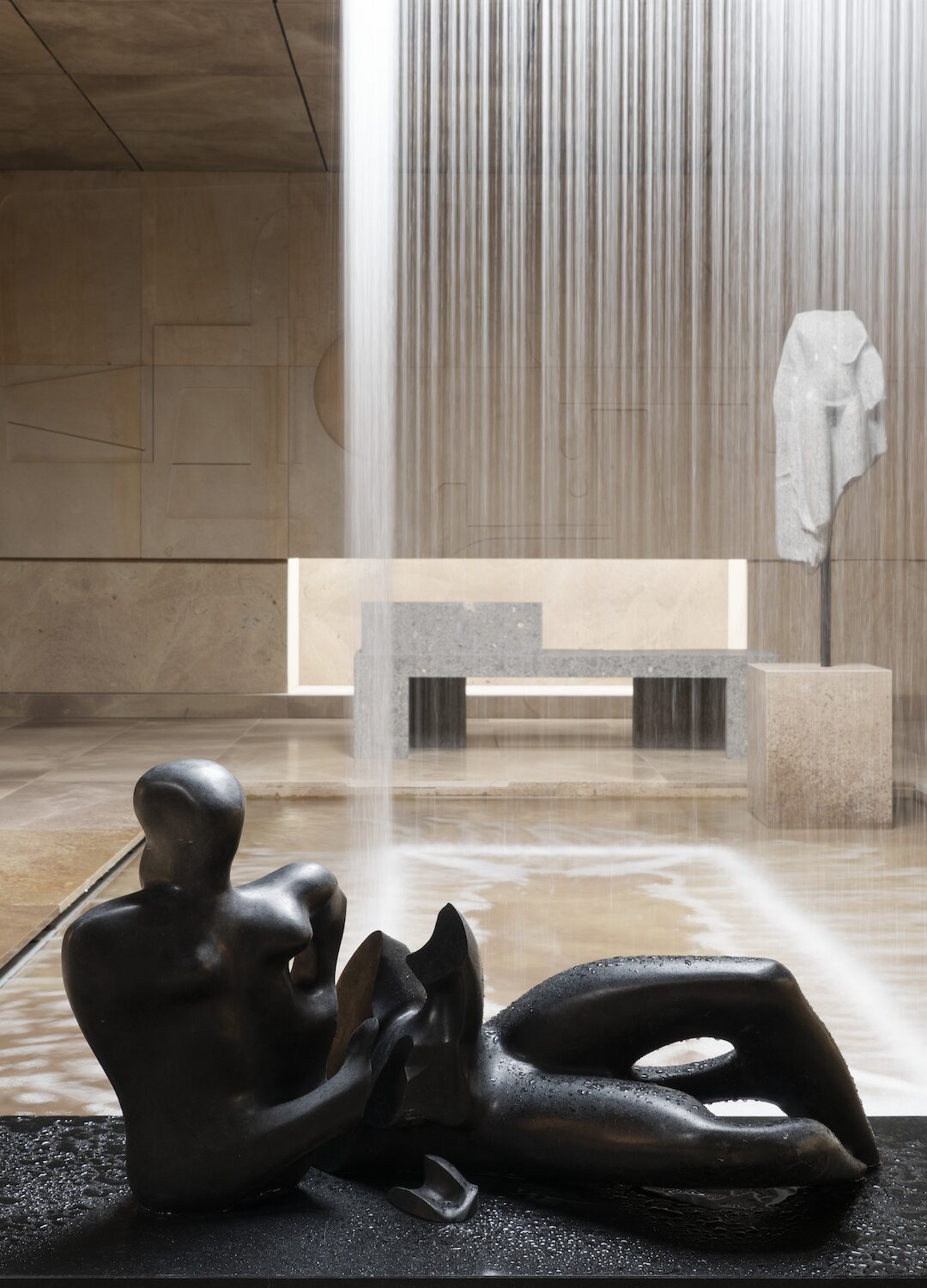
The sequence of rooms functions as a promenade, each space distinct but never disconnected from the whole. The central patio is its fulcrum, where a blade of light and a continuous sheet of water trace movement and sound across the mineral surface – two sculptures conceived as part of the project and realised with Margraf’s technical craft – inhabit the reflecting pool. The water was Hannes Peer‘s idea, and proved to be the biggest challenge the hundred-year-old company had ever faced. “If it wasn’t challenging enough already to build underground, to build an entire apartment, to bring water underground was a huge, huge challenge.” In his reading, the water feature roots the plan in the logic of the Roman villa – a centring element around which the rest of the fictional home is organised.
The conversation pit turns inward, anchored by a backlit wall of onyx and semi-precious stones developed with Taurini Pianeta Gemme. Upholstered volumes by Nalesso introduce softness without concession. The bedroom closes in around you, marble wrapping protectively, an oversized textile introducing a controlled friction between weight and warmth.
None of this would exist without what the designer describes as a genuinely collaborative process – one made possible by a client willing to follow him.
“Having a partner like Margraf – the direction, the management is very young, I think they’re in their 30s – was a very important part of the process. They are very good listeners,” he says. “And I’m a good listener, too. So we were trying to use their materials as best as we could. And we are happy with the result.”
About the author

Ludovica Proietti, journalist, design historian and curator, teaches in universities and curates events, always exploring projects with fresh, unconventional perspectives.
Instagram