The Zenbook DUO is ASUS‘s argument that a laptop deserves two screens. TIME has now sided with that argument, naming the 2026 model one of the year’s standout inventions. It is the latest milestone for a format the Taiwanese brand has refined across several generations.
Two screens, one workspace
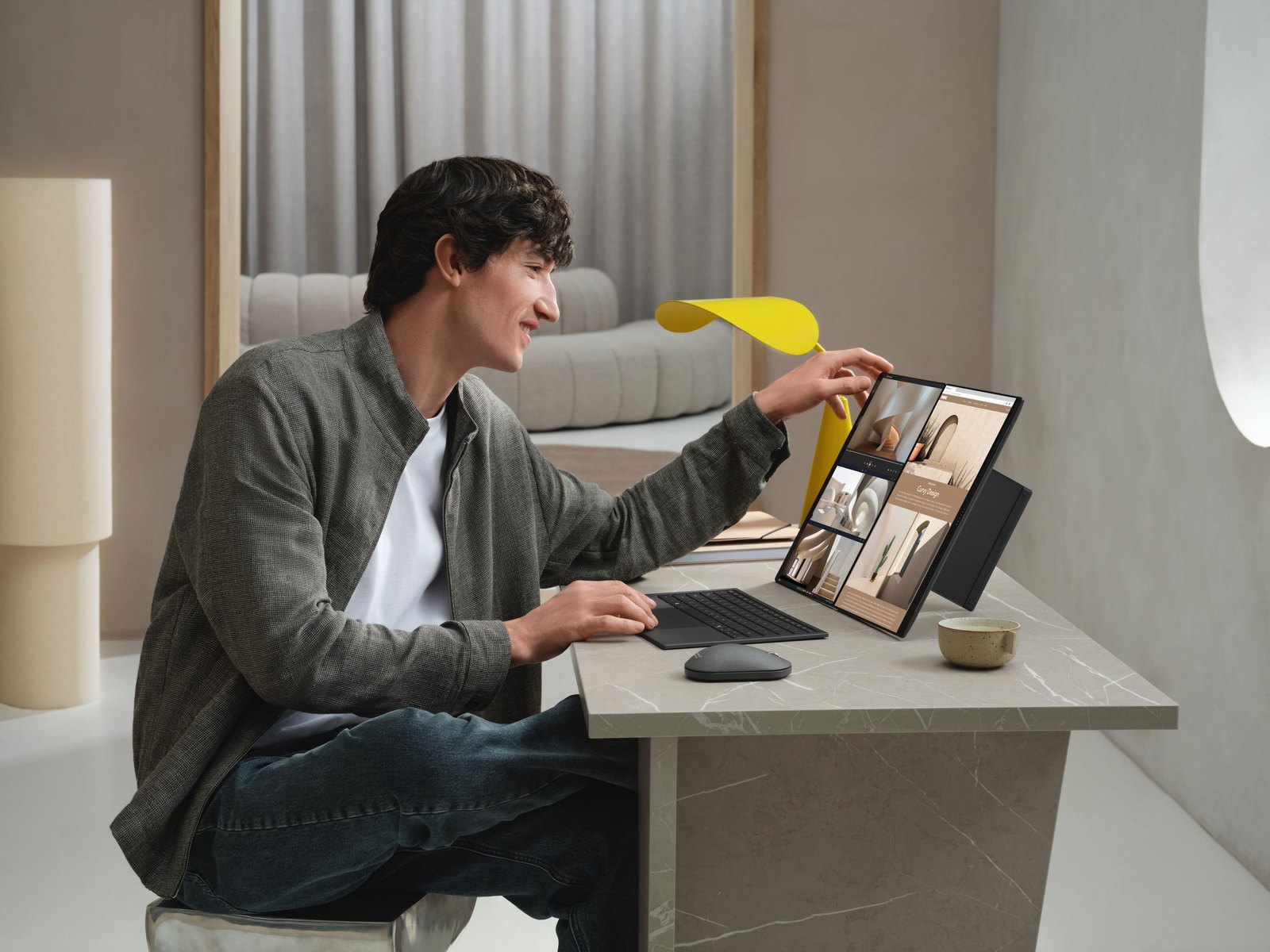
The Zenbook DUO’s defining feature is its dual 14-inch 3K ASUS Lumina Pro OLED displays, both Dolby Vision-certified and both touch-enabled. Each panel runs at a variable refresh rate of 48 to 144 Hz and reaches 1,000 nits of brightness, with an anti-reflection coating for clarity in bright light. Each panel resolves at 2880 by 1800 in a 16:10 aspect ratio, covering the full DCI-P3 colour gamut — the spec behind the Lumina Pro name. The panels are the centrepiece of a format that questions what a laptop’s display should be.
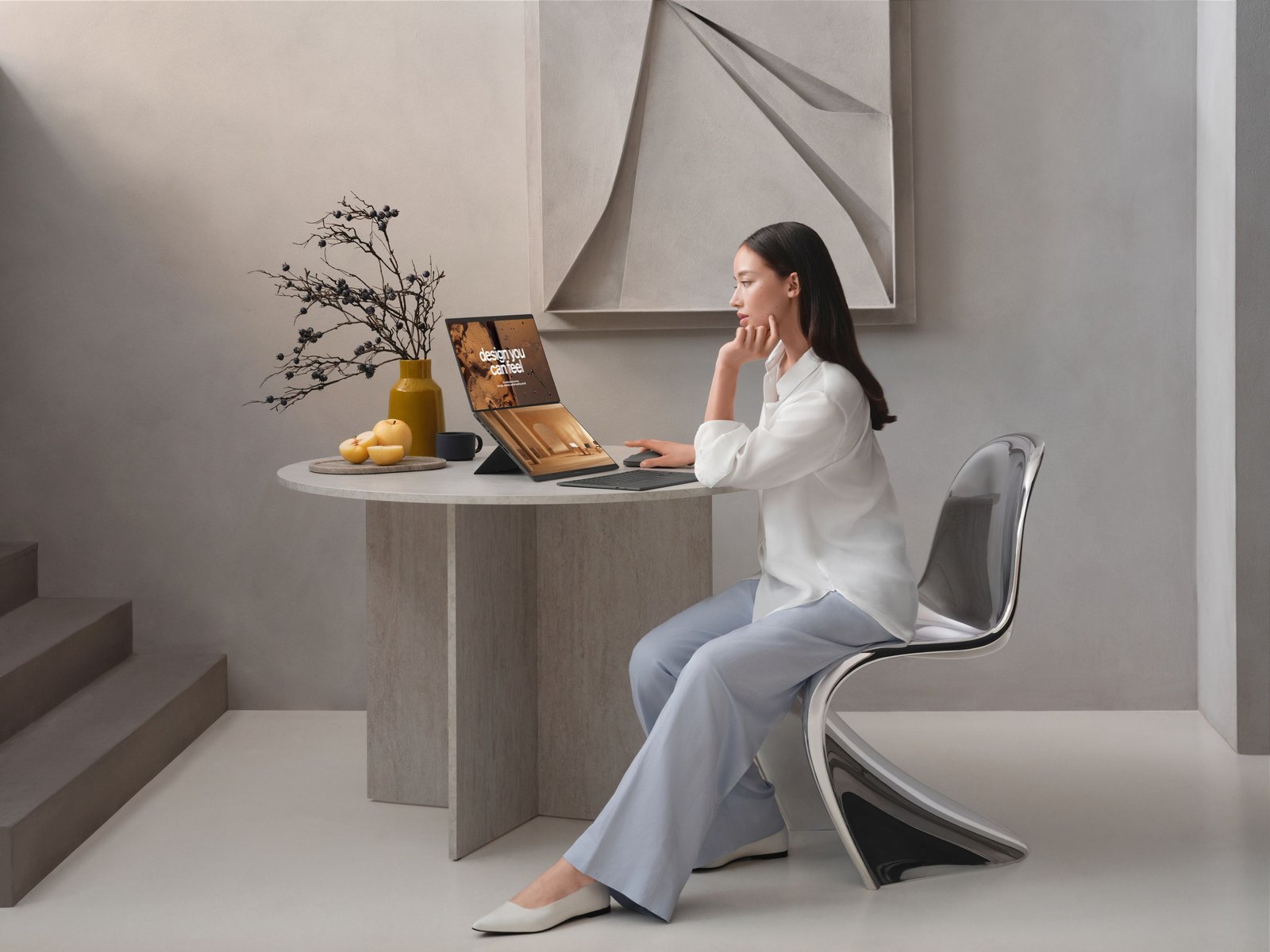
The detachable keyboard and integrated kickstand turn the two panels into a flexible mobile workspace: stacked vertically for a tall, near-20-inch viewing surface, or spread side by side. A redesigned lay-flat hinge narrows the gap between the screens, so the two displays read almost as one continuous surface. For multitaskers, that means a reference image on one panel and a full-size editor on the other, with no external monitor in the way.
Smaller, stronger, smarter
This year’s model wraps the whole assembly in a full Ceraluminum chassis — ASUS’s ceramic-aluminium alloy — and adds MagLatch keyboard docking for travel. The alloy pairs the rigidity of ceramic with the lightness of aluminium, giving the lid a cool, stone-like finish. It is five per cent smaller than the previous generation while holding the same 1.65 kg weight.
Inside, a 99 Wh dual-battery system and an Intel Core Ultra X9 Series 3 processor support demanding creative workflows. The neural processing unit delivers up to 50 TOPS, making the machine a fully compliant Copilot+ PC — aimed squarely at creative and professional users who move between tasks and locations. The split arrangement, ASUS says, also stretches the time between charges for the mobile workflows the DUO is built around.

Four modes, one device
The DUO moves between four modes — Dual Screen, Desktop, Laptop and Sharing — so the two panels can work as one extended display, a presentation surface or a conventional clamshell. In Sharing mode, the second panel flips to face someone across the table, turning the laptop into a two-sided presentation tool. It is the kind of flexibility a conventional clamshell cannot offer, and the reason the DUO has found an audience among designers, editors and multitaskers.

TIME‘s Best Inventions list gathers 300 innovations its editors judge to make the world, in the magazine’s words, ‘better, smarter, and more fun.’ The Zenbook DUO joins that list on the strength of a design that turns two screens into a single, adaptable workspace — a recognition of the form factor itself, and of a laptop built around the idea that two screens are better than one. For ASUS, the award is a signal that the dual-screen idea has moved from experiment to mainstream.

Editorial Team
Do you have a story to share? Feel free to reach us out and submit your design and inspiration, we are always looking for interesting design ideas!