The Bedrock: 4 ways of reading stone at Marmomac’s 60th edition
At Verona’s fair for natural stone, a new cultural pavilion gathers four curators to ask what one of the world’s oldest building materials still has to say about the future.
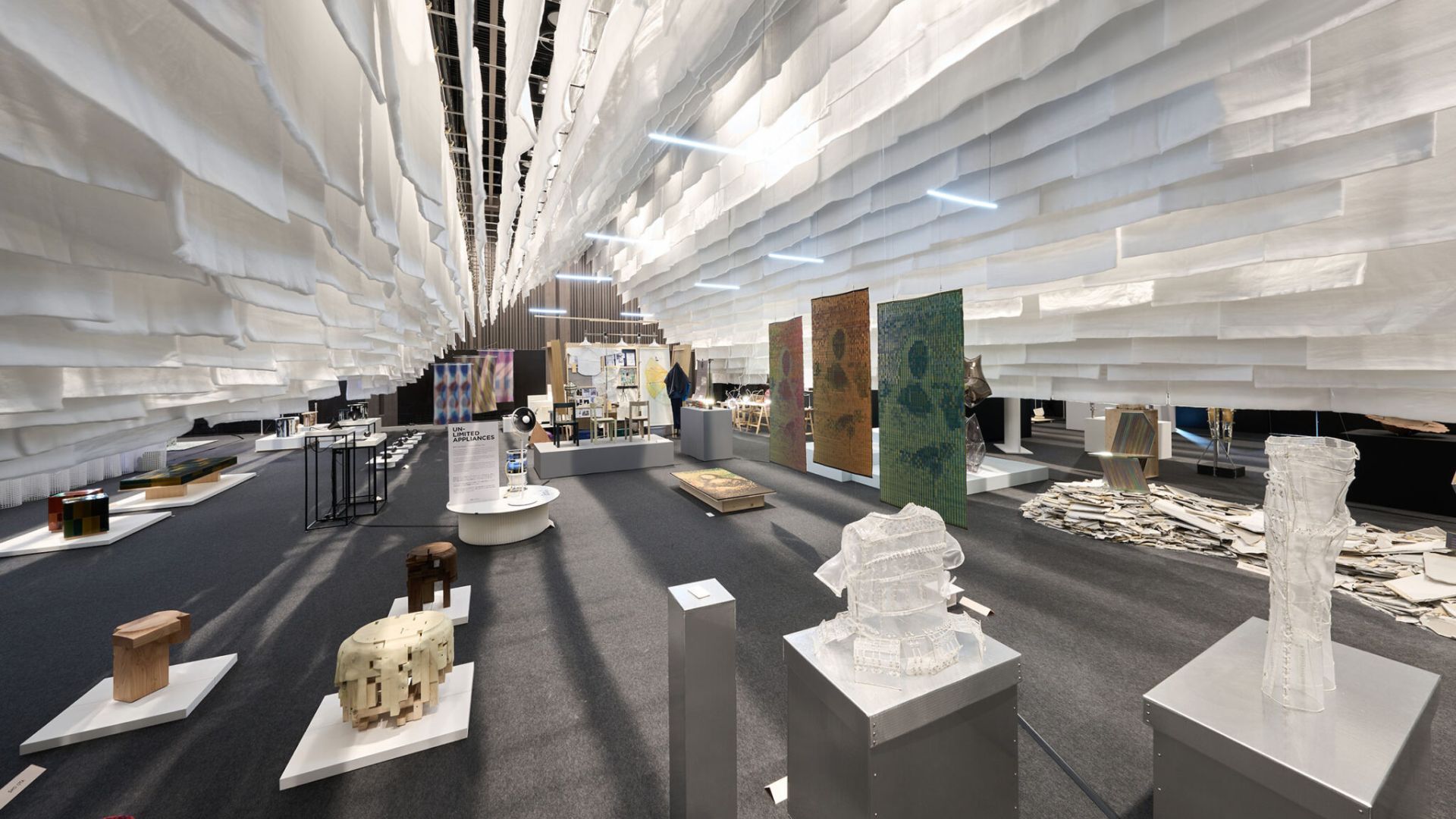
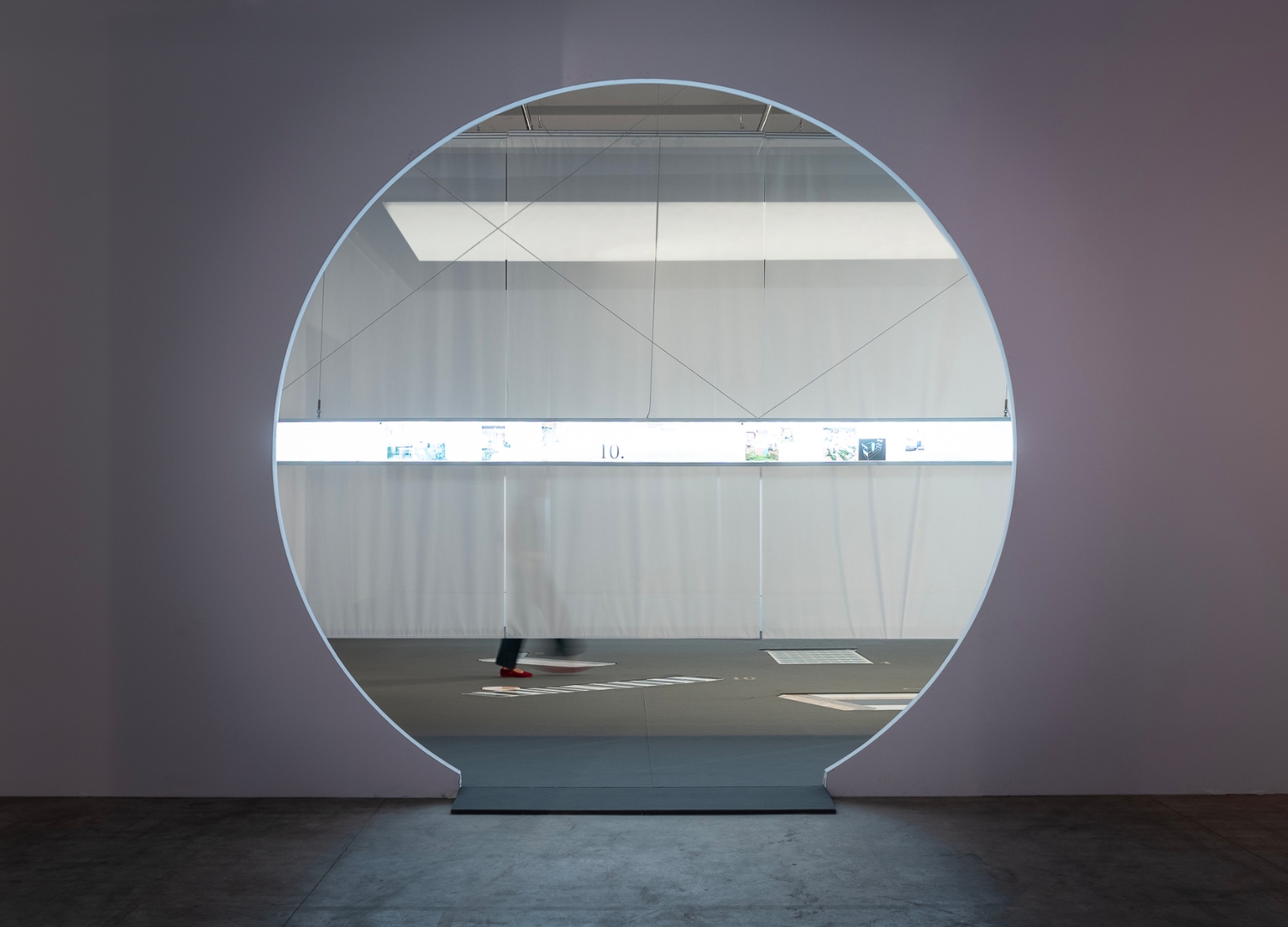
Marmomac turns 60 this year, and the fair marking the occasion, running September 22 to 25, has chosen to celebrate with an argument: that stone is not just a relic to be preserved but a material still capable of change. This argument lives in Pavilion 10, a space rebranded for the anniversary as The Bedrock, under the artistic direction of architect Giorgio Canale of DDM Branding. The name is a deliberate pun on foundation; bedrock as both the geological layer beneath everything else and the cultural ground on which the fair’s identity rests.
The conversation is carried by four exhibitions, each with a different curator and a different thesis. Two of the curators, Raffaello Galiotto and Giuseppe Fallacara, are Marmomac regulars, figures who have shaped the fair’s research program for years. Two are newcomers: Joseph Grima, the British architect and researcher behind Space Caviar, and Davide Fabio Colaci, a leading architect and curator from Milan.
Gallery
Open full width
Open full width
Marmomac 60th edition:
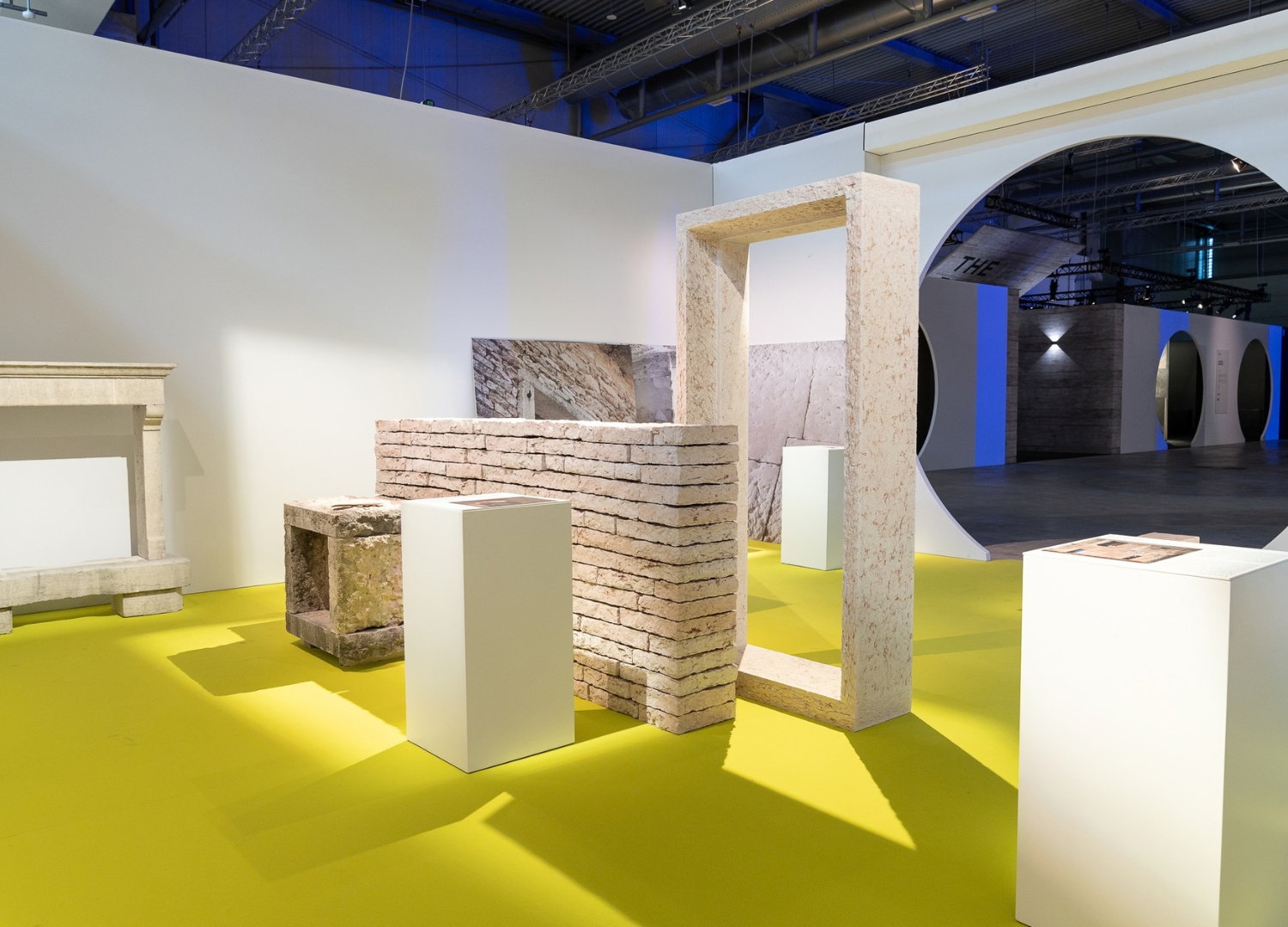
On Stone – Learning from Lessinia
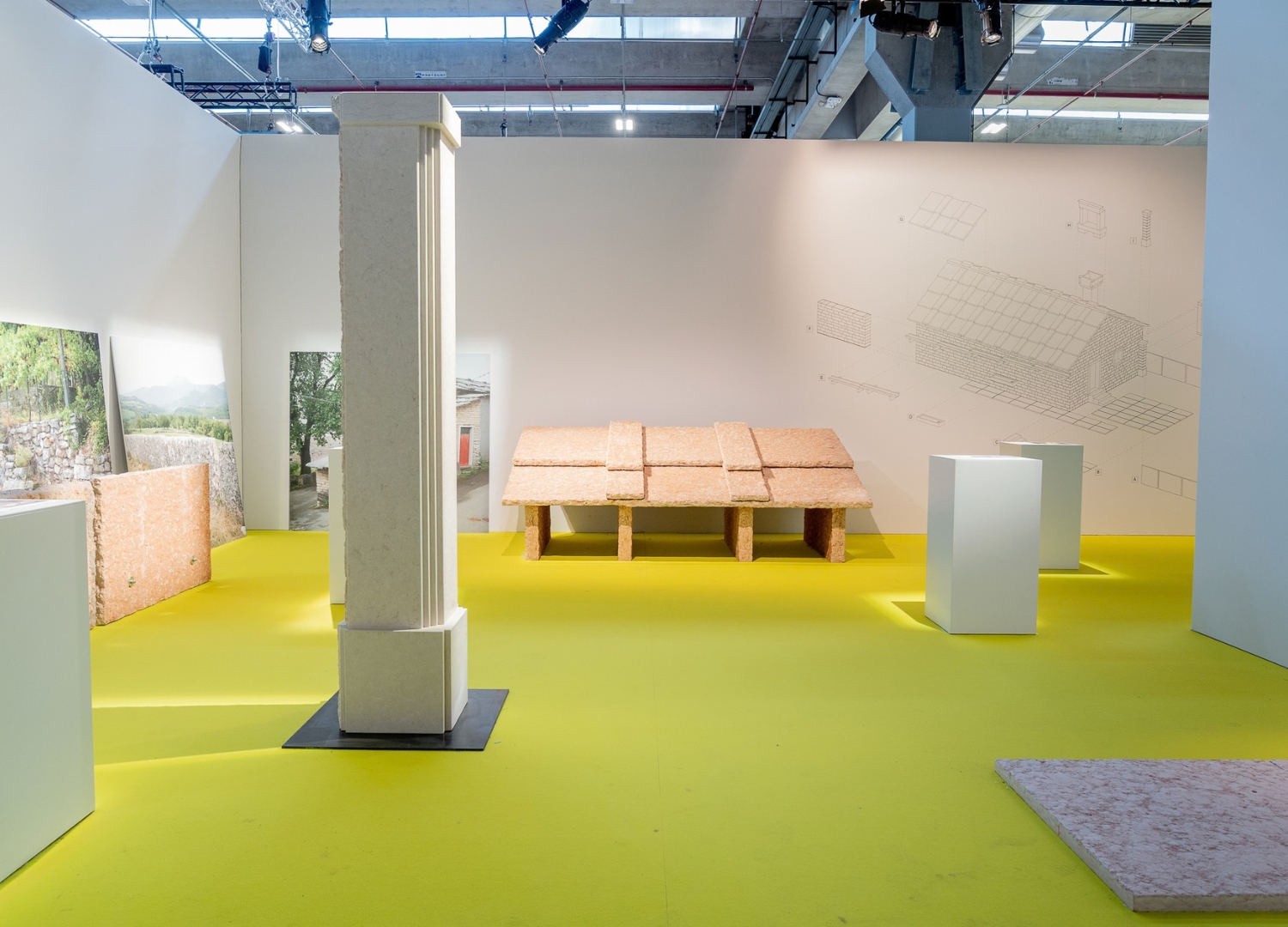
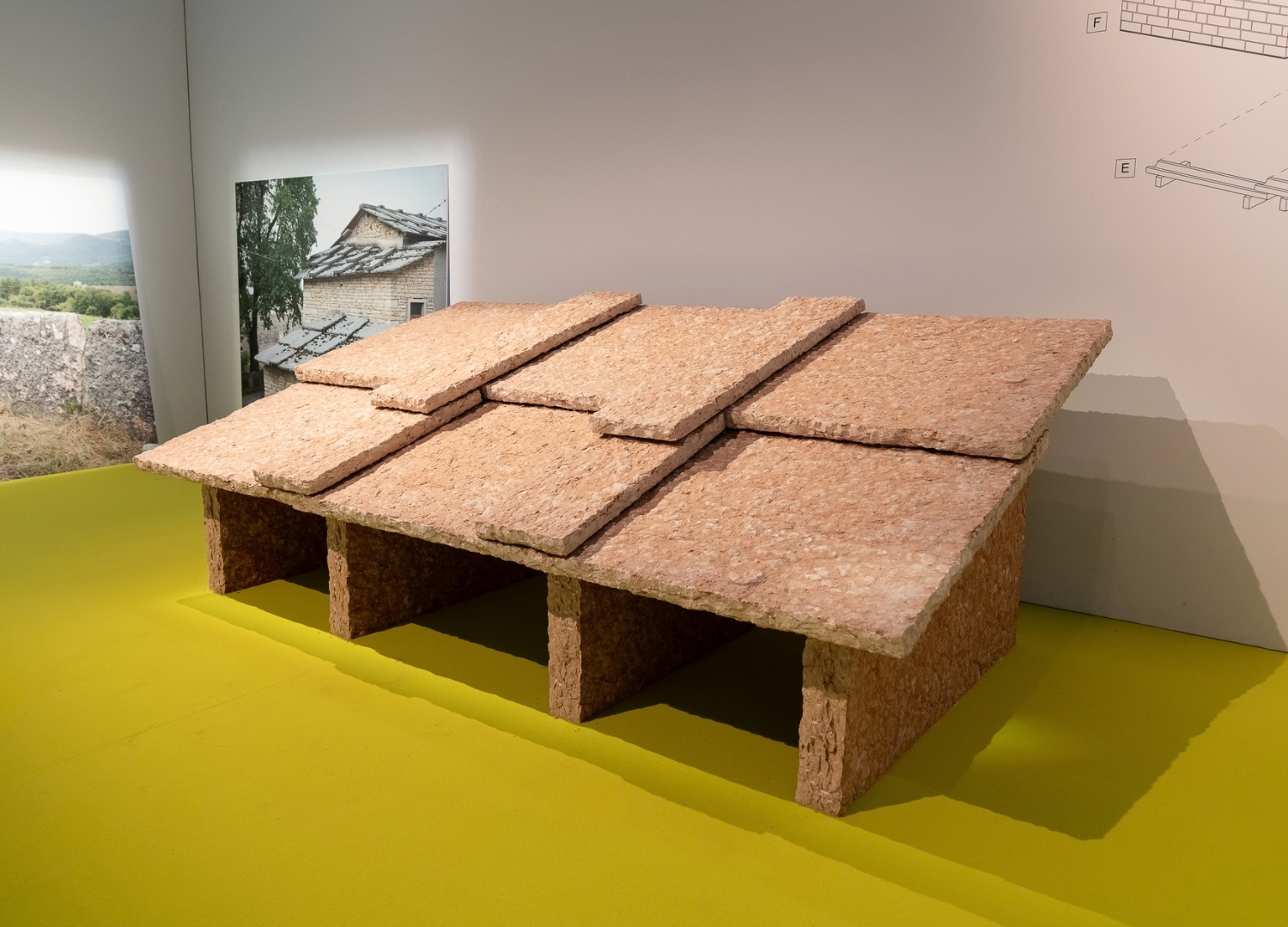
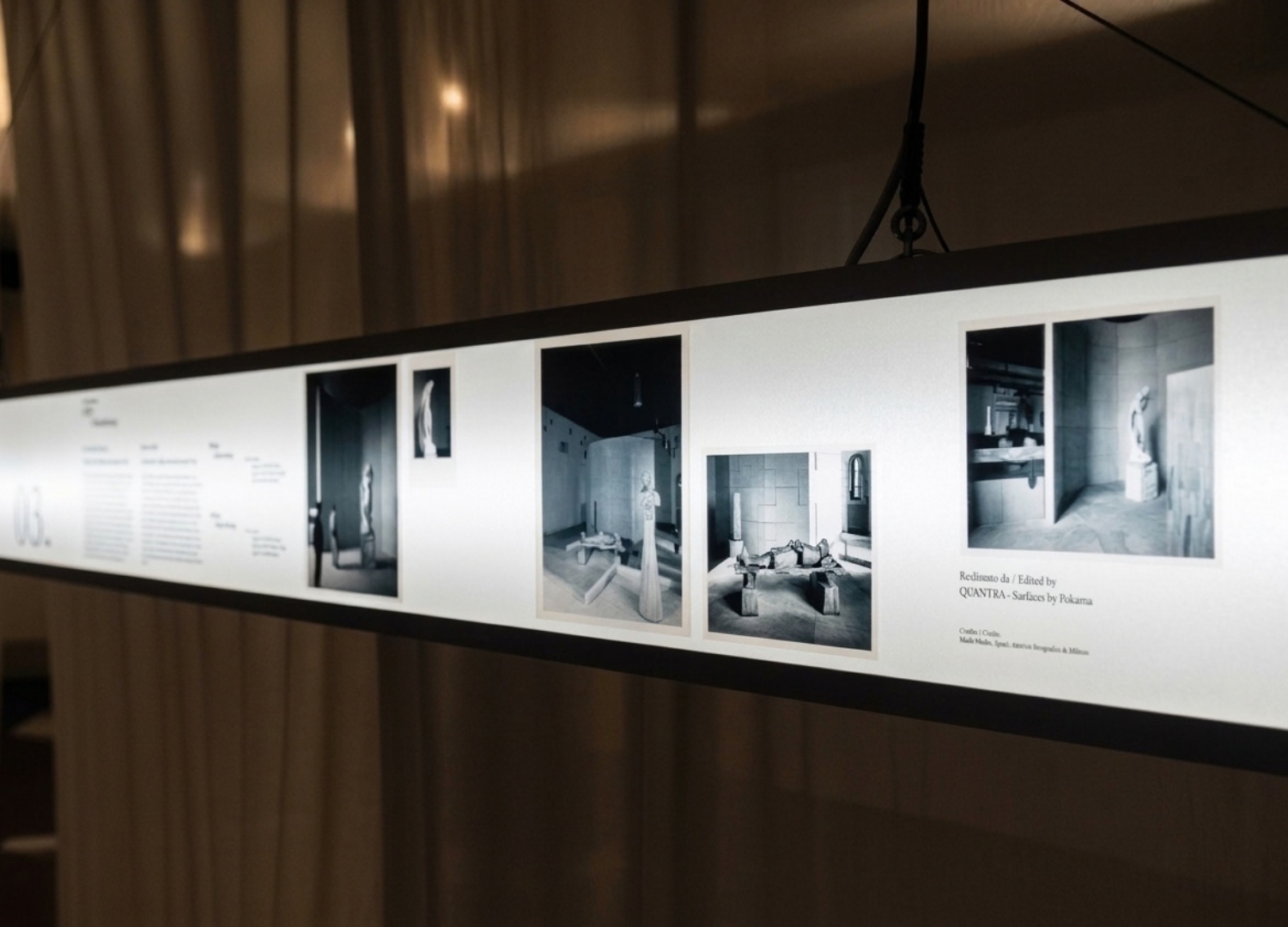
Joseph Grima’s exhibition starts from the Lessinia region north of Verona, where stone has shaped an entire architectural culture for centuries, as a material used for roofs, walls, doors, windows, and more. The exhibition takes apart a typical vernacular dwelling through an exploded axonometric drawing, isolating each element to show its structural function and the technical knowledge embedded in it. Alongside this dismantled house, the show presents international case studies that Grima reads as evidence of a broader, renewed interest in stone as an “active” material rather than a historical one.
“Over the past few decades, we have often viewed stone as a material belonging to the past. Yet many of the issues shaping design today — from the availability of resources to the need to construct buildings that are adaptive and capable of standing the test of time — invite us to reconsider its potential. I like to say that we are entering a new ‘Stone Age’,” Grima comments. “Lessinia represents an extraordinary example of this building culture: a source of knowledge to be reinterpreted, capable of engaging with some of the most advanced research in contemporary architecture.”
Marble Interiors
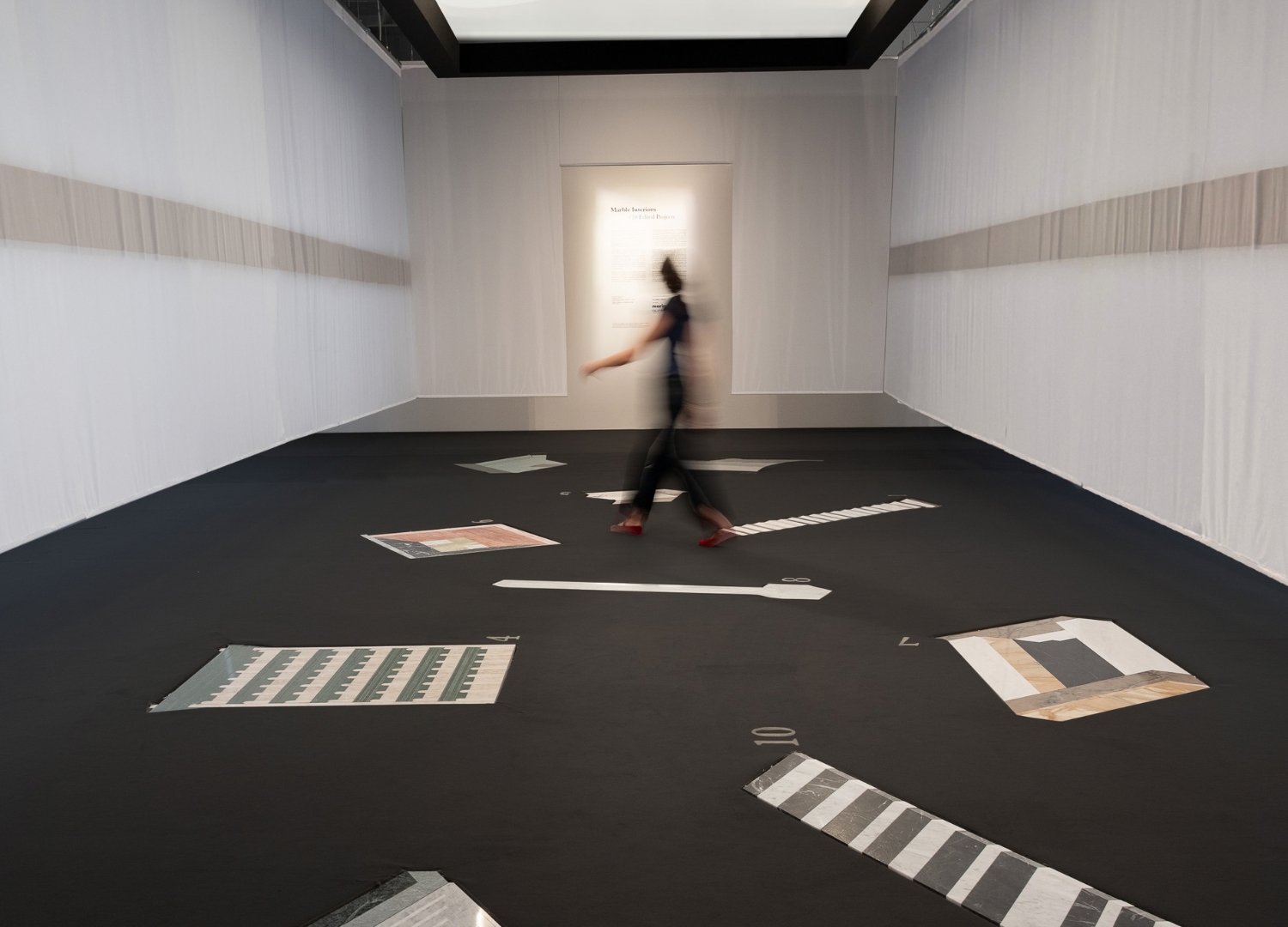
“Marble Interiors” is Davide Fabio Colaci‘s exhibition, which takes a narrower brief about the use of marble in interior spaces. The exhibition puts together ten interior projects: five historical, including work by Gio Ponti, Adolf Loos, BBPR, Aldo Rossi, and Ettore Sottsass, and five contemporary, by Francisco Alonso, Bovenbouw Architectuur, Henrik Becker, Marcante Testa, and Fala Atelier. Of these case studies, Colaci analyses how marble is used within the architecture and what its impact is.
The research then translates onto the exhibition’s floor, built using an intarsia technique from offcuts and residual fragments of marble slabs. The surface reinterprets the compositional qualities of the referenced projects as a walkable space, so that visitors don’t just look at photographs of the original projects but can walk across a literal reconstruction of their logic.
Carisma Materico
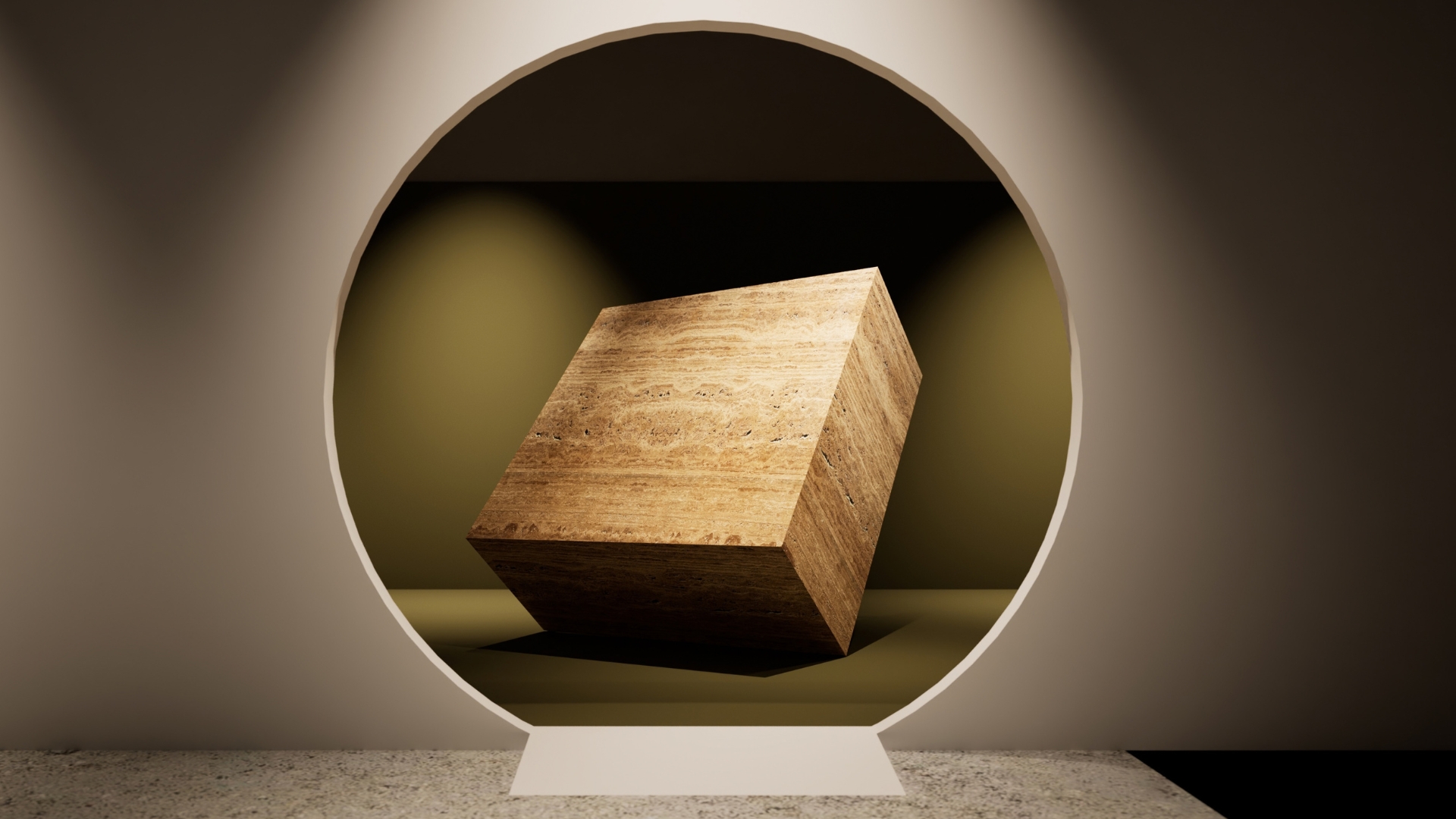
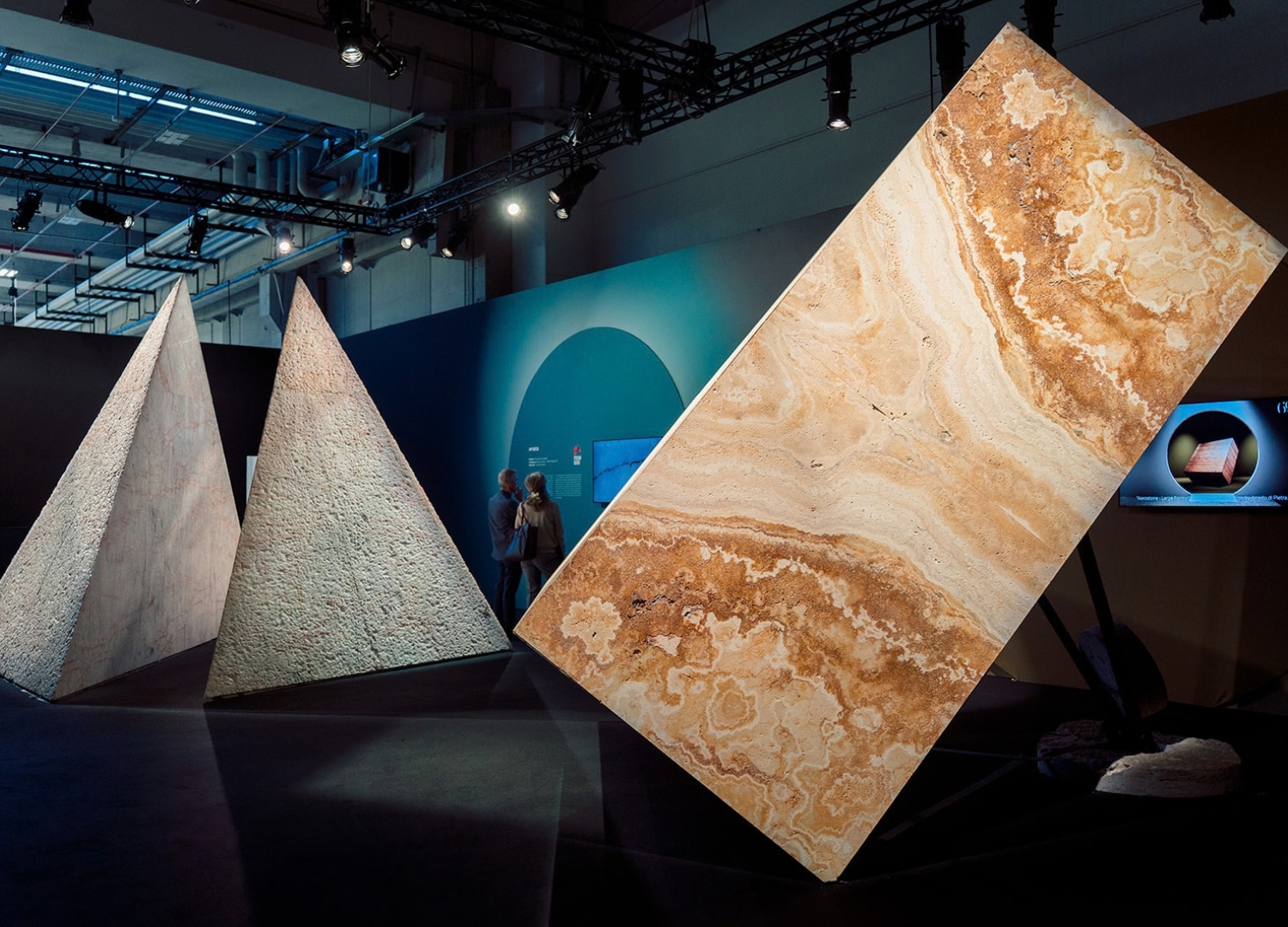
Galiotto’s “Carisma Materico” is the most explicitly technological of the four, built around four full-scale mockups that each test a different relationship between mass, surface, and structure using digital fabrication. Ironstone Grande Formato, by Arredo di Pietra, presents an apparently massive travertine block tilted and suspended against gravity – until you walk around it and find out it’s hollow, built from just three composite panels, turning stone’s traditional bulky limitations into an argument for lightness.
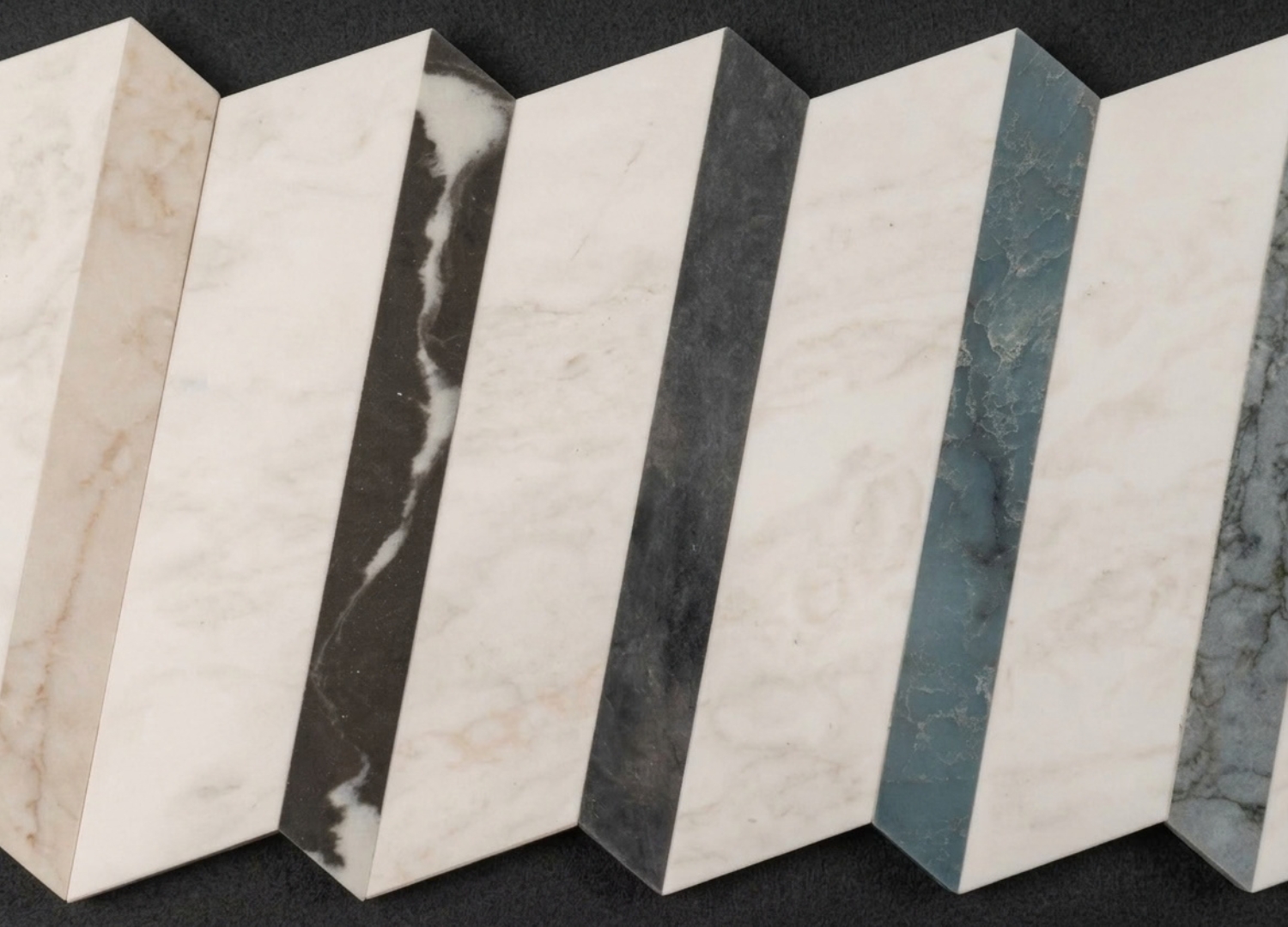
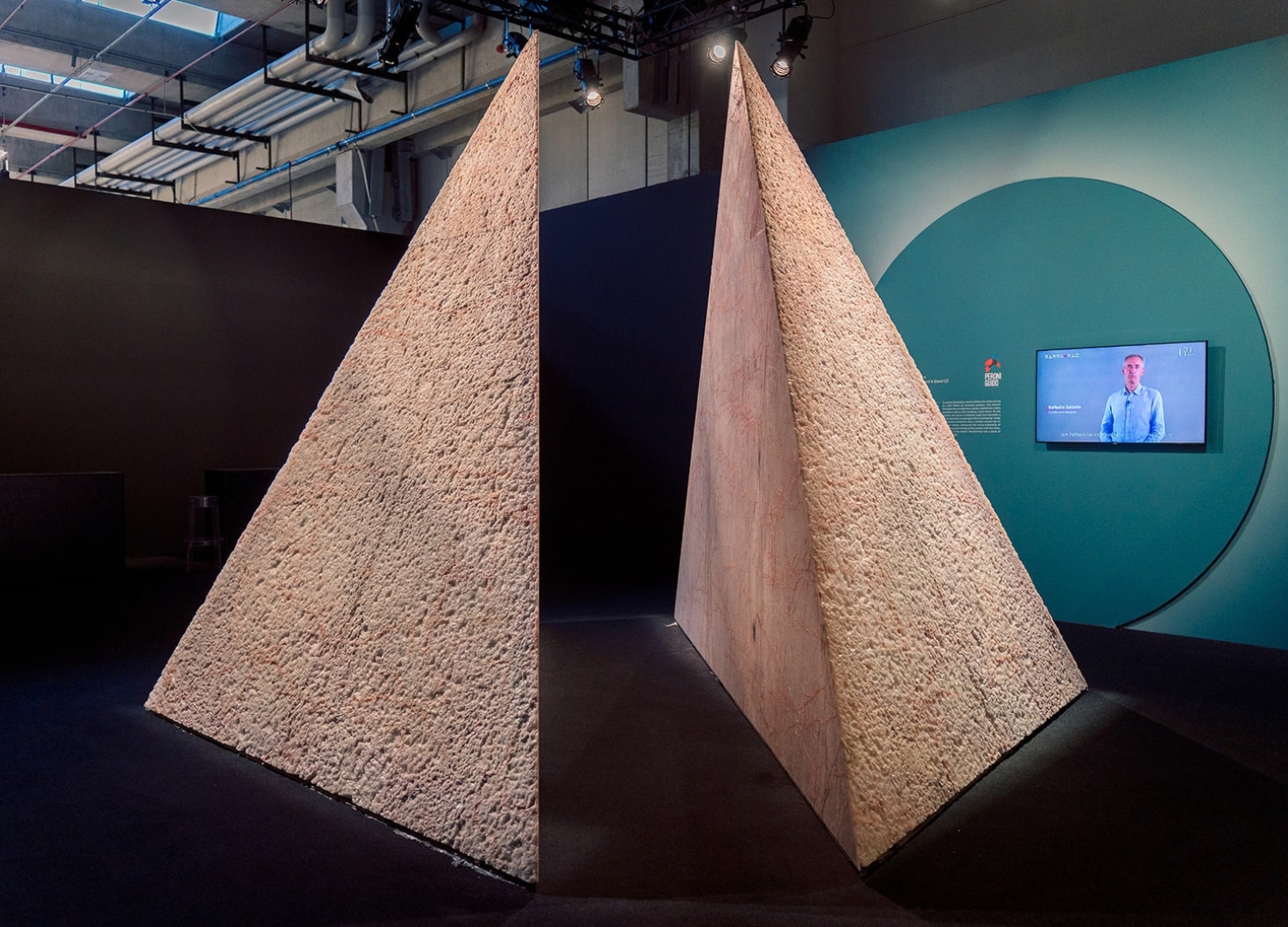
Sguinci Permeabili, by Gruppo Tosco Marmi, reworks the splayed medieval window opening into water-jet cut concentric walls of five marble varieties. Aporia, by Studio Nico Sandri with Peroni Guido, splits a pyramid of Crystal Sunset stone to reveal a rough exterior and a smooth interior corridor, pulling the visitor directly into the work. Partitura in Marmo, designed by Mario Botta with Marmi Ghirardi, reuses the system of Botticino stone battens which Botta had designed for Teatro alla Scala: 6,500 linear metres of slats, reinforced with steel and fixed with hidden inserts, requiring a purpose-built machine.
C’era una volta il “cielo” dell’architettura
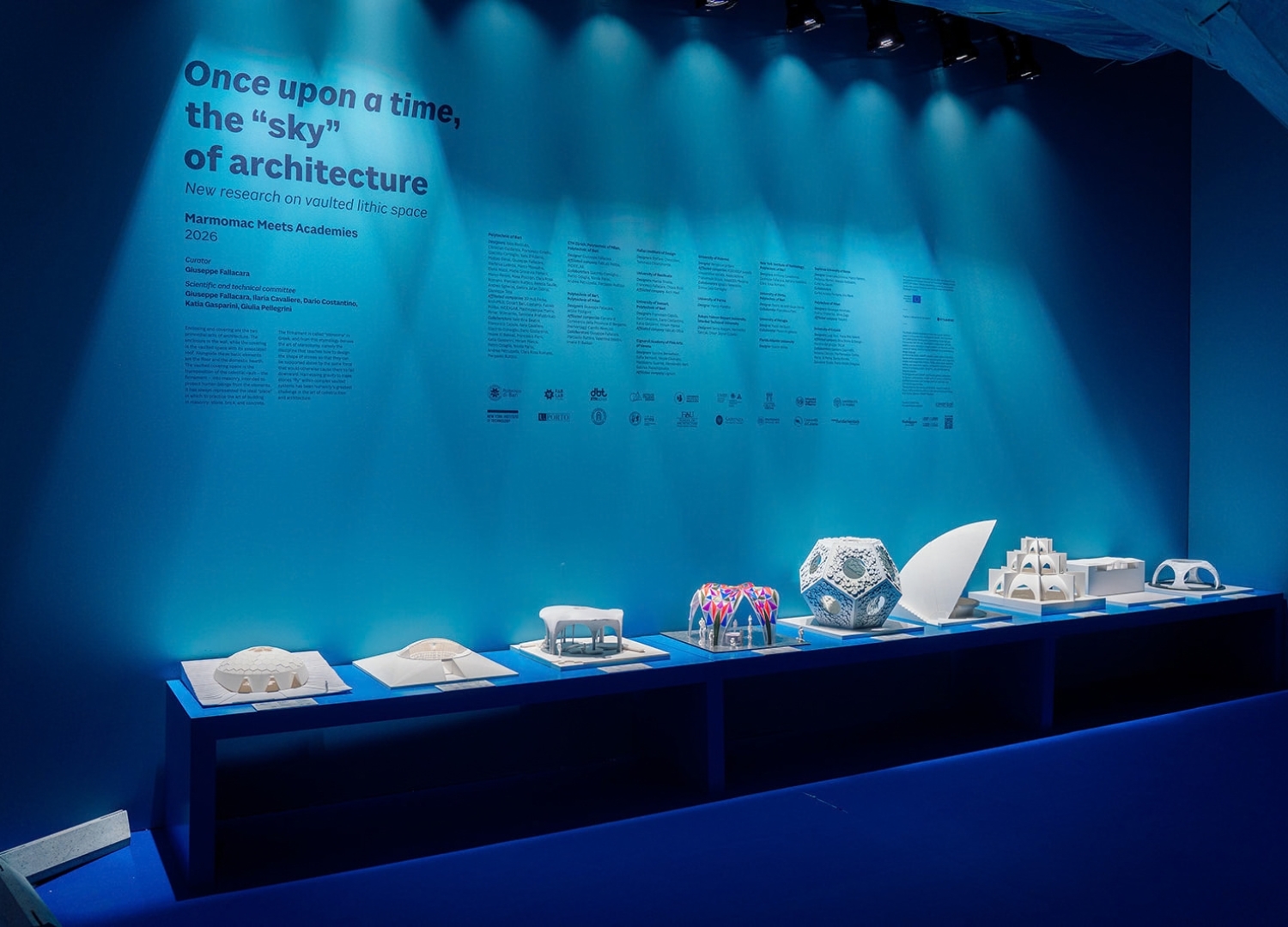
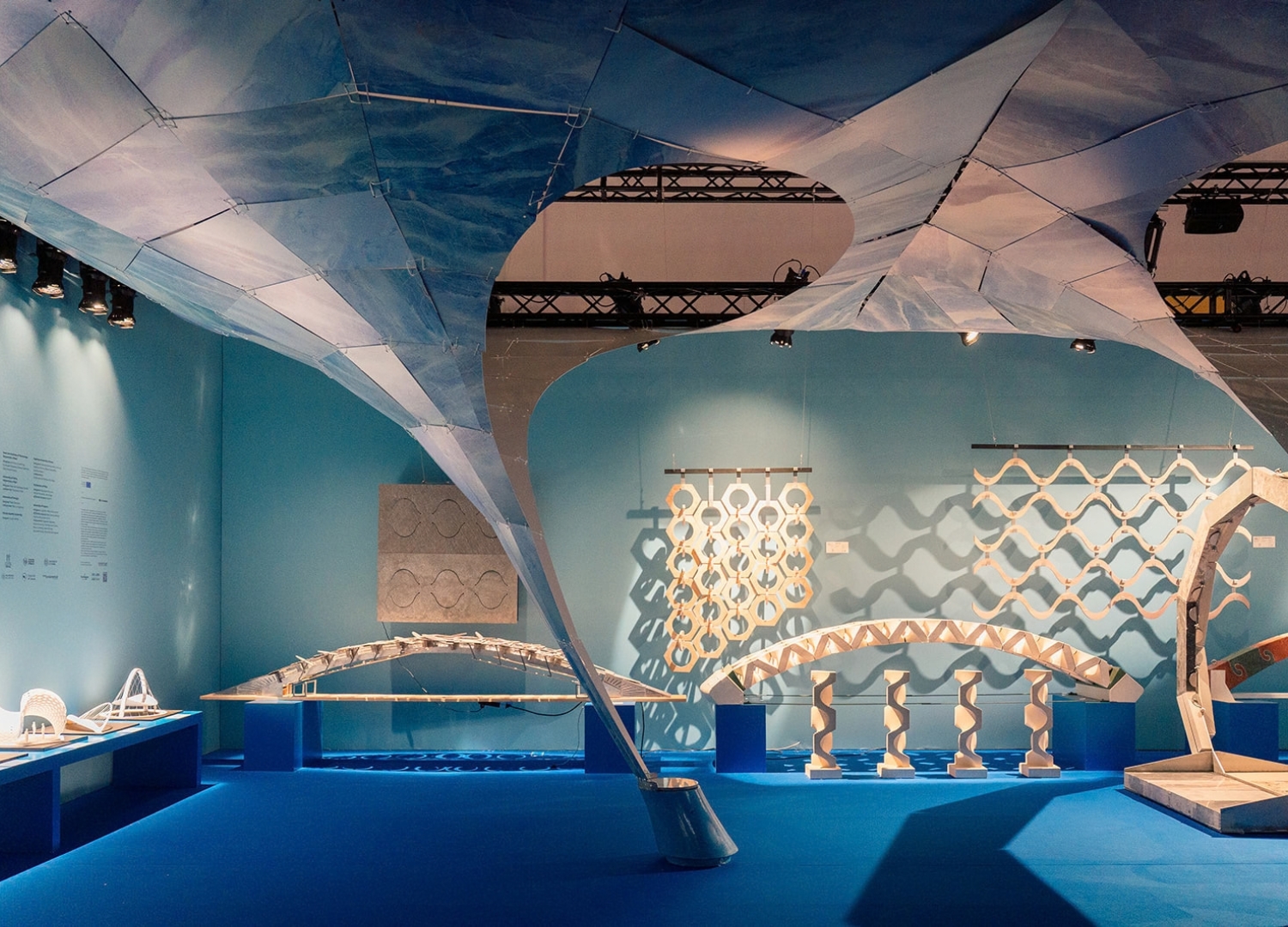
Giuseppe Fallacara‘s exhibition title translates to “Once upon a time, the ‘sky’ of architecture,” which treats the vault as architecture’s founding gesture, the one that determines an enclosure. The work is carried out within the context of Marmomac Meets Academies 2026, a programme that brings together prototypes from 17 universities, 11 Italian and 6 international.
Three swirling “columns of air” anchor the installation, around which the prototypes are arranged in loose thematic clusters: the vault as a new spatial form, geometrical studies, construction efficiency, stone as a resilient surface, collective life, memory, future material processing, and stone as infrastructure.
The value of research
Taken together, the exhibitions don’t converge on a single thesis as much as they triangulate one from different angles. For an industry event built around an anniversary, this research approach is a more interesting bet than a retrospective would have been, treating the past 60 years as an occasion to argue about what comes next, rather than to catalogue what has already happened.
Trade fairs like Marmomac exist to move product, to put buyers and quarries, fabricators and architects in the same hall. A pavilion of prototypes and artworks doesn’t do that job directly, but it elevates the cultural level of the fair while also being productive for the field as a whole. Additionally, it gives a naturally extractive industry, one that can look conservative from the outside, a visible claim and stake in the conversations about decarbonisation, circularity, and sustainability that it might otherwise be excluded from.
In a market where sourcing and networking have moved largely online, the case for physically attending a fair increasingly has to be cultural and intellectual as much as transactional. The exhibitions have shown that stone, among the oldest materials humans have ever used, still has room to surprise people. Not every prototype in the show will find its way into a real building, but an industry willing to fund that many open questions in the middle of its trade show is one still confident in its material’s potential. For a sector often assumed to be defined by its past, it’s an encouraging way to spend a sixtieth birthday.