What if humans are no longer at the center of design?
Rethinking Design for Longevity through a planetary lens.
My recent encounter with Satu Miettinen’s Planetary Design for Services workshop in Singapore in 2026 prompted a question that has stayed with me: What happens to design when humans are no longer the only point of reference?
In her article, Miettinen observed that as “AI becomes part of service systems and planetary challenges reshape our priorities, designers are taking on a more strategic role—connecting human values, technology, and regenerative futures. The future of service design is not only human-centred, but also systemic, life-centred, and future-oriented.”
Gallery
Open full width

Open full width
That proposition led me to reconsider the relationship between Planetary Design and Design for Longevity (D4L), my ongoing exploration of how longevity intersects with services, systems, design, technology, and society.
Both perspectives ask designers to look beyond immediate human needs. They invite us to work across longer time horizons, trace relationships among interconnected systems, and consider the social and planetary conditions that shape how people live now and how they might live in the future.
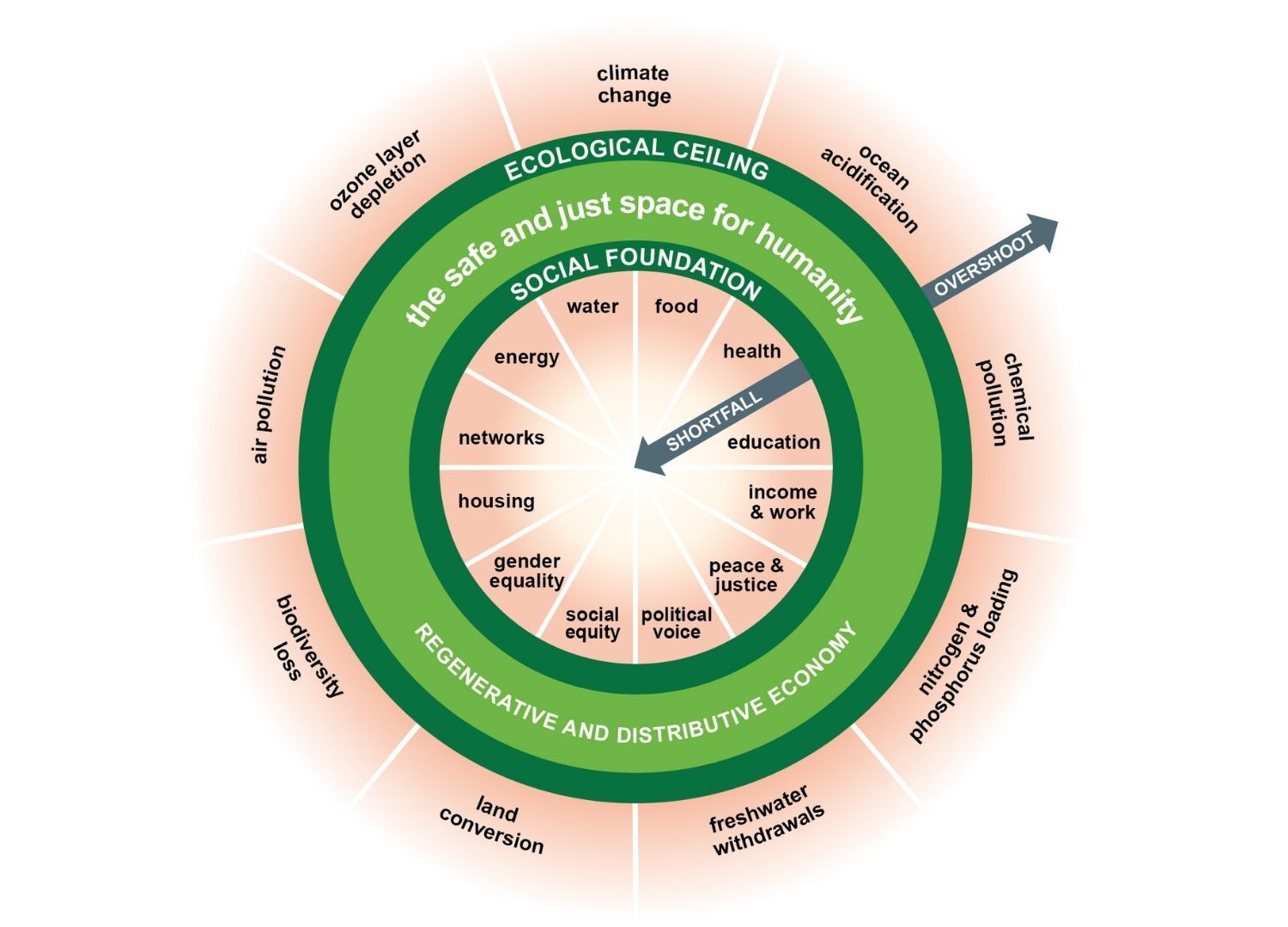
Economist Kate Raworth’s Doughnut Economics provides a useful starting point for this exploration (Figure 1). Its memorable visual structure makes a complex proposition immediately legible: human flourishing depends on staying between a social foundation and an ecological ceiling.
The Doughnut’s inner boundary represents the social foundation: 12 dimensions of fundamental human need, such as food, health, and social equity.
Its outer boundary represents the ecological ceiling, the planetary limits that human activity should not exceed. These boundaries define what Raworth calls a “safe and just space for humanity”: a space in which human well-being can flourish without overshooting the ecological limits of the planet.
For designers, the framework changes the question. It is no longer enough to ask whether an intervention addresses a human or social need. We also need to ask what ecological, infrastructural, and institutional systems make that intervention possible and what consequences it may create elsewhere or later.
This makes Doughnut Economics a productive bridge between my work in D4L and emerging perspectives on Planetary Design. For me, this connection can be understood through three fundamental shifts in how designers frame their work:
- Shift 1. Individual users → interconnected systems
- Shift 2. Immediate needs → long-term consequences
- Shift 3. Human stakeholders → human and non-human relationships
Across all three shifts is another critical consideration: power—who has the ability to define problems, shape decisions, allocate resources, and determine whose needs and perspectives are prioritized.
These shifts inform the three propositions I explore in this article:
- Planetary Design does not replace human-centered design; it expands the frame from individual users to the social, technological, institutional, and ecological systems around them.
- Design artifacts can do more than represent ideas. They can make invisible relationships, trade-offs, and non-human perspectives tangible enough to discuss and act on.
- Design education should help future designers move across scales and time horizons: from individual experiences to communities, infrastructures, ecosystems, and future generations.
Planetary Design expands the scale and responsibility of design
To me, Planetary Design expands how we understand the role, scale, and responsibility of design. Human-centered design (HCD) has taught generations of designers to understand people deeply, their needs, behaviors, experiences, and aspirations. That remains essential.
But Planetary Design asks us to widen the frame: What changes when the “user” is no longer the only consideration in the design process?
From a planetary perspective, people are embedded within interconnected social, technological, institutional, ecological, and environmental systems. No product, service, building, policy, or digital platform exists independently. Each depends on resources, infrastructures, organizations, communities, technologies, and natural environments and each can create consequences across different places and times.
The designer’s task expands from asking who we are designing for to asking what systems we are designing within, what relationships we are reshaping, and what consequences an intervention might generate over time.
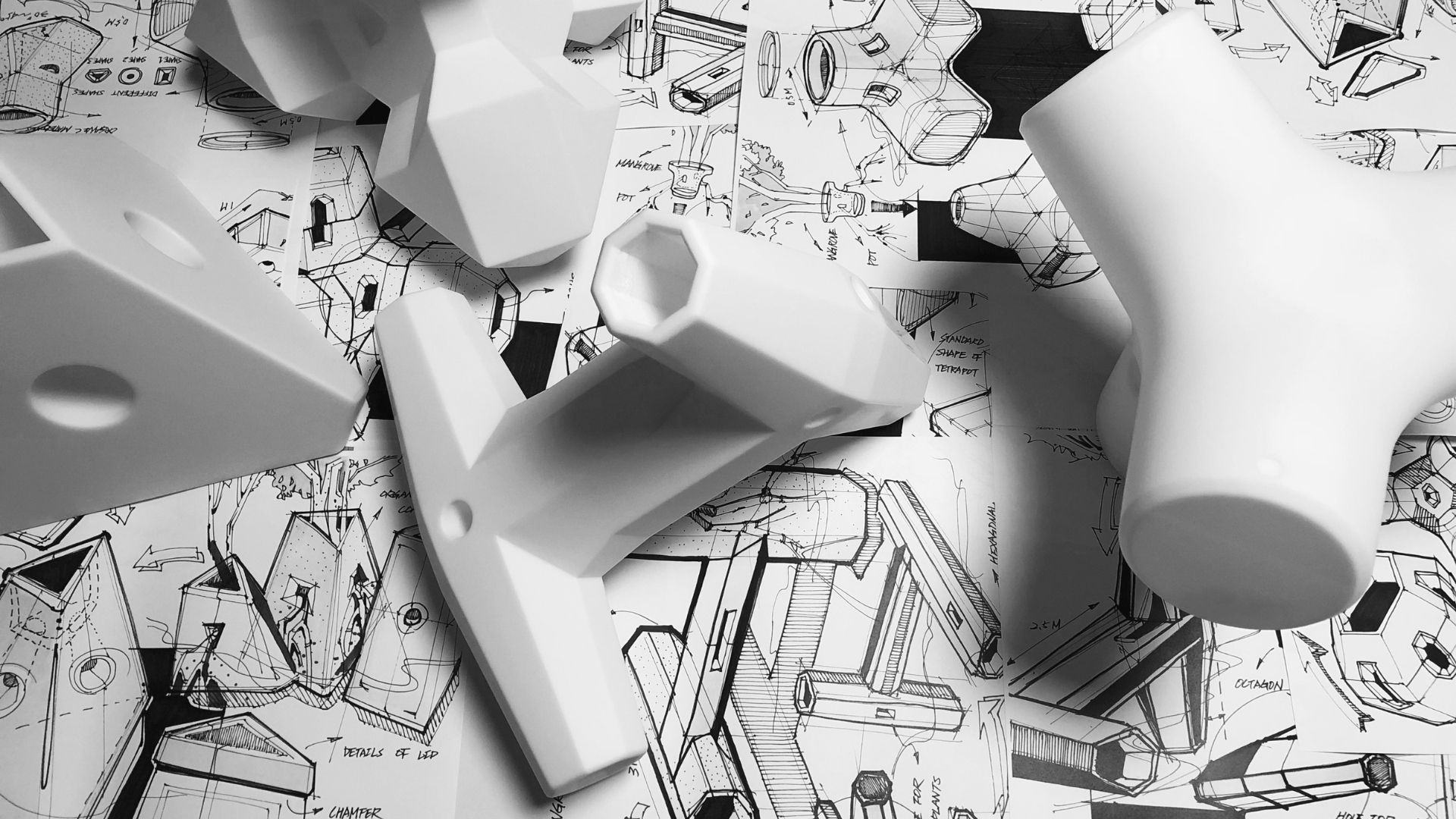
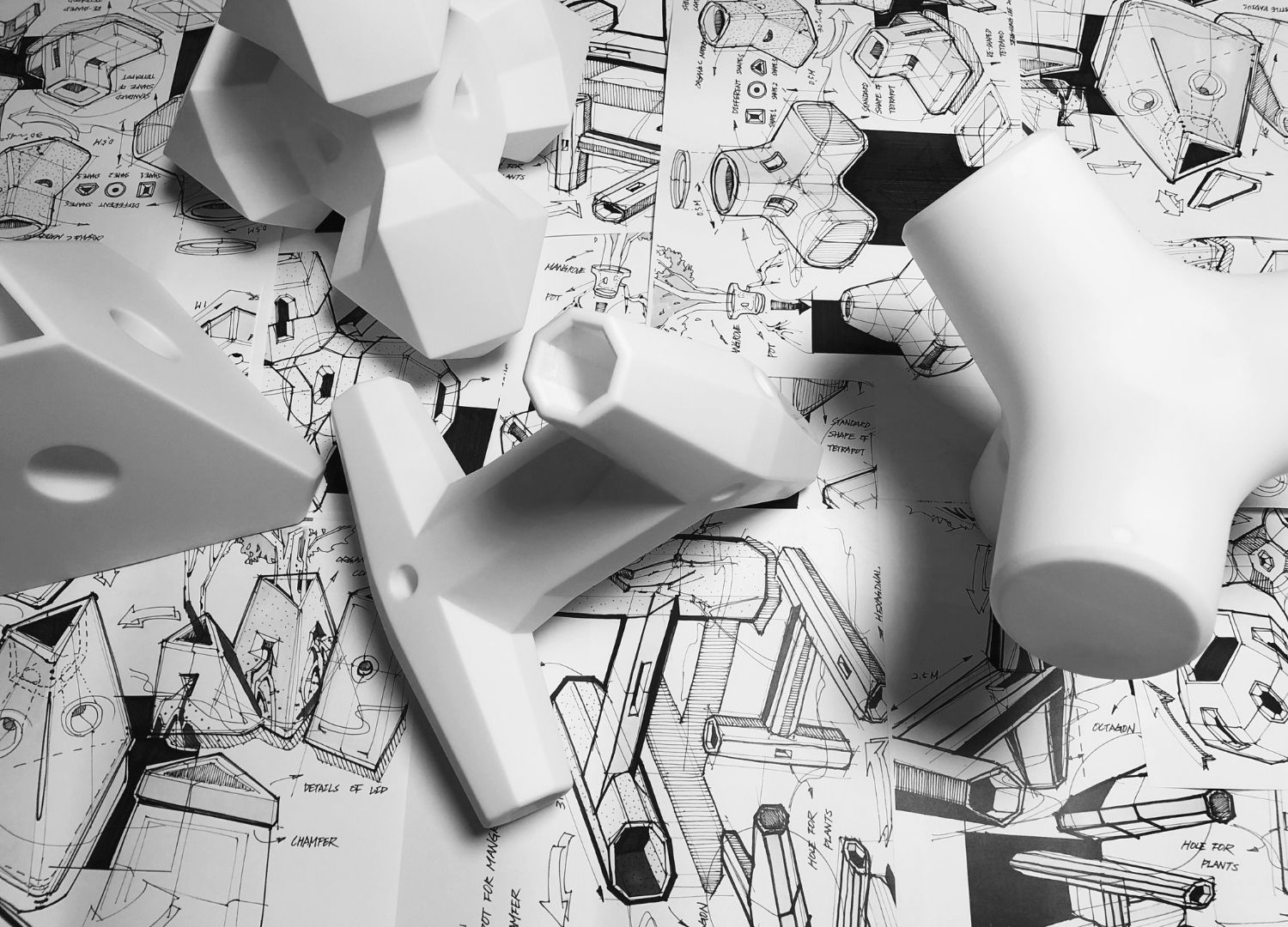
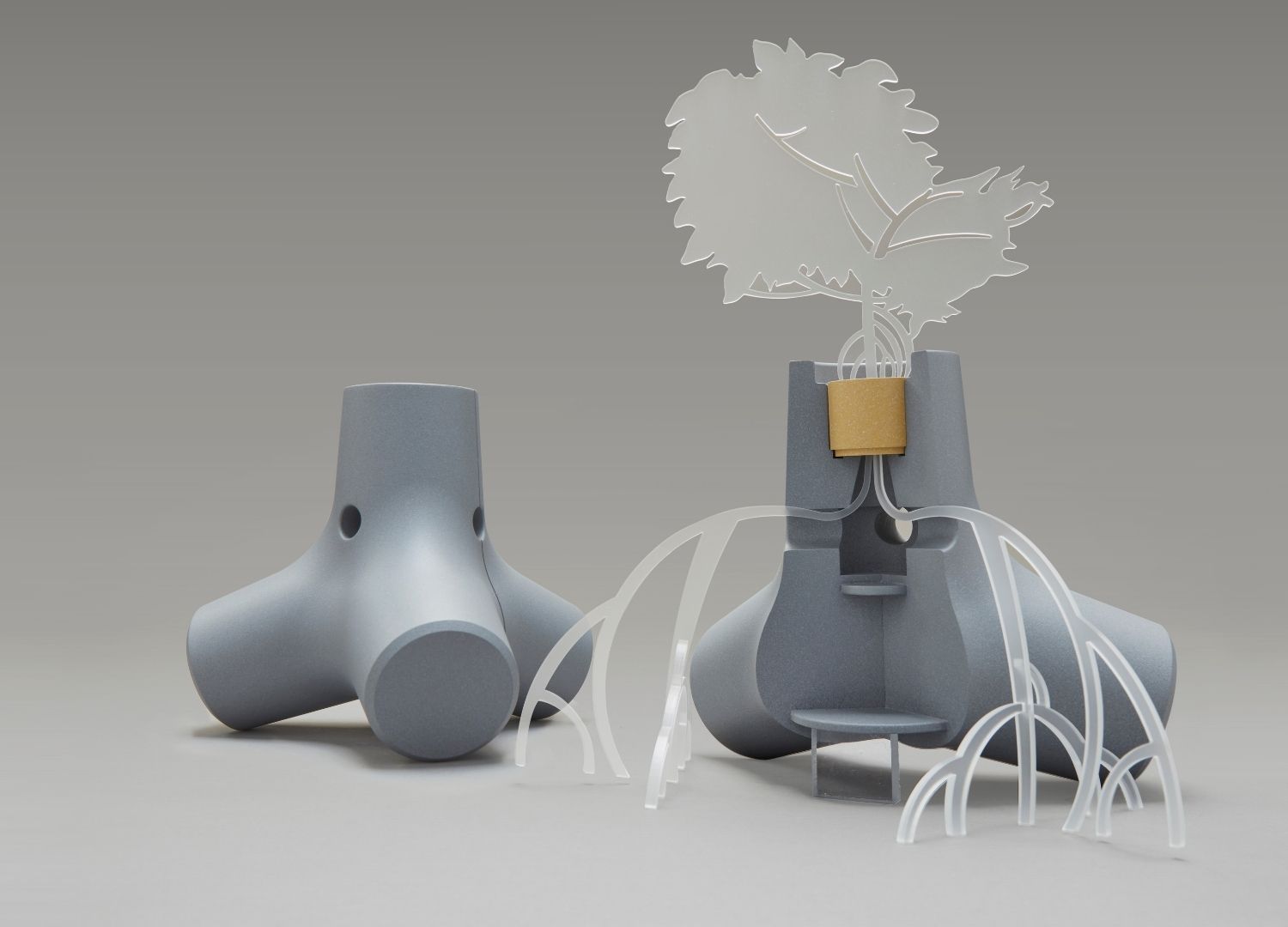
TetraPOT, a design intervention I developed with Wan Kee Lee (she is currently the Managing Director at TEAMS, China) in 2016 while working at IDEO, offers one example of this expanded perspective. What began as a side project asked how conventional coastal-defense infrastructure might become part of a more regenerative ecosystem (Figure 2).
Across Taiwan, Malaysia, Singapore, and many other coastal regions, concrete wave breakers are widely used to protect shorelines and reduce erosion. Yet their proliferation has also contributed to coastlines increasingly dominated by concrete, replacing complex coastal environments with hard, artificial boundaries.
These concrete structures can create physical and perceptual distance between people and nature. Their impact is not merely aesthetic; it is also ecological. Conventional coastal defenses intervene in habitats that once supported diverse forms of marine and coastal life, potentially disrupting the movement, settlement, and survival of organisms that depend on these transitional zones.
TetraPOT began with a simple question: Could coastal infrastructure protect human settlements while also creating conditions in which natural ecosystems can grow?
The concept reimagines the conventional concrete wave breaker as a planter-like structure capable of supporting mangrove growth. Young mangrove seedlings are vulnerable during their early stages of development, especially under changing coastal conditions and rising sea levels. TetraPOT provides a protected environment in which seedlings can establish themselves while the concrete structure continues to perform its wave-breaking function.
Over time, mangrove roots can extend beyond individual units, intertwining with one another and potentially forming a more connected ecological system (Figure 3). In this way, the infrastructure is conceived not simply as a finished object but as a framework that can change as living systems grow around and through it.
Besides asking only how concrete structures might defend coastlines for people, TetraPOT asks how infrastructure might also support mangroves as living participants in the same environment.
This reframing expands the purpose of coastal defense: infrastructure is no longer understood solely as a barrier between land and water, but as a structure that can participate in ecological processes.
The focus therefore shifts from constructing a static barrier to cultivating relationships among infrastructure, coastal communities, water, sediment, vegetation, and time. The success of the intervention is not determined only by the performance of the concrete structure at the time of installation, but also by what it enables to emerge, grow, and adapt over time.
This shift also changes who—or what—we recognize as a stakeholder. In a conventional HCD process, stakeholders typically include users, customers, employees, community members, and service providers.
These stakeholders are almost exclusively human. TetraPOT suggests a broader perspective: mangroves, marine organisms, sediment, water, and other components of the coastal ecosystem can also be understood as participants whose needs, behaviors, and relationships should inform design decisions (Figure 4).
A planetary perspective broadens that constellation to include ecosystems, plants and other species, natural resources, climate, infrastructures, technologies, policies, institutions, organizations, and future generations.
Many of these non-human actors cannot sit in a co-design workshop or articulate their needs in an interview, yet they can still be profoundly affected by design decisions. The challenge is to develop ways of making these less visible perspectives present in the design process.
Returning to Raworth’s Doughnut Economics, this expanded responsibility suggests that a better experience for people may still be a poor design if it depends on systems that undermine broader social or ecological well-being.
For much of modern industrial development, such trade-offs have often been treated as acceptable, or have remained largely invisible. A planetary perspective asks designers to make these consequences visible and to question whether immediate human benefits justify longer-term social and ecological costs.
Planetary Design therefore requires both a shift in scale and a shift in time. Designers must move from immediate experiences toward longer-term consequences, and from individual users toward families, organizations, communities, cities, ecosystems, and future generations.
A decision that improves one person’s experience today may produce very different consequences elsewhere, or decades later. Planetary thinking asks designers to move continually across these spatial and temporal scales rather than evaluating an intervention at only one moment or from one perspective.
This resonates strongly with Design for Longevity (D4L).
Longevity therefore becomes a planetary design question. Longer lives do not simply change individual experiences of aging; they reshape patterns of care, housing, mobility, consumption, work, intergenerational relationships, and resource use.
At the same time, these dynamics interact with changing fertility, migration, and population patterns differently across societies. The design question is therefore not simply how to help individuals live longer, but how longer lives can be supported within social, environmental, and infrastructural systems that remain sustainable over time.
Planetary Design is less a single method than a shift in orientation: from isolated problems to interconnected systems; from immediate needs to longer-term consequences; and from designing primarily for people to designing with awareness of the larger living systems in which human life unfolds.
This shift raises practical questions for both design practice and design education. If designers are expected to account for perspectives that cannot always speak for themselves, how can those perspectives become visible and actionable within the design process? What kinds of tools, artifacts, rituals, and methods might help design teams engage with these complex relationships? And how should we educate future designers to work responsibly within this expanded landscape?
Making these perspectives visible, however, is not enough. Different stakeholders do not have equal power to shape design decisions. Governments, corporations, institutions, investors, communities, and environmental organizations may operate with competing priorities and very different levels of influence.
Planetary Design therefore requires designers not only to identify a broader range of stakeholders, but also to examine who has the power to define the problem, whose knowledge is considered legitimate, and whose interests or consequences remain invisible.
These questions lead to two areas that I am interested in exploring: how design artifacts might expand to incorporate nature and non-human perspectives, and how design education might evolve toward a more planetary-oriented paradigm.
Design artifacts can make human and non-human relationships visible
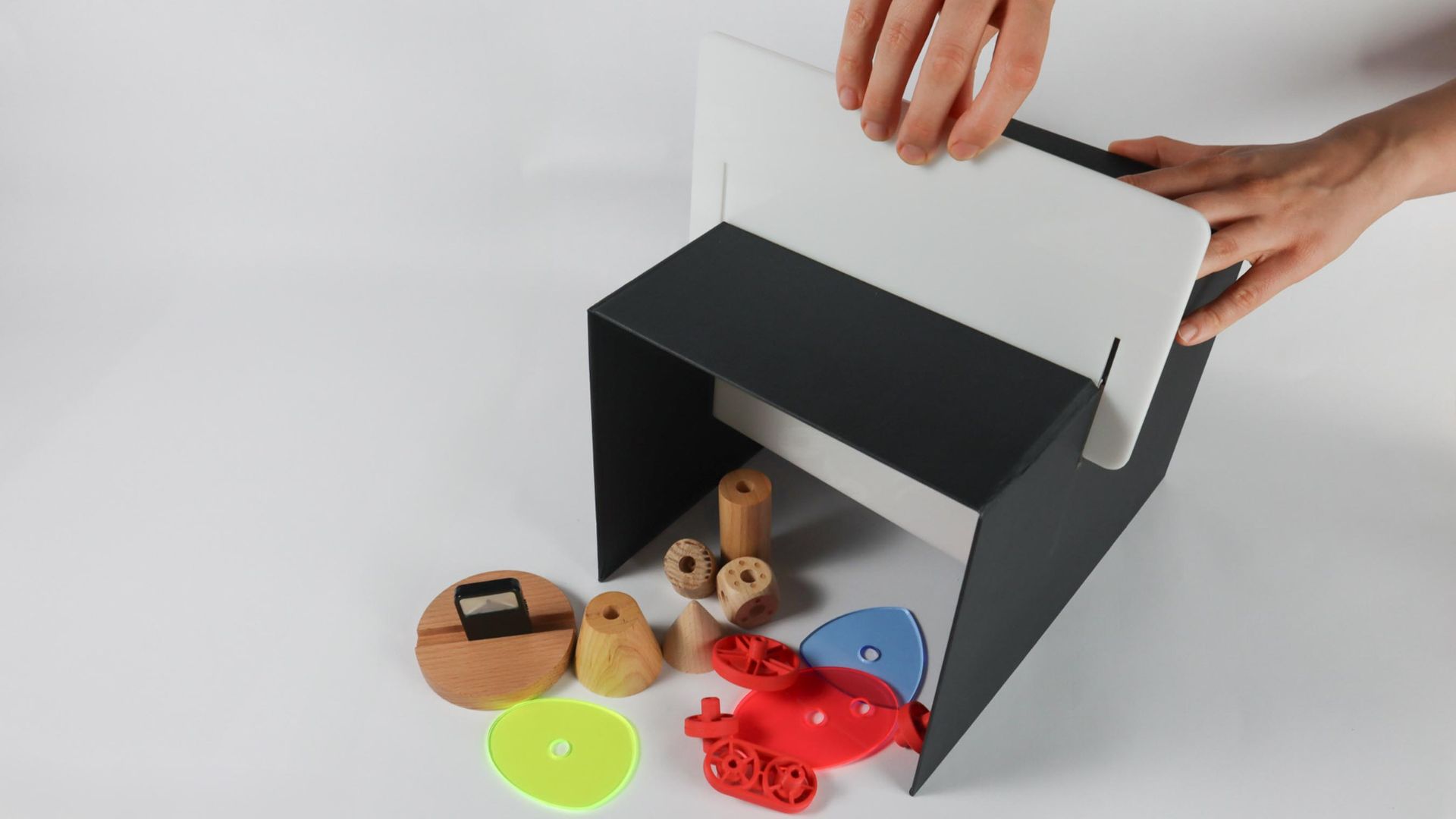
When designers and researchers discuss the idea of artifacts, we often think first of tangible objects—a deck of cards, a set of wooden cubes, a prototype, or other physical materials created to facilitate the design process.
However, if we expand design toward a more planetary-oriented perspective, our understanding of artifacts may also need to expand.
The challenge, in my mind, is this: How might we integrate non-physical, digital, informational, or even verbal artifacts to better incorporate nature and non-human perspectives into the design process?
Rather than understanding artifacts only as physical objects, we might consider them as mechanisms or media that structure conversations, shape behaviors, make relationships visible, and encourage people to reflect on dimensions that could otherwise remain overlooked.
In this context, I am interested in how we might build creative and sustainable rituals within organizations to support talent investment, team well-being, and more constructive conversations.
These rituals themselves can become a form of design artifact, not necessarily something that can be physically held, but something intentionally designed, repeatedly practiced, and collectively experienced.
For example, when I worked at IDEO, each project incorporated what we called a “flight system,” consisting of pre-flight, mid-flight, and post-flight conversations.
Before a project began, the team conducted a pre-flight check-in to better understand each team member, including clients, their needs, expectations, working styles, and personal preferences. Some team members might identify as night owls and prefer arriving at the office later in the day, while others might be early birds who prefer starting earlier and leaving around 4:00 p.m. These seemingly small conversations helped the team establish shared expectations and create a working culture that accommodated different rhythms and needs.
The mid-flight conversation provided an opportunity to revisit these initial agreements. The team could identify emerging misalignments, discuss whether the working culture had deviated from what was originally agreed upon, and determine how to plan and re-plan the remainder of the project. Treating the initial agreement as fixed, the mid-flight recognized that projects, relationships, and individual circumstances evolve over time.
Finally, the post-flight took place after the client engagement and project had concluded. Typically involving only the internal IDEO project team, it created space to collectively reflect on what worked, what was missing, and what could be improved in future projects.
These three moments formed a recurring organizational ritual that supported reflection, adaptation, communication, and learning throughout the project lifecycle.
The notion of a “flight system” provides an example of what we might call a virtual, informational, or ritual artifact. Its value does not depend on a physical object. It lies in the conversations, relationships, reflections, and behaviors that the artifact enables. From this perspective, an artifact can function as a designed structure for collective reflection and decision-making.
This expanded understanding of artifacts becomes relevant in the context of Planetary Design. If design teams are expected to consider not only immediate human needs but also broader social and ecological systems, then artifacts can be purposefully designed to bring these dimensions into everyday design conversations.
Building on the logic of the flight system, we might therefore imagine a planetary flight system in which teams periodically reflect on both social and ecological considerations throughout a project.
A pre-flight conversation could identify which human, community, institutional, and ecological stakeholders may be affected by a project. A mid-flight could revisit assumptions and examine emerging social or environmental consequences. A post-flight could evaluate not only whether the project met its original objectives, but also what broader impacts, trade-offs, or unintended consequences it produced.
Such conversations cannot rely on designers’ assumptions alone. A planetary flight system would require teams to bring different forms of knowledge into the design process—from community experience and qualitative research to environmental data, policy expertise, scientific evidence, and domain specialists.
It would also require designers to question the authority behind that knowledge: Who produced the evidence? Whose perspective does it represent? What interests shape it? Where do different sources disagree? The designer’s role is therefore not to become an expert in every domain, but to create conditions in which multiple forms of expertise can be surfaced, compared, questioned, and translated into design decisions.
In this way, design artifacts could become more than objects for facilitating HCD activities. They could serve as boundary objects, a concept proposed and defined by Susan Leigh Star and James R. Griesemer in 1989, as well as reflective mechanisms and organizational rituals that intentionally bring human and non-human perspectives into the design process.
Such artifacts could help make otherwise invisible relationships—among people, organizations, infrastructures, natural environments, and planetary systems—more visible, tangible, and open to discussion.
The purpose of these expanded artifacts is not simply to add more considerations to an already complex design process. They can help designers continually negotiate the relationship between social well-being and ecological responsibility.
Purposefully designed and facilitated, these artifacts can help teams navigate the space between the social foundation and ecological ceiling, the “safe and just space for humanity” in which human well-being can be supported without exceeding the ecological limits of our planet.
Design education should prepare students to work across interconnected systems
Planetary Design adds another layer to the design process by moving beyond the assumption that humans must always occupy the center. It asks designers to consider a broader range of human and non-human perspectives, including climate, the built environment, policies, cultures, institutions, organizations, infrastructures, and larger ecological and social systems.
In this article, I use non-human perspectives broadly to describe living beings, ecological systems, material conditions, technologies, infrastructures, and other forces that shape—and are shaped by—design but cannot necessarily participate directly in conventional human-centered research.
This broad use of the term is intentionally relational: human and non-human dimensions are not separate categories but continually influence one another.
Ezio Manzini’s Design, When Everybody Designs (2015) offers useful guidance for thinking about this expanded perspective. Manzini explores how everyday people can drive social change through collaborative problem-solving and distinguishes between diffuse design—the natural capacity of everyone to address problems and create solutions in everyday life—and expert design—the specialized knowledge, methods, and tools practiced by trained design professionals.
Thus, social innovation can emerge through bottom-up initiatives in which communities creatively respond to local challenges and develop new social practices. Co-design becomes an open and collaborative process through which citizens, communities, organizations, and design experts collectively imagine and create possible solutions.
This raises a question for design education: How might we prepare students not only to design for people, but also to understand and intervene responsibly in the interconnected systems in which people live?
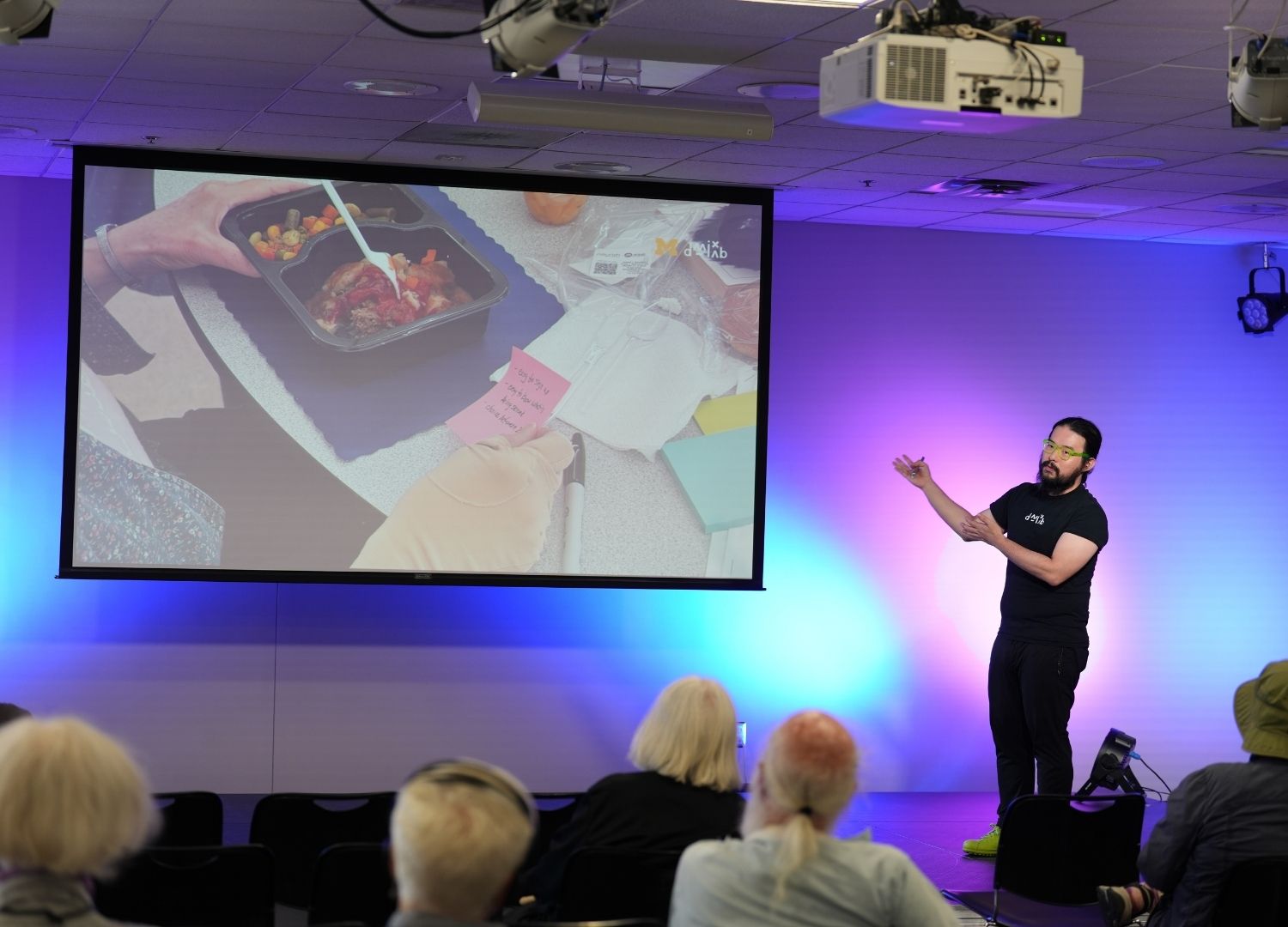
This fall, I am offering a new campus-wide course at the University of Michigan, Design for Longevity Across Scale: Product, Service, and City (UT402). Developed in collaboration with the Dexter Senior Center (DSC) in Michigan, the course gives students an opportunity to work directly with a local community and move from qualitative research and inspiration through ideation, prototyping, and implementation.
Working with a limited prototyping budget, students will translate insights from community-based research into tangible concepts and prototypes that respond to challenges identified with DSC participants and stakeholders.
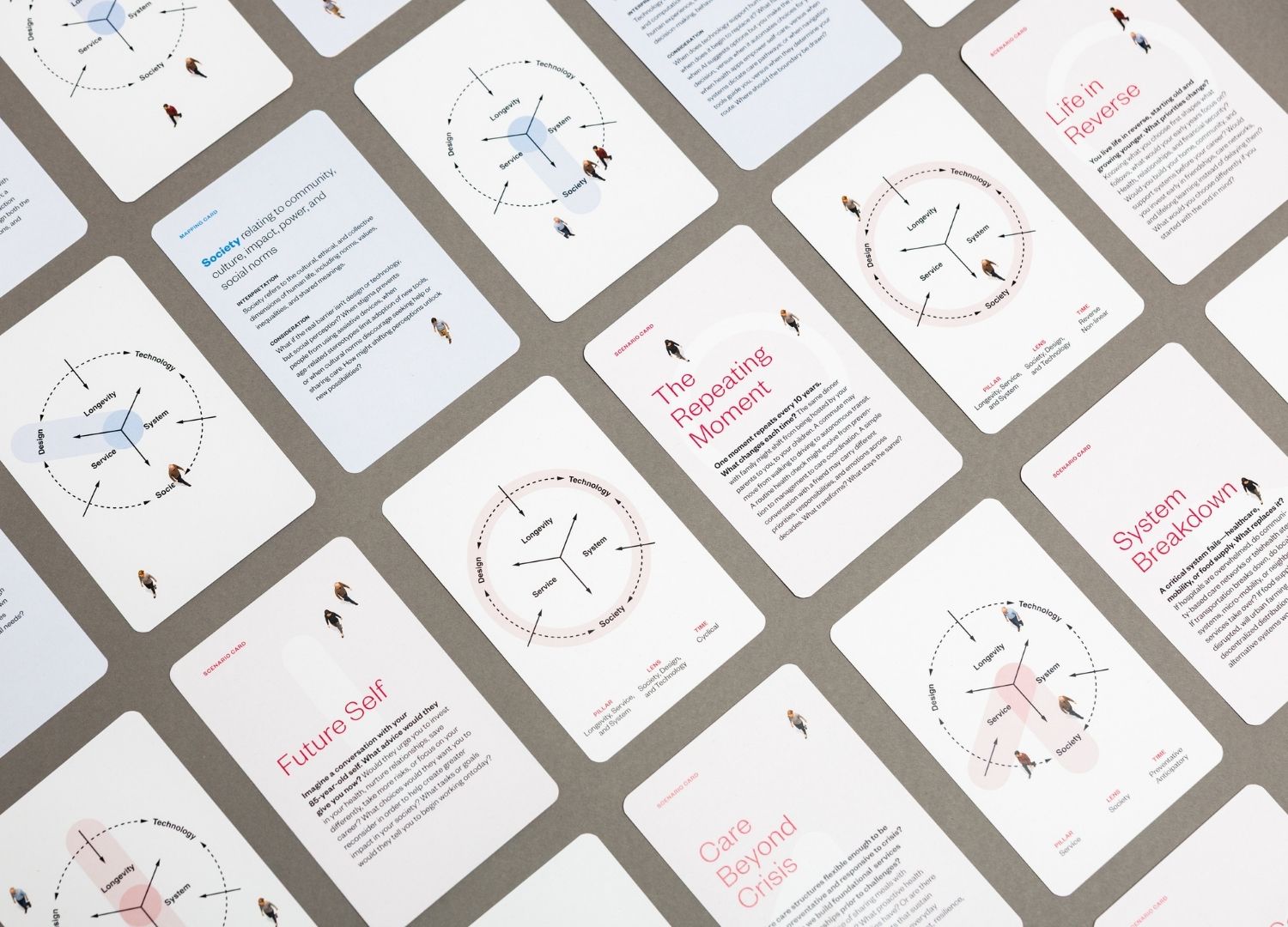
Students will also use the D4L Toolkit to conduct qualitative research, facilitate conversations with community members, and investigate longevity-related challenges across product, service, and urban scales (Figure 5).
Through the course, I am exploring what a planetary orientation might mean for design education in a longevity society. When students engage with DSC as a study site, they are encouraged to look beyond the older adults as individual service recipients and map the broader ecosystem surrounding their experiences.
That ecosystem includes DSC staff, service agencies such as Meals on Wheels (MoW), family and community members, as well as less visible actors and conditions: physical infrastructure, transportation, lighting, spatial configurations, policies, technologies, and environmental conditions (Figure 6).
Design education, in this sense, needs to expand from a primarily human-centered paradigm toward a more planetary-oriented one. This does not mean abandoning HCD. It means situating human needs, experiences, and aspirations within the social, institutional, technological, spatial, and ecological systems of which they are a part.
Audrey G. Bennett, in Design: A Quick Immersion (2026), provides another useful perspective for considering this transformation. She describes design as a human activity of creative problem-solving while emphasizing that design is enacted by people who have different levels of power and access to resources.
Her P-model of design offers a particularly productive starting point. She frames design as “a cultural system mediated by power involving people with purposeful practices in places that generate products with the potential to address problems in places.”
The P-model conceptualizes design as a cultural system comprising people, places, practices, purposes, products, problems, and power. Rather than understanding design primarily through individual designers, users, or designed objects, the model encourages us to see design as a broader system of relationships, resources, contexts, practices, and consequences.
For design education, this offers an important shift: rather than teaching students only to solve discrete human-centered problems, we can help them learn to recognize, navigate, question, and intervene in interconnected systems.
For me, this expanded perspective provides a more comprehensive way to think about inclusive and longevity-friendly design while also reconsidering the systems through which design itself is taught and practiced.
A planetary-oriented design education would encourage students to ask not only, “Who are we designing for?” but also, “What systems, relationships, resources, environments, and forms of power shape the problem we are trying to address?”
Designing for longevity is therefore not simply about supporting individuals as they live longer. Perhaps the question is not whether humans should no longer be at the center of design. The more productive question is what becomes visible when we move humans away from the center long enough to see the relationships around us.
Designing for longevity through a planetary lens means recognizing that longer, more meaningful lives depend not only on better products, services, and cities, but also on the social, ecological, and infrastructural systems that make those lives possible.
References:
About the author

Sheng-Hung Lee is an Assistant Professor of Urban Technology at the University of Michigan and Director of the d-mix lab. Trained in both design and engineering, his work explores how technology and human-centered design can shape more equitable and longevity-ready societies.
WebsiteInstagramLinkedin