Playrise: giving refugee children the right to play
Playrise, a UK charity and a team of award-winning architects, is building modular play structures for displaced children, asking what it means when design takes the right to play seriously.
Worldwide, 48 million children are displaced due to conflict and war, according to UNICEF. Meanwhile, the UNHCR says that 52% of all displaced people are children. These children live in troubling conditions, where no spaces are provided for them. For example, in the Aysaita refugee camp in Ethiopia, there are zero playgrounds for the more than 10,000 children living there.
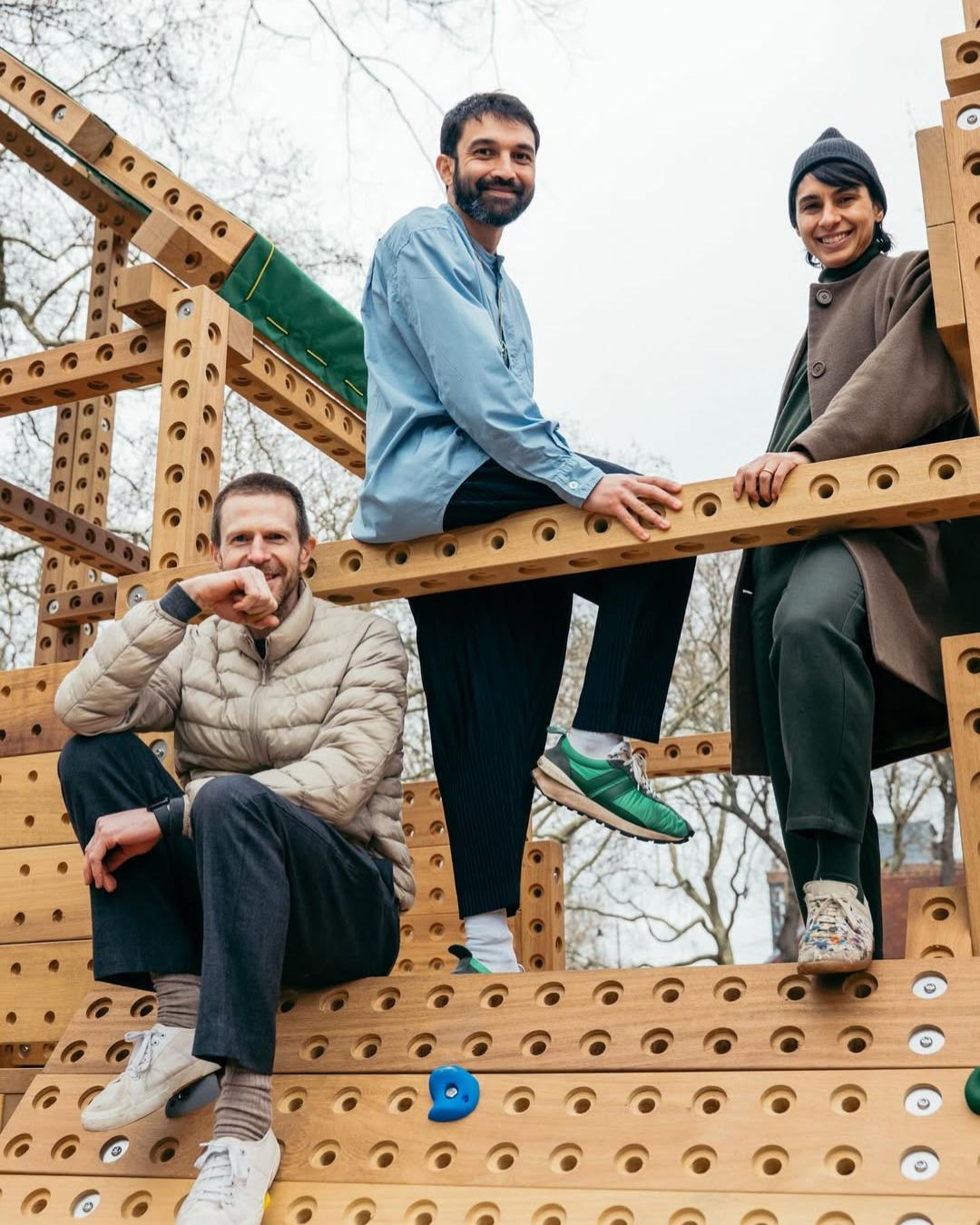
Playrise is a recently established UK charity attempting to do something about that last number. Founded by Alexander and Ariana Mouyiaris Meininger, with co-founder Hikaru Nissanke, the project brings together architects, structural engineers, and fabricators to design and build play structures capable of being transported to and installed in disaster-relief sites around the world.
Gallery
Open full width
Open full width
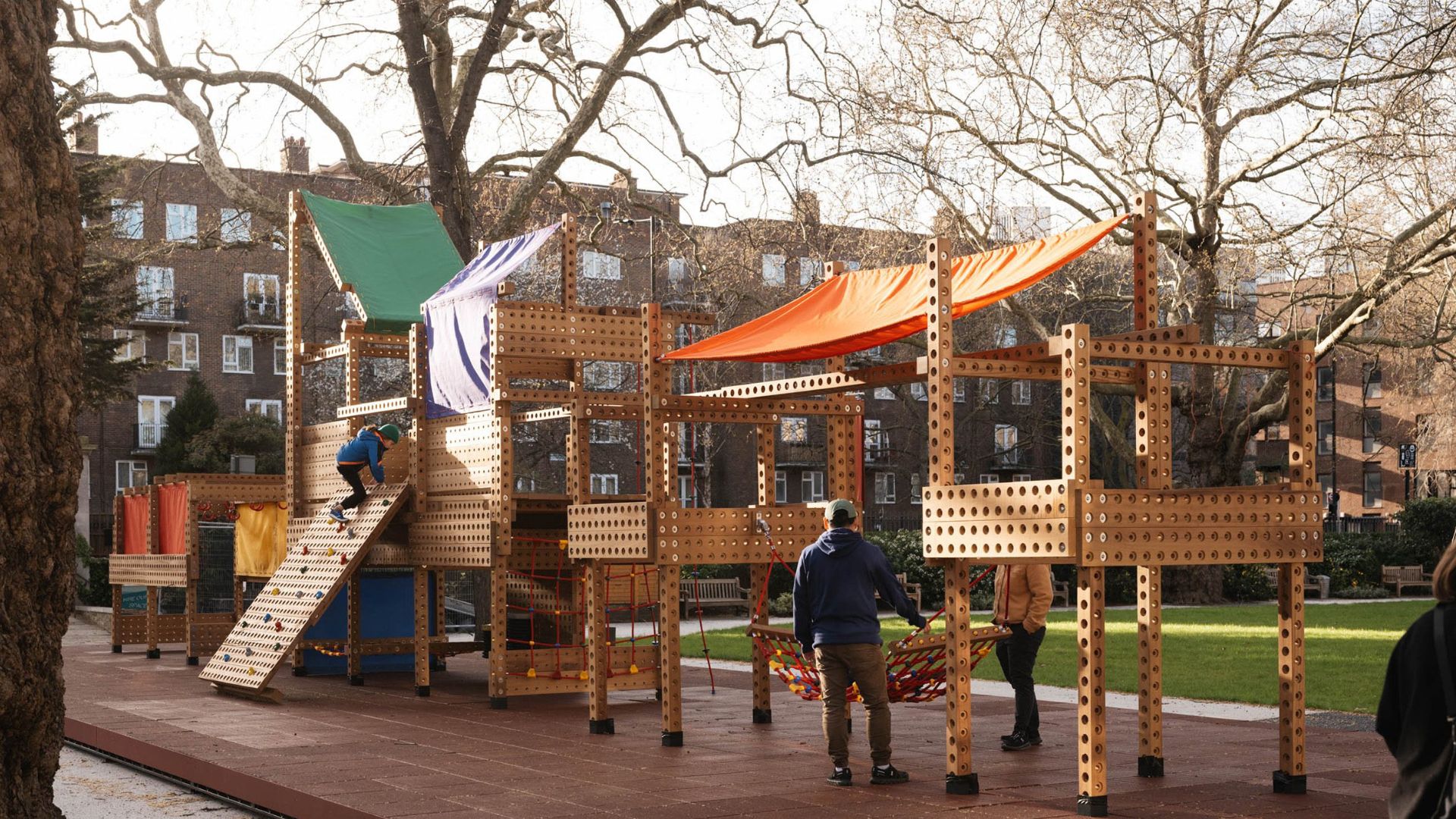
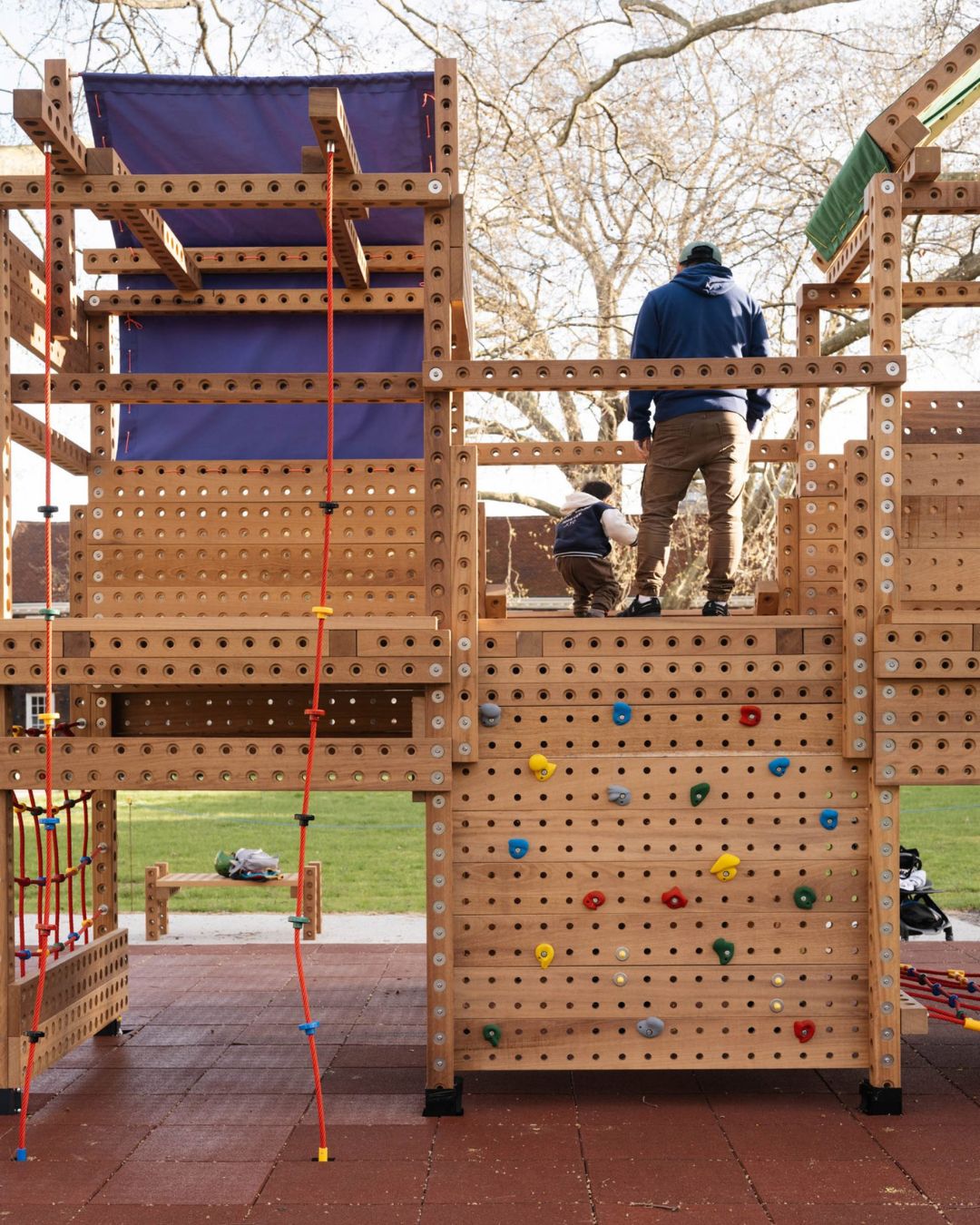
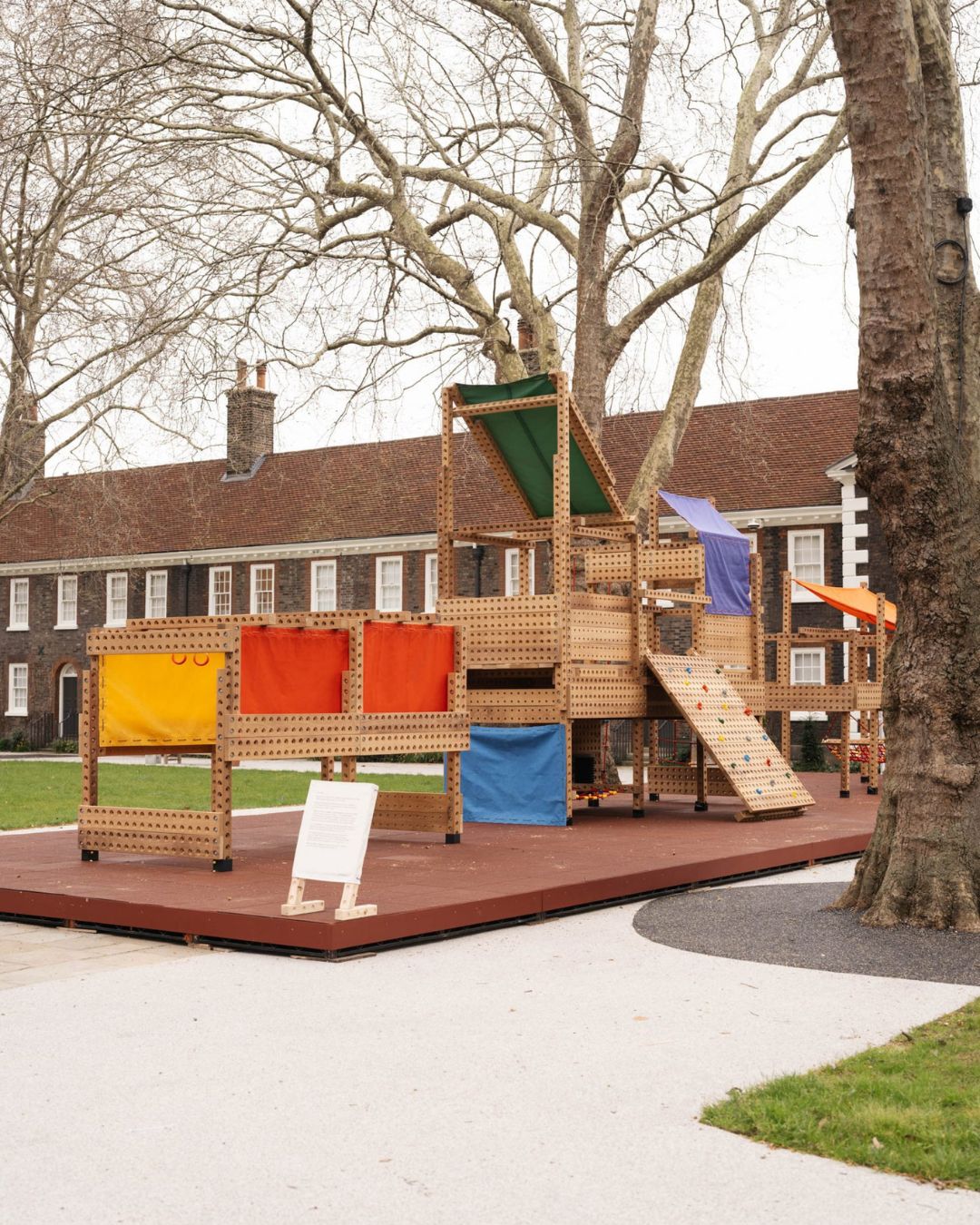
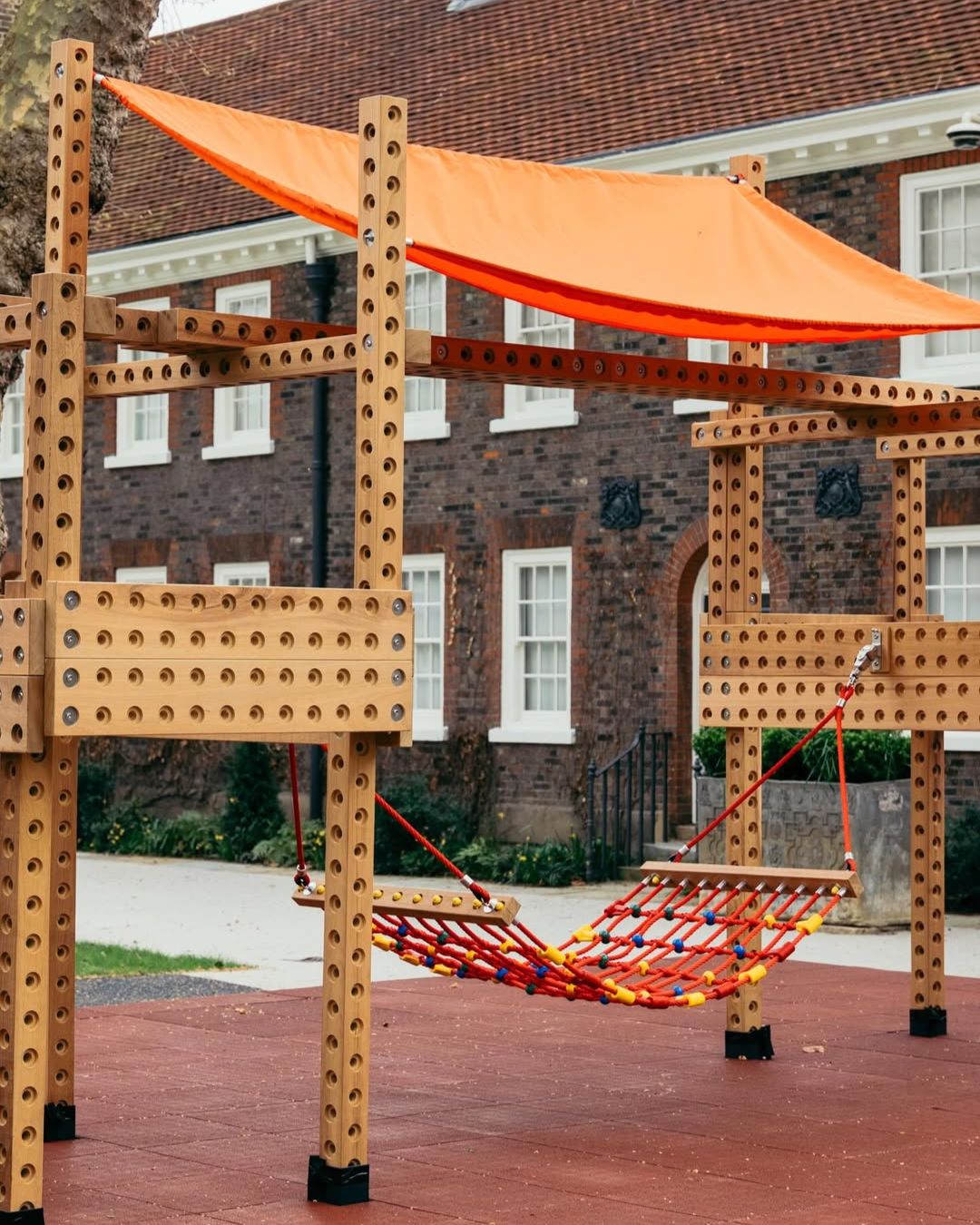
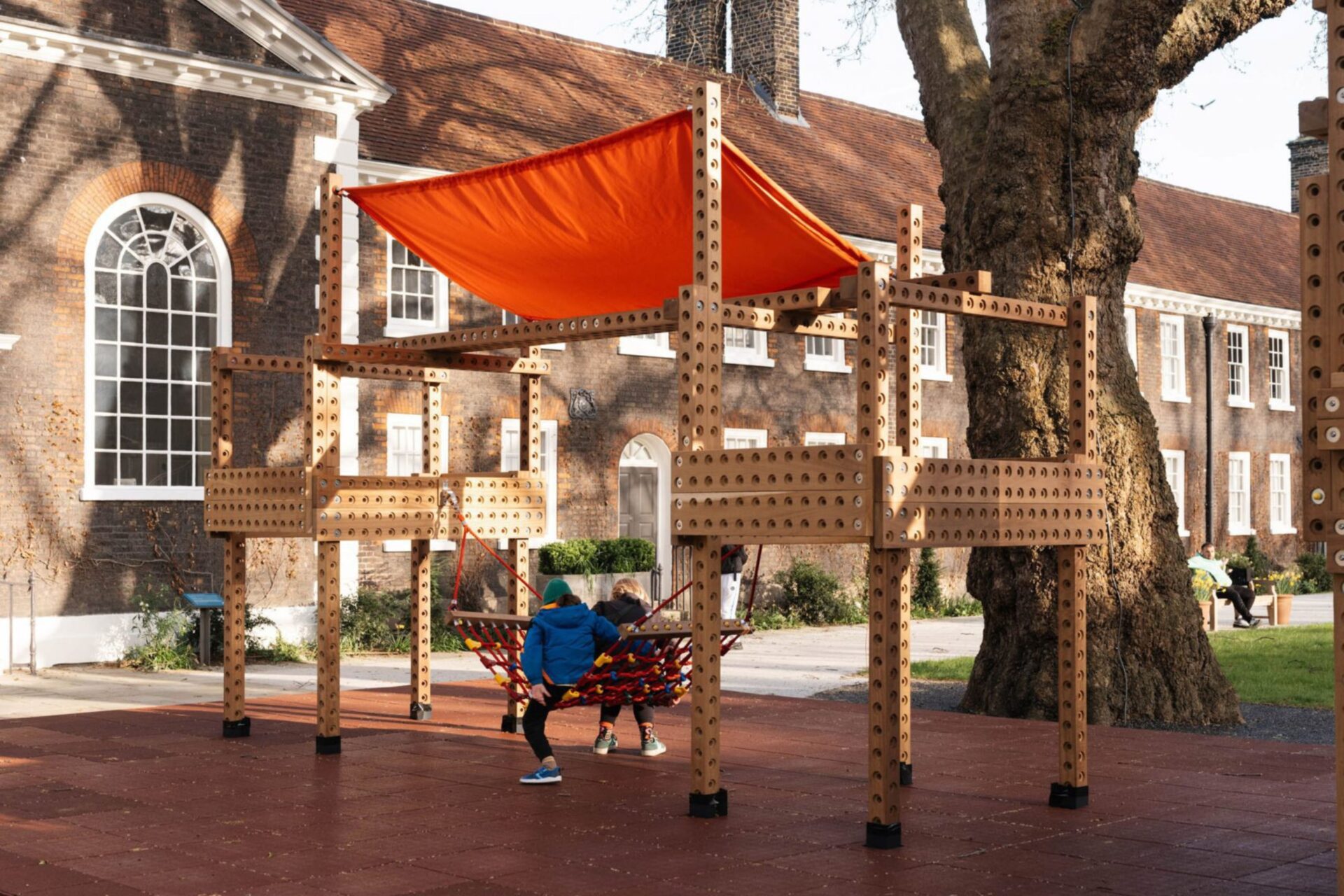
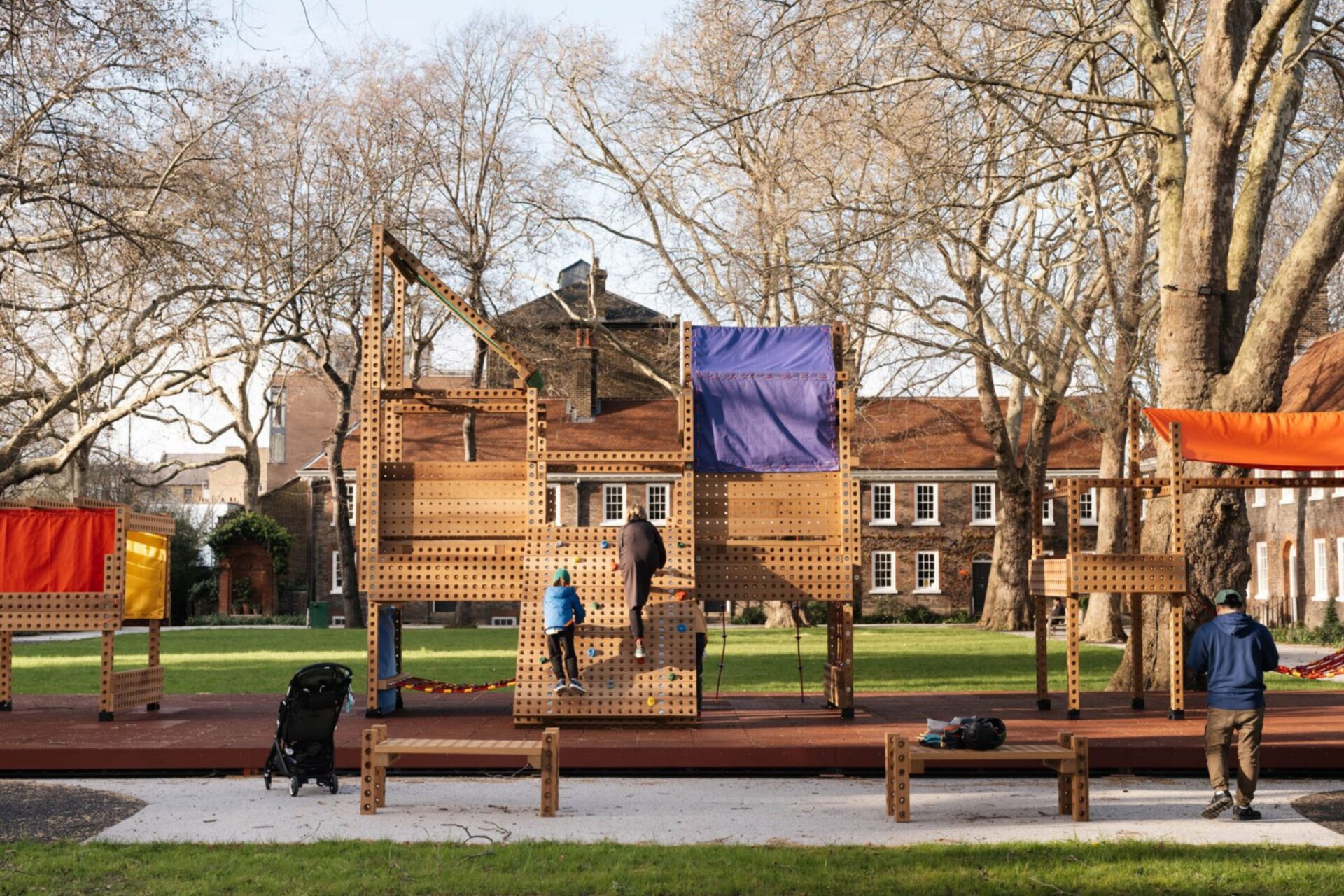
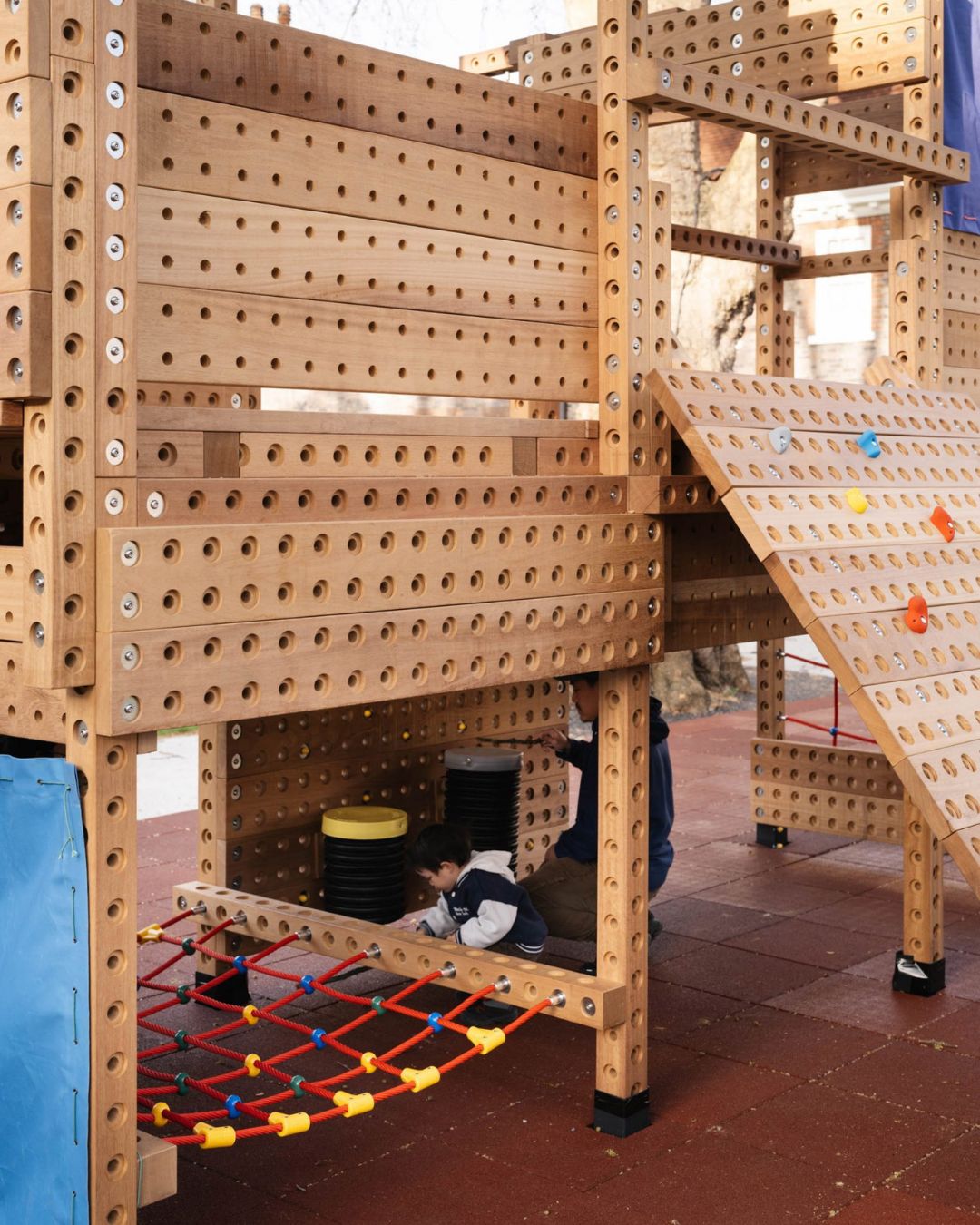
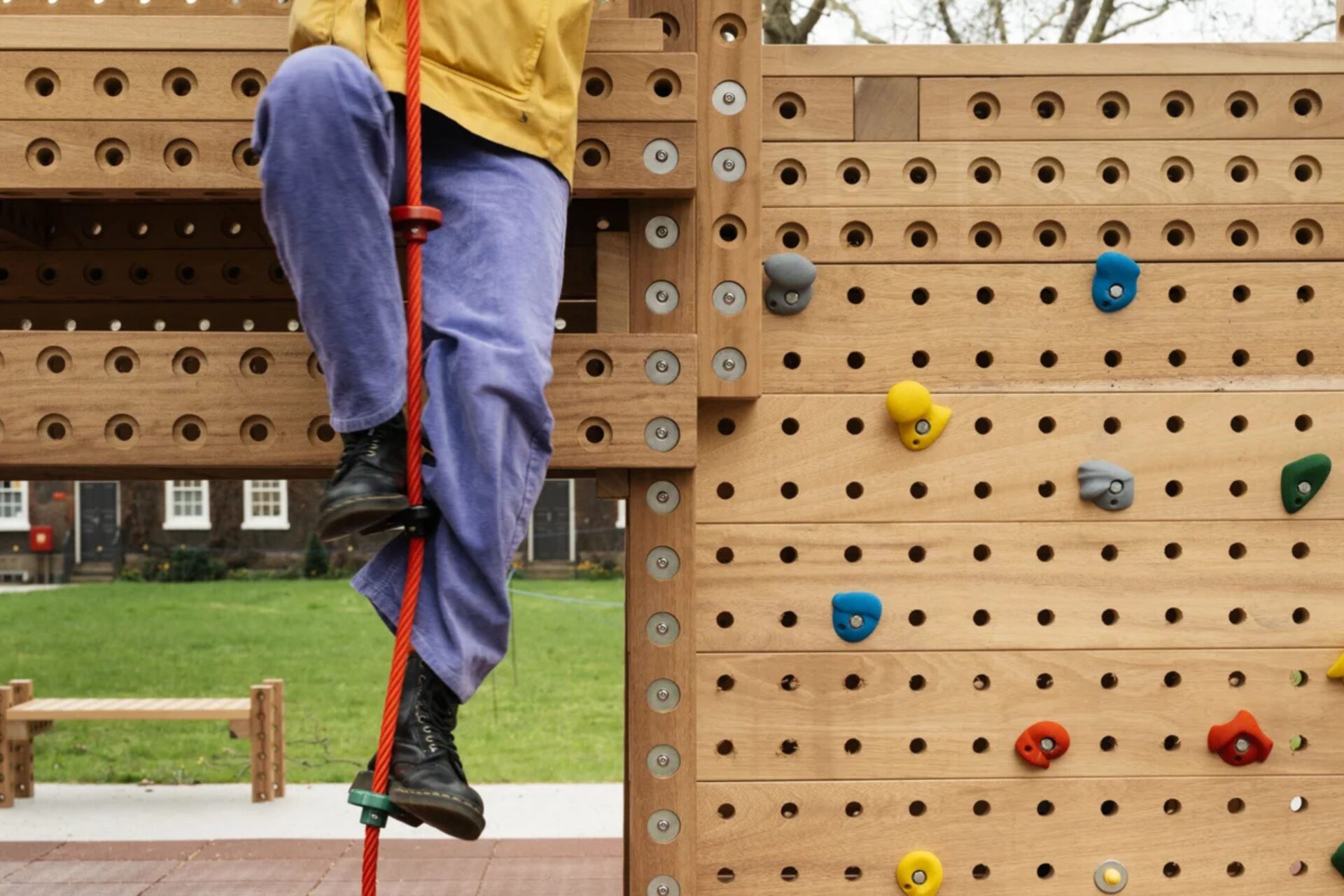
The design work is by OMMX, a London-based architecture practice, co-directed by Hikaru Nissanke. The playground structure is modular, built primarily from timber, using a system of beams, planks, and plates fitted together with metal connectors. Attachments like nets, ropes, monkey bars, or basketball hoops can be added or removed according to the needs of the community and the constraints of the site.
The system is reconfigurable, meaning that the same kit can become a playground, a theatre, a tunnel, or what the team describes as simply a safe space. It can be assembled, disassembled, and reassembled, designed to be light enough to transport easily and simple enough to be installed by anyone, without specialist equipment.
A relevant advisor to the team is CatalyticAction, a charity co-founded by Joana Dabaj and Ricardo Conti, who have been working in this space since at least 2015, when they completed the Ibtasem playground in Lebanon, a modular playscape designed with Syrian refugee children and built with local materials. Their connection to the team represents a lineage of thinking about how architectural practices can operate in humanitarian contexts, without romanticising any condition but simply by creating something useful.
What distinguishes this project is the seriousness with which it takes the argument for play, it is not framed as an add-on to more pressing needs, but as a rights issue. The right to play is described in Article 31 of the UN Convention on the Rights of the Child, and the organisation cites this explicitly in its mission statement. Play is central to motor development, emotional regulation, formation of peer relationships and community bonds, and it should not be reserved for the more fortunate of children. In crisis contexts, the absence of play compounds existing psychological harm and delays recovery.
The research behind the project was deep; the team made field visits to three communities: the Aysaita camp for Eritrean refugees in Ethiopia, a Palestinian community in Cairo, and a Sudanese refugee settlement in Egypt. The workshops they conducted were participatory by design, involving children directly in the process of identifying what kinds of play mattered most to them, what configurations felt useful.
What makes Playrise interesting is its framing, the insistence that a play structure is not furniture, but infrastructure. The modular kit is an inhabitable toy, something that belongs to the children who use it, that can be rearranged according to their needs, and takes seriously the idea that agency and ownership matter even when resources are scarce.