Terramater: the new sustainable porcelain stoneware by Marazzi
Terramater, the latest addition to the Crogiolo series, combines Italian raw materials and a history that began 90 years ago in Sassuolo. Its unique surfaces are crafted from 60% recycled content, with special glazes that fuse with the red body during firing, creating organic depth and a palette of seven rich, ’70s-inspired colors.

It’s been almost one hundred years since Filippo Marazzi, a young employee in his family’s grocery store, bought a factory near the center of Sassuolo, in northern Italy, for the production of ceramics. The place, soon nicknamed the “cardboard factory” by his fellow townspeople for its appearance, would, in less than ten years, become part of a true wave of innovation, alongside many other companies. A modest beginning that anticipated a cultural and industrial transformation for an entire district. Today – ninety years later, since the brand’s founding in 1935 – Marazzi is a benchmark for the global tile industry, an evolution that grew with the company itself and helped shape the identity of this territory.
Filippo’s vision, driven by a sharp focus on research and experimentation, continues to define Marazzi’s DNA. Throughout its 90-year history, the brand has excelled at translating new languages, anticipating change, and capturing emerging trends in living, architecture, design, and the spaces we inhabit, both indoors and out. Deeply committed to sustainability, Marazzi has reaffirmed its leadership through care, attention, and a bold perspective on aesthetics and technology.
Gallery
Open full width
Open full width
Over the years, this vision has taken shape through concrete transformations. Marazzi has doubled production capacity at its Fiorano and Finale Emilia sites, renovated its historic factories in Sassuolo, and upgraded its research labs to support increasingly advanced material development. And in this spirit of innovation and technology, applied to one of the most enduring and versatile materials on the planet, Marazzi created Crogiolo. It merges the tactile richness of traditional techniques with the precision of advanced production, offering a rare synthesis of authenticity and performance. Crogiolo is a return to the human touch, where ceramics radiate warmth and timelessness, beyond trends and becoming timeless.
The name itself carries the weight of the brand and family history: Il Crogiolo (Italian for “crucible,” a container in which clay is heated until malleable, then shaped and worked) was the original factory where Marazzi started in the 1930s, nestled between railway tracks and the Modena canal. In the 1980s, it became a creative lab where architects, designers, artists, and photographers were invited to explore the expressive potential of ceramics. A symbolic moment in the recent transformation of the brand was the restoration and public reopening of the original factory, which has now become a cultural venue and tribute to the company’s experimental roots. This led to the influential Sperimentazioni series – tiles by Roger Capron, Amleto Dalla Costa, Saruka Nagasawa, Robert Gligorov, among others – documented in the Il Crogiolo booklets: a unique archive of sketches, photos, and reflections that continues to inspire the brand’s research today.
These experiments were never about nostalgia and always about possibilities, showing ceramics not just as surface, but as language, process, and emotional texture. The latest Crogiolo collections are direct descendants of that legacy: a celebration of craftsmanship, innovation, and the emotional resonance of ceramic surfaces, shaped by decades of research and a clear design vision. Each piece in the collection is a small act of uniqueness against the flattening of industrial production, proof that emotion still matters.
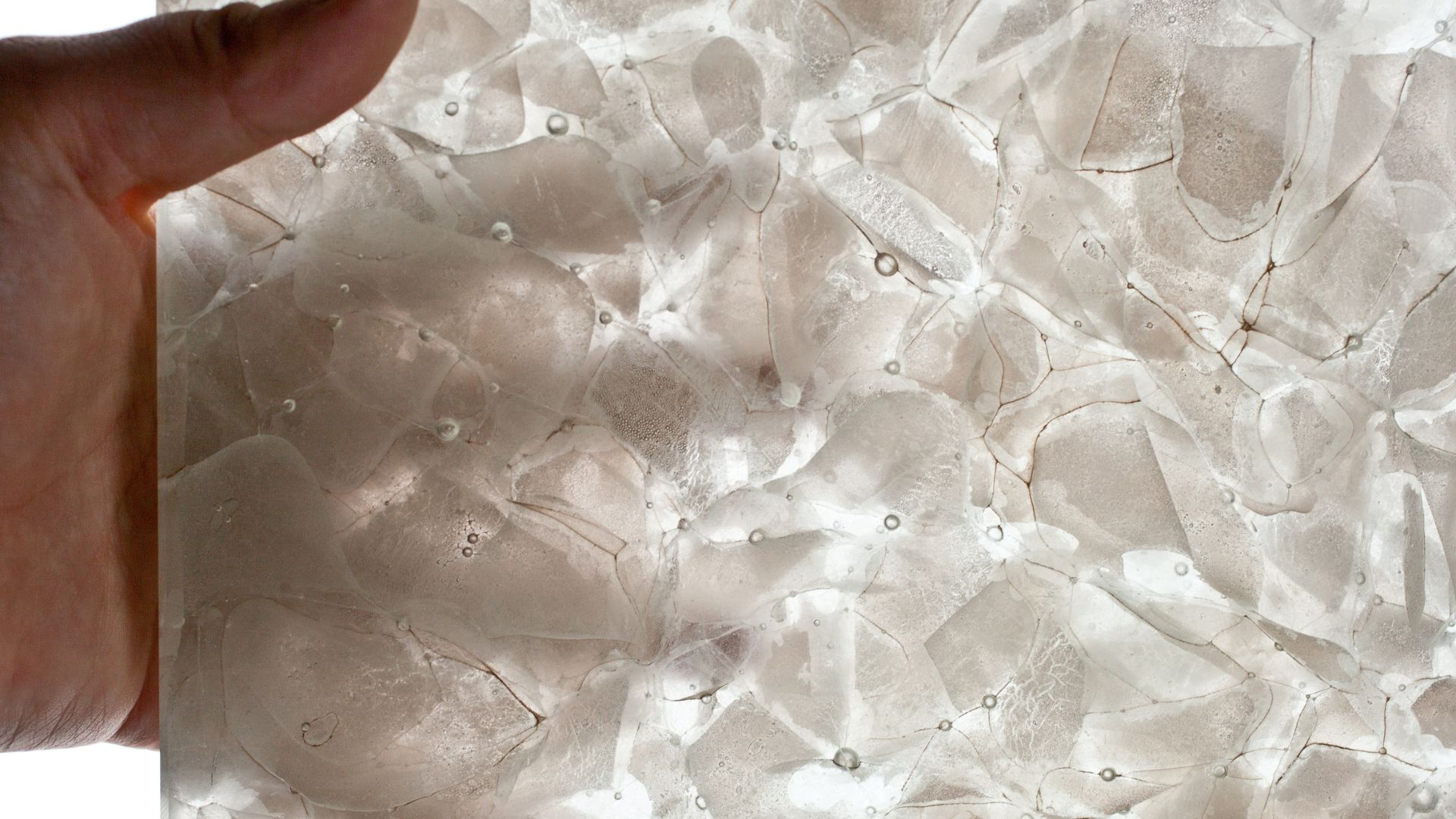
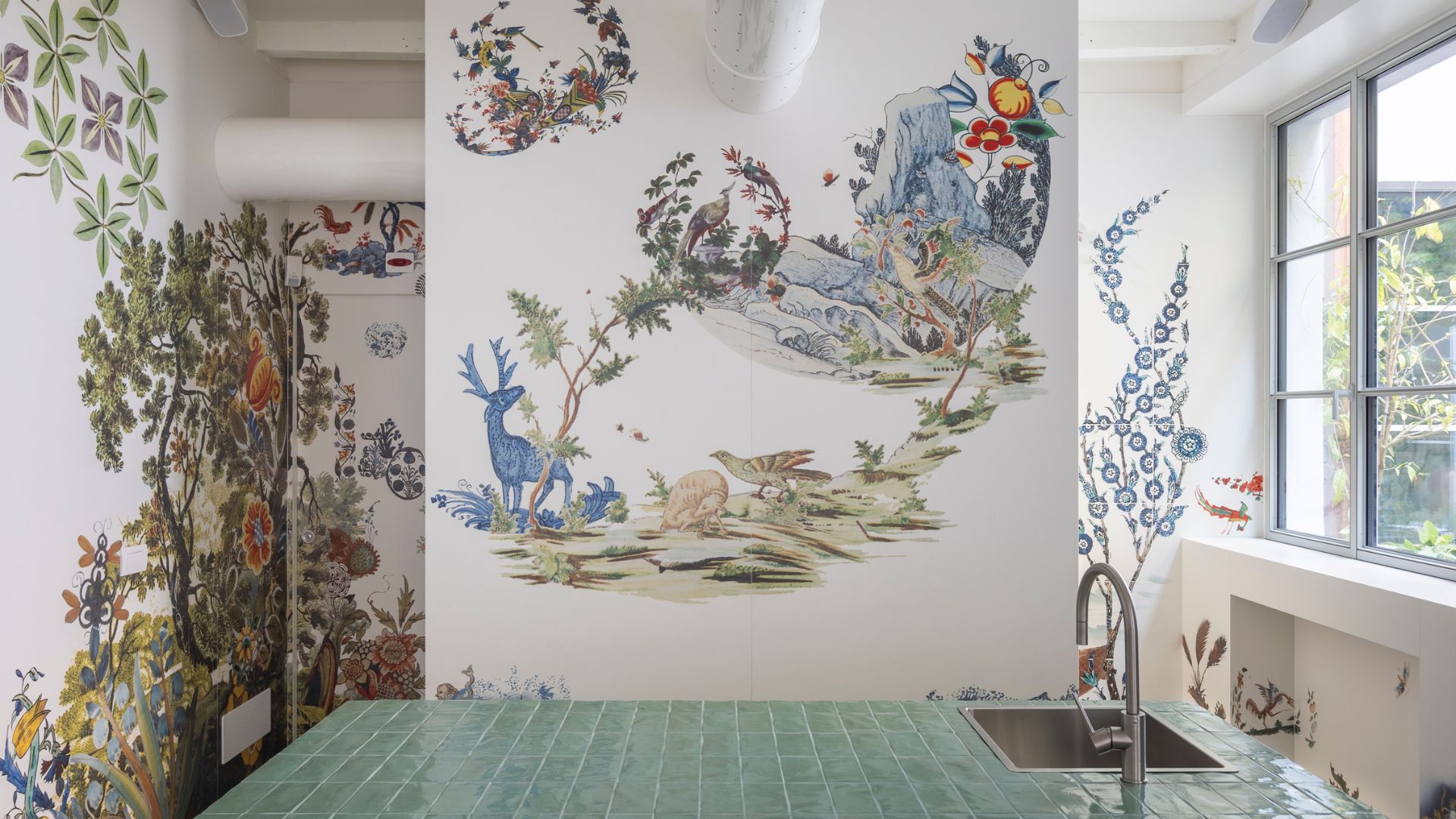
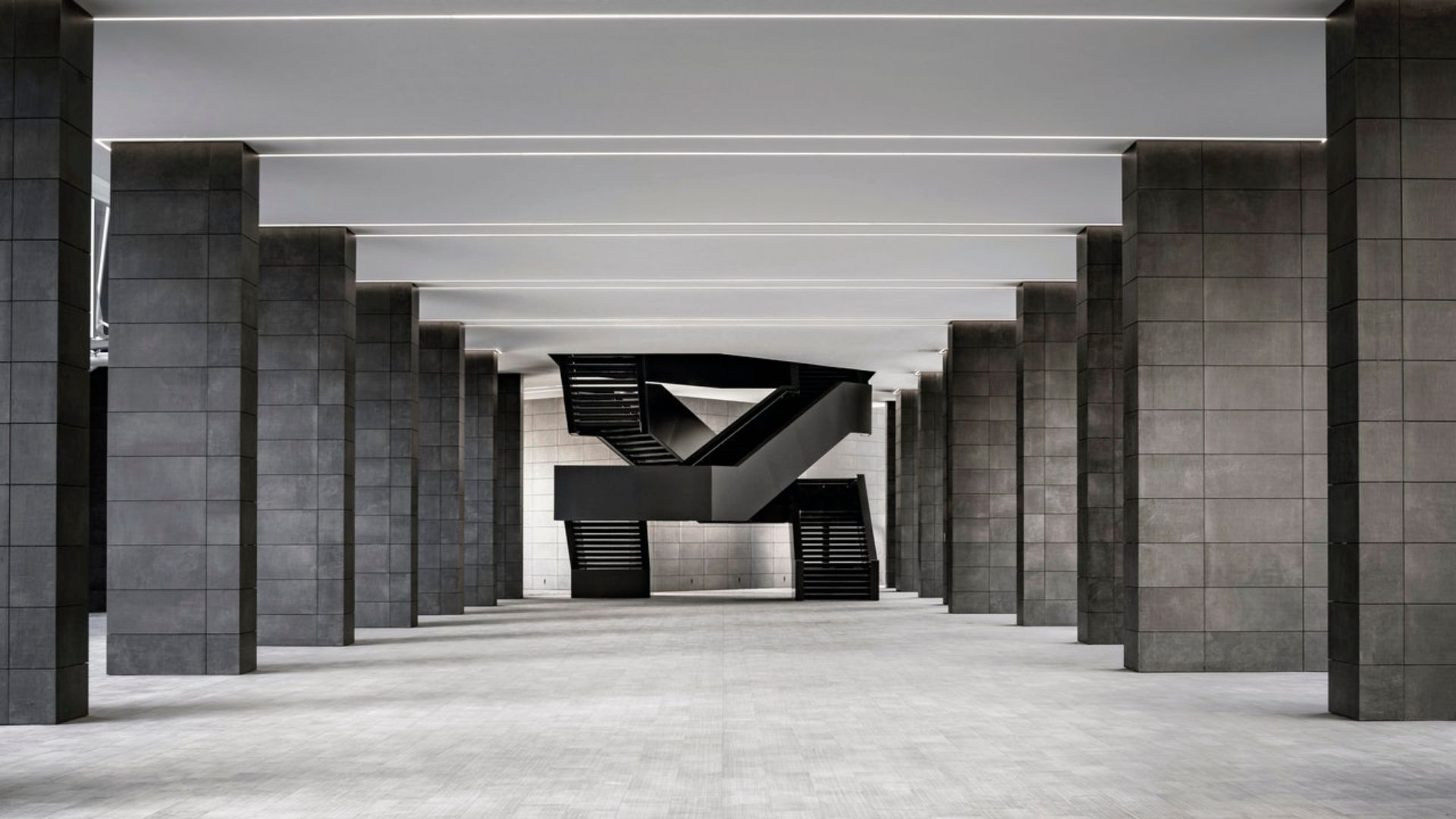
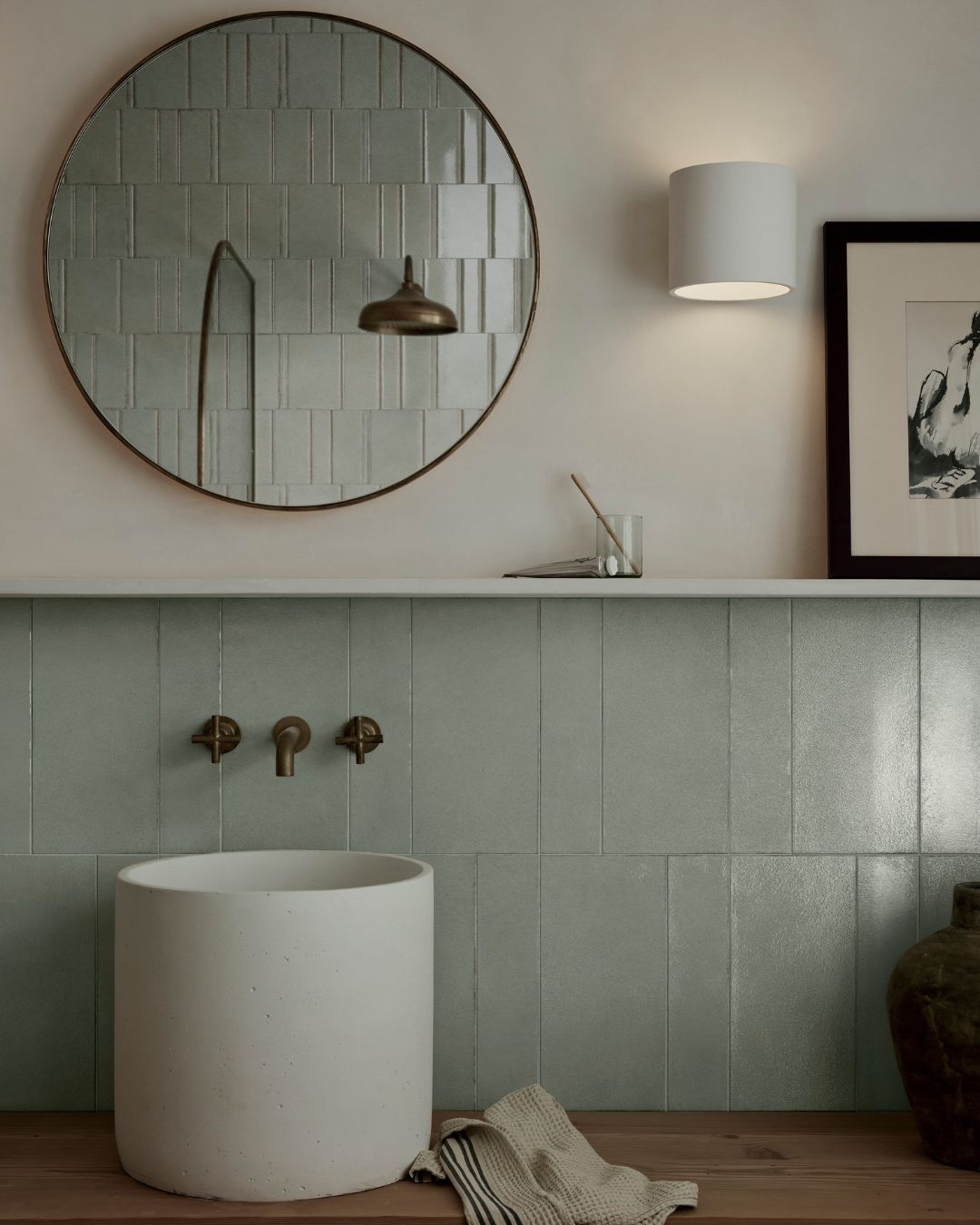
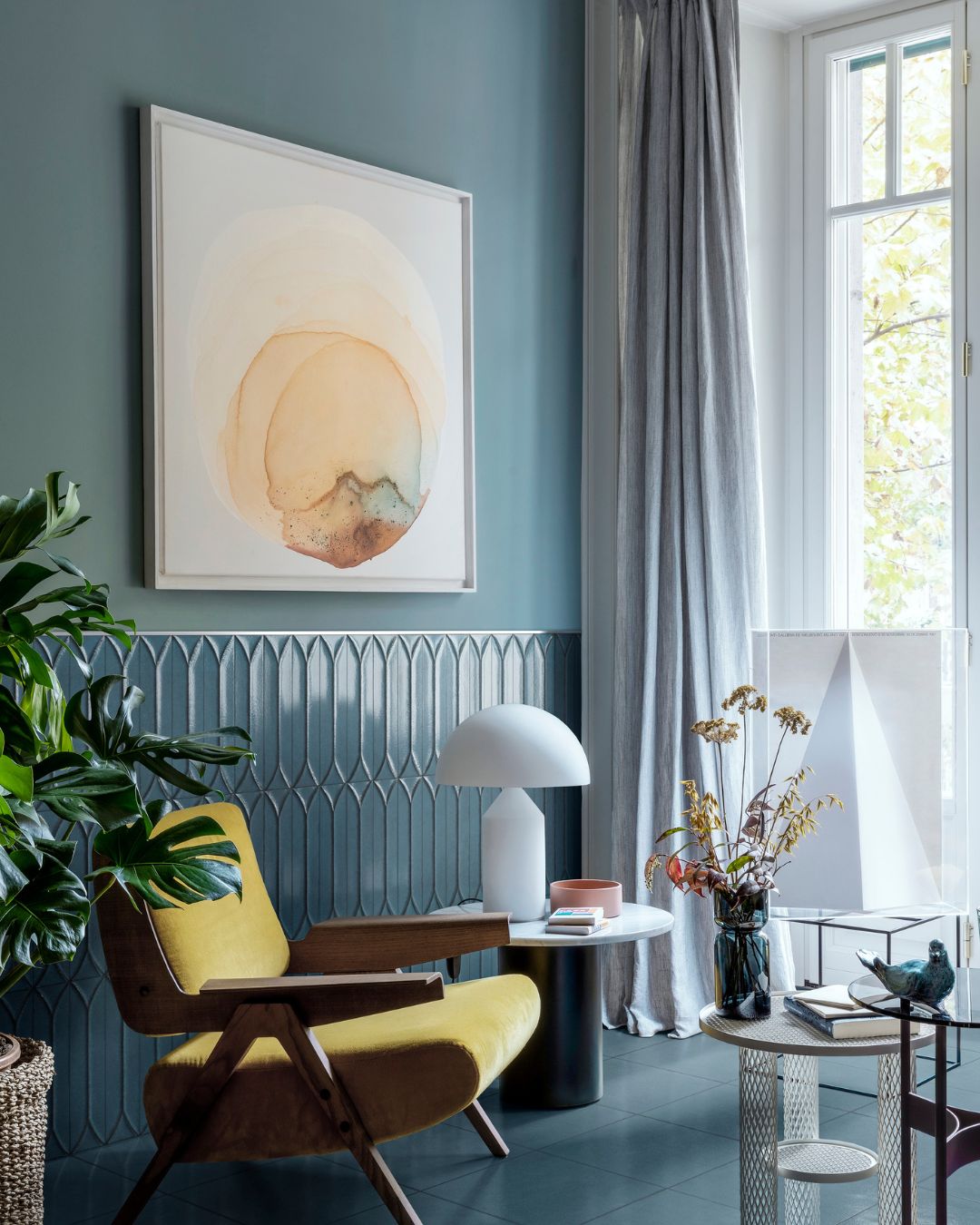
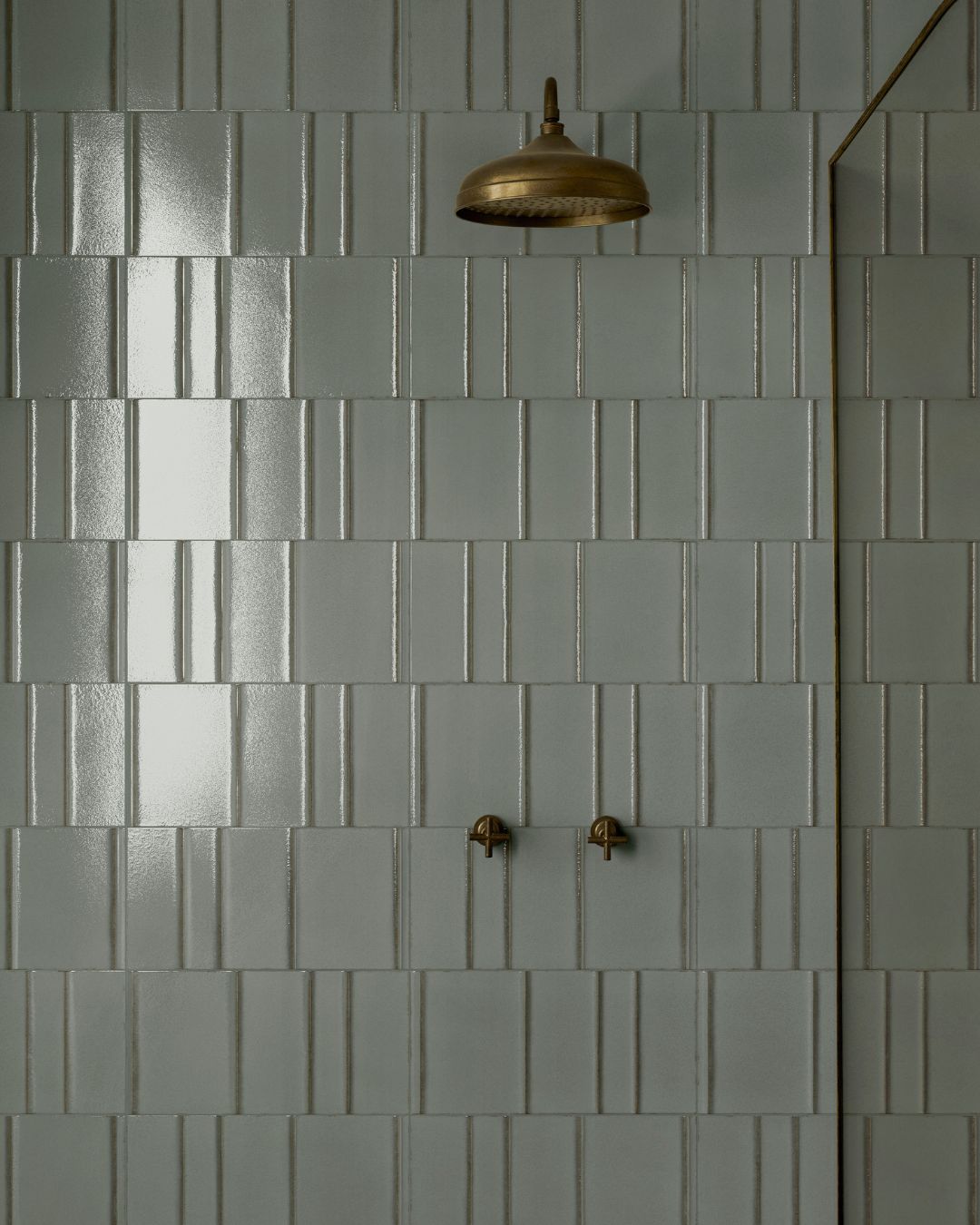
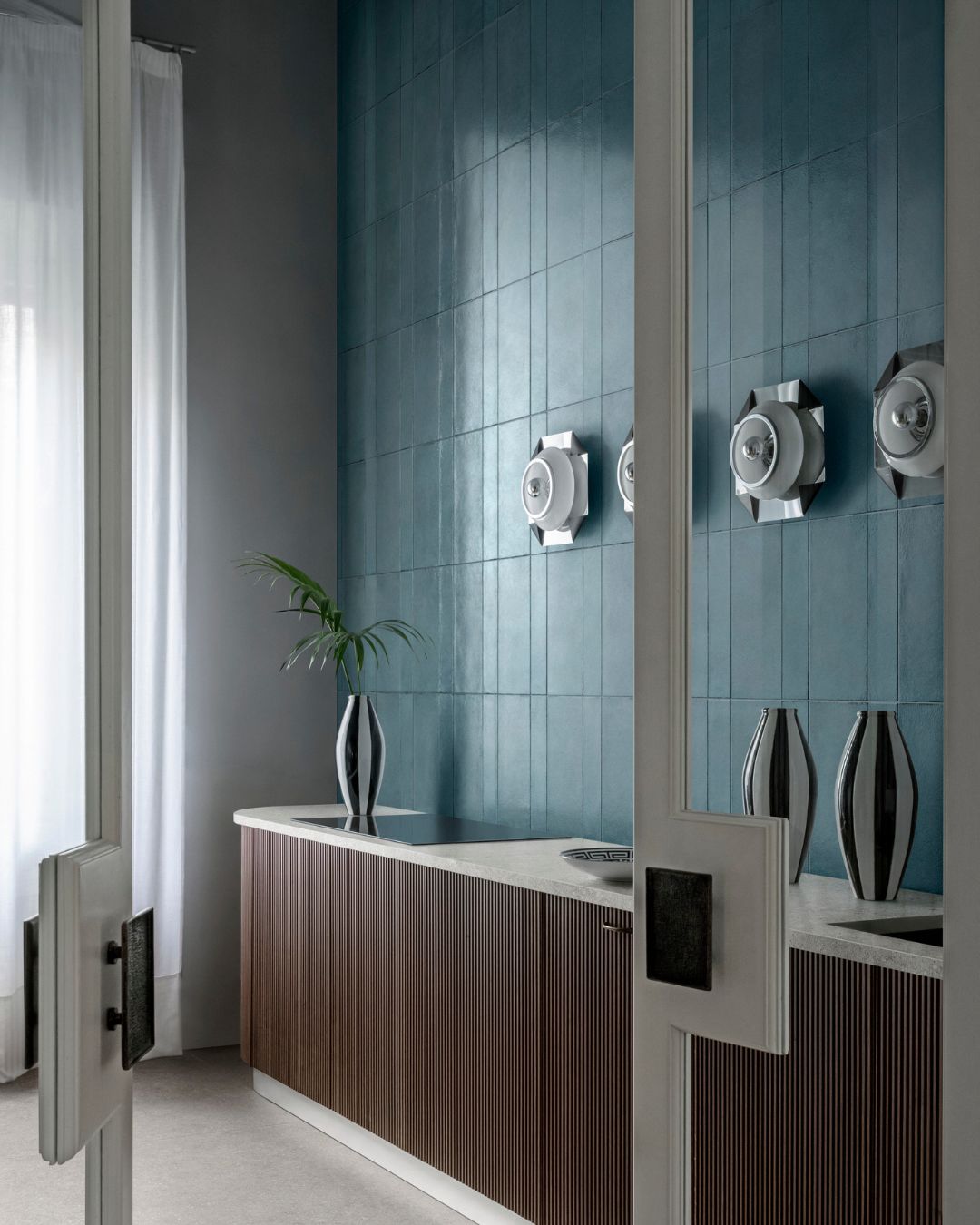
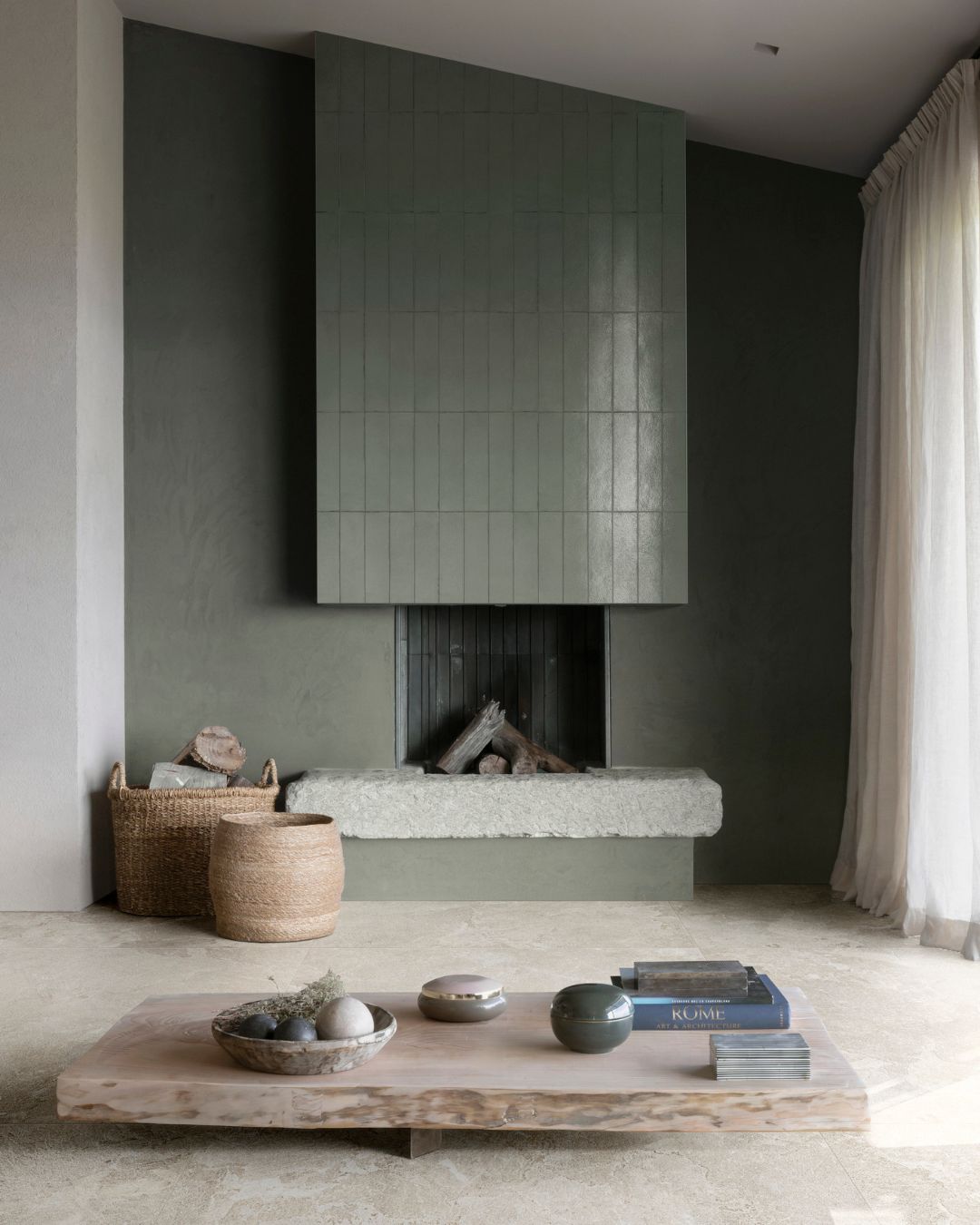
The newest addition to the Crogiolo family is Terramater, a porcelain stoneware collection made with Italian raw materials and 60% recycled content. Rich in texture and narrative, Terramater features unique surfaces created with glazes that fuse with the red body during firing – a process that gives both floor and wall coverings a layered, organic depth. Its palette of seven deep, earthy tones results from a reaction between glaze and natural oxides, evoking the aesthetics of 1970s ceramics. With its retro influence extended to the formats, the collection reinterprets vintage dimensions through a contemporary lens, giving rise to unexpected visual rhythms.
The Terramater modular system – comprising one square and two rectangular tiles with a very slim base – offers endless possibilities for composition. Two standout three-dimensional structures enrich the collection: Ritmo, that, with its parallel stripes and elongated shape, plays with light and shadow thanks to the ridged texture of burnt sienna glaze; and Losanga, which draws on classical decorative motifs, where red-glaze reliefs emerge from the surface to create a pattern that feels both timeless and innovative. These surfaces are more than decorative; they can structure the atmosphere of the space, creating depth and tactile identity.
Terramater is the result of in-depth research into materials, glazes, and chromatic nuance, and above all, it pays tribute to the 50th anniversary of Marazzi’s revolutionary single-firing patent – a milestone that redefined industry standards. A technology that drastically reduced energy consumption and production time, anticipating by decades the now urgent demands for sustainability and circular production in the ceramics sector. It’s not only a technical feat, but also a statement, demonstrating that innovation doesn’t have to come at the cost of beauty or tradition.
Marazzi’s global presence has grown alongside this process of renewal. In recent years, the brand has opened flagship stores in design capitals like Rome, Milan, Madrid, Athens, London, and Paris, becoming an increasingly influential presence in architecture and interiors. These spaces act as showrooms and cultural platforms, offering architects, designers, and clients an immersive experience in the world of Marazzi ceramics. They are places of dialogue, inspiration, and encounter, and a continuation of the creative openness that began with Il Crogiolo decades ago.
Today, Marazzi is part of the Marazzi Group, under the umbrella of Mohawk Industries Inc., the world’s largest flooring manufacturer and a publicly listed company on the New York Stock Exchange. This integration into a global network has strengthened Marazzi’s position in international markets, while preserving its distinct Italian identity, where a blend of craftsmanship, design culture, and continuous reinvention is the main core of its vision.
About the author

Ludovica Proietti, journalist, design historian and curator, teaches in universities and curates events, always exploring projects with fresh, unconventional perspectives.
Instagram