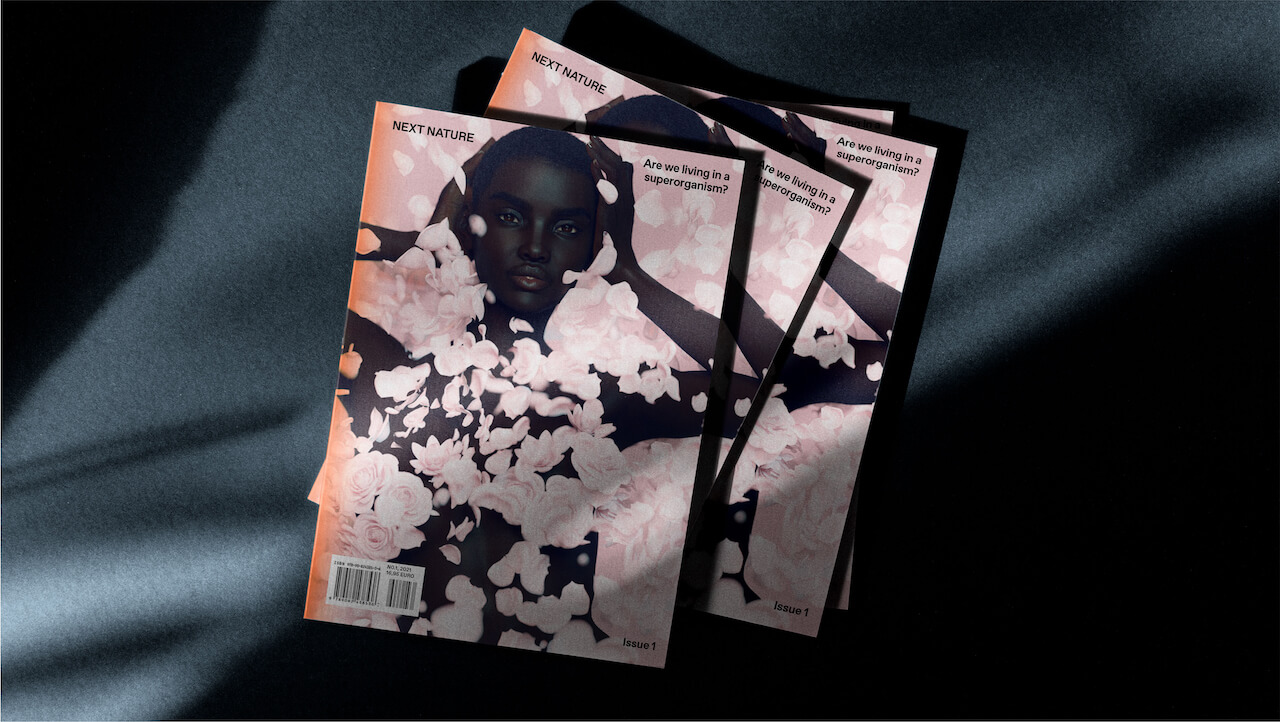
5 graduate projects that show what design education is for
From a passive cooling car to innovative dyslexia tools, the designers of tomorrow are getting a head start at Umeå Institute of Design.
Design education is a fairly underrepresented field in design media, despite its importance. While it is certainly possible to create a design career without a university degree, the impact that courses have on the next generations of designers is enormous. At Umeå Institute of Design in Sweden, the quality of teaching is especially high. The academy focuses on dialogue, describing engagement with people and with the world at the core of its philosophy, educating students to have an open mind about conceptual ideas, but to maintain detailed and realistic design solutions.
This June, students across Advanced Product Design, Interaction Design, Transportation Design, and Industrial Design have presented their degree projects: problem-solving design solutions, based on user research, materials thinking, and connecting the dots. In this article, we present 5 highlighted projects, which all try to solve a specific contemporary issue through deep analysis and future-forward thinking.
Gallery
Open full width

Open full width
Umeå Institute of Design graduates:
Tailion by Nicolò Vincenzi
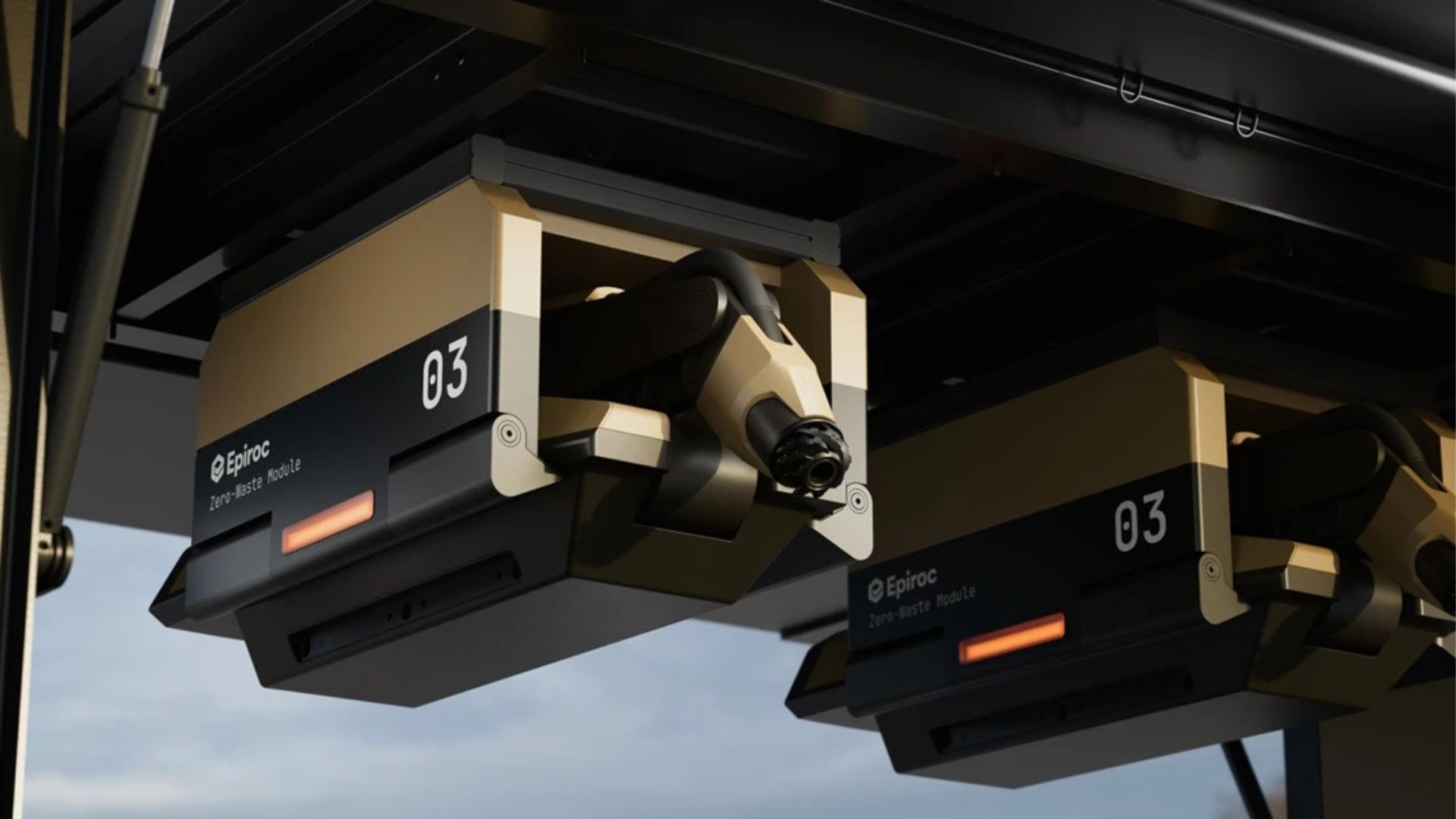
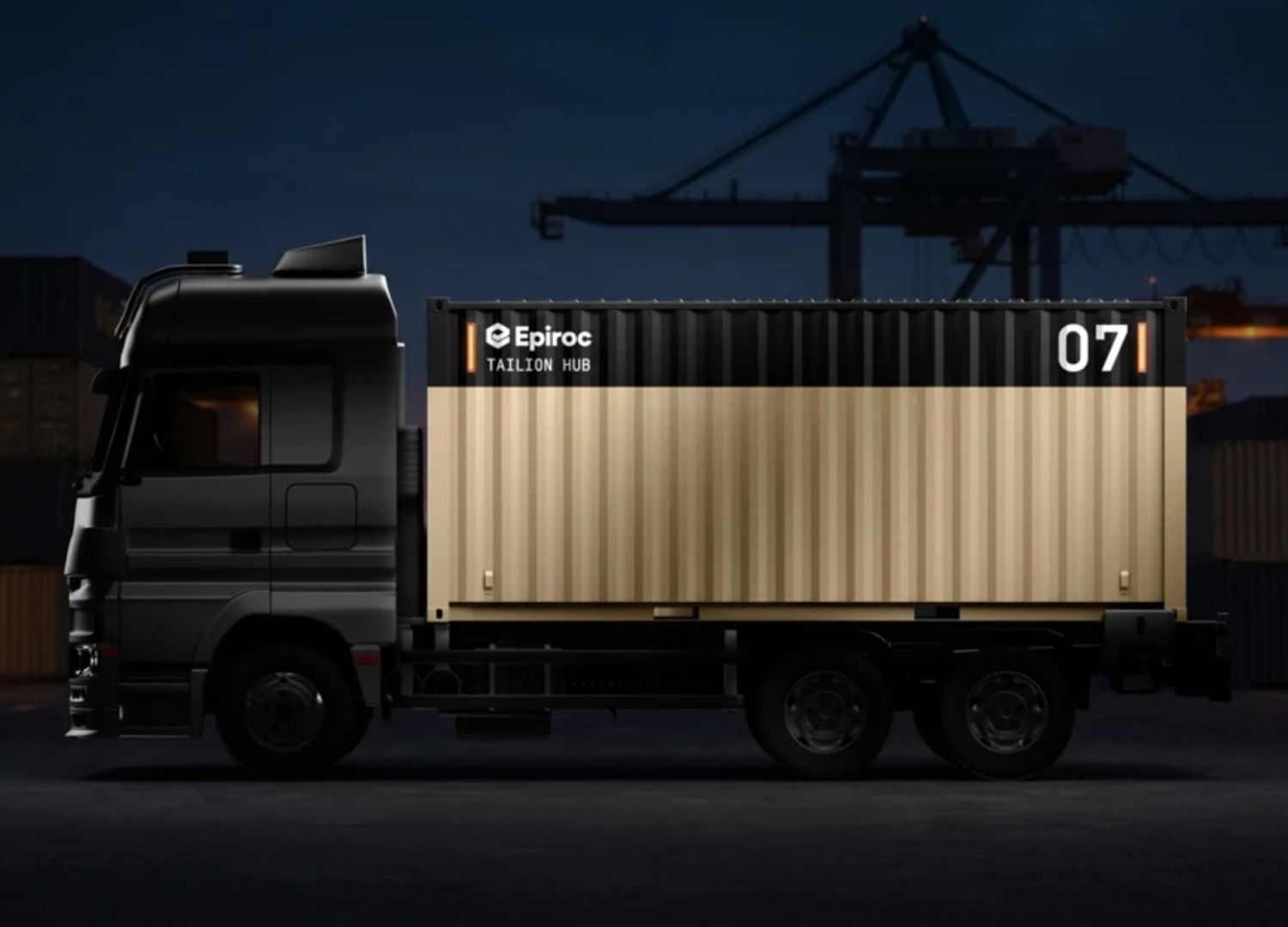
Nicolò Vincenzi‘s degree project starts from an industry problem: mining productivity has plateaued, in part because getting a “Social License to Operate” has become complicated. Vincenzi’s research, done in collaboration with Epiroc, found that while manufacturers have poured effort into the extraction side of the business, closure and rehabilitation of the mine has been left comparatively untouched.
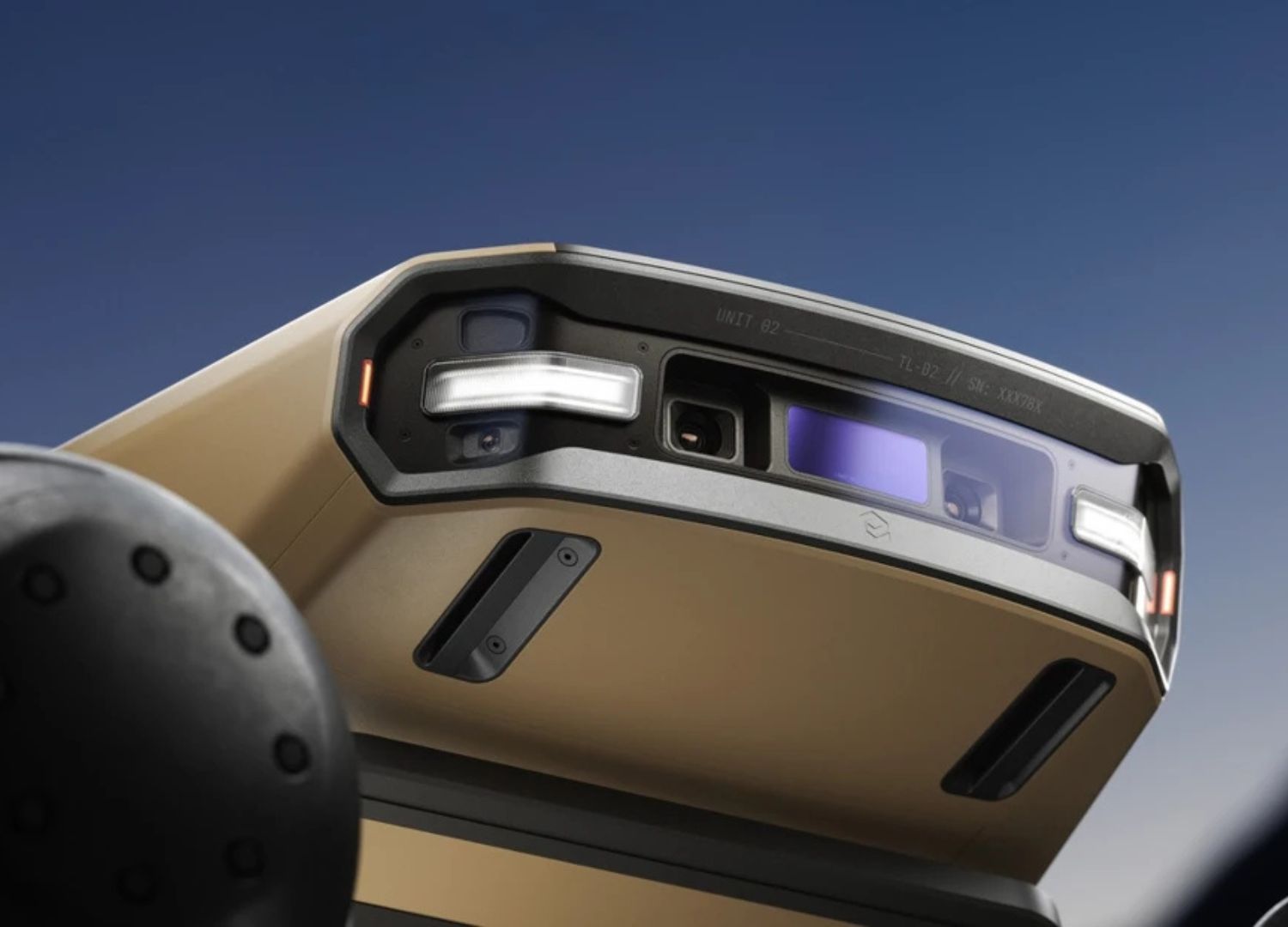
Tailion is a screw-propelled autonomous vehicle built to operate directly on the tailings ponds, sludge reservoirs, which are dangerous and complicated to clean up. Tailion is built as a modular system covering monitoring, maintenance, and re-extraction from a supervised hub. By removing humans from the working area, risk is reduced, and what is currently an environmental liability can become a source of recoverable material.
Bloom by Pierre Brand
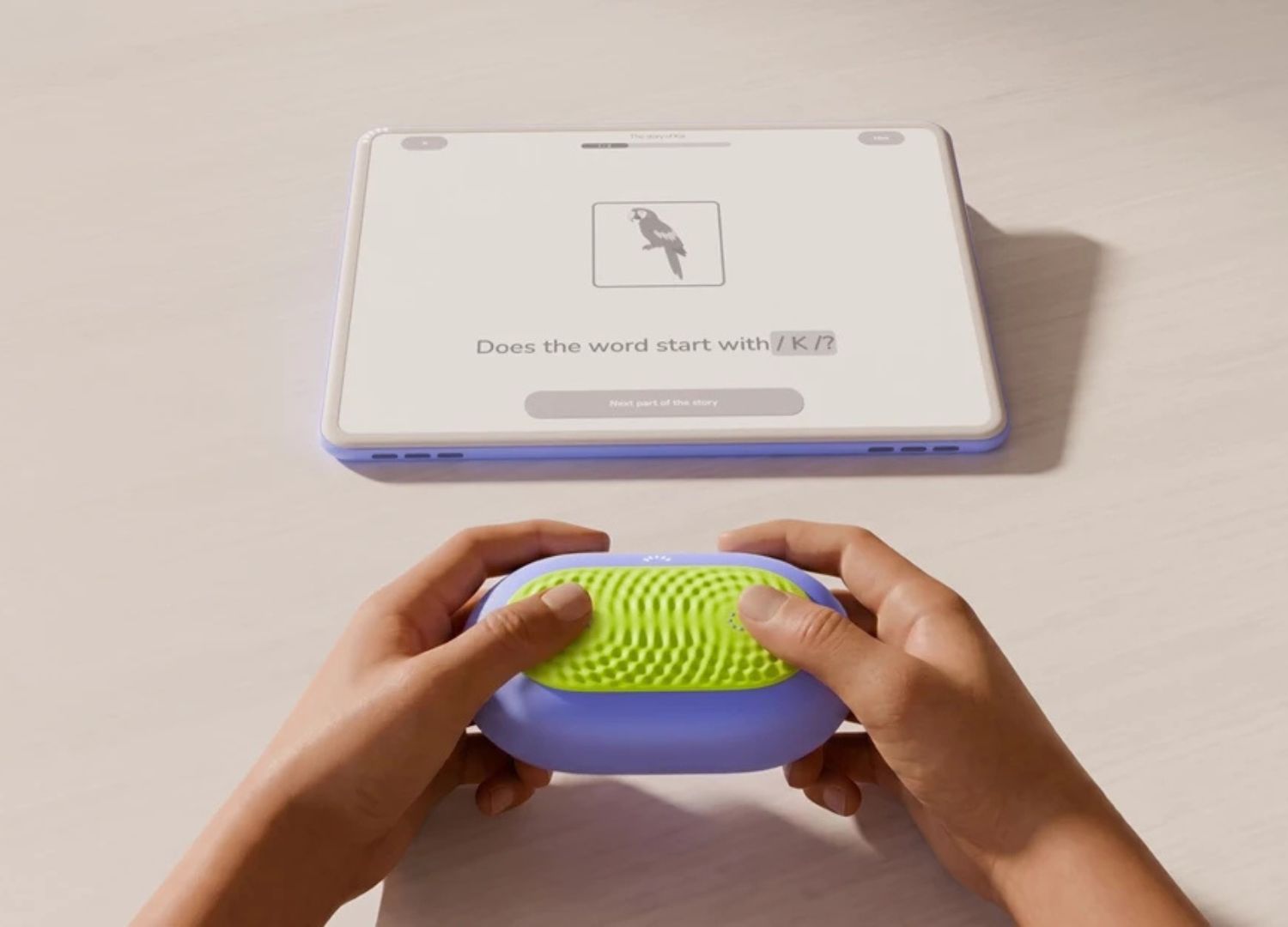
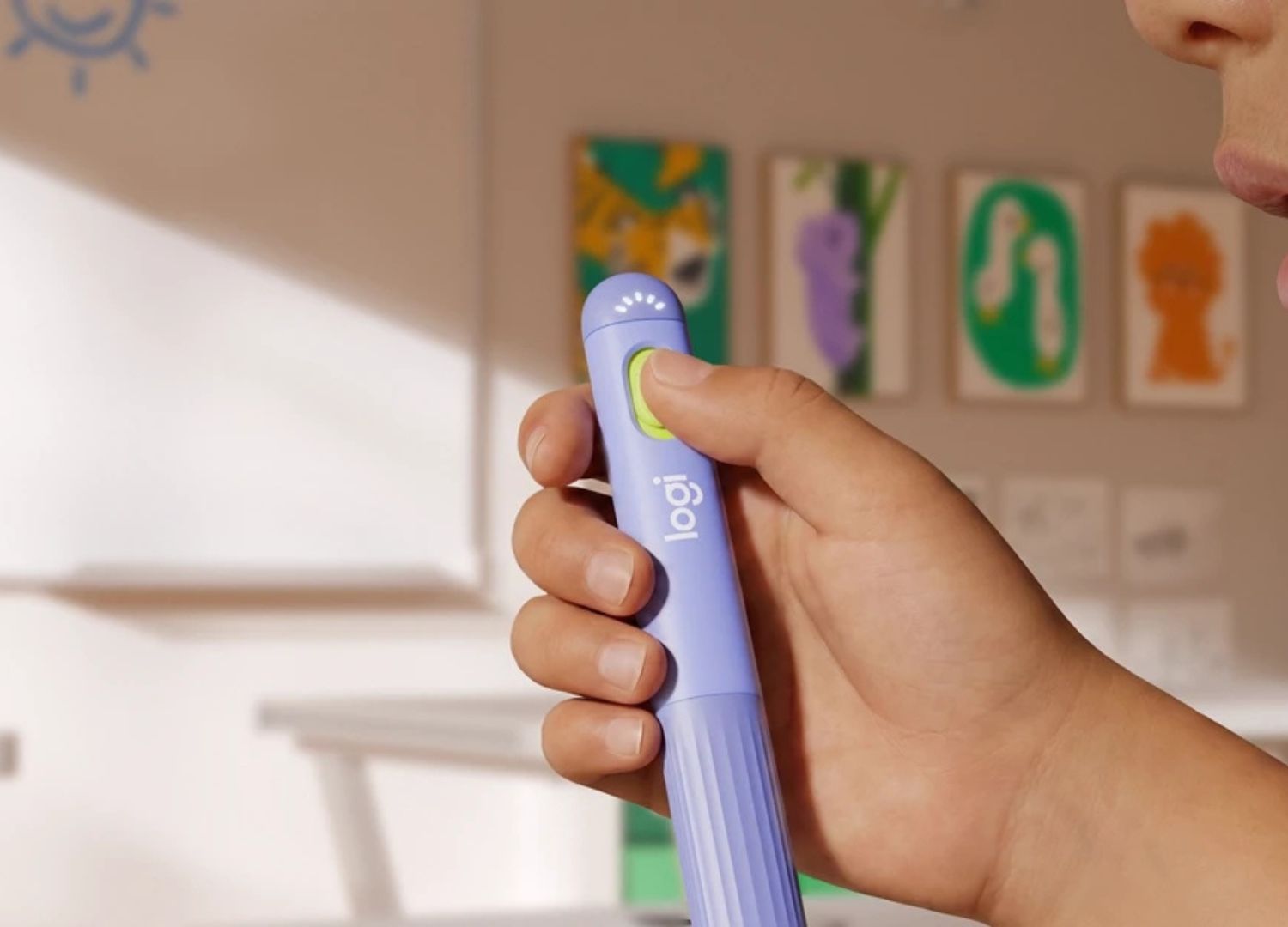
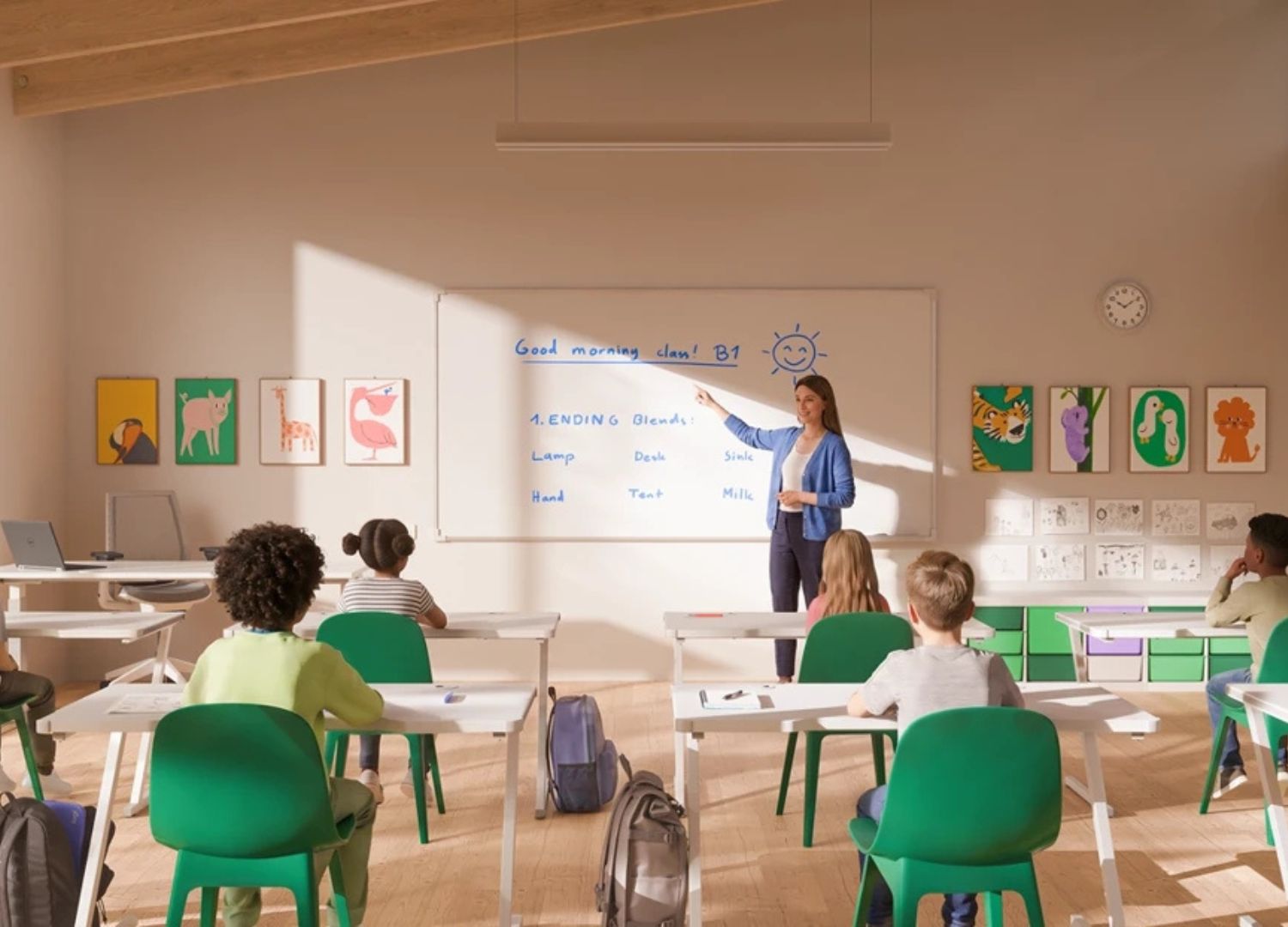
In an average classroom of 20 children, roughly 3 will be navigating dyslexia. Pierre Brand has decided to tackle this widespread issue, focusing especially on the ages between 6 and 9, as it is when the foundations of reading and writing are being laid down. Brand researched multisensory literacy learning, which pointed towards touch as an underused channel.
Bloom, developed with Logitech, answers the issue with a toolbox: Cue for sound sequencing and reading rhythm, Crayon for handwriting, and an E-Ink Slate that adapts between exercises. The purpose is not to replace a teacher or therapist, but to provide additional aids that facilitate children by making the invisible mechanics of literacy tangible.
Land Rover 365 by Josephine Samuelsson Wahl
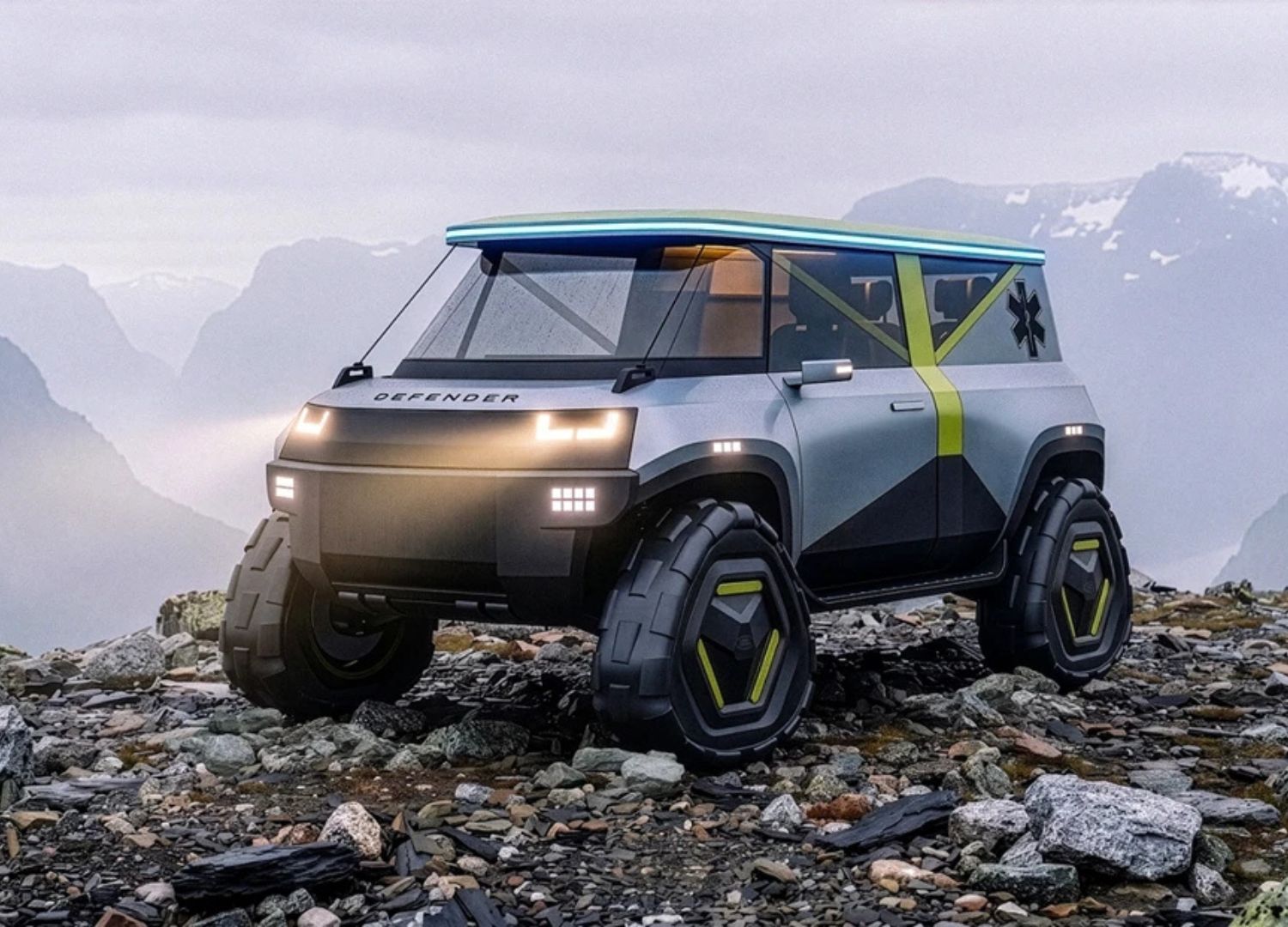
Josephine Samuelsson Wahl’s project is built around a specific gap in mountain emergency response: helicopters and ambulances cannot be used in every medical emergency, and often medical teams find themselves unable to reach the patient. Developed with Land Rover and Region Västerbotten, the project creates a new vehicle designed to reach all mountain areas.
The result is a rescue vehicle capable of going offroad, with a wheel system that reconfigures from circular to triangular track geometry, tuned to protect a stretchered patient from impact. Inside, the stretcher has clinician access on both sides, and a pop-up roof to extend the interior height, allowing a medic to stand and work.
Beosound Tableau by Mårten Malmnäs
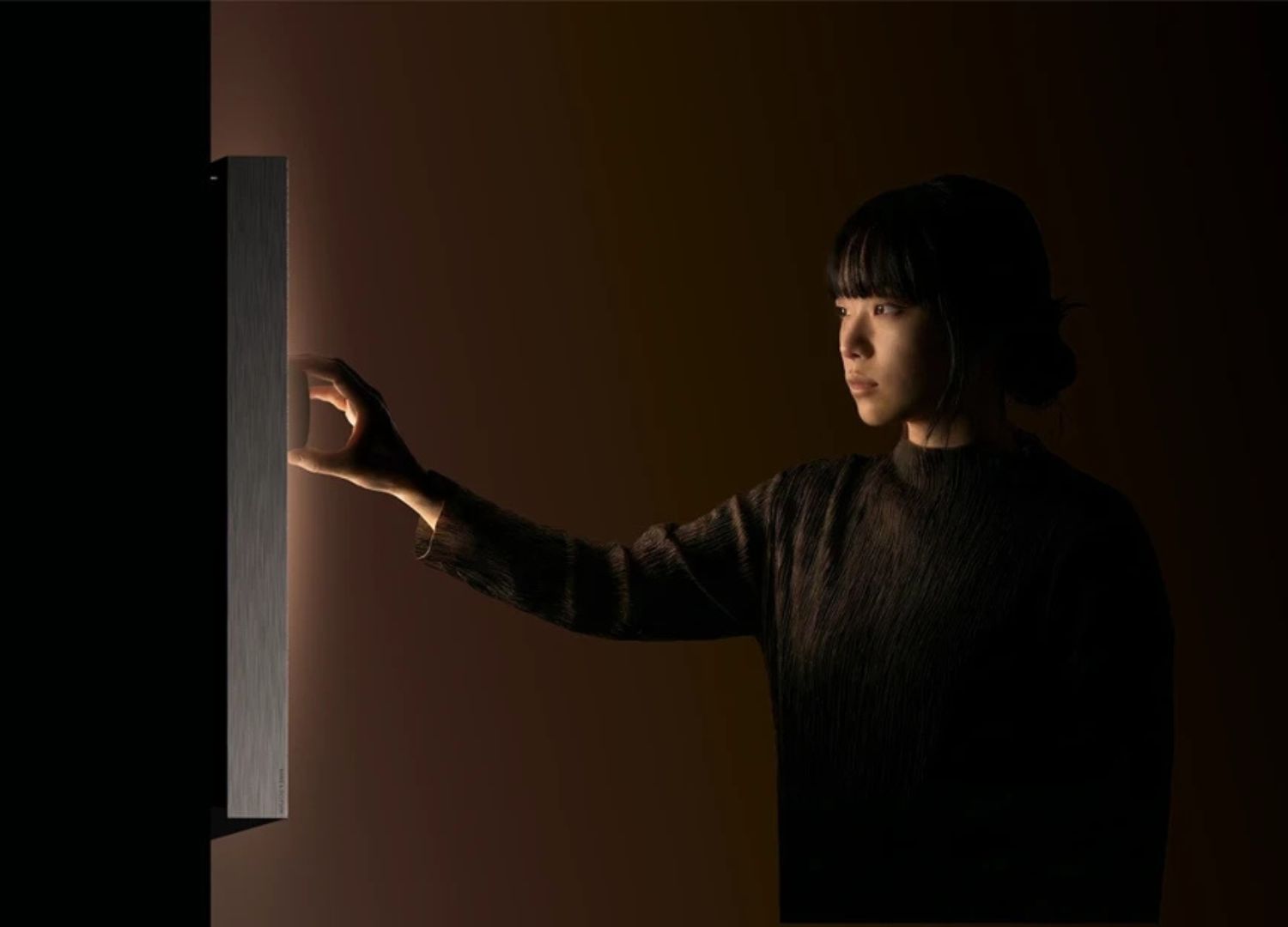
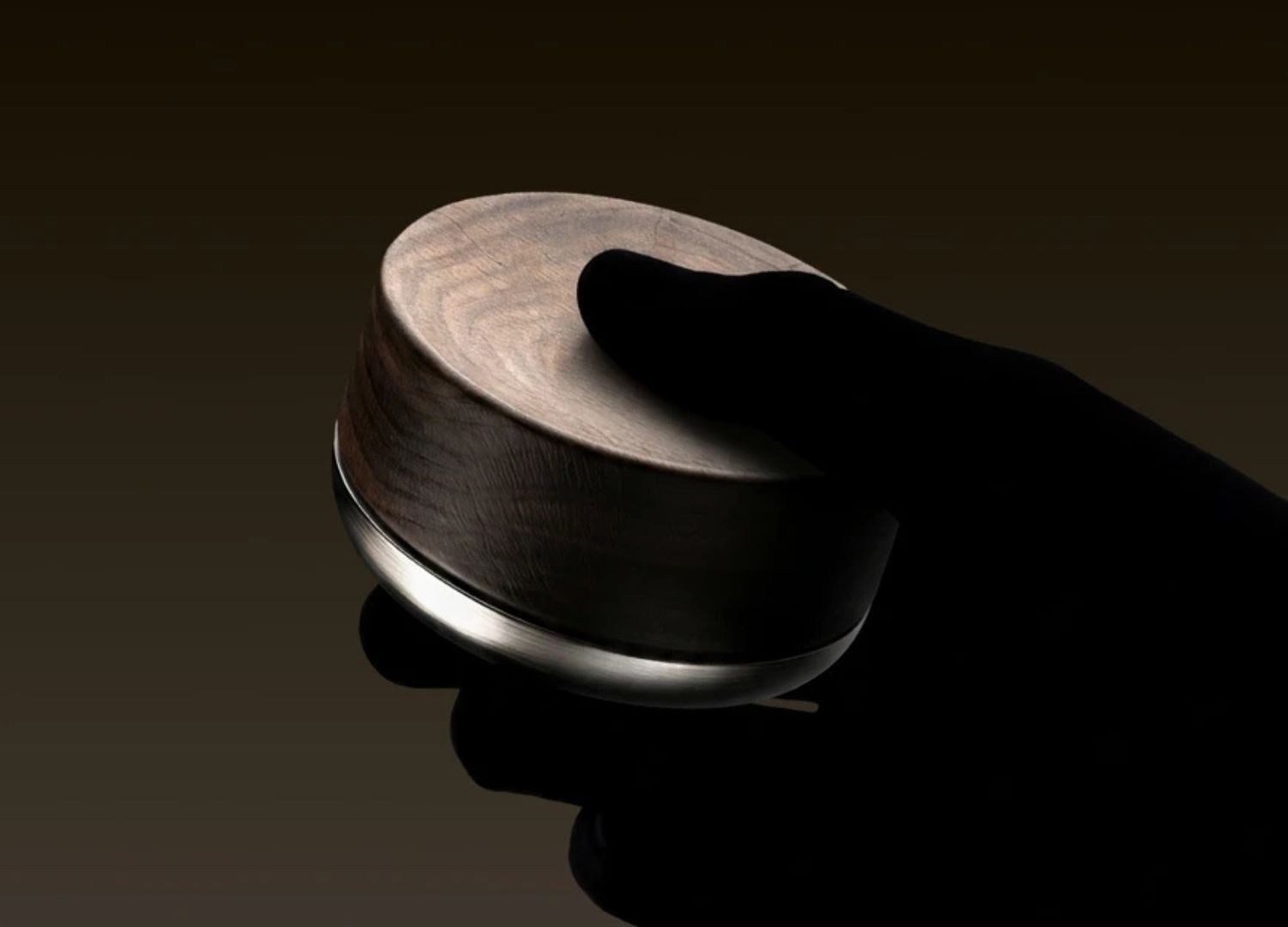
Mårten Malmnäs‘ project, from Umeå Institute of Design’s the Advanced Product Design course, looks instead at products of daily use. His research wonders about the relationships between calmness, domestic life, and technology, focusing especially on audio, since what used to be a physical, tactile ritual has now been reduced to the same screen that also delivers emails and constant notifications.
Working with Bang & Olufsen, Malmnäs developed a wall-mounted audio object that acts as a sanctuary, an object to gather around with friends and family. Instead of being navigated by a screen, the device is navigated through sound, believing that the most honest interface for a music object is music itself.
Umbría by Yishun Dai
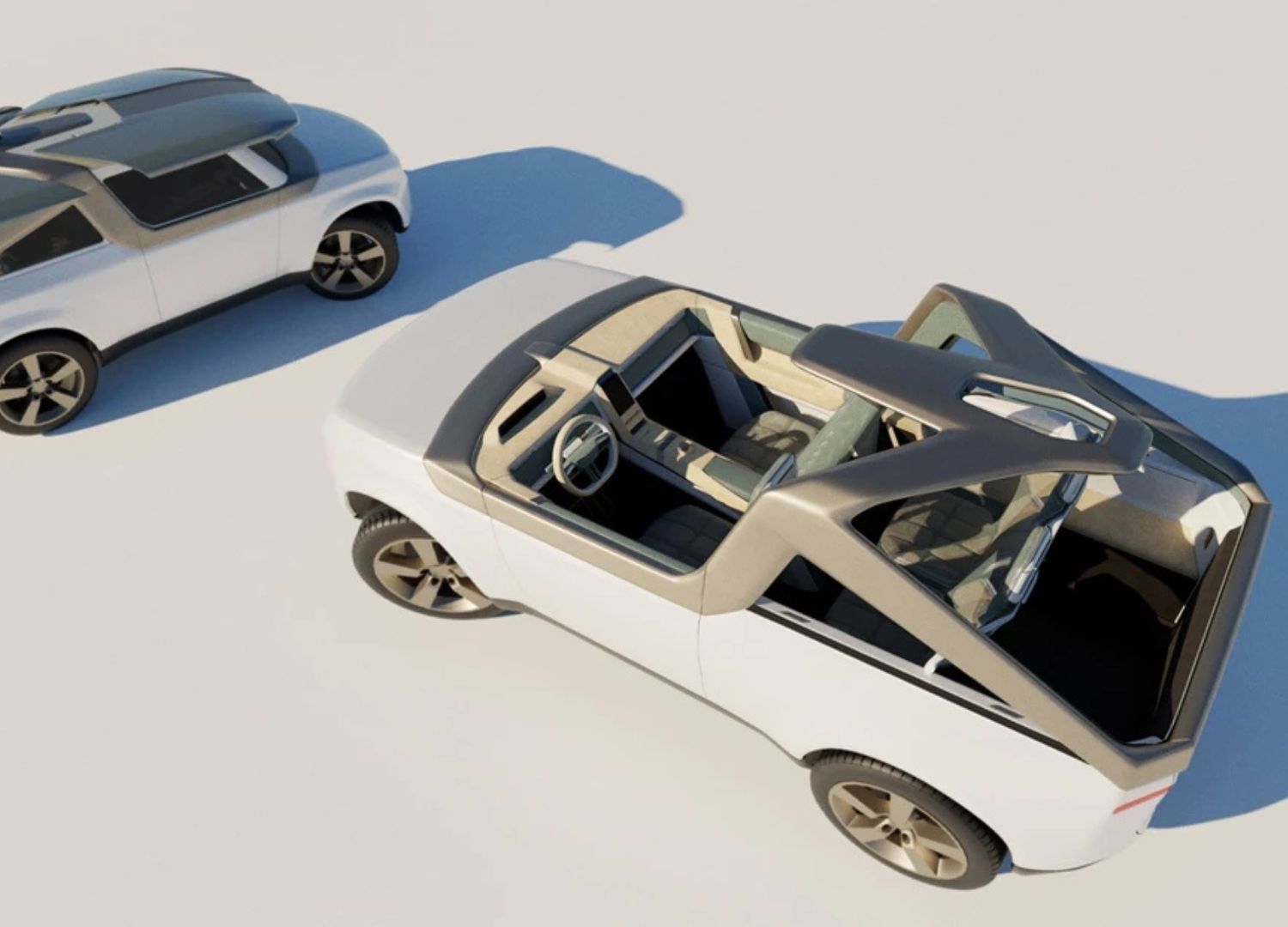
Yishun Dai’s project begins with worrying data about climate change: by the 2030s, regions like Andalucía will suffer extreme heat, making it unsafe to leave a sealed car parked under the sun for even a few minutes. The current solution is running air conditioning, but it is also a part of the problem, since more cooling demands more emissions, which drive more heat.
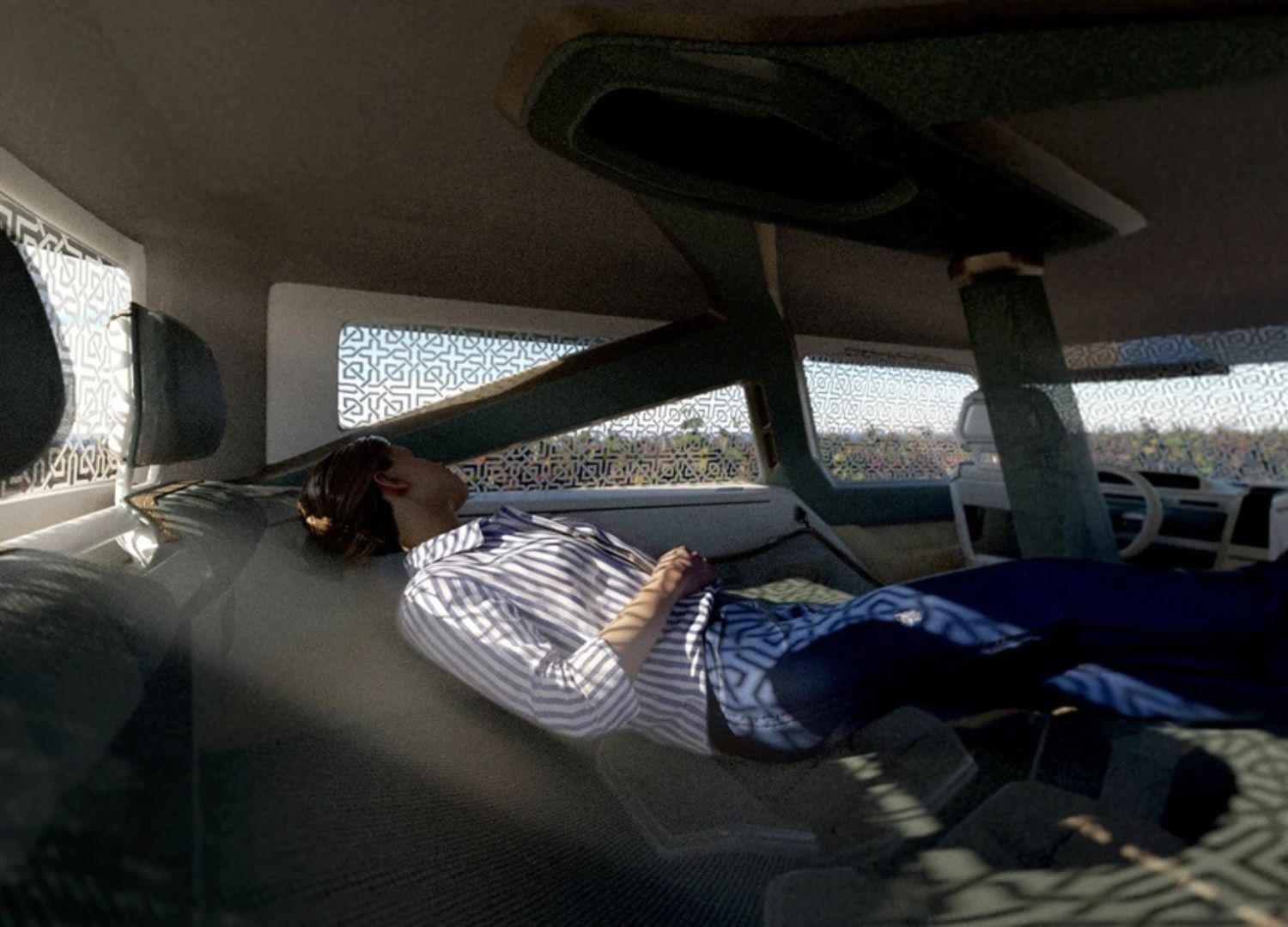
Umbría reimagines the vehicle’s cabin as a small mobile building: an exoskeletal thermal frame that drives stack-effect ventilation, a retractable solar chimney, intelligent materials, and a hammock seat configuration. By using passive thermal management principles, air conditioning’s workload will be reduced to a minimum, for a fresher and more sustainable future.