The outliers economy: who survives AI?
No reassurance, no hype. Walter Terruso, a designer running agentic AI workflows and consulting for large studios, gives young creatives the honest picture no one else is sharing.

Everyone is telling us that yes, there is agentic AI, and it will transform the way we work and design. But at the end of the day, like with all previous technologies, human creativity will always win: we will learn how to use it properly and turn this new technology to our advantage.
It is an interesting narrative, but it mostly comes from highly skilled people: top architects, designers, artists, entrepreneurs. People who are very much aware that there is no machine (at this point, they normally add “not yet“, though you can see they feel this will not really concern them) that can do what they do: create something new, spin ideas differently, add a special something to an experience.
A very different picture emerges when you talk to design professionals who have learned to use AI to its full potential and who, less individualistically, ask themselves harder questions. Like: what will happen to those who are not majestically gifted? Those who do their technical work well, even proficiently, but do not have the qualities or the means or the opportunities to truly think outside the box?
Gallery
Open full width








Open full width
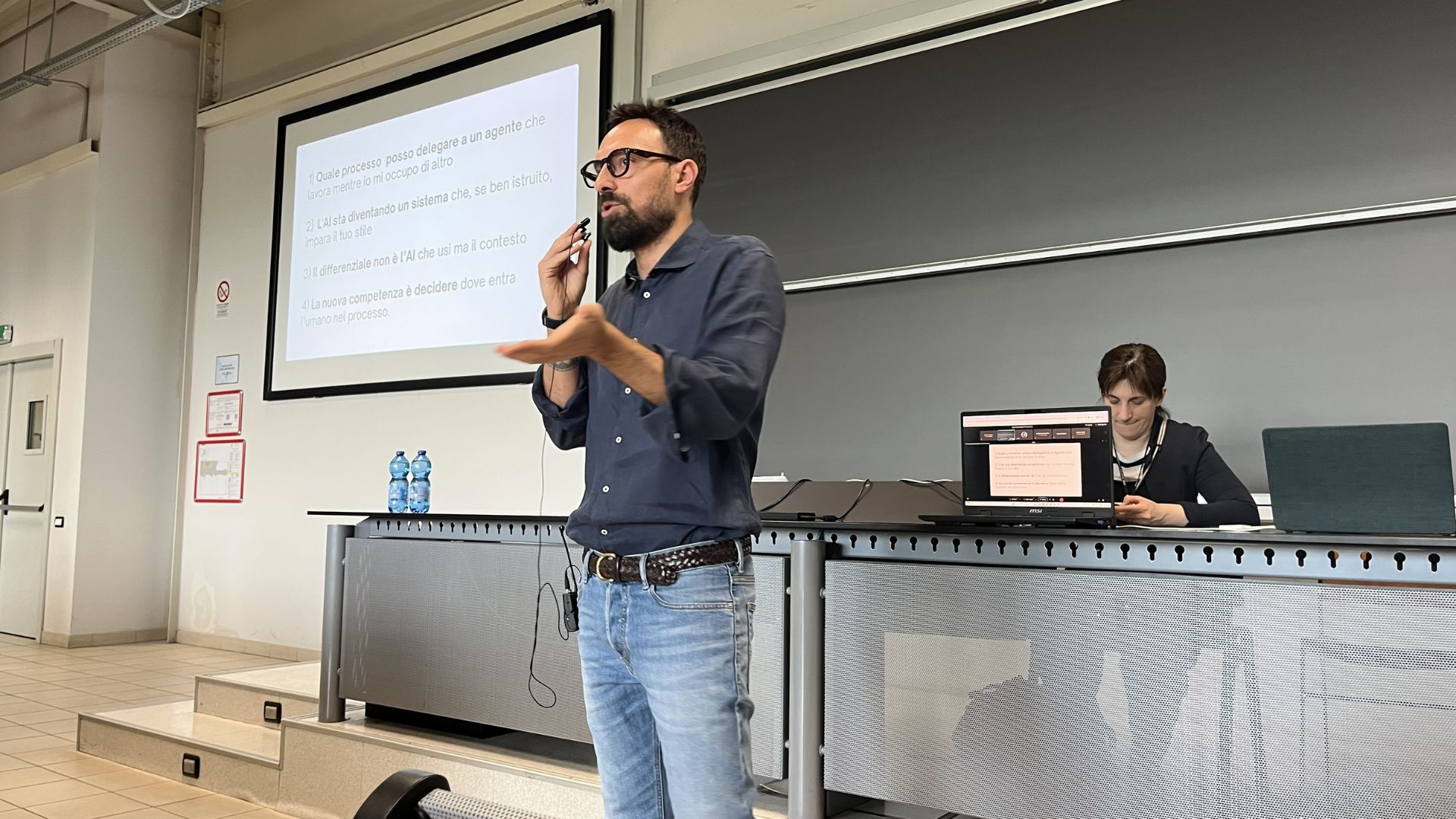
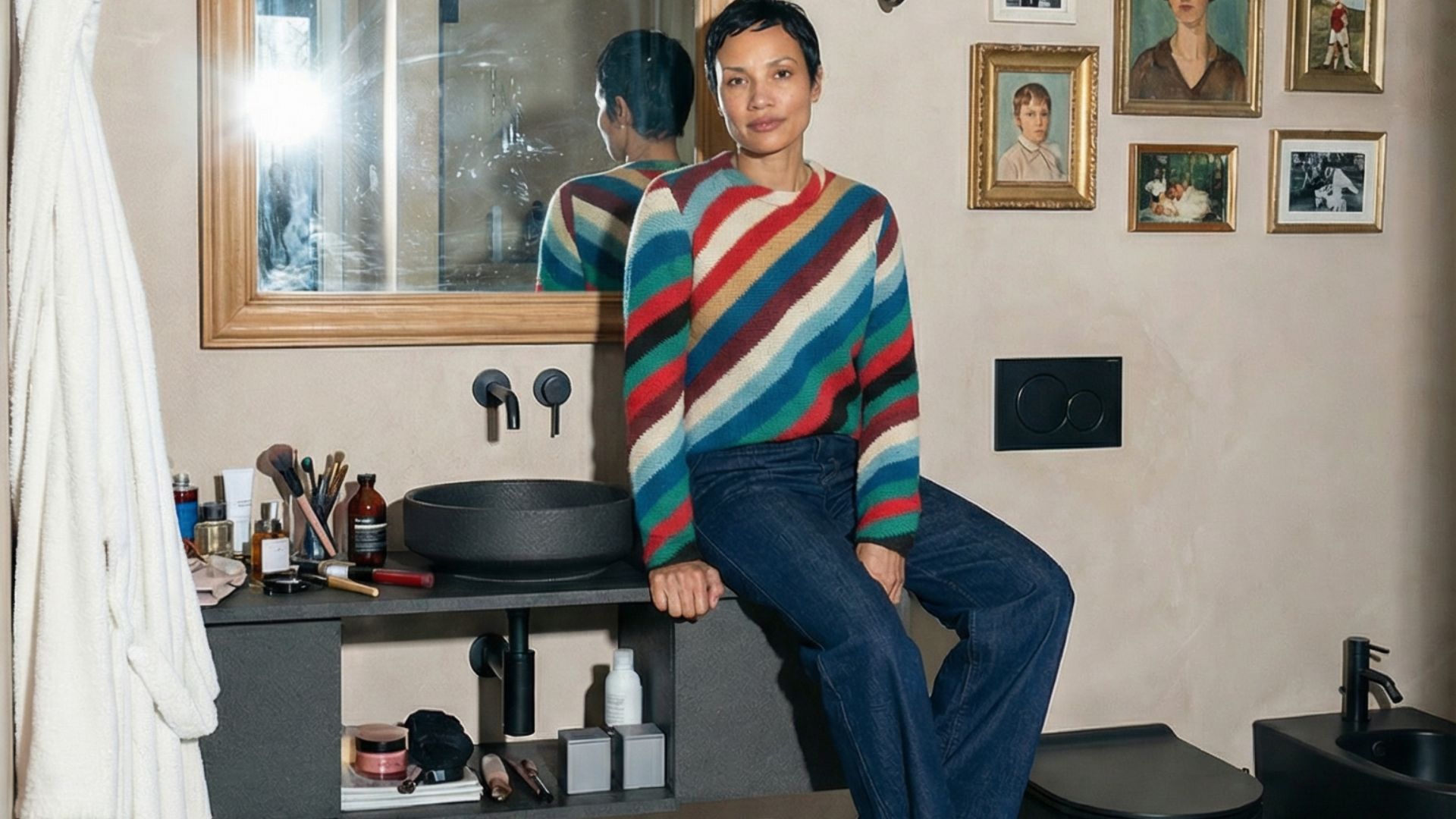
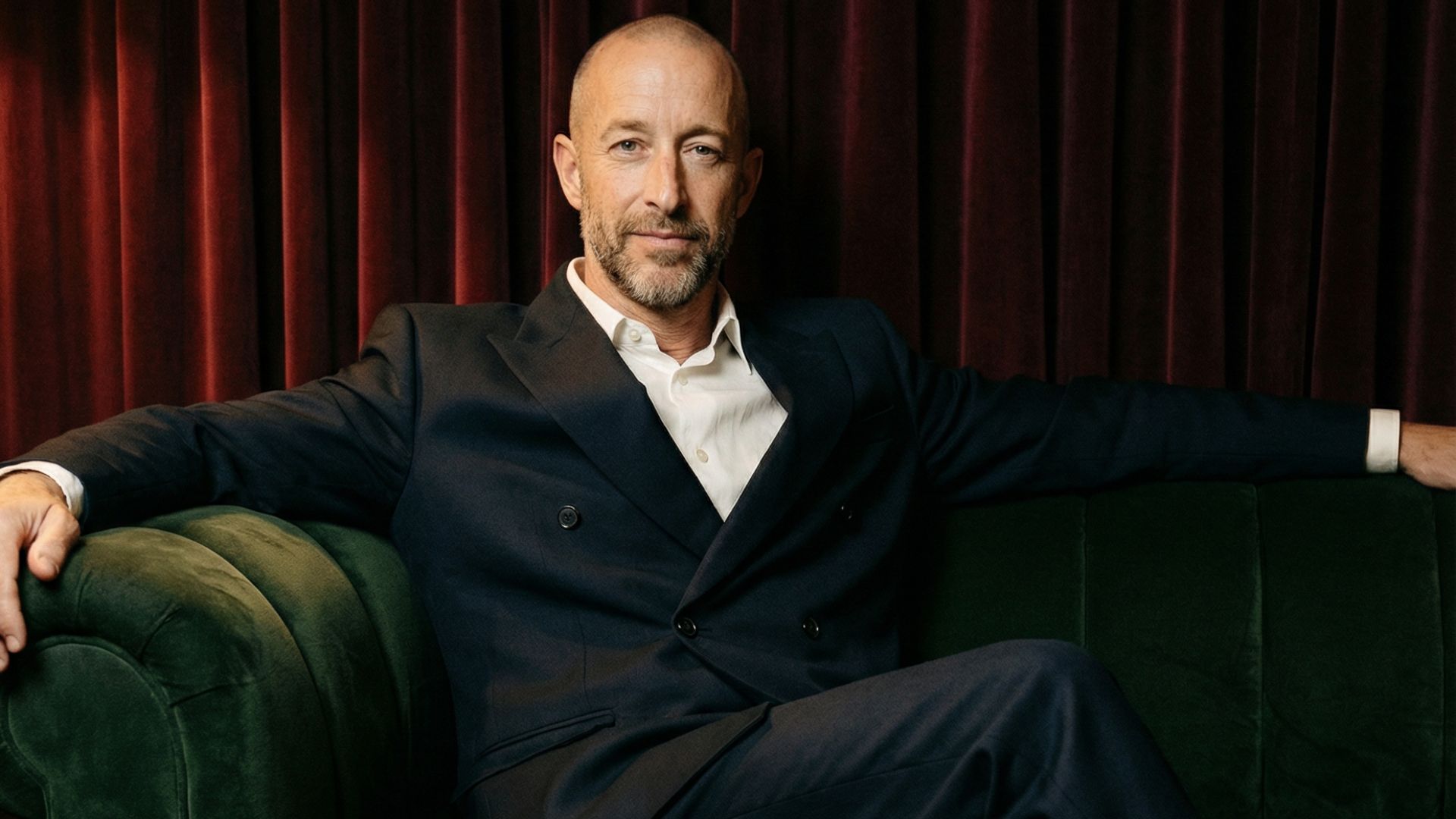
Walter Terruso is an Italian interior designer with twenty years of experience who now consults for studios on how to integrate agentic AI into their daily work. He gives hands-on courses to students and professionals to explain how to use it in interior design so that “people understand what is coming towards them and how to find their way within this new world.” He does it because he is “sincerely worried“.
“Everything that was floating in the middle will sink“, he says. “When you create real value, that value will be worth more. But this leaves a living space just for outliers. What is going to happen to everyone else? I have the feeling that no one is taking this topic seriously enough”.
We talked for an hour, during which he provided very useful and practical information for young designers. But also social insights on the consequences of this shift. And not once did he tell us not to worry.
The outliers economy: who survives AI? A talk with Walter Terruso:
You started using AI tools thoroughly three years ago. How has it shifted your actual design work?
Walter Terruso:
“Before, developing project sketches could take me a week. Today I can have ten ideas in a day. Right now, while we are speaking, I have an agent running automatically to produce a video for a cosmetics brand. I will check what it has done at the end of this call, iterate, give it another input, and move on. I made an entire product catalogue for a brand this way – 25 products in 25 different locations. No photography, no location scouting. Same budget as a single traditional shoot”.
For a student who has never used an agentic AI: what does that actually mean in practice, and where do you start?
Walter Terruso:
“From understanding this is not AI as you know it. An agent is not a chatbot you ask questions to, but a system you brief, the way you would brief a very well-prepared collaborator. And then it works through a sequence of tasks on its own.
The starting point is Claude. Download it on your computer, do not just use it in the browser. Then connect it to a project folder. Inside that folder, you put everything that defines the project: the floor plan as a JPEG, not a CAD file; documents with spatial constraints and lighting ratios; rough draft renders, even hand sketches; furniture technical sheets; moodboards; previous projects with a similar aesthetic direction. The more precise the context you give it, the more useful the output.
Then you work with it conversationally. You might say: I am not sure that sofa fits; if it does not, develop this alternative and search for upholsterers in this area. Give me five variations. It researches, generates options, cross-references constraints. Not instantly – more context means more processing time (and costs) – but while you are doing something else.
The key rule: never trust the output completely. It is always a draft. You need enough knowledge to know when it is wrong, and a clear enough vision to know what you actually want. If you skip that part, you just lose credits and money on bad output“.
Speaking of costs: are they affordable for a student or early-career designer?
Walter Terruso:
“It depends on what money she or he will make on the final project. I spend around €500 a month across Claude, Midjourney, and Higgsfield, which aggregates various AI rendering tools. But I use these systems intensively for client work, so the return justifies it. For a student, you can start meaningfully for much less. Claude has a paid plan at around €20 a month that gives you access to the most important features. Midjourney starts at around €10. You do not need everything at once. Start with one tool, learn it properly, then expand. The bigger investment is time, not money. You have to actually study how these systems work. Stop playing and study them”.
What can AI genuinely not do yet in an interior design workflow?
Walter Terruso:
“The site visit. Touching a material and understanding how it will age in a specific light condition. Managing a client through a difficult brief. The judgment that comes from having seen a hundred projects go wrong in ways no training dataset contains. Those things are still mine.
But I want to be honest about the timeline. For instance, spatial planning is an issue: ask AI for a precise partition layout and it often produces something that looks right but does not work structurally or ergonomically. That was true six months ago but in a year, maybe two, it will not be. The list of things AI cannot do is shrinking. I say this not to alarm, but because you need to know”.
Rendering, technical drawing, 3D modeling, documentation: those are the skills design students are trained on. And you are saying they are being automated first.
Walter Terruso:
“Yes. And I say it with genuine concern, not enthusiasm. The junior tasks – the work that used to justify bringing someone into a studio, that formed the base of a career – that is exactly what goes first. A photographer who has always shot still life for e-commerce has finished. I do not need to hire them, rent a location, or coordinate a shoot. I tell the AI the camera type, the lighting, the atmosphere, and it produces the image. Today, not tomorrow.
The same logic applies across the whole sector. If you have built your career on doing things correctly – on competence, on technical proficiency, on being reliable – without ever developing a genuine perspective, you are exposed in a way that was not true five years ago. And this is going very fast”.
So what should a design student actually focus on, right now?
Walter Terruso:
“Three things:
First: start using these tools seriously, now. Not to avoid thinking, but to understand what you are working with. There is a difference between using AI to skip an assignment and using it to generate ten versions of a concept so you can understand which direction is actually worth pursuing. One makes you weaker. The other makes you faster and sharper.
Second: do not let it replace the thinking. The real risk for younger generations is what I call cognitive anesthesia: letting the machine do so much that you never develop an opinion of your own. The output is always a draft. You need a point of view to evaluate it. If you do not have one, the tool is useless to you.
Third: figure out what you actually have to say. This is not technical skills, speed, or ability to produce variations but your perspective. The reason your choices are yours and not someone else’s. That is the only thing AI cannot generate. And if you have not figured out what it is yet, that is the work you need to focus on”.
Having a point of view and a unique perspective was always important for designers, though. What’s changed?
Walter Terruso:
“Beforehand, it was a key to success. Now it’s basic survival.”
But who actually benefits from all of this? Studios save on staff costs — but will they pass those savings to clients? Will clients simply expect to pay less, knowing AI does the work faster?
Walter Terruso:
“You are raising something I had not fully thought through, and it is a real problem. If a studio saves because it now works with two people instead of ten, the client will eventually find out and expect a lower fee. So the savings do not necessarily stay with the studio. They migrate upward — to the big tech companies whose tools everyone is paying for. That is where the value is accumulating. And the people who are laid off in the process are left with nothing”.
So, is there a systemic response to this, or are we just watching it happen?
Walter Terruso:
“We have a governing class — across parties, across countries — that does not have the culture to understand what is unfolding around them. And I do not mean technical expertise. I mean the basic capacity to ask the right questions. When a senior politician publicly interrogates a large language model as if it were a wise oracle rather than a statistical pattern-matching system, as it happened here in Italy, it tells you something about how prepared our institutions are for what is coming.
The people who could help build that understanding exist — thinkers like Luciano Floridi, who has been writing about these questions for decades. He made the point that for every company we interact with, we are no longer customers or citizens. We are data. When we attend a design fair and hand over our details at the entrance of every showroom, we are not networking. We are feeding a system. AI will amplify this dynamic exponentially. And if we do not develop the awareness to see it, we will not have the standing to push back against it”.
Some people have suggested a universal basic income as a response. That the only answer to mass technological unemployment is redistribution at scale.
Walter Terruso:
“This was said, amongst others, also by Elon Musk, and I think he was right about the problem, even if his credibility on solutions is complicated. The honest answer is: I do not know what happens to all these people. I am not being evasive, I genuinely do not know. What I do know is that the scale of the disruption is being systematically underestimated. This is not the internet arriving and changing how we communicate. This is not the industrial revolution automating physical labour. These are systems that can perform cognitive tasks -autonomously, continuously, at scale – without human supervision. The category of work that is safe is shrinking in a way that has no real historical precedent.
What I can say is that the answer is not to pretend it is not happening. The answer is awareness: in schools, in studios, in public conversation. Understanding what these tools actually are: not intelligent, not conscious, not creative in any meaningful sense, but extraordinarily capable at pattern recognition and task execution. From there, you can make informed decisions about where human judgment is irreplaceable and where it is not. But you cannot make those decisions if you do not understand what you are dealing with”.
You teach at university. Is the way design is being taught today fit for this world?
Walter Terruso:
“No. And the problem runs deeper than just adding an AI module to the curriculum. The whole structure is wrong. Right now, students sit in lectures absorbing theory. Then they go home and do the exercises alone. That model made sense when the knowledge lived with the teacher. It does not make sense anymore. The technical content is something AI can explain, demonstrate, and iterate on with a student at any hour of the day. You do not need a professor in a room for that.
What you need a professor in a room for is the thing AI cannot give you: a specific perspective. A point of view shaped by actual experience, by having made mistakes on real projects, by having had to defend a choice to a difficult client. That is what should happen in the classroom: working through problems together, with the teacher’s irreplaceable human judgment present in the room. The content delivery can happen elsewhere.
The other thing I would change: stop treating AI as something to keep students away from. The risk is not that they will use it to cheat. The risk is that they will use it without understanding it or developing the critical capacity to know when it is wrong, when it is superficial, when it is producing something that looks right but does not work. That literacy needs to be taught, from secondary school onwards”.
Walter Terruso is an interior designer and AI strategy consultant based in Milan. He consults for architecture and design studios on AI workflow integration and teaches at Politecnico di Milano.
About the author

Journalist, DesignAtLarge founder, internimagazine.it curator, scientific committee of the Compasso d’Oro Award member, Circular Design professor at NABA Milan.
Instagram