GOURDO: what growing a lamp from mushrooms and waste looks like
Inside Justin A. Wan’s mycelium and luffa lighting design, food waste becomes a living structural system, and biology replaces manufacturing as a maker.
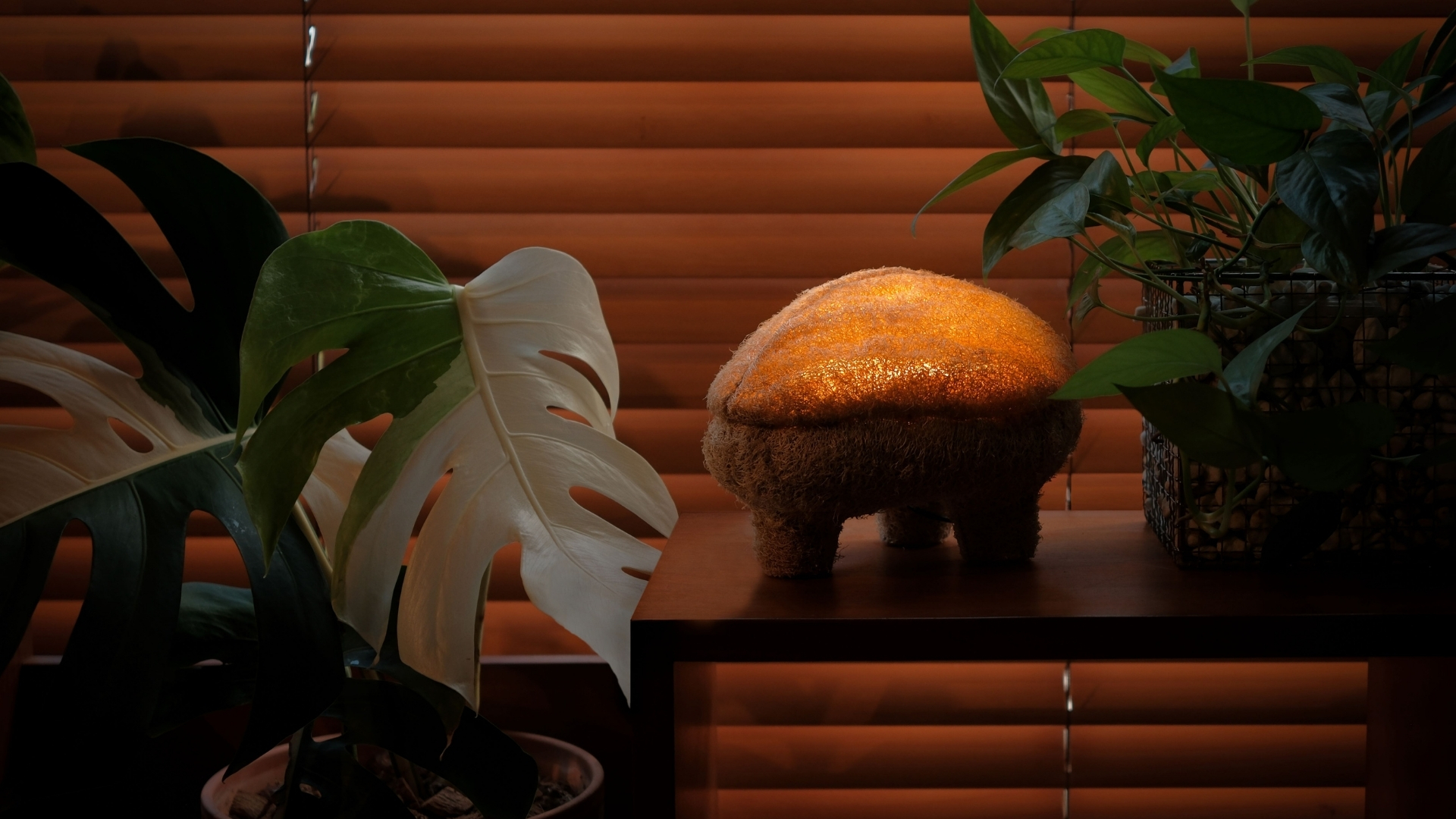
Design enthusiasts often have a knack for understanding how an object was made: looking at its parting lines, joints, or imperfections to recognise what machine created them, and sometimes even to grasp what the designer was thinking during their process. However, GOURDO, Justin A. Wan‘s latest lighting design, proves to be a complicated object to dissect.
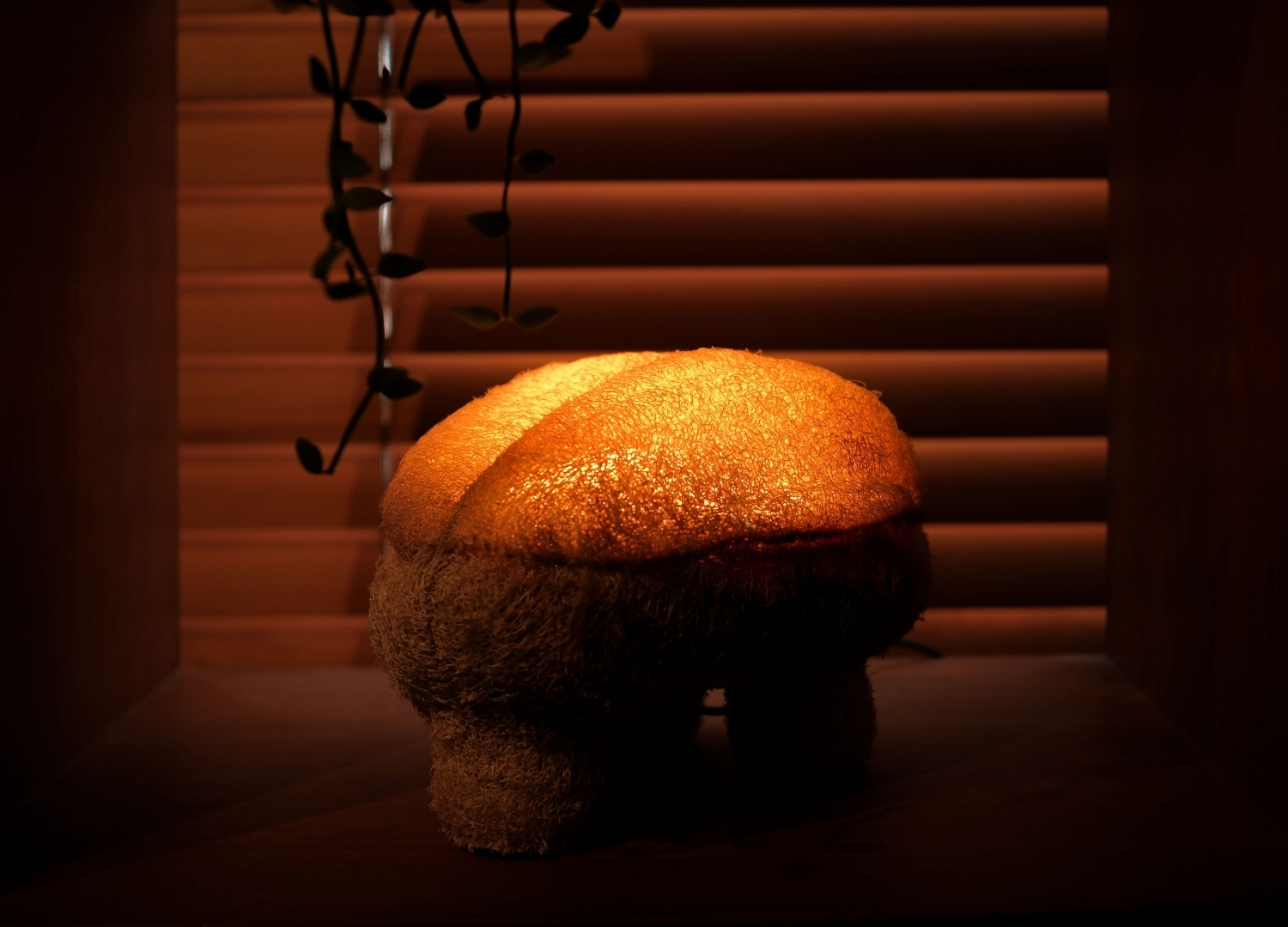
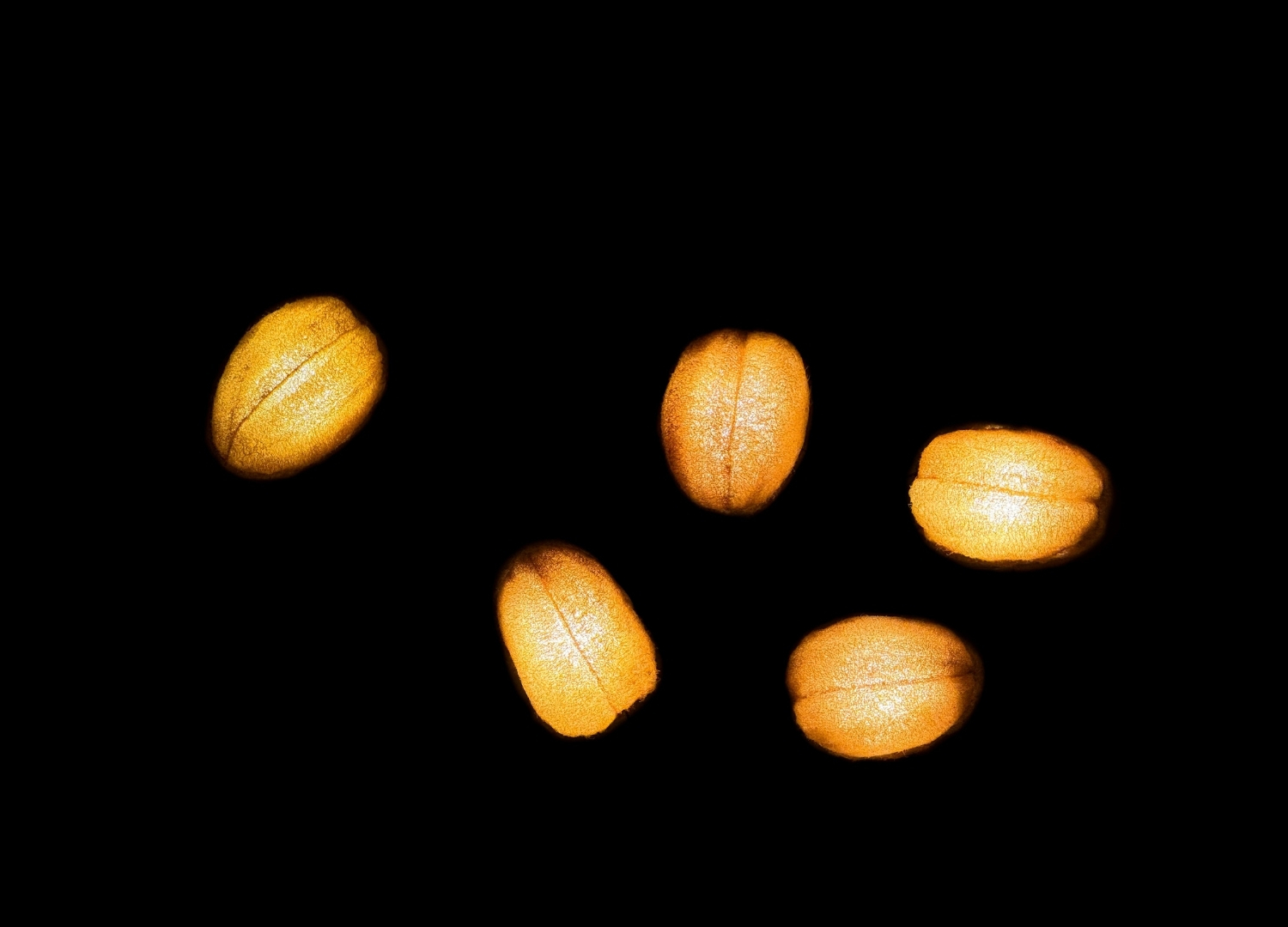
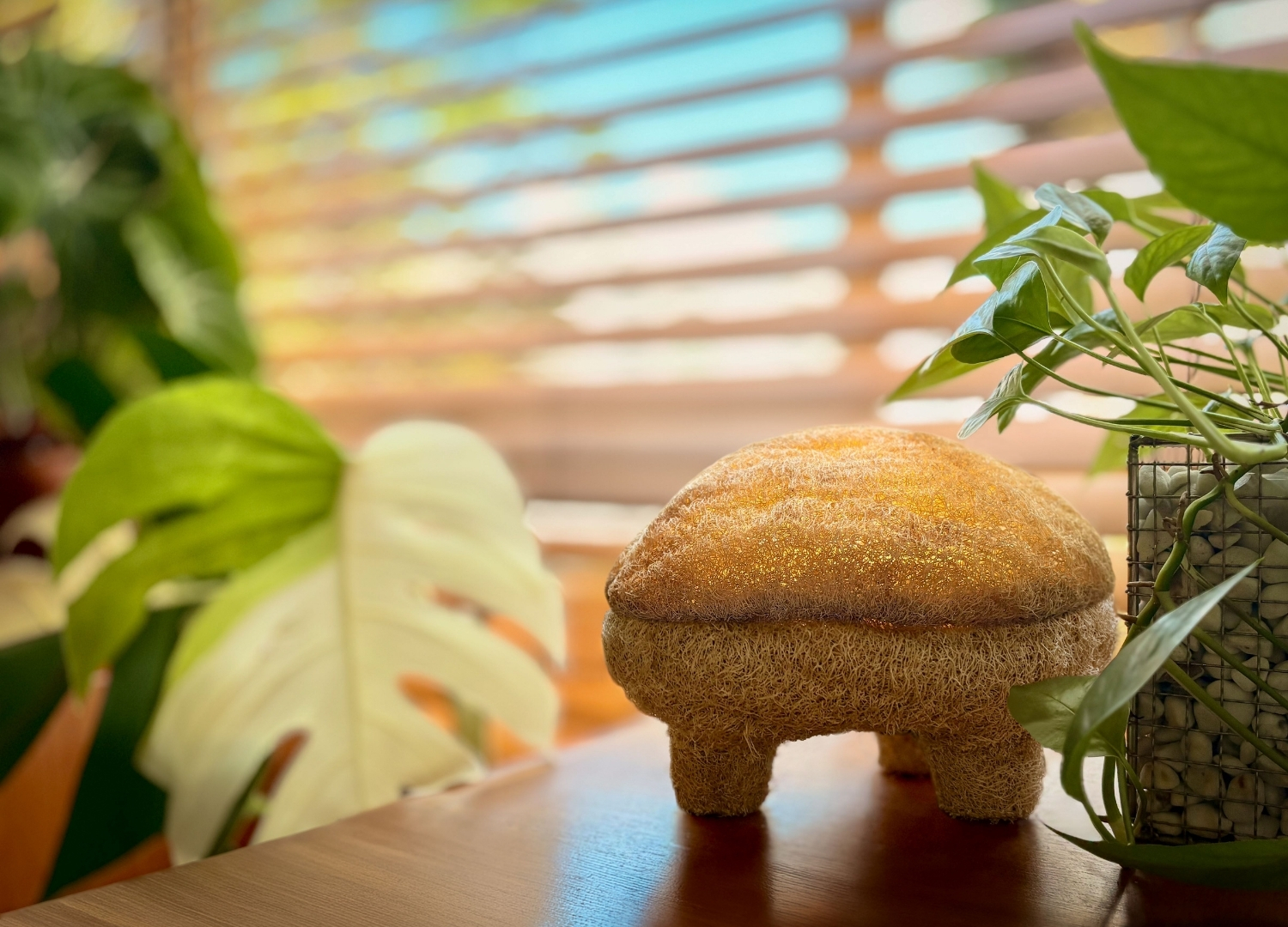
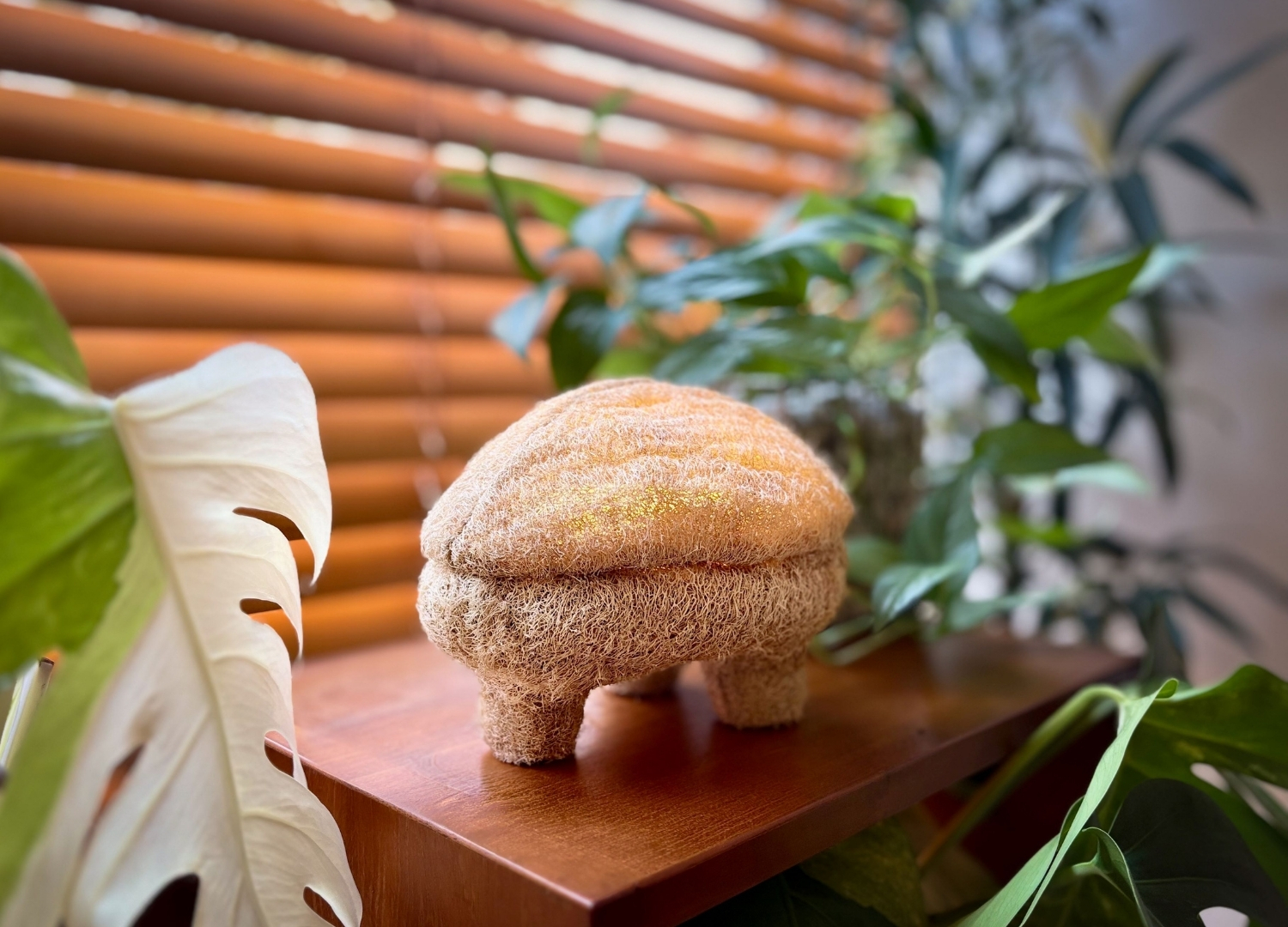
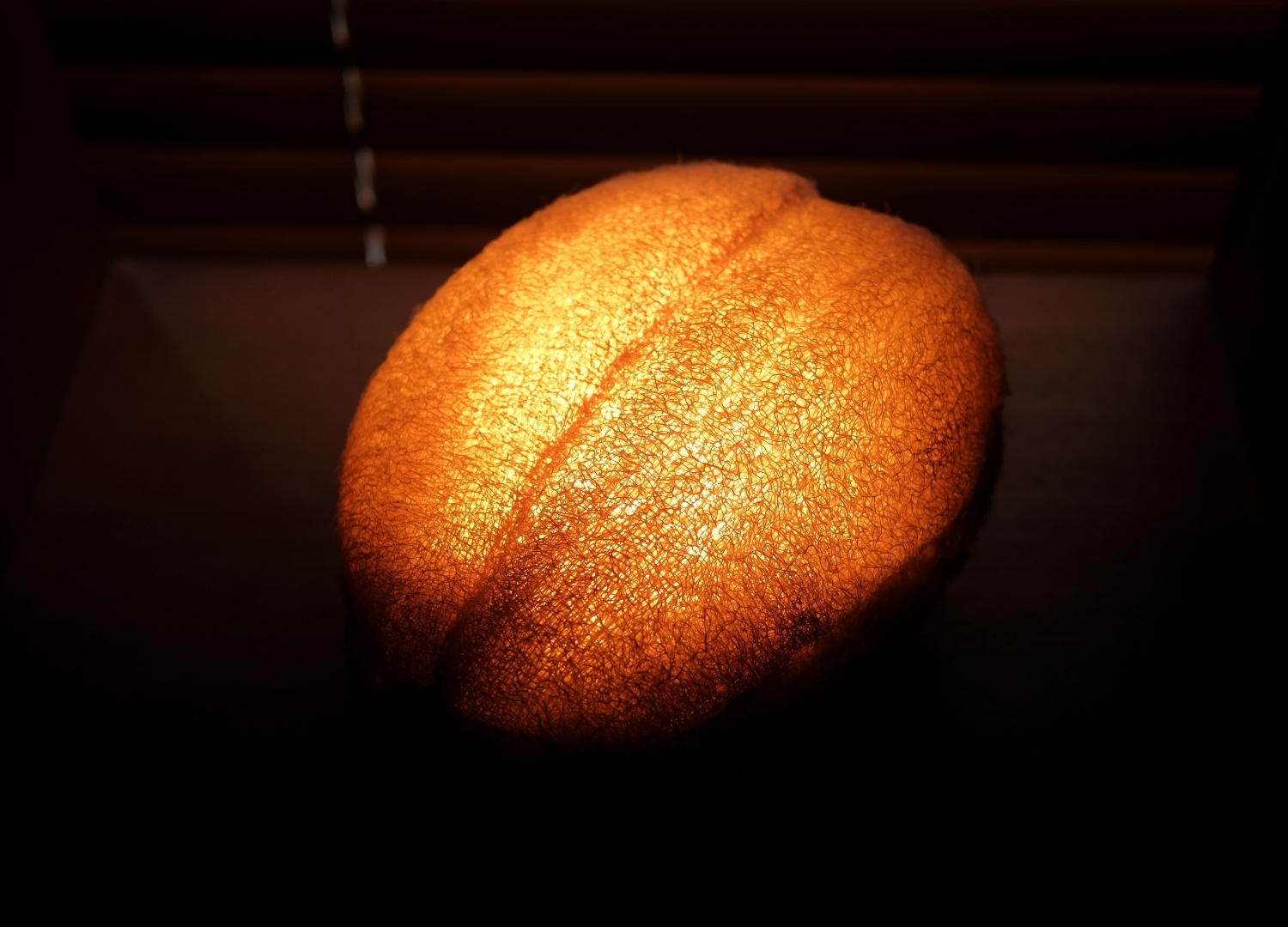
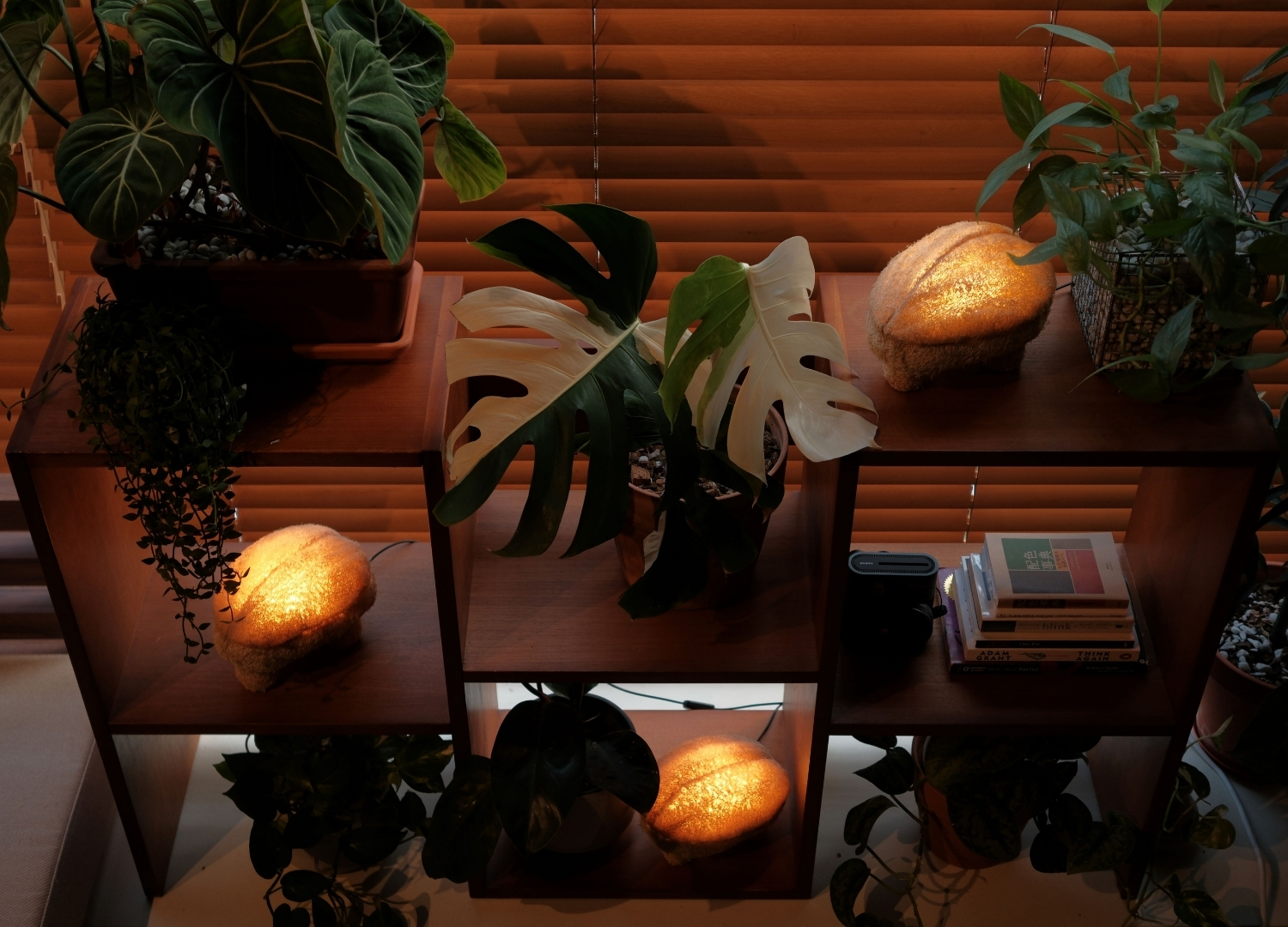
Its bulbous, amber-glowing body is the result of a fungus digesting a natural sponge over the course of two weeks, under conditions the designer set up but could not fully control. The lamp’s shape, texture, and even its structural integrity are outcomes of a biological process rather than a drafting decision.
Gallery
Open full width
Open full width
GOURDO by Justin A. Wan
The designer
Wan’s practice sits at the junction of product design, material research, and ecological thinking, and it consistently returns to one question: how might discarded matter come back to inhabiting daily life as a structure rather than decoration? Wan is not so interested in sustainable substitution (swapping a plastic for a “greener” plastic) as much as in analysing the behaviour of living systems themselves: how they grow, vary, bind, and stabilise.
From stool to lamp
GOURDO is the second chapter in Wan’s research trajectory, which began with the Luffa Stoolita, a project realised with Paul Edward Liu and Tim Ting-Hao Chen during his studies at Columbia University GSAPP. The piece used spent shower sponges and coffee grounds, establishing the conceptual scaffolding that Wan is still building on: taking a fibrous, discarded plant material and using it as a design resource.
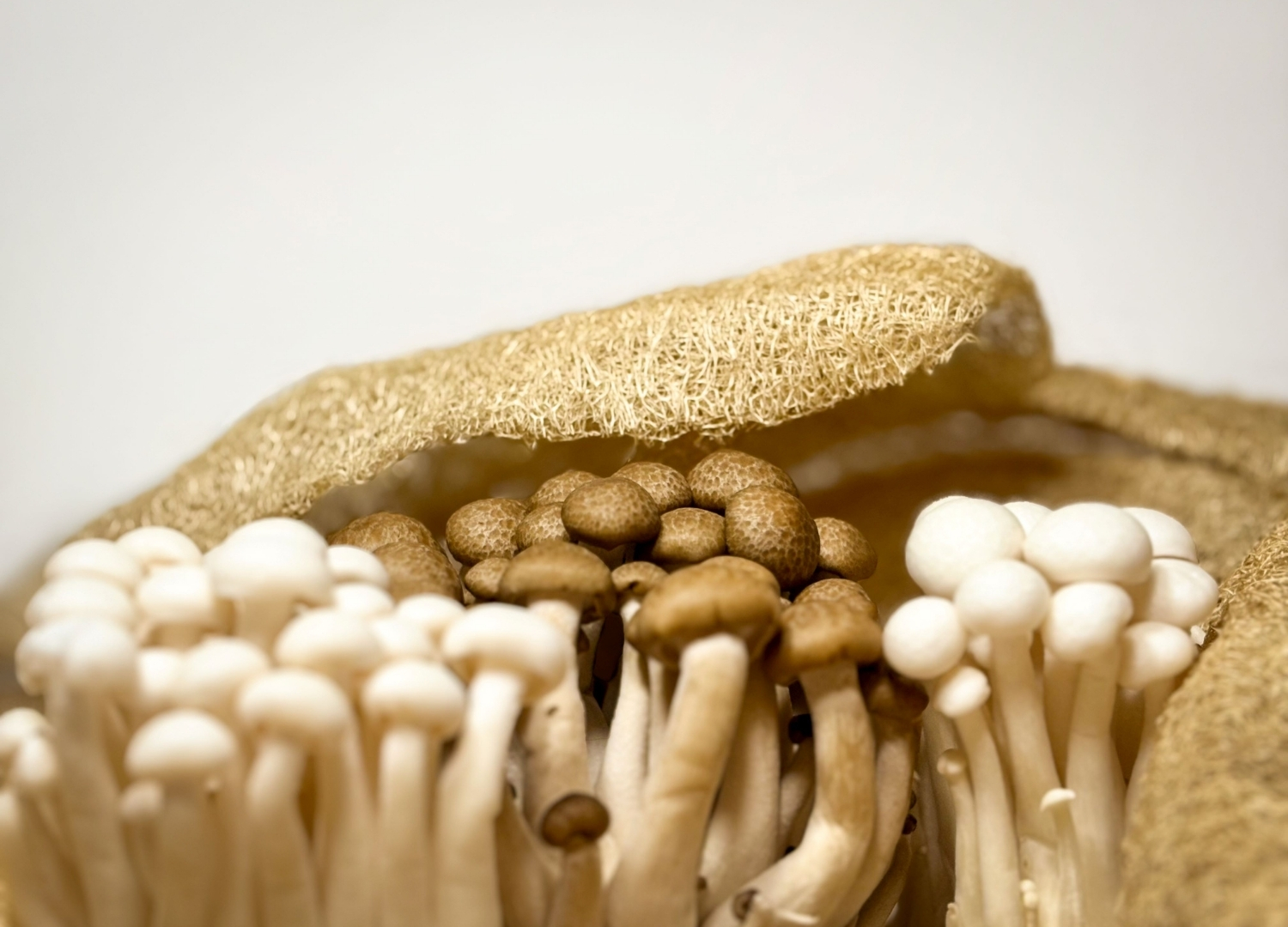
The lamp introduces a different living organism into the material system, mycelium, the root-like vegetative network of fungi. By pairing luffa with something alive this time around, the project’s unpredictability skyrockets compared to working with inert waste materials.
Material structure
Mycelium is composed of hyphae, microscopic filaments that spread through a nutrient substrate and bind loose organic matter into a dense, interconnected network. Once dried and deactivated, the network behaves like a natural composite, lightweight, highly compressive, and fire-resistant. However, it presents a significant weakness, tending to have poor tensile and flexural strength.
This is where the luffa comes in, as its reticulated internal fibre network supplies exactly the tensile reinforcement the fungal network lacks. The luffa functions as a skeleton and the mycelium as flesh, a functional and structural pairing where the entire system remains fully organic.
How to grow a lamp
Wan’s experiments tested various combinations of organic matter and food waste, in search of a blend that best supports fungal growth. The chosen substrate is inoculated with oyster mushroom spores and incubated for roughly two weeks, during which the mycelium colonises the material. The colonised material is then broken into fragments and remixed with fresh substrate and luffa cores before being packed into a mold shaped like the lamp’s base.
Inside the mold, the luffa acts as a scaffold that guides the mycelium’s continued growth, as the fungus consolidates in a stable form. Once colonisation is complete, the piece is demolded and oven-dried, halting biological activity and hardening the material permanently. Lastly, the luffa’s outer layer gets wrapped around the base to form a shade.
Biodesign as a discipline
Biodesign is the broader field GOURDO lives in, a discipline concerned with integrating biology and natural processes in the creation of new materials and objects. The field is mostly known through its showpieces, mushroom-leather jackets or self-healing bio-concrete, objects that tend to be exhibited as proof-of-concept more than to be lived with.
Wan’s ambition is smaller, and for that reason, more persuasive: a domestic object made almost entirely from a fungus and organic waste. If biodesign’s long-term goal is to see whether living materials can leave the laboratory and enter the home, GOURDO is a glowing argument that they already can.