Materials research is opening up new perspectives across industries, including design, shifting the focus towards not only impact and form, but also the processes through which resources are obtained and transformed. It is against this backdrop that Polybion™, a biotechnology company specialising in the development of cultivated cellulose-based materials, joins forces with Natural Urbano, a Mexican design studio founded by Sebastián Beltrán and Lorena Márquez.
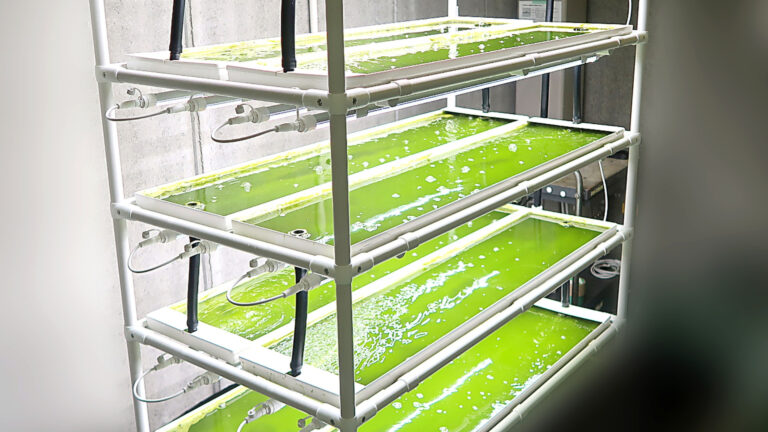
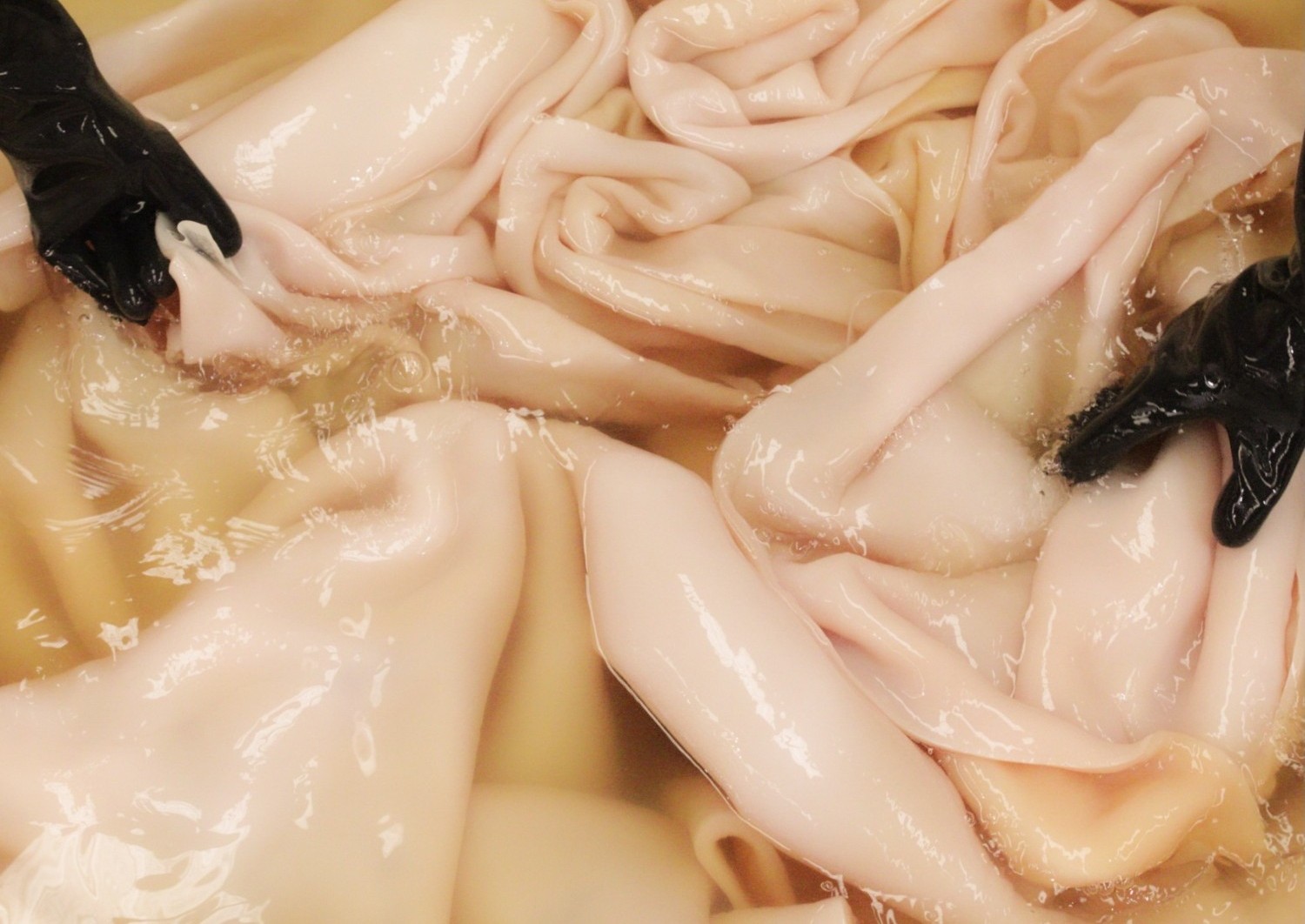
This collaboration has opened up new possibilities for Celium™ biomaterial, developed by Polybion through a fermentation process in which bacteria, fed with agro-industrial fruit waste, produce a cellulose network that is then harvested and processed. Its characteristics – transparency, density and texture – find a practical application in Cenit and Lomo, two lighting designs that explore the expressive potential of this material.
Table of Contents
Cenit: cultivated cellulose as a light filter
Cenit is a lighting collection that combines a natural ash structure with Celium™ Manto, a translucent version of cultivated cellulose. The project draws inspiration from the warm glow of sunsets on the horizon, translating it into an elongated, horizontal lamp with references to the clean, understated language of 1970s design. The collection includes two pendant versions, Cenit Pendant – Big and Cenit Pendant – Small, alongside a table lamp.
“Cenit was designed as a quiet line of warmth,” explains Lorena Márquez, founder of Natural Urbano. “We wanted to create a piece that could hold the presence of a horizon, but in a format that feels close, functional, and easy to integrate into different interiors. The ash gives it structure, while Celium™ gives the light its softness and depth.”
It is precisely through the combination of these two materials that the project finds its identity. The ash, crafted from thin overlapping layers, forms the lamp’s structure, while Celium™ Manto, in its translucent form, allows light to pass through, creating a soft, enveloping glow. The natural variations in the cellulose, from tone and density to texture, contribute to the lamp’s appearance, making each piece slightly different as a result of the biological process from which it originates.
For Polybion™, “Cenit reveals a more accessible and versatile side of Celium™,” explains Alexis Gómez Ortigoza, founder and co-CEO of the company. “It keeps the material innovation at the center, but brings it into a format that can live naturally in homes, studios, restaurants, hotels, and design spaces. That balance between uniqueness and usability is what makes this collaboration especially relevant for us.”
Lomo: one material, different expressions
Lomo is not an entirely new product, but a reinterpretation of an existing pendant lamp from Natural Urbano’s Legacy collection, now made using Celium™ Manto and Celium™ Espumante. In this case, the inspiration comes from Sebastián Beltrán’s lifelong connection with horses. As co-founder of Natural Urbano, he draws on this personal background in the design of Lomo, whose shape references the sudadero, the traditional textile placed between a horse’s back and its saddle.
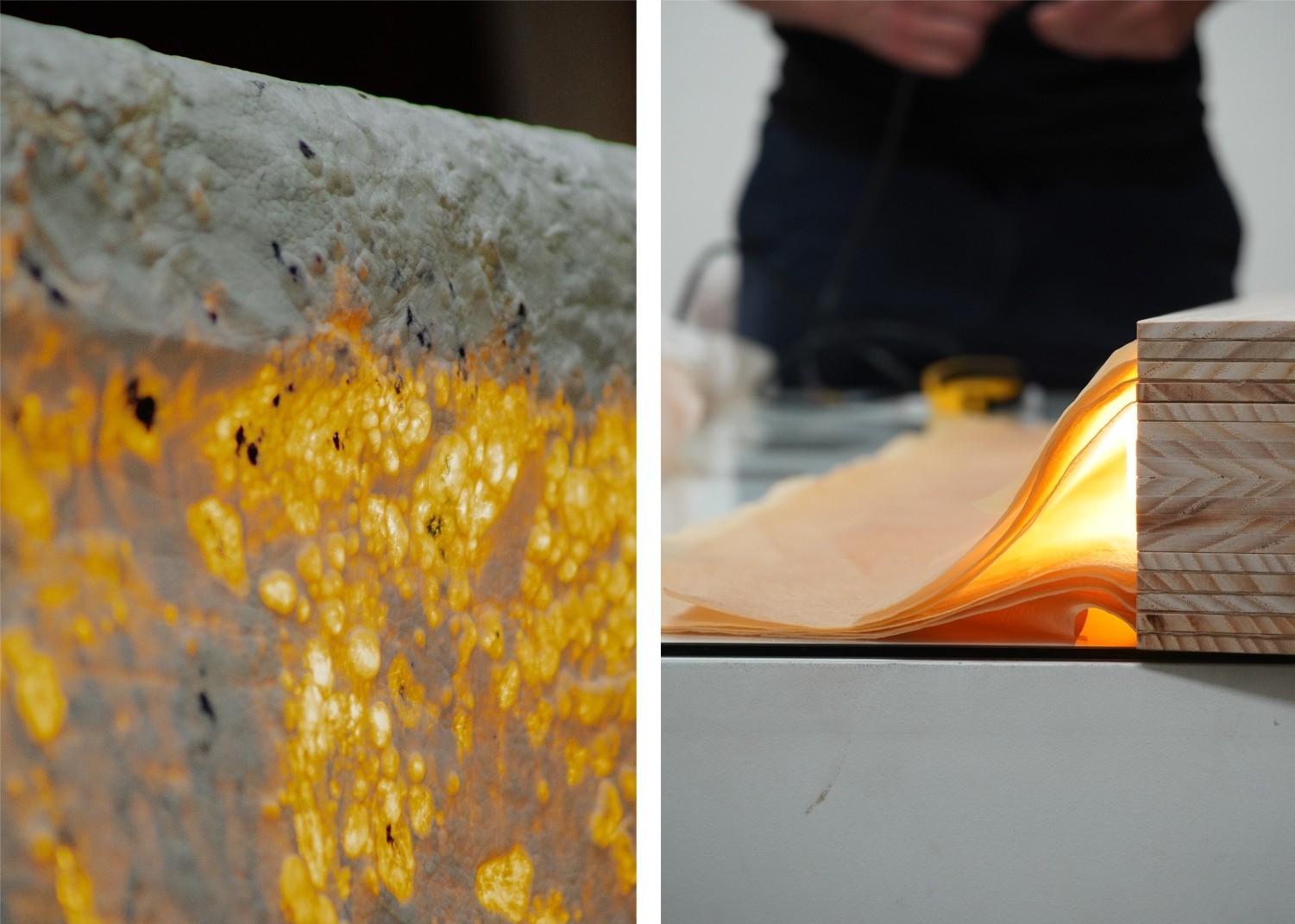
In this new edition, it is above all Celium™ that gives the lamp a different character, with two material variations that alter both its appearance and its relationship with light. Celium™ Manto is translucent and lightweight: when the lamp is switched on, light passes through the cellulose, revealing its natural variations in tone, density and texture. Celium™ Espumante, on the other hand, is denser and more tactile, with a more opaque surface that creates a different interplay between light and shadow.
These two versions demonstrate how the same biologically derived material can produce different aesthetic results depending on its characteristics and application. In Lomo, too, Celium™ is more than a simple covering: it helps define the way the lamp looks and shapes the way light is revealed.
From biological research to design
Cenit and Lomo continue the shared exploration by Natural Urbano and Polybion into the potential of Celium™, investigating its use through different forms and applications. The point is not simply to obtain a material from agro-industrial waste, but to understand how its properties can become part of the design process, particularly in lighting.
When transparency, density and biological variations help shape the quality and character of light, materials research is no longer just a preliminary stage. It becomes an integral part of the design language itself.

Annamaria Maffina
With a background in classical/humanistic studies, I work in communication and collaborate with design magazines. I write what I’d love to read.