Molteni Museum is used to showing treasures from its archive, but Materialized: IDEAS IN MATTER does the opposite. Curated by Ron Gilad, the exhibition treats familiar furniture as living matter — capable of being questioned, manipulated and reimagined — rather than as finished industrial artifacts.
The result is a series of one-off interventions in which a known piece becomes the materialization of a new narrative embedded in a familiar one.
Molteni Museum, Materialized – Highlights:
From catalogue to one-off
The starting point is the Molteni Group catalogue. Its familiar pieces — design icons from Molteni&C, UniFor and Citterio — are handed to twelve designers and studios, among them Herzog & de Meuron, Jean Nouvel, Naoto Fukasawa, OMA, Patricia Urquiola and Vincent Van Duysen, who are asked not to redesign them but to reinterpret them.
Each intervention may enhance a form, negate or exaggerate a function, alter proportions, or assign a new purpose. What emerges is not a variation of an existing object but a one-off work that sits between design and art.
Sixteen reinterpretations
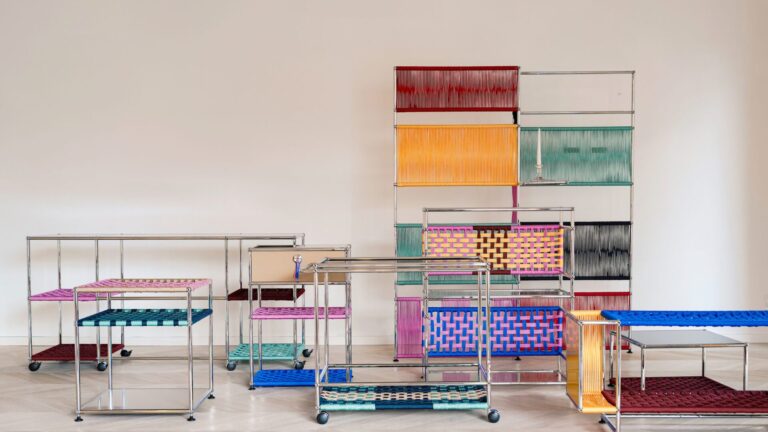
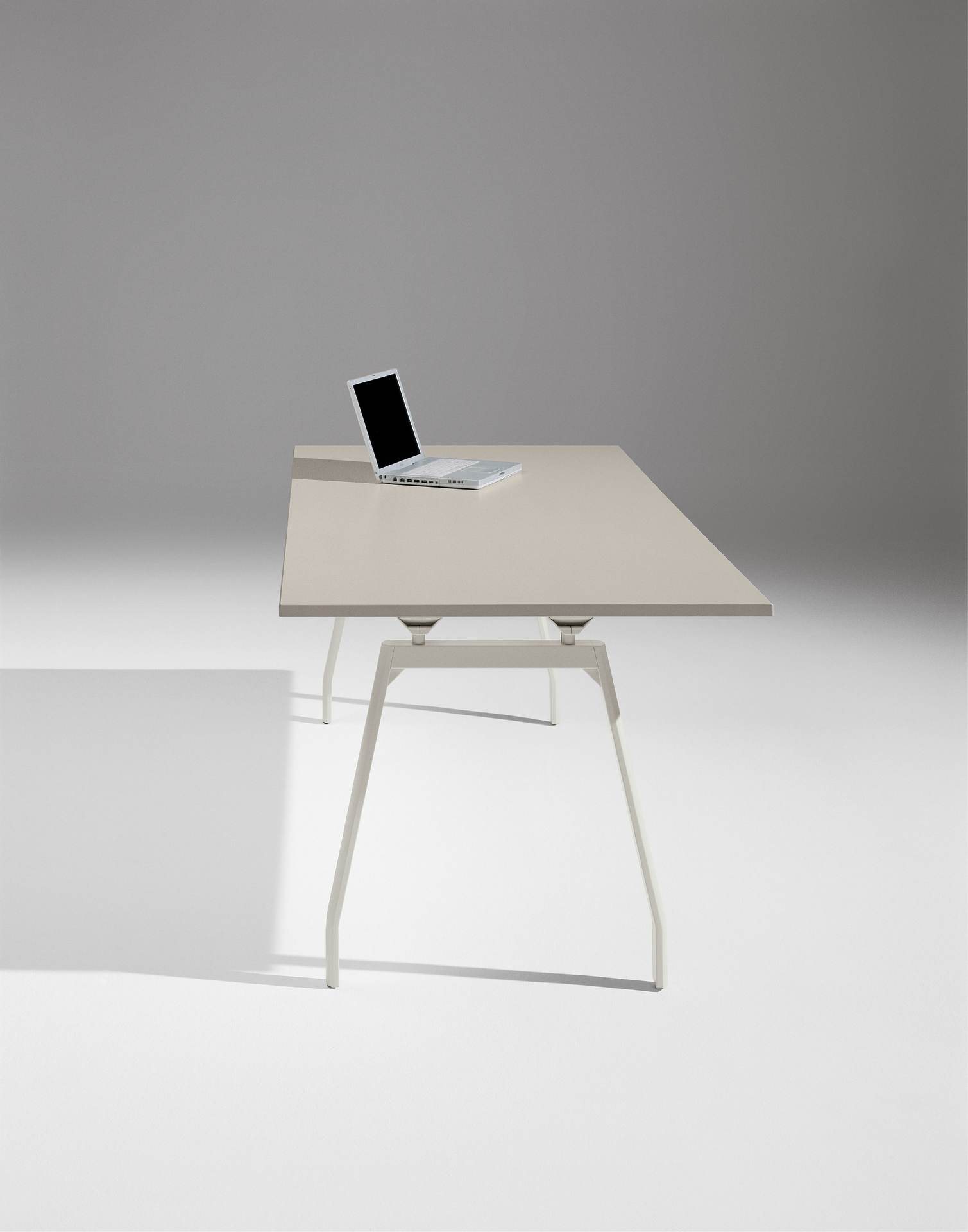
The results range widely. For the Porta Volta Special Edition, Herzog & de Meuron draw on the world of inflatable objects; for Less, Jean Nouvel pursues “almost nothing” with a tabletop so thin it reads as a line drawn in the air. Naoto Fukasawa’s Cinnamon turns to finely woven rattan, and Patricia Urquiola’s Diamond uses cedar from a historic tree in the Molteni family garden.
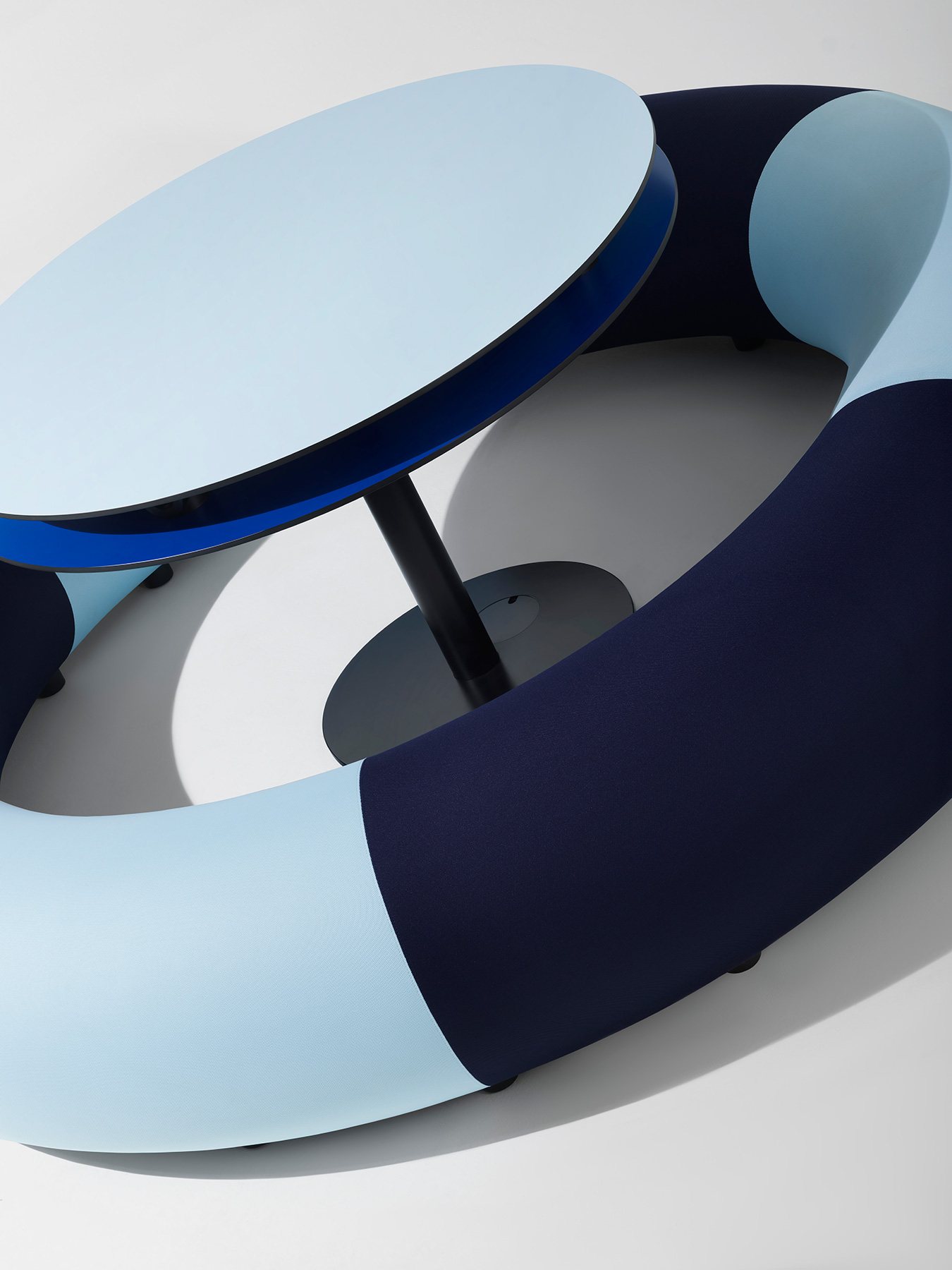
Structure is a recurring thread. Michael Anastassiades starts Card from the joint, reimagining a bookcase as a screen, while OMA’s PRINCIPLES reconsiders the ‘donut’ and double-layered table through material experimentation. As Philippe Braun, Associate at OMA, puts it: “Material determines character. The same system can be graphic or tactile, industrial or intimate, depending on what it is made of.”
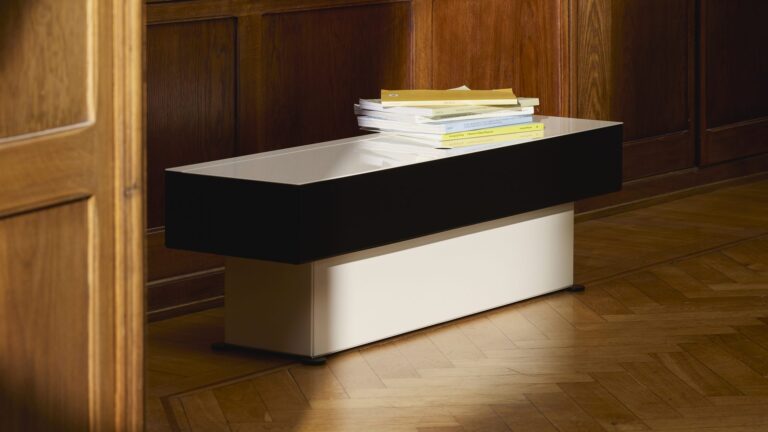
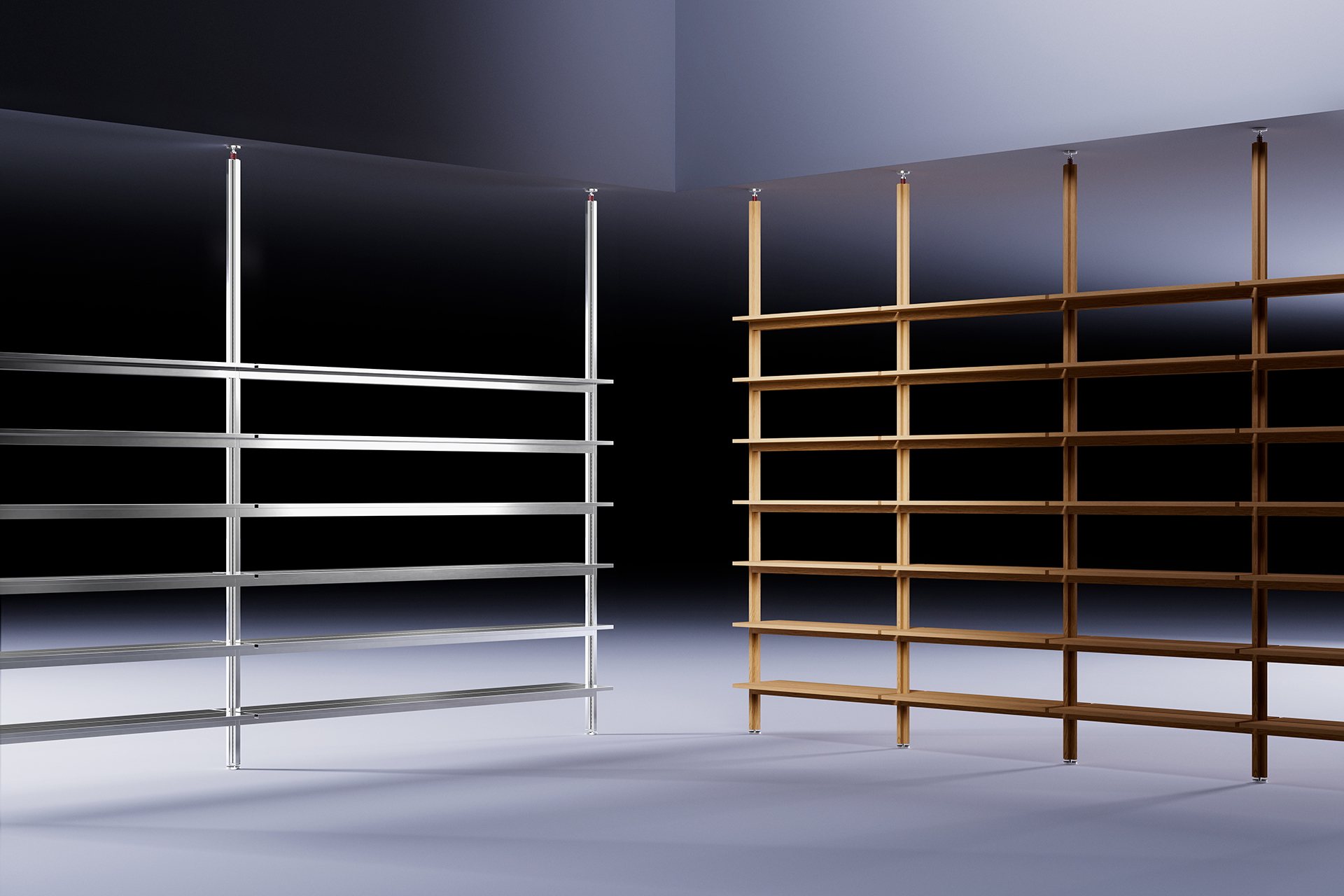
Others push toward sculpture. Ron Gilad’s Banco, a tribute to Luca Meda, takes the counter as a fountain-like form; Foster + Partners’ Arc adds coloured glass and black Ductal bases; Tobia Scarpa’s Monk and AMDL CIRCLE’s MDL System complete a collection that closes with the six-metre X Shelving, whose two long shelves read as a continuous surface floating through the museum.
Between design and art
Alongside the objects, video installations produced by Muse Factory of Projects reveal the genealogy, development and manufacturing behind the original catalogue pieces, adding a layered reading of the exhibition. The show, presented on the occasion of Settimana della Cultura d’Impresa, reflects the museum’s mission as a living archive — a place where, in Gilad’s words, “instead of dusting off the past, we’re unboxing the present.”
Studio Urquiola
Architect ItalyNaoto Fukasawa Design
Designer JapanOMA
Architect NetherlandsAtelier Jean Nouvel
Architect FranceVincent Van Duysen
Architect BelgiumHerzog & de Meuron
Architect SwitzerlandMichael Anastassiades
Designer UKFoster + Partners
Architect UKAMDL CIRCLE
Architect Italy
Editorial Team
Do you have a story to share? Feel free to reach us out and submit your design and inspiration, we are always looking for interesting design ideas!