AAU Anastas: reimagining stone, reclaiming territory in Palestine
From the ridged geometries of Tiamat to the radical community-building of Radio alHara and the Wonder Cabinet, the work of AAU Anastas charts a new political and poetic path for contemporary architecture.

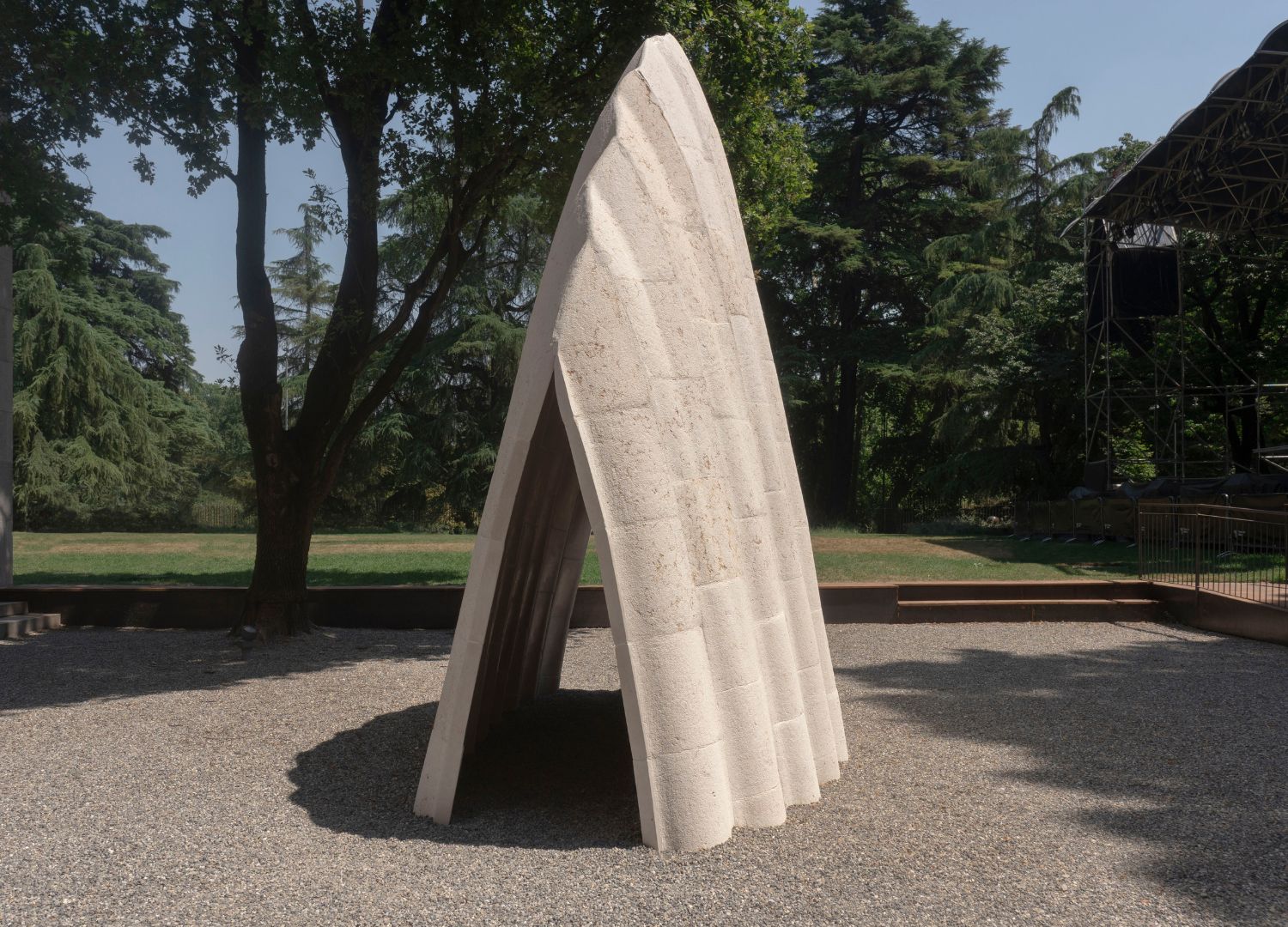
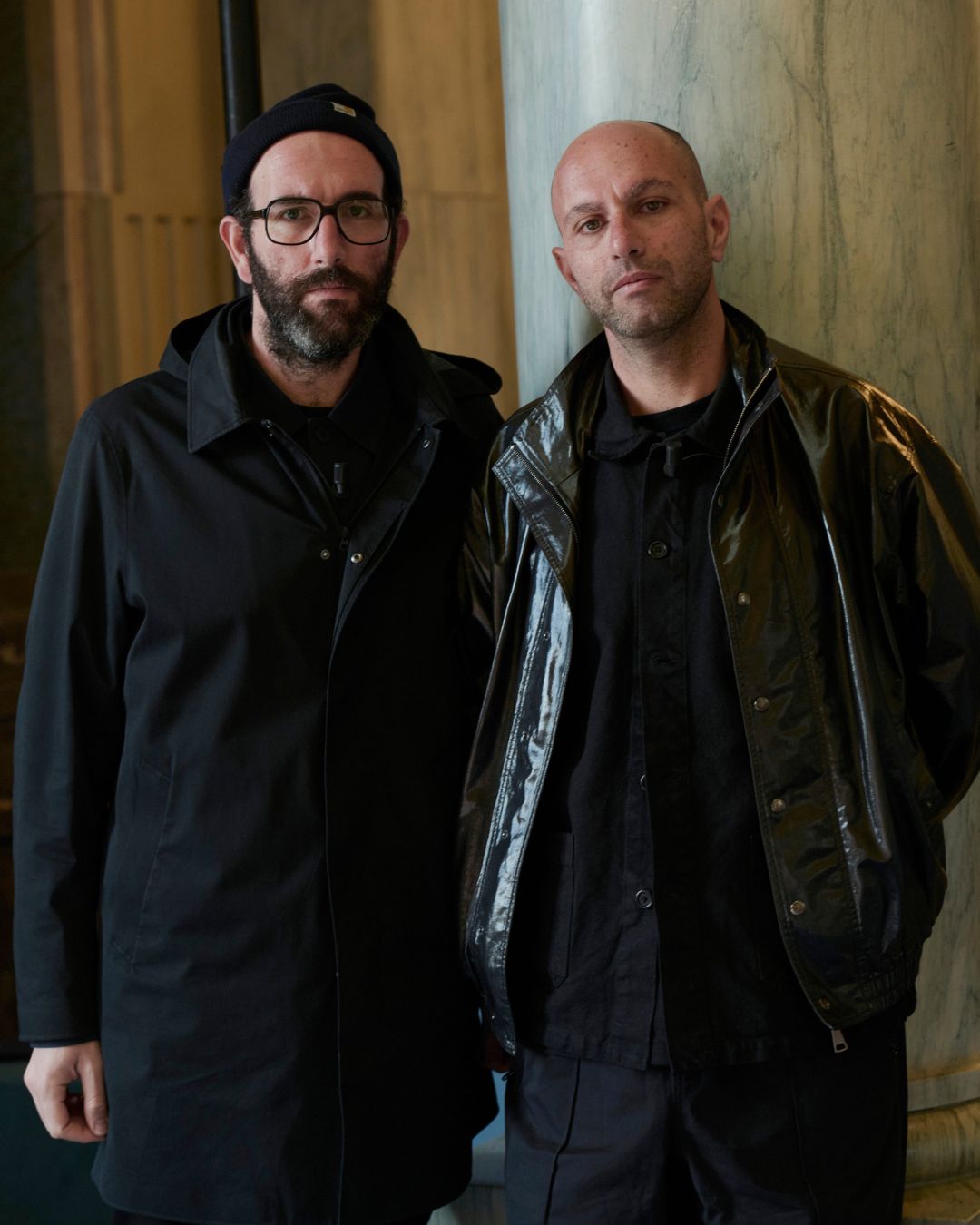
At the 24th International Exhibition of Triennale di Milano, a powerful stone structure rises in the garden like a creature unearthed from the desert. Named Tiamat, it is the latest evolution of Stone Matters, a long-term research project by the architectural studio AAU Anastas. Founded by brothers Elias and Yousef Anastas between Paris and Bethlehem, in Palestine, the studio’s work operates at the intersection of experimental form, material intelligence, and political awareness. With Tiamat, they push the limits of stone’s expressive and structural possibilities, drawing inspiration from Gothic ribbed vaults, the shifting topographies of sand dunes, and ancestral techniques of stereotomy.
But Tiamat is more than geometry. It is an organism of memory and resistance, a spatial and cultural proposition that challenges dominant construction practices and reclaims stone as a living, breathing material. In a territory where architecture is inseparable from questions of identity, history, and sovereignty, Tiamat is a radical gesture: anchored in the past, yet oriented toward new architectural futures.
Gallery
Open full width
Open full width
A legacy of stone and resistance
The story of AAU Anastas is deeply rooted in place and lineage. Elias and Yousef represent the fourth generation of a family of architects in Bethlehem. “From our father’s side, we’re probably the fourth or fifth generation of architects. Our grandfather was actually more of a land surveyor, which in Palestine plays a crucial role. Once a land is surveyed and registered, even in today’s context, it becomes much more difficult to expropriate it. So, our grandfather has a vast register of surveyed lands. Our great-grandfather, on the other hand, was the architect of the municipality of Jerusalem and contributed significantly to the urbanization of the city”.
This transmission of knowledge, both formal and manual, continues to shape the studio’s approach today. “Our studio, AAU Anastas, is the continuation of a generational practice of architecture in Palestine. Our parents’ studio was founded in 1979, and we established our own practice around 2012–2013. A common thread across all these generations is a critical approach to architecture—one that challenges established ways of designing and building, especially within the Palestinian context”.
Their first major project, the National Conservatory of Music in Bethlehem, reflected their belief in architecture as a generator of public space. When the budget for furniture disappeared due to economic instability, the brothers turned the construction site into a design lab, creating a bespoke collection of furnishings using local materials and collaborating with the workers who had built the structure. This hands-on, resourceful ethos led them to establish Local Industries, a branch of their studio dedicated to design and production in dialogue with local craftspeople.
“Local Industries was born out of necessity. Now is both a brand and a network of craftspeople. We’ve integrated these makers into our architecture team. They prototype, build, and now, at the Wonder Cabinet, they also teach. After 5 p.m. each day, our space turns into a learning center for welding, carpentry, stone masonry, skills that connect back to our larger architectural research”, explain Elias and Yousef Anastas.
Stone as decolonial practice
Palestine is a land of stone, but not all stone is created, or treated, equally. A century-old Ottoman regulation still requires that buildings be constructed in stone, yet in practice, most structures are now built in reinforced concrete and clad in a thin stone veneer. “Over time, stone became only decorative”, says Elias.
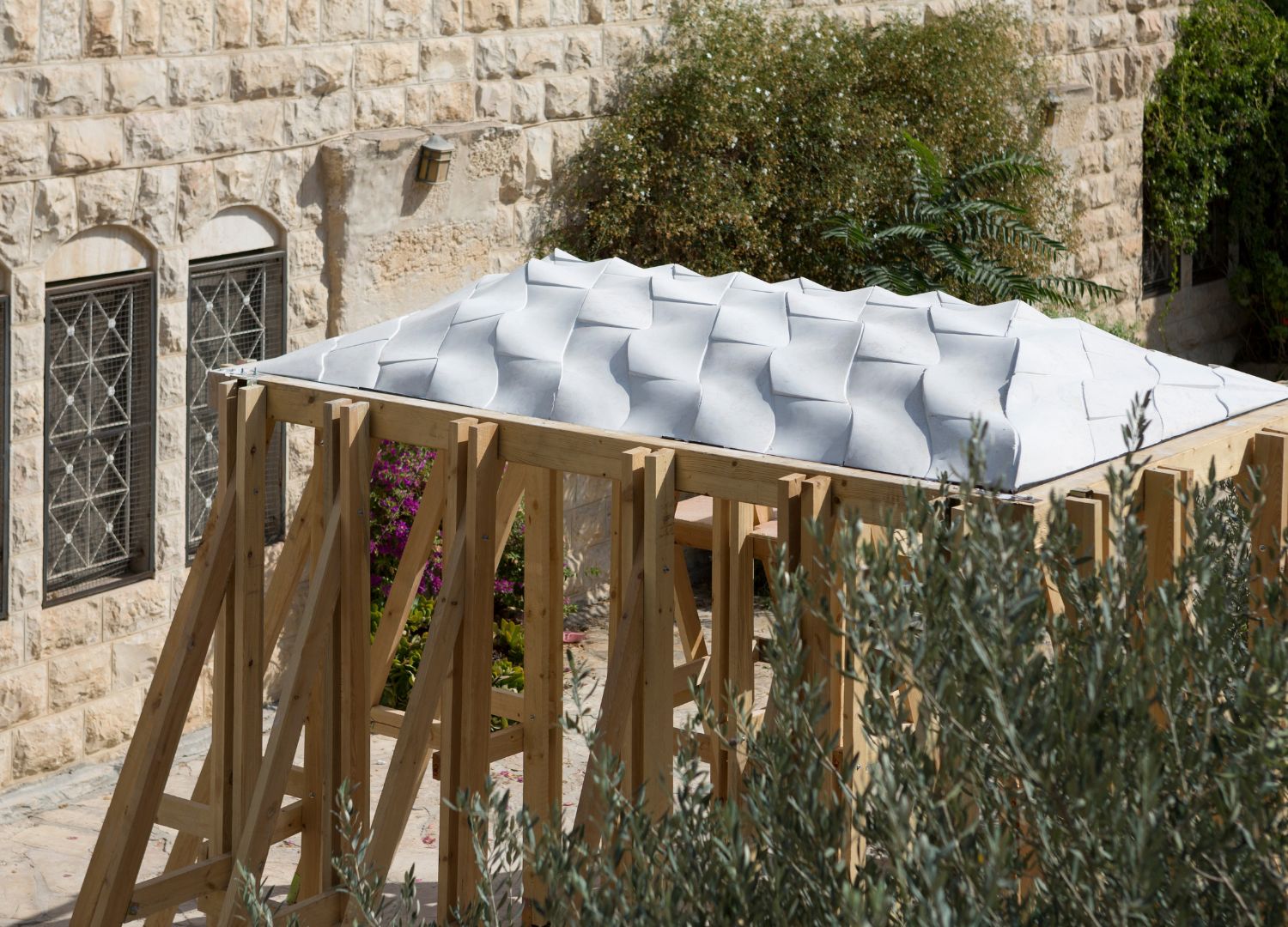
For AAU Anastas, reclaiming stone means more than reviving a material; it means decolonizing architecture itself. Cement, imported and industrial, represents the colonial logic of speed, uniformity, and detachment from context. Stone, by contrast, is heavy, slow, situated. Working with Palestinian quarries and artisans, the studio develops new tectonic systems that reimagine what stone can do and what it can mean.
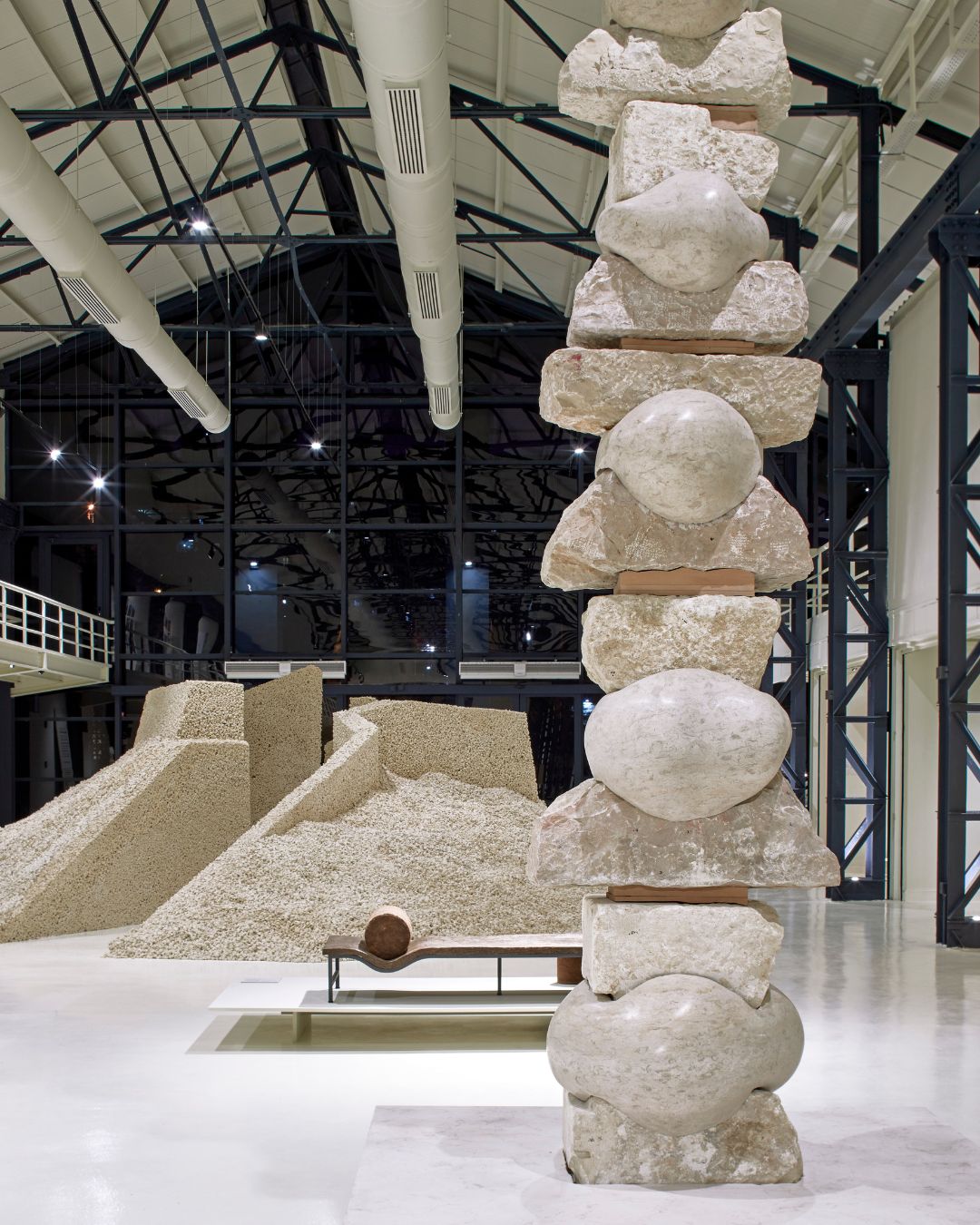
The Stone Matters research has produced over a dozen iterations, from vaulted stone pavilions at the Victoria & Albert Museum to experimental ridged systems in Doha. These structures, while contemporary in form, are deeply rooted in historic methods of construction. “Stone Matters is a response to the inherited colonial law about stone usage. Our project reclaims stone as structural, local, and sustainable. Palestine is full of nearby quarries. The carbon footprint is very low. Our research moved from small pavilions and columns to full buildings”.
In this way, their work actively resists the dominant narratives of architectural modernity, those that are linear, Eurocentric, and materialist. Instead, it embraces a networked, empirical, and collective understanding of space and construction. As they explain, “The architecture of stone is both theoretical and empirical, constantly fed by prior trials while challenging existing principles.”
From soundwaves to social fabric: Radio alHara
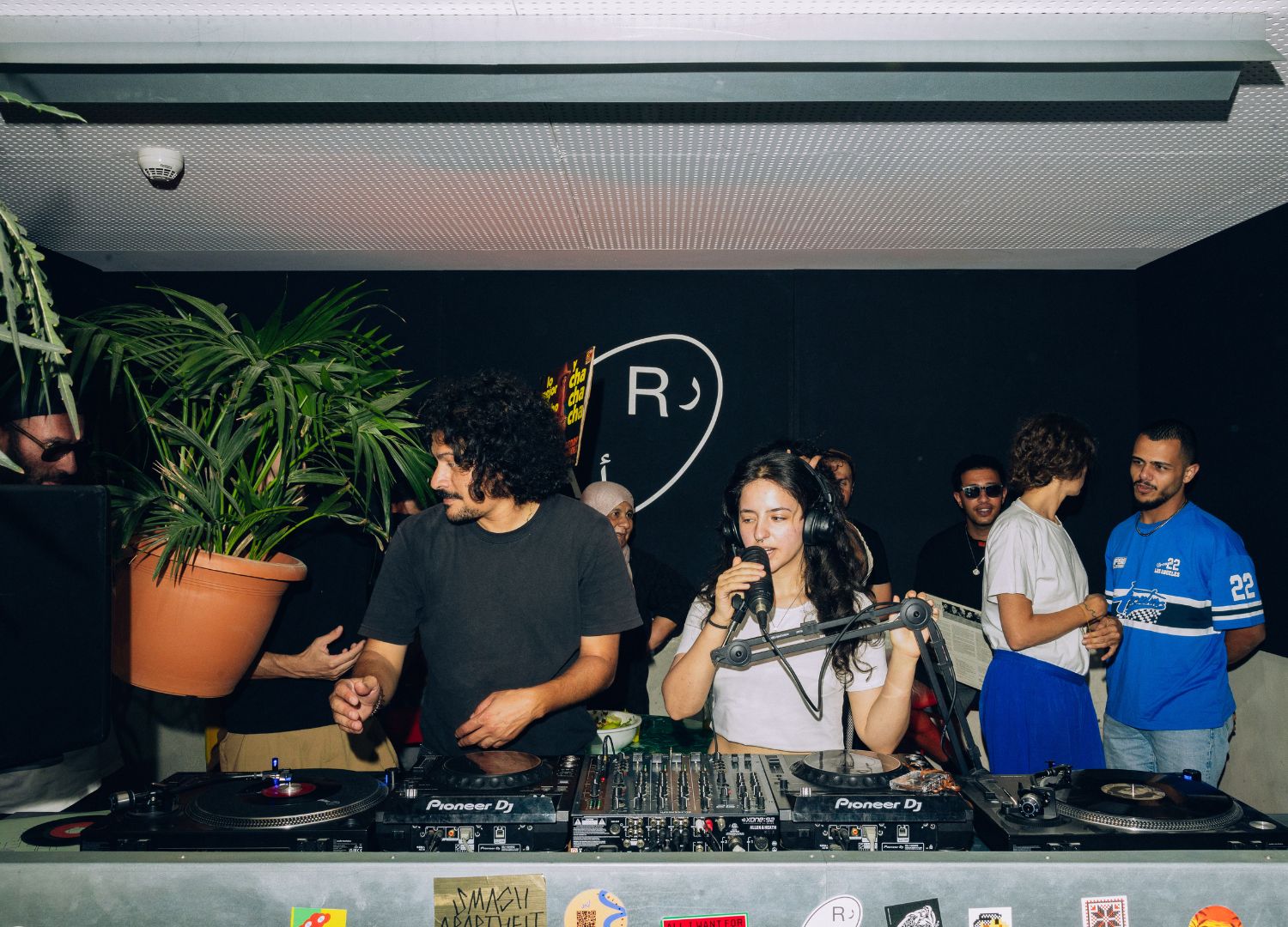
In March 2020, during the global lockdown, AAU Anastas co-founded Radio alHara, an online platform born from a need to connect, protest, and imagine together. What began as a local response to political oppression quickly grew into a global sonic movement. The radio became a space of shared resistance and imagination, broadcasting protests, experimental music, and conversations that crossed borders and built solidarity.
Their first collective action, Fil Mish Mish, lasted over 80 hours and was organized in protest of Israel’s annexation plans in the West Bank. But the resonance was immediate and global.
“Radio alHara, with over 350 resident contributors, is more than a radio, it is a transnational agora”, says Yousef. It represents how the Anastas brothers understand architecture: not as isolated buildings, but as a network of actions, atmospheres, and communities. “Cities don’t have fixed boundaries due to the constant threat of land expropriation by the Israeli occupation. This creates chaotic urban conditions, which also disrupt traditional architectural typologies and public-private space dynamics. Given these challenges, we try to touch other realms – sound, field recordings, craftsmanship, art – that aren’t typically part of architecture but deeply inform it. Our practice goes beyond the standard definition of architecture. It’s about production in a wider sense”.
The Wonder Cabinet: toward a school of possibilities
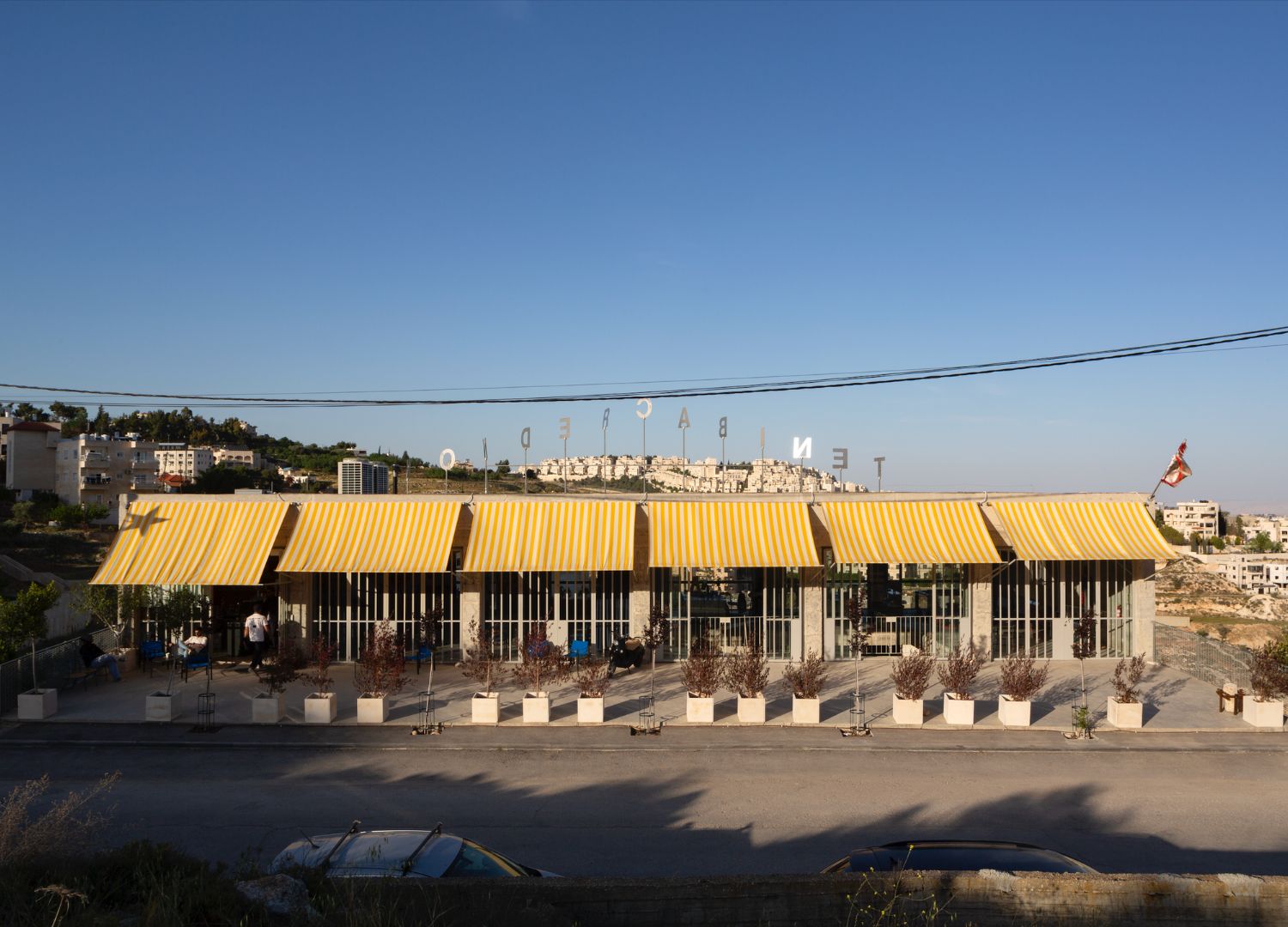
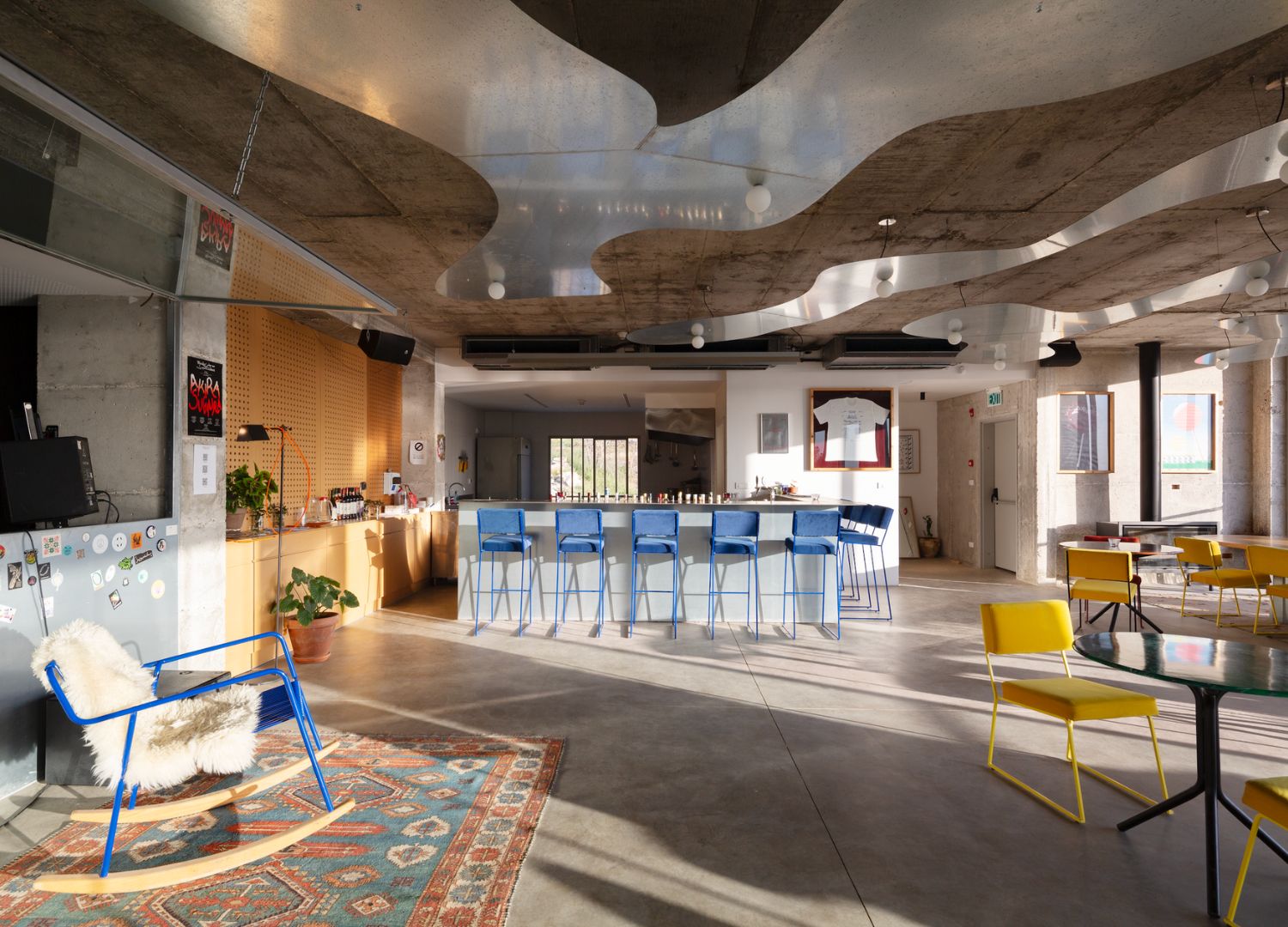
If Radio alHara redefined sonic space, the Wonder Cabinet reclaims physical space as a site of experimental knowledge. Opened in Bethlehem in 2023, this non-profit initiative weaves together architecture, music, food, craft, and public discourse. It is, in essence, the base for a future experimental school of architecture and art.
Conceived as a space of cross-pollination, the Wonder Cabinet brings together diverse practices and practitioners to imagine new ways of learning, making, and being together. It also serves as a counter-model to institutionalized education, where knowledge is often compartmentalized and disconnected from lived realities. “The challenge is continuous. One major turning point was in October 2023, when the war started. The entire cultural sector shut down, but we quickly realized that culture must persist during such moments. We reopened, inviting the community to co-create the programming”.
In the context of Palestine, the Wonder Cabinet connects local expertise with global conversations, while maintaining a direct, hands-on relationship with place. “Our goal is for the Wonder Cabinet to become, in the next five years, a fully experimental art and architecture school, one that connects disciplines and fosters new ways of learning and building. We want to break down barriers between architecture, sound, art, and craft. For us, architecture is deeply linked to the act of making”.
Architecture as hope
The work of AAU Anastas is profoundly generous. Whether through stone, sound, or space, their projects open up possibilities, material, political, and poetic. They embrace architecture not just as a practice of resistance, but as a horizon of hope. “One challenge is redefining culture not as entertainment but as something essential. We had to ask: how can a cultural space serve the real-time needs of the neighborhood? How can it engage with the future of the community?”
For AAU Anastas, designing is more than resisting: designing is looking forward. And in Palestine, that act of looking forward carries immense weight. It means reclaiming land, memory, and identity. But it also means crafting new worlds, where the stone is not dead matter, but a living force; where community is not inherited, but invented; and where architecture is not a monument to power, but a shelter for shared futures.