Designing ecological repair: the Aranyani Pavilion
In New Delhi, a spiral pavilion turns restoration science, sacred landscapes and colonial histories into a lived, collective experience.
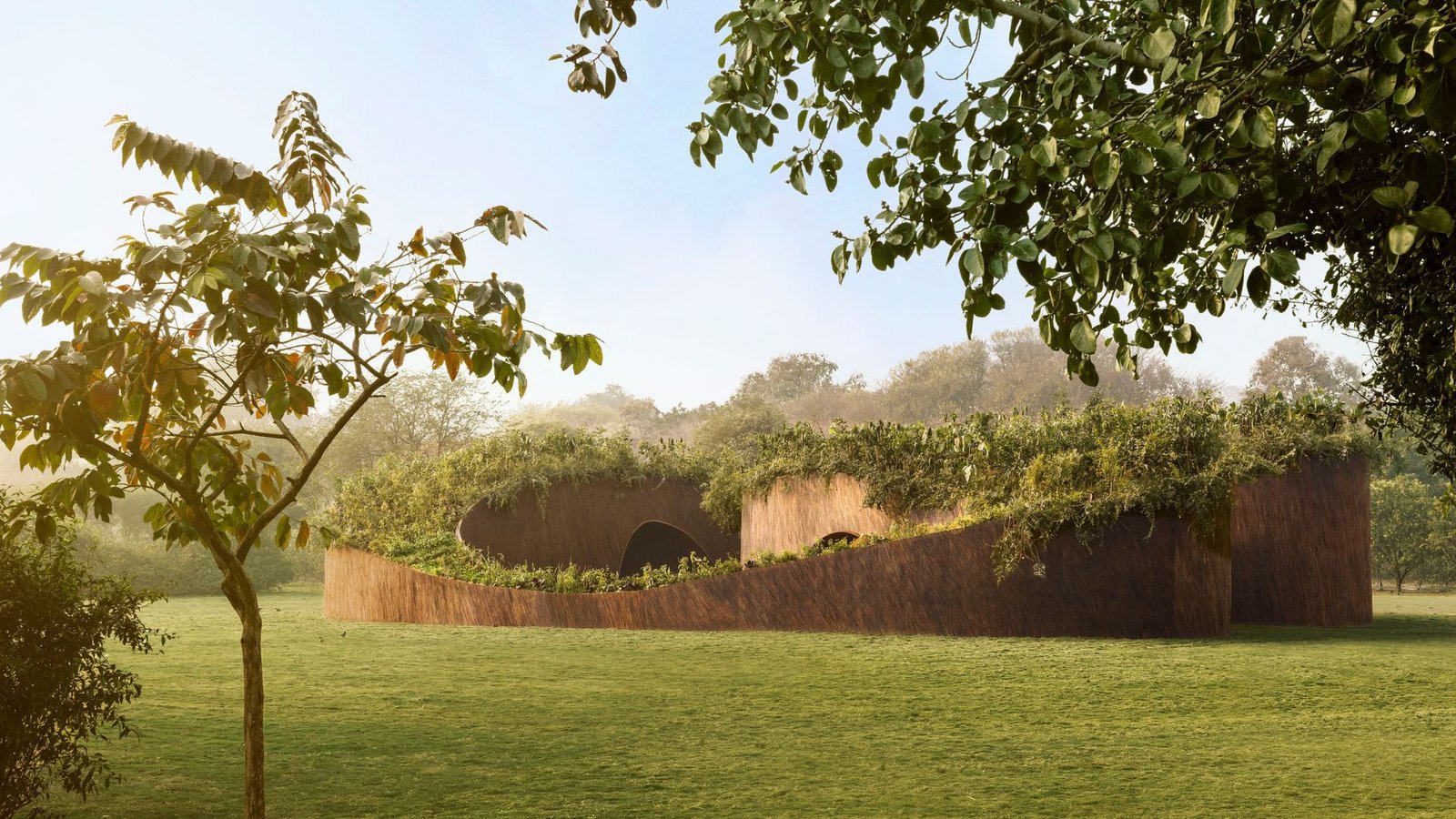
In a time when ecology is often reduced to data, targets and distant catastrophes, a new landmark, the Aranyani Pavilion, has been conceived to propose something radically different: an embodied encounter with the living world. Installed at Sunder Nursery in New Delhi, the Pavilion invites visitors to walk through ecology rather than merely contemplate it: to feel it underfoot, overhead, and all around.
Founded by conservation scientist and creative director Tara Lal, Aranyani is a conservation and creative arts initiative dedicated to renewing human relationships with nature. With its first architectural commission, it translates years of ecological research into spatial form, entering the built environment with a clear ambition: to repair the rupture between people, land and memory produced by modern – and colonial – systems of extraction.
Gallery
Open full width



Open full width
“We are living through a moment where the distance between people and the natural world has never been greater”, explains Tara Lal. “So many of our ecological crises are rooted in colonial histories and systems that separated us from land, from Indigenous knowledge, and from one another. The Aranyani Pavilion is an invitation to repair that rupture, to experience ecology not as abstraction but as something we walk through, feel, and belong to”.
Named after the forest deity of the Rigveda, one of the oldest sacred texts in the world, Aranyani draws on ancient Indian cosmologies that understood nature not as a resource, but as a living, sacred presence.
Sacred groves as spatial memory
Titled Sacred Nature, the inaugural edition of the Pavilion is conceptualised by Tara Lal and designed in collaboration with T__M.space, the architectural studio led by Tanil Raif and Mario Serrano Puche, known for lightweight, digitally crafted structures shaped by ecological thinking and local material intelligence.
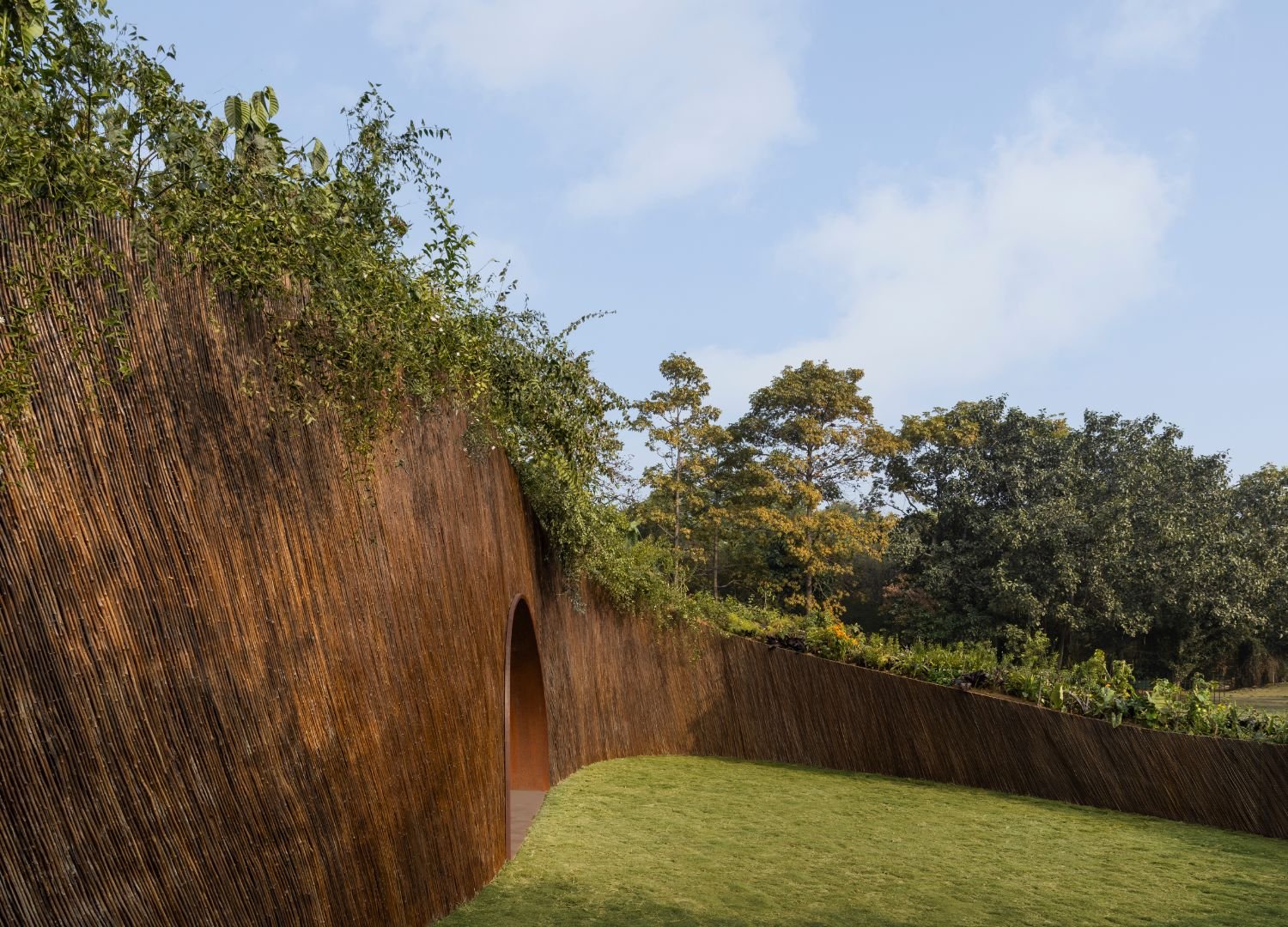
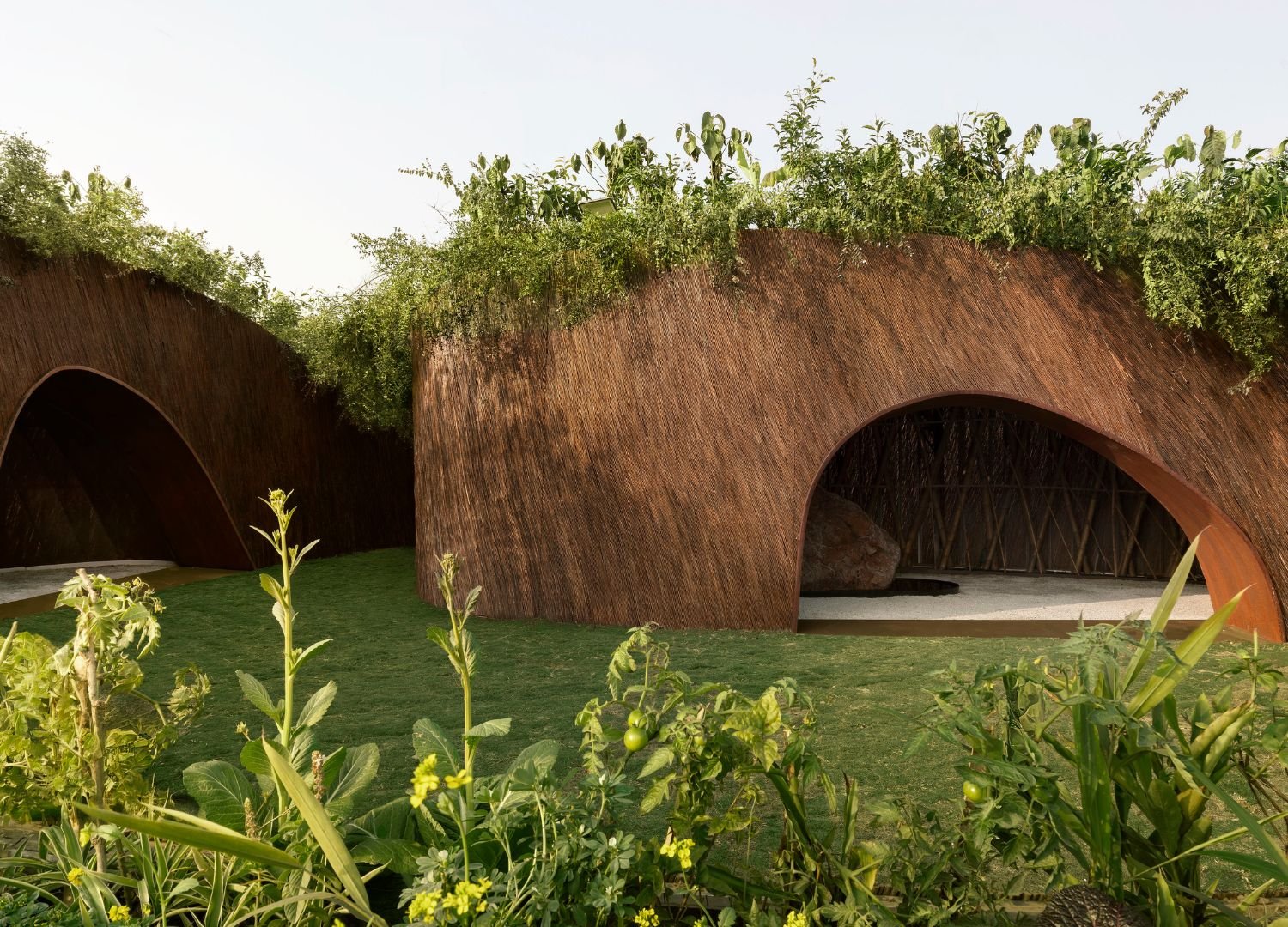
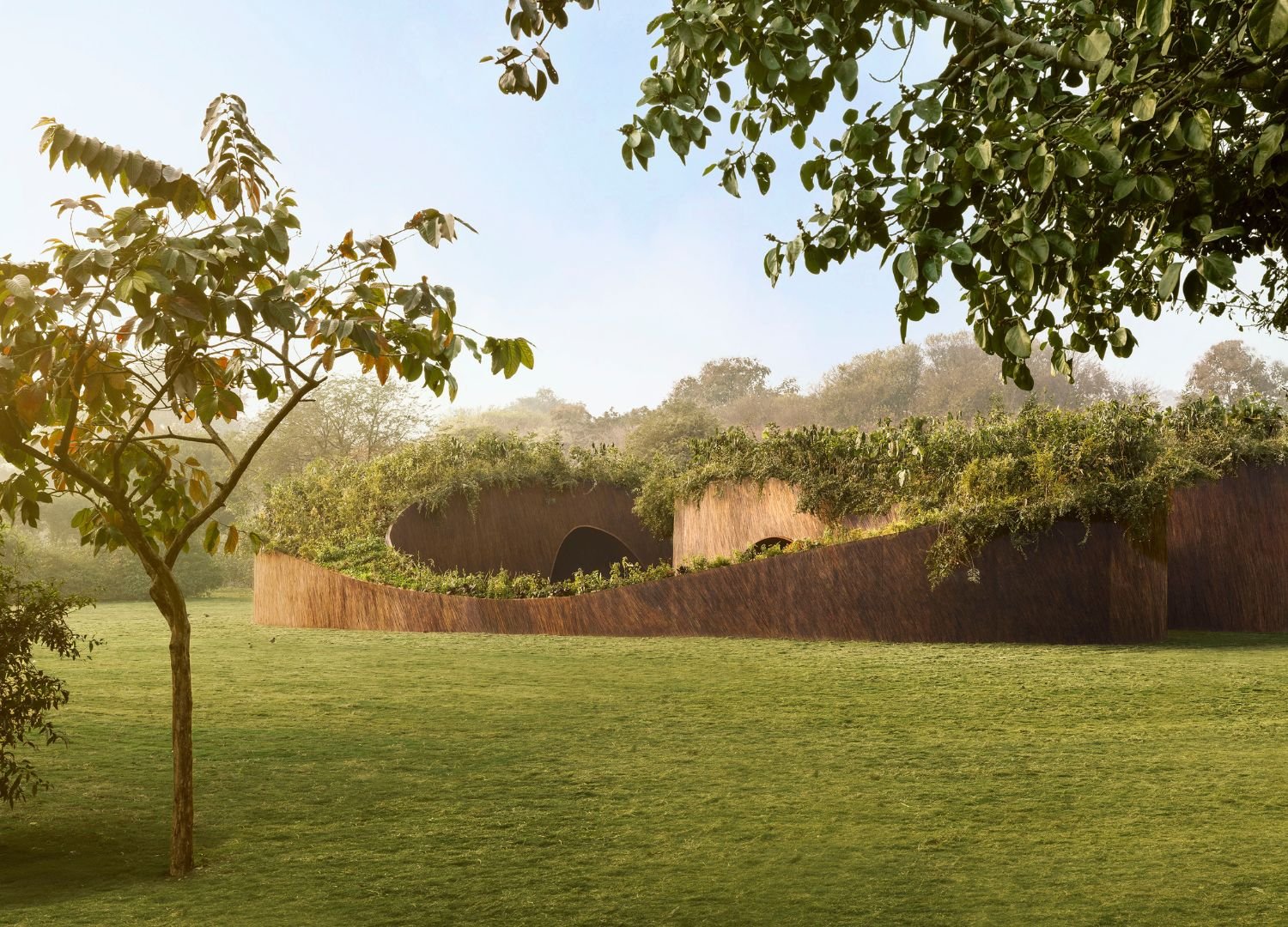
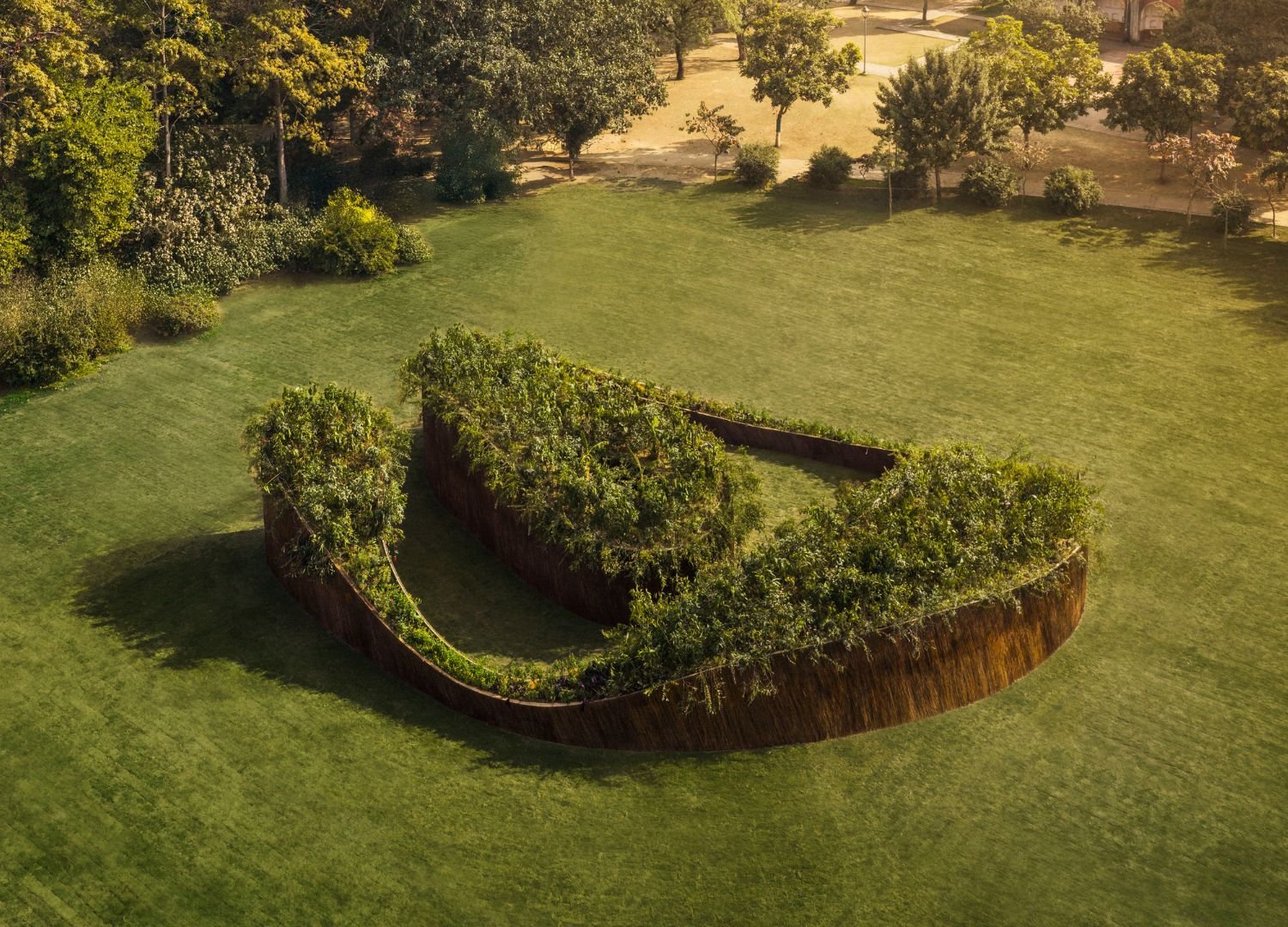
Conceived as a spiral walkthrough installation, it references the spatial logic of India’s sacred groves, community-protected forest sanctuaries that functioned as early bio-reserves long before formal conservation laws existed. Preserved through ritual, belief and collective responsibility, these groves safeguarded biodiversity, water sources and local ecologies, and are now recognised as some of the subcontinent’s most important biodiversity hotspots.
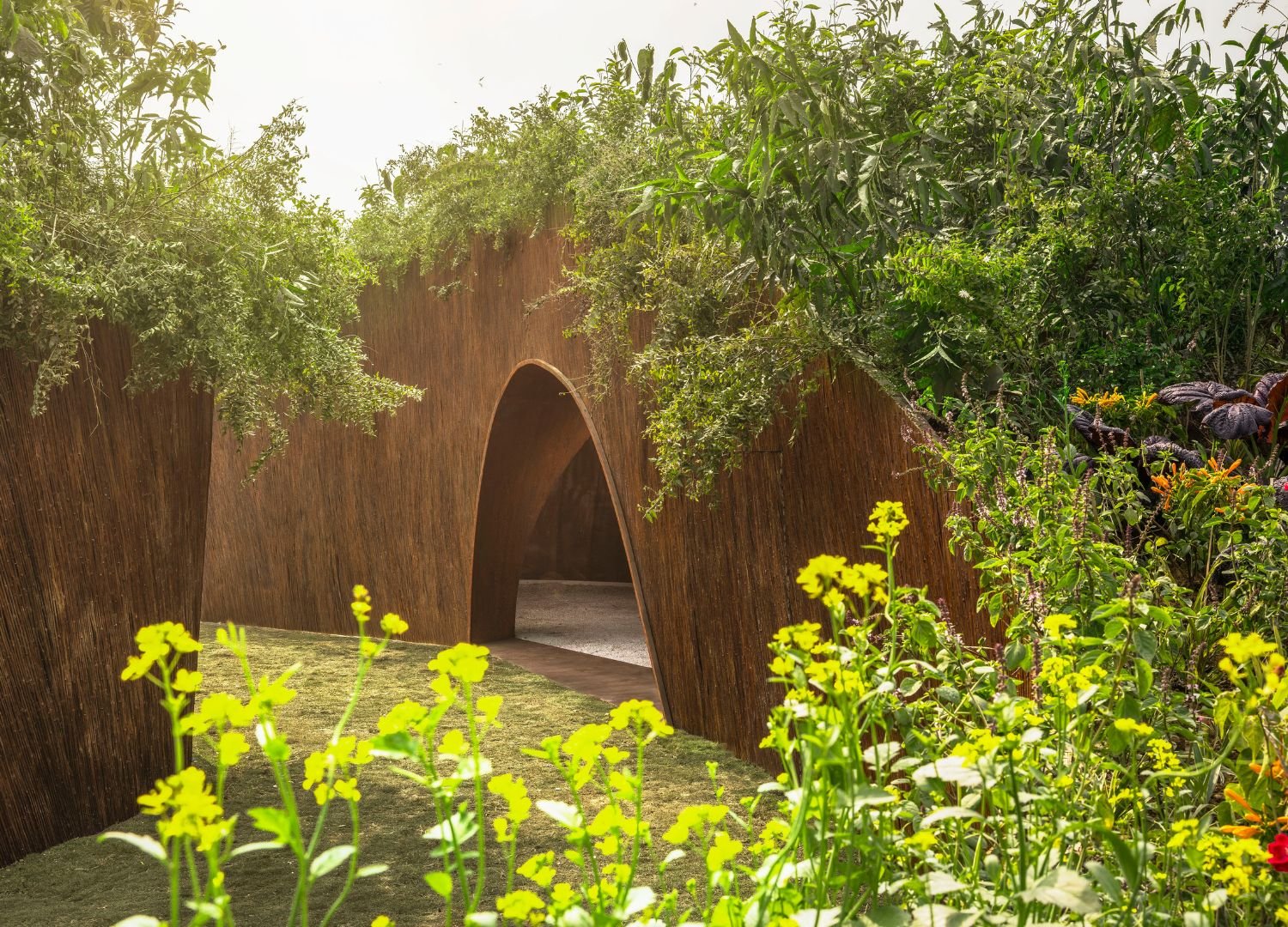
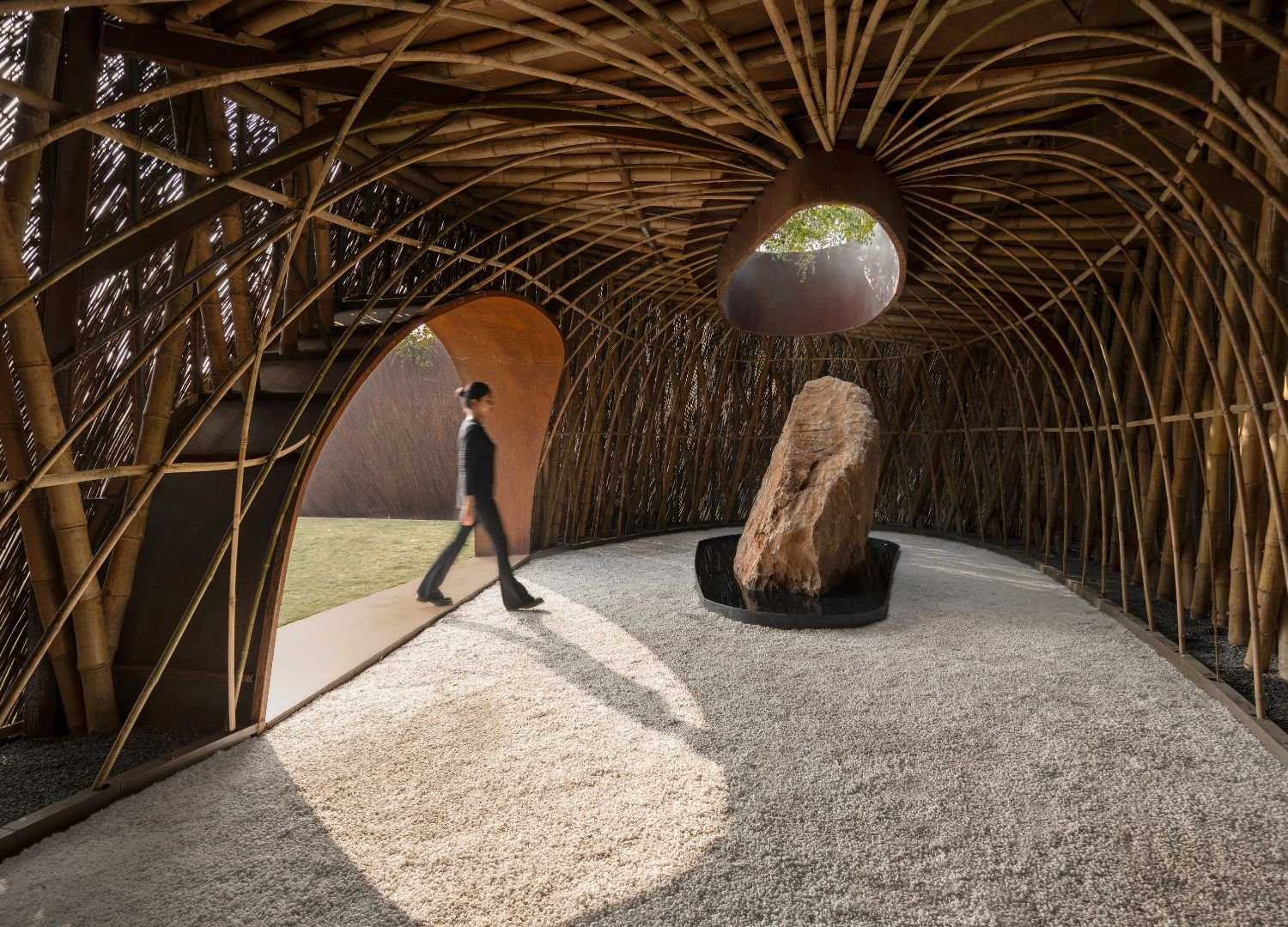
The Pavilion translates this ancestral model into contemporary architectural language: guided by principles of sacred geometry, it choreographs a slow, inward journey through shifting light, shadow, texture and sound, echoing the sensory rhythm of a living forest. At its centre, a stone monolith anchors the space like a shrine, a symbolic meeting point between earth and sky, matter and meaning.
Decolonising nature through material
If the Aranyani Pavilion draws from ancient ecological wisdom, it is equally engaged with confronting the legacies of colonialism embedded in today’s landscapes.
Its structure is built from upcycled invasive Lantana camara, a shrub introduced to India through Portuguese and British colonial trade in the 18th century. Today, Lantana covers over 13 million hectares, threatening nearly half of India’s forest ecosystems. Rather than erasing this history, the Pavilion confronts it head-on.
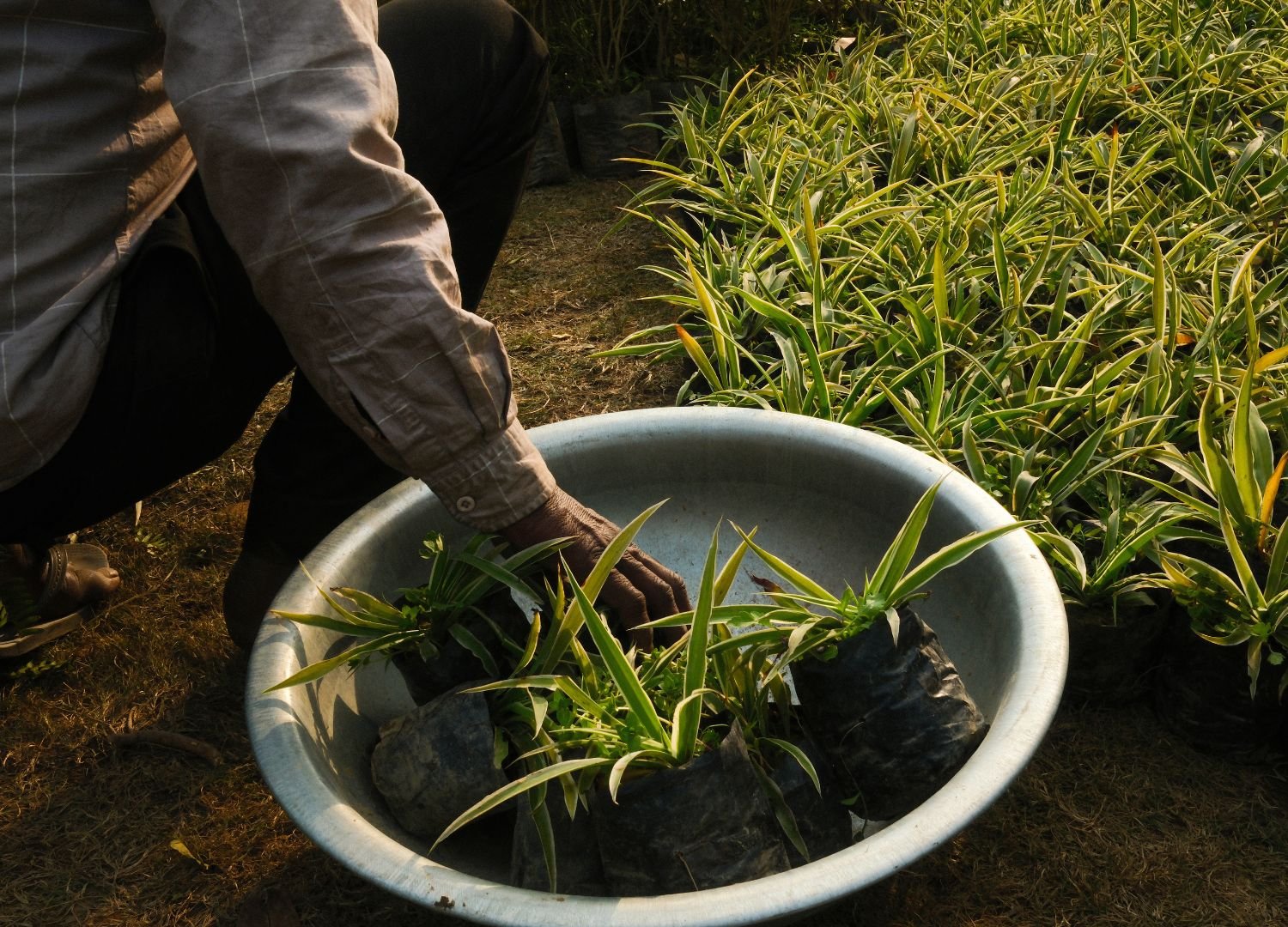
Crafted into a latticed structural system by Ekarth Studio, specialists in natural-material construction, Lantana is transformed from an ecological threat into an architectural framework. Above it, a living canopy of more than 40 native plant species — including edible, medicinal and culturally significant varieties — forms a functioning micro-habitat.
By layering invasive species below and indigenous plants above, the Pavilion embeds restoration into its very structure. It becomes a spatial narrative of India’s colonial ecological past and a speculative model for repair — not through erasure, but through transformation. “By bringing invasive and native species into conversation, we hope to restore not only ecosystems, but the relationships that sustain them”, continues Tara Lal.
A platform for collective reflection
Beyond its physical presence, the Pavilion functions as a public forum for ecological and decolonial discourse. Its programme includes talks, performances, workshops and guided tours that extend its themes into the social realm. Contributors range from environmental activist Vandana Shiva and historian Sathnam Sanghera, to architects and designers working at the intersection of ecology and making, alongside musicians, filmmakers and emerging creative practitioners. Together, they transform the Pavilion into a temporary commons, a space where knowledge circulates across disciplines, generations and lived experiences.
The Aranyani Pavilion’s future
After its presentation in New Delhi, the Aranyani Pavilion will be permanently installed at the Rajkumari Ratnavati Girls’ School in Jaisalmer, an award-winning example of climate-responsive architecture designed by Diana Kellogg Architects. There, it will serve as a living classroom for students, researchers and emerging naturalists. And its plants will continue their journey too, transferred to community-led environmental projects in Delhi, from the Basti Gardens of Hope to urban forest restoration initiatives in under-resourced neighbourhoods.
In this way, the Pavilion fulfils its deepest ambition: to nourish new minds, new contexts and new ecologies. Less a monument than a seed, it suggests that architecture – when rooted in care, memory and responsibility – can become a quiet but powerful agent of repair.