Finding value in landfills: Maximum’s approach to design
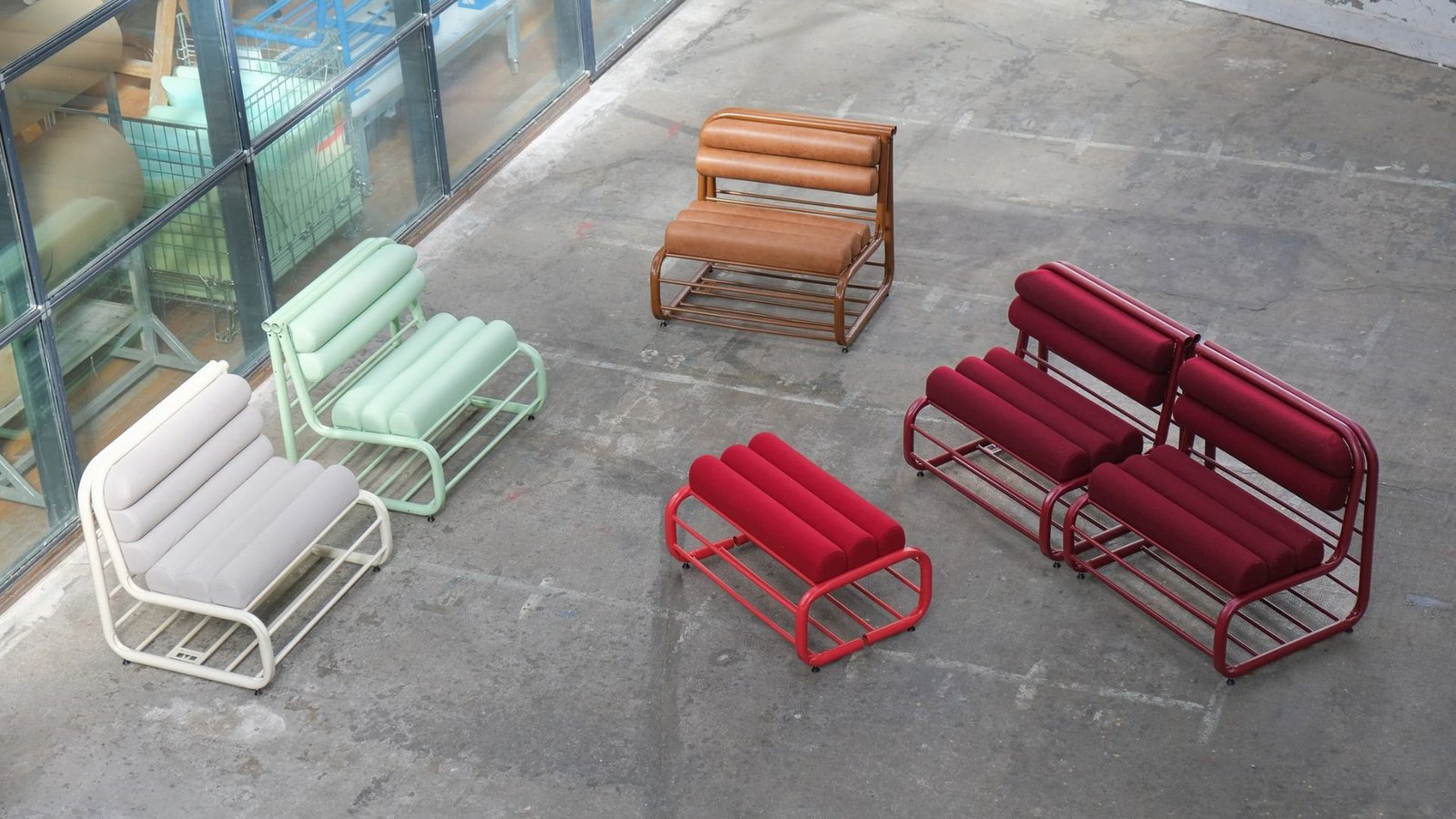
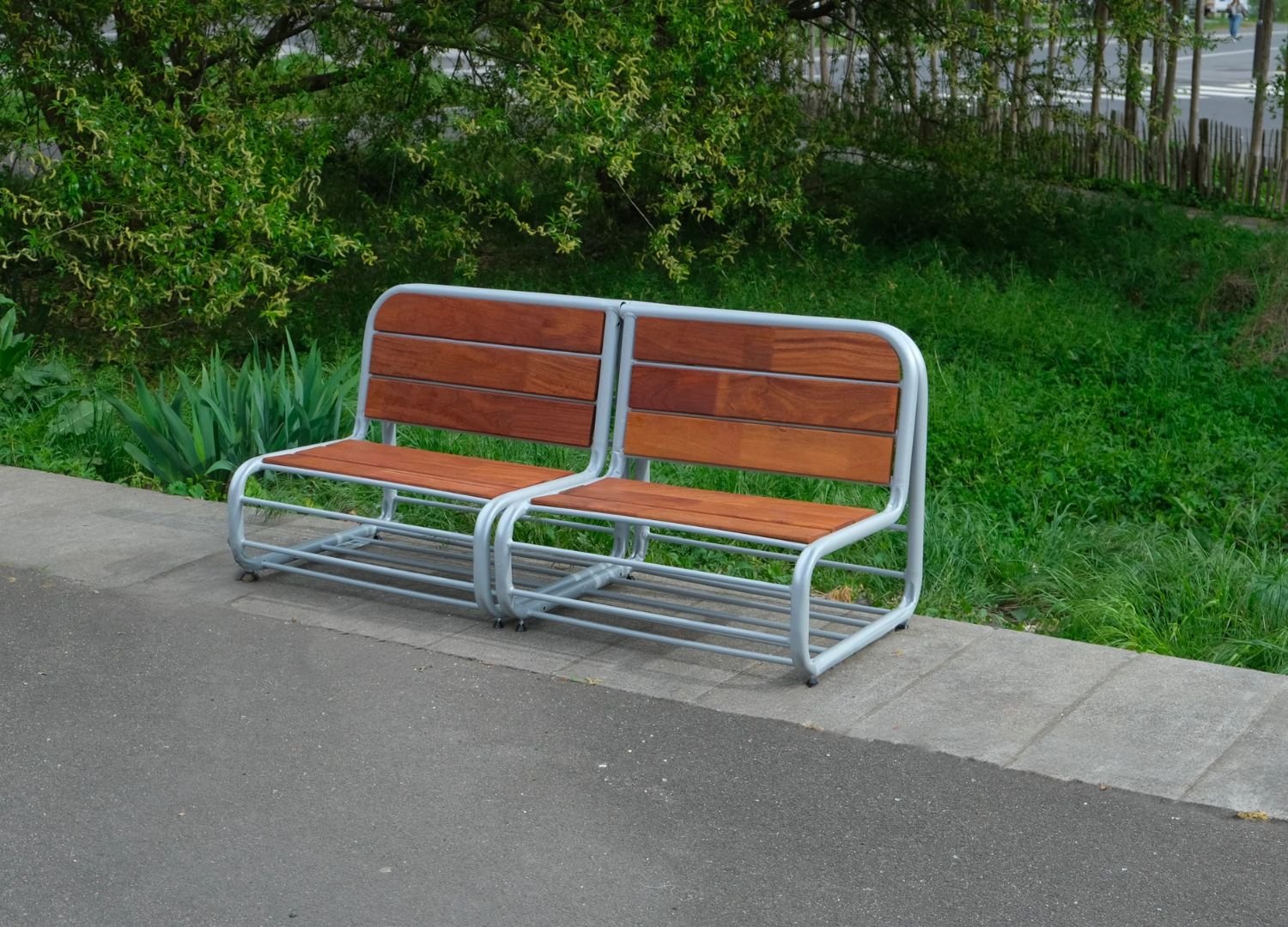
What if we could reevaluate waste for its qualities, instead of discarding it for what went wrong? The Bultan bench uses discarded steel barricades to create a seating system, giving new life to an object destined for the landfill.
At live concerts, no matter the genre, there is often only one object standing between an artist and their fans: a hard, cold, metal barricade. They have held back thousands of bodies pressed toward stages, caused bruises on the hips of the most euphoric festival-goers, and absorbed the energy of crowds waiting for the gates to open.
Maximum has decided to give new life to this object, which represents a global collective experience, present at every moment, requiring the management of people in urban space. In transforming this artefact into the Bultan bench, the barricade becomes an object for a different kind of gathering.
Gallery
Open full width
Open full width
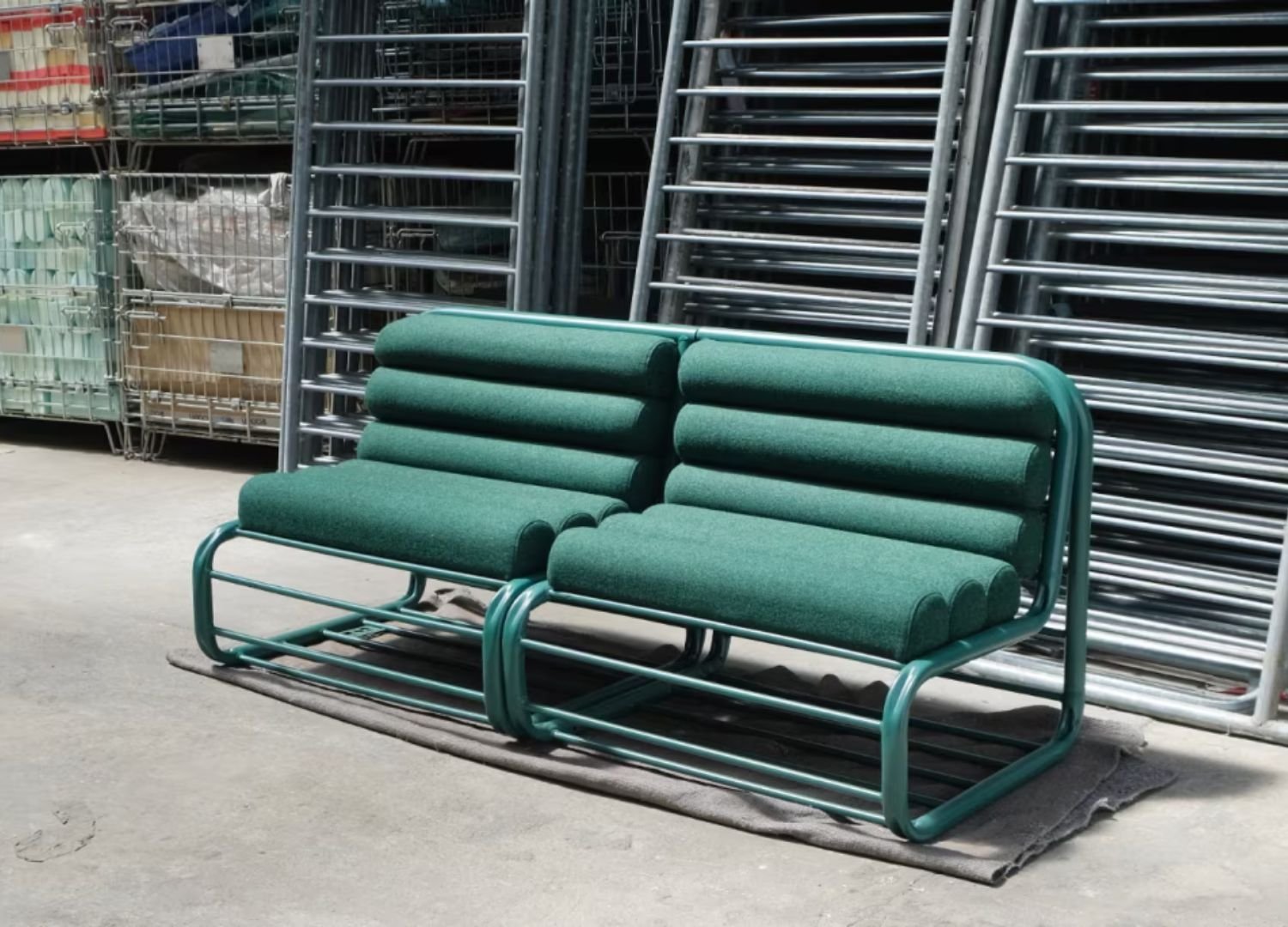
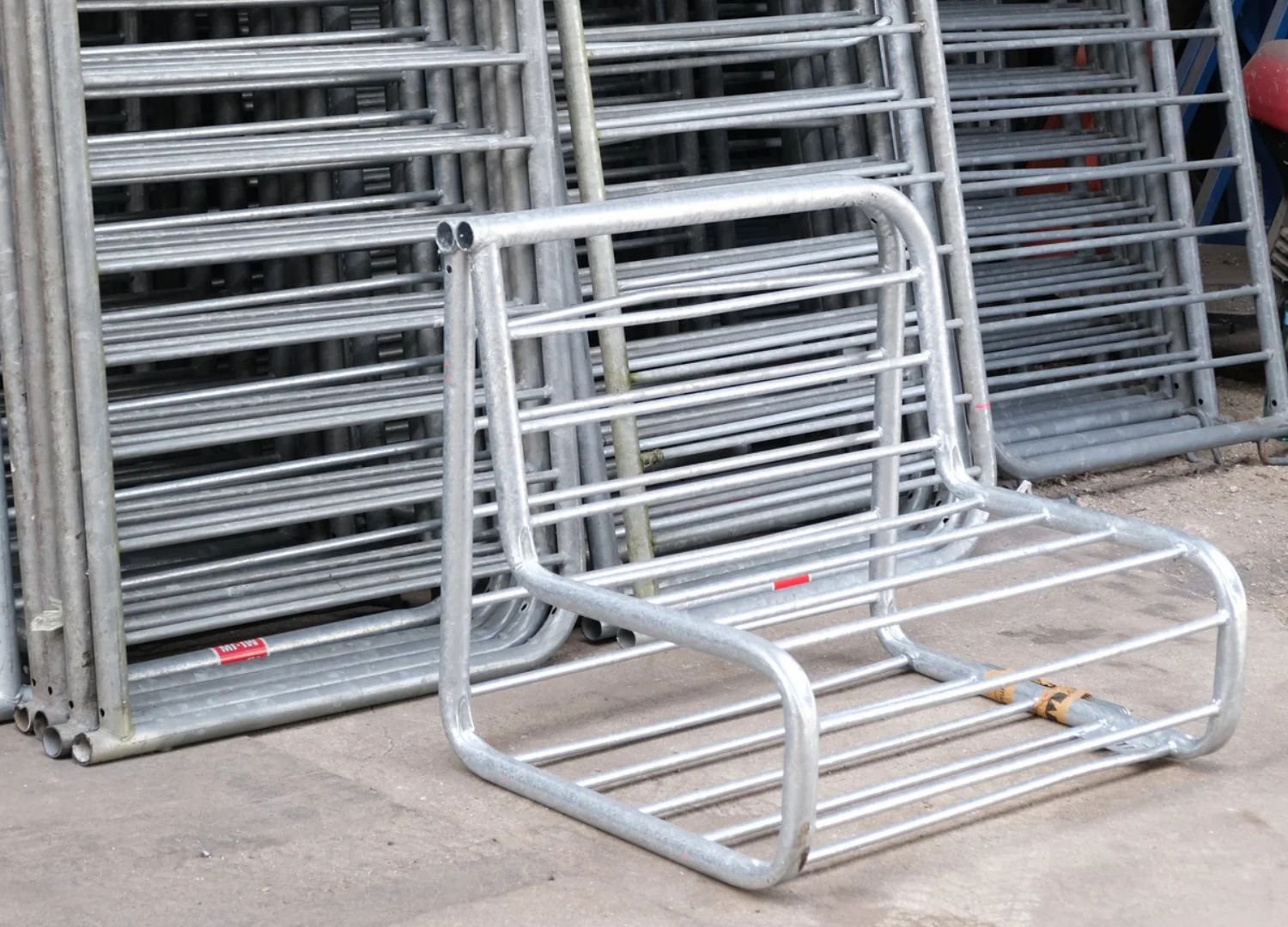
The Bultan’s origin story begins with a design flaw. Vauban barriers, which are a specific kind of metal barricades used for the project, have a fatal weakness: their feet. When the base gets crushed or damaged in the rough conditions these barriers endure, the barricade cannot stand upright anymore, and the entire frame typically ends up in the trash. Maximum recognised an opportunity in this flaw they call “an Achilles’ heel,” and found a way to reuse the frame for a new product.
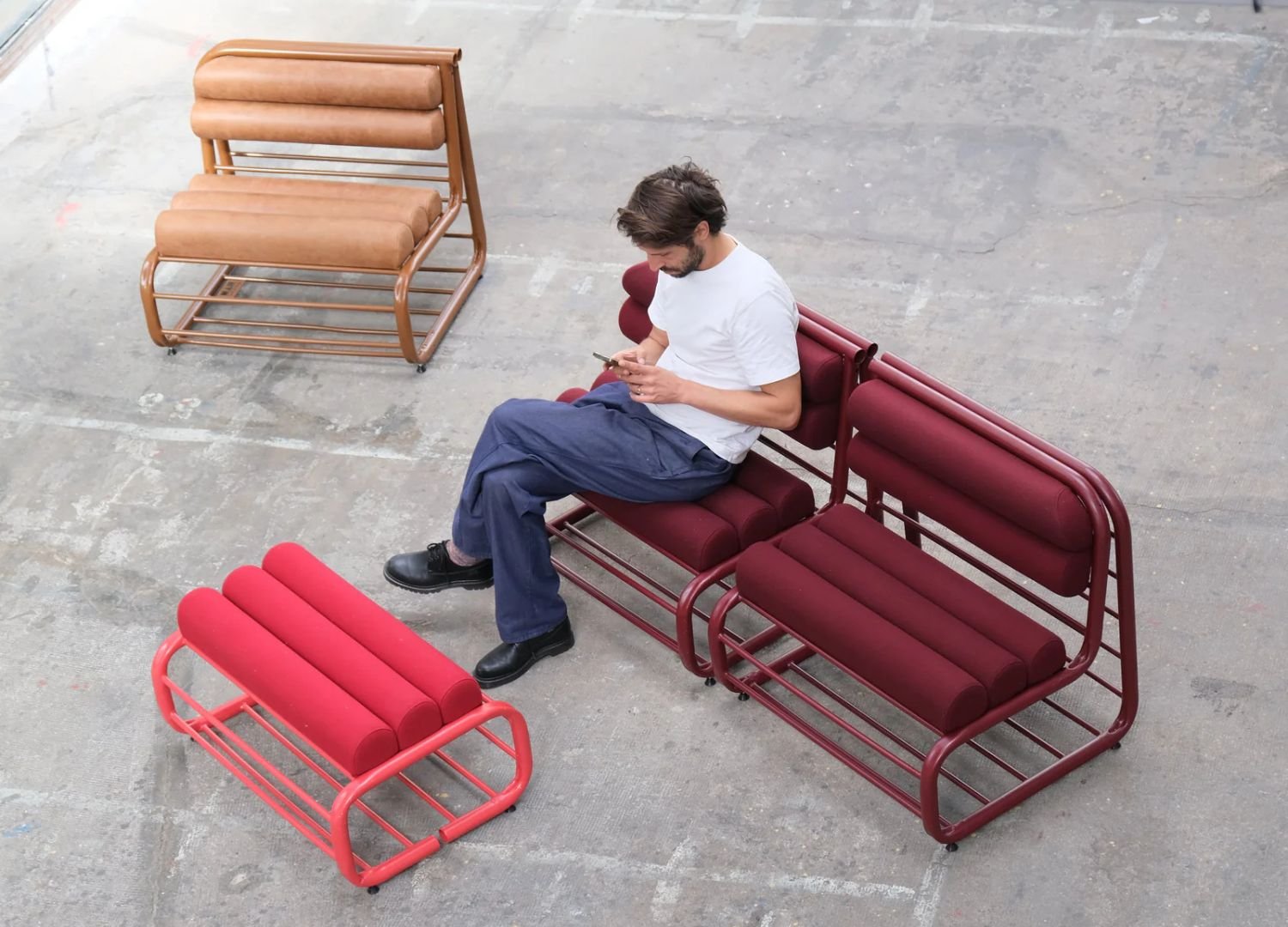
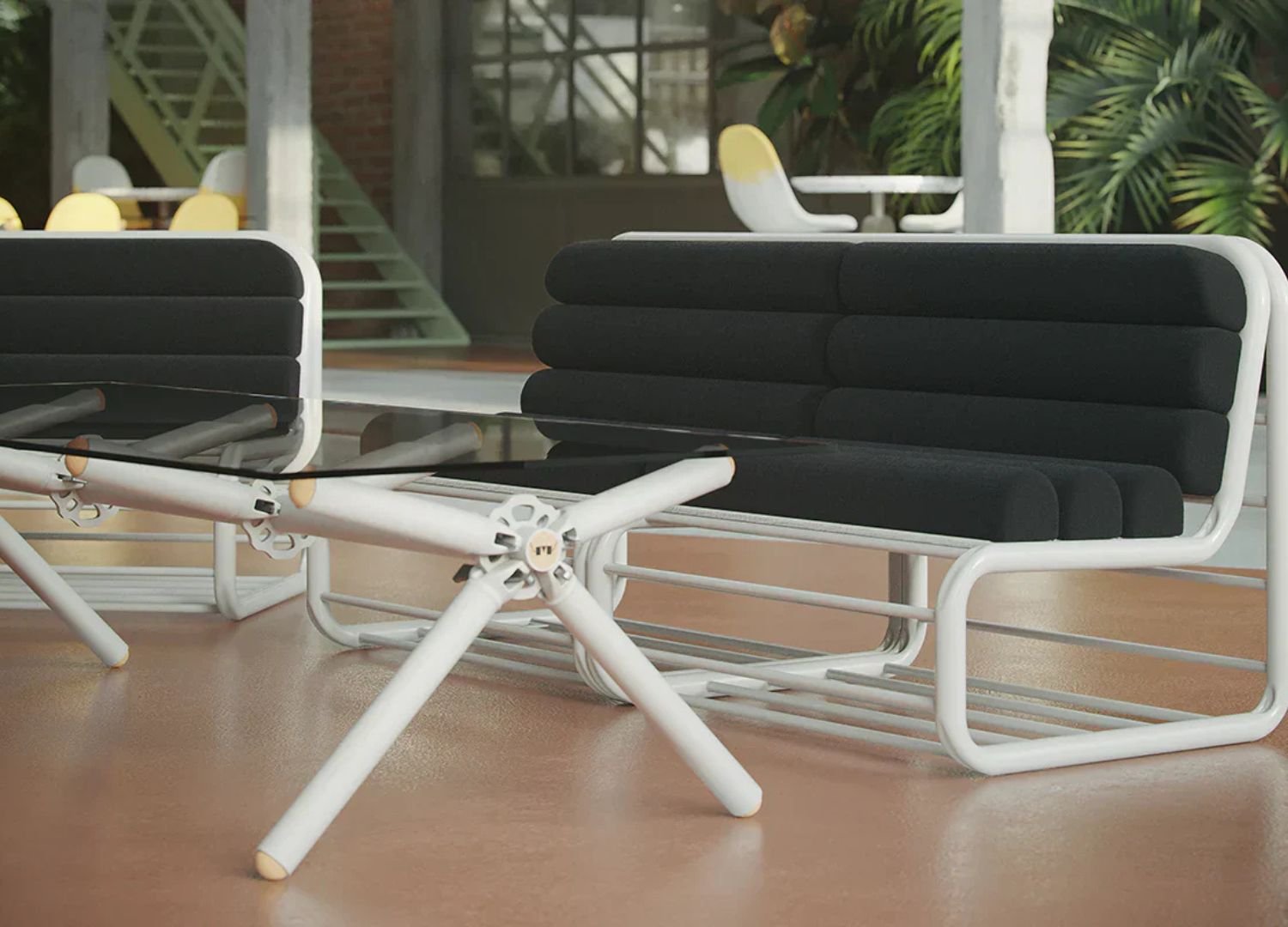
With a few bends, the decommissioned steel frames become the structure of the Bultan seating system, which includes a solo chair, a duo bench, and an ottoman. Each product is available in either a simple wooden base or with upholstery. The wooden slats come from pine manufacturers in Douai, who usually have to discard pieces with knots due to their aesthetics. Maximum gladly takes these rejected pieces, whose undesirable aesthetics are hidden under the upholstered versions of the Bultan.
For the upholstered option of the Bultan, Maximum sources foam from La Maison de la Mousse et du Caoutchouc, a custom fabricator who often generates offcuts that fall below minimum usable dimensions for its standard production. Bultan’s thin, elongated cushions fit perfectly between the barrier bars, being able to save these scraps of foam from the landfill. The fabrics also come from waste recovery as they are unused samples from automotive fabric manufacturer Tesca, providing engineering quality that exceeds typical furniture requirements.
Maximum has built its entire reputation on projects like Bultan, transforming materials destined for the landfill into furniture that can last a lifetime. Born in Paris, the company’s model addresses a pressing issue in France, as the country’s industry rejects approximately one-third of its production as scrap, whether it be for perfectionism or for inefficient logistics. Maximum is proposing a new way to look at the system, embodying a circular design approach and looking at the embedded value within any kind of existing object. In their process, they achieve what they call “an economic tour de force,” producing entirely French-made furniture, hand finished, guaranteed for ten years, and at competitive prices.
By reversing the typical design thinking process and starting with what material is available, rather than the user’s desires, the company creates constraints that, paradoxically, drive innovation. Seeing the intrinsic value and qualities of every material is key to creating a sustainable design practice in our contemporary ecosystem. Waste is not something we can ignore anymore, and Maximum proposes that we might as well see it as a clever resource instead of an inconvenience.