Logroño as an urban laboratory: Concéntrico’s 12th edition
Across vineyards, bridges and historic gateways, 20 international practices explore what architecture becomes when it steps outside buildings and into the fabric of shared urban life. Here, our selection looks at architecture as a way to enhance community, practices and territory.
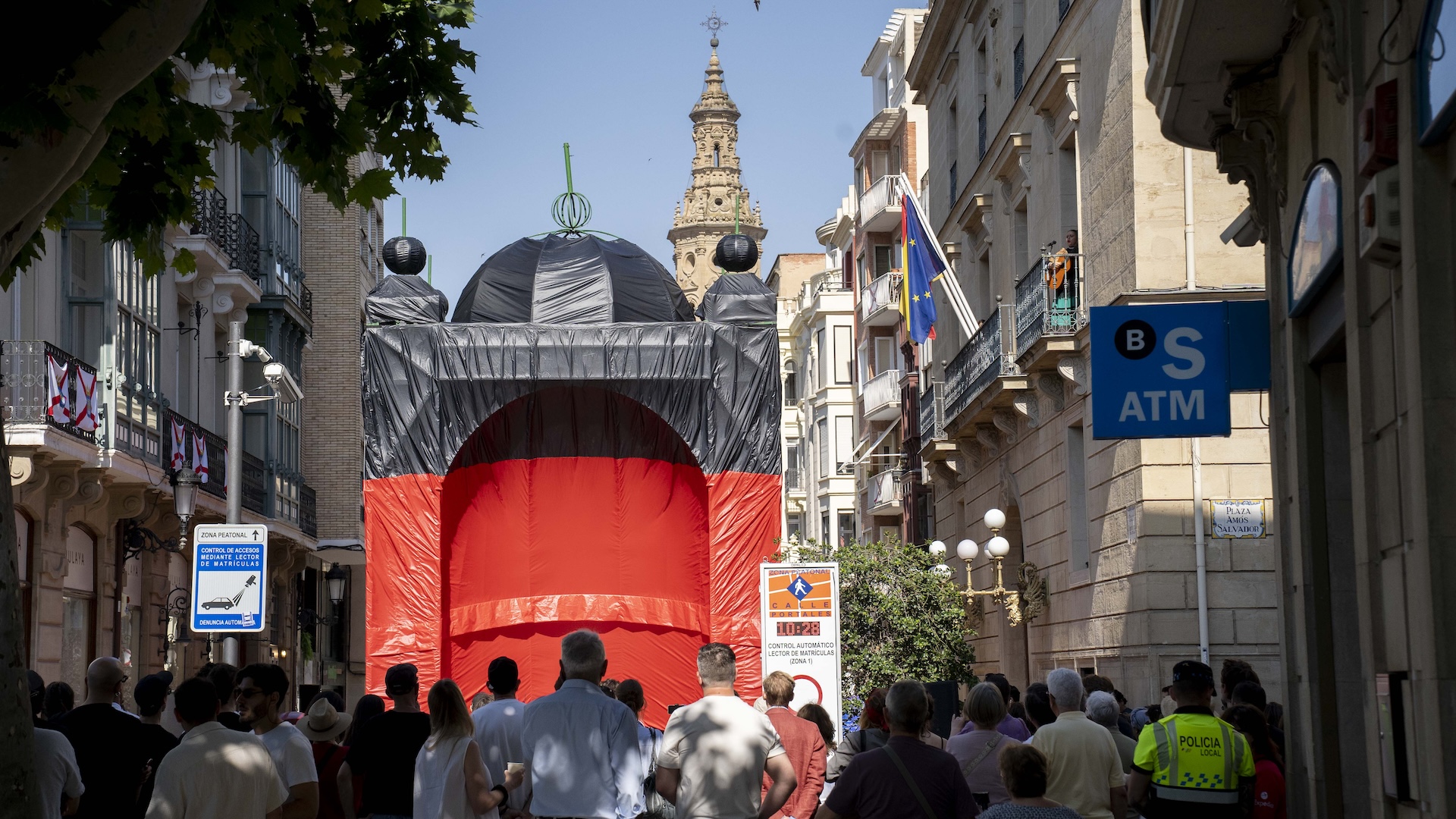
Twenty participants, three themes, and a city reconfigured through ephemeral architecture and design gestures: this is how the 12th edition of Concéntrico, in Logroño, Spain, unfolds.
Held from 18 to 23 June of this year, this edition of the exhibition, conceived by Javier Peña Ibáñez in collaboration with the Fundación Cultural de los Arquitectos de La Rioja, challenges what architecture can mean in 2026. If architecture was once born to separate humans from nature – to offer shelter and protection – it is now increasingly called to reconnect with it. No longer confined to the construction of buildings, the discipline is expanding into a broader cultural and social practice, one that rethinks cities, reshapes public life and introduces new ways of inhabiting shared space.
Gallery
Open full width
Open full width
Concéntrico 2026:
A festival of spatial thinking
Concéntrico embraced a playful yet thoughtful approach, presenting architecture as a tool for discussing culture, traditions and collective ways of living, rather than simply solving functional problems. Its three thematic sections offered a compelling framework, showing how architecture can be understood through different lenses and inviting visitors to engage more deeply with its values and potential.
Architecture as social practice: the three themes
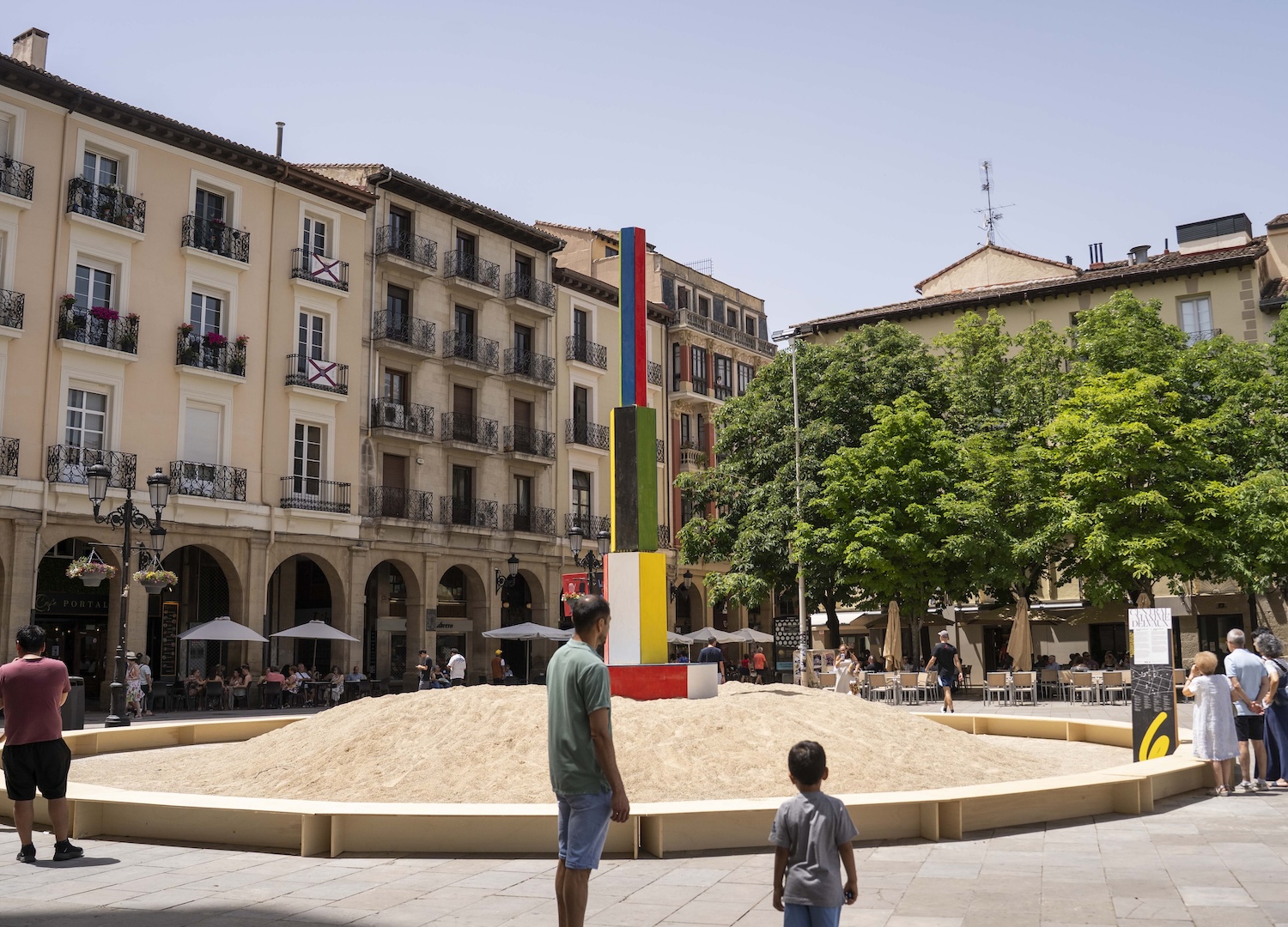
Identity and Fiction explored public space as a place where shared narratives, symbols and experience are constructed. Bringing together practices working through ritual, storytelling and the imaginary, this section presented architecture as a medium for imagining alternative forms of coexistence. The projects raised questions rather than offering solutions, encouraging visitors to reflect on how we inhabit space together.
Urban Ecologies shifted the conversation beyond environmental sustainability, framing ecology as a complex network of relationships between architecture, climate, materials and the contemporary city. Here, architecture was understood as part of a living system. The featured practices activated public space through adaptation, care and transformation, from reusing materials sourced from the energy industry to designing pavilions capable of generating microclimates or cultivating civic gardens.
Ephemeral Agents focused on temporary architecture as a catalyst for social interaction and new forms of public life. Through listening, play and bodily experience, the projects proposed lightweight structures inspired by informal architectures, interventions on existing river infrastructures, adaptable open devices and intimate spaces for urban perception. Sound became a way of narrating space, while play was reimagined as an infrastructure capable of transforming the urban environment itself.
The festival brings together architectural practices and studios from around the world, selected through invitation and competition, combining established names with emerging voices. This year’s selection includes twenty participants: 2050+, AAU Anastas, Amanda Pinatih, Gabriel Fontana, BEAR, Boltshauser Architekten, Garbizu Collar, CENTRAL, Maxime Delvaux, DF DC, El Plano Latente, Faris Alossaimi, Future Firm, Ignacio G. Galán, Ozaeta Fidalgo Architects, Jordan Whitewood-Neal, Matilde Cassani, noof group, OFREIA, Parabase, PPAA, raumlabor, Sahra Hersi, Smiljan Radić, Sounds of Architecture Records, Suomi-Koivisto Architects, IC-98, Taelon7, Tło, Zeppelin Design.
Ten installations worth knowing
Ten installations stood out for their attentiveness to social use, spatial intelligence and relational design: projects that connect people, ideas and new ways of inhabiting the city of Logroño.
2050+ – Frontones Danzantes
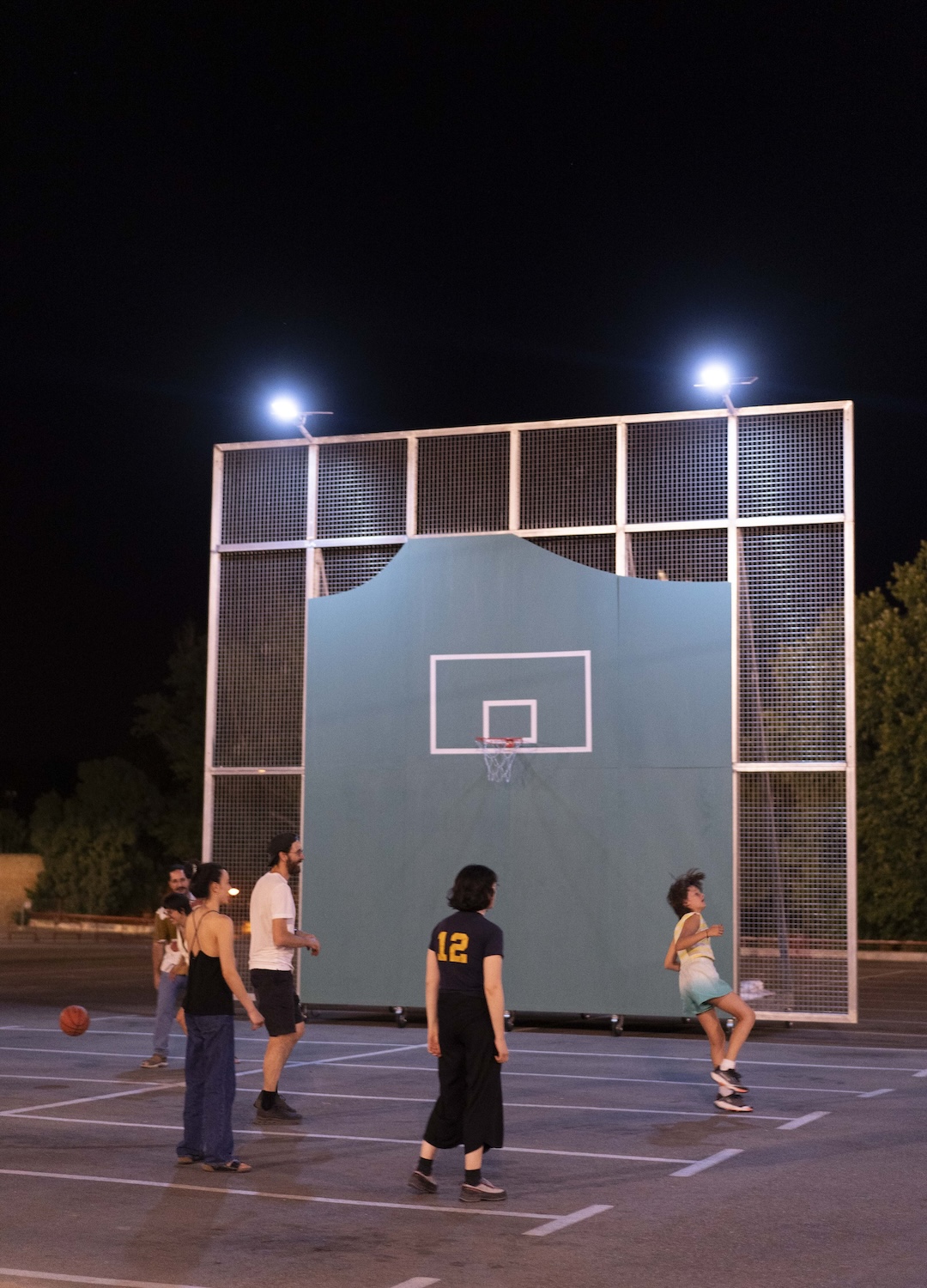
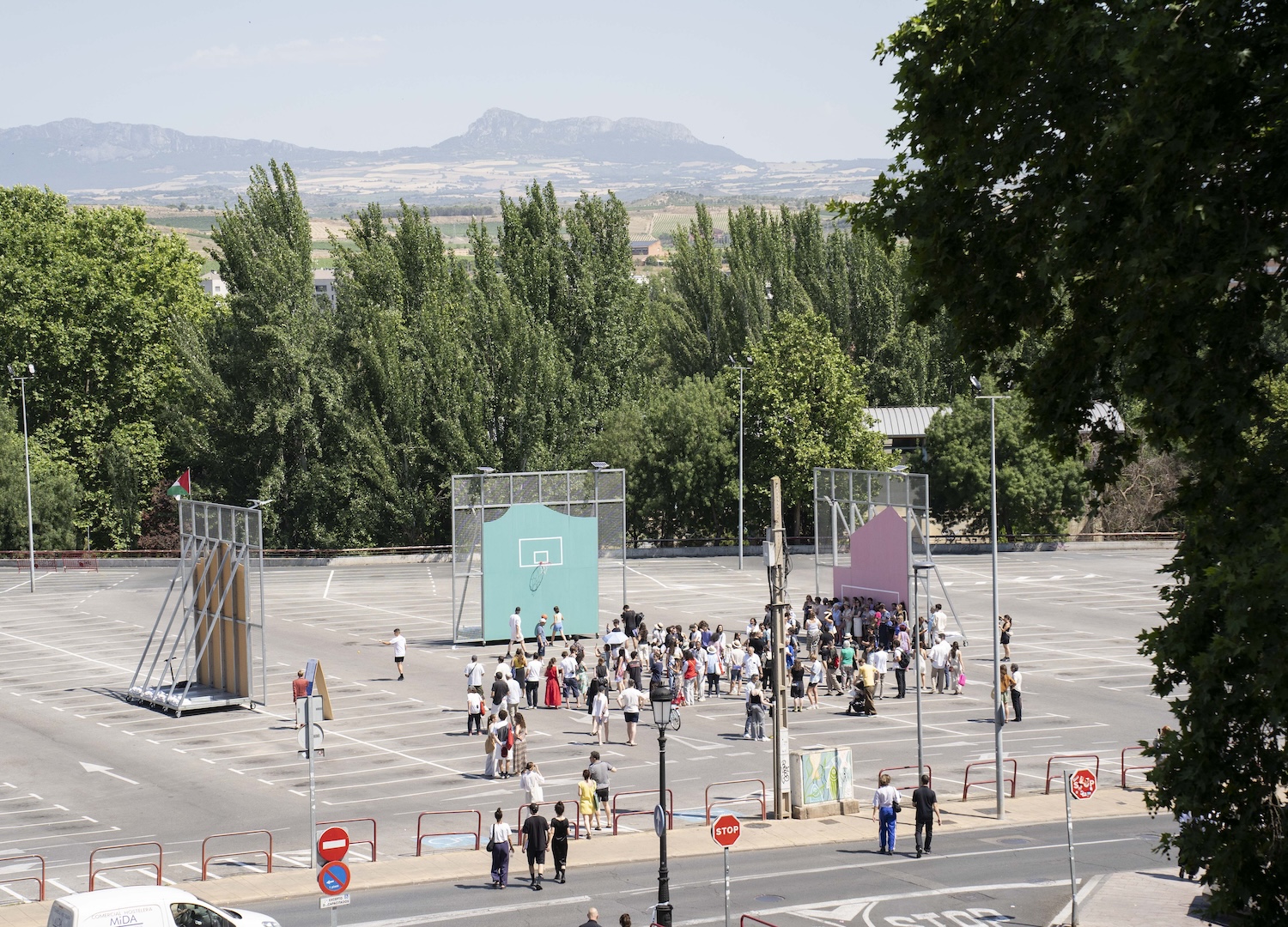
Founded in Milan in 2020, 2050+ works across architecture, exhibition design, research and curatorial practice, investigating the relationship between technology, politics and the environment. Frontones Danzantes transforms a residual parking area into a civic playground through four movable pelota walls, built with lightweight timber and steel modules. More than a sports facility, the project reclaims physical activity as a shared urban ritual, where architecture becomes an active participant in public life. Simple, adaptable and easily replicable, the installation suggests a model that could be implemented in cities well beyond Logroño, demonstrating how play can generate lasting forms of public engagement.
Parabase – Transtation
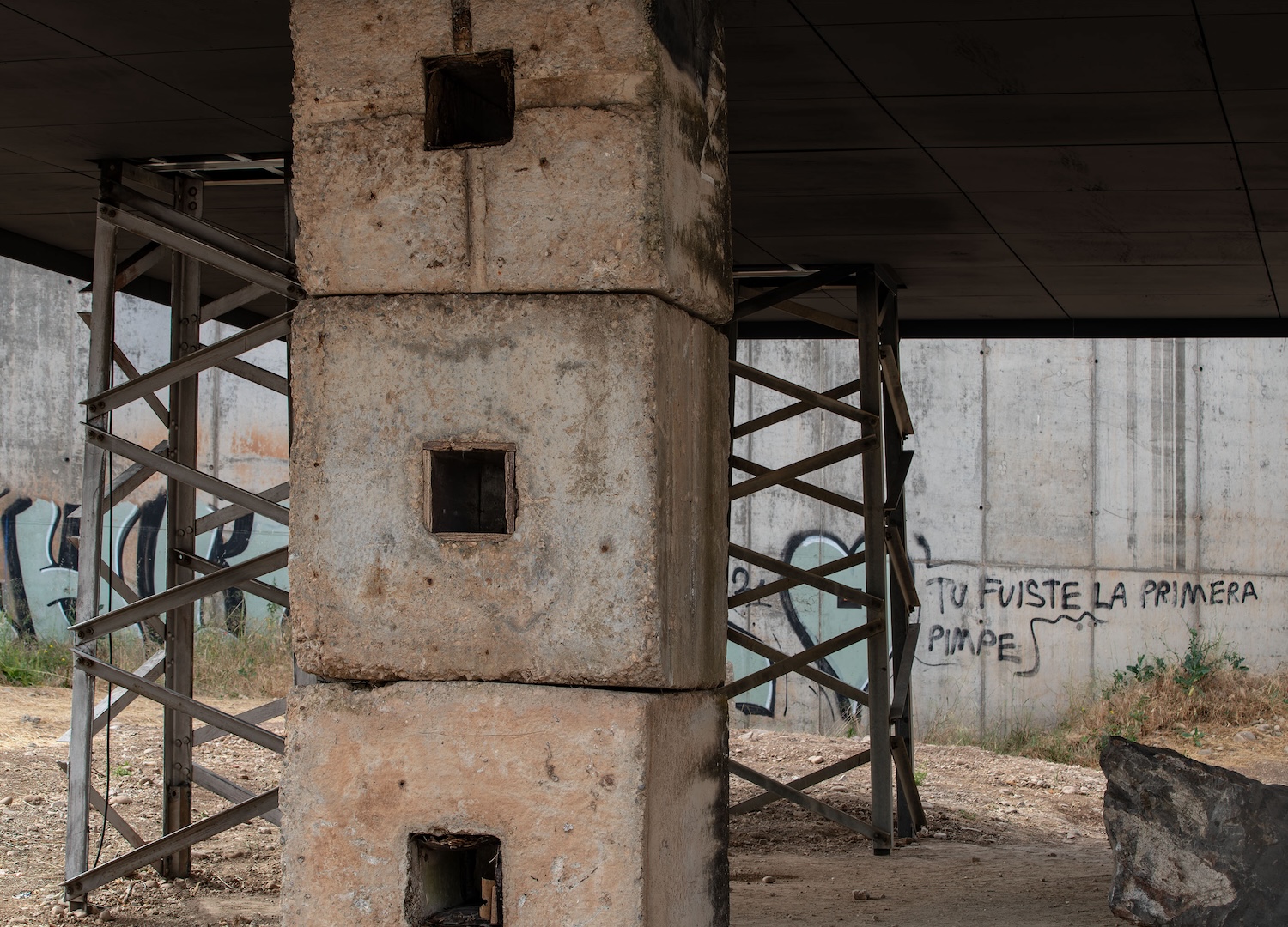
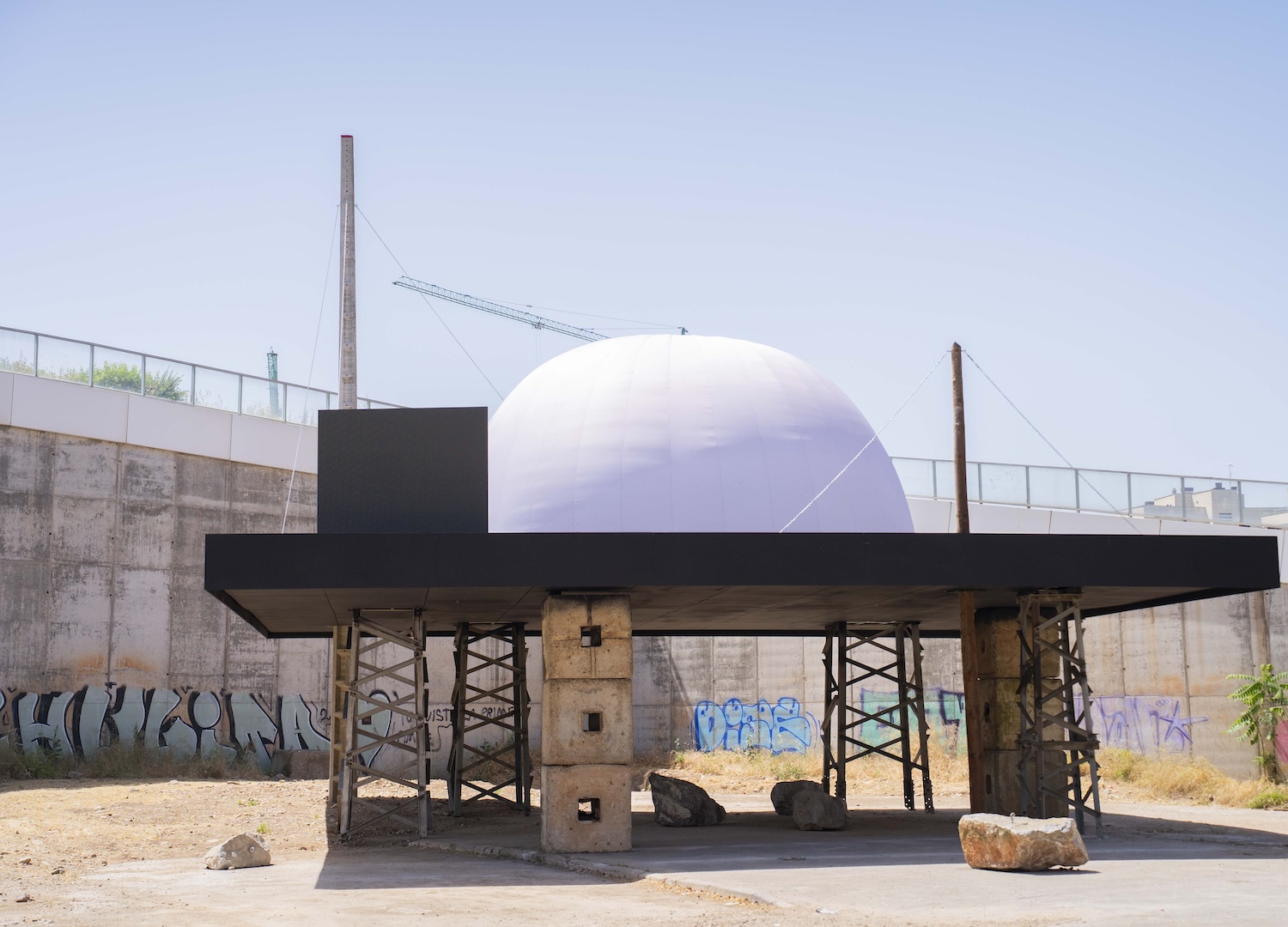
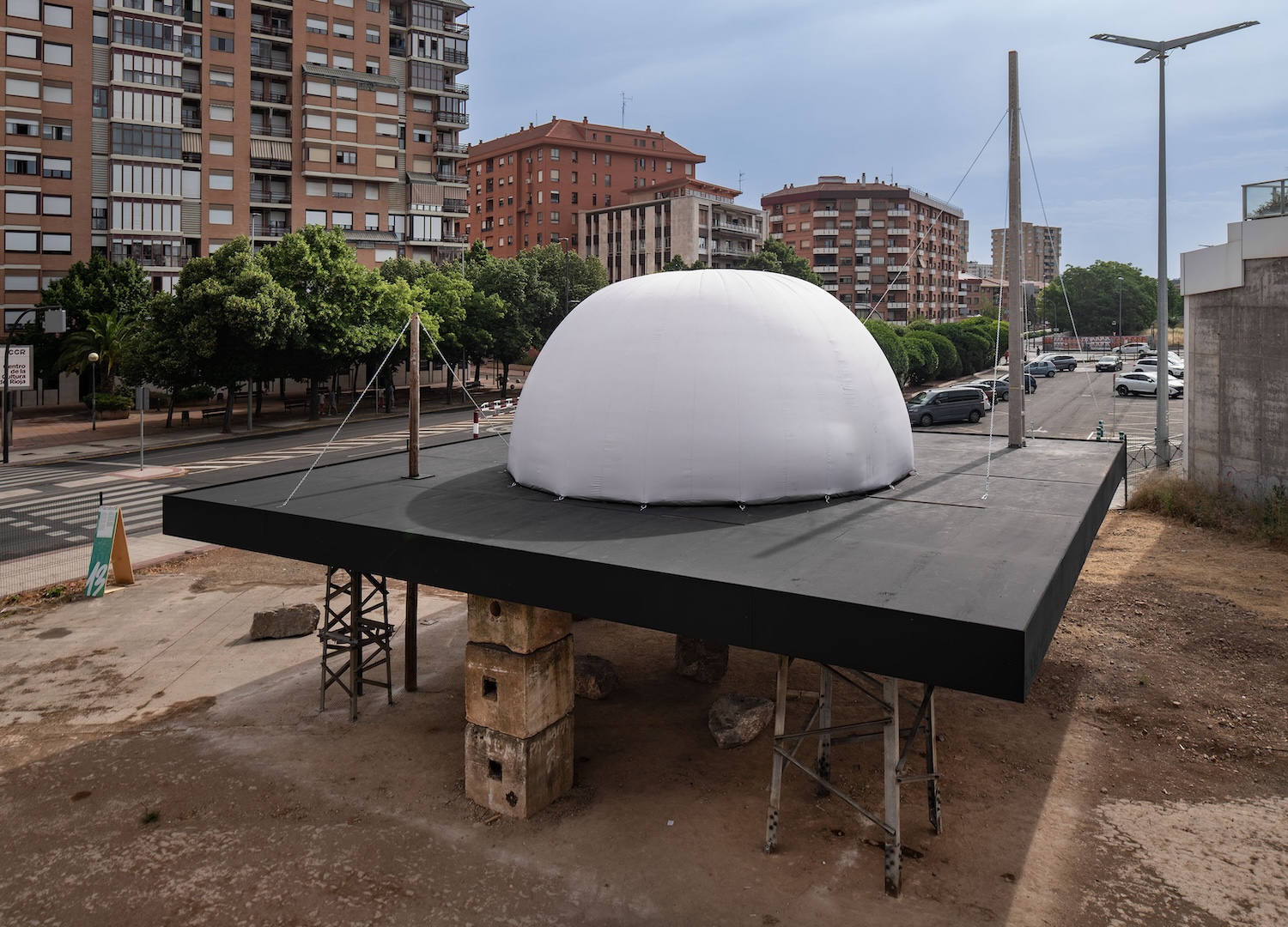
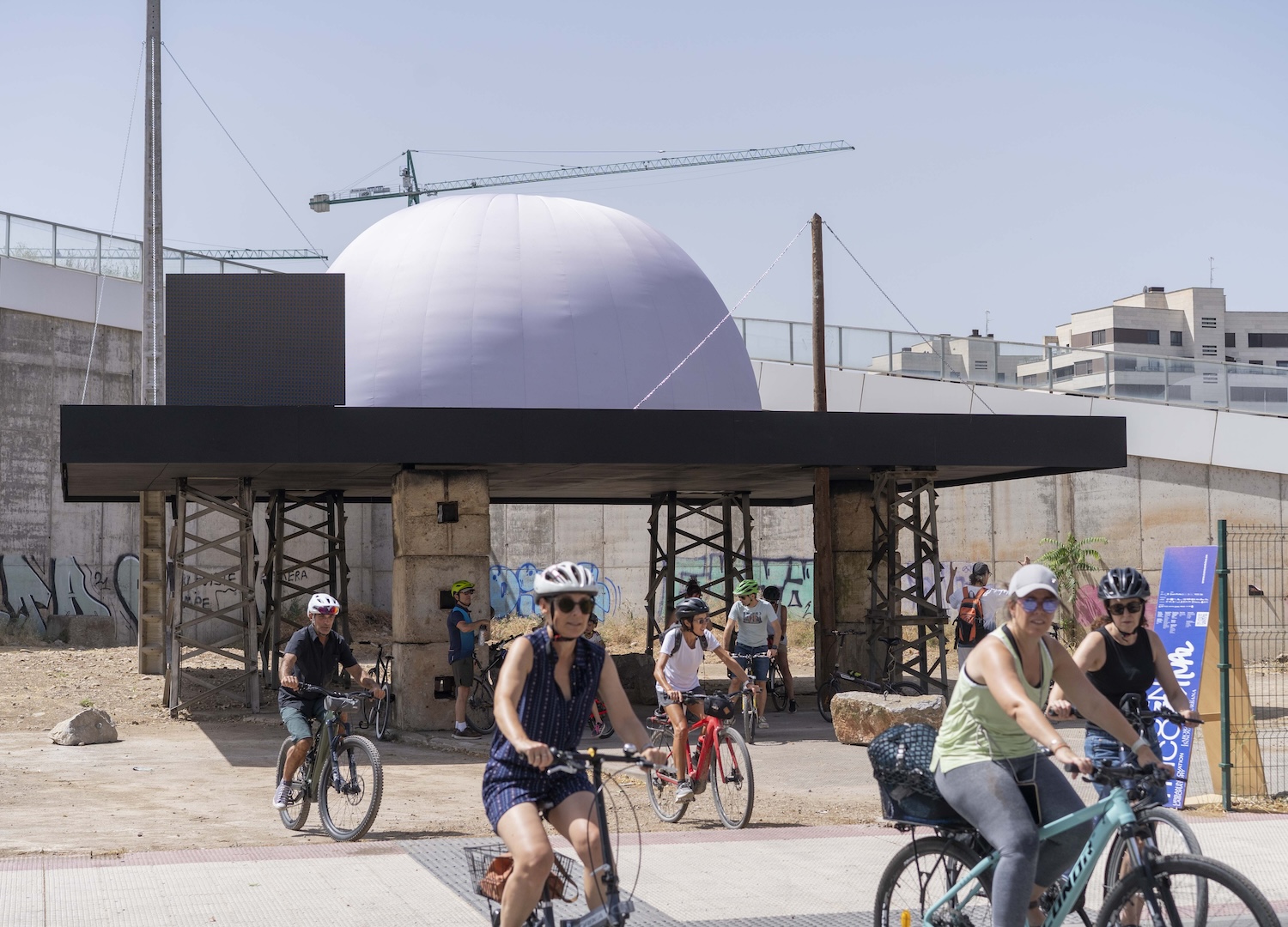
Founded by Carla Ferrando and Pablo Garrido Arnaiz, Parabase combines architectural practice with research and teaching, consistently exploring the productive potential of reuse. Their installation reassembles discarded components from the energy industry into a semi-circular structure that appears almost extraterrestrial against the industrial landscape. The project establishes a direct dialogue with the neighbouring power plant, transforming industrial remnants into an architecture that reflects on contemporary systems of production. The result is an understated yet powerful exercise in material intelligence, where context and construction become inseparable.
Boltshauser × Garbizu Collar – Terroir
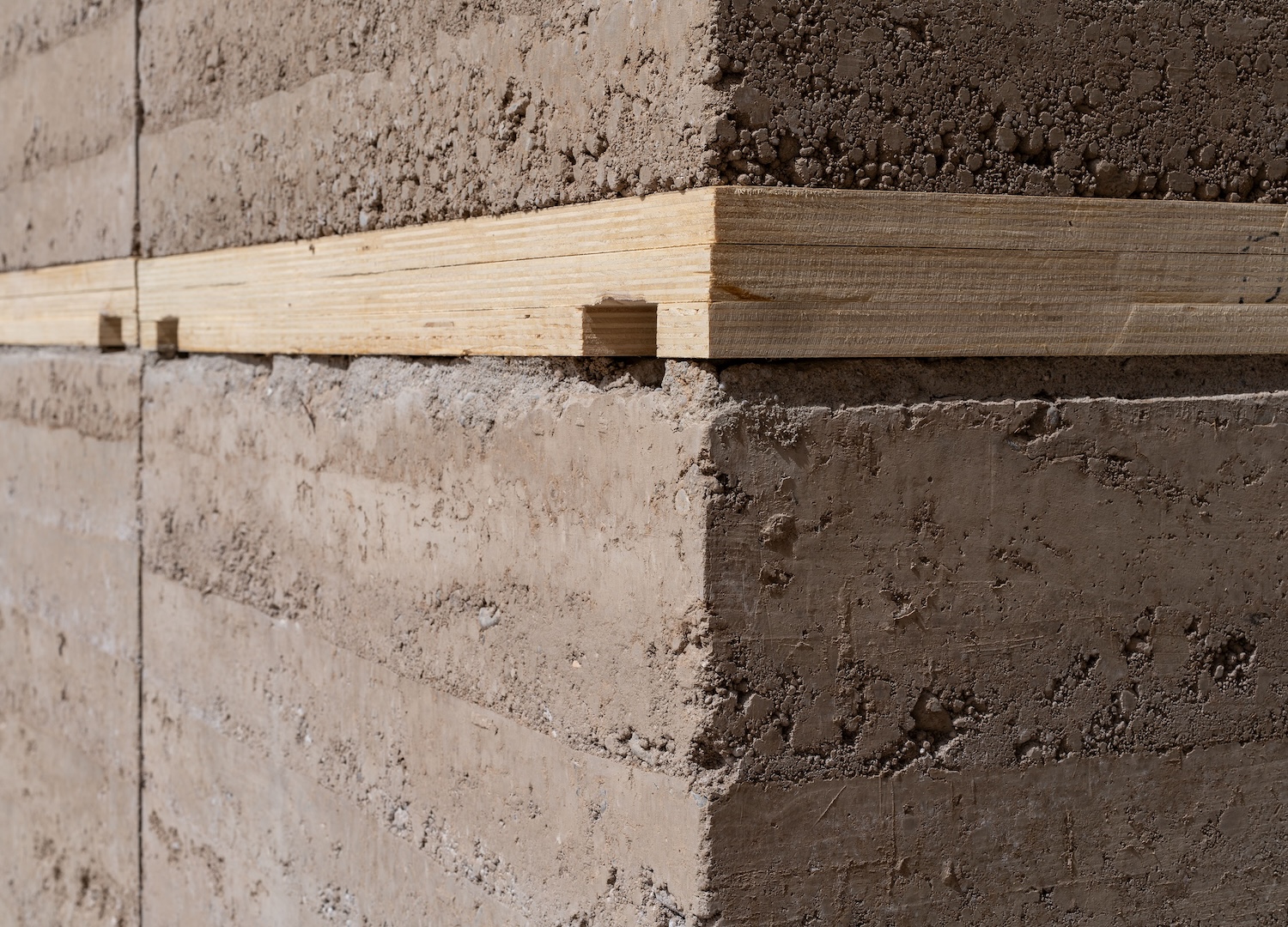
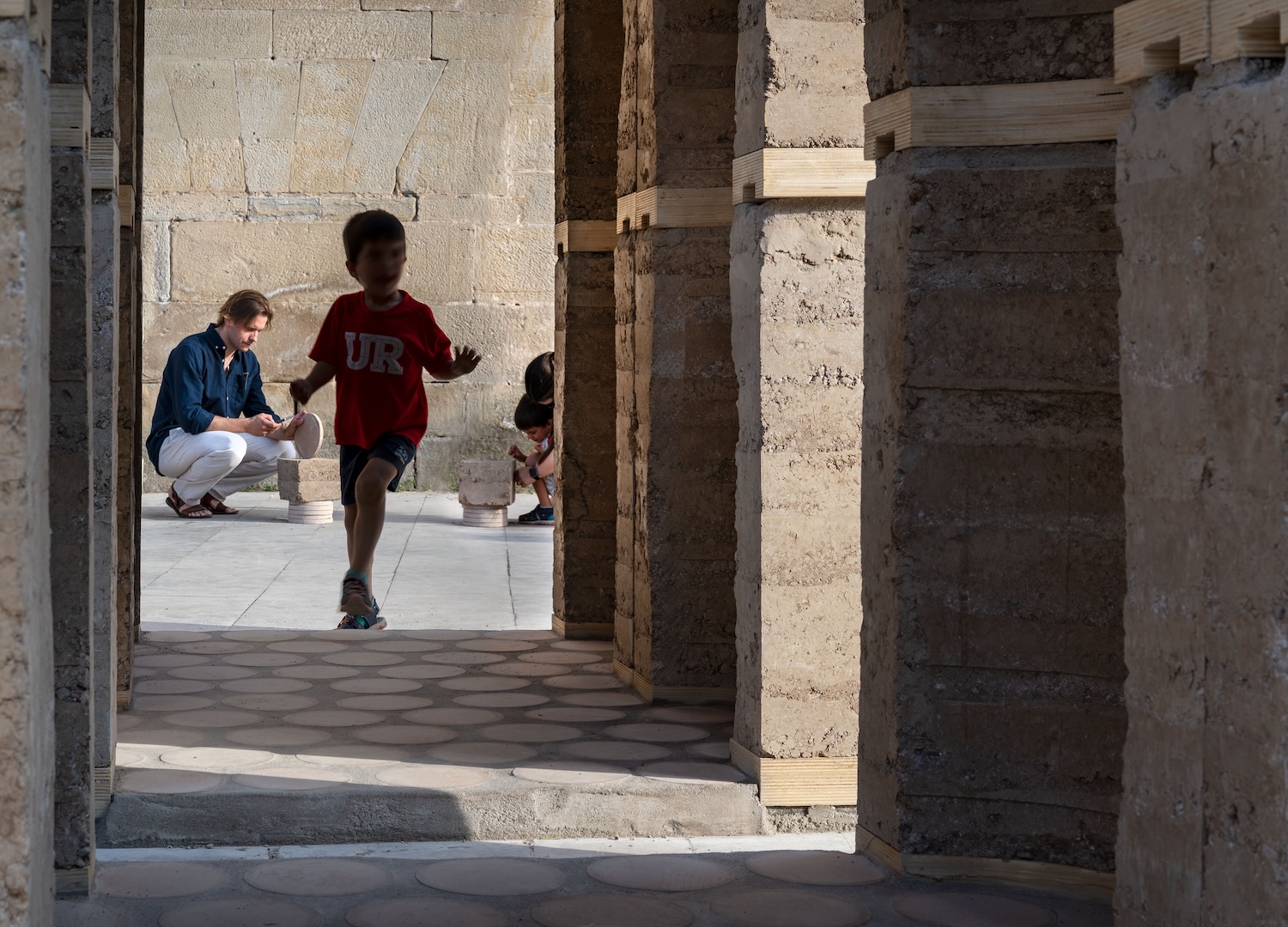
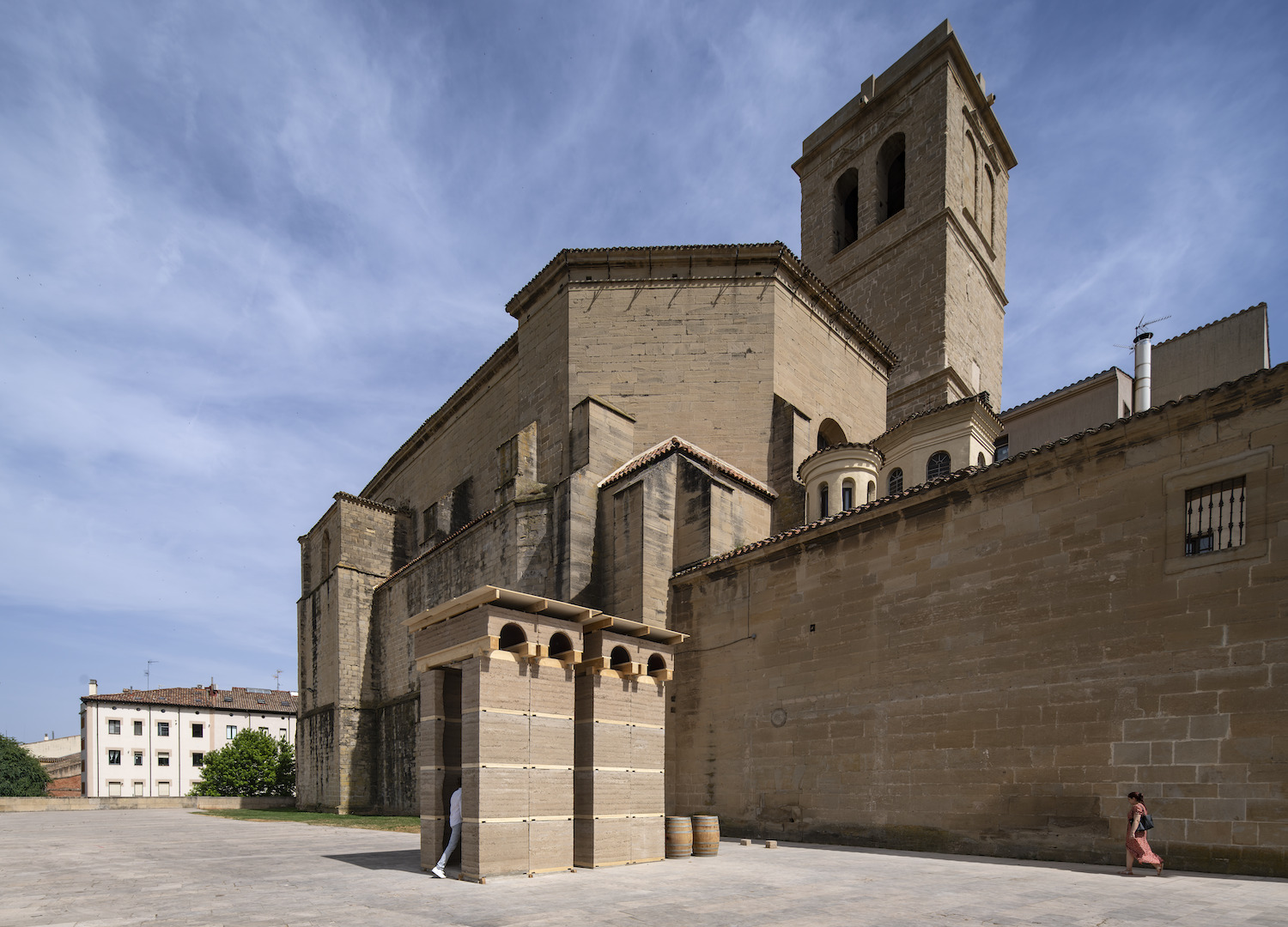
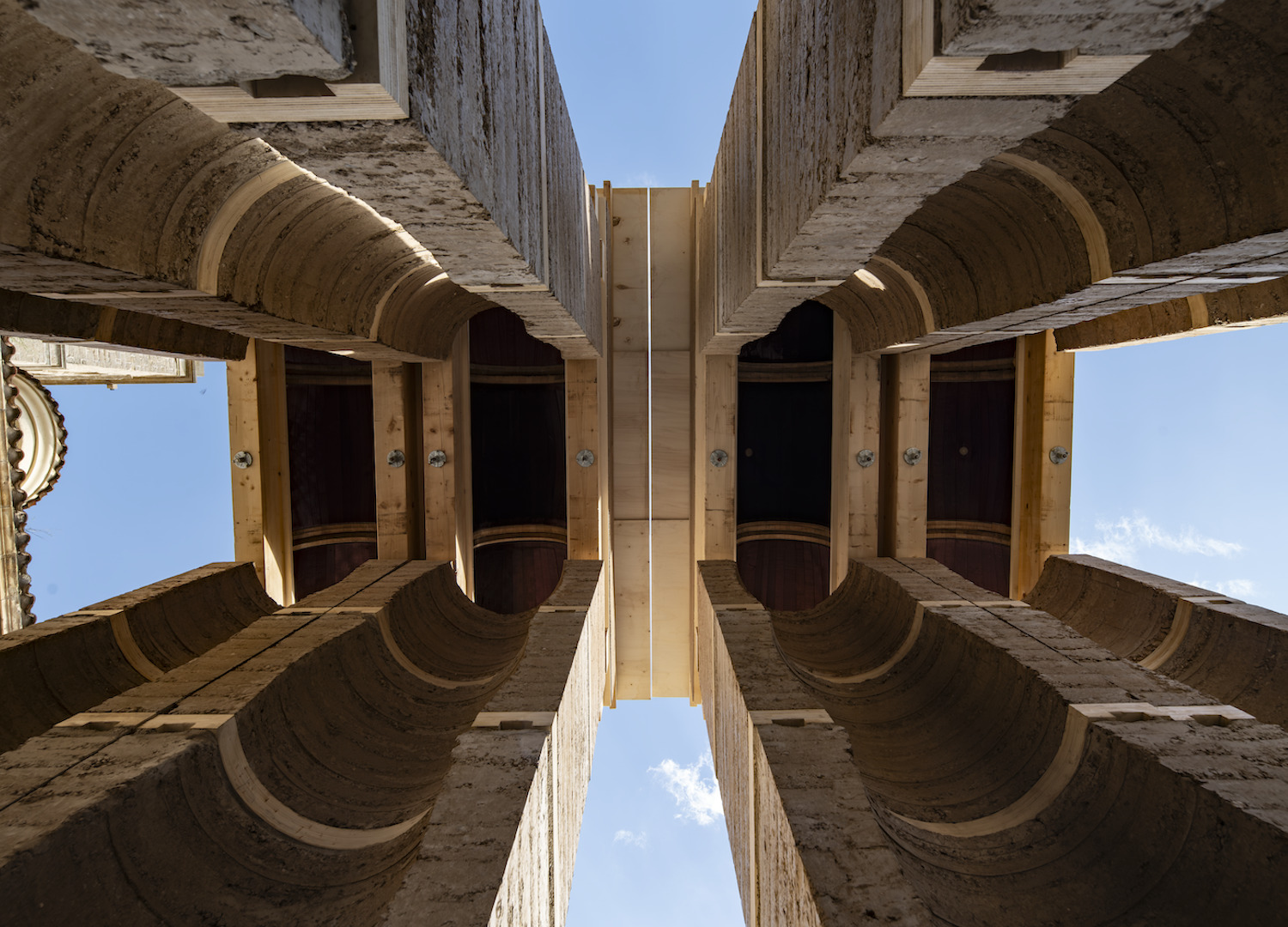
The collaboration between Boltshauser Architekten and Garbizu Collar Architecture centres on vernacular materials, circular construction and the relationship between landscape and culture. Their pavilion combines rammed earth with reclaimed wine barrels to create an intimate tasting chamber rooted in the traditions of La Rioja. The thick earthen walls regulate light, humidity and temperature, while the barrels become both structure and formwork, extending their life beyond wine production. With its restrained geometry and sand-coloured surfaces, the installation evokes the quiet presence of a rural chapel, establishing a subtle visual dialogue with the city’s historic stone architecture.
IC-98 & Suomi/Koivisto Architects – One Third of Life
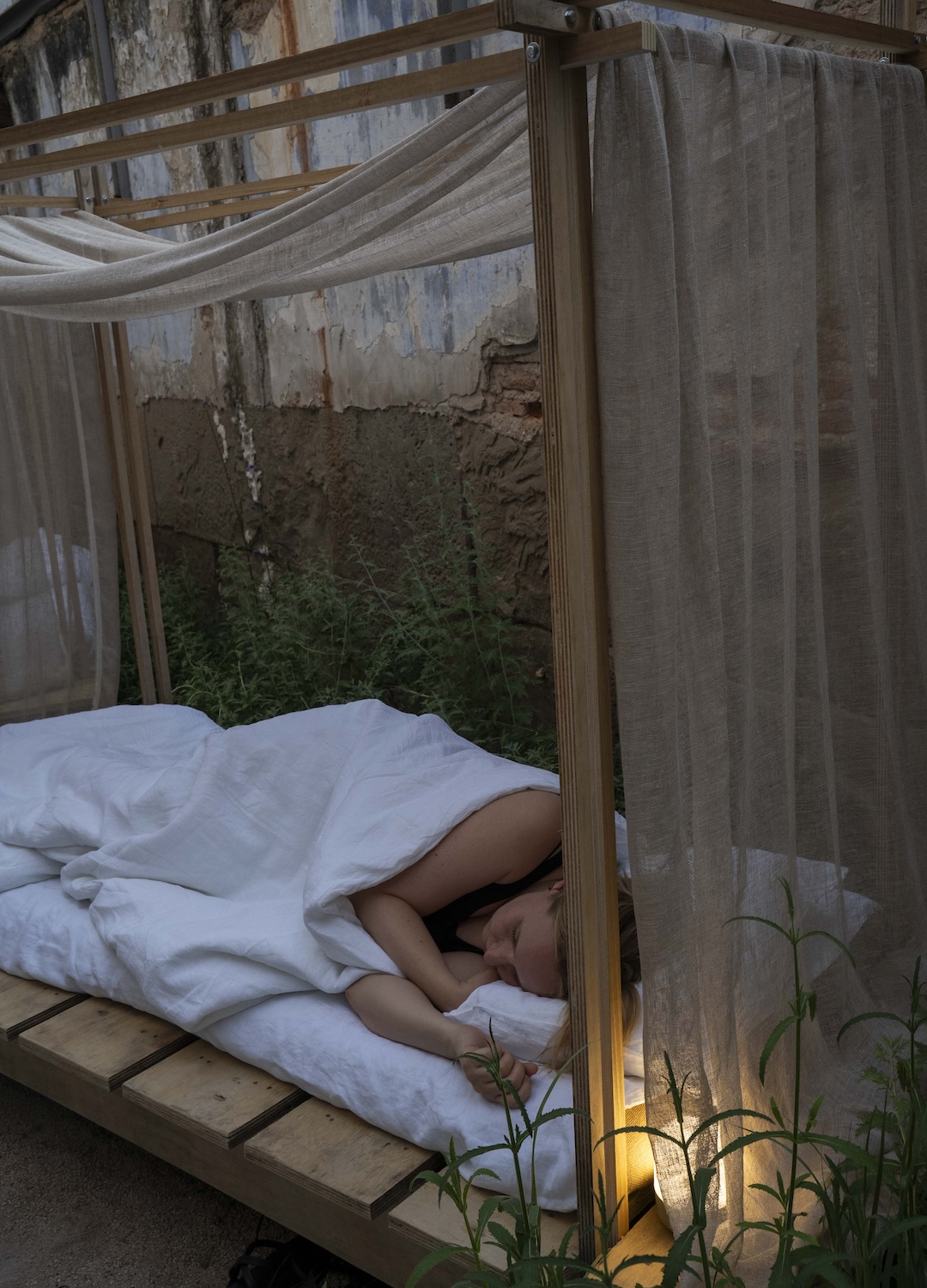
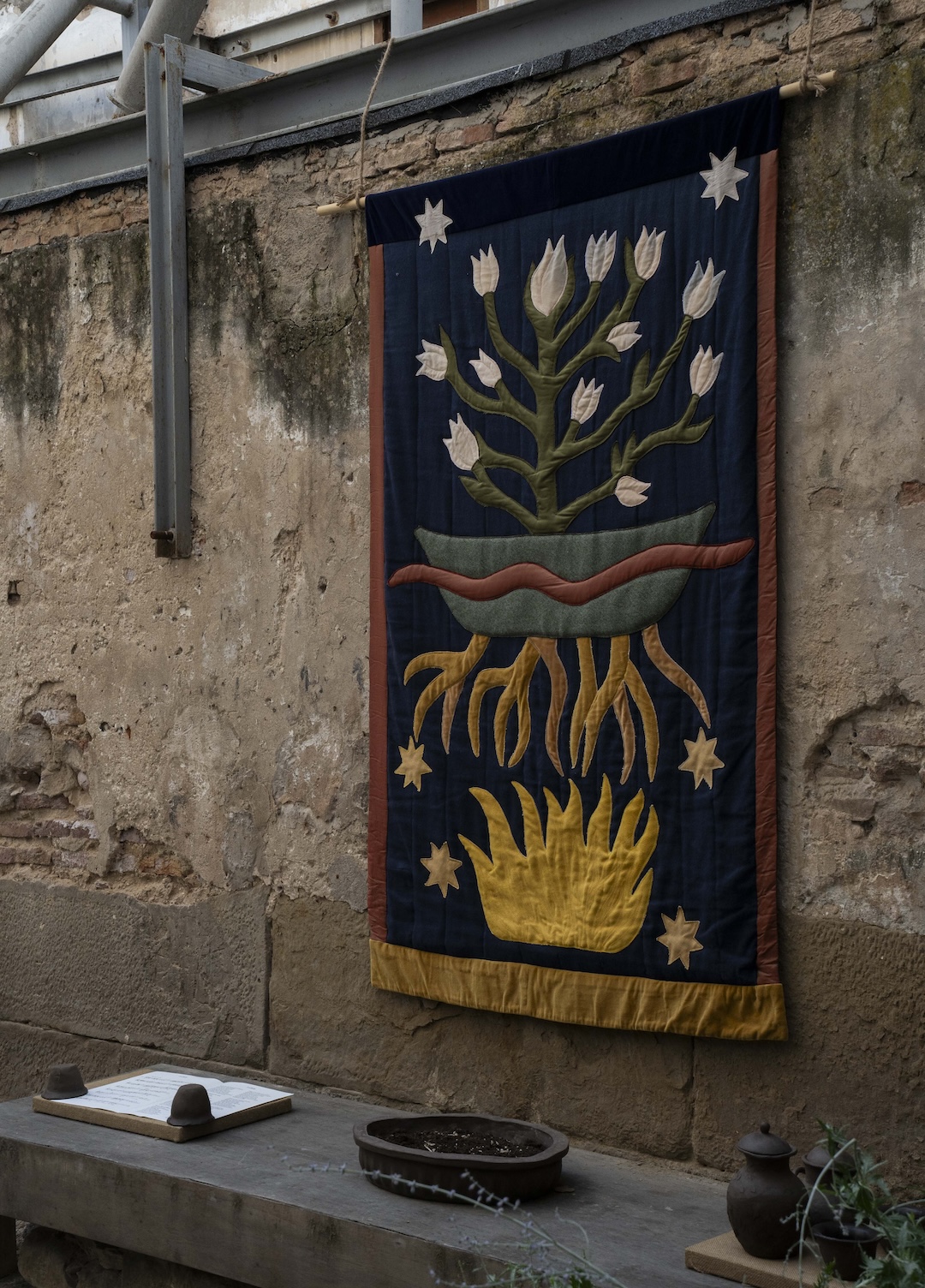
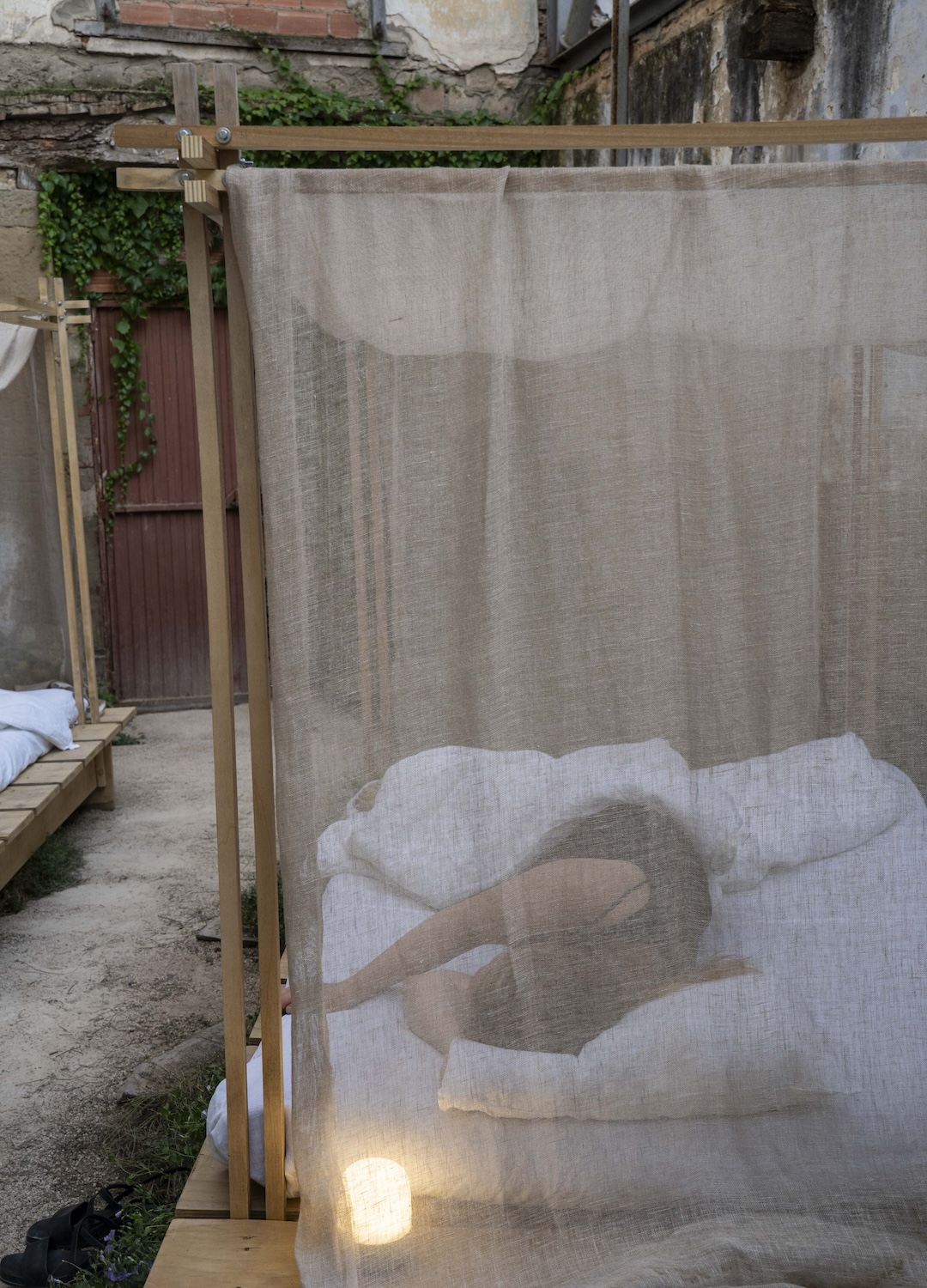
The Finnish collaboration between artist collective IC-98 and Suomi-Koivisto Architects continues a long-term investigation into ecology, ritual and multispecies coexistence. One Third of Life combines a drought-resistant garden with a pavilion dedicated to sleep, offering both environmental relief and a space for shared reflection. Conceived as a refuge from the urban heat island, the installation reveals itself gradually as a hidden garden where nature and architecture merge into a single experience. Complex in its references yet immediately accessible, it invites visitors to rediscover the value of rest, memory and imagination within the contemporary city.
noof group – Shade, Breeze, Cooling
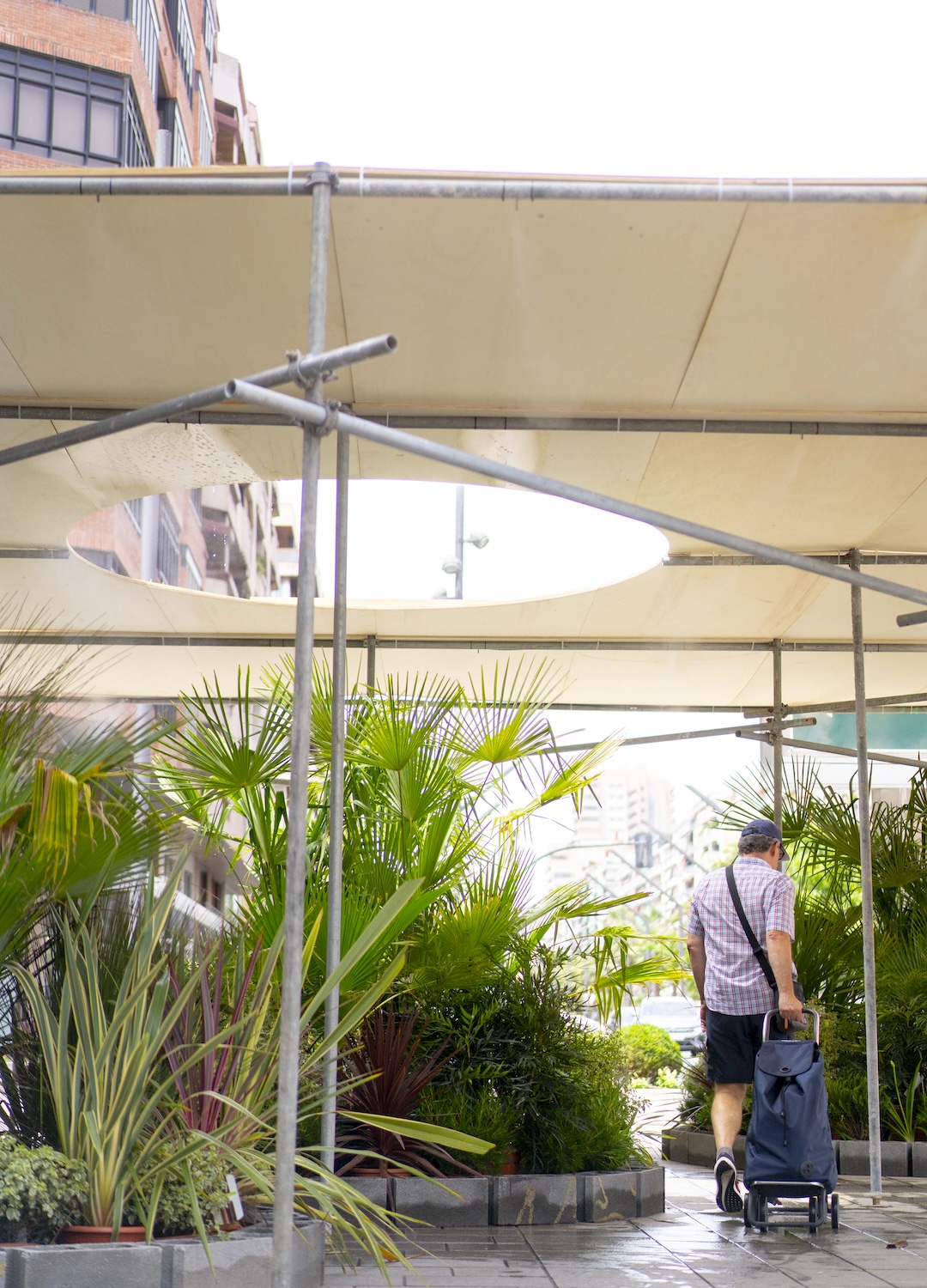
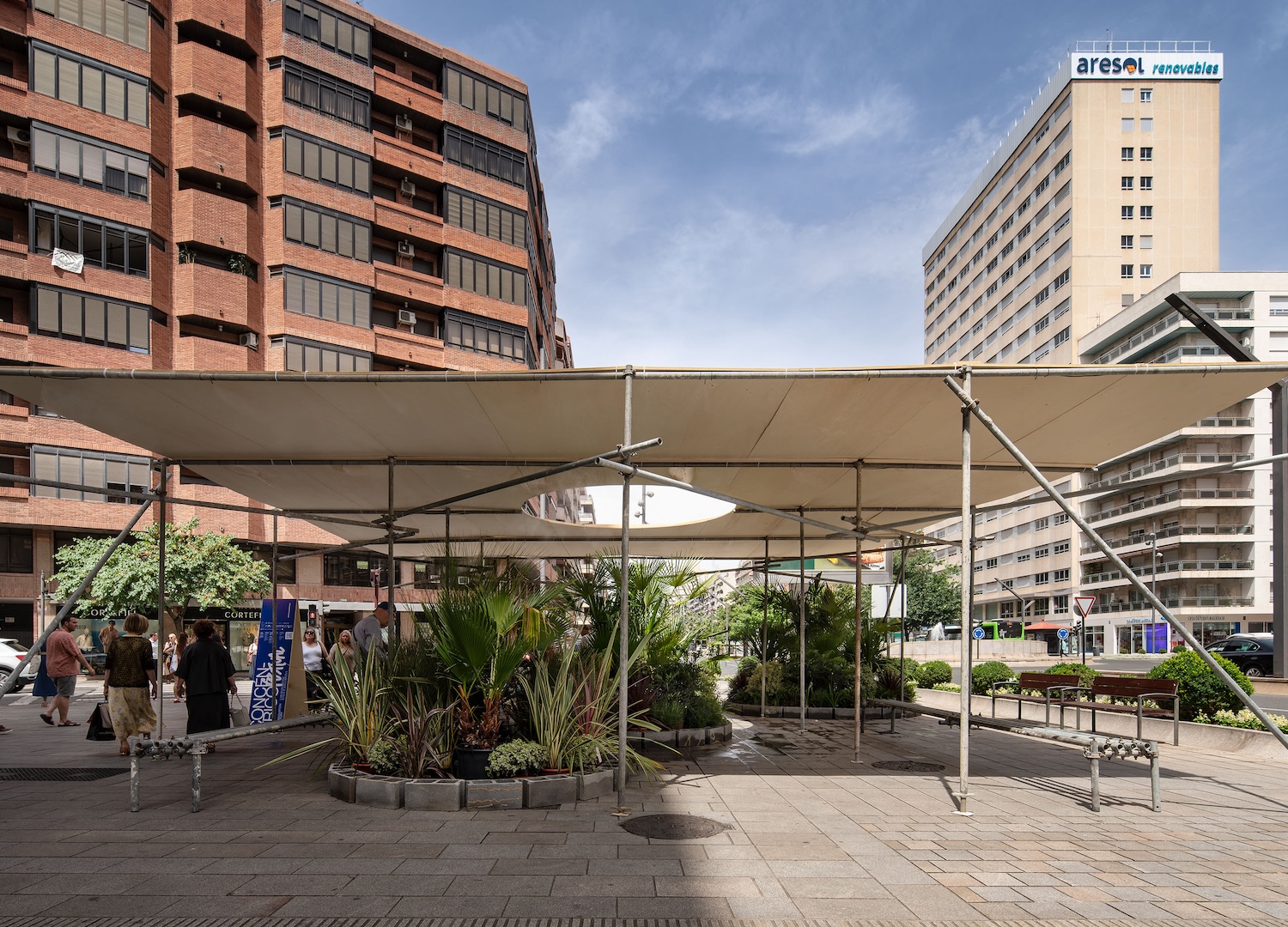
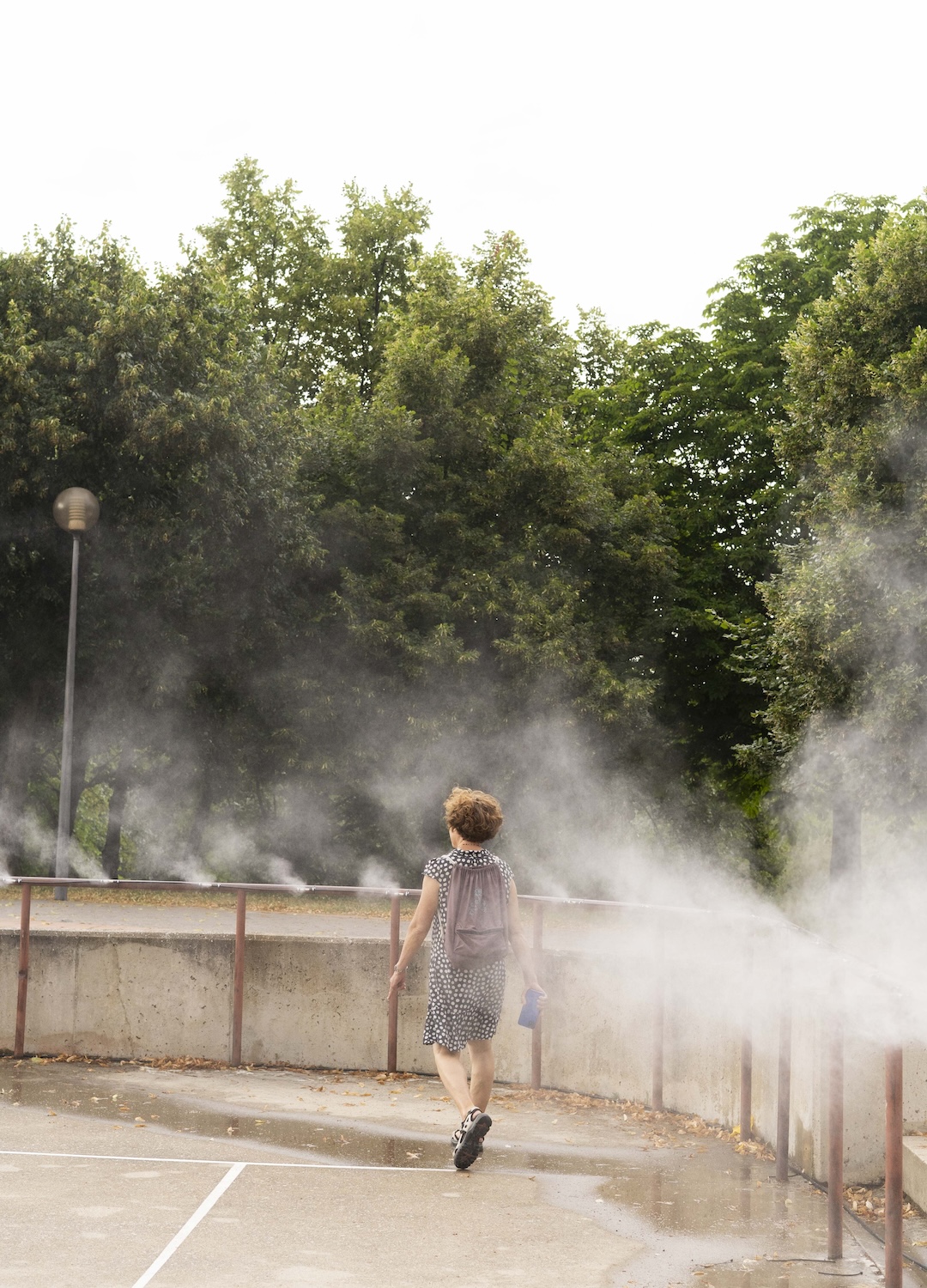
Working between Chile and Spain, noof group has developed an architectural language shaped by arid climates, resource scarcity and environmental adaptation. Shade, Breeze, Cooling responds directly to the increasing thermal vulnerability of public space by introducing a lightweight system of timber structures and suspended water mist that lowers the perceived temperature of Plaza del Mercado. The project provides an immediate and measurable public benefit – one visible in the steady stream of local residents who occupy the space throughout the day, seeking relief from the heat. It demonstrates how environmental comfort can become a permanent civic infrastructure rather than a temporary installation.
BEAR – Temblores de superficie
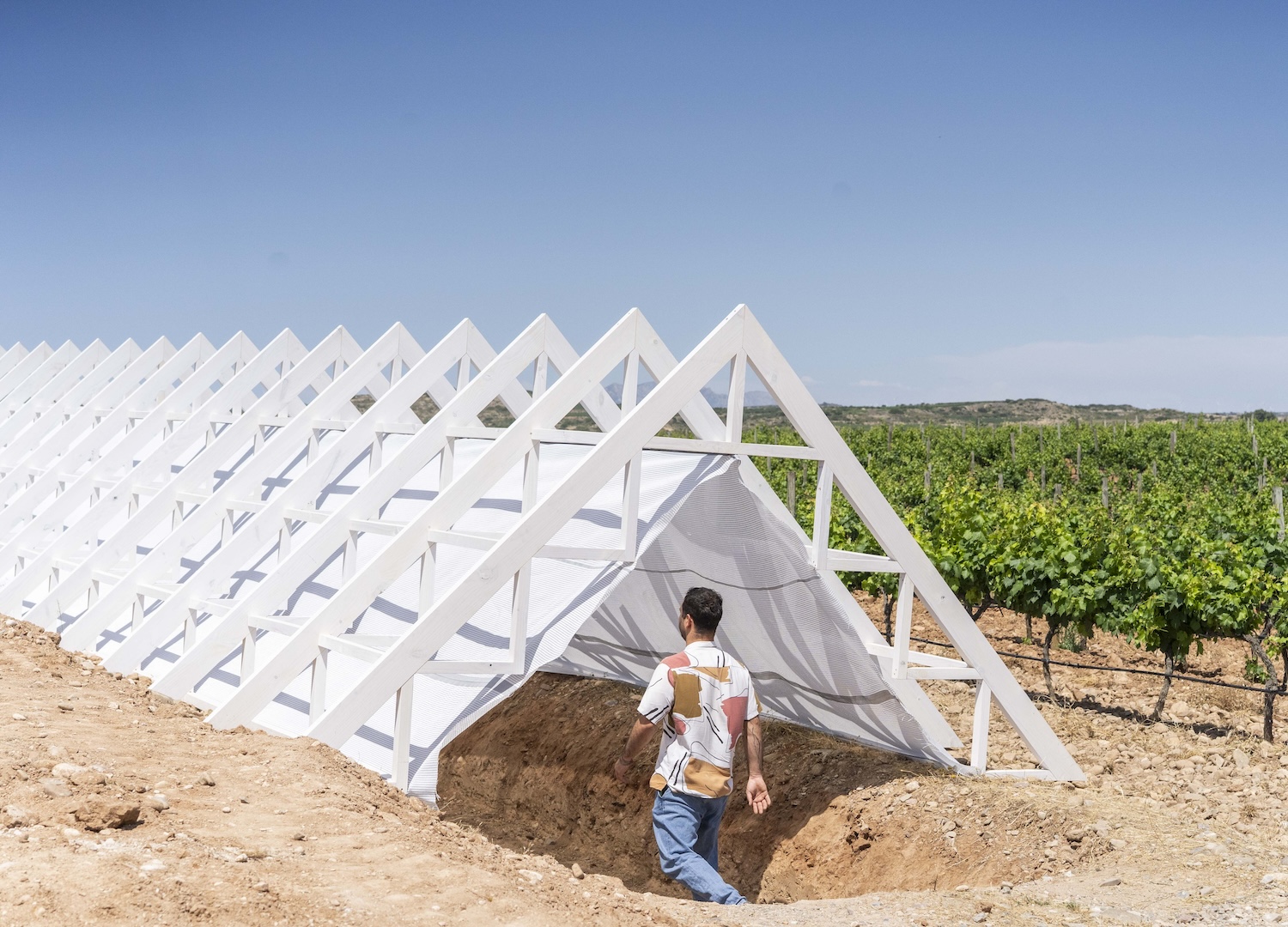
Based in Bilbao, BEAR approaches architecture as a critical instrument for interpreting territory and experience. Set within the vineyards outside Logroño, their intervention is the festival’s only installation beyond the urban centre. A lightly excavated platform, sheltered by a prefabricated beam and enclosed with timber and textile cables, frames the surrounding landscape without dominating it. Transparent surfaces and reflective elements blur the boundary between visitor and environment, reinforcing the idea that the cultivated land beneath our feet is an active, living system. The project offers a precise reading of agricultural geometry while encouraging a renewed awareness of the landscape itself.
OFREIA – Summer shaped memories
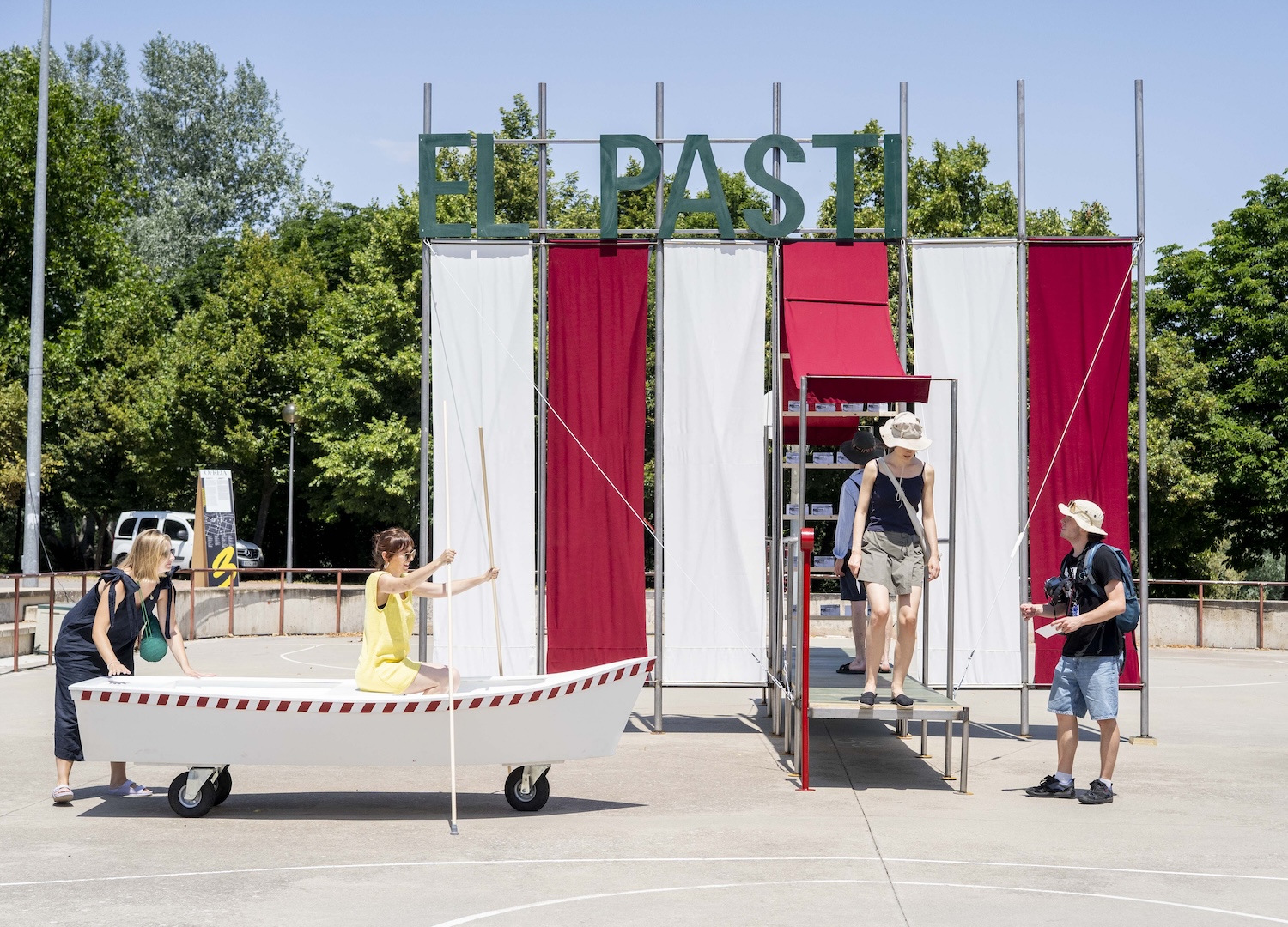
Swiss practice OFREIA develops highly site-specific interventions that reveal the latent histories embedded within places. Focusing on the River Ebro, the project recalls the city’s long-forgotten bathing culture by reinterpreting existing riverside structures as spaces for gathering. Playful in appearance yet rooted in historical research, the installation reconnects contemporary visitors with everyday memories that have gradually disappeared from the urban landscape, balancing nostalgia and present-day use in a way that reactivates the past without reconstructing it.
Smiljan Radić – Circo
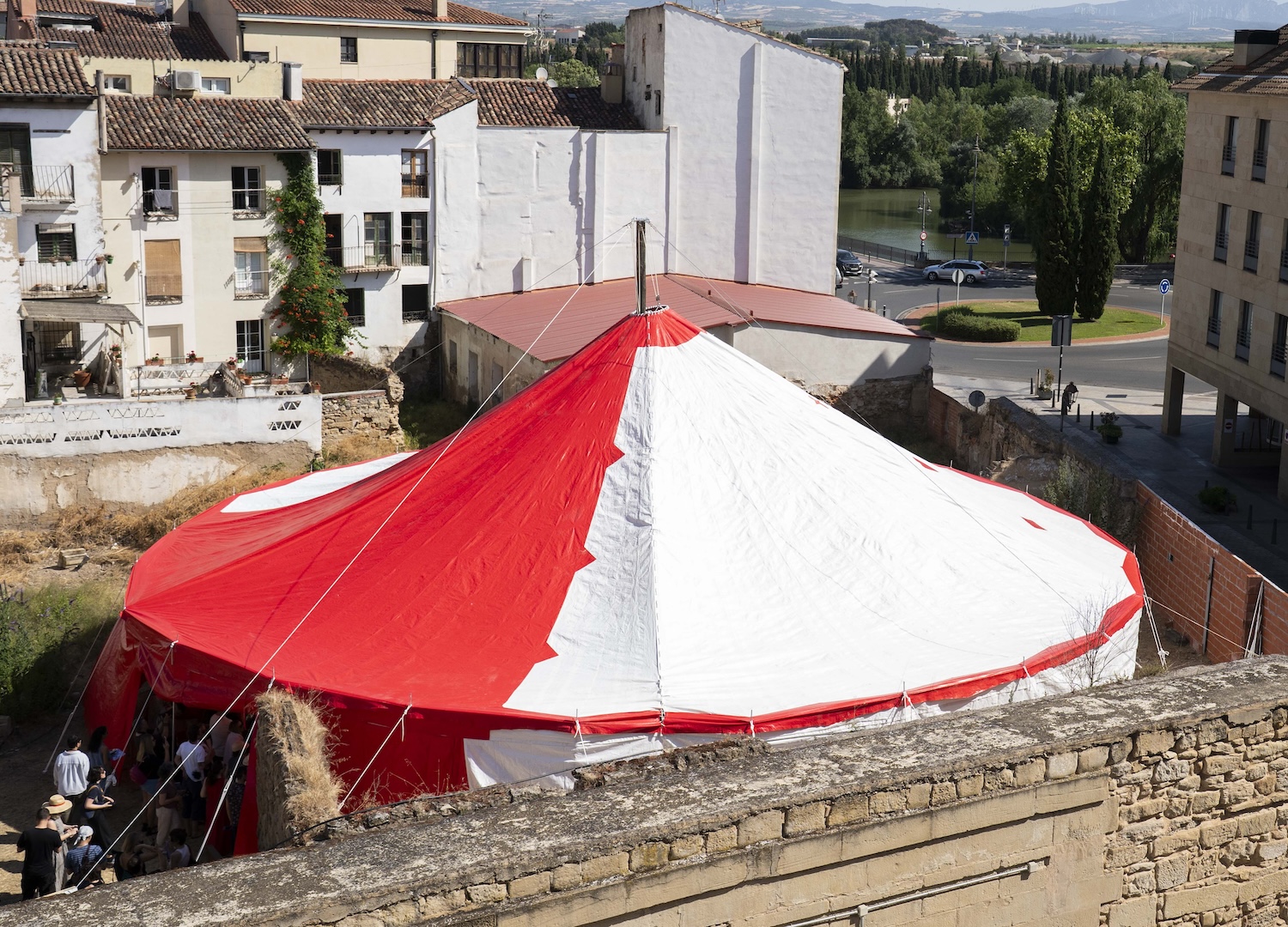
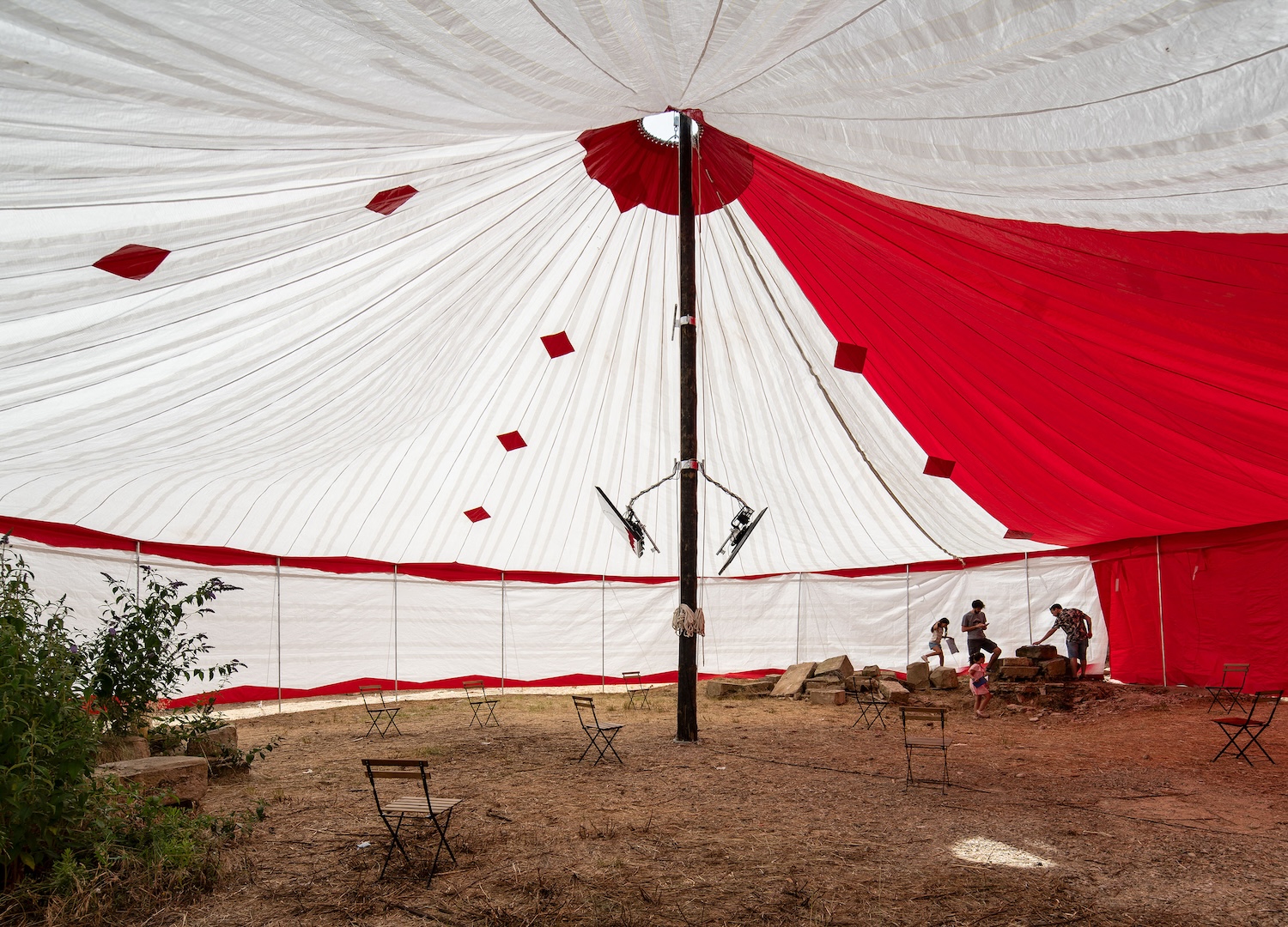
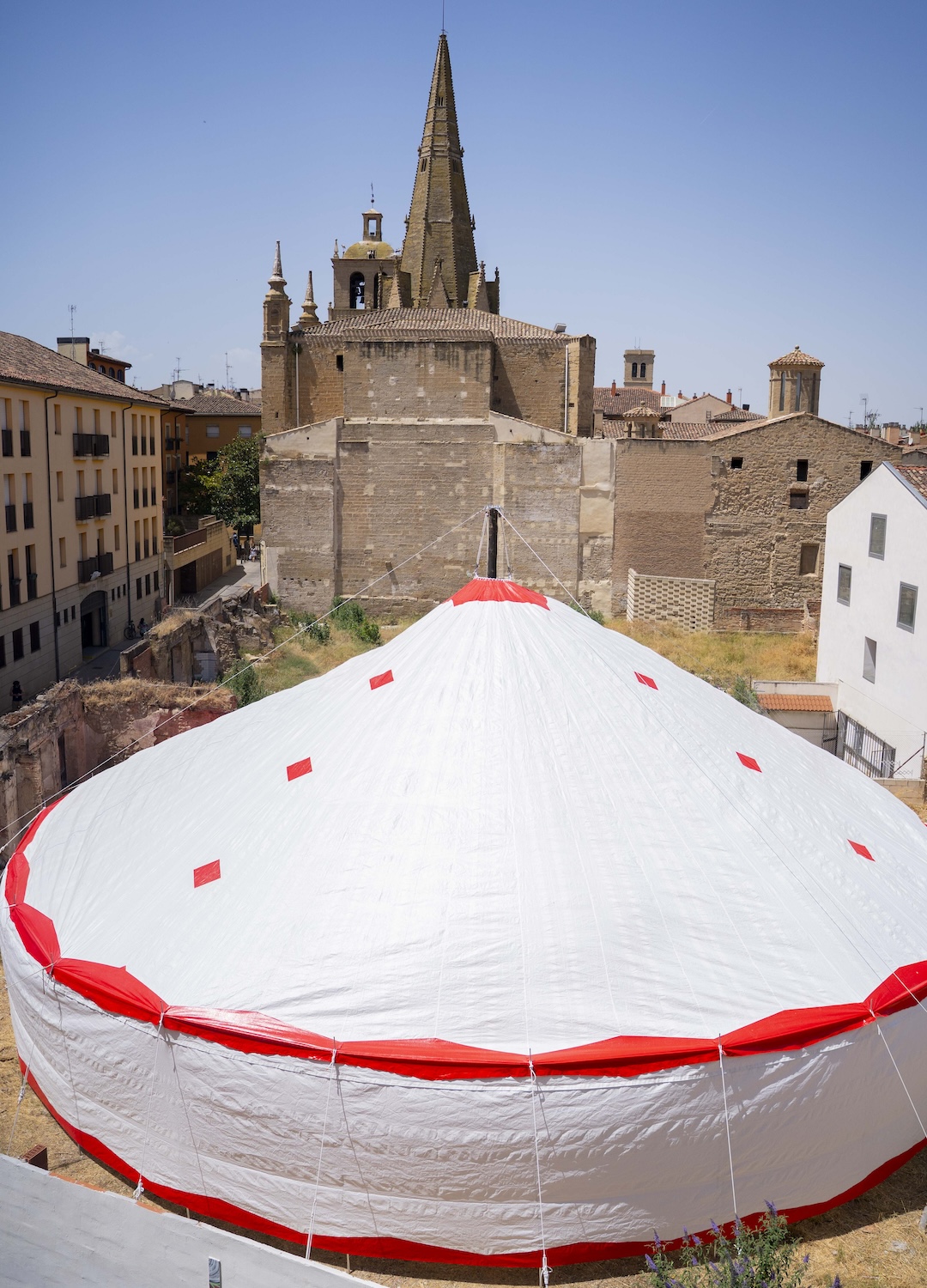
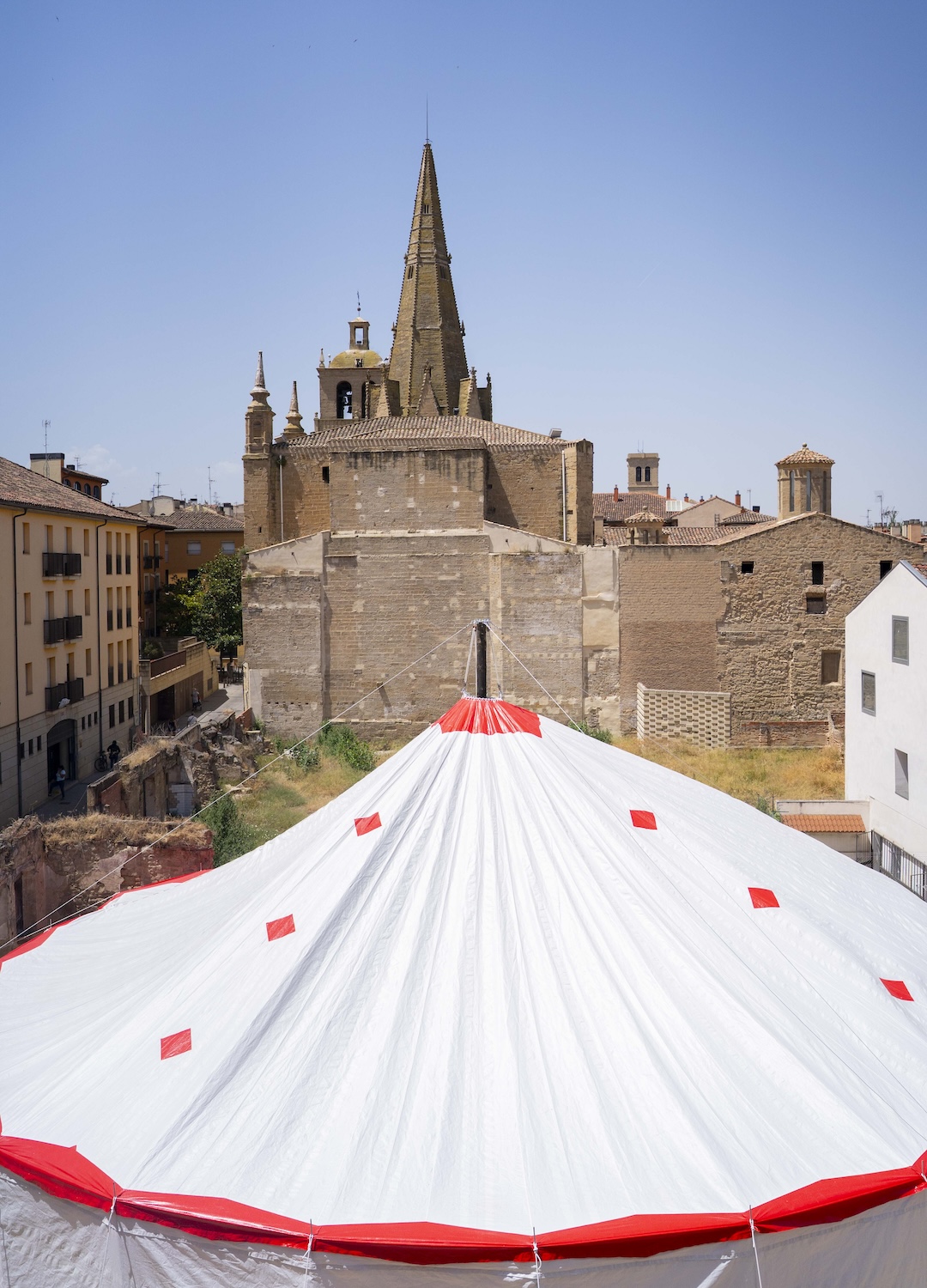
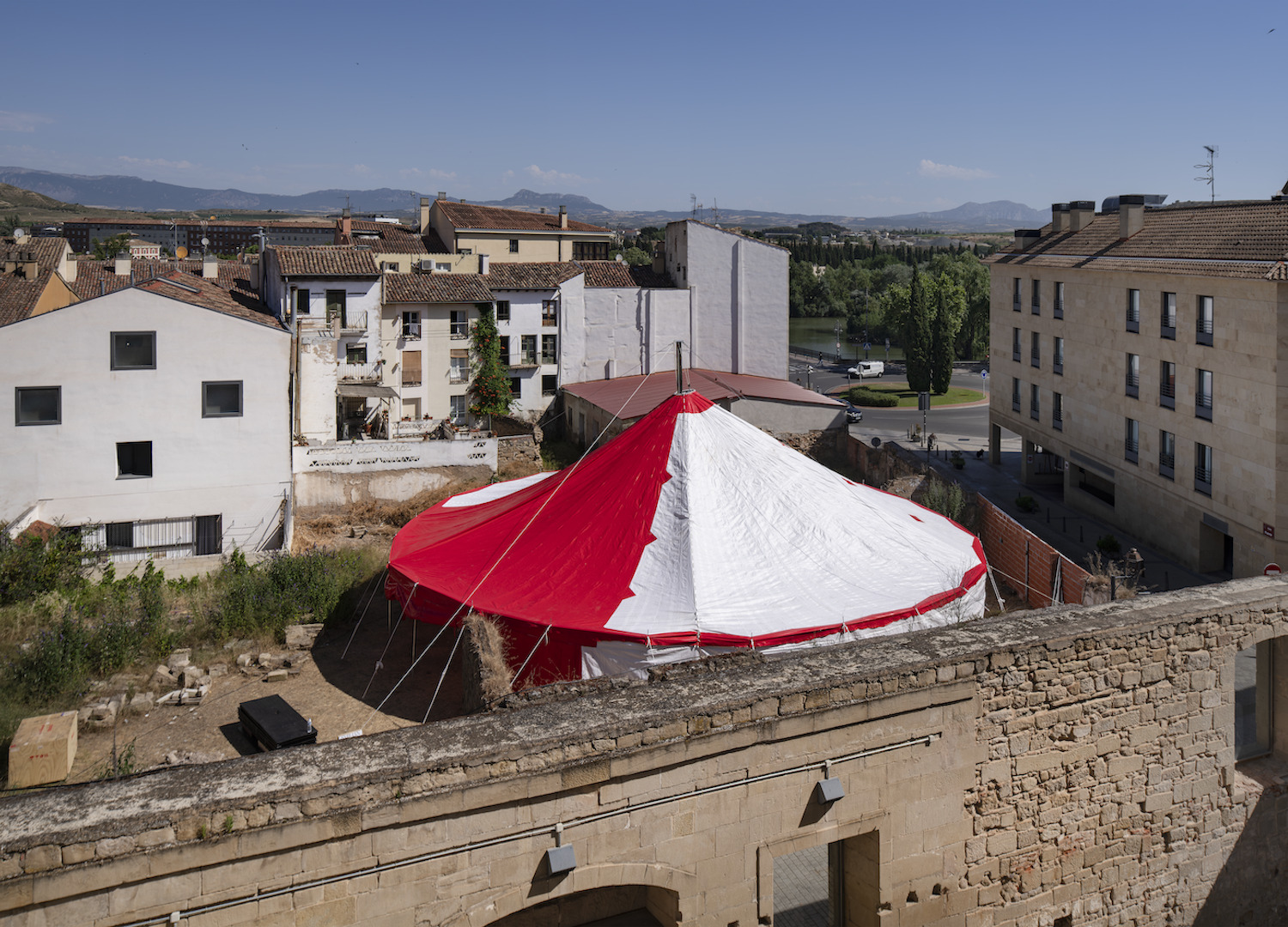
Chilean architect Smiljan Radić revisits the archetype of the travelling circus through a temporary pavilion built from industrial plastic fabrics. Inspired by itinerant performances and Eugenio Dittborn’s Airmail Paintings, the lightweight structure appears briefly before disappearing without leaving traces, deliberately embracing the language of the “poor circus” – an architectural typology long associated with ephemerality and spectacle. The spatial experience is compelling above all through the intimate film projections that transform the interior into a shared environment for observation, gathering and reflection.
Matilde Cassani studio – La Serrana de San Bernabé
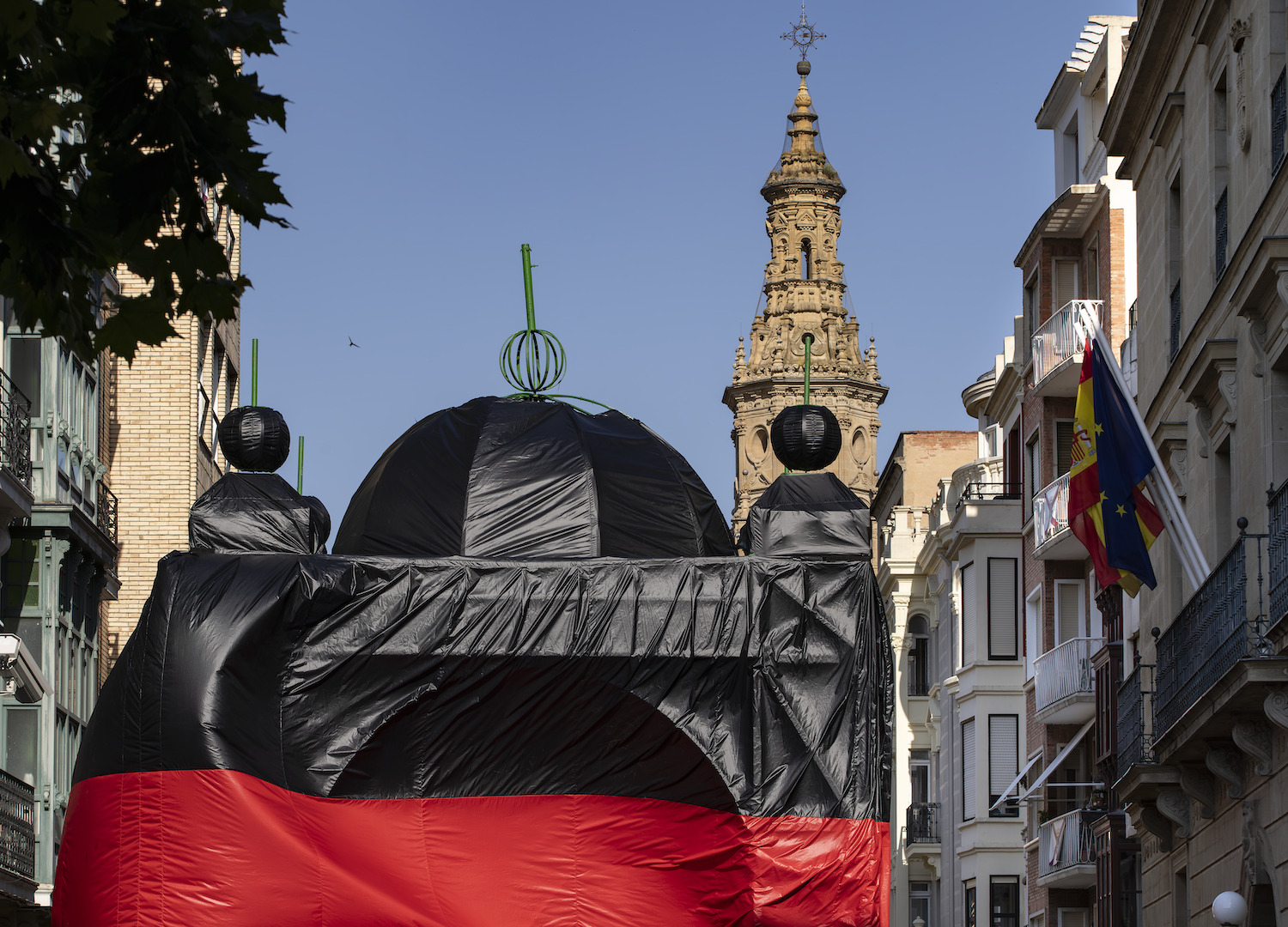
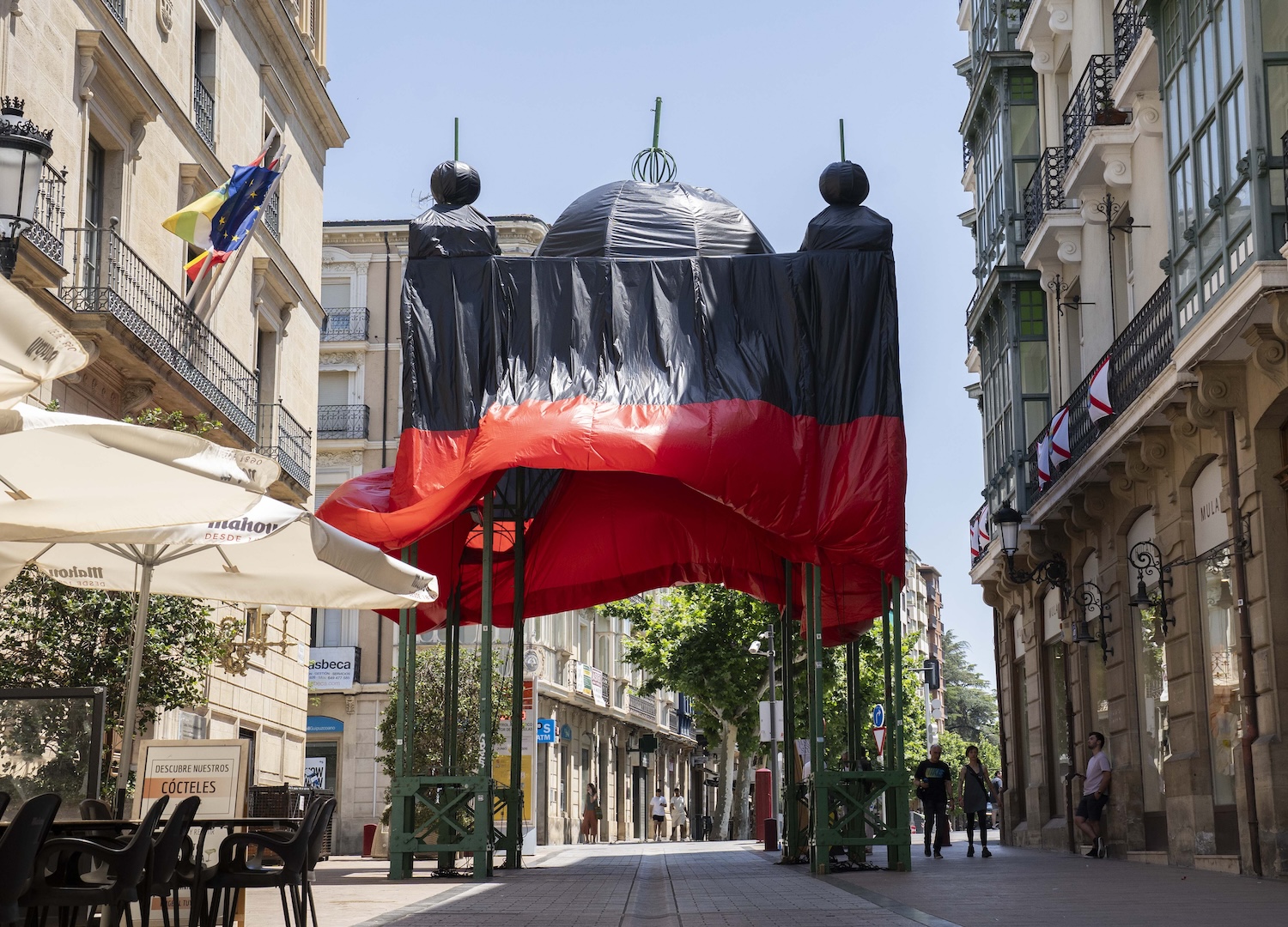
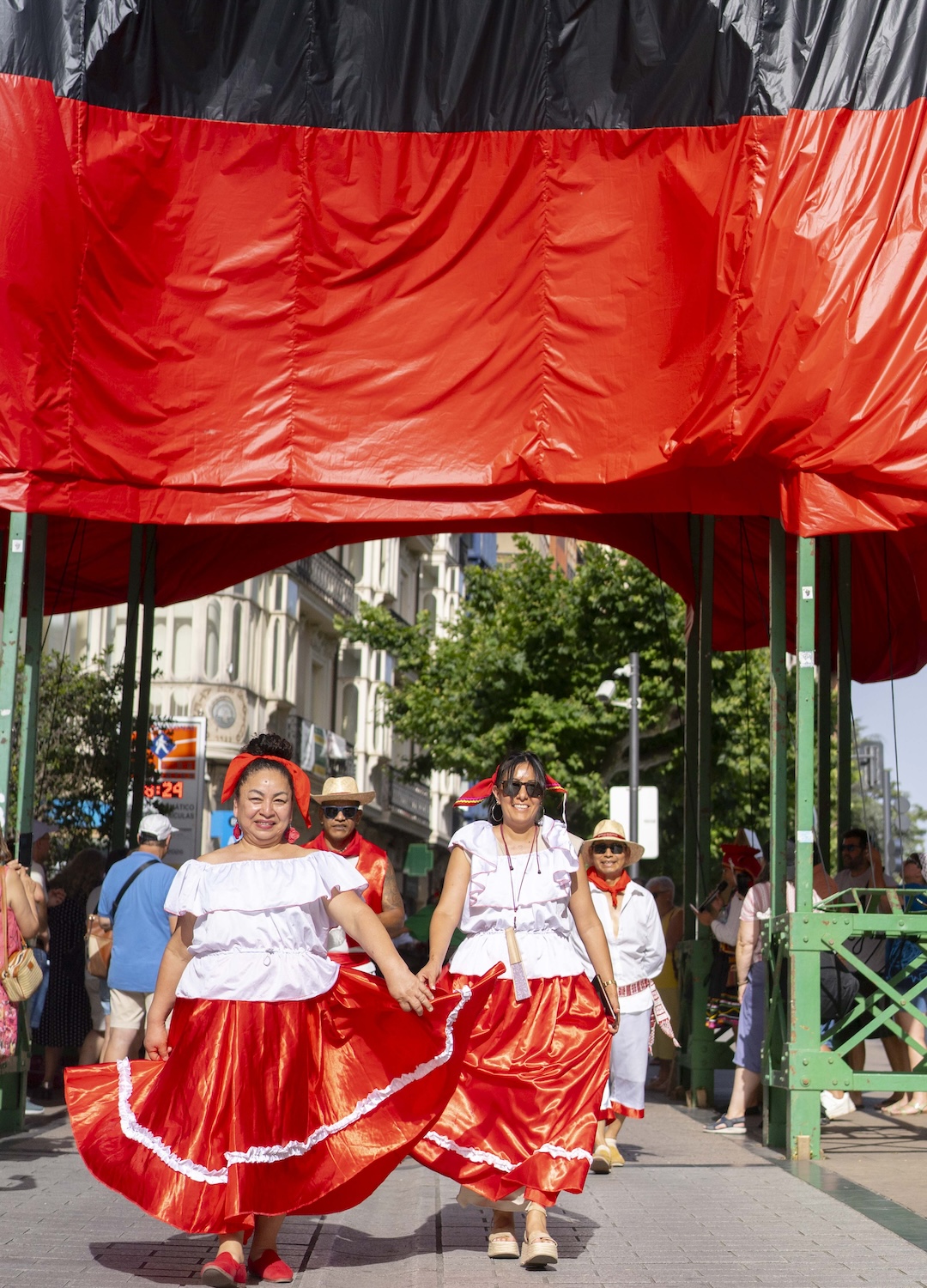
Matilde Cassani continues her long-standing investigation into ritual and cultural identity by intervening around the Arco de San Bernabé, one of Logroño’s most symbolic public spaces. Layers of suspended textiles reinterpret local festive traditions without reproducing them literally, dressing the historic gateway with a contemporary architectural language. The moving fabric introduces softness and movement into the stone structure, creating an installation that is simultaneously ceremonial and everyday. By treating architecture as something that can be temporarily clothed rather than permanently altered, the project offers a thoughtful reflection on how urban identity is continually renewed.
Future Firm – La Escalera de la cigüeña
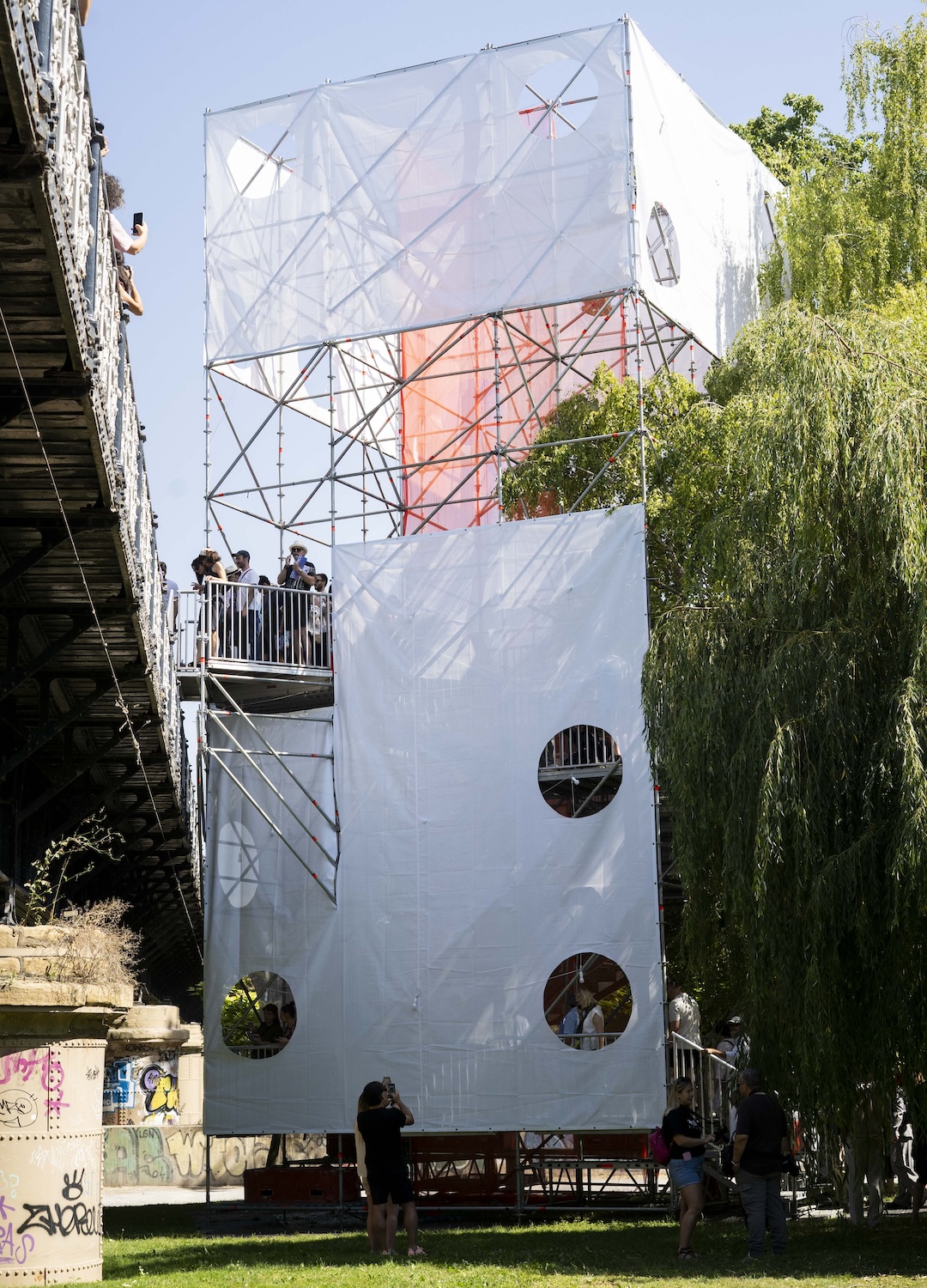
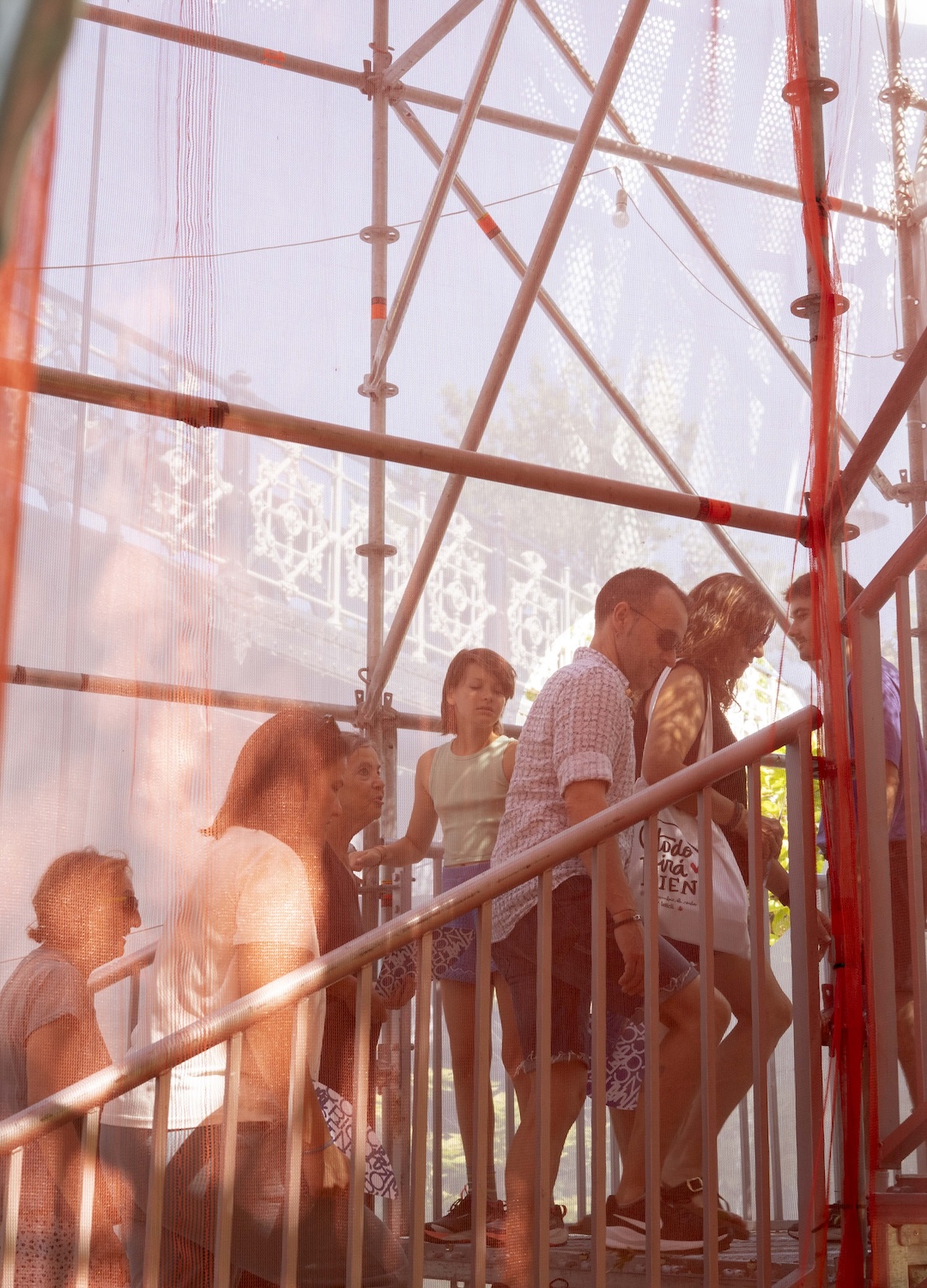
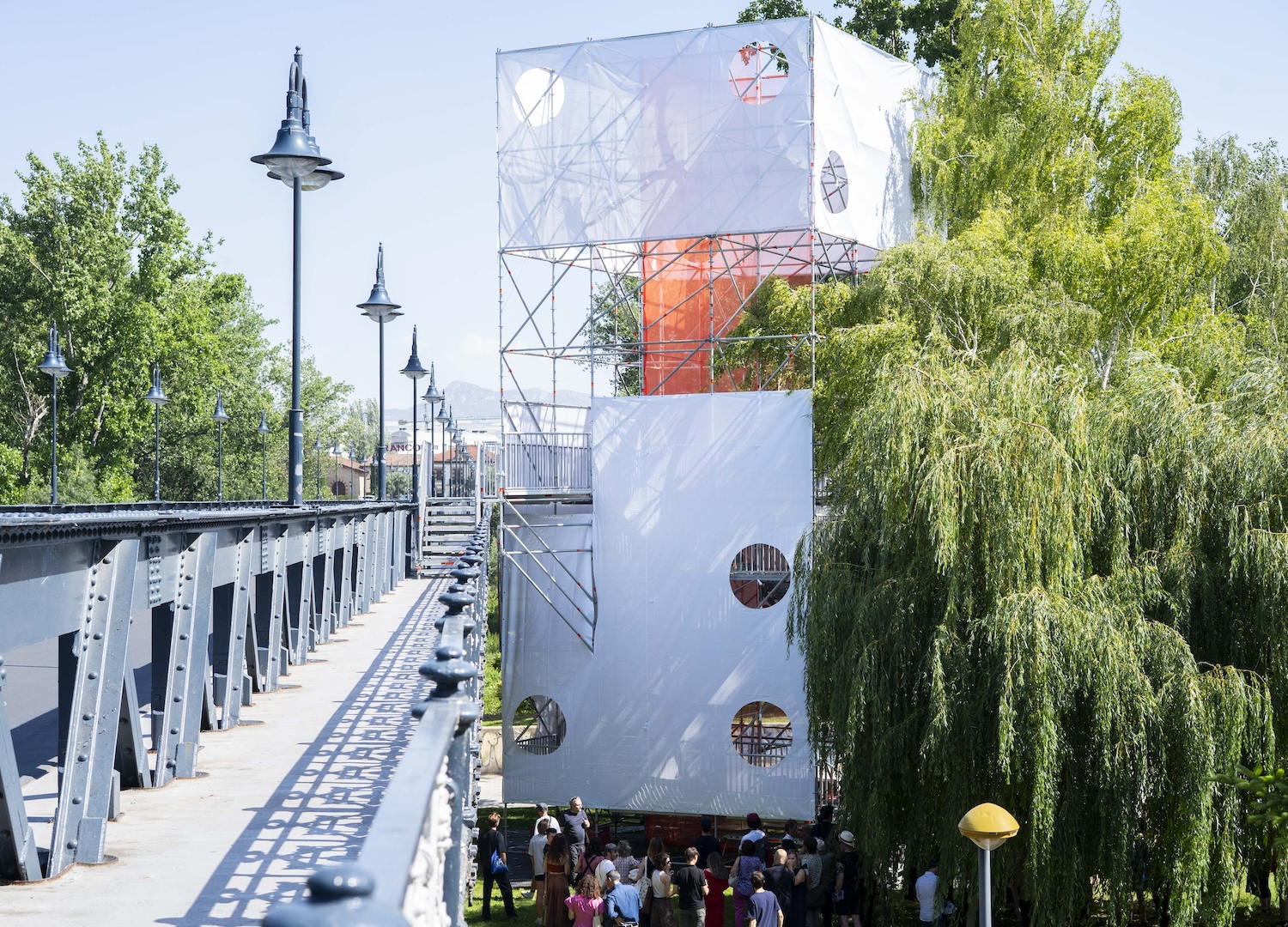
Chicago-based Future Firm explores architecture through research, civic engagement and strategic design. Their intervention at the Puente de Hierro proposes a subtle reactivation of existing infrastructure rather than the construction of a new object. A temporary architectural device encourages visitors to pause, observe the River Ebro and reconnect with the surrounding landscape. The recurring image of the stork – a long-standing local symbol – reinforces this renewed relationship between nature and the city, suggesting that ecological awareness can emerge not through grand gestures but through careful reinterpretations of places already embedded in everyday life.
About the author

Ludovica Proietti, journalist, design historian and curator, teaches in universities and curates events, always exploring projects with fresh, unconventional perspectives.
Instagram