How design can revolutionise healthcare accessibility: the Dengue Fever Test Kit
What if disease diagnosis could be decentralised and accessible worldwide? Crux Product Design has created an at-home test kit to diagnose dengue fever.
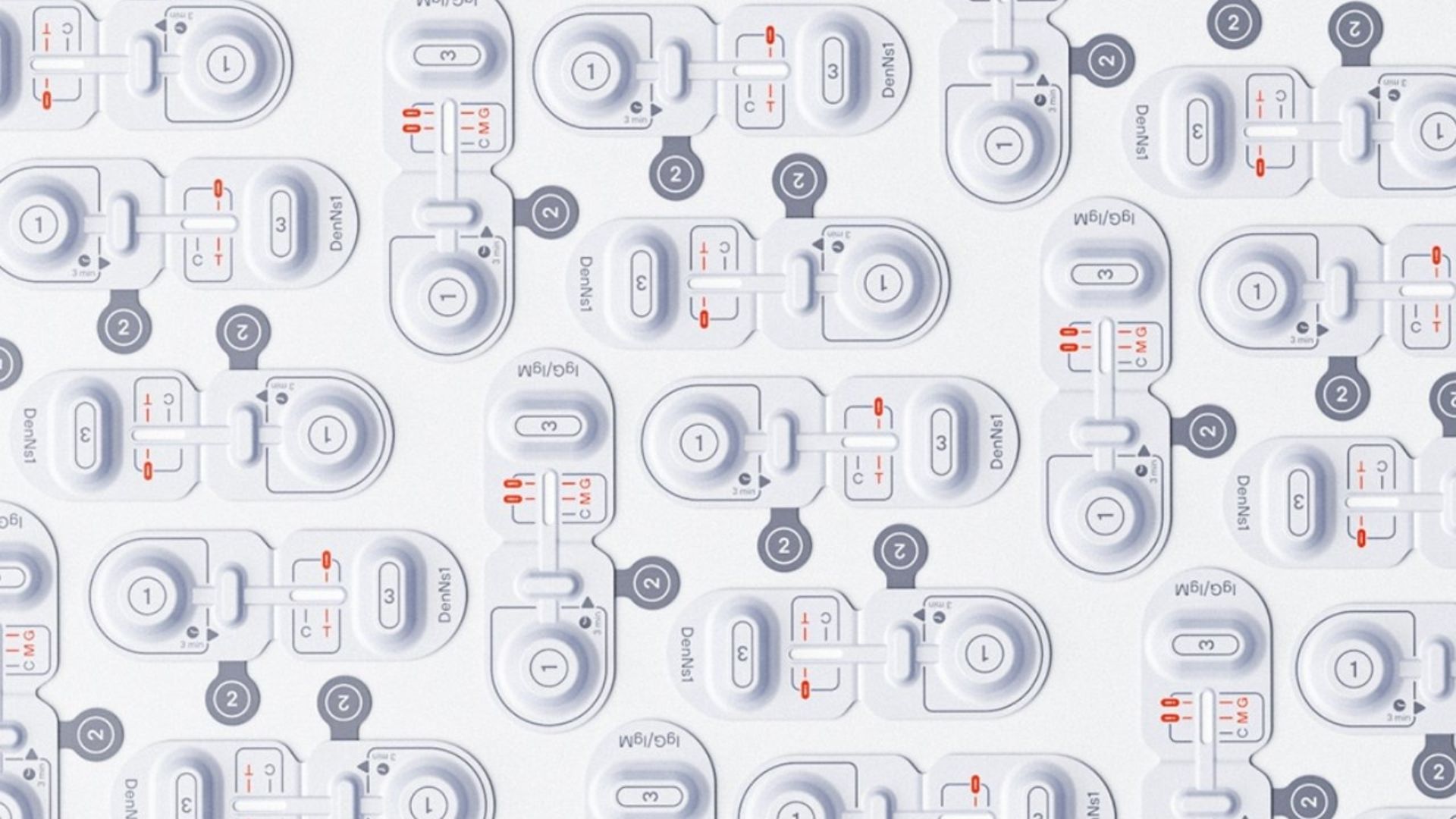
As climate change accelerates the spread of mosquito-borne diseases, dengue fever is one of the world’s fastest-growing health threats. With three million cases diagnosed annually and forecasts suggesting that 60% of the population could be at risk in the next decades, there is an urgent need for accessible and fast diagnostic solutions.
In response to this issue, Bristol-based agency Crux Product Design has developed an innovative at-home test kit that promises to transform the process of dengue detection, making early diagnosis accessible worldwide. The project has won the iF Design Award 2025 as well as the iF Social Impact Prize, credited as “a potential gamechanger for many around the world,” addressing the gap between medical technologies and the communities that need them the most.
Gallery
Open full width


Open full width
For reference, current dengue testing methods work similarly to regular blood checkups, meaning that they require healthcare professionals, specialised training, multiple tools, and a scientific laboratory. These are resources that are often scarce or nonexistent in remote areas across Latin America, South Asia, and Africa, which are the most affected regions by the illness.
For a disease where every hour counts, such delays during outbreaks can be fatal. Up to 80% of all dengue infections are asymptomatic, meaning that for many communities, cases can go undiagnosed and untreated, increasing the risk of transmission and death. The Crux Product Design team recognised these issues through ethnographic research in Colombia and India, where they immersed themselves in the populations affected by dengue outbreaks, gaining insight into the barriers between people and healthcare.

The result is the Dengue Fever Test Kit, which reimagines the entire diagnostic experience by transforming a complex medical procedure into a simple, accessible process. The device works through a blister-based patch system, which attaches to the skin like a band-aid. Pressing the patch will then activate a microneedle technology, painlessly collecting a small blood sample. A second button will then mix the buffer solution with the sample to initiate the test, while a third button will release an antiseptic to clean the extraction site. Results will then appear rapidly, within just 15 minutes.
The kit includes two different path types, one for early-stage infection and another for prolonged or secondary infection. If a test returns positive, users should repeat the procedure with another patch to confirm the result. The design of the display uses an intuitive visual language, with colour coding and iconography to make the interpretation straightforward even for users with limited literacy or medical knowledge.

The product does not only focus on social sustainability, but also on material qualities, as it employs a minimal, low-waste format, and the packaging is crafted from biodegradable cartons made from recycled grass. This addresses the enormous amounts of single-use plastics that the medical industry wastes, creating inspiration for other medical companies.
As dengue fever continues to spread, possible solutions like this one by Crux Product Design are not just desirable but essential. An exciting part of the project is also its broader potential as a testing platform, as the patch technology could be adapted to diagnose other infectious diseases. This scalability could transform healthcare worldwide, increasing accessibility in communities with limited resources, letting people take control over their health, no matter where they live.