Designing the Design Toolkit: the hidden design behind successful workshops
“Design as a tool for improving daily life and the appreciation of human existence.” — Jasper Morrison, Utilism vs. Uselessnism (2002)
Right after celebrating the Fourth of July with family and friends in the United States, the quiet days that follow have become one of my favorite moments of the summer for reading, reflecting, and writing.
After months of co-designing, co-facilitating, and co-developing participatory workshops and interviews, I found myself asking a simple question:
What is the most important design in a design workshop?
Surprisingly, the answer is often invisible. It is not the final concept, prototype, or presentation—it is the toolkit that makes meaningful collaboration possible.
Design researchers have long argued that the artifacts used in participatory design are not merely facilitation materials but active mediators of collaboration, learning, and knowledge creation (Sanders & Stappers, 2008).
Gallery
Open full width
Open full width
Long before participants enter the room, designers are already planning and shaping how conversations unfold, how ideas are expressed, and how collaboration emerges. In many ways, designing a workshop begins with designing the toolkit.
As someone trained in both industrial design and electrical engineering, I have always enjoyed creating artifacts for experimentation. I am particularly interested in bringing tangibility into the design process—transforming abstract ideas into physical objects that invite people to think, make, and learn together.
During my time at IDEO and Continuum, I contributed to numerous build-to-think and make-to-learn projects, including the Ford 360 user experience project, the Fotile kitchen hood project, and the GAP retail experience project.
Across these diverse contexts, toolkits were never simply facilitation materials or project deliverables. They became essential vehicles for exploration, communication, and discovery, enabling teams to prototype ideas and learn through making (Buchenau & Fulton Suri, 2000).
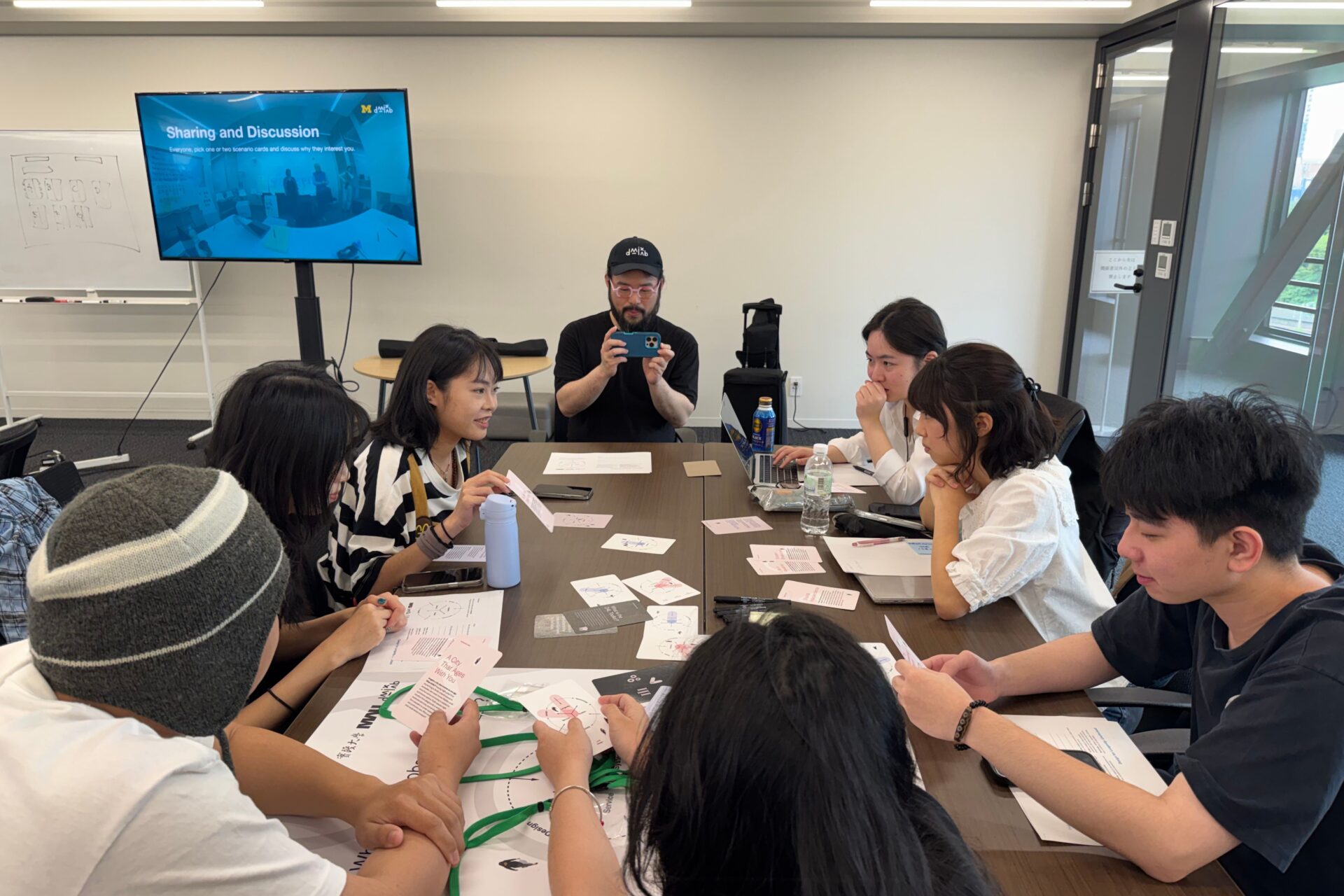
Earlier this summer in June, I facilitated a two-day Design for Longevity (D4L) workshop with design students from Shih Chien University in Taiwan and Musashino Art University (MAU) in Japan.
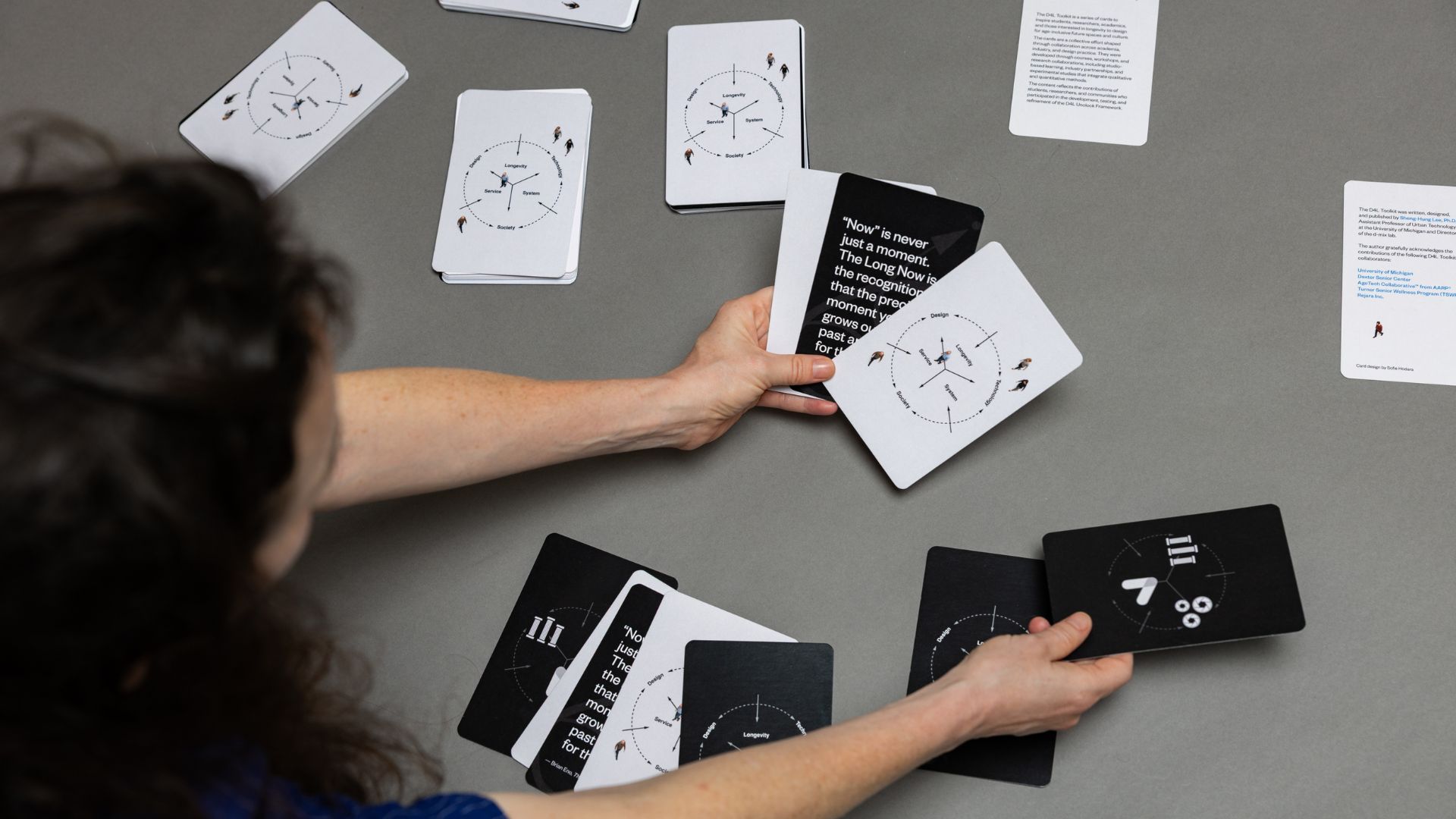
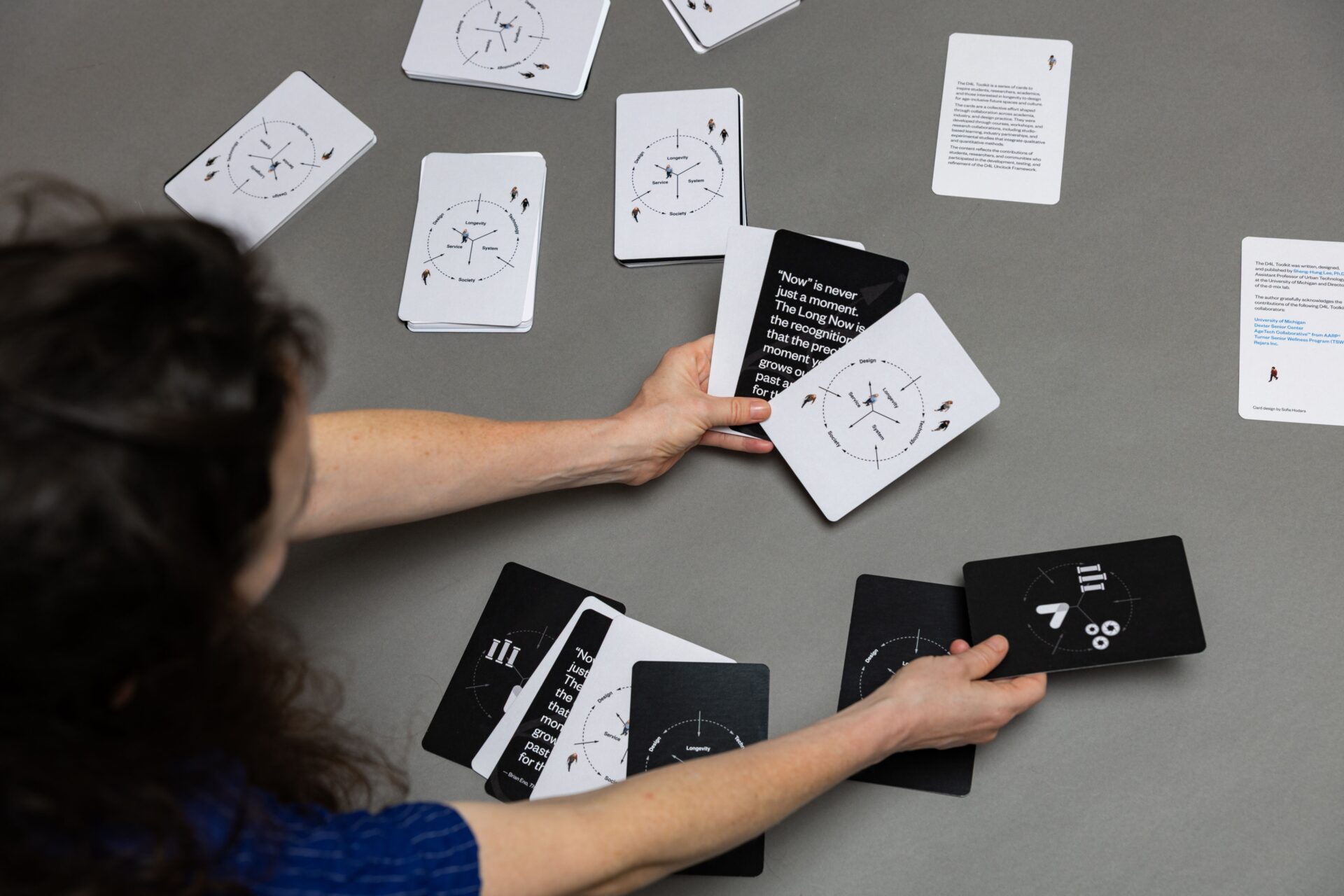
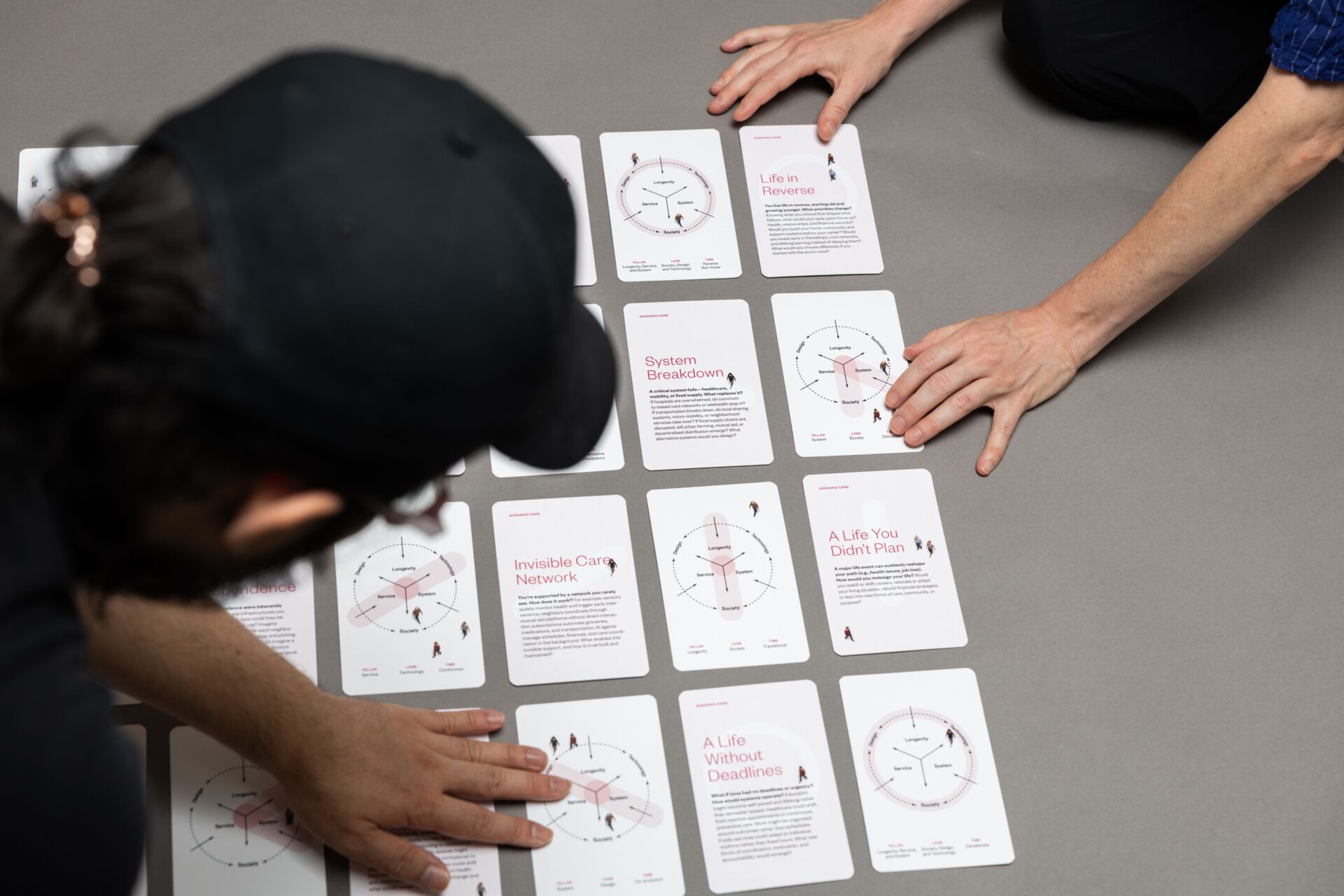
Forty students worked in eight interdisciplinary teams using the D4L Toolkit—a set of 18 design cards (Figure 1)—as a shared research artifact that facilitated conversations among facilitators, students from different cultural and disciplinary backgrounds, and interview participants.
Guided by the D4L Toolkit, students conducted campus observations and reflected on what they saw, heard, and experienced while exploring how universities could become more longevity-friendly environments.
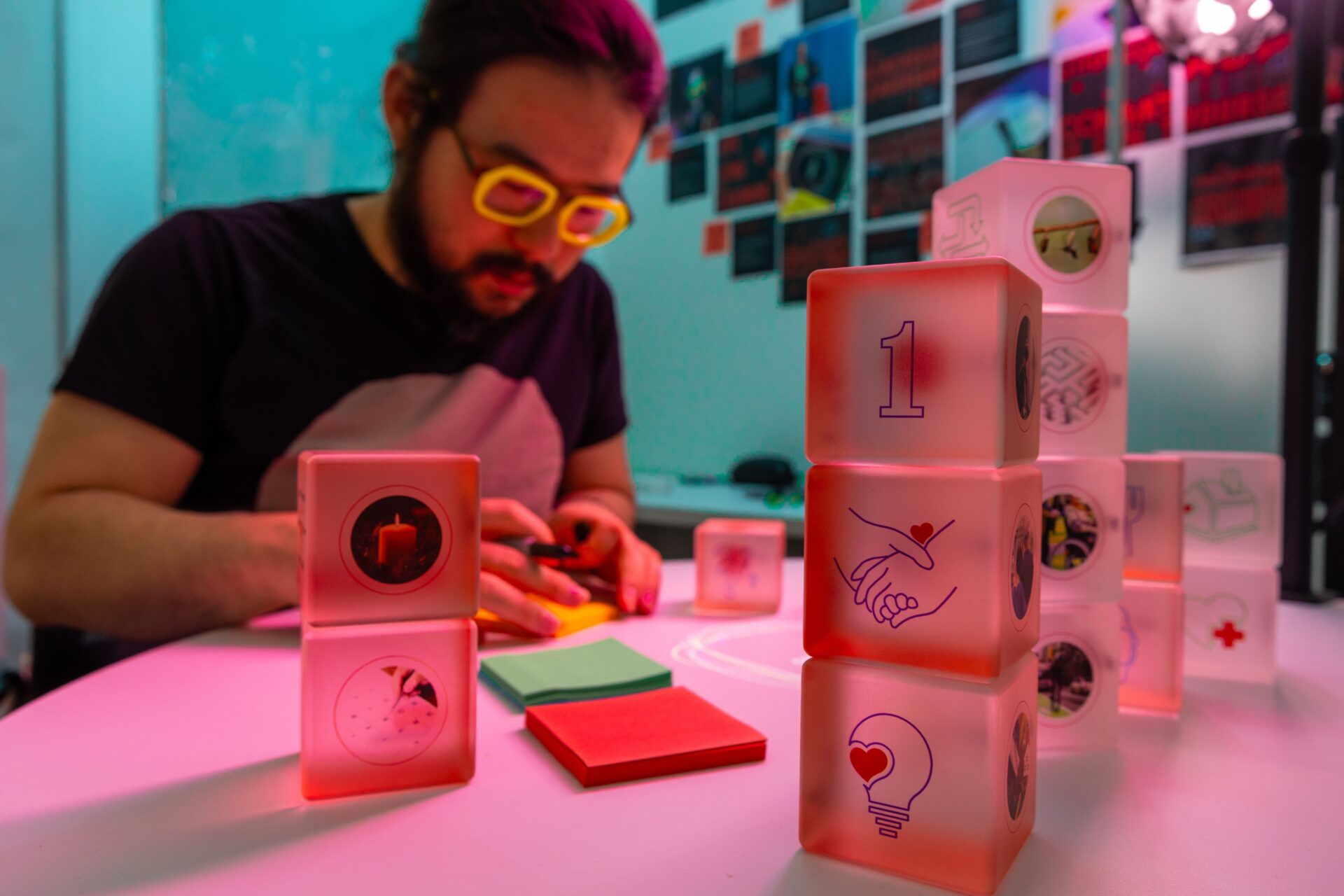
Another example comes from my doctoral research at the Massachusetts Institute of Technology (MIT). Together with the MIT AgeLab, I co-designed and co-developed the Longevity Planning Blocks (LPBs)—a tangible boundary object that complemented a longevity planning service model.
Unlike the two-dimensional D4L Toolkit, the LPBs consist of twelve weighted acrylic cubes designed to encourage hands-on interaction.
Rather than creating another set of cards or blocks, the goal was to cultivate an engaging environment where participants could collaboratively reframe, explore, and articulate the complex socio-technical challenges of longevity (Figure 2).
Using the LPBs, I conducted qualitative research with more than 90 participants to investigate how tangible artifacts can support retirement planning and conversations about later life.
Through both industry practice and academic research, I have come to realize that design toolkits serve multiple roles throughout the design process. During participatory research, they function as engagement tools that encourage storytelling, co-creation, and reflection. Within research teams, they become simulation and synthesis tools that help externalize ideas, communicate diverse perspectives, and support collaborative sense-making.
More importantly, they reveal that a toolkit is never just a collection of cards, blocks, or worksheets. It is itself a carefully designed experience.
In this article, I explore three essential roles that design toolkits play in design research and practice. Why should designers invest time in creating them? How can thoughtfully designed toolkits contribute to more evidence-driven and human-centered solutions for complex societal challenges?
I believe the answer can be understood through three complementary roles:
- Design toolkits as boundary objects — facilitating participation and collaboration.
- Design toolkits as research infrastructure — documenting thinking and making throughout the design process.
- Design toolkits as synthesis artifacts — crystallizing ideas into shared understanding.
1. Design toolkits as boundary objects
Creating shared spaces for participation
Whether they take the form of tangible artifacts, such as cards, cubes, or blocks, or digital experiences, such as animations and interactive platforms, design toolkits can function as boundary objects (Star & Griesemer, 1989; Carlile, 2002) that create a shared space enabling people from different backgrounds to collaborate despite having different experiences, vocabularies, and perspectives.
As boundary objects, they provide participants with a shared language for expressing experiences, communicating ideas, and building conversations together.
When developing the Longevity Planning Blocks (LPBs) with the MIT AgeLab, my intention was to create provocative prompts rather than instructional tools. The tangible cubes invited participants to touch, rotate, arrange, and play with different concepts, transforming abstract discussions about longevity and financial planning into engaging and personal conversations.
Instead of simply answering interview questions, participants were encouraged to think through making, interaction, and storytelling.
Another benefit of viewing LPBs, and other tangible design artifacts, as boundary objects is that they create an exploratory space where participants can experiment without worrying about giving the “right” answer.
Unlike traditional surveys or structured interviews, where participants may feel pressure to respond correctly, a design toolkit encourages exploration, iteration, and even failure. Much like the design process itself, participants move through cycles of divergence and convergence, where uncertainty becomes an opportunity for learning rather than something to avoid.
2. Design toolkits as research infrastructure
Making thinking visible
One of the most valuable aspects of designing a toolkit is that it naturally documents the evolution of ideas. Over time, I have found that the toolkit gradually becomes embedded in the research process itself.
Rather than functioning merely as research materials, toolkits become part of the research infrastructure itself, supporting the iterative generation, documentation, and interpretation of knowledge throughout the design process (Gaver, 2012).
This perspective also aligns with Research through Design (RtD) method, an approach introduced by scholar and educator Christopher Frayling (1993), which positions the act of designing as a legitimate mode of inquiry.
From this perspective, the design toolkit is not simply an output of research but also a means of generating knowledge throughout the design process.
As the project evolves, designers and researchers continually refine not only the toolkit’s appearance but also its intended function. While the research question may remain constant, the toolkit continually evolves alongside the project.
For example, is the toolkit intended to explain abstract concepts in the early stage of design workshops? Does it help participants tell stories in the later stage of design process? Is it designed to encourage dialogue, reflection, or co-creation across the entire experiment?
Answering these questions requires designers and researchers to clarify both the goals of the study and the role that each artifact plays within it. The purpose of a toolkit is rarely fixed. Instead, it evolves alongside the project, adapting to new insights, changing research questions, and practical constraints such as time, budget, and participant needs.
Designing a toolkit is also a way of demonstrating respect for participants. A thoughtfully crafted toolkit signals that researchers have carefully considered the overall participant experience rather than treating participants merely as sources of data.
Every detail, from the visual language and material choices to the timing of activities, contributes to the quality of engagement (Figure 3).
One accessible example is the use of Post-it Notes in design thinking workshops. Post-it Notes, Sharpies, posters, Play-Doh, and even simple sheets of paper together represent a minimal yet highly effective design toolkit.
Because these materials feel so ordinary, we often overlook the intentional design behind them.
Before placing these materials on the table, we should ask ourselves: Should this toolkit serve as an icebreaker? Should it support collaborative mapping? Or should it become an artifact for “serious play” (Schrage, 2000) that empowers participants to generate, test, and evaluate ideas together?
These seemingly small design decisions fundamentally shape both the research experience and its outcomes.
3. Design toolkits as synthesis artifacts
Turning ideas into tangible artifacts
Perhaps the reason I enjoy designing toolkits most is that they force me to clarify my own thinking.
Designing a toolkit requires researchers to synthesize large amounts of qualitative insight into prompts, visuals, and interactions that support collective sense-making (Kolko, 2010; Sanders & Stappers, 2012).
Designing within the constraints of space, content, production costs, time, and participants’ attention requires difficult decisions about what truly matters.
Every word, graphic, prompt, and interaction must justify its existence.
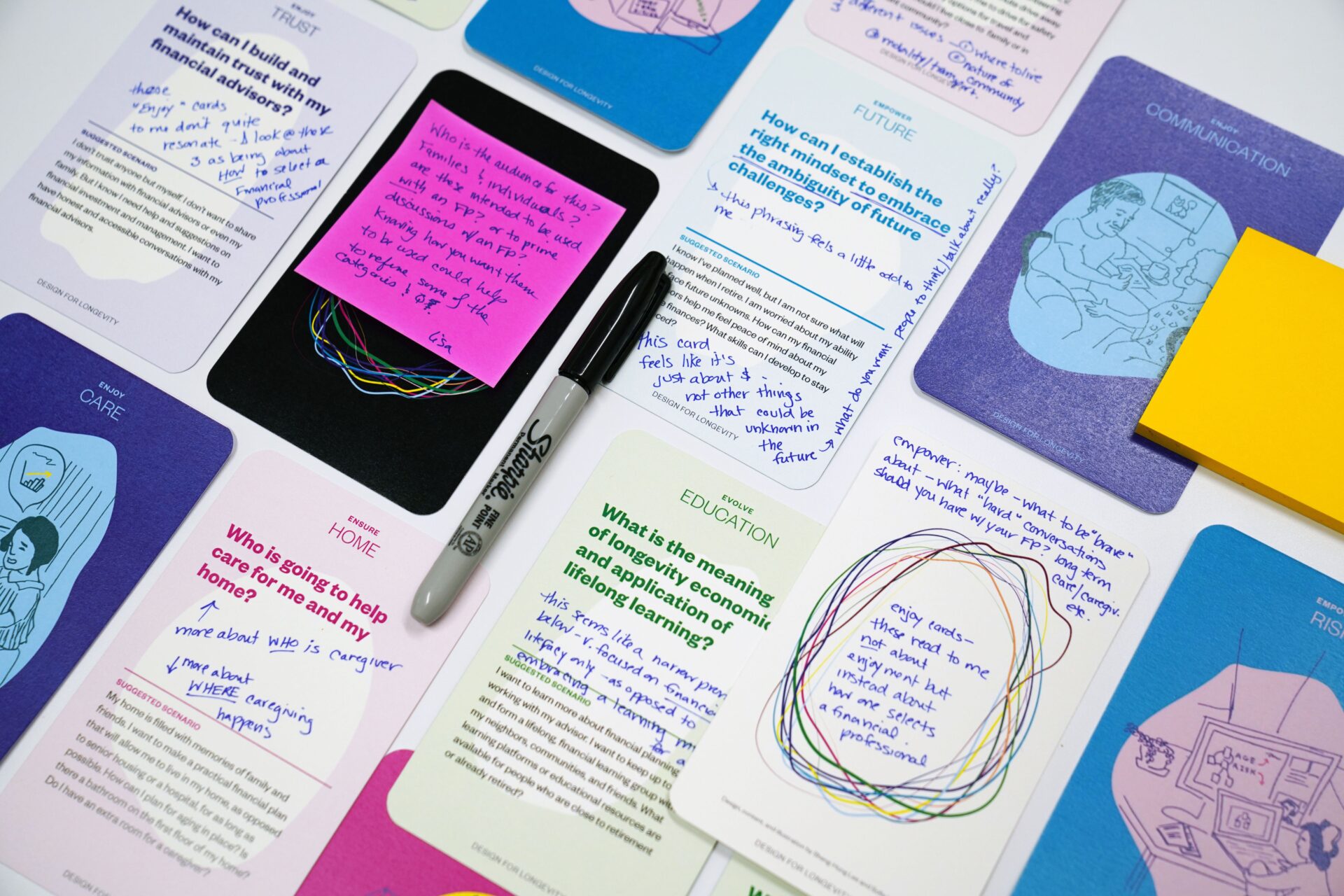
As illustrated in Figure 4, the D4L Cards became much more than communication devices; they evolved into tangible syntheses of the research itself.
Filled with researchers’ comments, sketches, and annotations, the D4L Cards documented the iterative refinement of content, visual language, and sequencing throughout the design process.
While aesthetics certainly matters, an effective design toolkit is never designed for appearance alone. It balances beauty with usability, production constraints with research objectives, and creativity with clarity.
In many ways, designing a toolkit mirrors the broader process of design research: making the invisible visible and transforming complex ideas into tangible experiences that people can understand, discuss, critique, and build upon together.
Designing the character of collaboration
Designing a successful workshop is less about designing the final concept than designing the conditions that enable people to think, create, and learn together.
Throughout this article, I have argued that design toolkits play three essential roles in the design process: they facilitate participation by serving as boundary objects, document thinking and making as part of the research infrastructure, and crystallize ideas by synthesizing complex concepts into tangible artifacts.
Ultimately, I have come to see design toolkits not as supporting materials but as carefully designed experiences. They shape participation, capture collective thinking, and transform abstract ideas into shared understanding.
In The Unimportance of Form and Other Arguments, product and furniture designer Jasper Morrison (2026) introduces the concept of “Objectality”—a way of describing the character an object embodies.
He argues that Objectality is the equivalent of personality: “It’s the character and spirit of things. It’s what attracts us to, or repels us from, an object” (p. 139).
Rather than arising from a single feature, objectality emerges from the balance of many variables, including form and void, materials and the absence of materials, discretion and indiscretion, and function and expression.
Morrison’s concept offers a valuable lens for thinking about design toolkits. Like any well-designed object, a toolkit possesses its own character. Its objectality influences how facilitators guide discussions, how participants engage with one another, how stakeholders contribute, and ultimately how the entire workshop unfolds.
Designing a toolkit, therefore, is not simply about producing a collection of cards or artifacts—it is about shaping the character of collaboration itself.
Viewed through the lens of participatory design and Research through Design (RtD), design toolkits are not merely supporting materials but epistemic artifacts that enable collaboration, documentation, and knowledge production. By designing better toolkits, we create better conversations, stronger collaboration, and ultimately more meaningful design outcomes.
Selected References:
- Buchenau, M., & Fulton Suri, J. (2000). Experience Prototyping.
- Carlile, P. R. (2002). A Pragmatic View of Knowledge and Boundaries.
- Frayling, C. (1993). Research in Art and Design.
- Gaver, W. (2012). What Should We Expect from Research Through Design?
- Kolko, J. (2010). Sensemaking and Framing.
- Morrison, J. (2026). The Unimportance of Form and Other Arguments.
- Sanders, E. B.-N., & Stappers, P. J. (2008). Co-creation and the New Landscapes of Design.
- Sanders, E. B.-N., & Stappers, P. J. (2012). Convivial Toolbox.
- Star, S. L., & Griesemer, J. R. (1989). Institutional Ecology, `Translations’ and Boundary Objects
- Schrage, M. (2000). Serious Play: How the World’s Best Companies Simulate to Innovate.
About the author

Sheng-Hung Lee is an Assistant Professor of Urban Technology at the University of Michigan and Director of the d-mix lab. Trained in both design and engineering, his work explores how technology and human-centered design can shape more equitable and longevity-ready societies.
WebsiteInstagramLinkedin