Earth Valley Theater: when architecture is not just for humans
In the mountains of Wuxi, China, GOA transforms an open-air theater into a shared habitat: spectators, birds, nature, and architecture become part of the same performance in a project that rethinks the relationship between humans and other species. And challenges its usual rules…
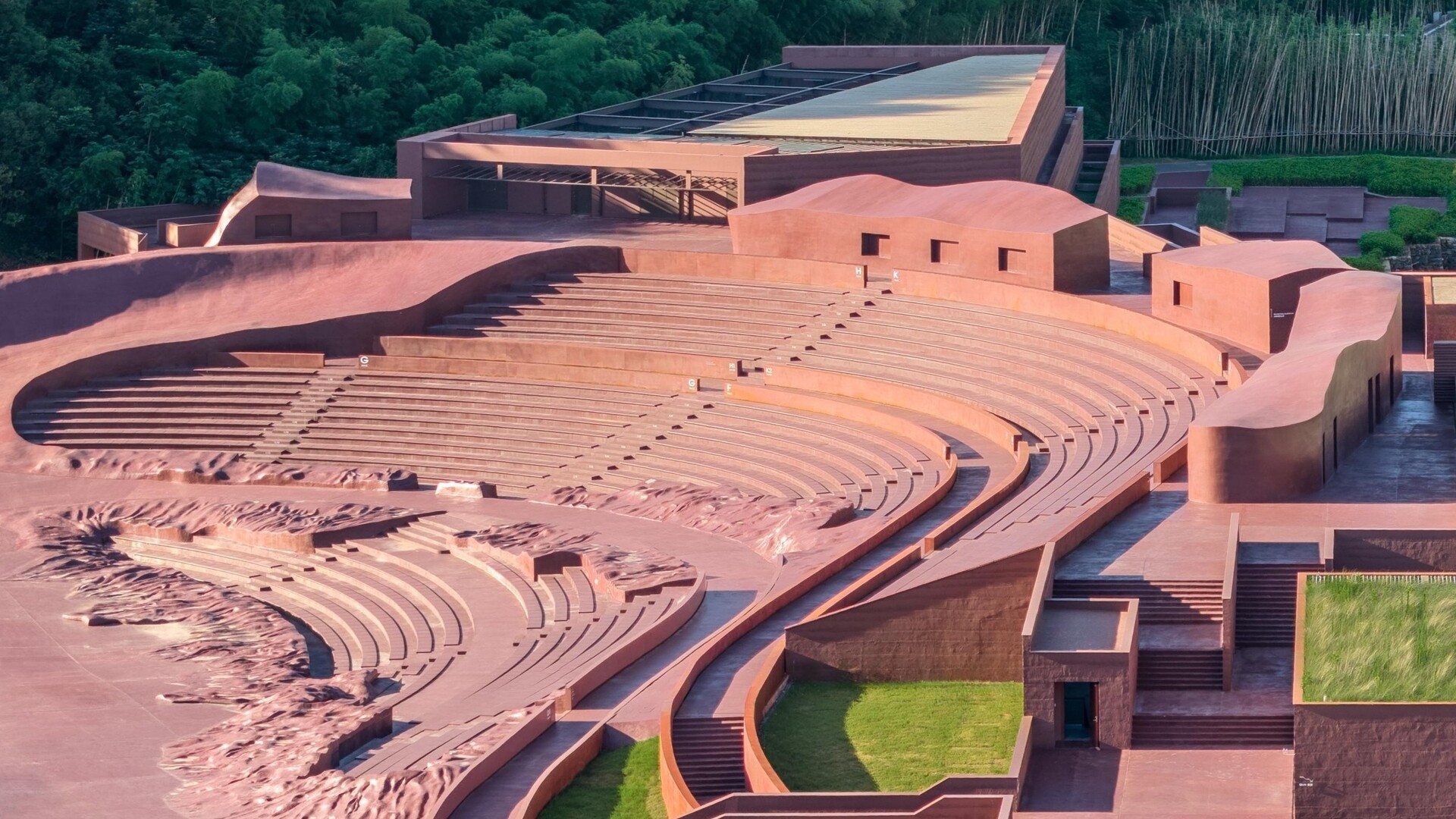
Traditionally, architecture is designed around human needs and choices, but not in this case. The Earth Valley Theater – a 9,200 sqm open-air theater located in the valleys of the Mingling Mountains, near Yixing, China – starts from a different perspective: what happens when the behavior of other species also becomes part of the design process? GOA (Group of Architects), a Chinese architecture studio, has placed birds at the center of the project, making them not an added or secondary element, but the protagonists around which the entire environment is designed.
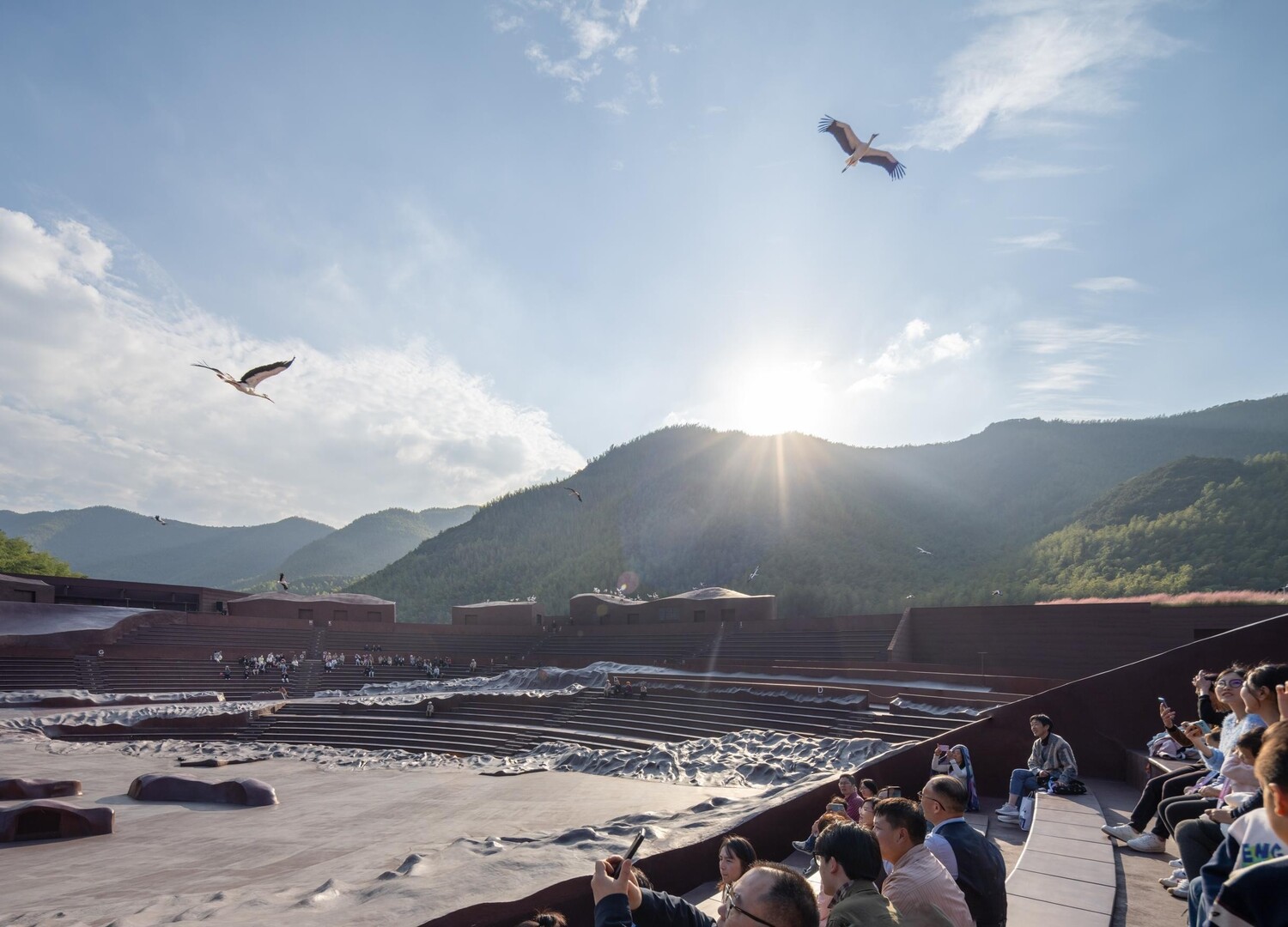
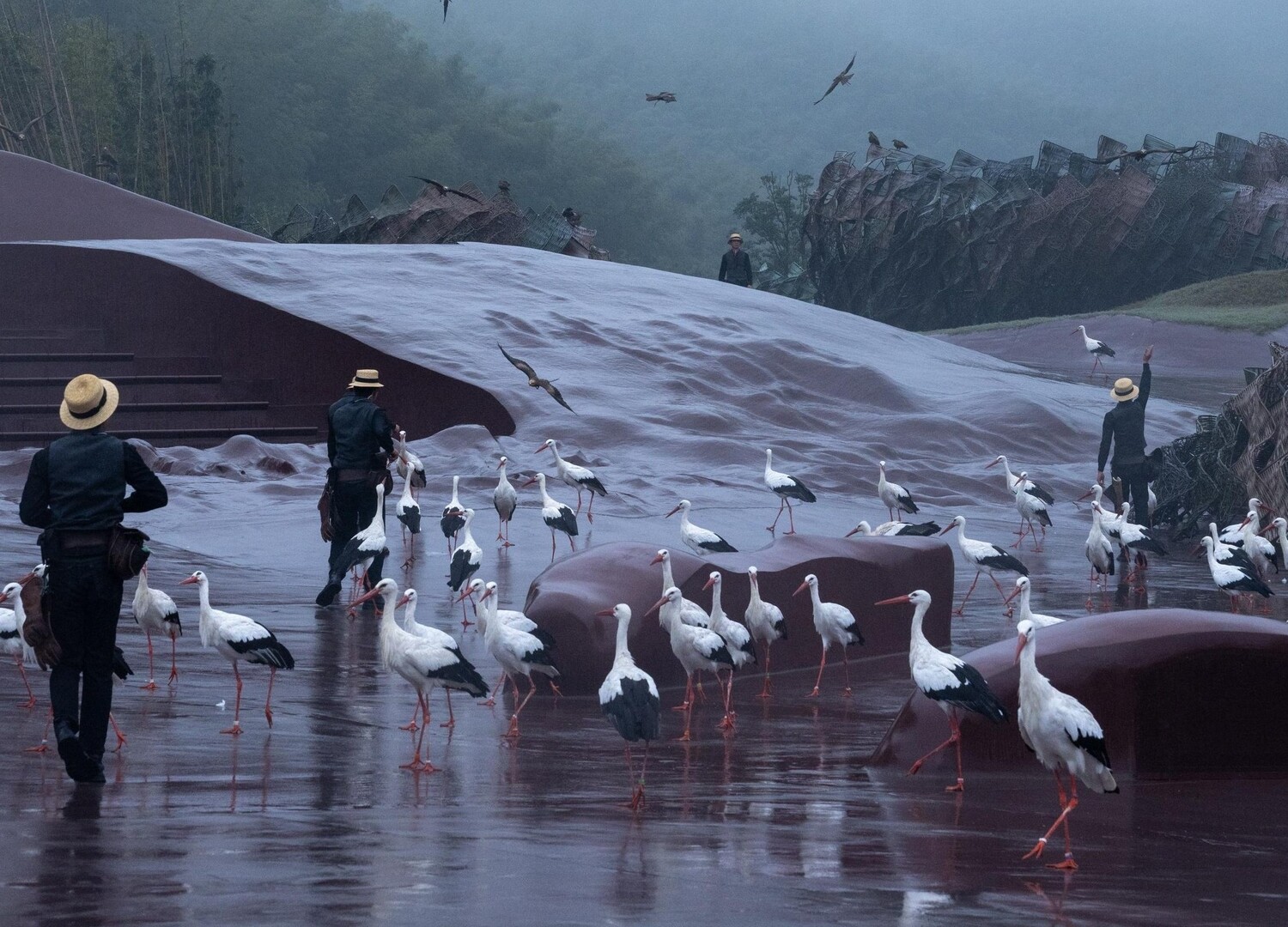
Created for Dancing with the Birds, an ecological storytelling performance directed by Fan Yue, the structure is conceived as an open system where birds can be welcomed and “feel at home’” thanks to dedicated resting areas and shelters. To make this possible, architecture and performance were developed together, taking into account the animals’ needs and the characteristics of the site. Nothing was left to chance…
Gallery
Open full width
Open full width
At the heart of the project is a broader reflection on the relationship between humans and nature. As continuous urbanization has gradually but inevitably separated people from other living beings, the Earth Valley Theater tries to imagine a different relationship: not a space designed exclusively from a human point of view, but an environment where animal behavior is not only considered, but also supported.
Earth Valley Theater:
Architecture seen through the eyes of birds
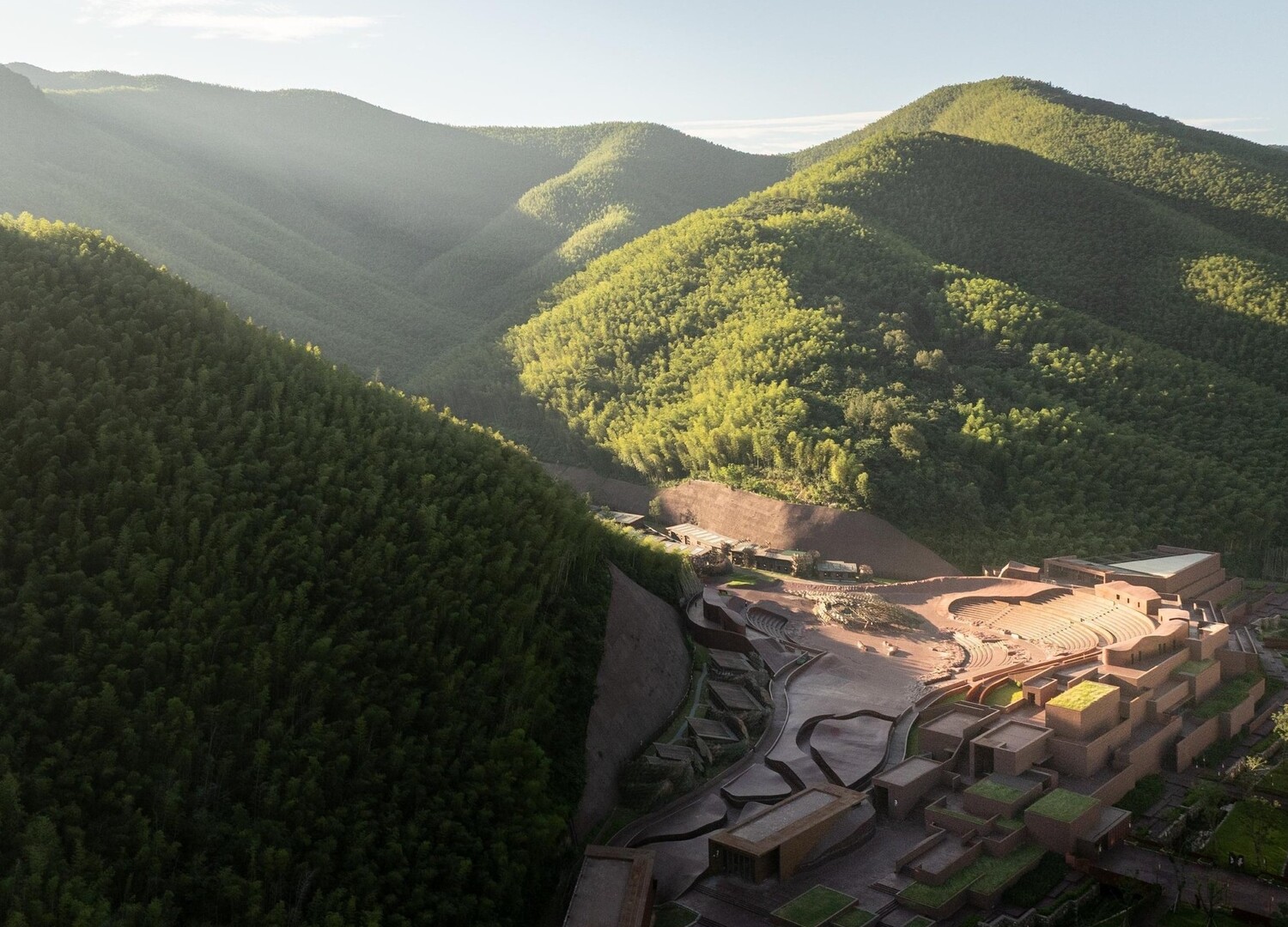
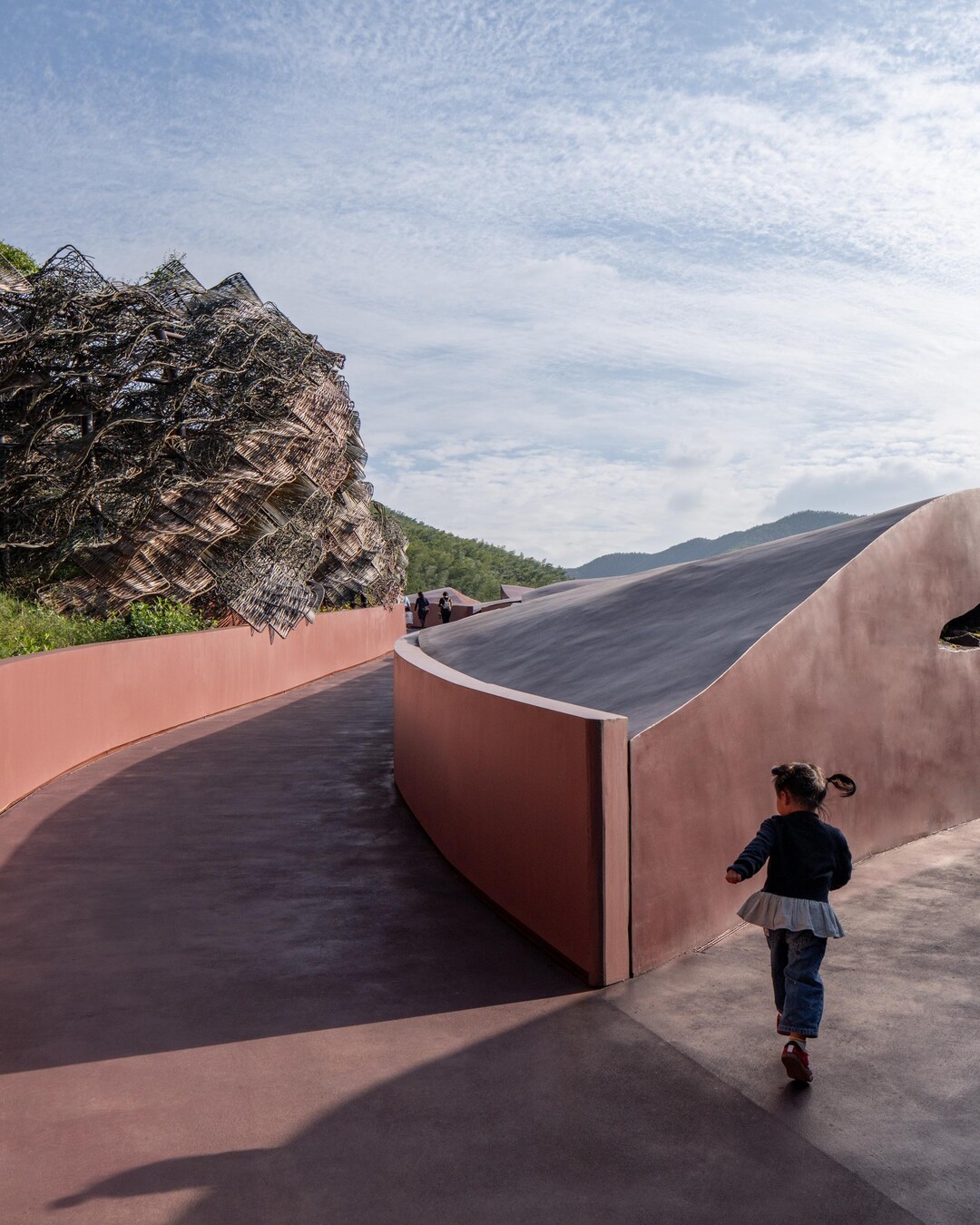
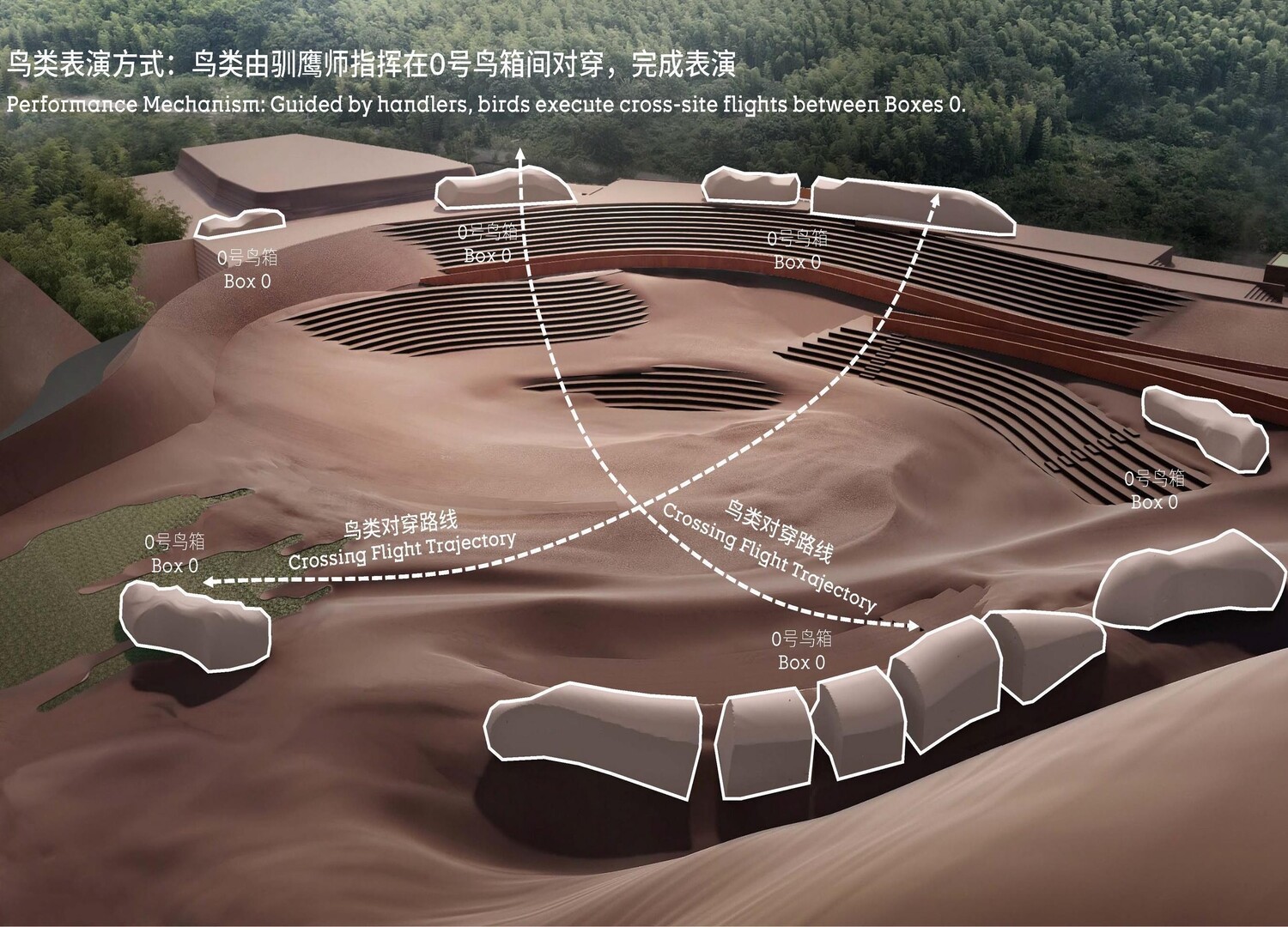
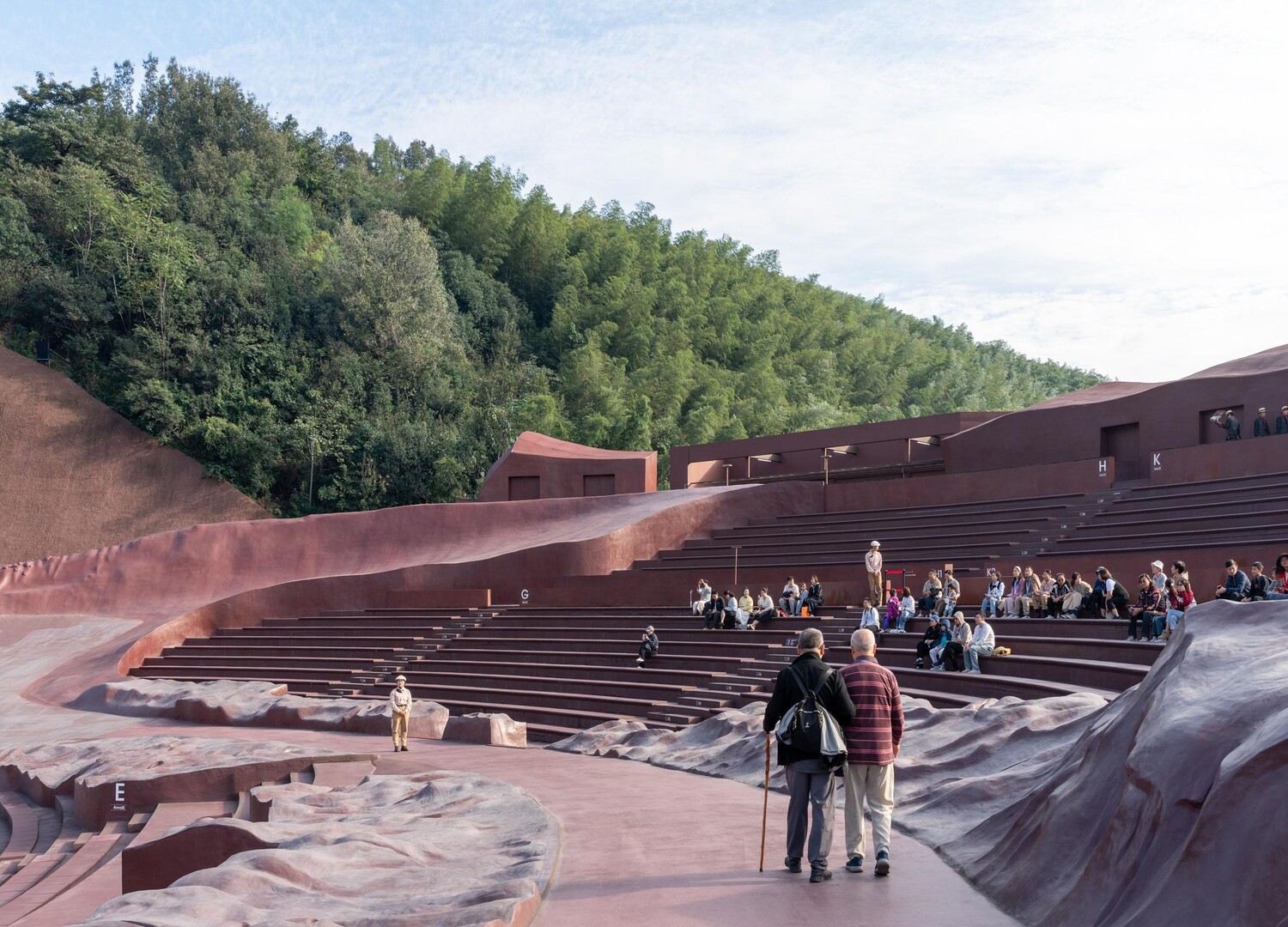
The theater does not impose itself on the valley, but follows its natural form. The 2,300-seat auditorium is embedded into the ground, while the surrounding hills become both habitat and scenery. A second valley houses the aviaries, maintaining a natural separation between the areas dedicated to birds and those intended for the audience.
The real challenge, however, was to design the space from the animals’ point of view. For this reason, specialists in avian behavior worked alongside the architects to study flight paths, take-off points, field of vision, safety conditions, habitat, light, sound, and wind. For example, the slope of the seating was calibrated according to the birds’ flight paths, allowing birds of prey to safely fly just above the audience, creating a performance within the performance.
Clay, bamboo and hidden technology: nature everywhere
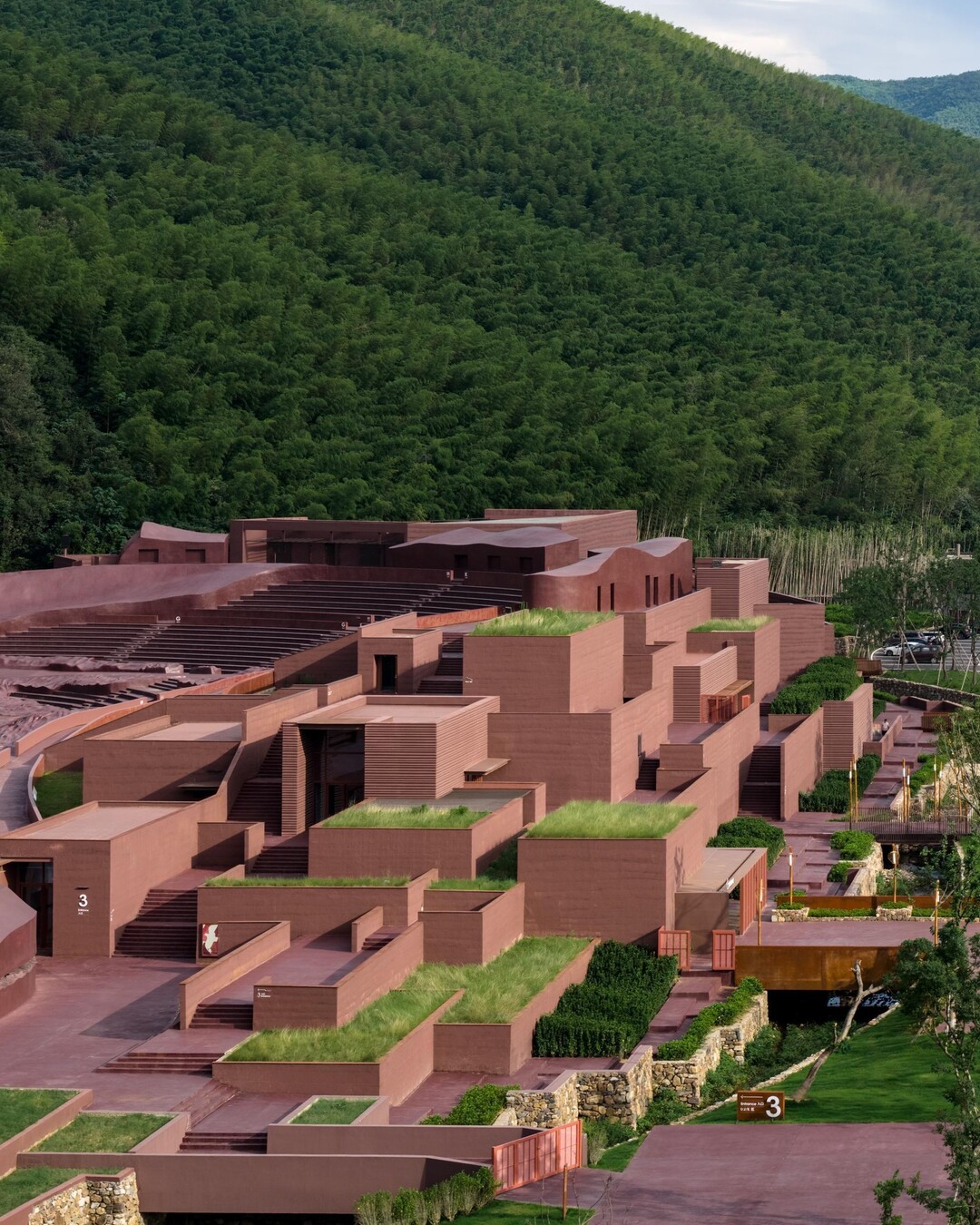
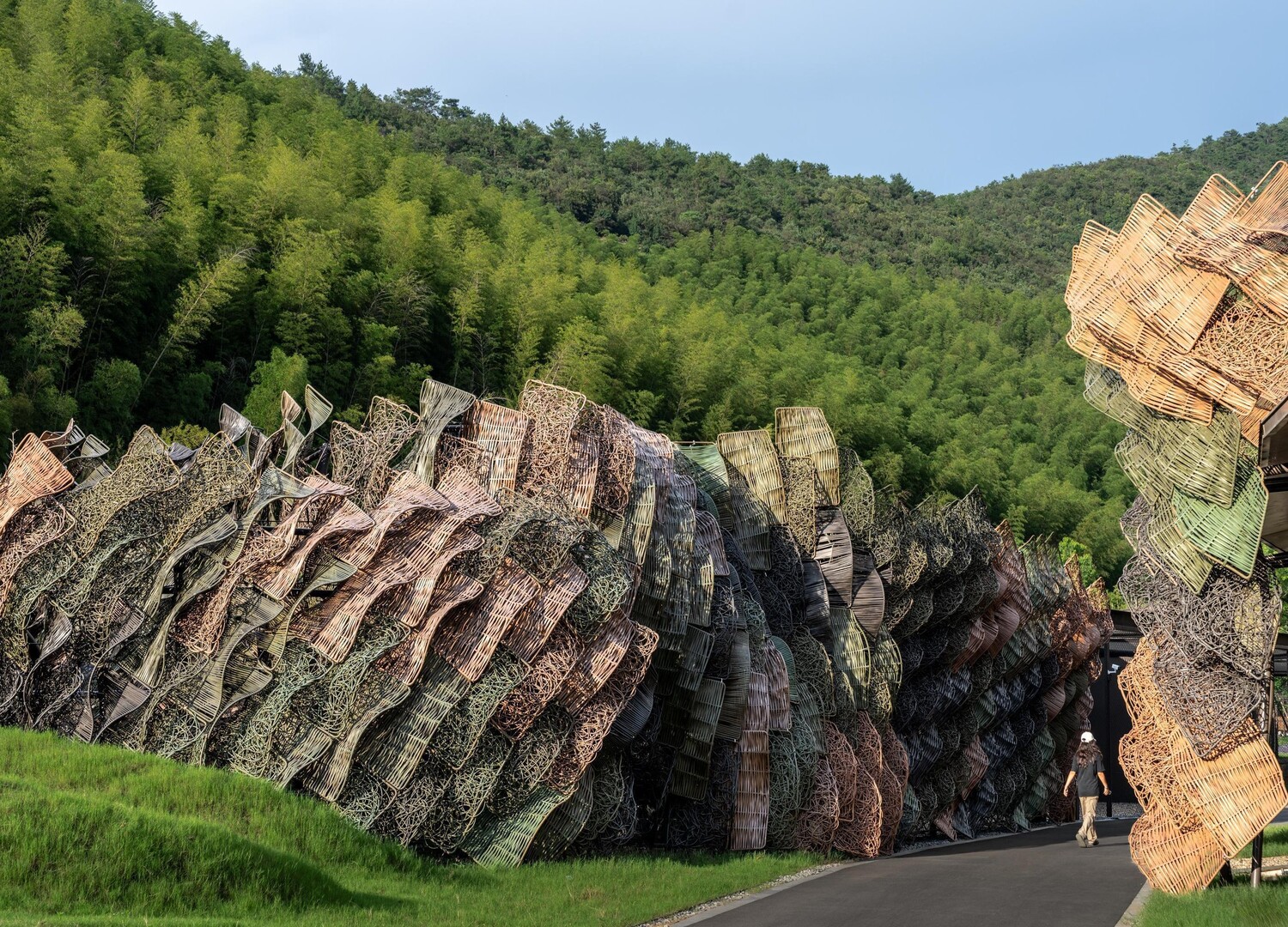
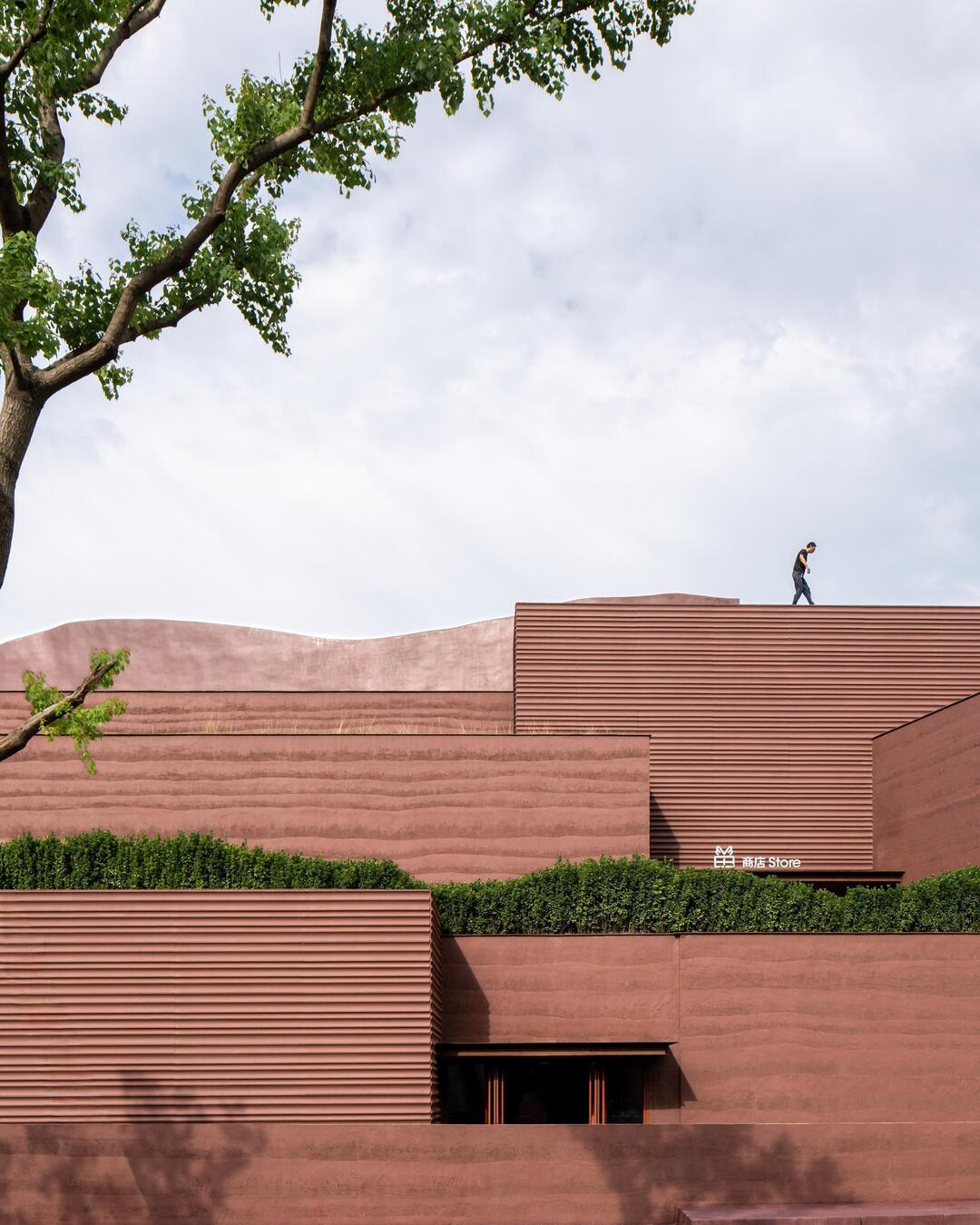
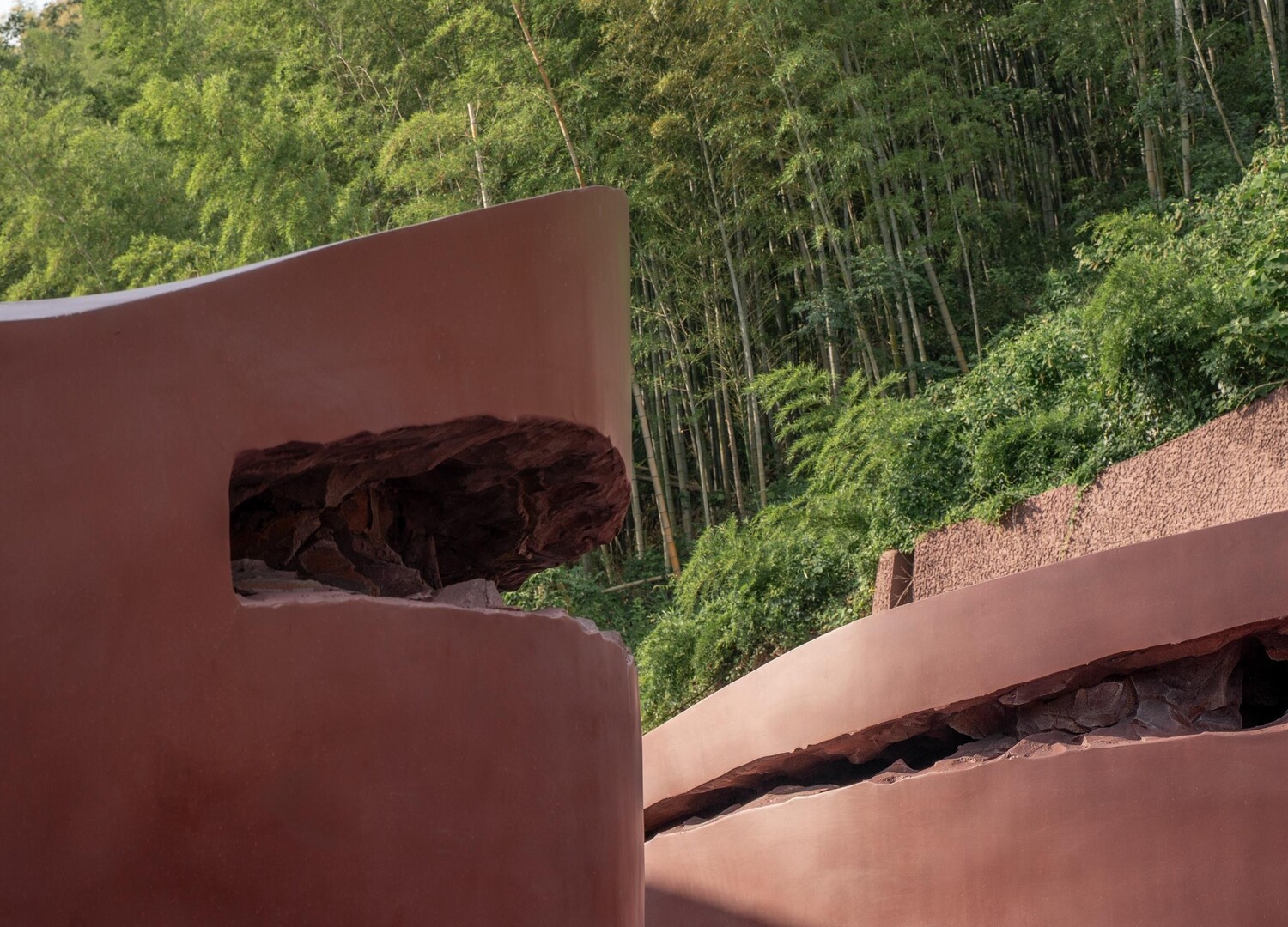
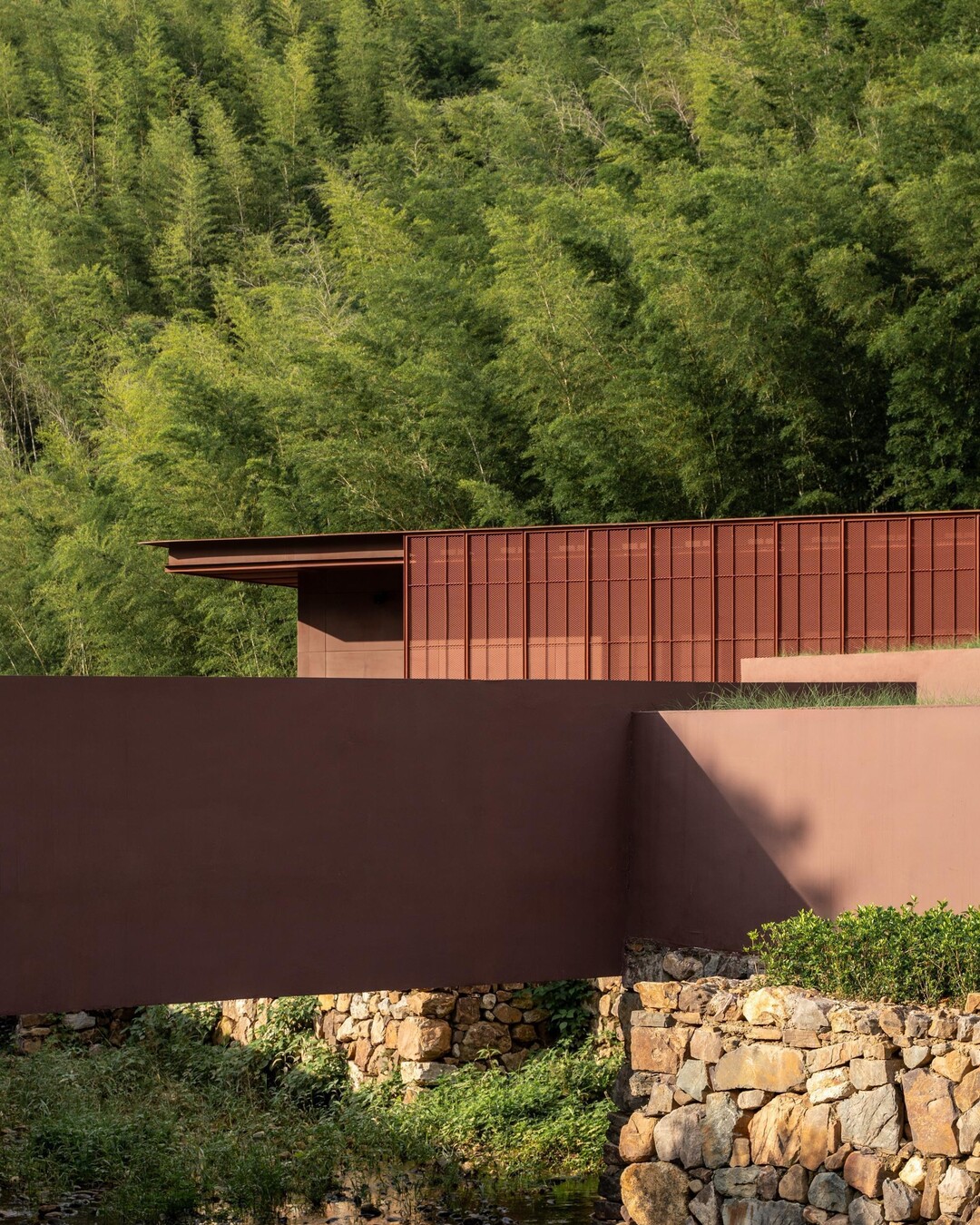
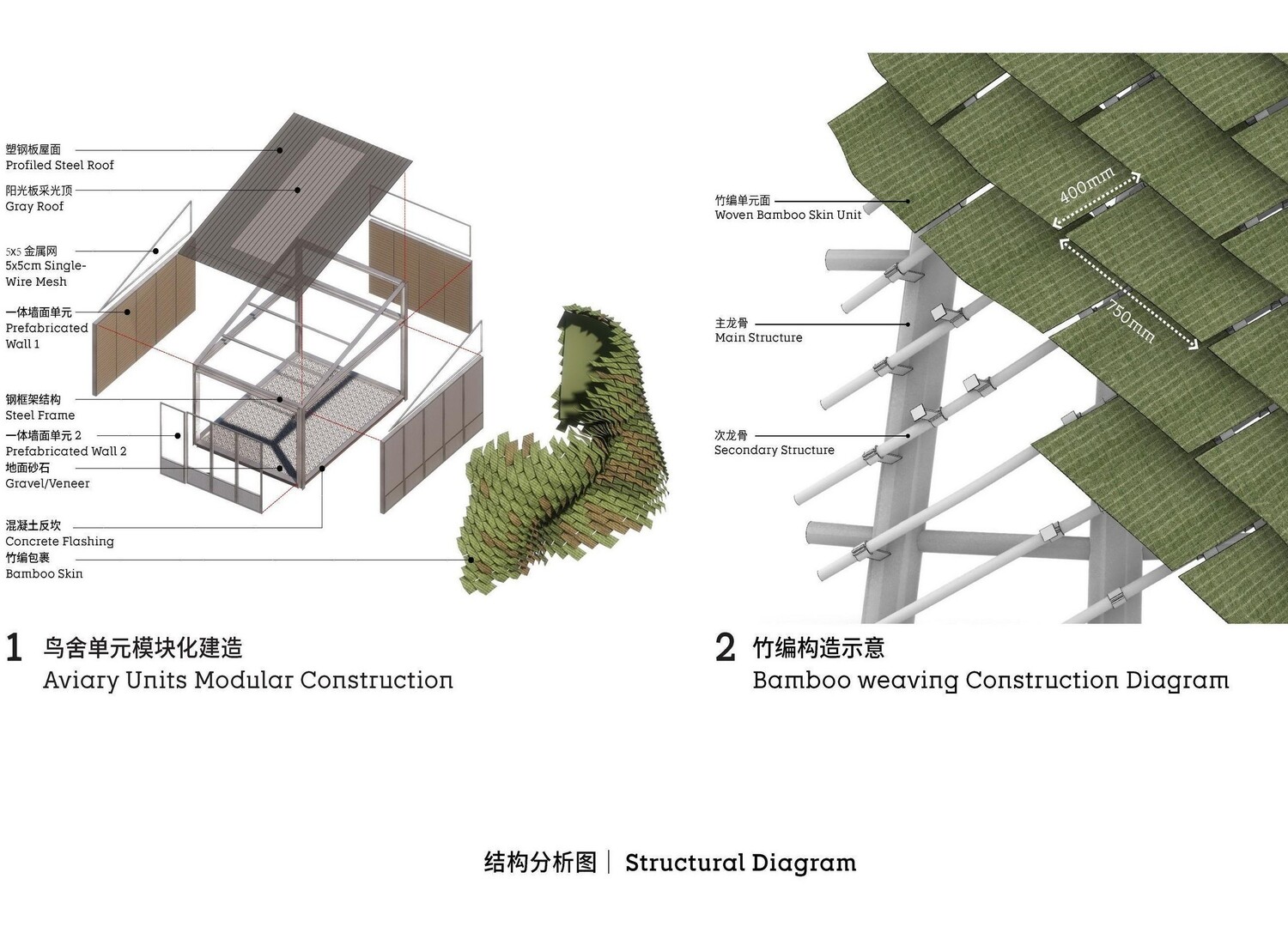
The materials also reflect the connection with the site. Yixing has a long tradition of ceramic production, while Yaohu Town, where the theater is located, is surrounded by a landscape dominated by bamboo forests. The first reference is expressed through concrete elements shaped using CNC machines and then finished by hand by artisans to recreate its appearance. The rough surface also helps prevent birds from becoming disoriented or slipping. Bamboo, meanwhile, is reinterpreted through high-density polyethylene elements that reproduce the look of woven bamboo on the aviary structures. The result combines a reference to local tradition with durability and reduced glare.
Behind an architecture that appears almost natural, however, lies a complex technical system. Rainwater is collected through channels integrated into the topography and connected to existing drainage channels and the water system, which also supports irrigation. Similarly, acoustic and multimedia equipment (for performances) is hidden within the structure so that it does not interfere with the surrounding landscape.
Attention to detail was also essential in the aviaries. Markers on the glass help reduce the risk of bird collisions, while thermally treated wood avoids the need for toxic paints. Even the gravel size, mesh openings, and division of spaces have been adapted to the needs of different species.
A “total work of art” for multiple species
Architecture and landscape, human performance, and animal behavior were studied and developed by GOA through a single process, together with the director and specialists in animal behavior, acoustics, and other fields. This approach recalls the concept of Gesamtkunstwerk, the “total work of art” theorized by German composer Richard Wagner, in which different elements become part of a single experience.
It also reflects GOA’s multidisciplinary approach. The Chinese architecture studio has been active for more than 25 years, working on projects ranging from residential and hospitality to offices and cultural and educational buildings, bringing different areas of expertise together throughout the design process. As in this case.
The Earth Valley Theater is therefore more than a theater immersed in nature: it is an experiment in a different way of designing space, where humans are no longer the only point of reference. As Xu Qi, the project’s lead architect, explains: “The Earth Valley Theater is an adventure of humans, nature, and the mind. Space is no longer a shelter, but a question: how far are we from nature, and how close are we to ourselves?” There is only one question left: how should we answer?