What makes a piece of furniture worth keeping? Its appearance, certainly, but also the way it is made, the details that emerge with time and how naturally it becomes part of a home. These questions seem to run through Kronos‘s latest collections, presented at EDIT Napoli, where the company brought together the work of two design studios, tolook and Stormo, around a shared interest in domestic furniture and its established typologies.
With more than thirty years of experience in furniture manufacturing, Kronos has built its production around a fairly straightforward idea: making well-designed, well-made furniture at an accessible price point. In 2023, the company introduced a new creative direction by appointing tolook, the Treviso-based studio founded by Luca Bernardelli and Lucrezia Teghil. The collaboration extends beyond product design, involving branding, communication and the overall development of the collections. It also marks a shift in the way Kronos approaches its audience, with a particular interest in a younger generation of designers and consumers.
Kronos at EDIT Napoli 2026:
A new generation, a different perspective
The starting point was a manifesto, as tolook explains: “We also defined a clear target audience: the middle class, now almost a niche, who can afford a little more but out of habit turn to fast furniture. Hence the idea of high-quality products at a fair price, simple at first glance yet carrying intrinsic details that reveal themselves slowly.”
This positioning is interesting because it addresses a gap in today’s furniture market: between mass-produced solutions and the increasingly exclusive world of collectible design. Kronos works within this space through familiar furniture types, giving them a different presence without turning them into objects of formal experimentation. The references to Scandinavian and Japanese design are evident in the attention to proportions, material choices and restraint, but the intention is less about adopting a recognisable aesthetic than finding a consistent design language of its own.
Revisiting the archetypes of domestic life
Duplo, designed by tolook, is perhaps the clearest expression of this approach. The collection revisits two pieces of furniture that have gradually disappeared from contemporary homes: the cassapanca, a storage bench, and the settimanale, a tall chest of drawers. Both respond to very basic domestic needs, yet their traditional forms have become less common in today’s interiors. Duplo brings them back with a simple intervention: each piece is divided into two sections by a horizontal line, the detail that gives the collection its name. Rounded edges and integrated handles soften the volumes, while different sizes and configurations allow the elements to work independently or together.
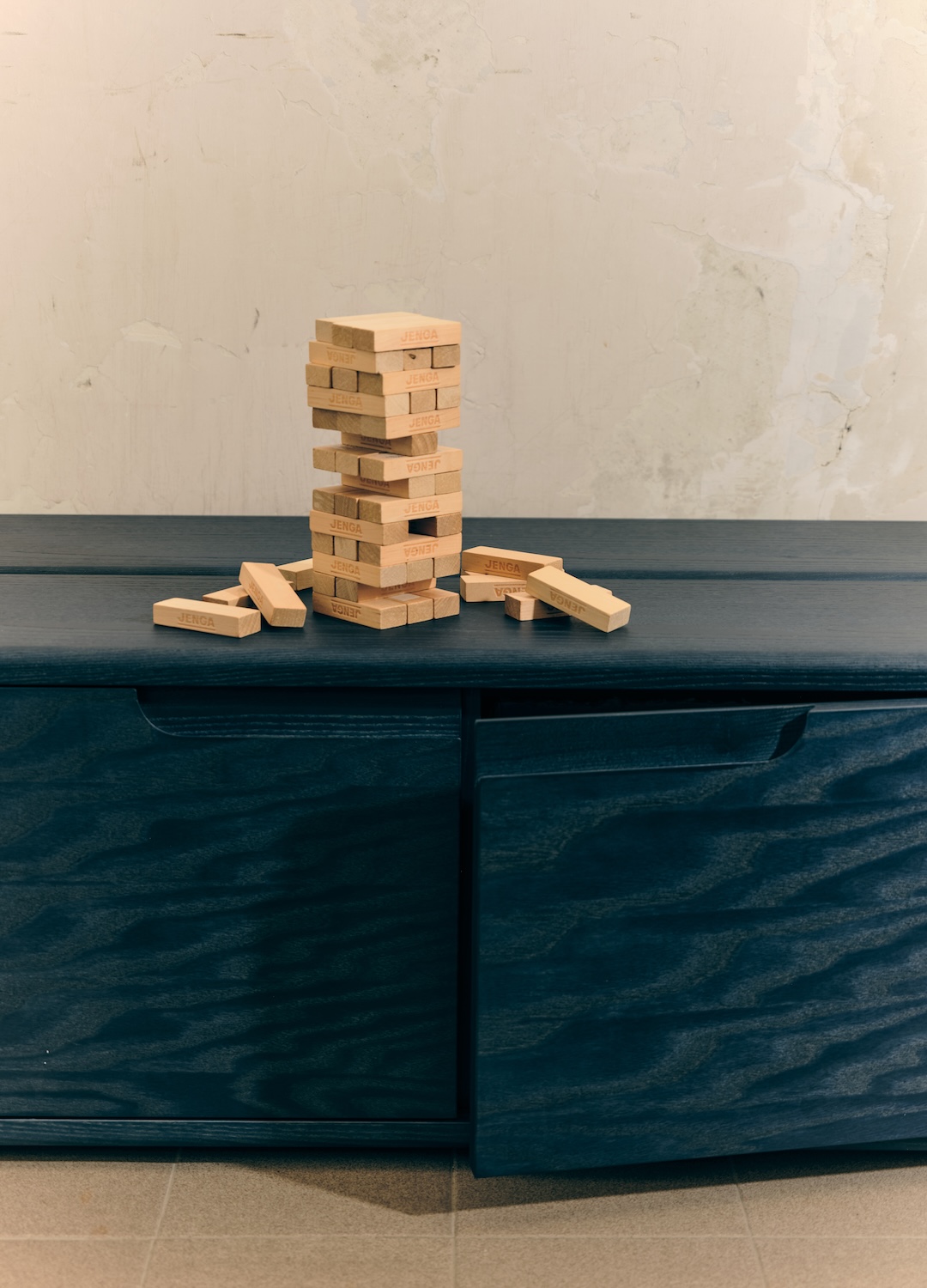
As the designers point out, “in the collective imagination they belong to the past, yet on reflection they answer the needs of today’s small living spaces.” It is precisely this distance between an object’s history and its current usefulness that makes Duplo an interesting exercise in contemporary furniture design. Rather than inventing a new typology, tolook looks again at something we already know, reconsidering its place in the home.
A different reading of domestic archetypes comes from Tomo, designed by Elena Calabrò and Michael Carion of Stormo Studio. Here, the starting point is equally familiar: a bookcase, a sideboard, a cabinet that can also serve as a bar, and a small step stool designed to double as a bedside table or an element in an entrance hall. The difference lies in their visual language. Stronger volumes, essential geometries and contrasting materials give the pieces a more pronounced architectural presence, without altering their basic functions.
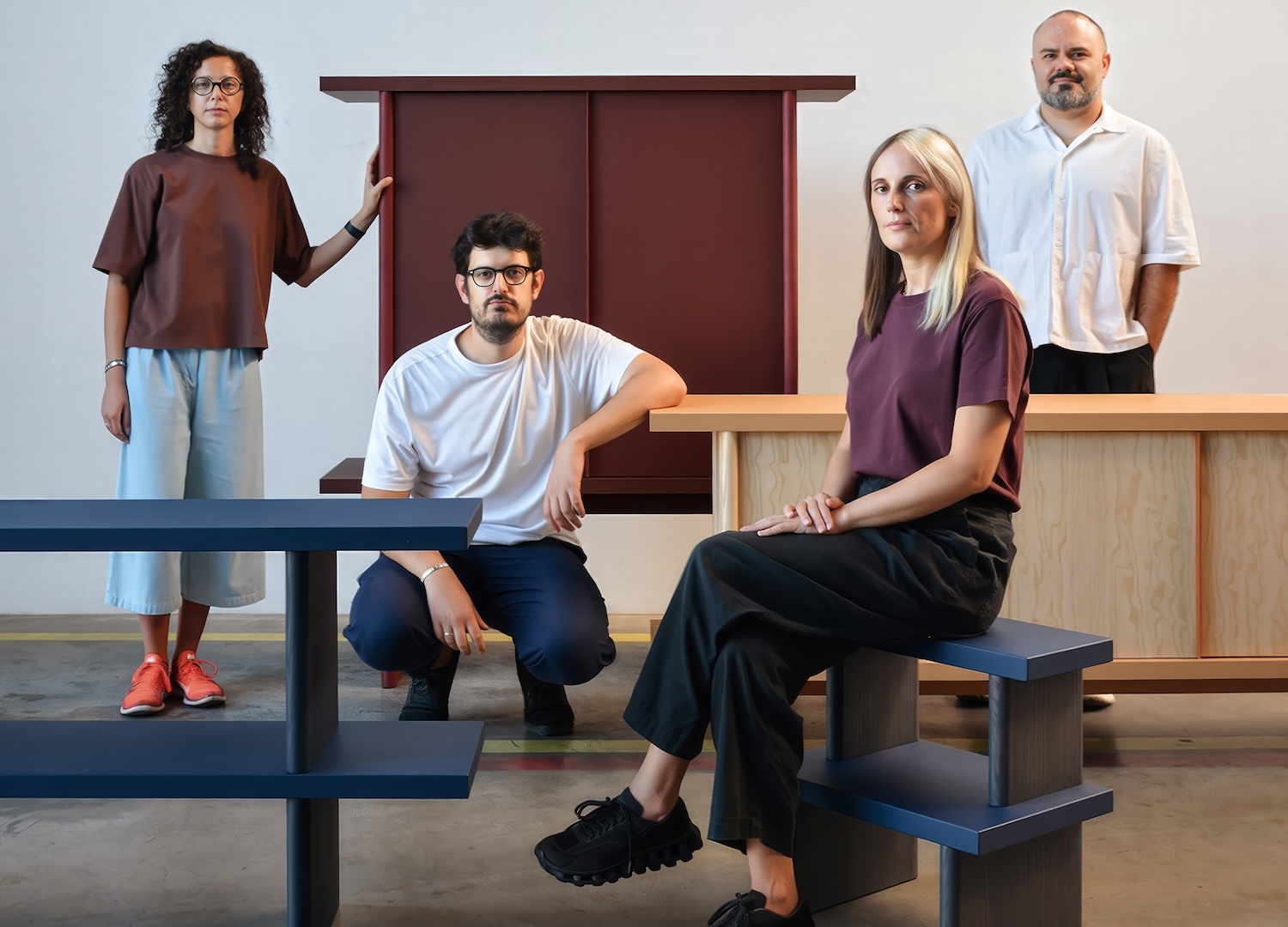
“Tomo was born from the desire to return to the essence of furniture, exploring the idea of the archetype. We asked ourselves what objects truly inhabit our homes, the ones that respond to the simplest, most everyday needs: storing, organizing, supporting, keeping and displaying. We chose to start from familiar, almost universal typologies, reinterpreting them through a distinctive formal language made of clean volumes, essential geometries and recognizable proportions. We weren’t interested in inventing new functions, but in giving a new presence to objects we have known forever.
These are pieces of furniture that belong to the most ordinary dimension of domestic life, without claiming to be special or extraordinary objects. This is precisely what interests us: designing pieces that can become part of people’s lives, adapt to different settings and accompany the gestures we repeat every day. After all, we believe that everyday life is where design finds one of its deepest purposes.”
The collection also reflects a close exchange with Kronos around materials and production. As Stormo describes it, the aim was to understand how surfaces, volumes and details could contribute to a shared identity, rather than simply applying a material finish to an existing range. The result is a family of objects with a distinct formal character, yet firmly rooted in the ordinary activities of a home.
Placed alongside each other, Duplo and Tomo reveal two different ways of approaching the same subject. While tolook works through the reinterpretation of familiar forms and their relationship with space, Stormo gives greater emphasis to volume, structure and material contrast. Neither collection relies on novelty for its own sake. Their point of departure is the furniture we already live with, and the possibility of looking at it differently.
The details that shape an object
The same attention to form can be found in Croma, a chair by tolook introduced in 2024. Made with a solid wood frame, it features a gently curved backrest and a restrained silhouette. Its proportions and connections are central to the design, while the option of a contrasting finish on the backrest introduces a small but effective variation. A relatively simple chair, Croma leaves little room for decorative gestures, making the relationship between its individual elements all the more important.
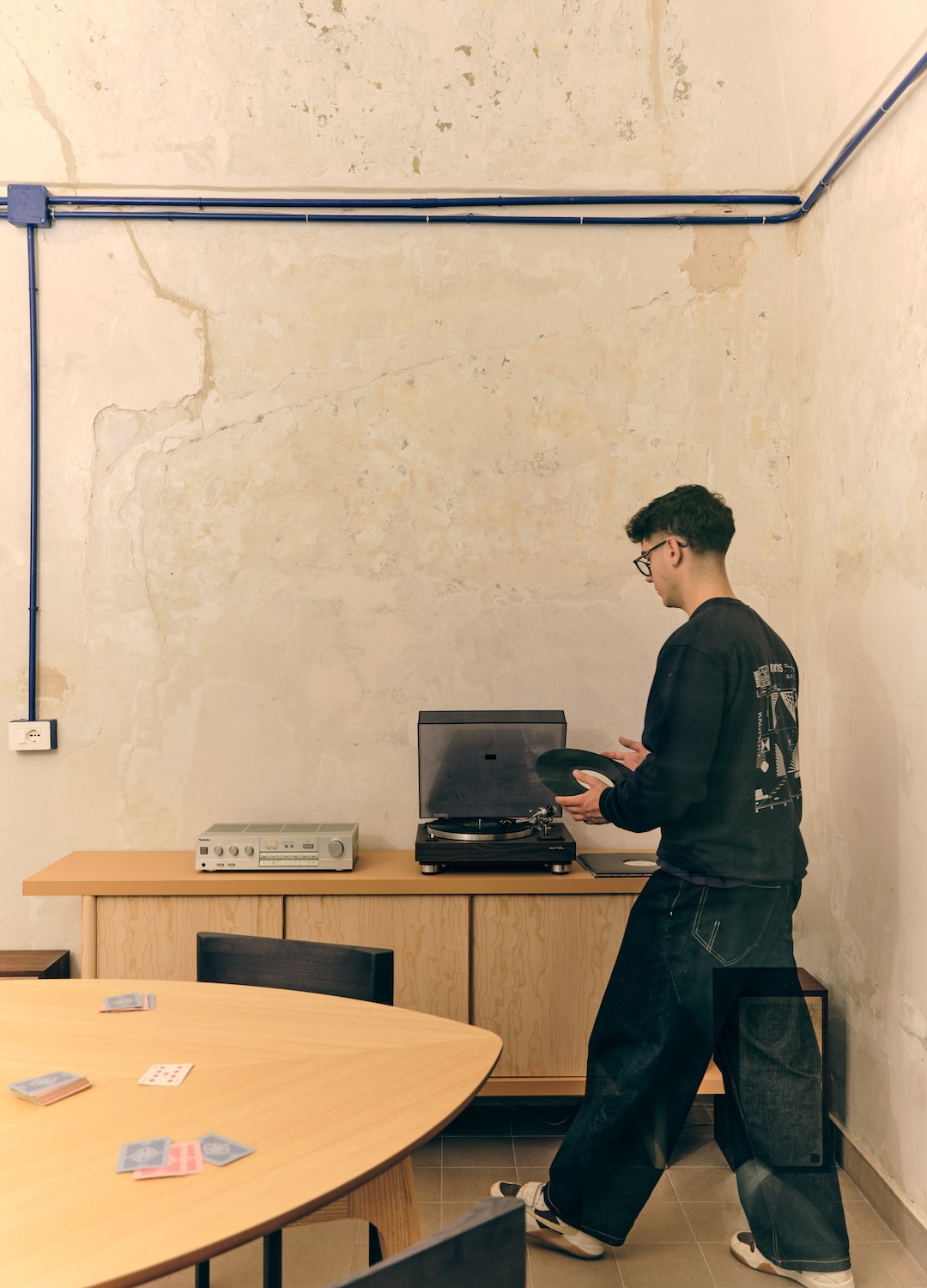
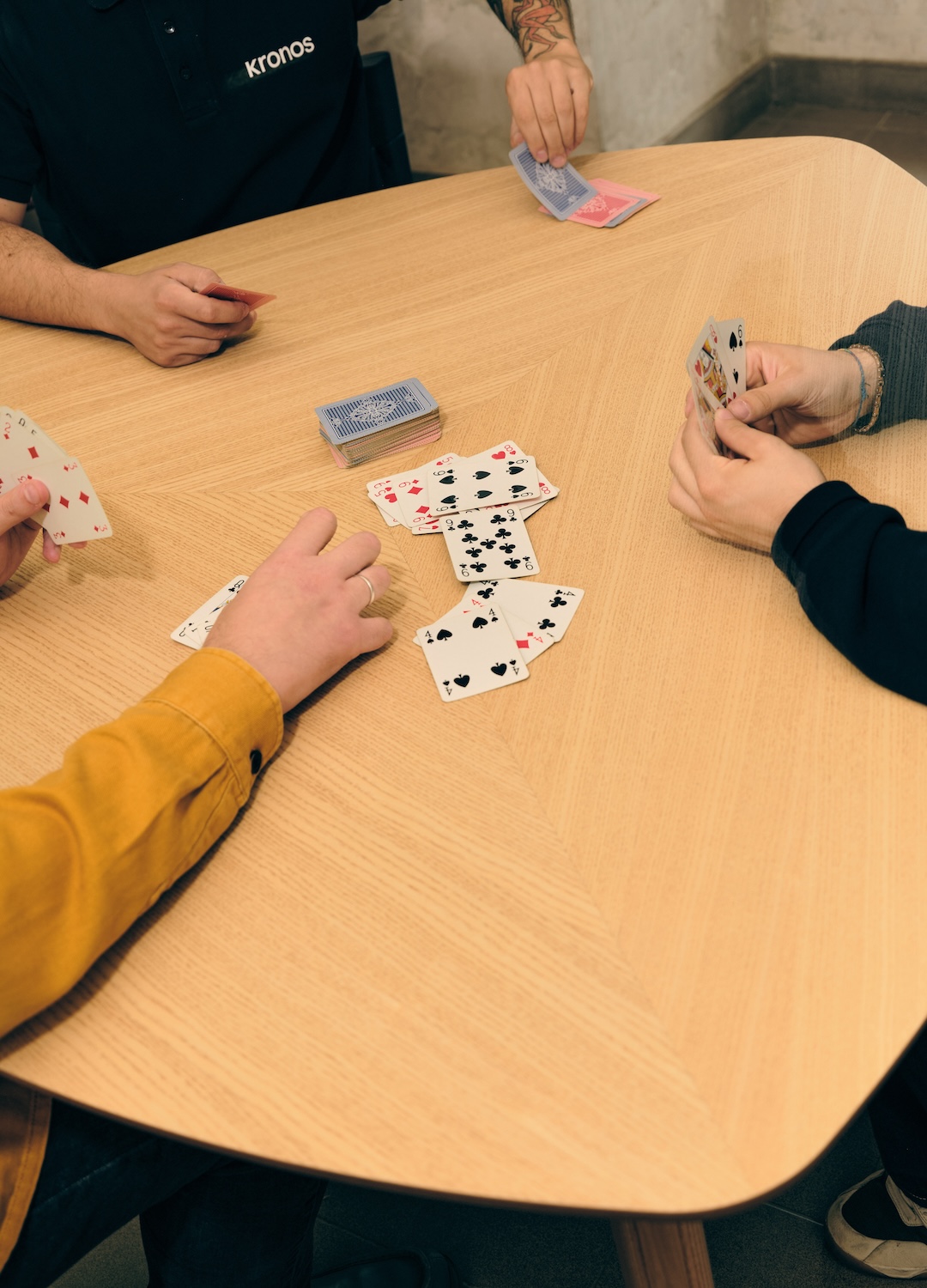
At EDIT Napoli, Kronos chose to present these collections through a reconstruction of everyday domestic scenes rather than a conventional exhibition stand. Card games, vinyl records and an aperitivo provided the setting, echoing the manifesto behind the collaboration with tolook. It was a way of bringing the furniture back to the scale of the home, where its qualities are measured through use, proportion and the relationship with the objects around it. A fitting context for a company now looking at its own manufacturing history through the eyes of a new generation of designers.

Ludovica Proietti
Ludovica Proietti, journalist, design historian and curator, teaches in universities and curates events, always exploring projects with fresh, unconventional perspectives.