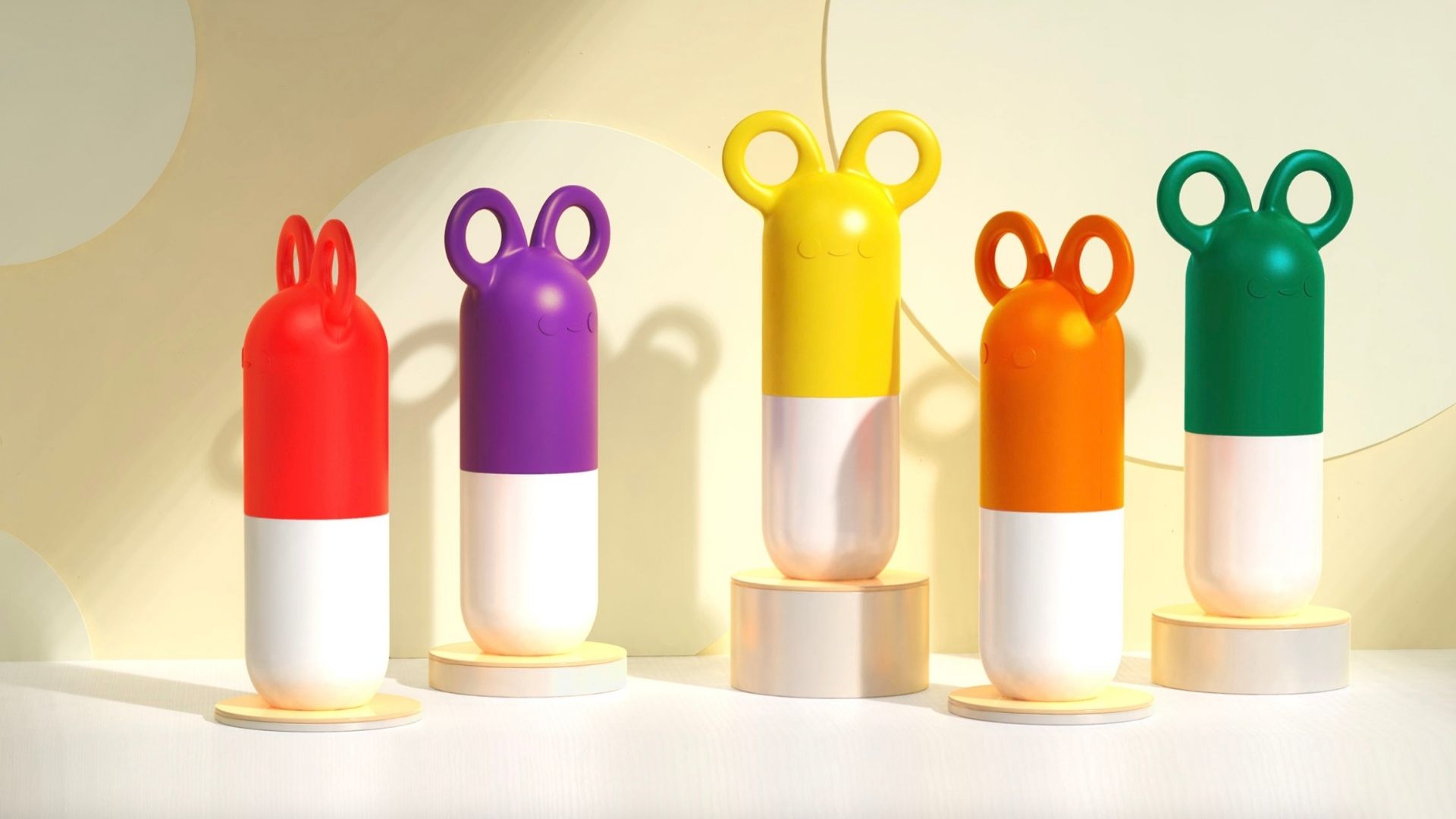
EDIT Napoli 2026: on the importance of conversation and community
Italy’s southern capital hosted the eighth edition of EDIT Napoli; a fair dedicated to editorial design, focused on the relationships between design and its makers.
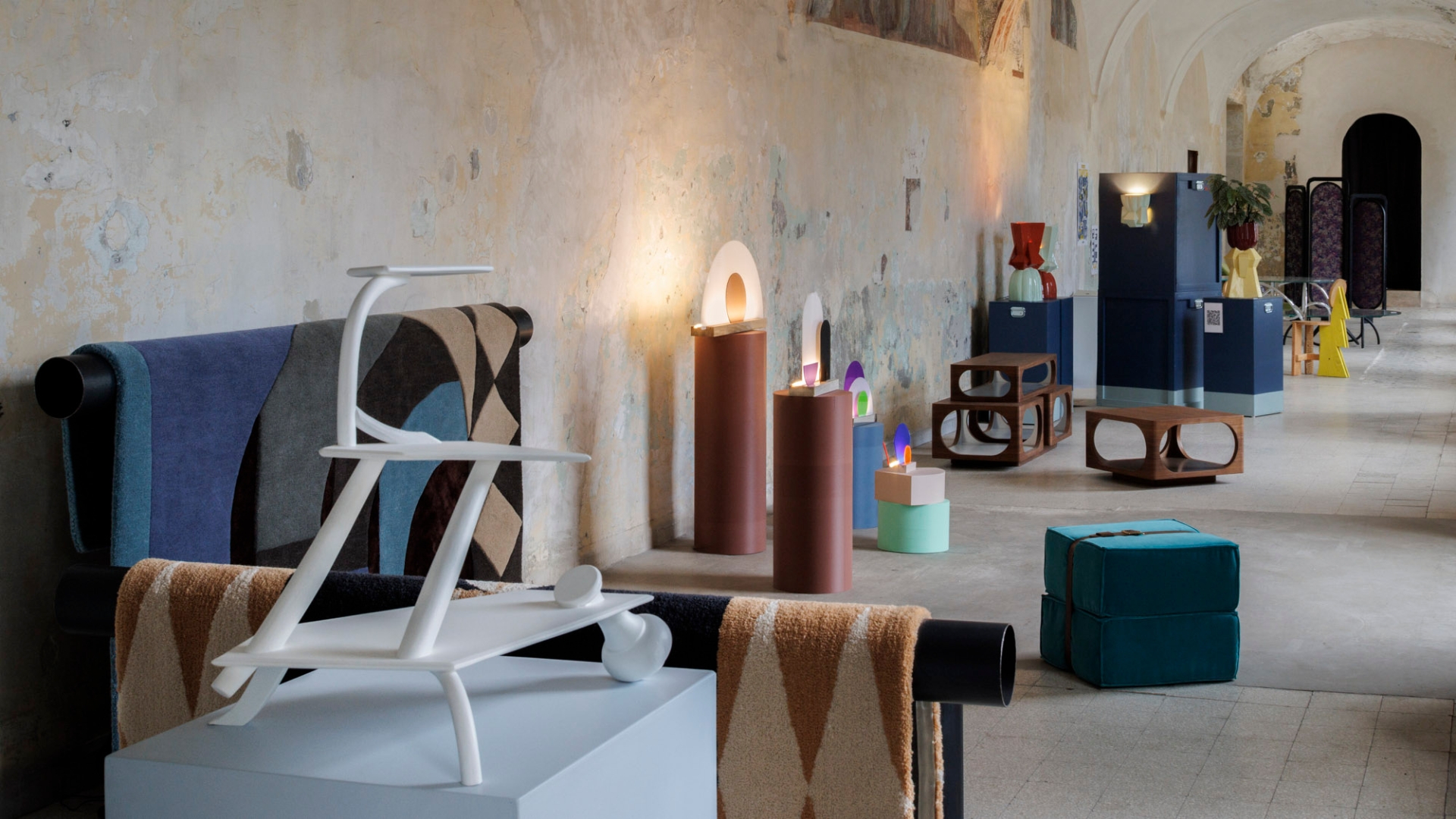
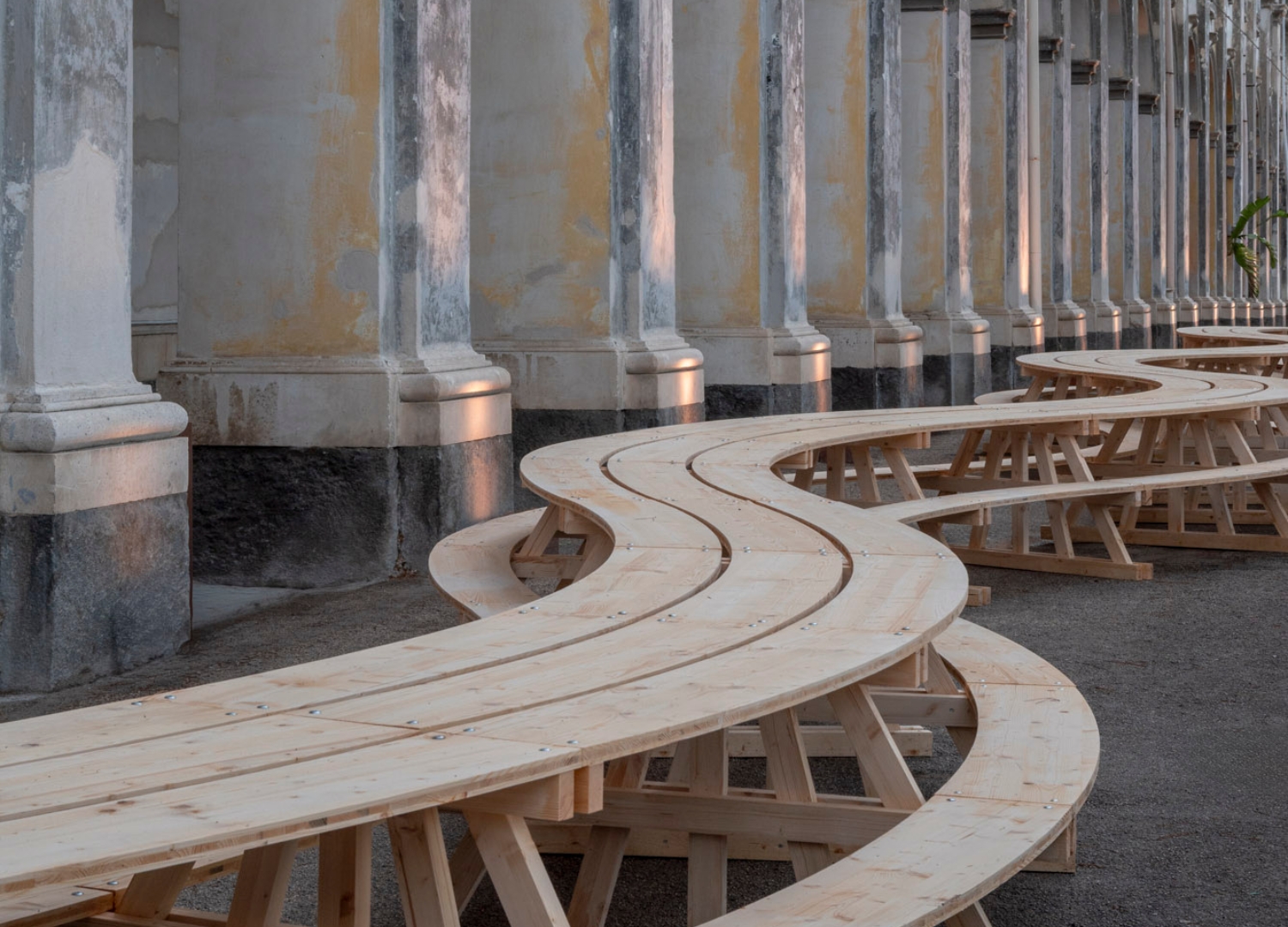
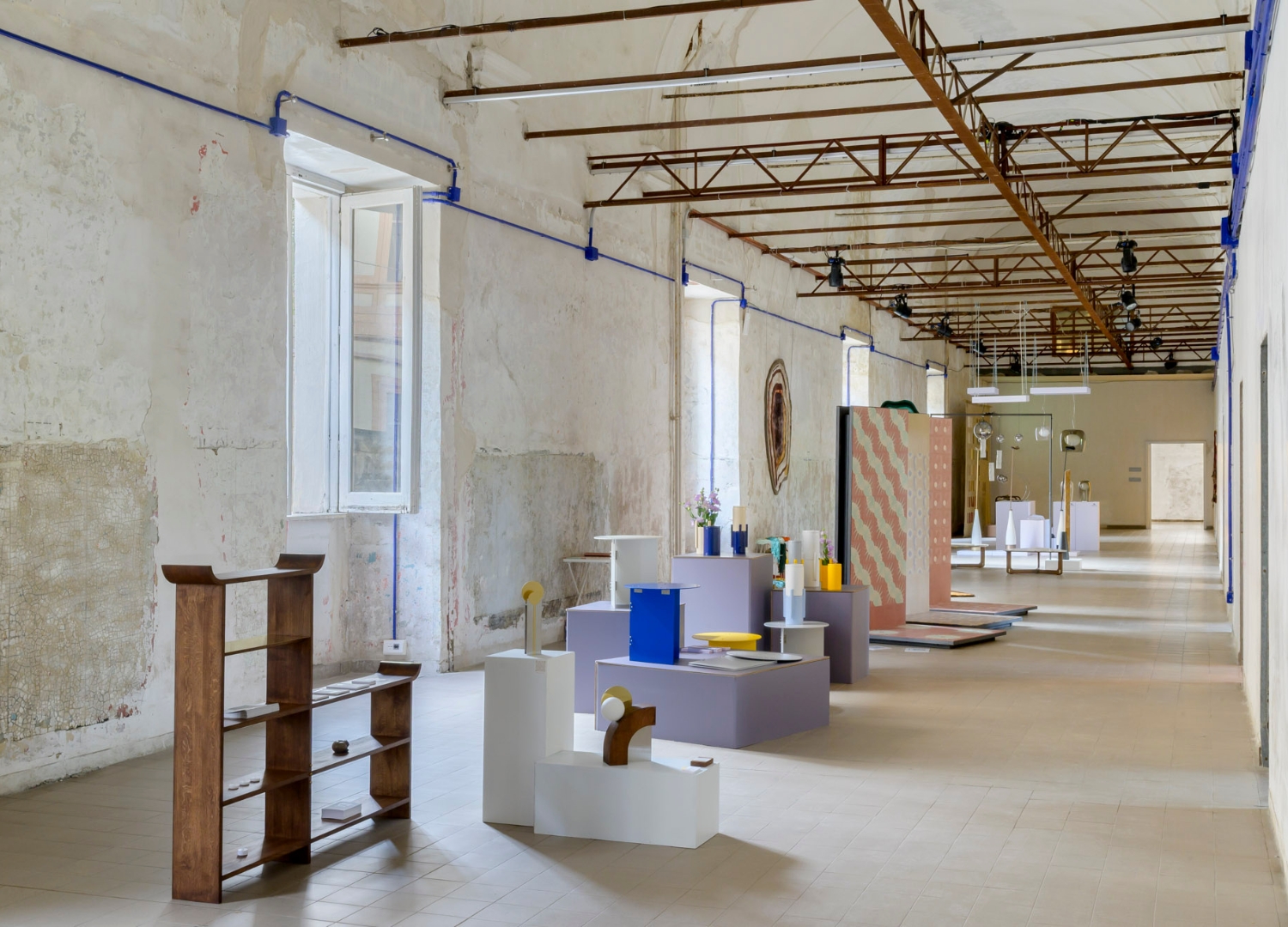
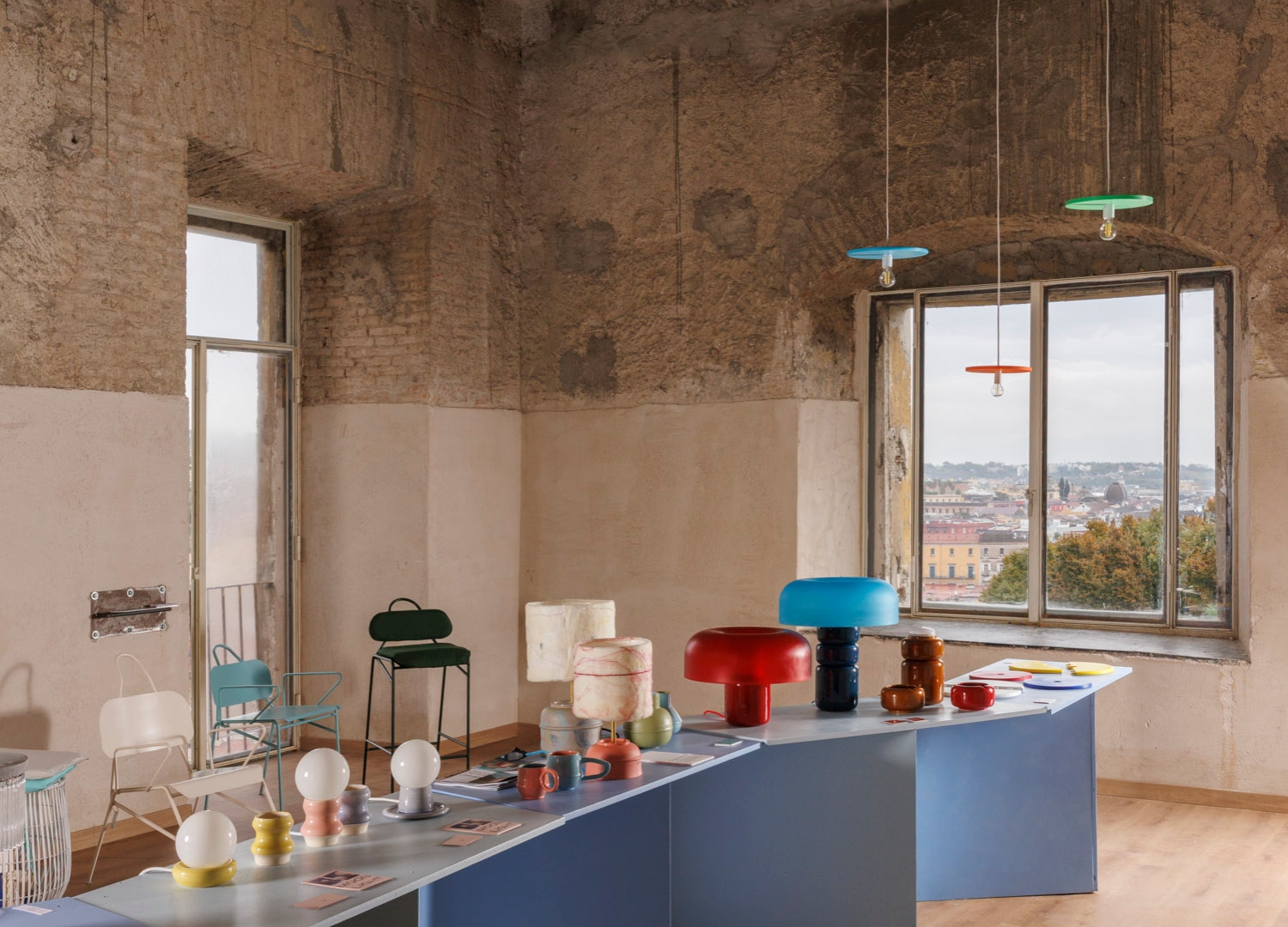
EDIT Napoli returned on 9-11 October 2026 to La Santissima and to several locations in Chiaia, with around 80 Italian and international exhibitors. This year’s theme, Where Design Shapes, shifts attention from the finished object to the process behind it: materials, gestures, skills, relationships, and production models. In a market that tends to reduce design to image and trend, the fair argues for research and for the culture of making.
The fair’s founders, Domitilla Dardi and Emilia Petruccelli, created EDIT Napoli because they saw a gap between industrial design and collectible design, which is more tied to the art-fair circuit. They wanted a place for editorial design: expressive, small-scale, and made with a strong sense of authorship.
Gallery
Open full width
Open full width
EDIT Napoli 2026 – Highlights:
A festival for connection
Still, the most striking part of the fair is its community. While in Milan, and at most larger events, encounters are brief and rushed between an aperitif and a taxi, Naples keeps a smaller and slower rhythm. Dardi describes the fair as family-run even after eight editions: a household of relationships formed over the years, which have in turn generated new work and new projects.
At this size, the festival feels like one long conversation, and conversations are often where new work begins. When the pace drops, listening becomes possible, and listening is where invention starts: a designer has time to explain an idea and a manufacturer has time to hear them, a maker can see their own craft reflected in a stranger’s questions, and a writer like me discovers they came for the design and stayed for the people.
Naples’ slowness and romance are not a decoration to the fair but the very essence of it, because they make room for attention, connection, and trust, which are ultimately what new ideas in design are shaped by. This is what the 11 projects that follow have in common; some were made by 5 workshops, others in a prison, in a ceramic lab in Amalfi, or in the water of the Gulf. Each is the result of people who took the time to meet and the patience to work together.
Tempesta in Galera by Monoferments
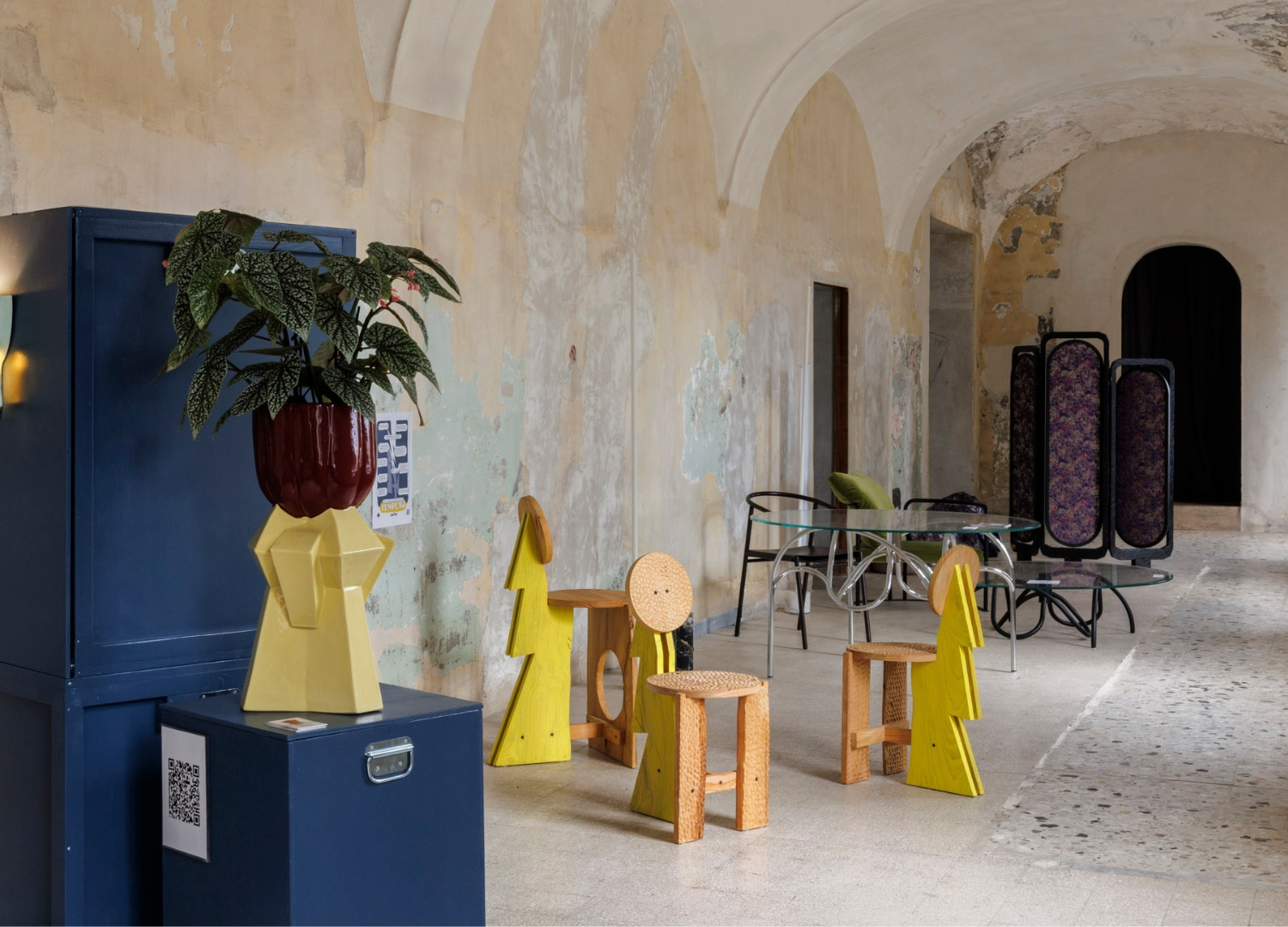
Monoferments is the independent research lab of Monostudio in Milan, dedicated to natural, local, and reclaimed materials. The Tempesta project began with the storm that hit Milan in 2023, from which the studio used the fallen trees to build furniture. However, the project’s evolution came with its makers: the studio collaborated with Monza’s prisoners, who participated in a training programme for designing and making a stool with few tools and accessible skills.
Each stool is unique and keeps the traces of the wood and the people who made it. Monoferments’ co-founder Elisa Evaso is especially proud of the project because of the positive impact it had on everyone involved: giving new life to a material, new skills to the young inmates, and a fulfilling experience for the designers.
In Between by Artieri 1895
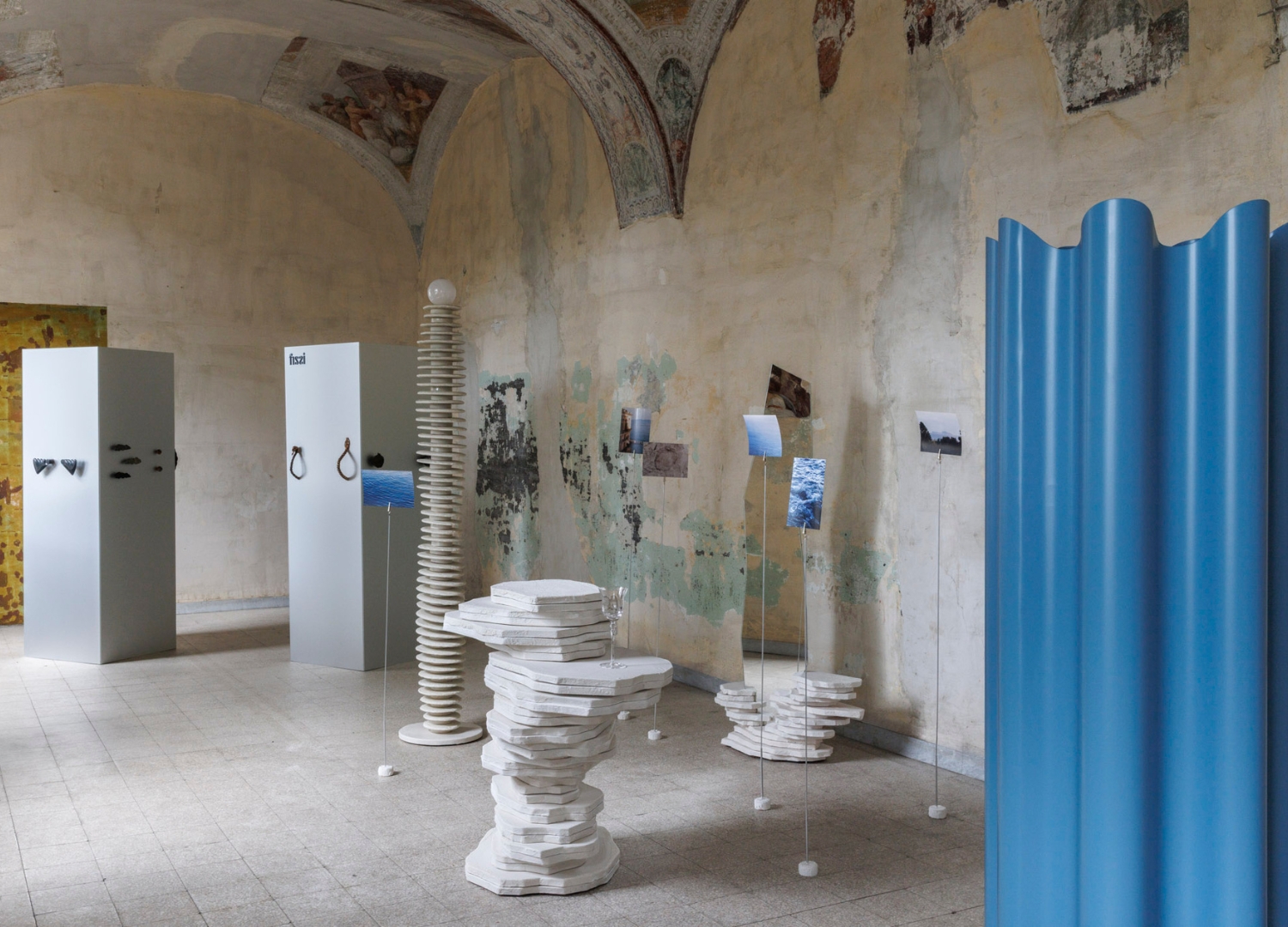
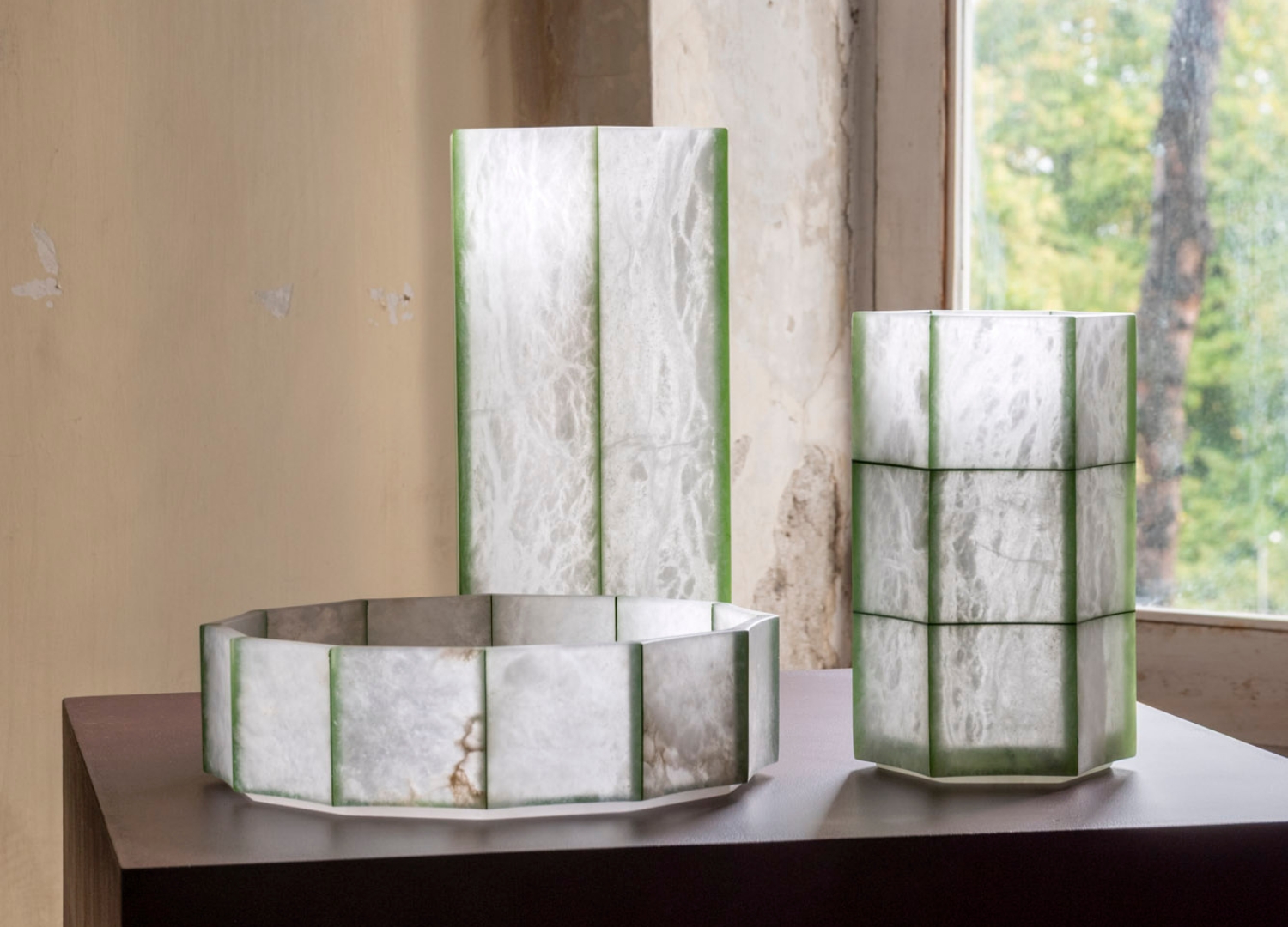
Artieri 1895 presented two projects this year, one of which, Fade by Zaven, won the award for the Main section of the fair. Fade is a collection of vases and side tables that bring colour to the joint, which is normally hidden. Made in translucent alabaster, a veil of light blue spreads from the edges to highlight them like a liquid shadow.
Fade was accompanied by Lotto Studio‘s Pila, a modular system of tables, sideboards, and shelving that combines handcrafted alabaster columns with thin, perforated stainless steel surfaces. Sitting between architectural decoration and utilitarian furniture, contrast is what makes the objects successful.
Due Sicilie by Debonademeo for Chroma Composites
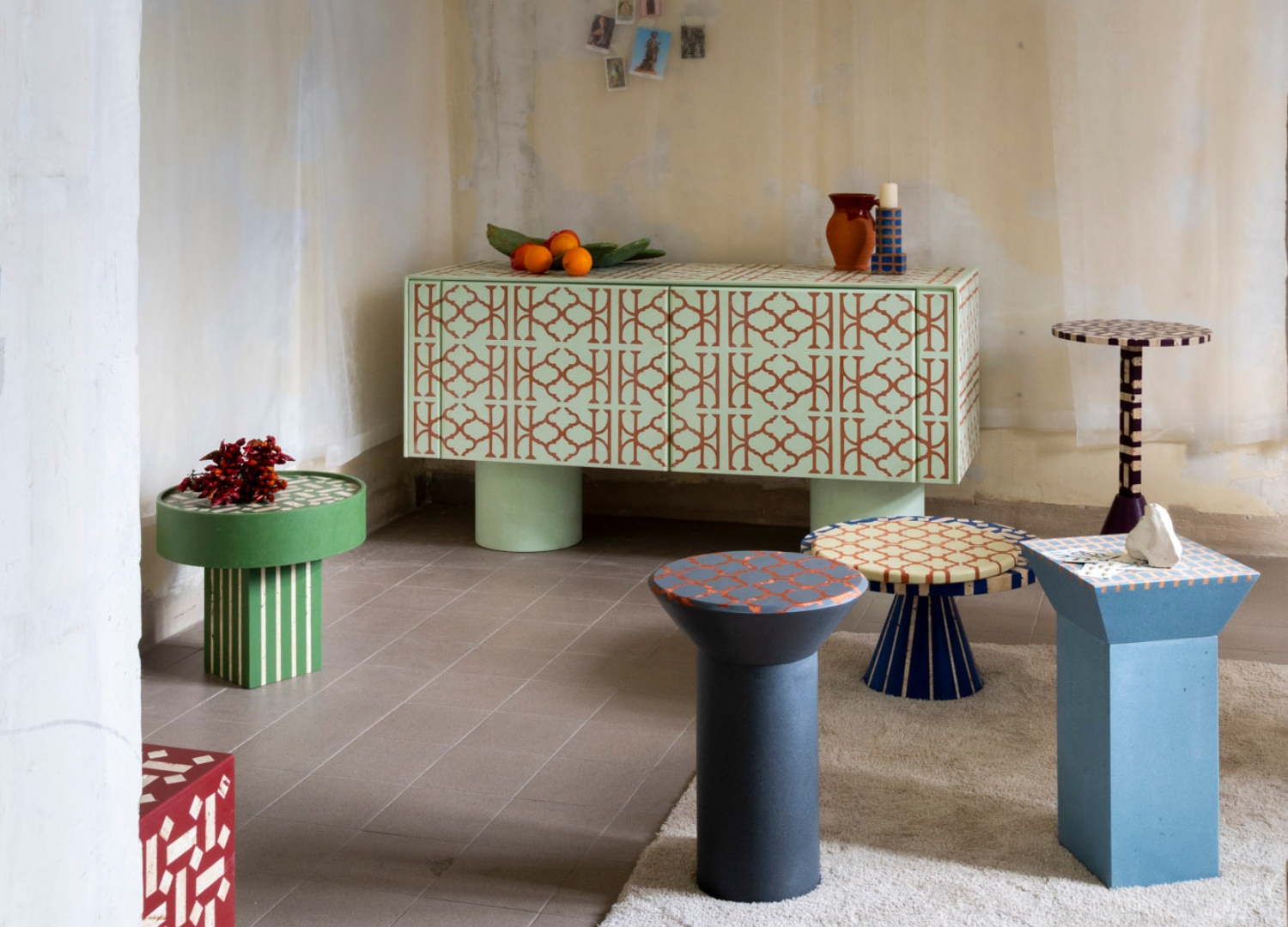
Debonademeo’s Due Sicilie for Chroma Composites grows into what the studio calls a Mediterranean Wunderkrammer. The collection began in 2025 as vases and small tables inlaid with geometric fragments of discarded travertine in composite resin, while the 2026 pieces are larger and more architectural: tables, stools, benches and storage units made from terracotta cubes and small bricks that are stacked, set side by side, and immersed in mineral colour until they form three-dimensional patterns.
Colour here is not applied but permeates the material, which turns the surface into something dense and tactile. The studio draws on rural Mediterranean brickwork, where a brick carried the structure, made ornament, and let air and light through.
Cork Coated Found Wood by Lucas Muñoz Muñoz + Joan Vellvé (ex-debris) and Corradino Garofalo
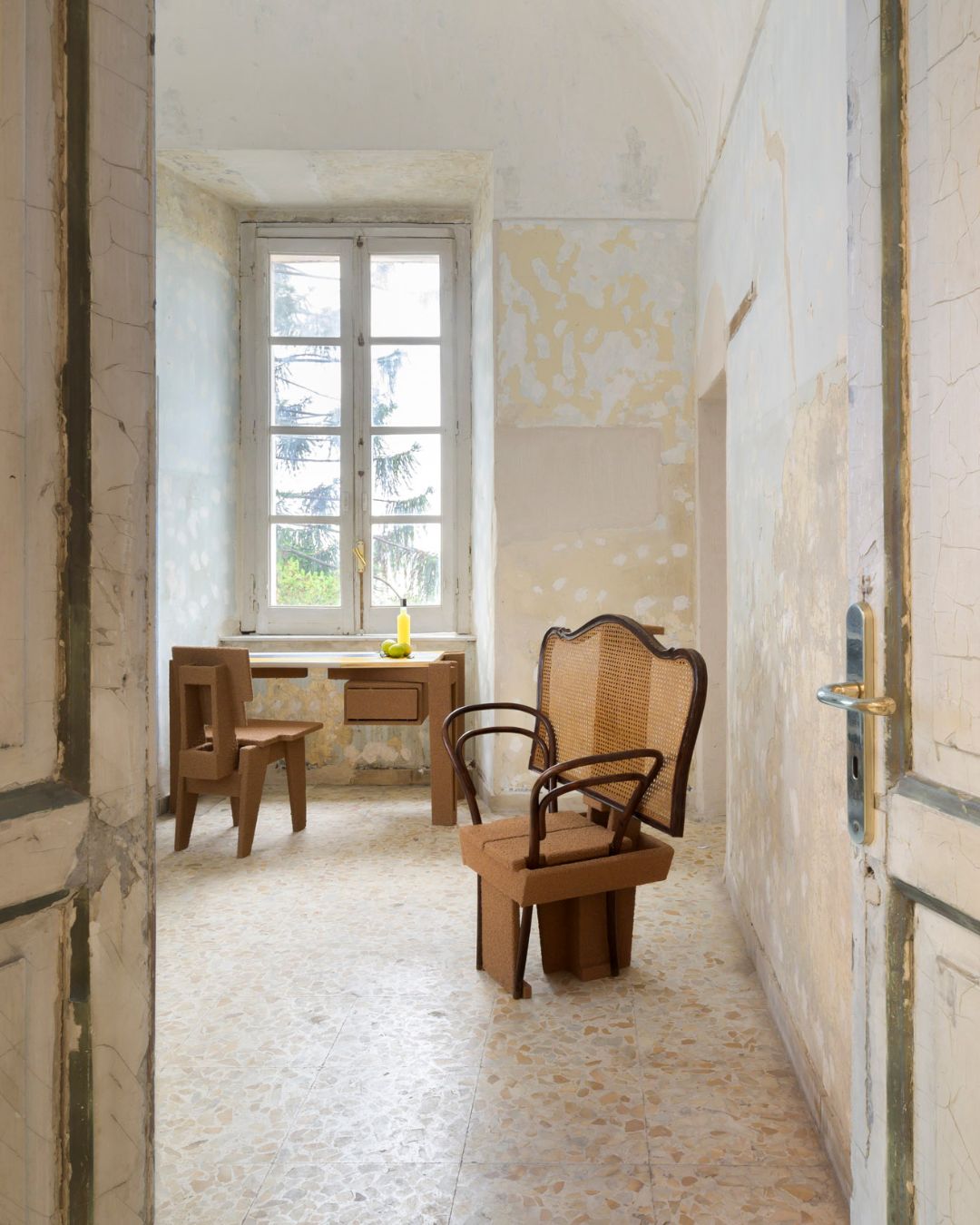
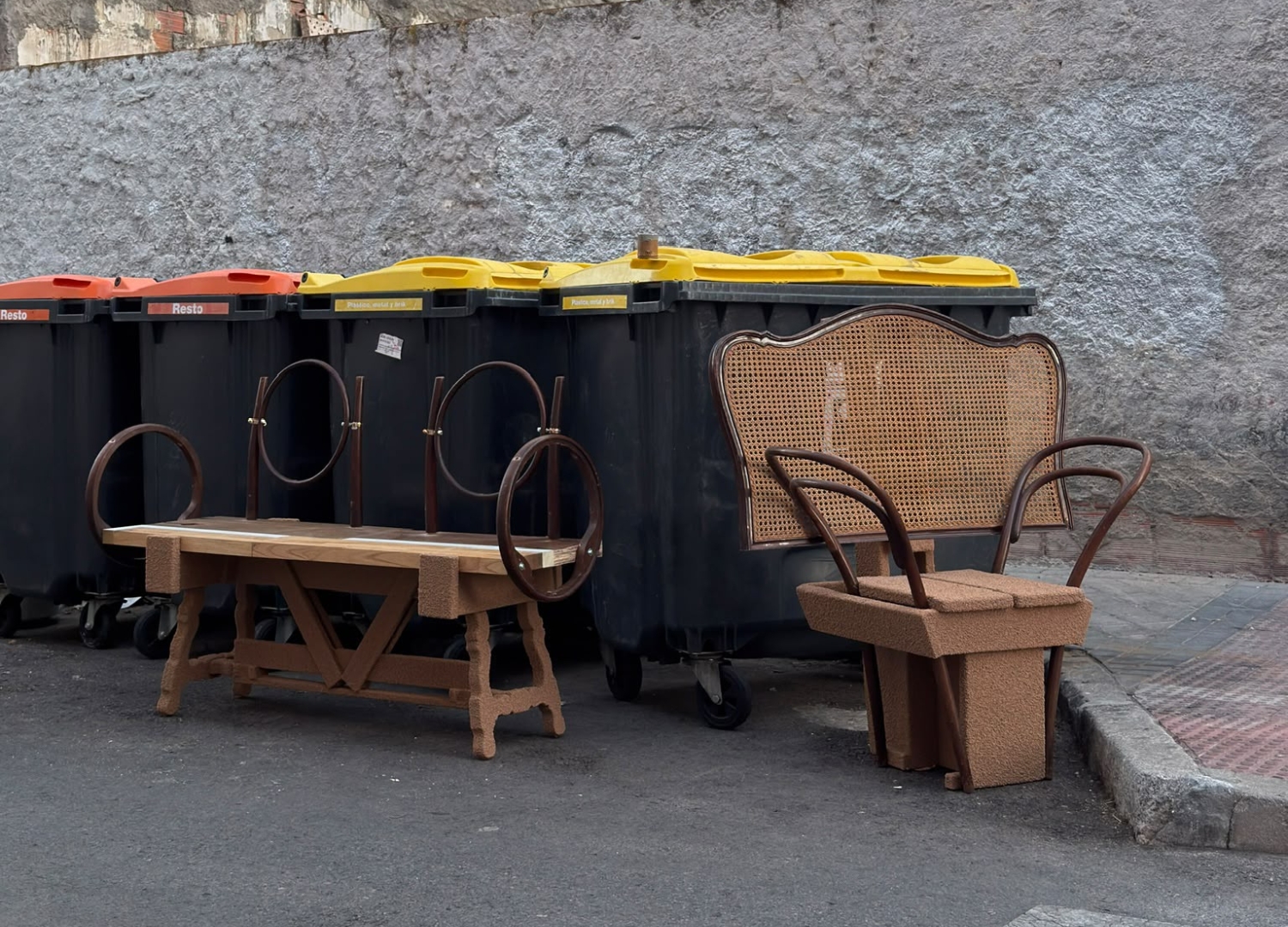
This collection by ex-debris and Corradino Garofalo was made in just a week, where the designers made four pieces of furniture from materials found in the streets of Madrid. Combining old wood with IKEA LACK parts and probably fake Thonet chairs, the new furniture elements are born without erasing the story of the materials that made them.
Some parts of the pieces have been finished with cork spray, a technique the designers have been using and working on since making the furniture for Infinito Delicias. The work is a continuation of Muñoz’s series of working with salvaged materials, in which he mines places where materials are abundant and underappreciated, and he redignifies them.
CantoMadre by Denis Bianchini, Roberto De Mattia, Arianna Santoro
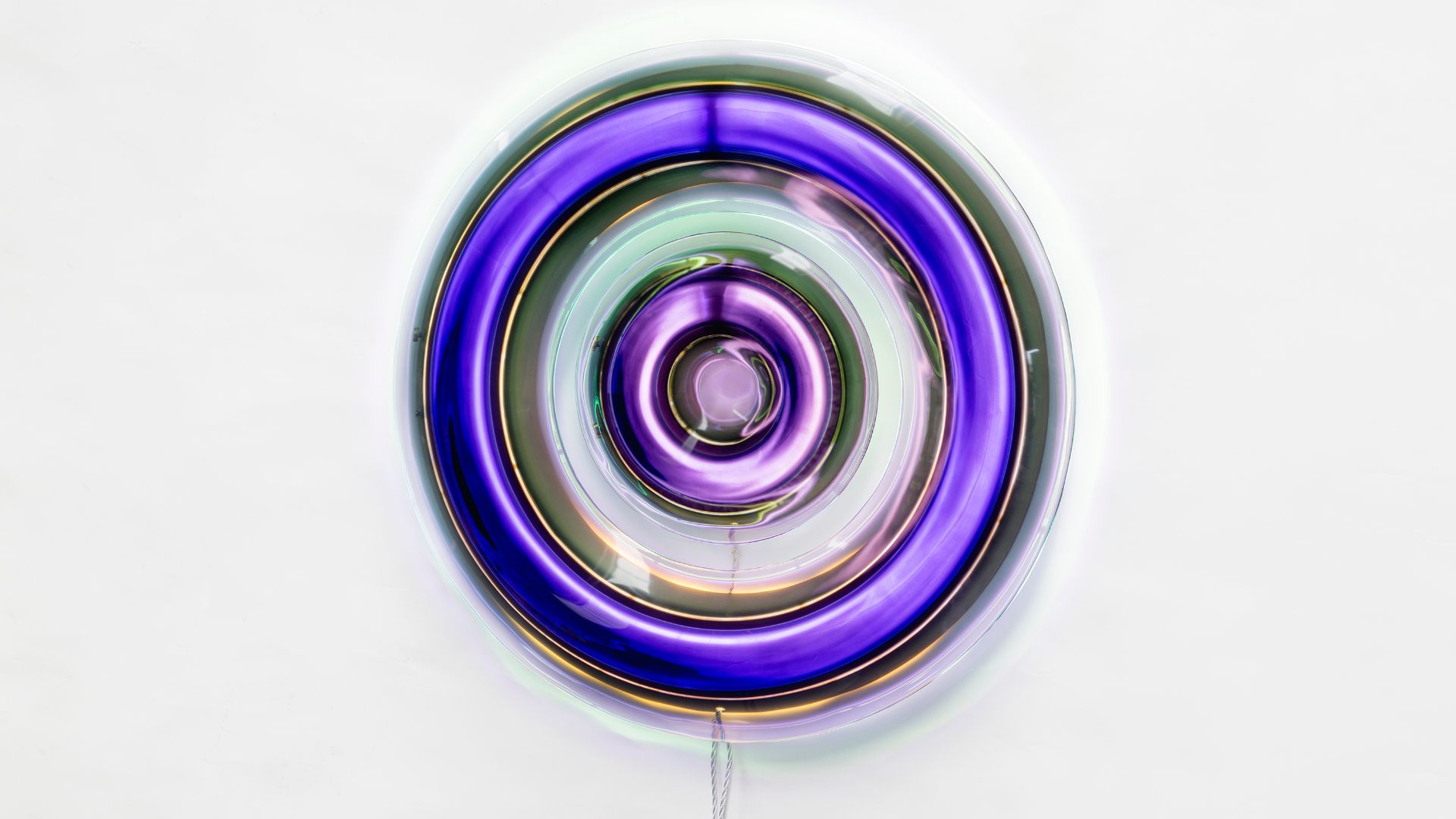
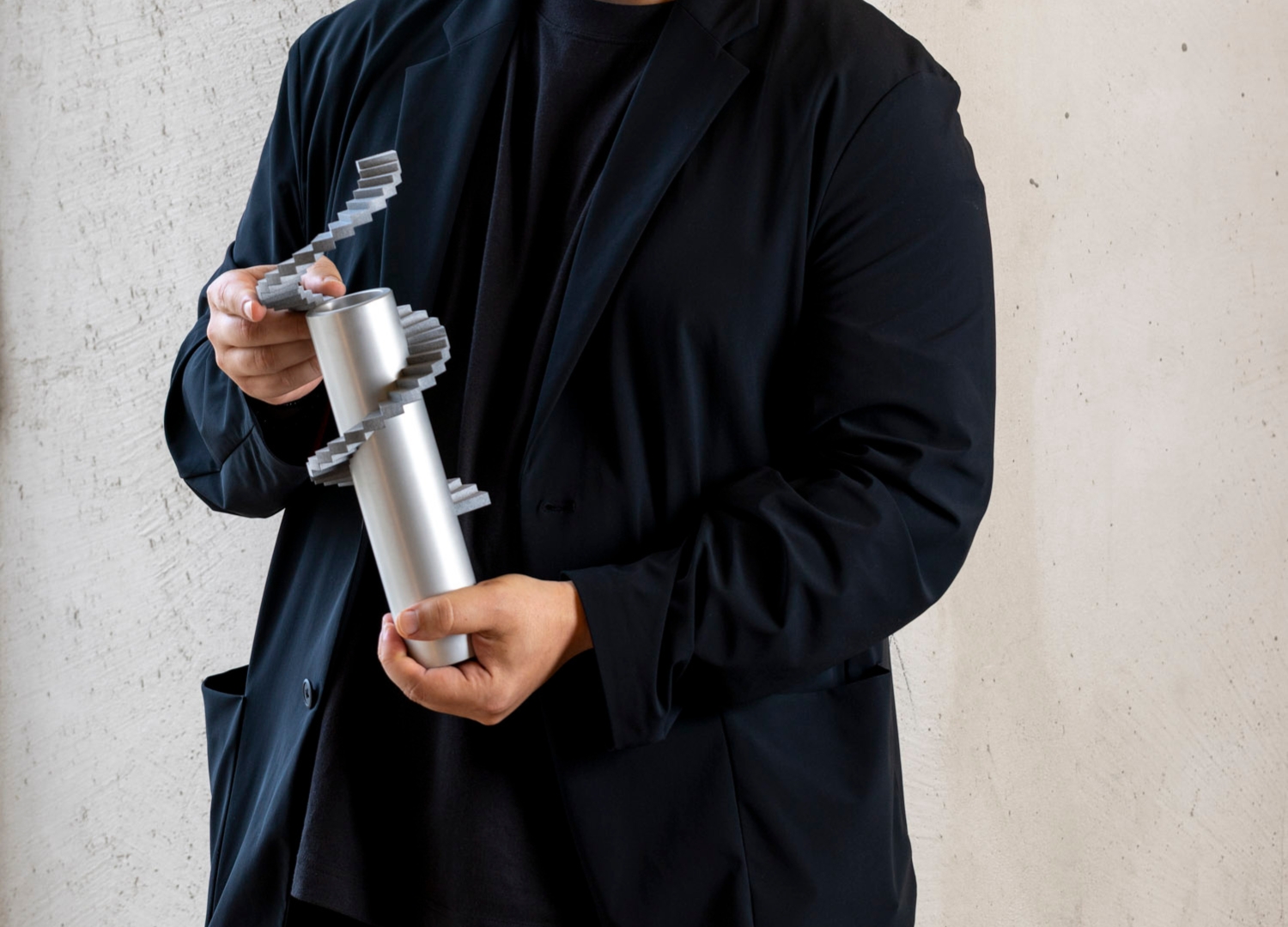
CantoMadre starts from a Neapolitan myth. After failing to seduce Ulysses, the siren Partenope let herself die, and the sea carried her body to the shore where Naples would rise. The project wonders where her voice went when she left and looks for it in the water. Sea sounds were recorded at several points around the Gulf of Naples and translated through parametric tools into three-dimensional ceramics, making a lamp, a mirror, and a table.
Each stretch of coast has a different timbre, intensity and rhythm, producing different objects. The ceramics come from Ceramica Giovanni De Maio, a local company dating back to 1826, which has five generations of master artisans.
Common Ground by Margherita Rui
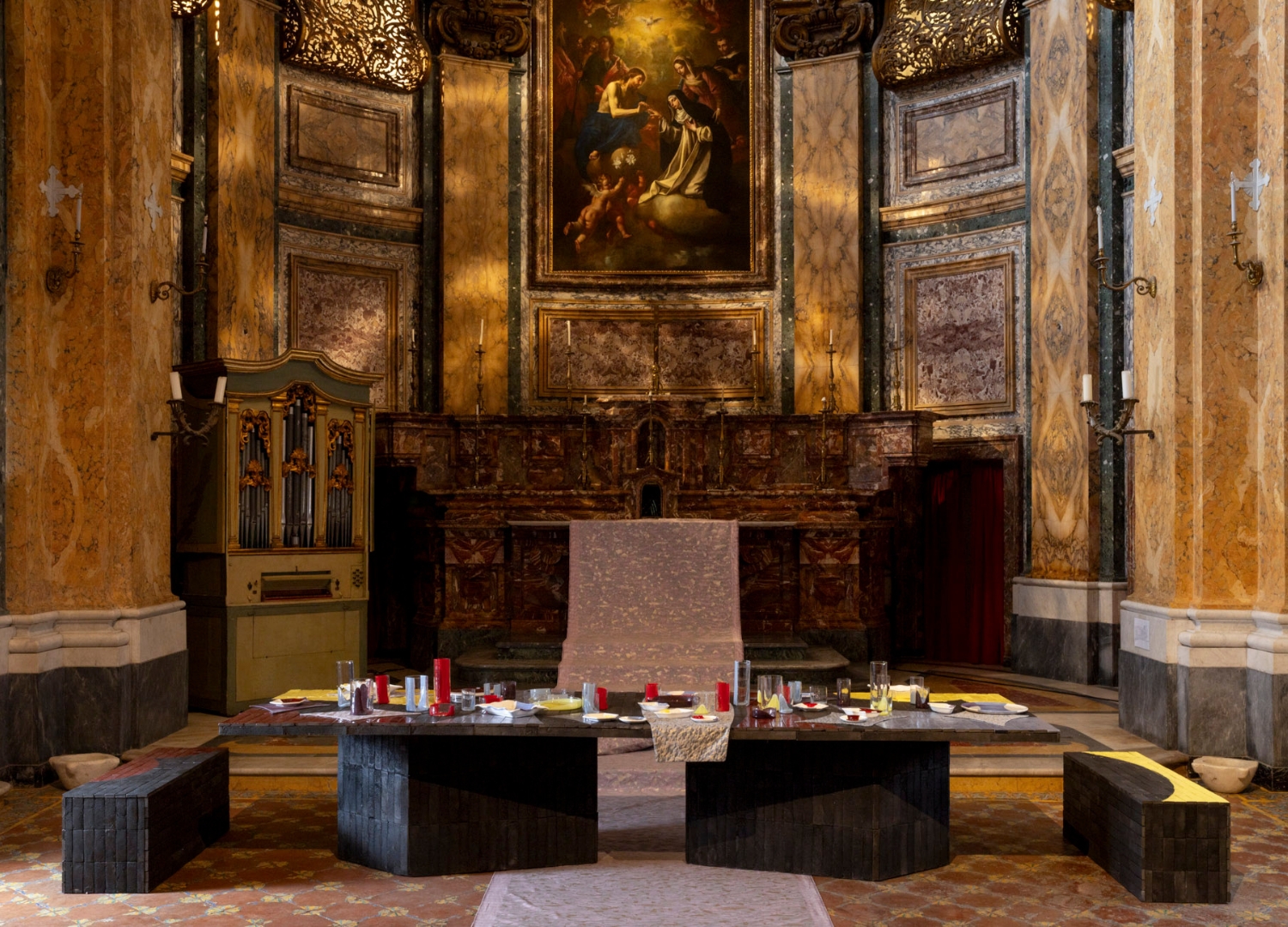
Moving out of the fair and into the Chiaia district, Margherita Rui‘s installation was part of the EDIT Cult programme and held at the Church of Santa Caterina da Siena. The designer created a tablescape by collaborating with five Italian manufacturers. NasonMoretti contributed blown glass with a core of solid colour, Fornace Brioni supplied a terracotta-strip table with a hand-enamelled top. Fortuny’s drape, cushions, and runners dress the room. Imolarte made twenty hand-painted ceramics, and finally Amenta Incisioni produced printed wall pieces with Fortuny that carry the project’s graphic language from table to wall.
L’Equilibrista by Lombardini22
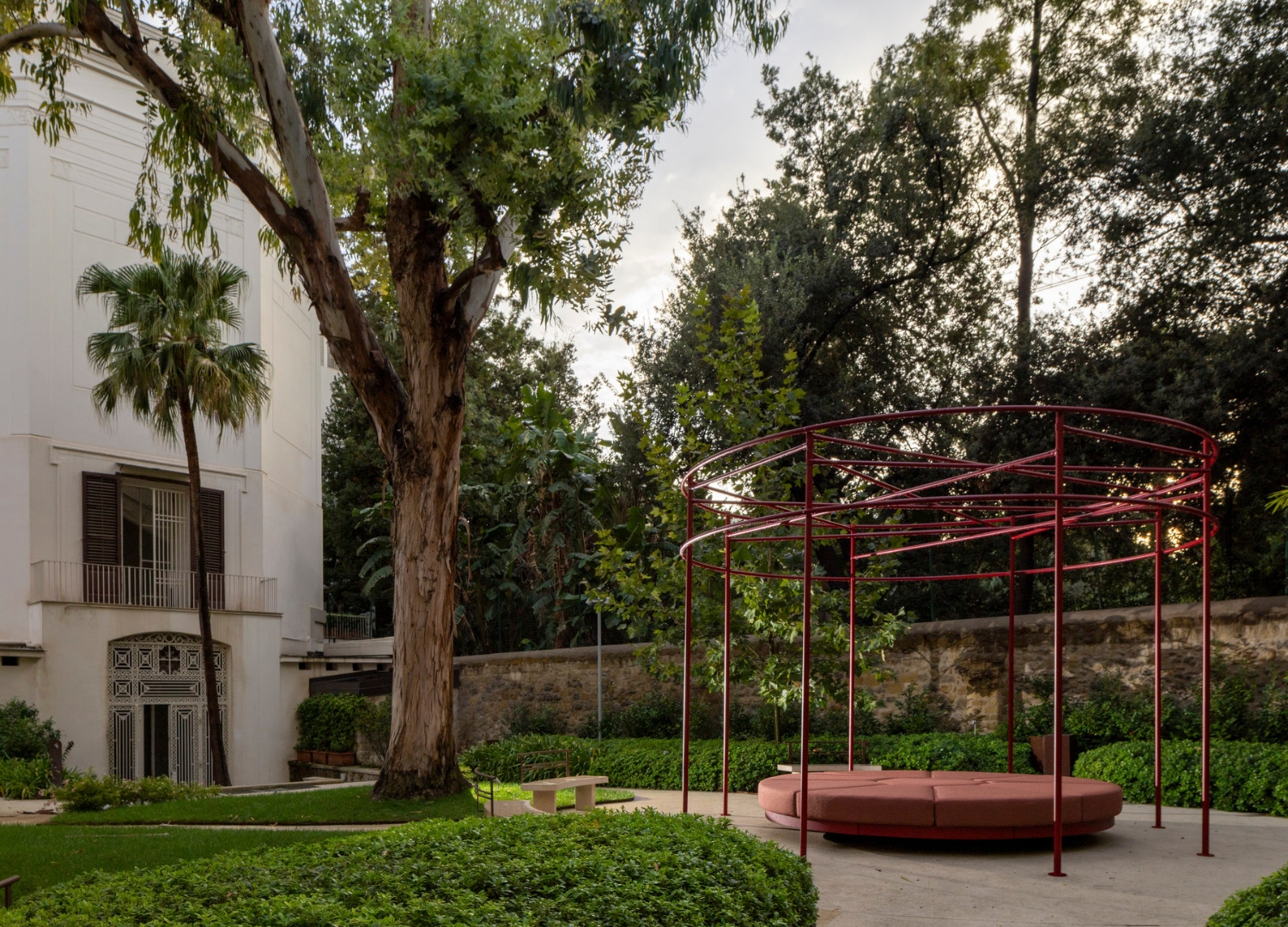
This was Lombardini22‘s first time at EDIT Cult, an unusual guest for a fair of independents. The firm is among Italy’s largest architecture and engineering groups, with more than 530 professionals. Their installation featured a circular daybed that oscillated when someone put weight on it, using balance as a metaphor for collaboration and harmony between people.
Dunae by Vittorino Panozzo
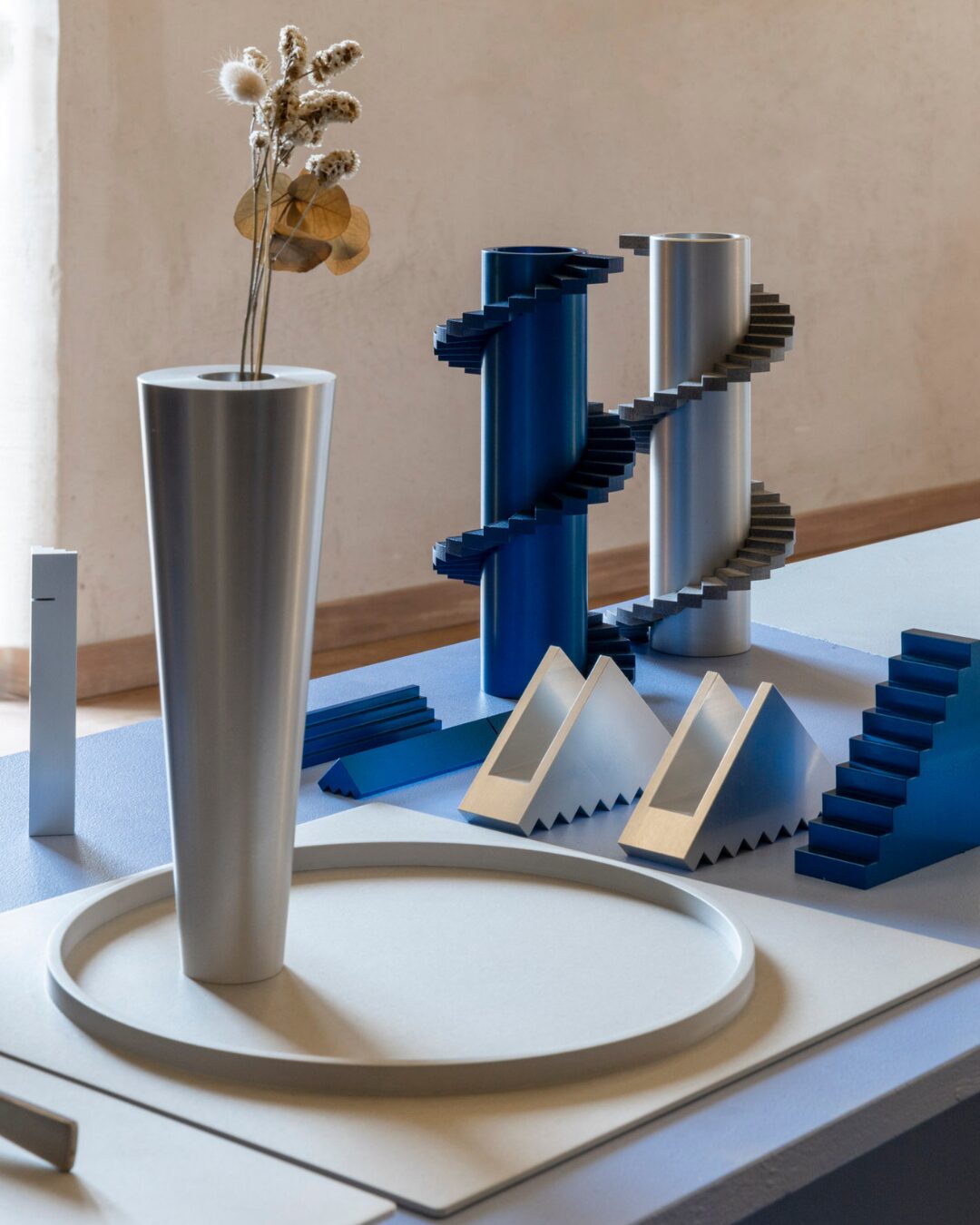
Going back to the main fair at La Santissima, Dunae was the winner of the Seminario section, a part of the festival dedicated to younger designers and companies. The project begins with a film: in 1974, Pier Paolo Pasolini made a short documentary for RAI called “La forma della città.” Pasolini goes to Sabaudia and finds the town formally coherent and harmonious with the sea, dunes, and lake, despite it being founded in 1934 under fascism, and he judges its aesthetic and cultural quality separately from the ideology that produced it.
Designer Vittorino Panozzo took rationalist details from various architectures of the town, from the post office to piezometric towers, simplified them and shrank them into tableware. The six objects are a centrepiece and a trivet, two vases, candle holders, a cutlery rest, and a napkin holder. Most can be turned upside down, which the brand reads as a small subversion of polarised thinking.
Grounded Light by Ipek Demircioğlu Studio
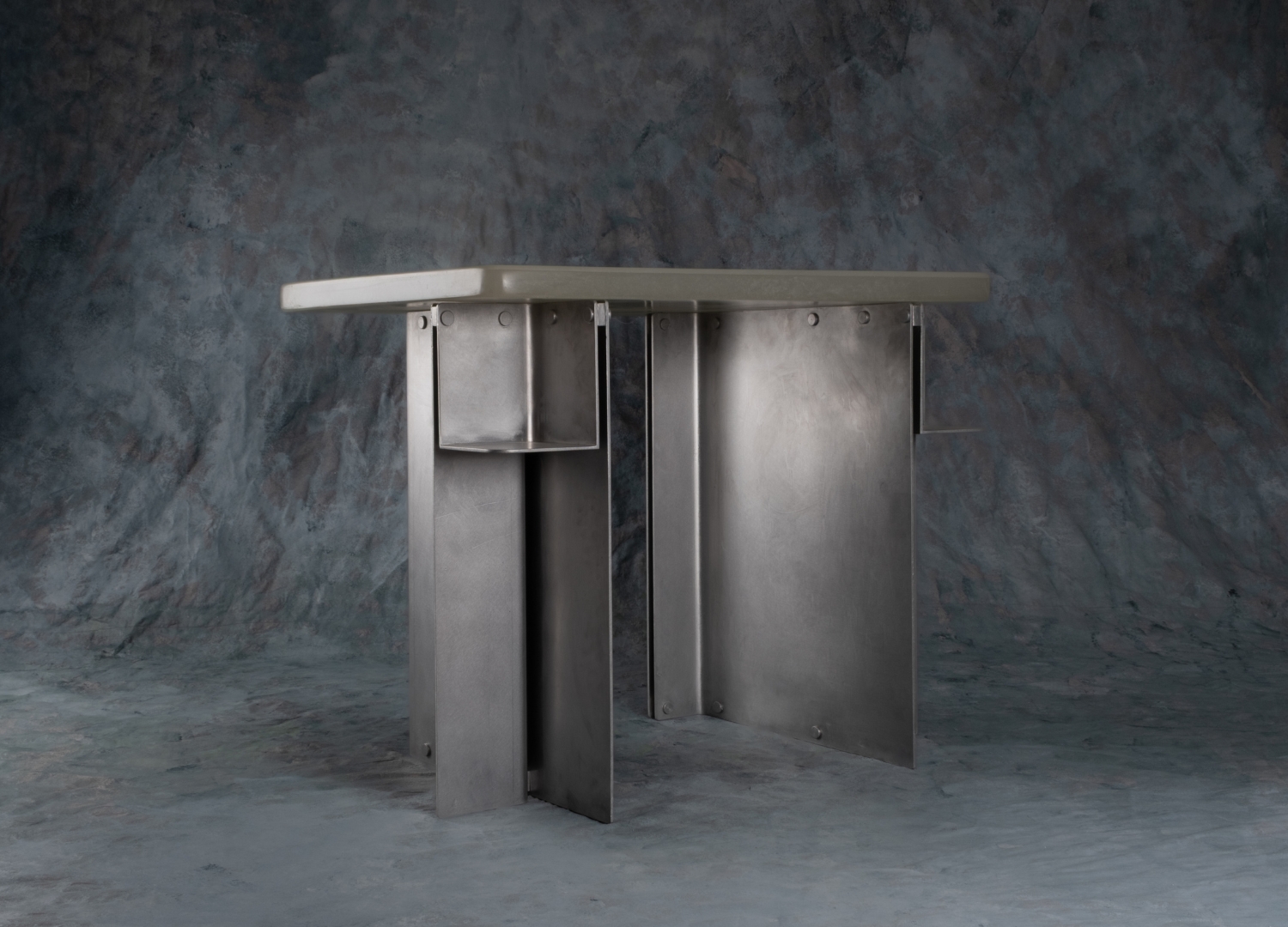
Ipek Demircioğlu is a designer based in Istanbul, Turkey, and she presented an object from her collection in the context of Seminario, on the third floor of La Santissima. The table is made of aluminium and epoxy and it plays solidity against transparency. The white-pigmented epoxy top can look solid, cloudy, or almost liquid depending on its surroundings, and it softens the metal’s visual weight while keeping the traces of how it was made.
The designer’s studio is based on the premise “make space for material poetry,” emphasising how her objects have a poetic flair and meaning while still being perfectly functional.
Korrøm
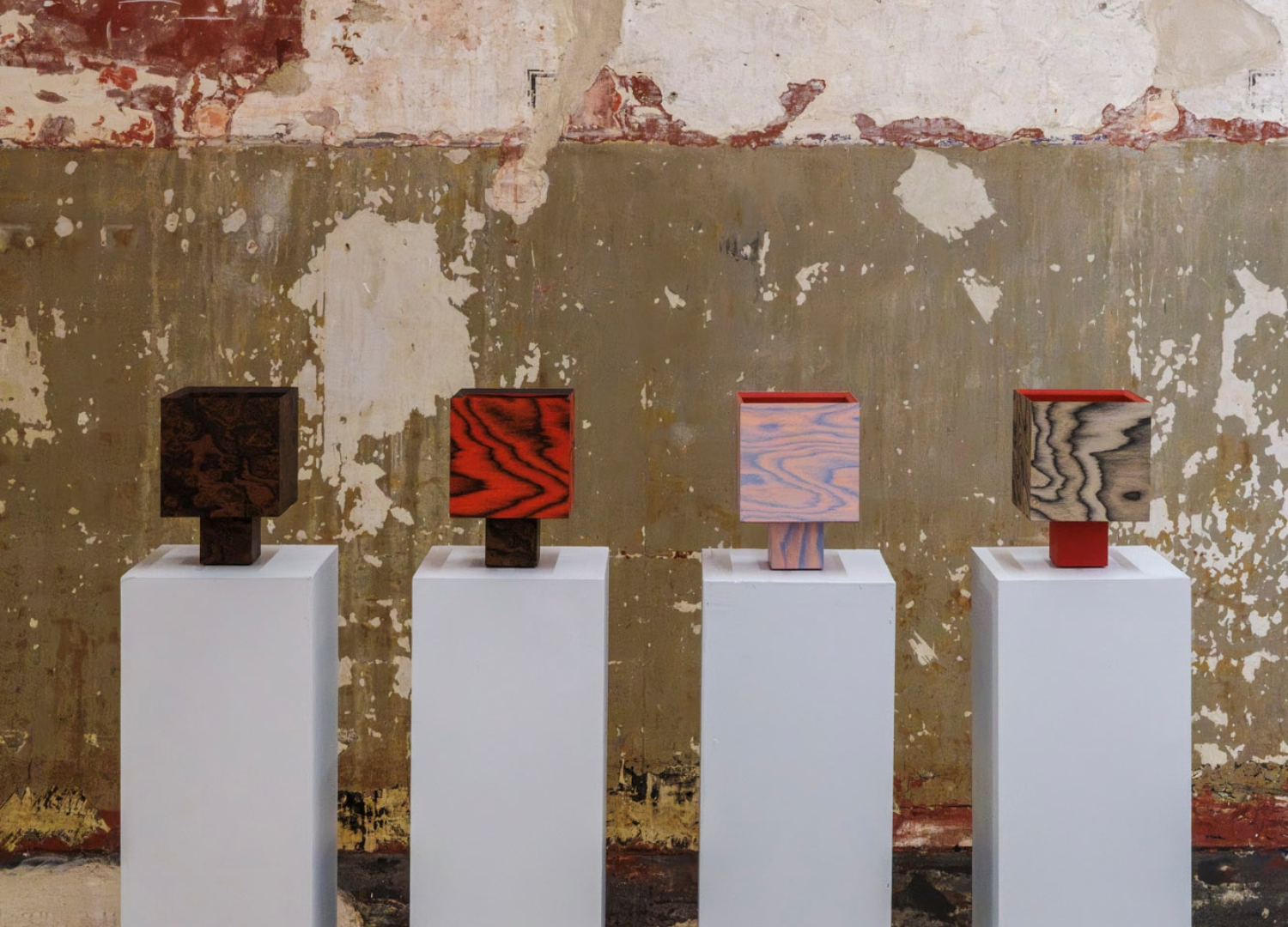
Korrøm, a Scottish studio founded by Jeremy Hollister, brings two products, a table lamp and a stool. The Too Cube Mini is a small cordless rechargeable LED table lamp wrapped in Sottsass veneer by ALPI Wood. It is a scaled down version of the studio’s original Too Cube, and it is meant to evolve through new colourways, solid woods, and unexpected material pairings.
The stool is called NASC, from the Gaelic word for link, and it reconsiders the seat as a scalable architectural block. Its comb joints become the graphic motif of the design. Modules can be made in walnut, oak, or maple, or set againt Valchromat’s dyed wood fiberboard, or Douglas fir.
DECODE by Giorgio Bena
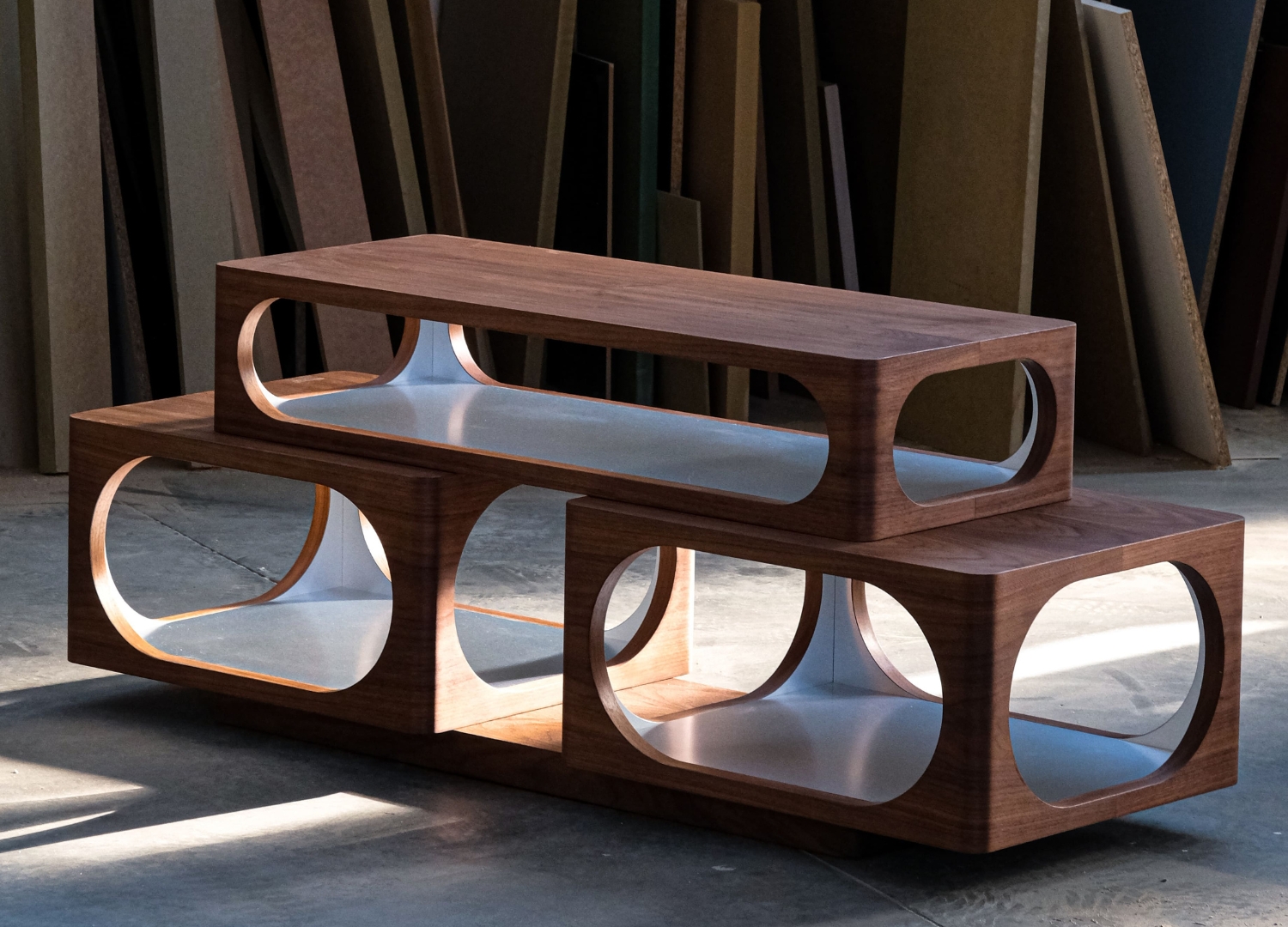
Past winner Giorgio Bena closes the selection with DECODE, a new design language shown for the first time at EDIT. Wood enters his vocabulary and brings warmth, new curves, and tactile consistency, while metal stays essential, in dialogue with the new material. The collection is built on contrasts: rigid and warm, structural and tactile.
Bena was born in 1995 and is based near Turin. His practice moves between experimental, craft-based work and a more traditional approach to interiors and products. His debut collection LOCKWERK was built around metal and won “Best unreleased product” at EDIT Napoli back in 2023, coming back with new work to the community that launched him.
Design as a medium for relationships
Design, in the end, is about people. A table is a reason for people to sit down together, a stool carries the hands that made it, a vase is for the flowers we were gifted. We tend to speak of objects as if they existed on their own, as forms, materials, and answers, but an object is only ever a message passed from one person to another across time. A chair is a conversation between the body that shaped it and the body that will rest in it.
For this reason, a design can never be separated from the world that produced it. Every object holds the memory of its making, though we cannot always see it. Craft, in this sense, is not a technique but an attitude toward time and toward others, a willingness to give attention to something that will outlast the moment of its making.
If design is about people, then its measure is not novelty or beauty but the relationships it makes possible: what it lets us say to each other, how it gathers us, how it answers the question about how we want to live.