EJE Belgrade, Yugoslav modernism meets the Japanese listening bar
The hotel-dining-discotheque designed by Supaform is defined by a unique aesthetic centered around sound culture and the retro-futuristic style of 1960s Yugoslavia.
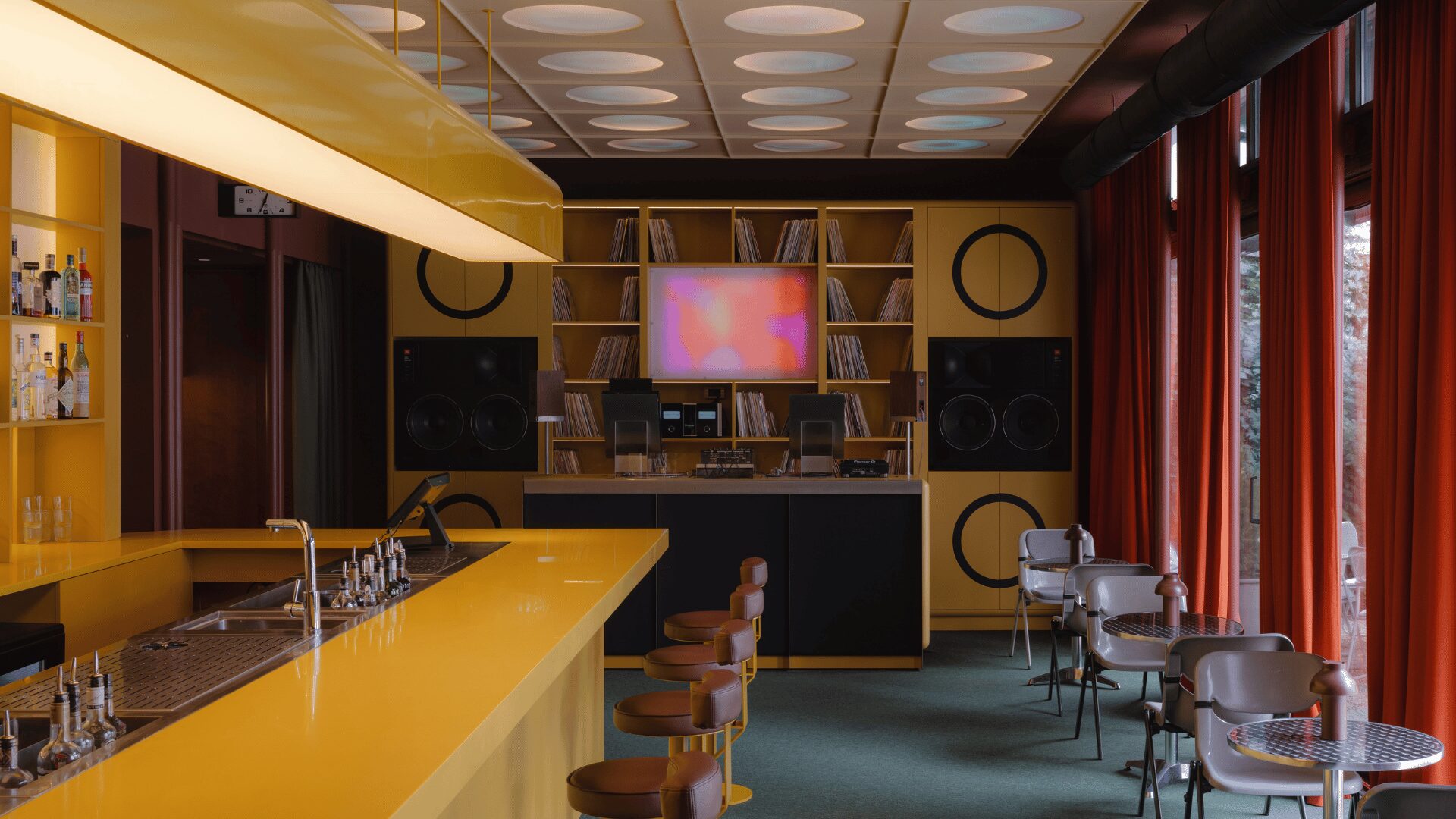
Designed by the Paris-based studio Supaform, EJE Belgrade (Esthetic Joys Embassy) is an original space that can be summed up with a simple question: what would a Japanese listening bar in 20th-century Yugoslavia look like, suspended between past and future? A venue where historical and geographical references meet harmoniously within a layered environment.
The concept draws inspiration from two main languages: Yugoslav modernism of the late 1950s and early 1960s, and the aesthetic of authentic Japanese listening bars. However, the project’s main visual starting point is the rounded geometry of the K67 kiosk, designed in 1966 by Yugoslav architect and designer Saša Mächtig. A unique mix that creates a true cultural exchange for the guests.
Gallery
Open full width
Open full width
EJE Belgrade, Yugoslav modernism meets the Japanese listening bar:
How sound shaped EJE Belgrade
“At the heart of the concept is a disco bar with a particular focus on warm, analog sound, urban Japanese dining, and the hotel experience,” explains Supaform.
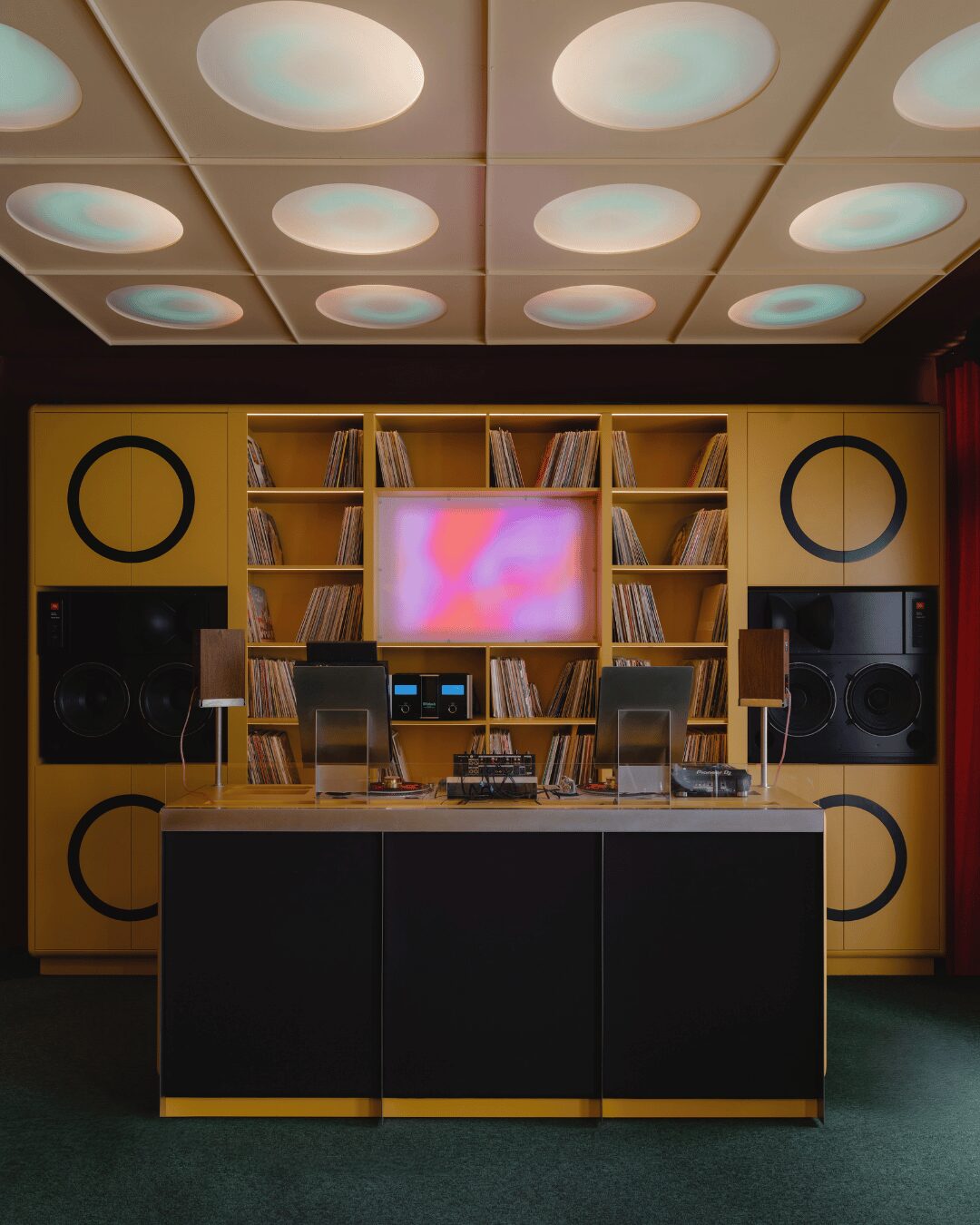
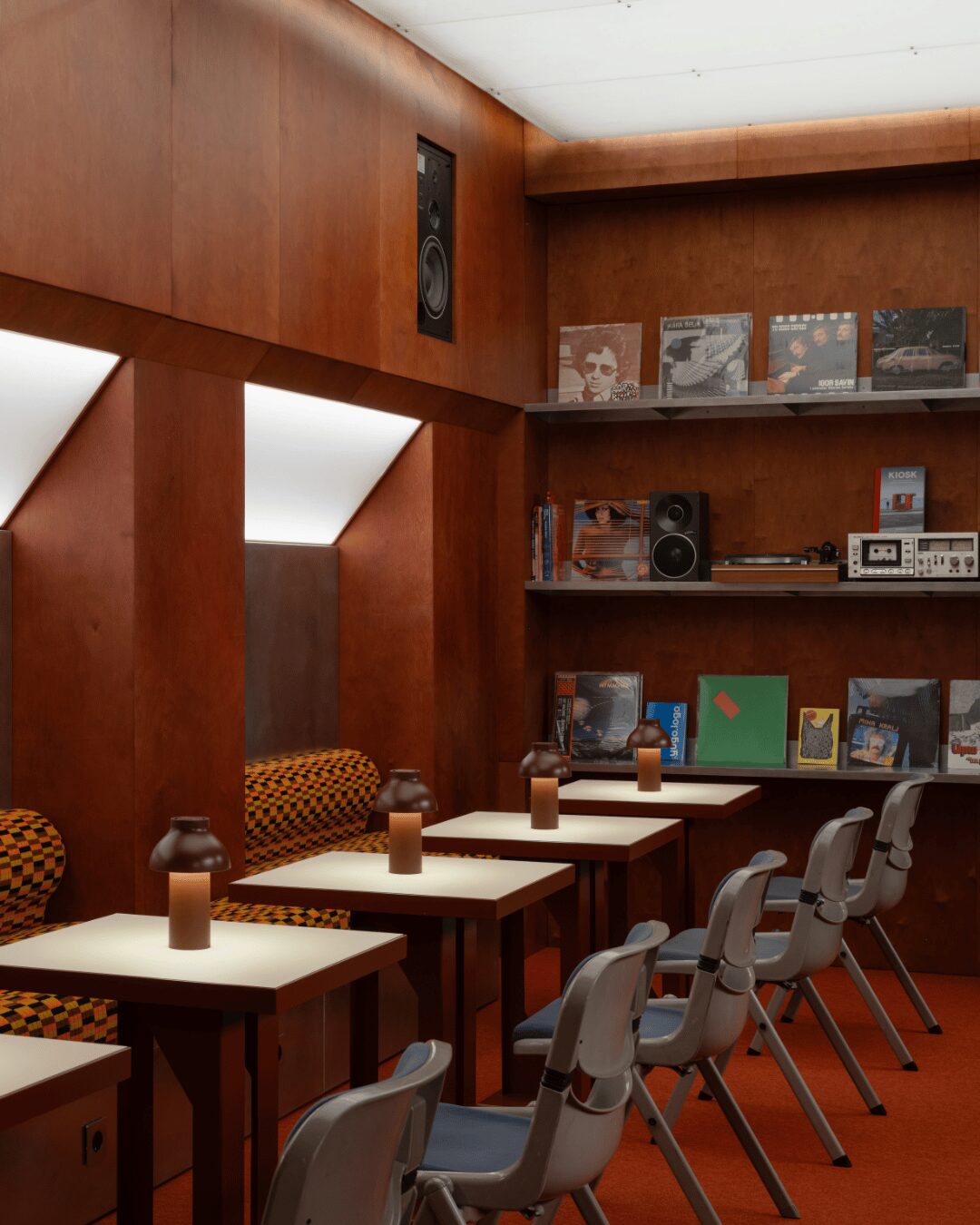
The venue functions as a hotel, dining, and discotheque, making sound another fundamental aspect of the design process. Here, the protagonists are a pair of vintage JBL 4435 studio monitors and a carefully curated vinyl collection. The space was built around the ritual of listening to recorded music through high-quality equipment. The vinyl library is curated like a digger would: records are the heart of the project, not simply a decorative element.
The colors and details that define the space
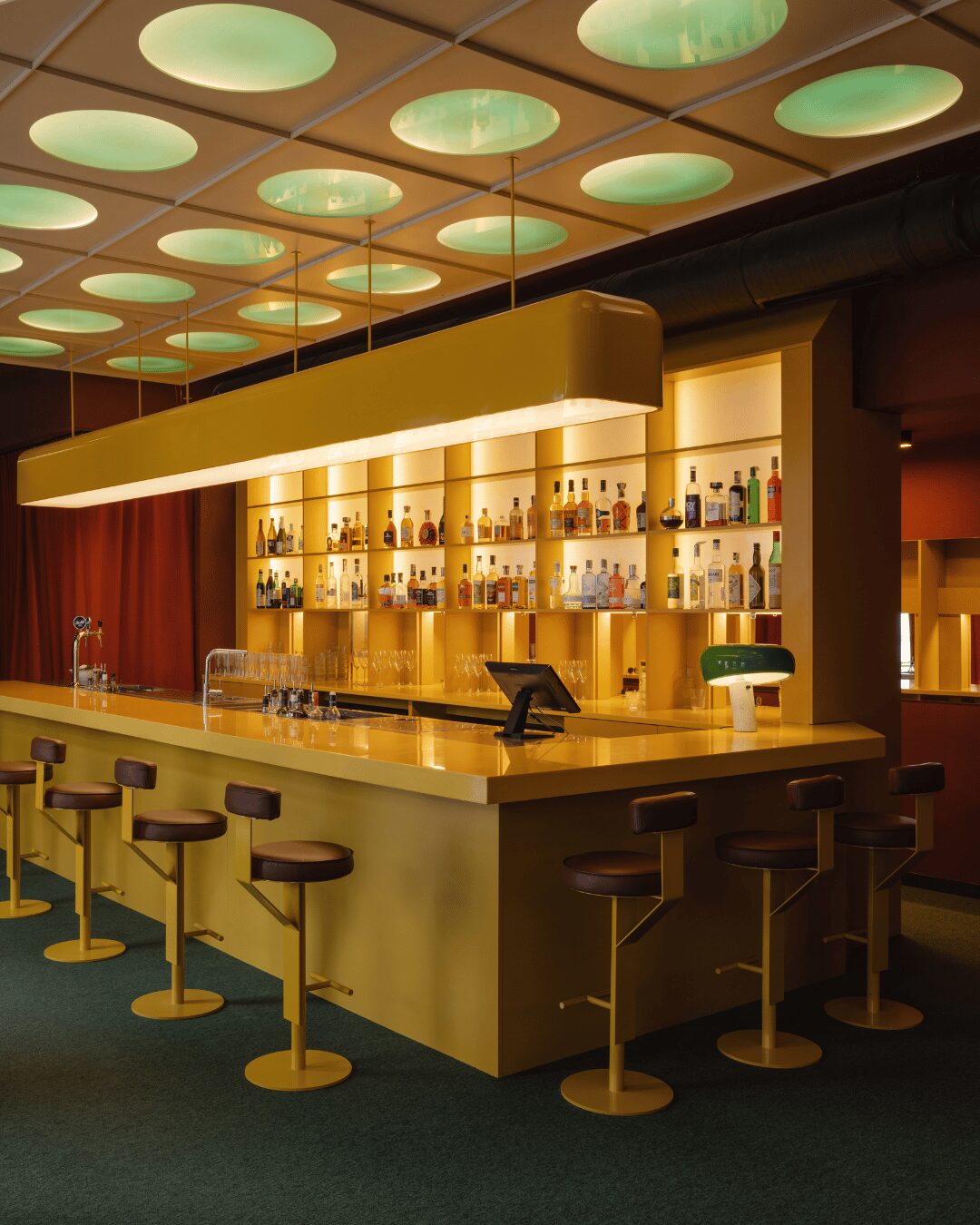
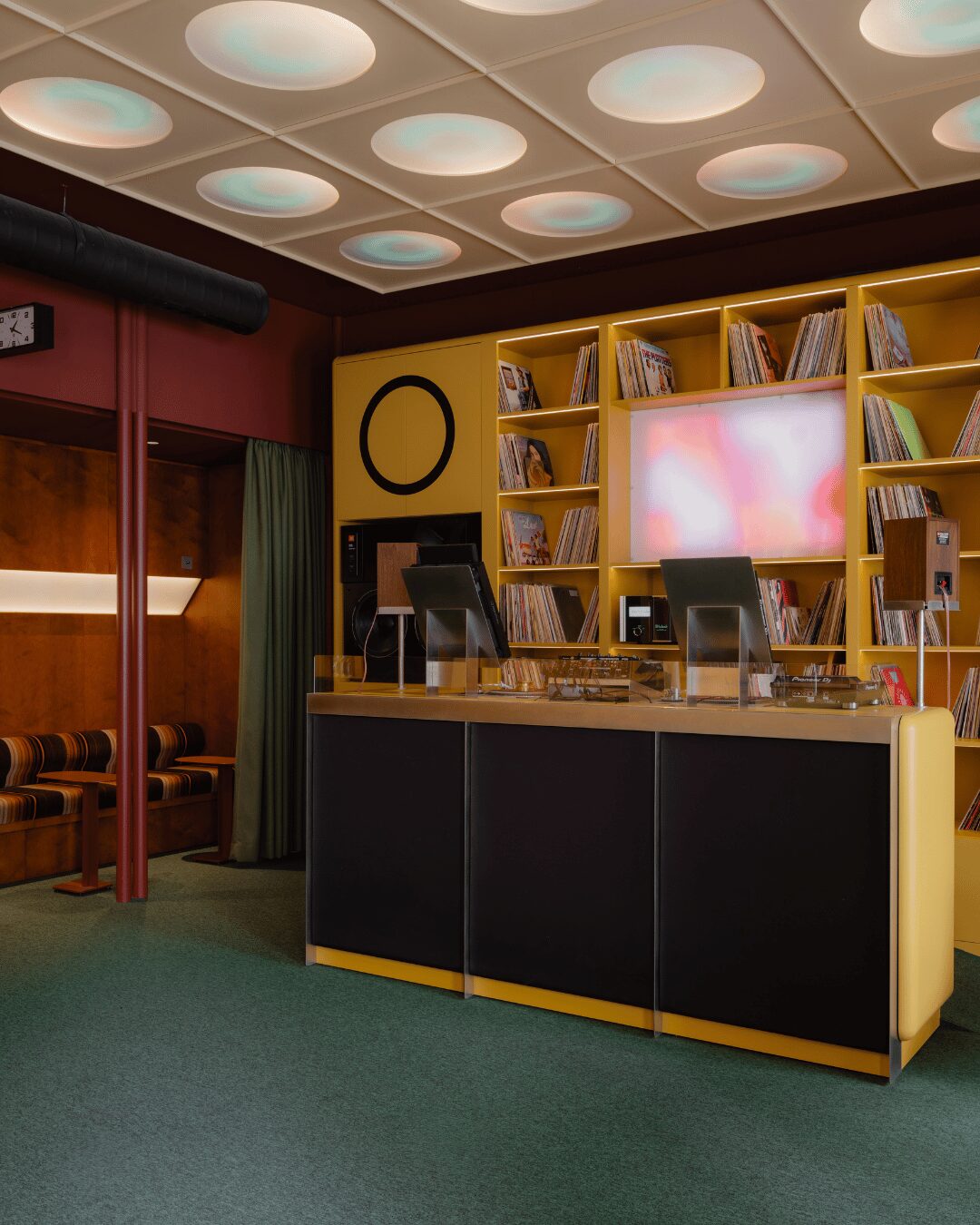
The color that most characterizes EJE Belgrade is a deep, warm yellow, suspended between vintage and futurism, which can be found in the DJ booth and bar area. Above, a ceiling composed of oval luminous panels envelops the space, creating the sensation of being inside a spaceship. Between the two areas is a zone reminiscent of the sleeping cabins of a railway carriage, above which hangs the Japanese Dulton Double Face clock, specifically designed for public spaces such as stations, waiting rooms, and offices.
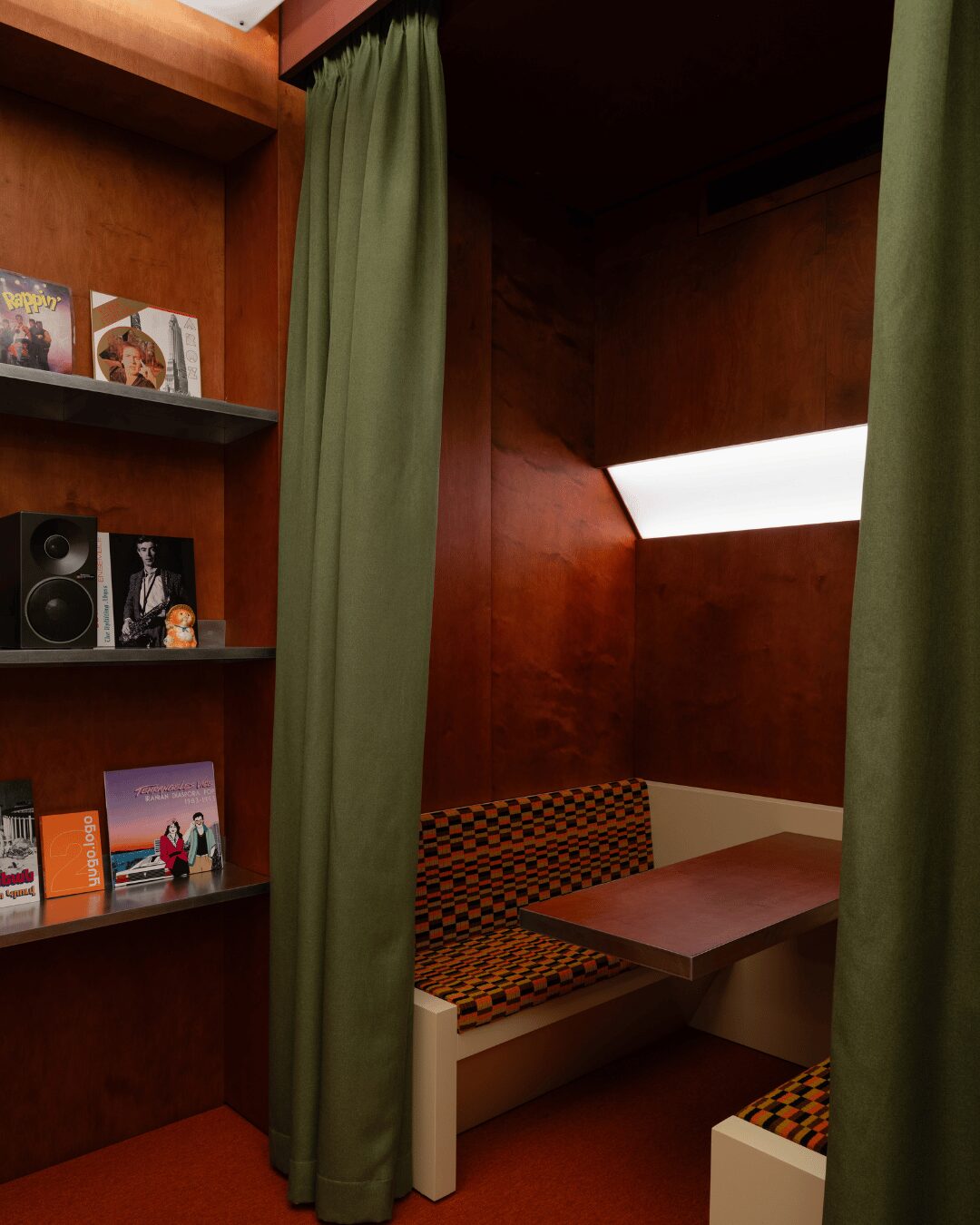
The upholstery of the sofas is made from the last available production of the original London Underground moquette, purchased directly from the manufacturer. Today, EJE Belgrade preserves an authentic historical fragment of fabric: Misha Black’s District line pattern can now be seen not only at the London Transport Museum, but also in Belgrade.
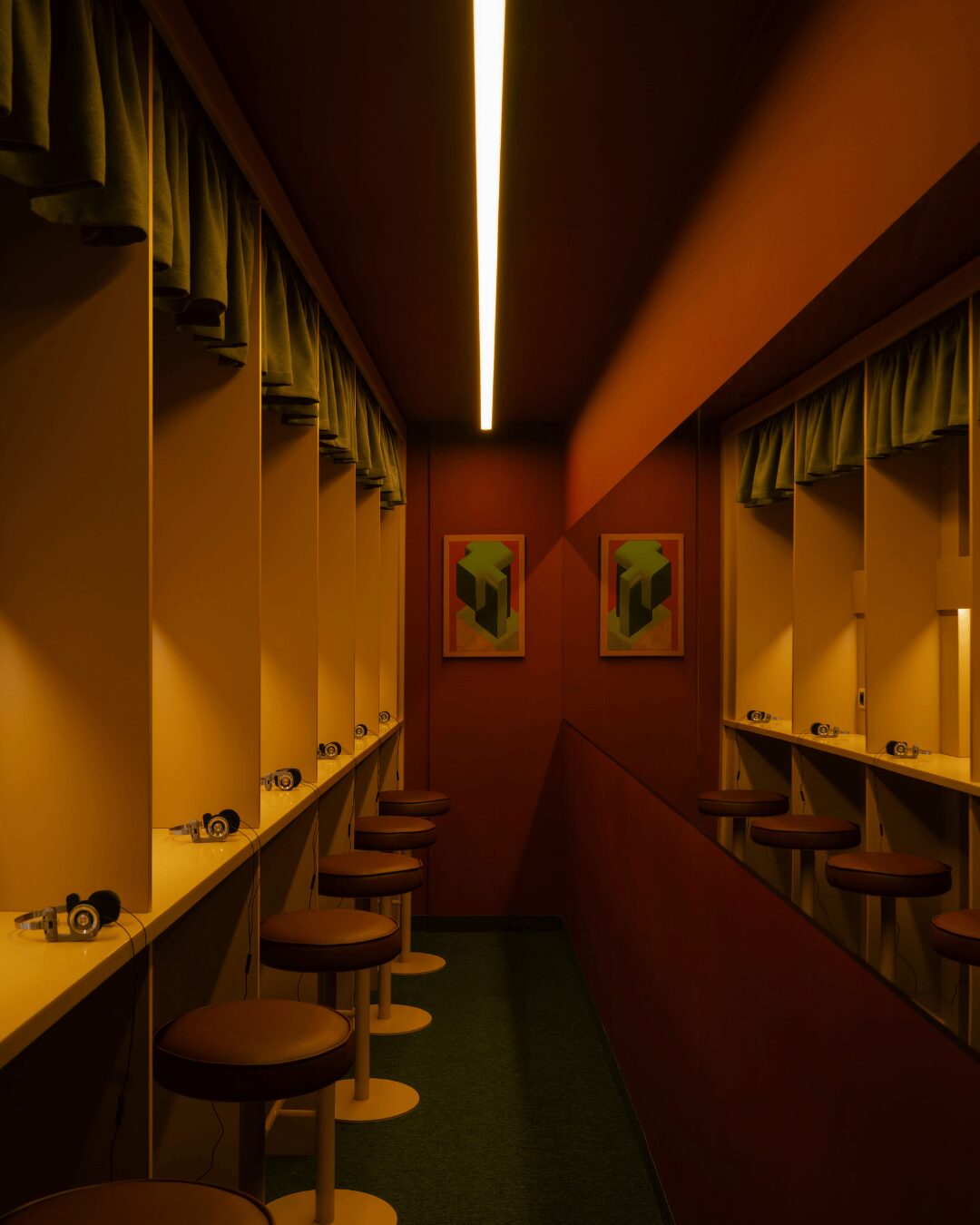
From a more open and social dimension, the venue gradually develops into increasingly private areas. On the opposite side of the bar, there is a row of six Ichiran-style booths (also known as flavor concentration booths), where guests can order and receive their food, close the vertical curtain, put on a pair of headphones, and dedicate themselves to listening. The area draws inspiration from the most introspective corner of Japanese bar culture, transplanted here into a Balkan context.
A menu shaped by the spirit of the project
The food at EJE Belgrade could only be inspired by Japanese cuisine, guided by chef Katsuhiko Kobayashi, and by the concept of contamination, which is at the core of the space’s concept. The menu is rooted in the Japanese concept of yoshoku, referring to the Meiji Restoration period, when chefs began to assimilate Western dishes, creating something that was not imitation, but exploration. Thus, a bisque ramen coexists with hambagu, a Japanese interpretation of the minced meat patty, a central element of Serbian culinary tradition.
An eclectic place for unique experiences
EJE Belgrade is a melting pot of references and styles that come together in a unique environment, almost as if it had emerged from a cinematic set. The studio wanted to recreate the sensations of their first exploration of the city of Belgrade: “It only took a few walks to realize that it is a fascinating, layered, and highly distinctive city. It feels like an almost utopian environment, lacking only neon to be perceived as cyberpunk…”
The result is a project that combines hotel, dining, and discotheque functions, becoming a point of cultural connection between different atmospheres and eras.