Palaces for the people: on the importance of designing social infrastructure
Aire Commune’s latest project combines shade, seating, planting, and power in a repeatable module and shows how modest infrastructure can matter to a city as much as the monuments around it.

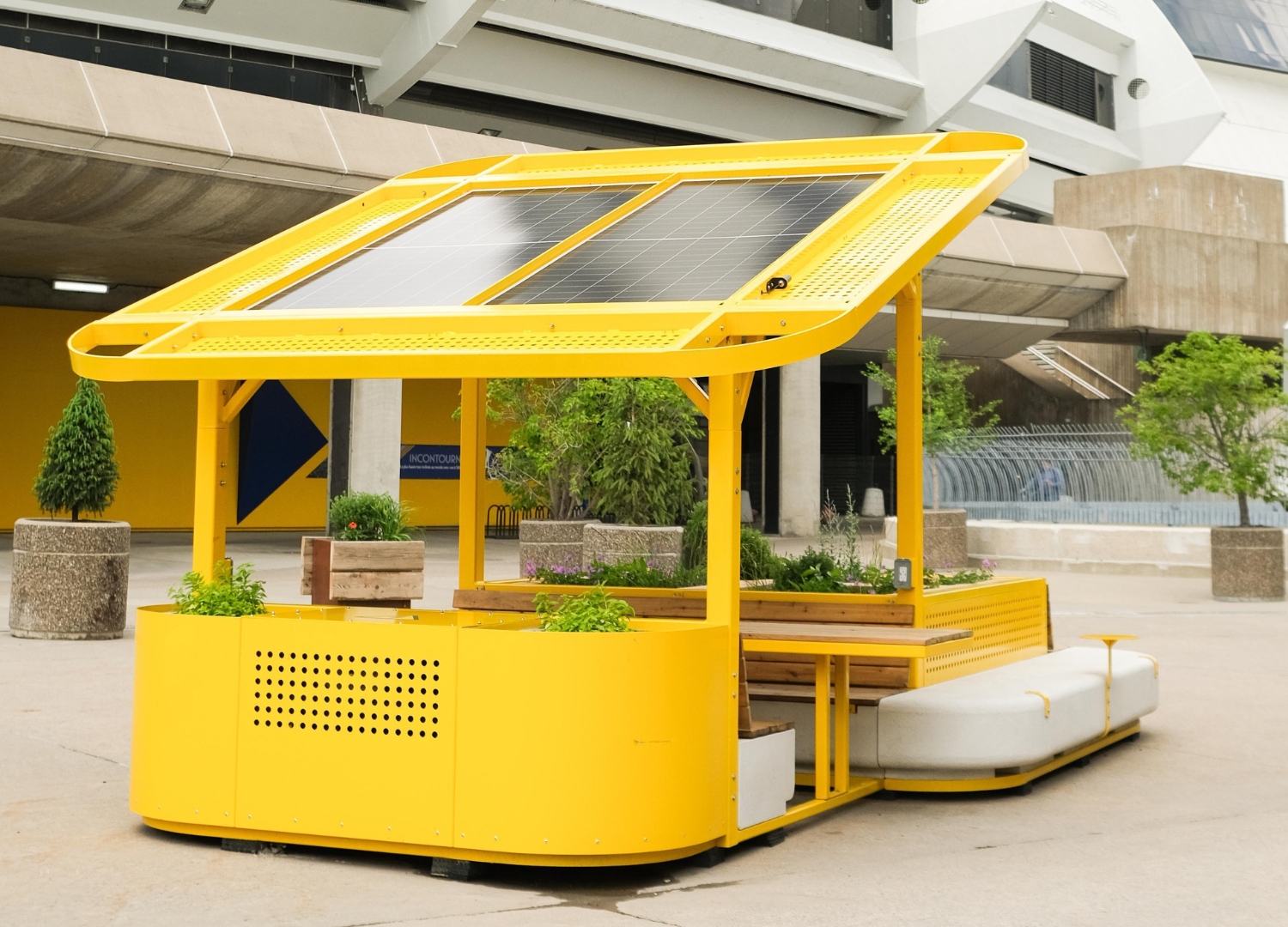
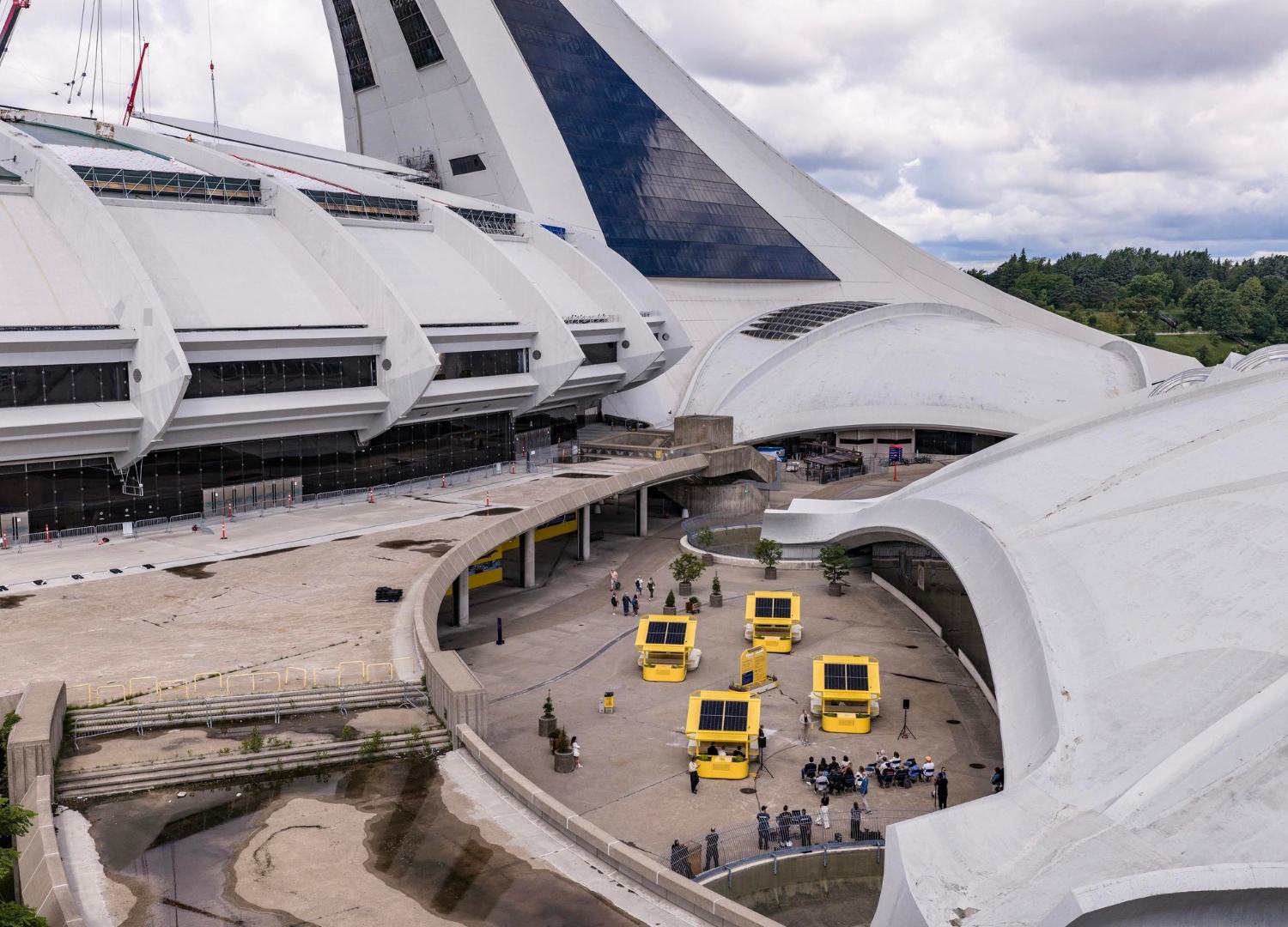
Espace Solaire is a permanent installation by Aire Commune, a Montreal studio focused on events and spatial design, built in the city’s Olympic Park. It is Quebec’s first outdoor public space powered entirely by solar energy, through a system developed with Sunbird Énergie that combines solar generation, battery storage, and software that manages the site.
As our cities become increasingly hostile, public infrastructure dedicated to rest and community is disappearing. The project is an initial attempt to bring it back, reminding us of the importance of third places and that the cities we live in are our homes too.
Gallery
Open full width
Open full width
Espace Solaire by Aire Commune
The module
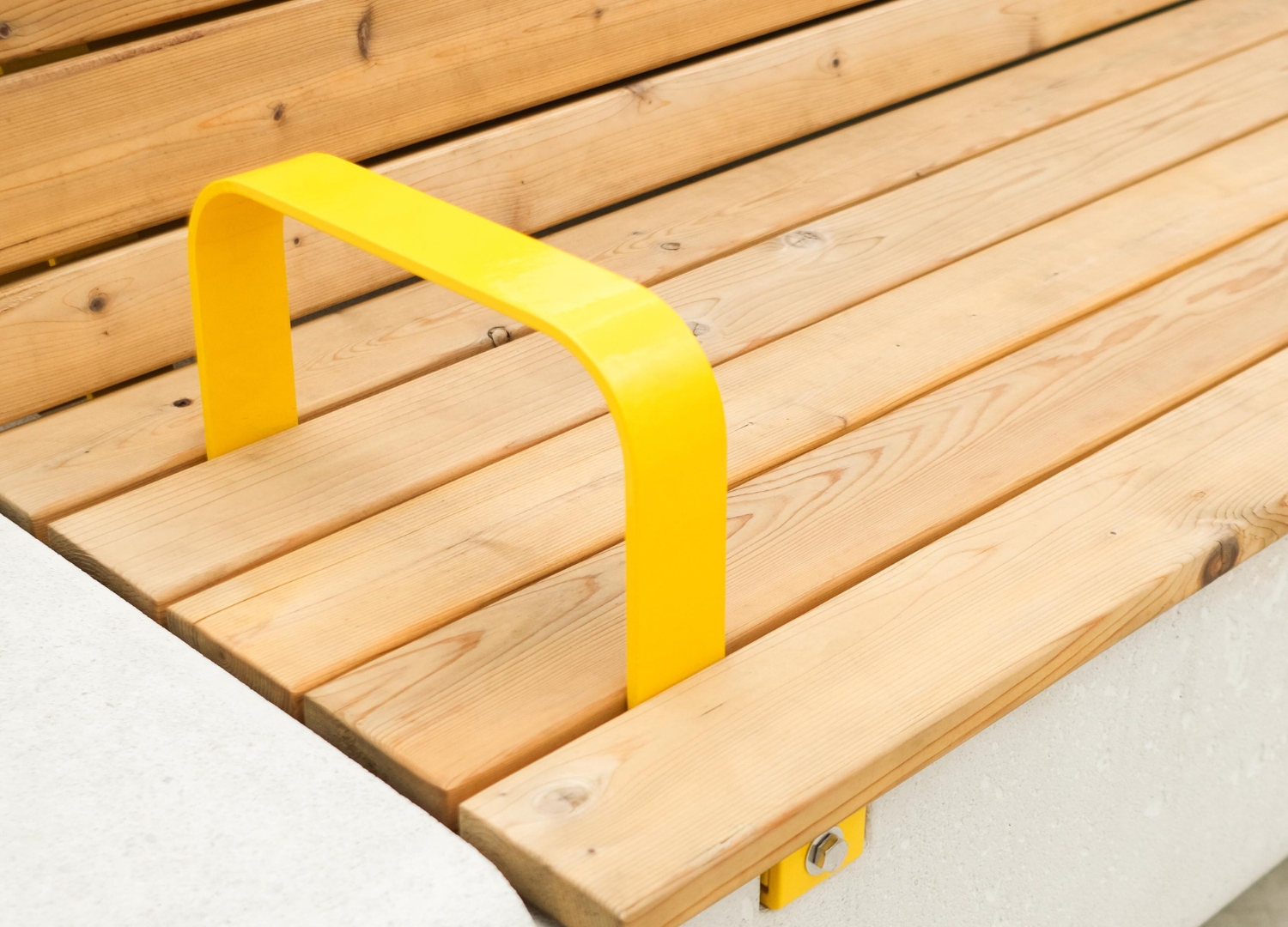
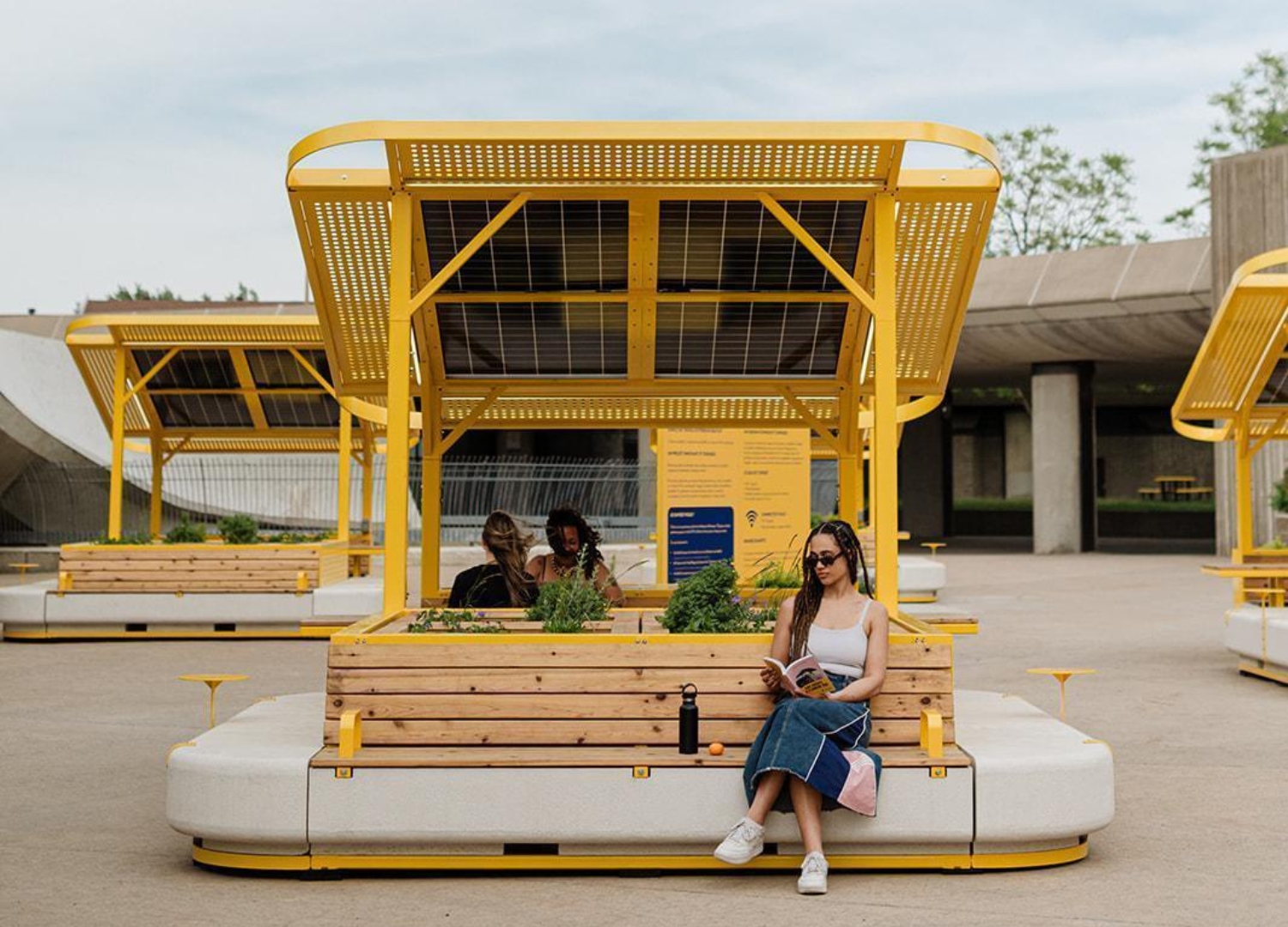
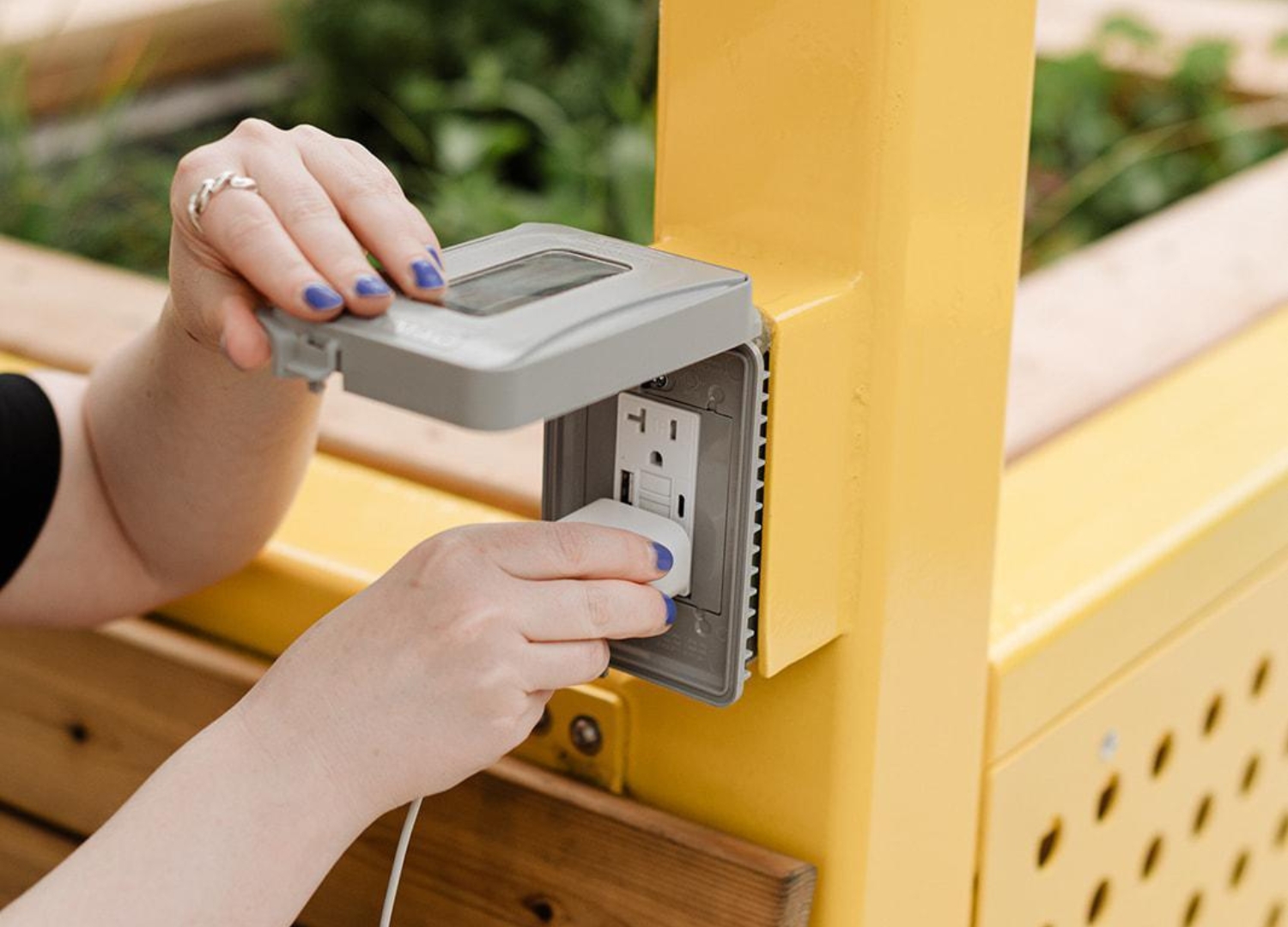
The design is structured around a canopy of yellow steel, where the solar panels act as a roof for shade. Various modules offer different seating arrangements, from a table with benches for a picnic with friends to a square-shaped bench for a more private date. The seats are made of a concrete base and wooden slats, adding warmth to the steel. A central signboard explains the space, as well as how to connect to the Wi-Fi and power outlets.
On social infrastructure
We usually reserve the word infrastructure for pipes, roads, and wires. But cities also depend on a softer kind: the places where people can stay in the same space without needing a reason or a purchase. The sociologist Eric Klinenberg calls these places social infrastructure, and in his book Palaces for the People, he argues that libraries, parks, and plazas shape how connected a neighbourhood is, and even how people fare in a crisis.
Klinenberg’s research begins with a 1995 heatwave in Chicago, where the deaths were not spread evenly but varied strongly between neighbourhoods. His central comparison is between Englewood and Auburn Gresham, two adjoining neighbourhoods on Chicago’s south side, which were both about 99% African American, with high rates of poverty, unemployment, and violent crime. However, Englewood registered 11 times the number of deaths in Auburn Gresham.
Klinenberg’s explanation is that the difference lay in the physical fabric of daily life: Auburn Gresham residents met one another on walks to diners, parks, in clubs and church groups, while Englewood had lost its safe sidewalks and gathering places to decades of decay. In a heat wave, those social ties meant someone would notice if you hadn’t been seen and knock on your door.
The claim is also that social infrastructure is not a metaphor; it can be funded, designed, built, maintained, and programmed just as the rest of infrastructure is. People build relationships in those places not because they set out to build community but because repeated contact produces bonds as a side effect. Those bonds then do practical work: they tell you who is vulnerable in a crisis and who has someone looking out for them. As he puts it, when hard infrastructure fails, soft infrastructure determines our fate.
Urban spaces
William H. Whyte‘s observational studies of New York plazas in the 1970s, summarised in The Social Life of Small Urban Spaces, gave the idea its practical rules. People sit where there are good places to sit. They like sun or shade depending on the season, something to lean on or eat near, and a bit of choice about where to put themselves. Espace Solaire is built from those same ingredients, with shade, seating, plants, and surfaces to use.
The addition in Espace Solaire is electricity. As a growing share of people work, study, or take calls away from a fixed office desk, putting power and connectivity into a free public space means that the person who can’t afford to buy a coffee every time they need a seat can still enjoy a communal space to hang out in, which is usually missing.
Quality of life, criminality, and health have all been statistically tied to having a community in a city, and having a community begins with having communal spaces available. Espace Solaire is a small project, but it could make a world of difference for the community that gets to experience it.