Rícino C: Estúdio RAIN’s ongoing journey with castor oil resin
Now in its third phase, the research project by Estúdio RAIN shows through a new furniture series how this plant-based resource reacts to the addition of organic and mineral elements.
Rícino C is the collection born from the most recent phase – the third – of the eponymous research project initiated seven years ago by Estúdio RAIN. Since 2018, the Brazilian duo, composed of product designer Mariana Ramos and architect Ricardo Innecco, has been studying and working with plant-based castor oil resin, a material developed by the University of São Paulo and used mainly in civil construction for waterproofing or painting.
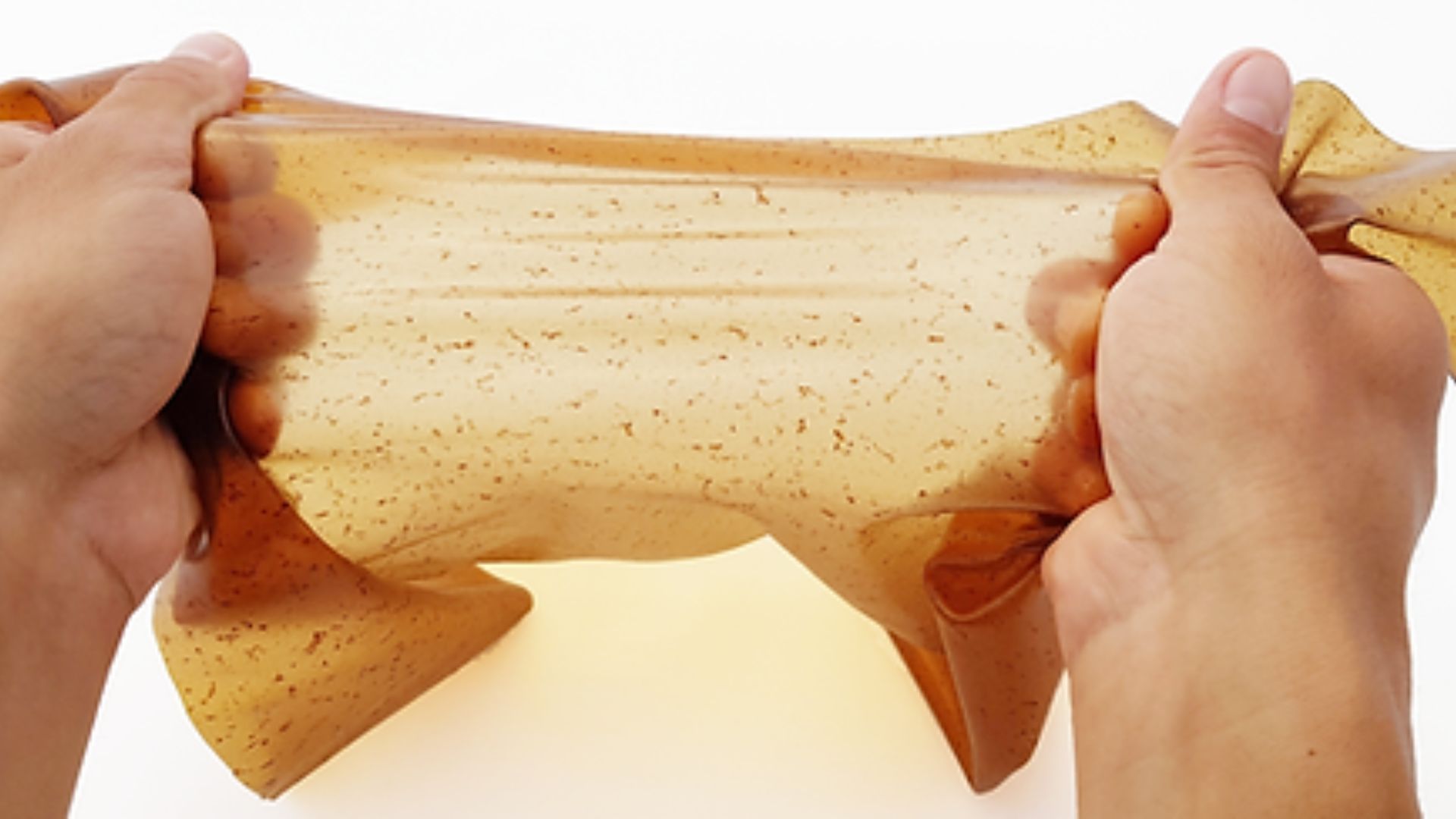
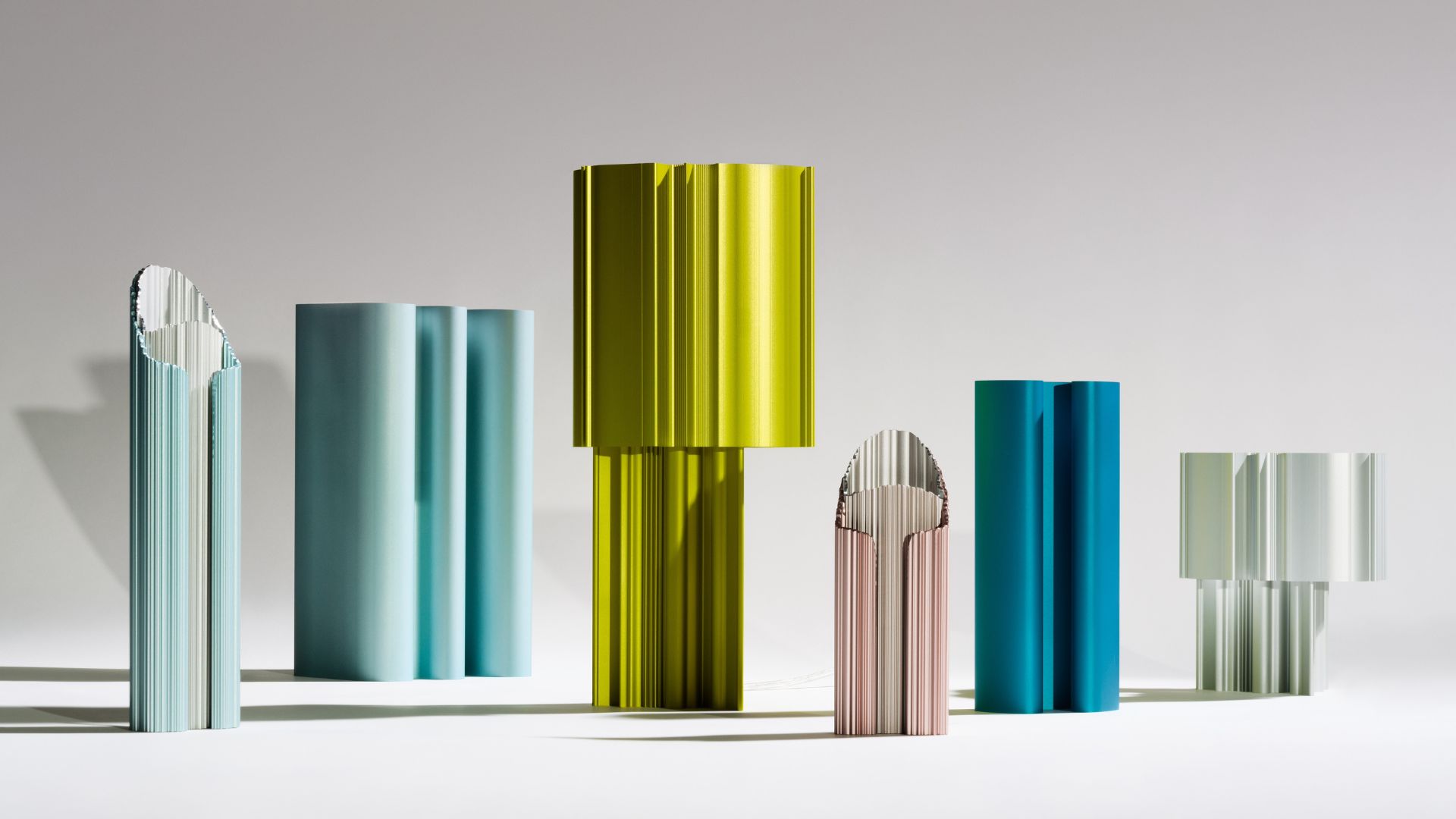
The Rícino (2019) and Rícino F (2023) series mark the early stages of the project, in which the studio sought to understand and approach the characteristics of the material. While the former explores density, natural color, and translucency, the second phase of research introduces air into the formula, creating light, flexible, membrane-like surfaces, marking a transition to a more intuitive and organic experimentation process.
Gallery
Open full width
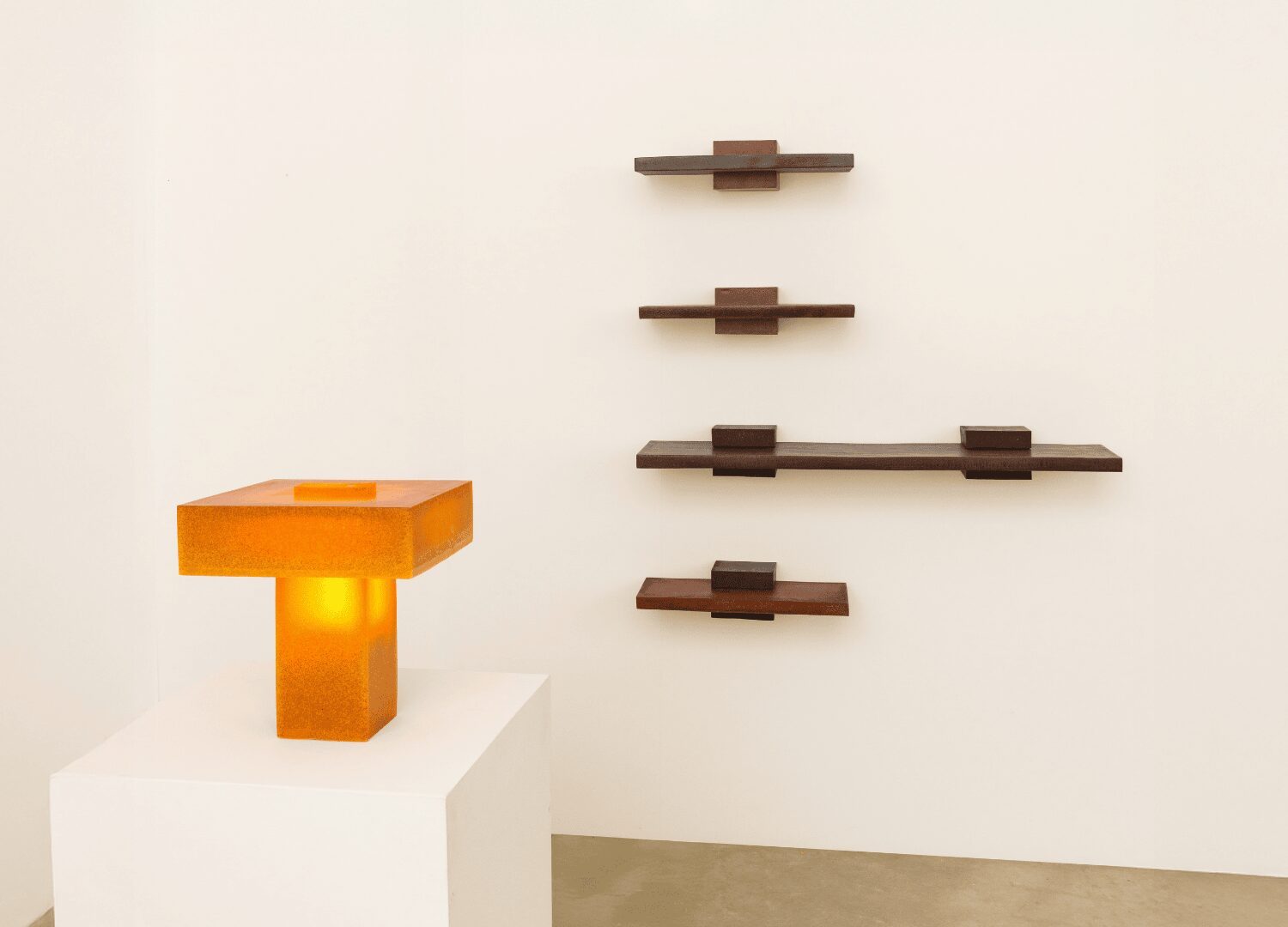
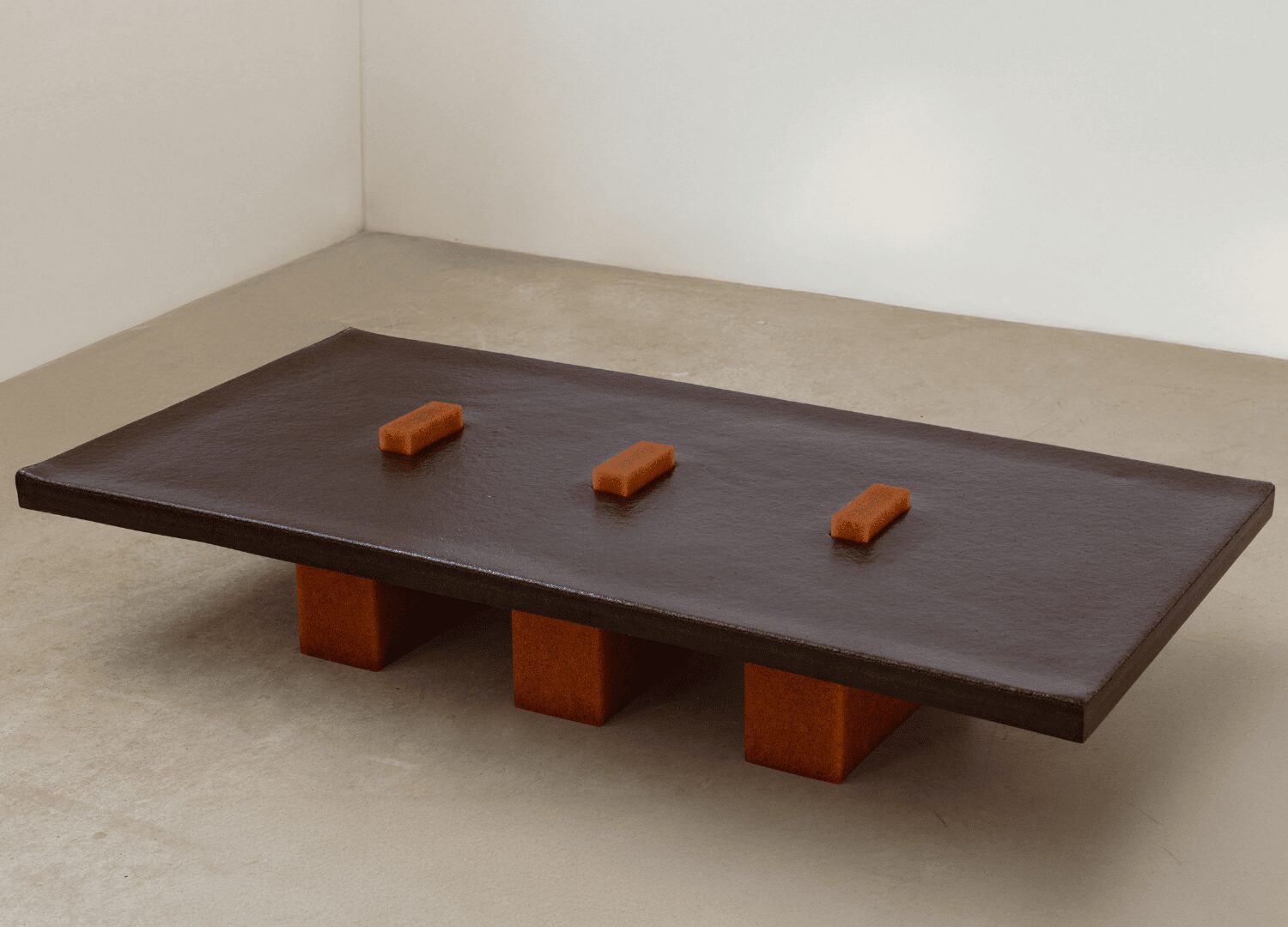
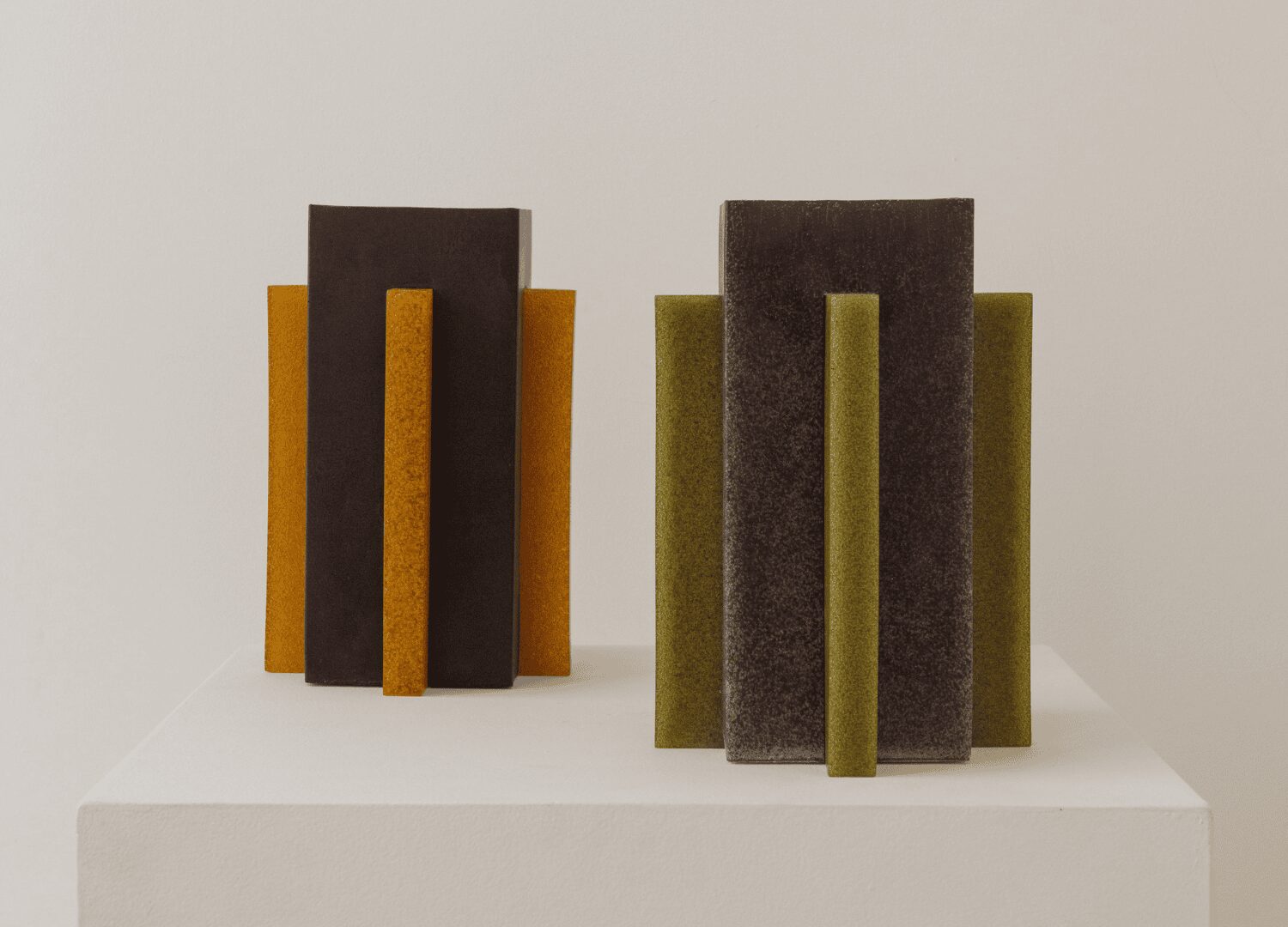
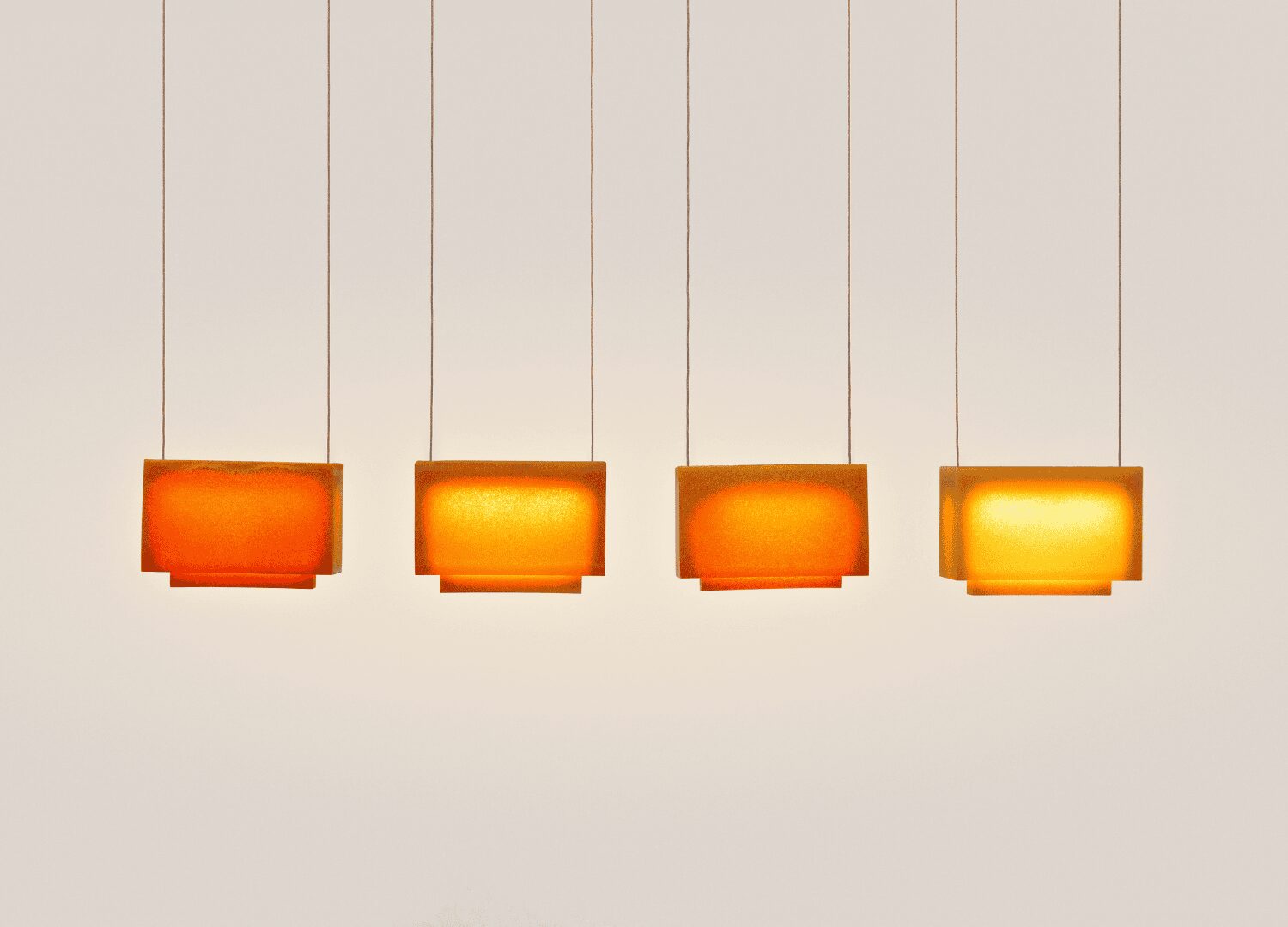
Open full width
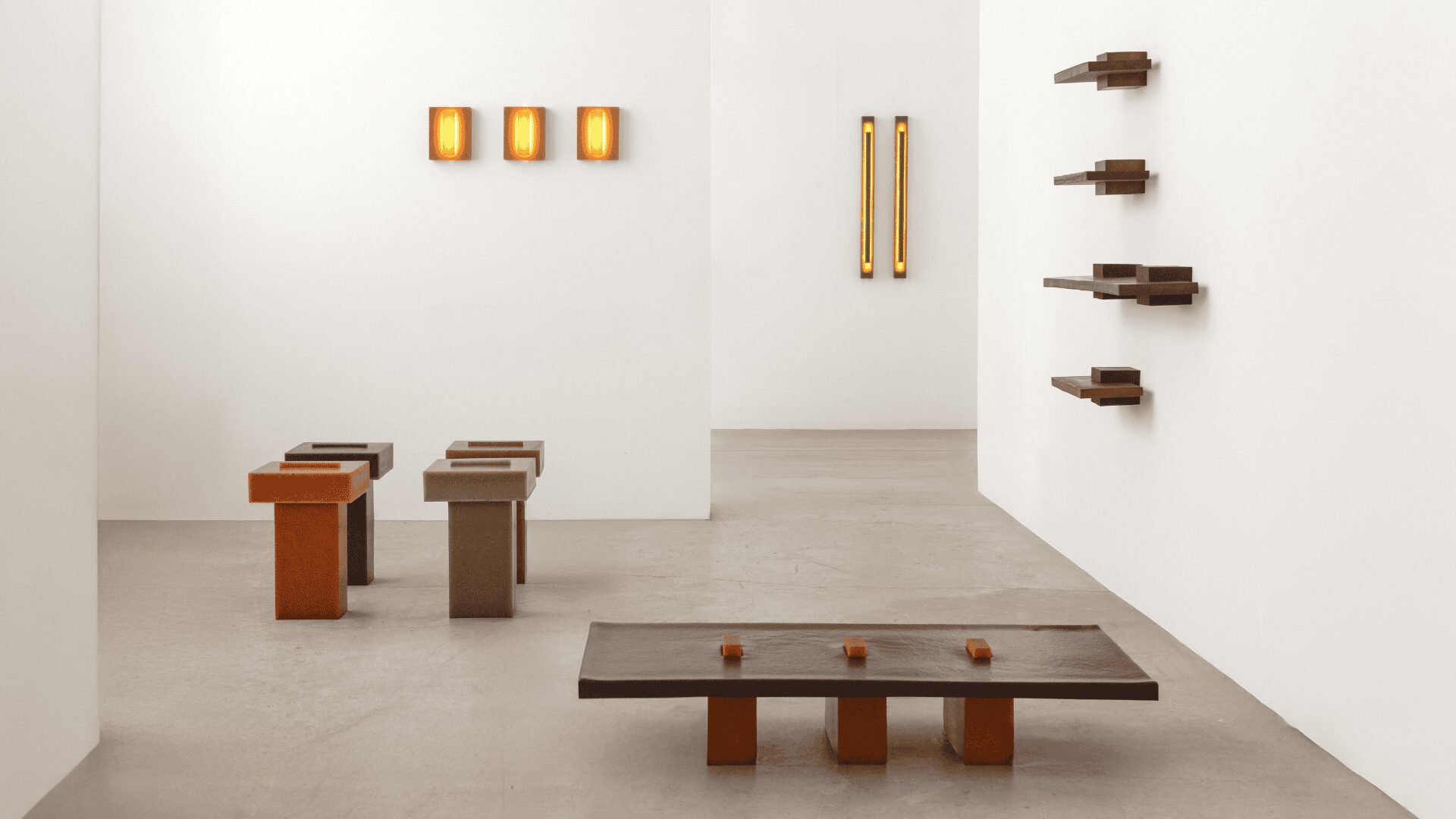
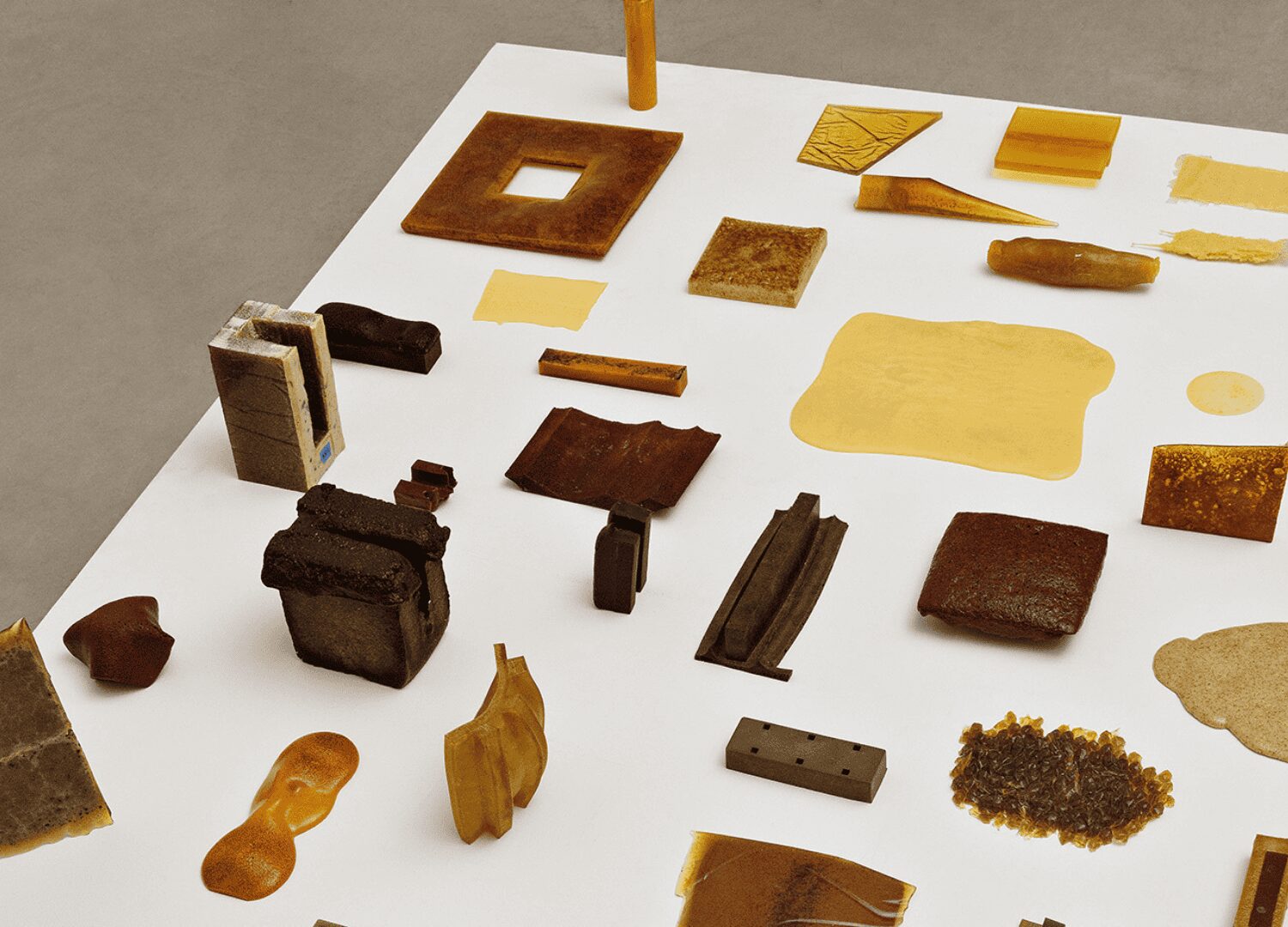
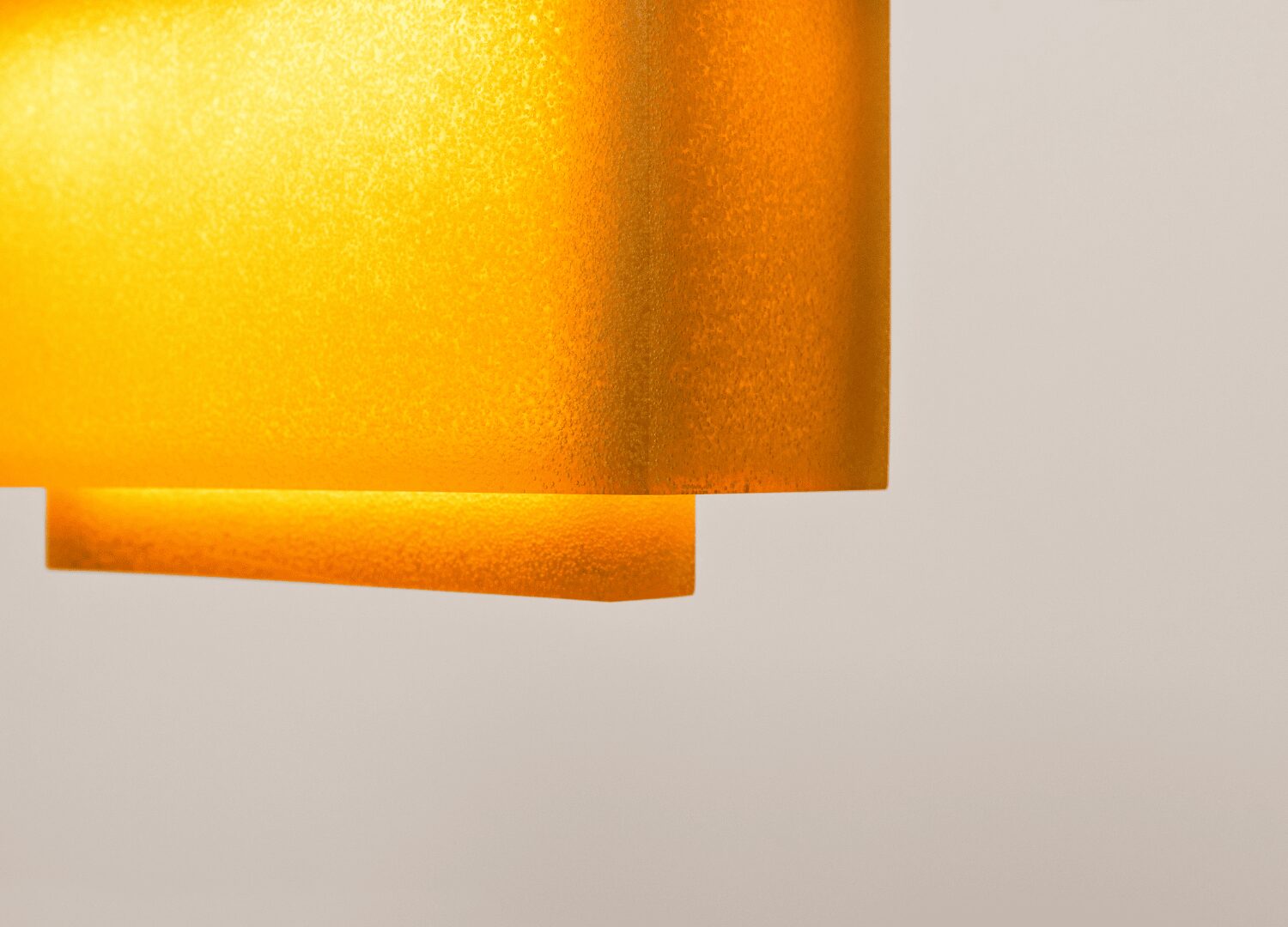
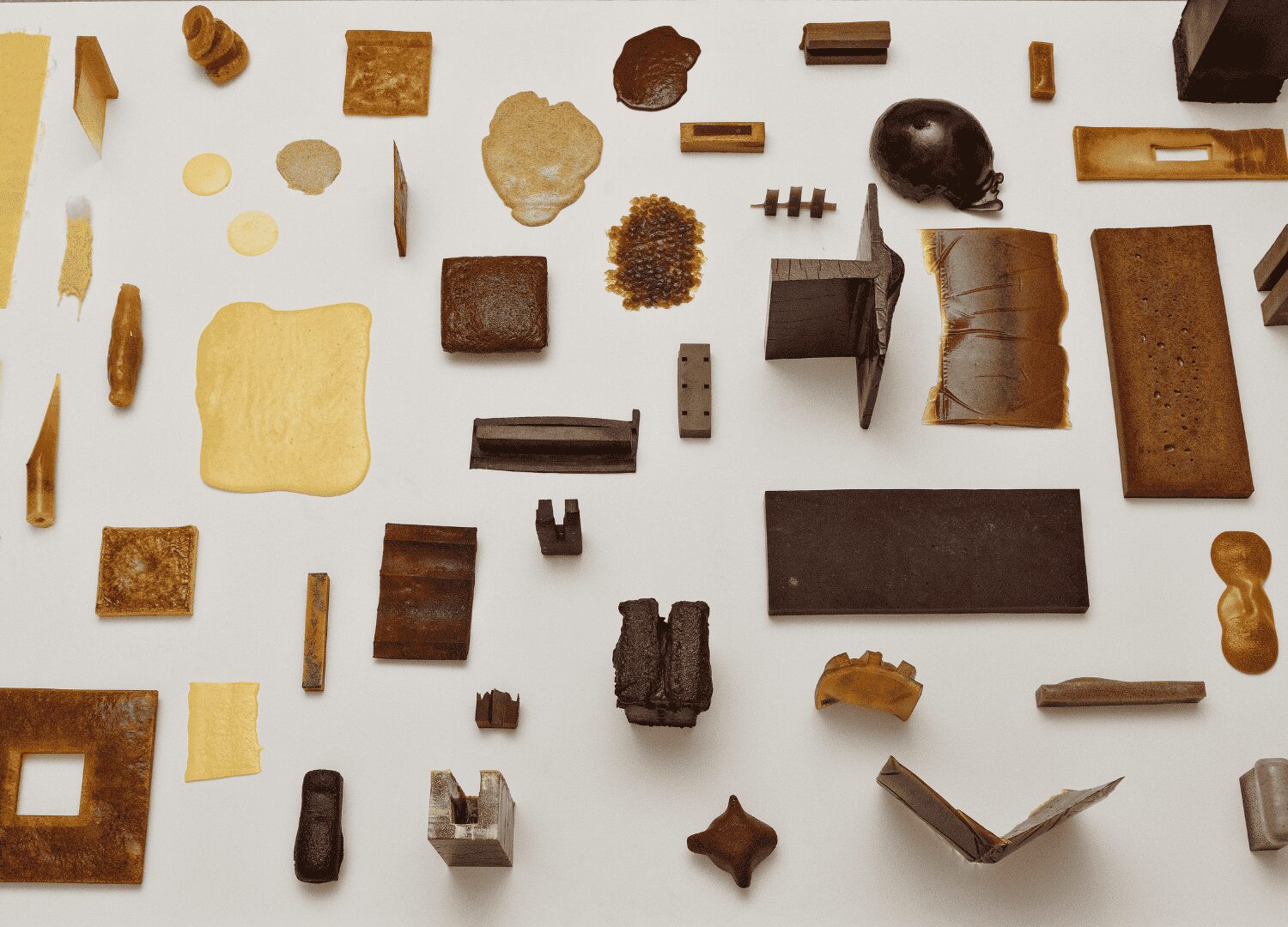
This year, RAIN launched the third phase, called Rícino C, which introduces a new element: pigments. In this case, organic and mineral elements – such as flowers, fruits, roots, algae, seeds, and sediments – have been added to the formula, generating different textures, densities, and shades each time, which have been applied to specific functions.
We explored this new stage and the resulting furniture collection in depth with the studio.
How did the decision to experiment with castor oil resin come about?
Estúdio RAIN:
We had long been interested in finding an alternative to petrochemical resins, materials whose visual qualities intrigued us but whose toxicity made them problematic to work with. The research took a more concrete direction during the development of an incense holder, when the studio began experimenting with colophony. We were immediately drawn to its scent, but especially to its color and translucency.
However, colophony is a very unstable material, thermically speaking, which led us to search for an alternative that could have similar visual qualities while being more stable to work with. This search led us to the castor-oil resin, a locally produced, non-toxic material, which opened up a new quest for exploring light, volume, and material behavior.
As you write on your website, “The modified resin’s behavior required a reassessment of design and manufacturing processes.” Can you explain how you adapt the process?
Estúdio RAIN:
To understand the adaptations developed for the Rícino C collection, it is important to revisit the first phase of the research. When working with pure resin, we used the open surface of the mold as the front of the piece, embracing its glossy finish and clear amber translucency. In this third phase, two distinct material families emerged: a pigmented resin and a composite resin. Each cures differently and therefore requires specific mold strategies.
When pigmented, the resin reacts by increasing bubble concentration, forming a foamy layer on the open curing surface. This led us to invert the logic of casting, transforming this surface into the back of the piece so the texture remains concealed. The composite resin, by contrast, behaves as an expansive foam and must be cast in tightly sealed molds; the internal pressure generated during curing is what gives the material its structural rigidity. In parallel, we aimed to let the resin remain the sole visible material, concealing the metal structures by integrating all technical components within the resin bodies. This approach required the creation of internal compartments and fitting pockets, resulting in tailored, multi-part molds and a more intricate construction process.
Looking at one of the pieces in the collection, the coffee table, you can appreciate the different colors created by experimenting with organic elements. How is the piece made, and what kind of assembly system did you adopt for the collection?
Estúdio RAIN:
The coffee table represents the culmination of the dialogue between the two material families. Its base is composed of three identical blocks cast in pigmented resin, while the top, designed to be more rigid and functional, is made from composite resin. In this piece, the material is allowed to grow in a more organic way, contrasting with other elements in the collection, such as the shelving system, where the same resource is used with greater precision to ensure exact alignment with the wall fixtures. As the largest and final piece developed for the collection, the coffee table marks a moment of conclusion in this phase of the research. It brings the two resins together in articulation, highlighting and complementing their material differences through the fitting connections, present throughout the whole collection.
The composite materials obtained by mixing organic matter with resin are described as biodegradable. Can you elaborate on this aspect, particularly in relation to the materials’ durability and disposal processes?
Estúdio RAIN:
The resin is a non-toxic and compostable material because it is a plant-based polymer made from castor oil. To preserve these qualities, we exclusively used natural pigments and organic fibers as additives. Once cured, the resin stabilizes and becomes highly durable. Its biodegradation only begins when it is disposed of with organic waste, leaving no toxic residues behind.
The aluminum structures used for technical support are detachable and can be recycled separately. One consequence of working with natural pigments is their sensitivity to UV exposure, which can cause gradual fading over time. This was a conscious decision, as it allowed us to avoid synthetic pigments and maintain the material’s ecological integrity rather than introducing contaminating elements into the pieces.
What unexpected findings emerged from this third phase of the research?
Estúdio RAIN:
The Rícino C collection emerged from experiments combining the resin with other elements, opening up a wide spectrum of possibilities in terms of color, texture, and rigidity. This allowed us to explore the material in new ways, introducing pigmentation while preserving translucency, and scaling it up to design larger pieces, including furniture. These new formulations brought technical challenges, particularly in achieving precise proportions, as the resin is highly reactive during curing. Through this process, we also developed a fiber-reinforced composite resin, which behaves differently during curing. These organic reactions demanded new approaches to mold-making and calibrated formulas, achieved through extensive testing and iterative experimentation.
You have developed three collections, Rícino (2019), Rícino F (2023), and the recent Rícino C (2025), in which you explore the performance and aesthetics of resin. What are the next steps in your research?
Estúdio RAIN:
We are still very intrigued by how the resin reacts and cures. It’s an alchemic experimentation of components and proportions in the end. Making constant tweaks and analysing them have given us a rich range of results that we still want to explore as collections. Until now, we’ve been putting a lot of effort into finding ways to control the resin and have a more finished piece, but there’s a lot of the organic aspect that reacts and cures that opens up a range of material expressions that could be great to explore as well.